
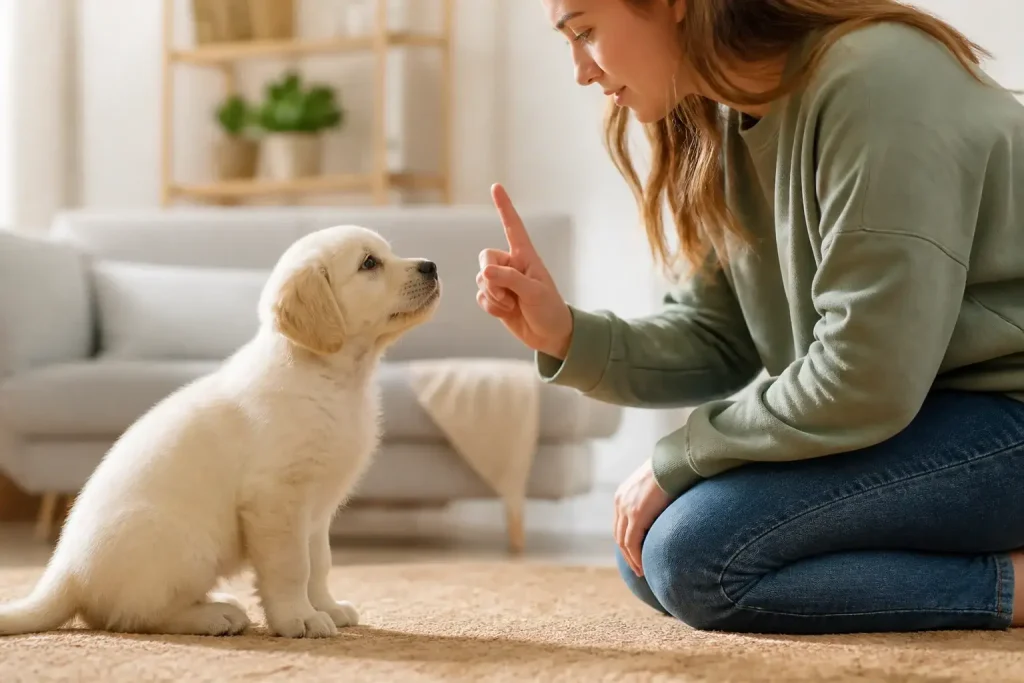
Building a Foundation for Puppy Training
Puppy training is an educational process that teaches a young dog how to live safely, confidently, and cooperatively with people. It is not a single lesson or a test of obedience. Instead, it is a gradual program of communication, practice, management, and relationship building. A well designed training plan helps puppies understand household expectations while protecting their emotional development. The goal is not to suppress normal puppy behavior, but to guide curiosity, energy, chewing, barking, and play toward acceptable outlets.
The earliest months are especially important because puppies are rapidly learning about their environment. Positive experiences can create resilience, while frightening or confusing experiences may produce avoidable anxiety. Training should therefore combine clear boundaries with patience. Short sessions, generous rewards, and realistic expectations produce better results than punishment or prolonged drills. Owners should remember that a puppy has limited concentration and may appear inconsistent when tired, hungry, overstimulated, or distracted.
A useful program begins with three priorities: safety, communication, and routine. Safety includes preventing access to hazards, supervising interactions, and arranging veterinary care. Communication involves teaching a marker, such as a cheerful word or click, that identifies desired behavior. Routine gives the puppy predictable opportunities for eating, sleeping, elimination, exercise, exploration, and calm learning. Together, these elements make good choices easier and reduce the need for correction.
What a Complete Training Program Provides
A puppy training program can be understood as a practical educational product containing lessons, schedules, demonstrations, and troubleshooting guidance. Its value lies in helping families apply consistent methods every day. A comprehensive program should explain not only what to teach, but also why a behavior occurs, how to prepare the environment, when to reward, and how to adjust difficulty.
The program should include age appropriate instruction for name recognition, attention, handling, house training, crate comfort, leash skills, recall, polite greetings, settling, and basic cues. It should also address common challenges such as biting, jumping, barking, stealing objects, digging, and resistance to grooming. Each topic benefits from a simple sequence: prevent rehearsal of unwanted behavior, arrange an achievable situation, reinforce the preferred response, and gradually increase distractions.
Effective materials also provide practical tools. A daily checklist can help families record meals, elimination, naps, training sessions, and unusual behavior. A reward guide can explain how to use kibble, soft treats, toys, praise, access to sniffing, or opportunities to greet. A progress chart encourages observation rather than guesswork. Clear safety notes should identify situations requiring a veterinarian, qualified trainer, or veterinary behavior professional.
The product should be flexible enough for different homes and breeds. Puppies vary in temperament, physical development, motivation, previous experience, and recovery after surprises. A timid puppy may need distance and gradual exposure, whereas an energetic puppy may need more sleep and structured enrichment. Breed tendencies can influence interests, but they do not determine personality. Individual observation remains more important than stereotypes.
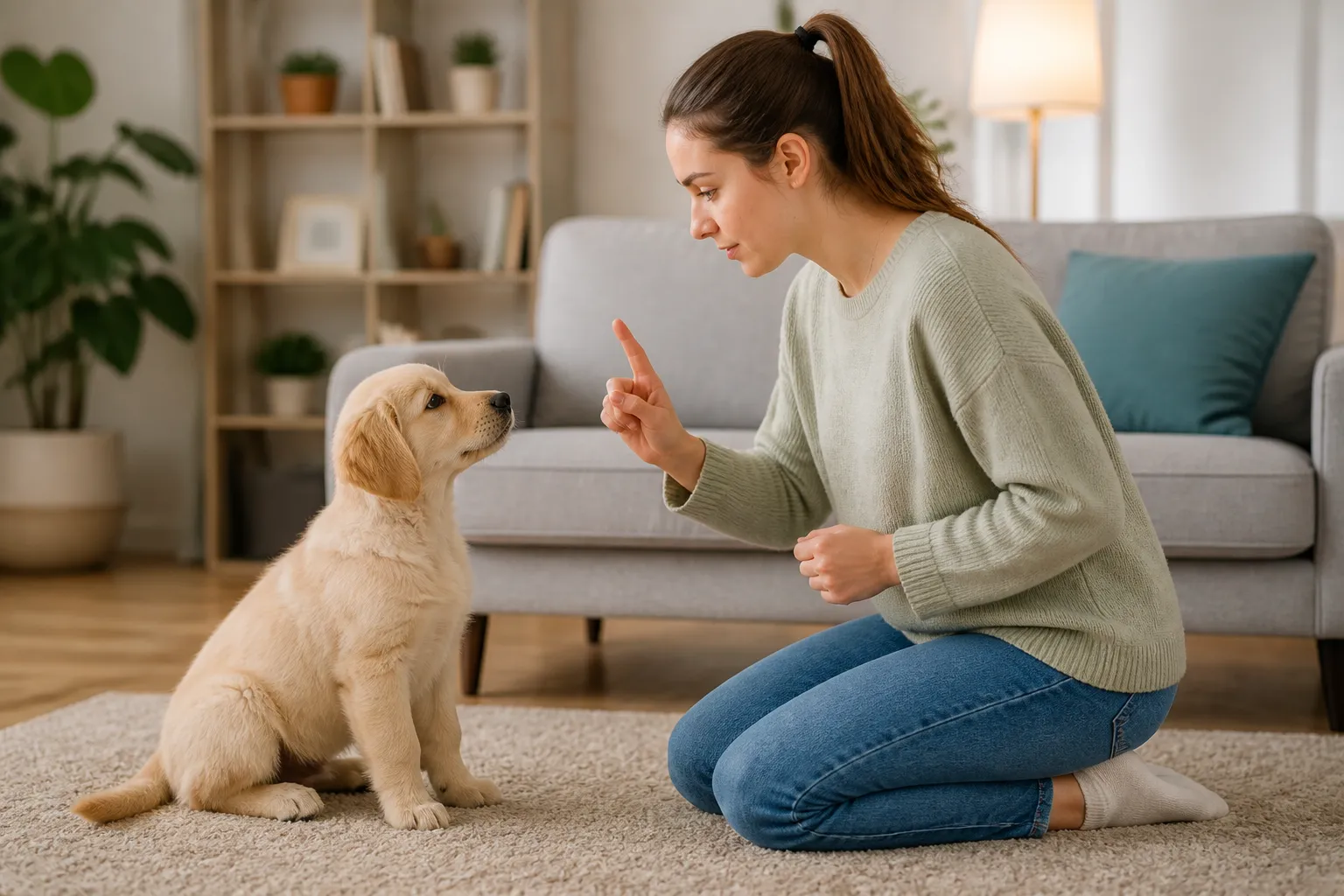
Preparing the Home
Before a puppy arrives, prepare a secure area with a comfortable sleeping place, water, safe chew items, and washable flooring. Use gates, closed doors, and barriers to limit access to stairs, electrical cables, toxic plants, medications, and small objects. Remove tempting items from the floor because prevention is easier than repeatedly taking possessions away. If children live in the home, establish rules for gentle contact, quiet spaces, feeding, and supervision.
A crate can support rest and house training when introduced gradually. It should never function as punishment or long term confinement. Begin by placing treats near the entrance, then inside, allowing the puppy to enter voluntarily. Feed meals nearby or within the crate if the puppy remains comfortable. Close the door briefly while providing a chew, and reopen it before distress develops. Increase duration in small increments. The puppy should receive adequate movement, interaction, elimination breaks, and sleep outside the crate.
House training depends on timing and supervision rather than blame. Take the puppy outside after waking, eating, drinking, playing, and exciting activity. Reward elimination immediately after it occurs, using calm enthusiasm. Indoors, watch for sniffing, circling, wandering, or sudden pauses. If an accident begins, interrupt gently and move outside without anger. Clean the area with an enzymatic product that removes odor. Punishment can cause fear and may teach a puppy to hide, but it does not explain the desired location.
Establishing Communication
Choose a short name and say it pleasantly. When the puppy looks toward you, mark the moment with a word such as “yes,” then offer a reward. Repeat in quiet locations before adding distance or distraction. The puppy learns that responding to the name predicts something valuable. This skill becomes a foundation for safety because it can redirect attention before the puppy approaches a hazard.
A marker should be precise and consistent. Say it while the desired action is happening, not several seconds afterward. Follow it with a reward every time during early learning. Later, the marker can remain meaningful even when rewards become intermittent, but praise should not replace food too quickly. Food is not a bribe when it is delivered after behavior; it is information and reinforcement.
Teaching Essential Skills
Attention and Settling
Reward voluntary attention whenever the puppy glances at you, follows calmly, or chooses to rest. Begin on the floor in a quiet room. Avoid repeatedly calling the puppy’s name when you cannot reinforce a response. For settling, place a mat near you and reward the puppy for stepping onto it, lying down, relaxing, and remaining calm. Deliver rewards slowly and quietly. Gradually practice while household activity increases.
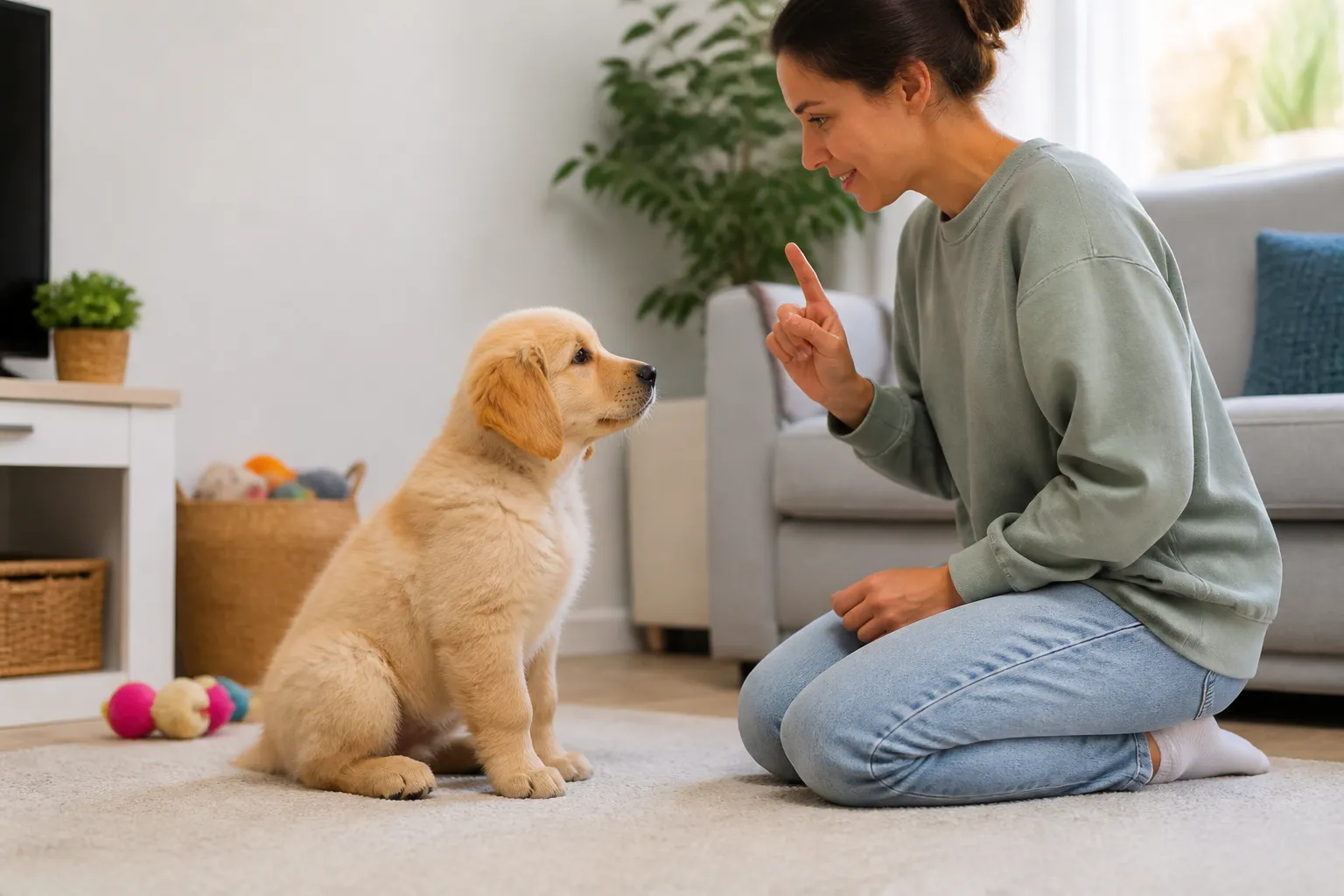
Settling is a life skill, not merely a trick. Puppies need planned naps because overtired behavior often resembles disobedience. A puppy that bites, races, vocalizes, or cannot respond may need sleep rather than additional exercise. Balance active play with quiet chewing, sniffing, food puzzles, and rest. Excessive forced exercise can strain developing bodies and create an athlete that has difficulty relaxing.
Recall
Recall training should make returning to the handler rewarding. Start a few steps away in a safe room. Use an upbeat cue once, move backward, and reward the puppy for following. Practice with two people who take turns calling and rewarding. Outside, use a secure harness and long line until reliability develops. Never call the puppy to deliver a frightening consequence, end every enjoyable experience, or perform an unpleasant procedure without preparing the puppy.
Increase difficulty gradually by changing distance, location, distraction, and reward value one at a time. If the puppy ignores the cue, do not repeat it continuously. Reduce the challenge, use gentle movement to encourage following, and reward success. A reliable recall is built through hundreds of pleasant repetitions, not through one dramatic test.
Leash Skills
Leash walking begins indoors. Reward the puppy for approaching the harness, standing calmly while it is fitted, and following light leash movement. Outdoors, begin in a quiet area. Reward proximity, loose leash moments, and voluntary check ins. Allow safe sniffing as a reward because exploration is important enrichment. If pulling becomes intense, stop or change direction without jerking. Resume movement when the leash relaxes.
The purpose is cooperative travel, not a rigid position beside the handler. Puppies may need short walks, play, training, and sensory exploration rather than long distances. Follow veterinary advice concerning vaccination, growth, weather, and breed specific physical risks. Carrying a young puppy through busy locations may provide social exposure before full outdoor access is appropriate.
Handling and Grooming
Pair touch with rewards from the beginning. Briefly touch an ear, lift a paw, inspect teeth, brush a small area, or hold a collar, then reward and stop. Build duration only while the puppy remains relaxed. Do not force a struggling puppy through grooming because restraint can create lasting fear. Professional groomers and veterinarians can work more safely when the puppy has learned cooperative handling.

Teach a consent signal, such as presenting a chin or remaining on a mat. If the puppy moves away, pause and lower the difficulty. This approach does not mean every procedure can always wait, but it encourages trust and helps identify when specialized assistance is needed.
Biting and Chewing
Puppy biting is normal, especially during play, teething, excitement, and fatigue. Keep suitable chew items in several locations. When teeth contact skin, calmly stop movement, offer a toy, and reward engagement with it. If excitement continues, provide a brief quiet break. Avoid yelling, physical punishment, or deliberately provoking biting. Children should be supervised and taught to become still rather than waving hands.
Chewing needs management and fulfillment. Rotate safe toys, provide food stuffed items, and allow appropriate exploration. Inspect toys for damage, supervise novel items, and follow manufacturer guidance. Never assume an object is safe merely because it is marketed for dogs. Choking, intestinal obstruction, dental injury, and toxic ingestion require urgent professional advice.
Socialization and Emotional Development
Socialization means learning to feel safe and behave appropriately around people, animals, surfaces, sounds, movement, handling, vehicles, and places. It does not mean greeting everyone. Exposure should be gradual, controlled, and paired with food or play. Watch body language: loose movement, normal eating, soft eyes, and curiosity suggest comfort. Hiding, freezing, frantic escape, tucked posture, lip licking, or refusal of food indicate that the situation is too difficult.
Create distance, reduce intensity, or leave before fear escalates. Repeated forced exposure can worsen sensitivity. Well managed puppy classes may provide useful learning when they maintain hygiene, use reward based methods, separate play appropriately, and require suitable veterinary precautions. Socialization continues throughout adolescence, although the pace should respect changing confidence and physical maturity.
Solving Common Training Problems
Jumping and Greetings
Teach greetings with four paws on the floor. Ask visitors to ignore jumping by turning away and avoiding hands, eye contact, and excited speech. The moment the puppy stands calmly, visitors can reward with food or gentle attention. A leash, gate, or mat can help prevent rehearsal. Practice with familiar people before expecting success with enthusiastic strangers.

Barking
Identify the reason for barking before choosing a response. A puppy may bark from alarm, frustration, fear, excitement, loneliness, or a desire for access. Block visual triggers, increase distance, provide rest, and reinforce quiet behavior. Avoid shouting, which may add excitement or appear to join the barking. Persistent, sudden, or distress related vocalization deserves veterinary and behavioral assessment.
Jumping on Furniture or Stealing
Management prevents self rewarding behavior. Use gates, closed containers, and supervised access. Teach a trade by presenting a better reward, waiting for release, and returning a safe item when appropriate. Do not chase, because chasing can turn theft into a game. Reward dropping objects and teach “leave it” through gradual practice, beginning with low value items.
Creating a Daily Schedule
A workable schedule alternates biological needs and learning opportunities. After waking, provide elimination access, then food, calm interaction, and another break. Follow active periods with a nap. Several one to three minute training sessions are usually more productive than one long session. Include sniffing, free movement, chewing, gentle play, handling, and quiet observation. Keep a written record for several days to discover patterns.
Training should fit the family’s real life. Practice recalls in the garden, settling during television, leash skills near the home, and calm handling before meals. Every family member should use the same cues and reward preferred behavior. Consistency does not require identical personalities; it requires shared rules and predictable consequences.
Safety, Health, and Professional Support
Training cannot replace veterinary care. A puppy that suddenly changes behavior, stops eating, shows pain, has repeated digestive symptoms, or becomes unusually fearful should be examined. Vaccination and parasite prevention plans should be discussed with a veterinarian. Ask about exercise limits, safe public exposure, diet, dental care, and sterilization decisions according to the puppy’s individual needs.
Seek qualified help for aggression, severe separation distress, persistent panic, guarding, compulsive behavior, or injuries. Choose professionals who explain methods, prioritize welfare, and avoid intimidation. Reward based training is not permissive; it includes management, boundaries, and consequences while protecting the animal’s ability to learn.
Frequently Asked Questions
When should training begin?
Training can begin when the puppy enters the home, using tiny lessons suited to age and health. Begin with name recognition, safe handling, elimination routines, gentle confinement, and reinforcement of calm behavior. Expectations should remain modest. Young puppies need frequent sleep and cannot generalize a skill immediately.
Are treats necessary?
Treats are highly effective but not the only reward. Kibble, toys, play, praise, access to sniffing, and freedom can reinforce behavior. Choose rewards that matter to the individual puppy and account for food calories. Deliver rewards promptly, then gradually vary them after the behavior is reliable. Do not remove reinforcement entirely when distractions increase.
Should I punish accidents or disobedience?
No. Punishment may create fear, avoidance, or defensive behavior without teaching the correct alternative. Prevent mistakes, interrupt gently when necessary, and reward the behavior you want. If accidents or repeated problems continue, examine timing, supervision, environment, health, and difficulty before blaming the puppy.
How long should sessions last?
Most early sessions should last one to five minutes, ending while the puppy is still successful. Several brief practices spread across the day are preferable to demanding concentration. Stop if the puppy becomes frustrated, distracted, tired, or overexcited. Progress is measured by quality and recovery, not by duration alone.
Is crate training required?
No, but teaching comfortable confinement can be useful for safety, travel, recovery, and rest. Some puppies prefer a pen, gated room, or bed instead. Any confinement area must be introduced positively, provide appropriate breaks, and never replace companionship, exercise, or supervision.
How can I prevent separation problems?
Begin with short, easy separations while the puppy is relaxed, using a safe area and a suitable chew. Return before distress becomes intense, then increase time gradually. Practice departures and arrivals calmly. If the puppy panics, damages barriers, vocalizes continuously, or cannot eat when alone, seek professional guidance rather than extending absences abruptly.
What if my puppy is fearful?
Respect the fear and increase distance from the trigger. Pair the sight or sound with valuable food while the puppy remains able to eat and think. Avoid dragging, cornering, or forcing greetings. Consult a veterinarian or qualified behavior professional if fear is intense, spreading, or accompanied by aggression.
Should puppies meet every dog?
No. Quality matters more than quantity. Select healthy, vaccinated, socially appropriate dogs and provide brief, supervised interactions. Interrupt play when one puppy is overwhelmed or unable to disengage. Calm observation at a distance is also valuable socialization. A puppy does not need to greet every person or dog encountered.
When is professional training worthwhile?
Professional support is worthwhile whenever the family feels confused, progress has stalled, or safety is uncertain. Early help can prevent small issues becoming established habits. Look for education, humane methods, transparent credentials, and willingness to collaborate with a veterinarian when medical factors may contribute.
Conclusion
Puppy training succeeds when it treats learning as a cooperative, ongoing process. Prepare the environment, establish predictable routines, reward useful behavior, and increase challenges gradually. Protect sleep, health, and emotional comfort while teaching practical skills such as recall, leash cooperation, house training, handling, settling, and polite greetings. Normal puppy behavior is information about developmental needs, not evidence of bad character.
The strongest program combines prevention with education. Gates prevent access to hazards; rewards teach alternatives; careful socialization builds confidence; and observation reveals when a puppy needs rest or professional assistance. Families that practice briefly and consistently can create dependable habits without sacrificing trust. Progress will include mistakes, plateaus, and occasional regression, especially during growth and adolescence. Responding calmly keeps learning possible.
A trained puppy is not one that never makes errors. It is a young dog that understands how to succeed, feels safe asking for help, and can gradually function in a human household. With patience, humane guidance, thoughtful management, and appropriate expert support, puppy training becomes more than obedience instruction. It becomes the foundation for communication, resilience, health, and a lasting relationship.
Pingback: Behavioral Dog Training for Calm, Happy Companions
Pingback: Puppy Behavior Management Tips for a Happy Dog