
Understanding Puppy Training
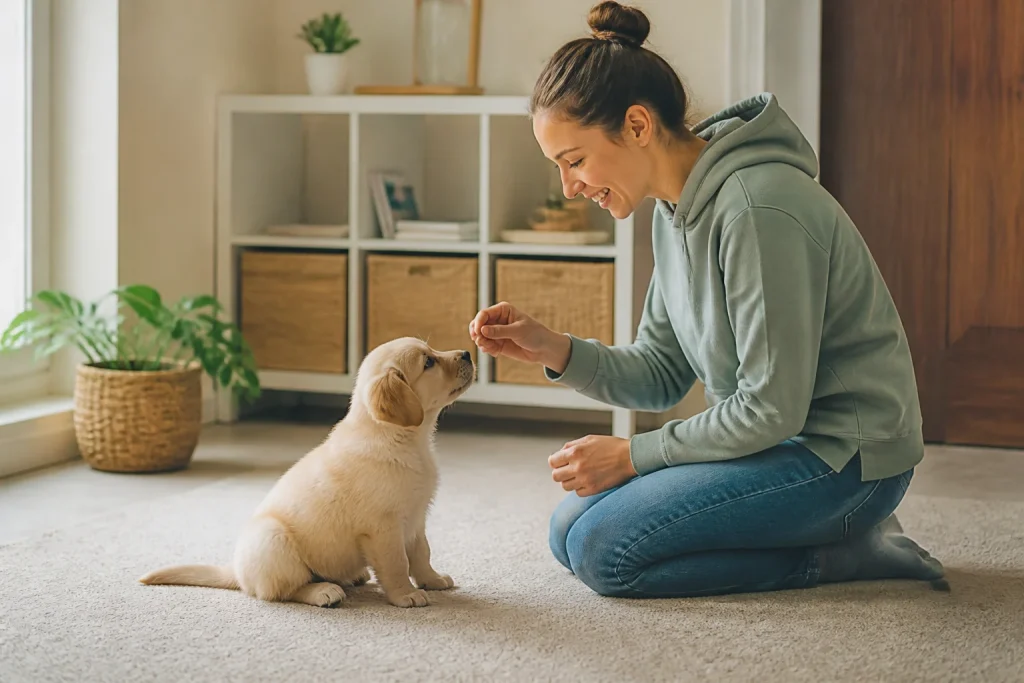
Puppy training is a structured learning program that helps young dogs develop safe habits, useful skills, confidence, and a cooperative relationship with their families. It is not limited to teaching commands. Effective training also guides toilet habits, chewing, social behavior, handling tolerance, calmness, and decision making. A well designed program gives puppies clear information about what earns rewards and what behavior leads to different, appropriate outcomes.
The earliest months are especially important because puppies are rapidly forming associations with people, places, sounds, surfaces, and routines. Training during this period should be gentle, brief, and consistent. A puppy does not need harsh corrections to learn. In fact, intimidation can create fear, avoidance, and defensive behavior. Reward based teaching, careful management, and realistic expectations usually produce better long term results.
Every puppy learns at a different pace. Breed tendencies, age, health, previous experiences, sleep, and the home environment influence progress. Training should therefore be adjusted rather than treated as a rigid schedule. The goal is not a perfectly obedient animal in every situation. The goal is a dog that understands household expectations, responds reliably when possible, and can recover calmly when faced with ordinary challenges.
What a Puppy Training Program Includes
A comprehensive puppy training service or course commonly combines written guidance, demonstrations, practice exercises, progress tracking, and opportunities for questions. Some programs are delivered through private lessons, while others use group classes, online videos, home visits, or blended support. The best format depends on the puppy’s temperament, the owner’s schedule, vaccination guidance, and the behavior being addressed.
Core Learning Areas
House training teaches the puppy where elimination is appropriate. Owners learn to create a predictable schedule based on age, meals, drinking, play, naps, and waking. Supervision prevents mistakes, while immediate rewards make the preferred location meaningful. Accidents should be cleaned with an enzymatic product and treated as information about timing or supervision, not as evidence of stubbornness.
Crate or pen training provides a secure resting area. The space should be introduced gradually with food, toys, and quiet experiences. Puppies should never be forced into confinement for excessive periods or used to punish unwanted behavior. A suitable rest area supports sleep, safe management, travel preparation, and recovery from excitement.
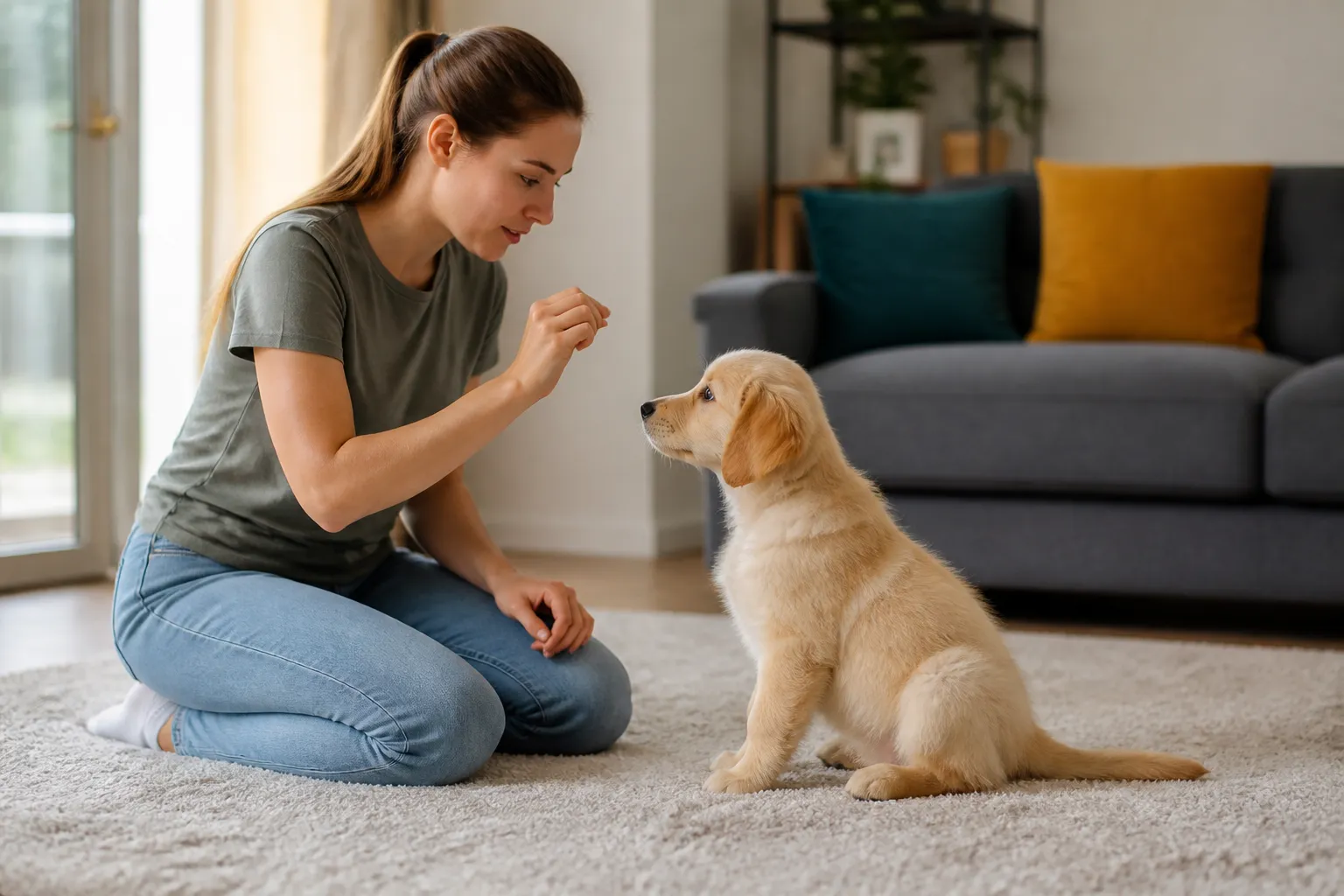
Name recognition and attention are foundational. The owner says the puppy’s name once, marks an orienting response, and delivers a reward. This exercise teaches that responding to the name is valuable. It should not become a warning that predicts anger. Attention can later be practiced around mild distractions, then gradually increased as the puppy succeeds.
Basic cues often include sit, down, touch, come, wait, leave it, and settle. Cues are communication tools, not tests of dominance. Each behavior should be taught in small steps, reinforced frequently, and practiced in several safe locations. A puppy may perform a cue in a quiet kitchen but struggle in a garden or busy street. Generalization requires deliberate repetition in different contexts.
Loose lead walking prevents pulling from becoming a rewarding habit. Initially, the owner rewards the puppy for remaining near a comfortable position, turning toward the handler, and moving with a slack lead. Walks should include sniffing, pauses, and exploration rather than constant marching. This approach teaches that staying connected does not eliminate natural behavior.
Bite inhibition and chewing guidance are essential. Puppies investigate with their mouths, and teething can increase the need to chew. Owners should provide suitable chew items, redirect gently, and end interaction briefly when teeth contact skin. Rough play, punishment, or repeatedly snatching objects can increase excitement or guarding. Trading an item for food teaches cooperation and protects trust.
Socialization and Emotional Development
Socialization means introducing a puppy to new experiences in a controlled, positive manner. It includes people with different appearances, household sounds, transport, veterinary handling, surfaces, friendly vaccinated dogs, and ordinary community activity. Exposure should remain below the puppy’s fear threshold. A frightened puppy does not benefit from being held near a frightening stimulus until it stops reacting.
A useful program teaches owners to observe body language. Loose muscles, soft eyes, normal breathing, exploratory sniffing, and the ability to eat often indicate comfort. Freezing, hiding, frantic movement, tucked posture, lip licking, yawning, or persistent avoidance may indicate stress. The handler should increase distance, reduce intensity, offer recovery time, and seek professional advice when fear is substantial.
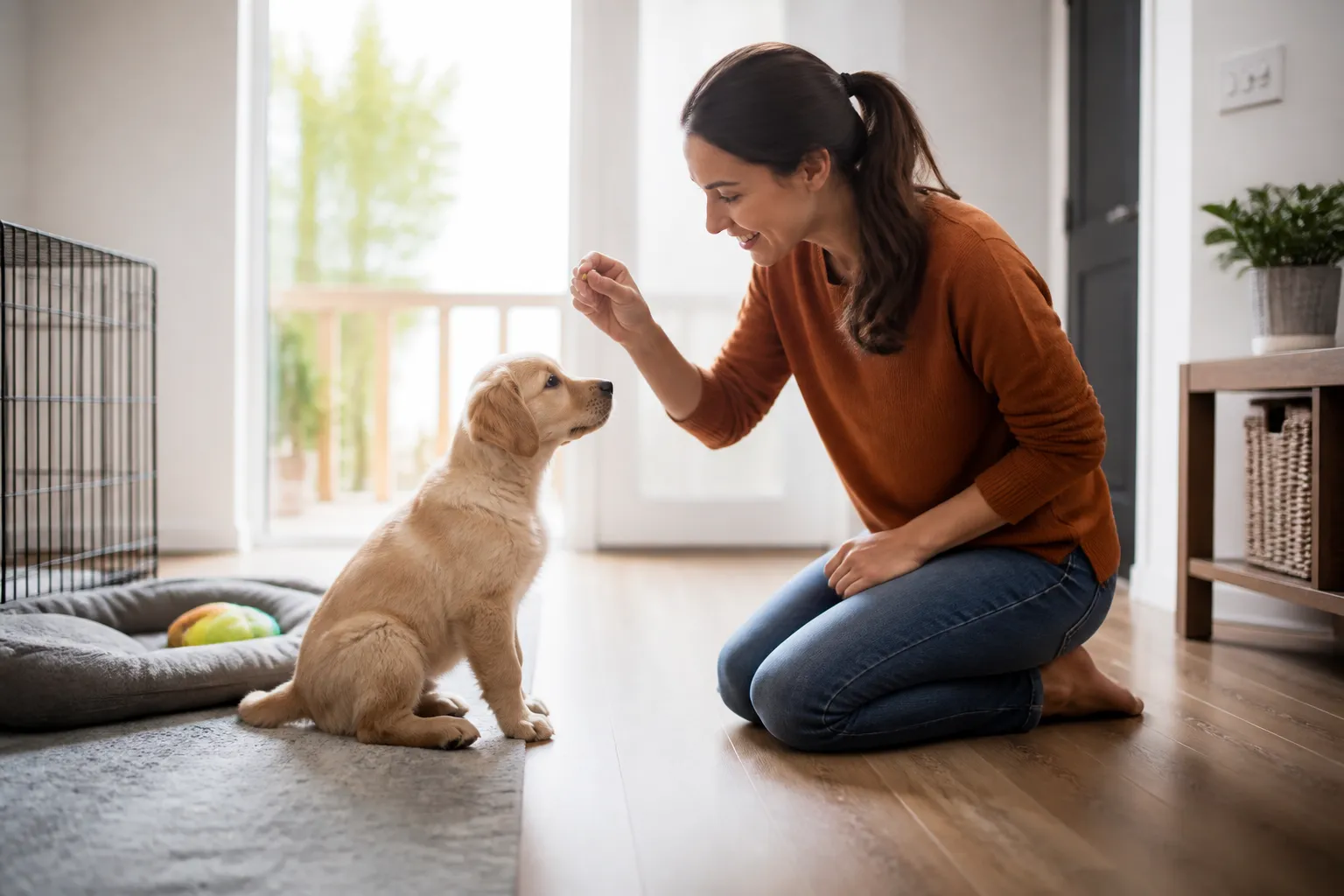
Puppies also need lessons in calm independence. Short periods behind a gate, resting on a mat, or staying with a safe chew can prevent constant dependence on human attention. Independence should be developed gradually, beginning with seconds and expanding only when the puppy remains relaxed. A sudden long absence can create distress rather than resilience.
The Training Method
Reward based training works by increasing behaviors that produce desirable consequences. Rewards may include food, play, access to a sniffing area, praise, or the opportunity to greet someone. Food is often efficient because it can be delivered precisely, but it should be part of a varied reinforcement system. Once a behavior is reliable, rewards can become less predictable while social praise and natural rewards remain important.
A marker word, such as “yes,” or a clicker can identify the exact moment the puppy performs correctly. The sequence is simple: present a manageable situation, wait for the desired response, mark it, and provide the reward. Timing matters. If the reward arrives several seconds late, the puppy may associate it with a different behavior. Trainers should practice their own timing before increasing difficulty.
Training sessions should be short, perhaps two to five minutes for a very young puppy, and repeated several times daily. Stop while the puppy is still interested. Tired, hungry, overstimulated, or unwell puppies have reduced learning capacity. Rest is not a reward for failure; it is a biological requirement that supports memory and emotional regulation.
Building Reliable Behavior
Reliability develops through a gradual progression. First teach the behavior in a quiet location. Next add small changes in distance, duration, or distraction, but avoid increasing all three at once. If the puppy fails repeatedly, the exercise is too difficult or the reward is insufficient. Return to an easier step, reinforce success, and progress more slowly.
Owners should use management alongside teaching. Baby gates, closed doors, covered bins, safe storage, exercise pens, and supervised freedom reduce opportunities for rehearsal of unwanted behavior. Management is not a substitute for training, but it prevents mistakes while the puppy’s skills are developing. A puppy cannot learn not to steal food if food remains accessible on low surfaces.
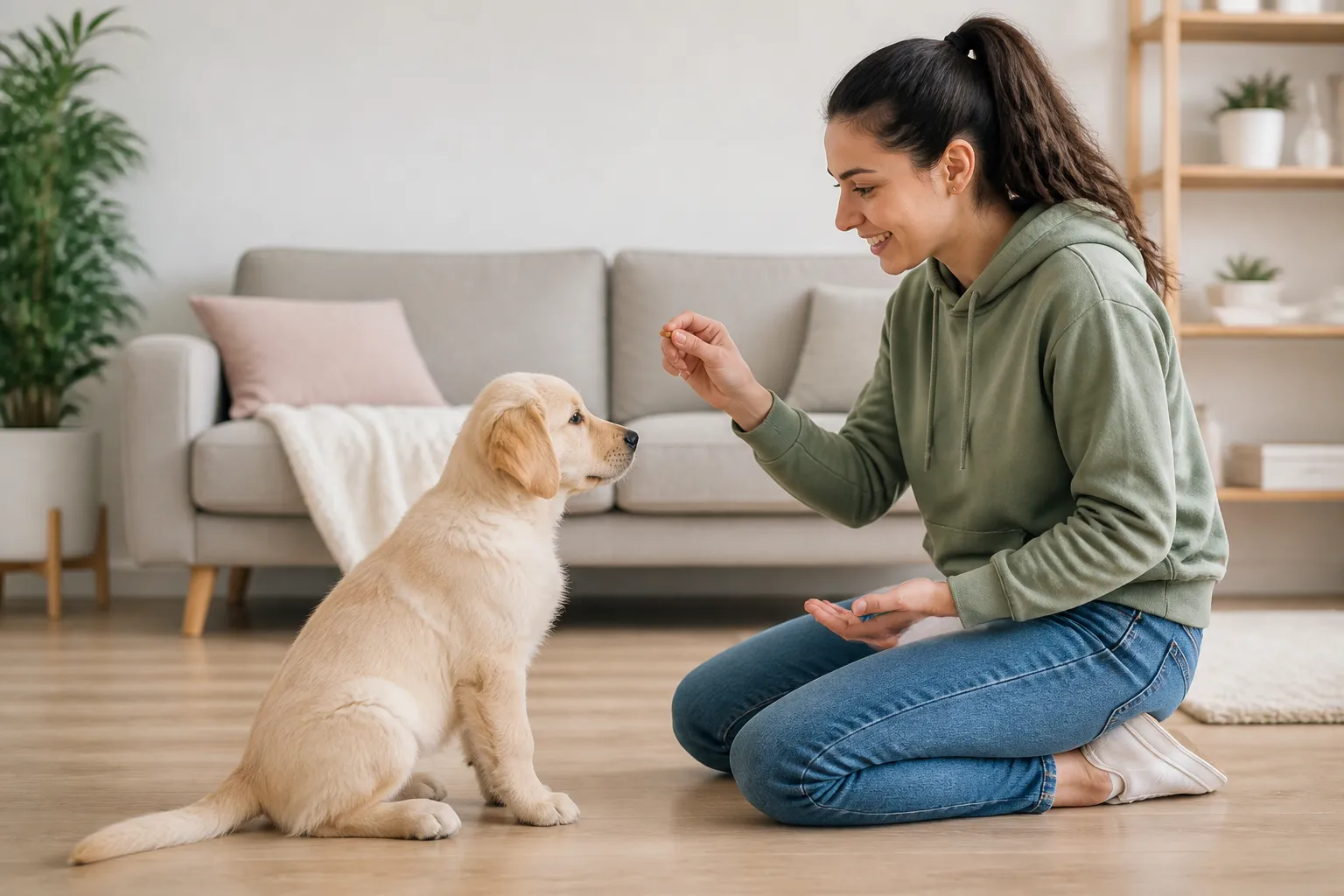
Consistency does not mean every family member must use identical words or gestures. It means everyone should agree about important rules, rewards, and consequences. If one person permits jumping for attention while another pushes the puppy away, jumping may become persistent because it sometimes succeeds. A clear household plan makes learning easier and reduces frustration.
Handling and Daily Care
Gentle handling exercises prepare puppies for grooming, nail care, medication, and veterinary examinations. Touch one body area briefly, provide a reward, and stop before discomfort appears. Gradually include paws, ears, mouth, tail, collar, harness, and brushing. Cooperation can be strengthened by teaching the puppy to place its chin on a hand or mat, creating a voluntary start and pause signal.
A puppy training product may include a properly fitted harness, lightweight lead, treat pouch, washable mat, chew toys, food puzzles, a crate or pen, grooming tools, and educational lesson materials. Equipment should support communication and safety rather than restrict movement or cause pain. Collars, leads, crates, and barriers must be inspected regularly, and every item should match the puppy’s size and chewing ability.
Food puzzles and scatter feeding encourage appropriate investigation and can reduce boredom. They should be introduced at an easy level so the puppy experiences success. Rotate toys rather than presenting everything at once, and supervise items that could break or be swallowed. No product replaces interaction, exercise suited to age, sleep, and veterinary care.
Common Challenges
Jumping usually continues because it gains attention. Turning away, rewarding four paws on the floor, and teaching an alternative greeting such as sitting can change the outcome. Visitors should receive instructions before entering. If excitement is excessive, use a gate or lead while the puppy settles, then permit a brief greeting. Repetition matters more than dramatic corrections.
Barking requires identifying its function. A puppy may bark from alarm, frustration, loneliness, play, or a desire for access. Punishing the sound without addressing the cause can increase anxiety. Reduce triggers, reward quiet observation, teach a settle behavior, and provide appropriate activity. Sudden or intense barking, especially with other symptoms, warrants veterinary discussion.
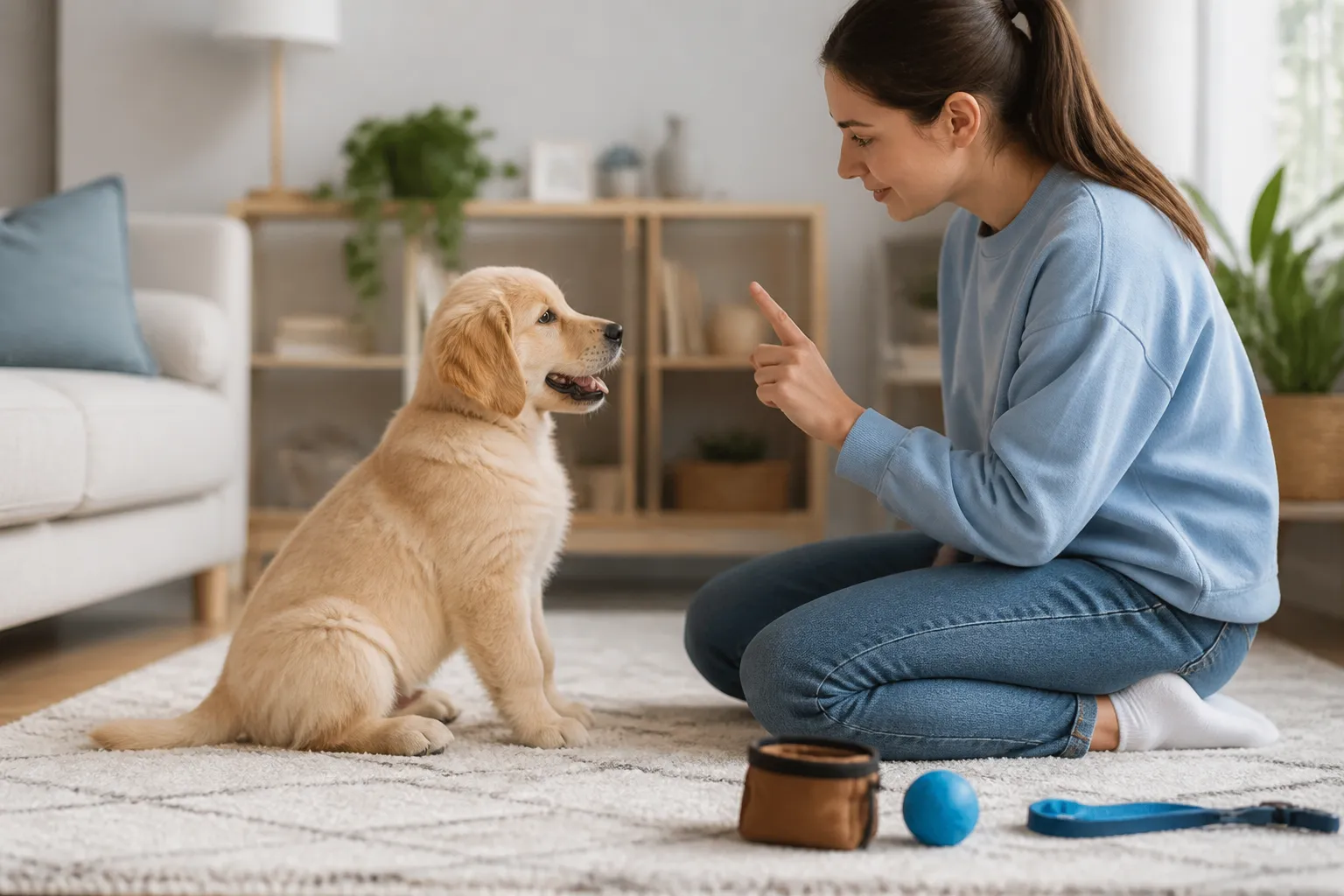
Recall training begins indoors with a cheerful cue, immediate rewards, and no punishment when the puppy arrives. Never call a puppy only to end fun, administer medicine, or scold. Use a long line in safe outdoor areas, protect against traffic and wildlife, and reward check ins. Recall remains a lifelong skill requiring maintenance.
Resource guarding may appear as stiffening, freezing, growling, or snapping around food, toys, or resting places. Do not forcibly remove items or punish warnings. Keep children away from the puppy during eating and seek a qualified behavior professional promptly. Medical discomfort can influence irritability, so veterinary assessment is appropriate.
Choosing a Service or Course
Before purchasing training support, examine the instructor’s qualifications, methods, lesson structure, and approach to welfare. Ask whether the program uses reward based teaching, how it handles fear or aggression, and what support is offered between sessions. Avoid providers who promise instant results, guarantee a specific personality, promote dominance theories, or rely on pain, intimidation, or unexplained equipment.
A useful course states learning objectives and gives owners practical homework. It should explain why exercises work, identify common mistakes, and show how to adapt activities for different puppies. Private lessons may be preferable for fear, guarding, household complexity, or location specific problems. Group classes can provide controlled social learning when puppies are comfortable and the class is managed carefully.
Health and safety policies matter. Ask about vaccination requirements, cleaning procedures, class size, emergency plans, and interactions between dogs. Puppies should have opportunities to rest and should not be forced into greetings. A competent instructor notices stress early and changes the setup rather than blaming the puppy.
Frequently Asked Questions
When should puppy training begin?
Training can begin when a puppy arrives home, using simple routines, name games, gentle handling, and rewards for calm behavior. Formal classes should follow veterinary advice about health risks and suitable environments. Early learning does not require long sessions or advanced obedience. Everyday moments provide frequent opportunities.
How long does house training take?
Timing varies widely. Age, supervision, access to outdoor areas, schedule, health, and previous learning all matter. Young puppies have limited bladder control, so frequent opportunities are necessary. Maintain a record of meals, sleep, elimination, and accidents. If progress suddenly worsens, consult a veterinarian to exclude infection or another medical problem.
Is crate training necessary?
A crate is optional, but many families find it useful for travel, rest, safety, and management. A pen, gated room, or other secure area can serve similar purposes. The puppy must associate confinement with comfort and should receive regular breaks, exercise, interaction, and elimination opportunities.
Should treats be used forever?
Treats are useful during teaching and can gradually be reduced as behavior becomes reliable. They need not disappear completely. Intermittent food rewards help maintain difficult behaviors, especially recall and calm responses around distractions. Use small portions, account for them in the daily diet, and select food appropriate for the puppy.
What if my puppy ignores me outside?
Outdoor environments contain stronger distractions than the home. Reduce difficulty by increasing distance from distractions, using better rewards, and practicing in quiet areas first. Do not repeat a cue many times. Help the puppy succeed, mark attention quickly, and build duration gradually. A long line provides safety while recall develops.
How should children participate?
Children should be supervised and taught to avoid chasing, hugging, climbing, disturbing sleep, or taking food and toys. They can participate by scattering treats, practicing simple cues with an adult present, or helping prepare enrichment. The puppy needs a protected resting area where children never follow.
When is professional help needed?
Seek help for bites that break skin, intense fear, repeated aggression, severe separation distress, guarding, compulsive behavior, or sudden changes. Choose a reward based trainer or veterinary behavior professional. Early assistance is valuable because it prevents rehearsal and gives the family a clear safety plan.
Measuring Progress
Progress should be measured by behavior and emotional quality, not by how many commands the puppy performs. Useful indicators include faster recovery after excitement, fewer accidents, softer body language during handling, improved ability to settle, safer greetings, and more frequent voluntary check ins. Keep brief notes about triggers, successes, reward types, and setbacks.
Expect uneven development. A puppy may improve for several days and then struggle during teething, growth, illness, travel, or adolescence. Regression does not erase learning. Lower the difficulty, restore routine, increase sleep, and review health factors. Avoid comparing puppies because individual development is not a competition.
Training should also protect the human animal relationship. Owners who feel overwhelmed need practical support, realistic schedules, and permission to use management. Sharing responsibilities, arranging safe puppy care, and planning quiet periods can prevent burnout. Patient teaching is easier when people are rested and confident.
Conclusion
Puppy training is an investment in communication, safety, emotional health, and daily cooperation. The strongest program combines reward based instruction, thoughtful management, socialization at a comfortable pace, gentle handling, adequate sleep, enrichment, and veterinary support. It teaches owners to notice behavior before problems become serious and to change the environment so success is easier.
Choose equipment and educational services that prioritize welfare, clear explanations, and adaptable practice. Work in short sessions, reward useful choices, increase challenges gradually, and treat setbacks as information. When fear, aggression, guarding, or medical concerns appear, seek qualified help promptly. With consistency and compassion, a puppy can develop reliable habits while preserving curiosity, confidence, and trust throughout life.