
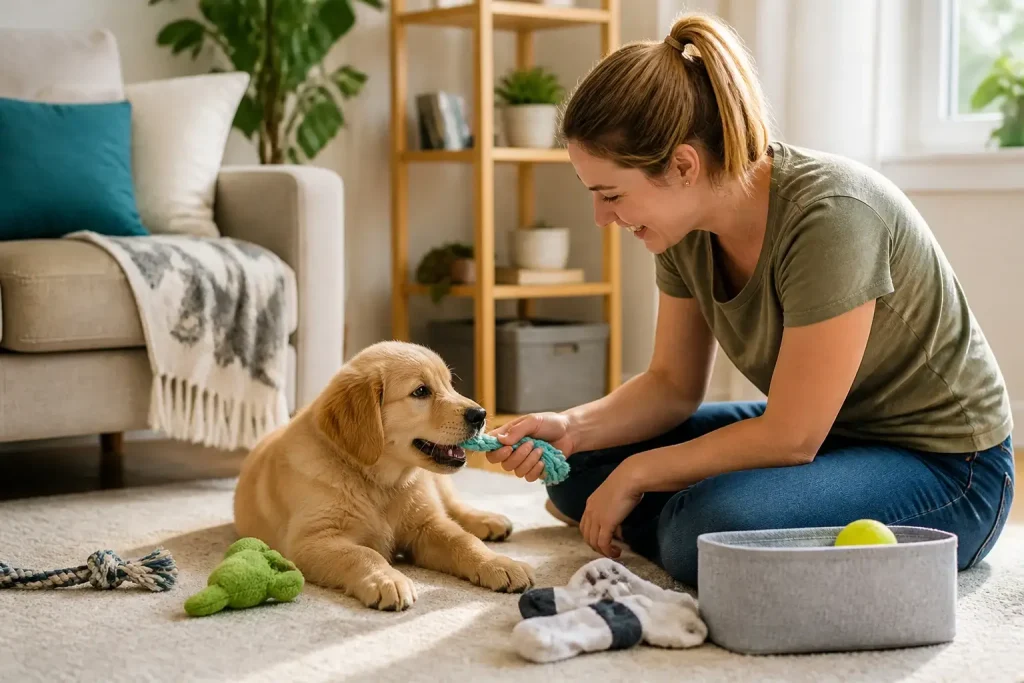
Puppy Behavior Management for a Happier Home
Puppy behavior management is the practical process of teaching a young dog how to live safely, calmly, and cooperatively with people. It is not about suppressing normal puppy energy or demanding perfect obedience immediately. Effective management combines prevention, clear communication, rewarding choices, appropriate routines, and patient supervision. The goal is a puppy who can handle everyday experiences while your household develops habits that support trust.
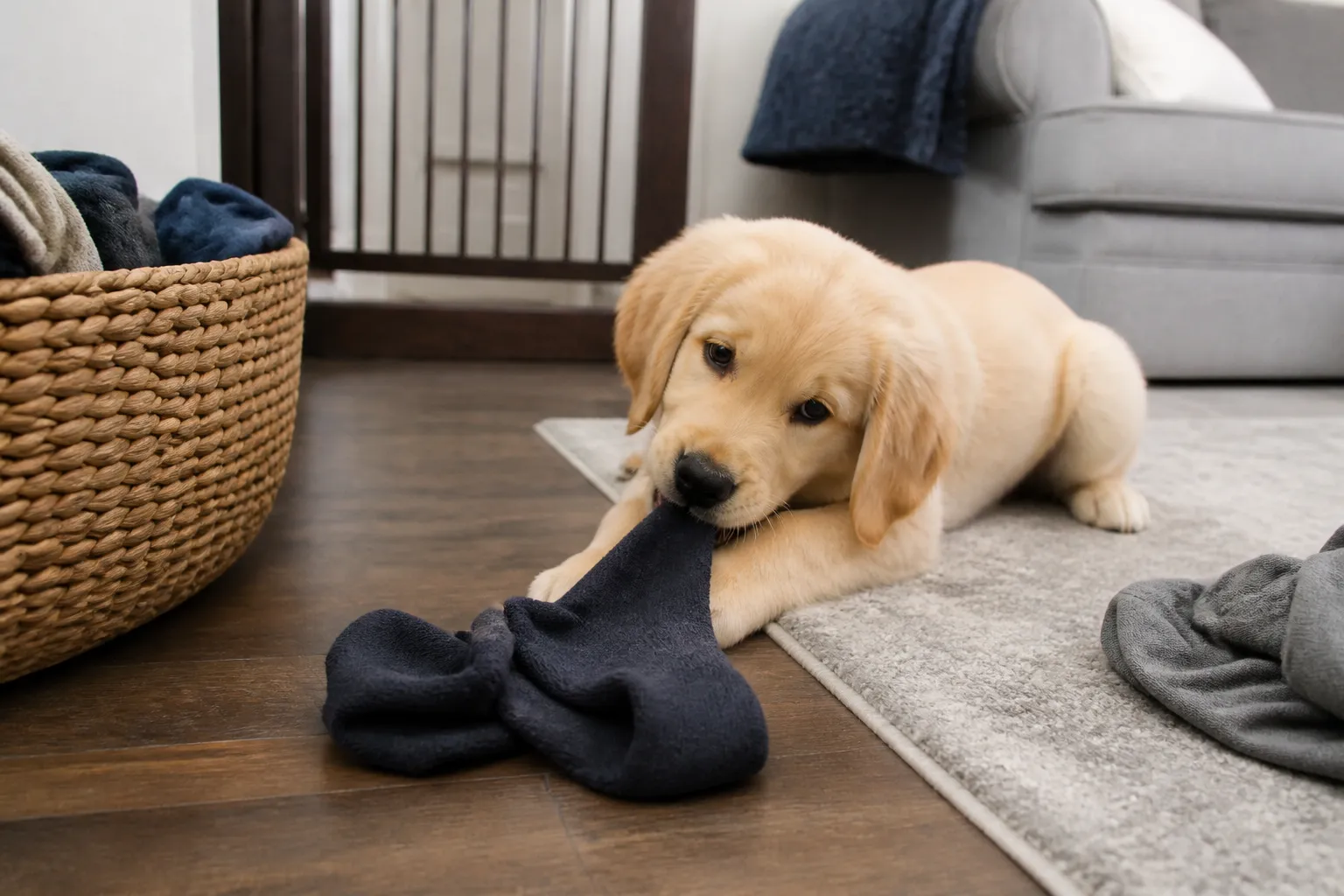
The most useful starting point is simple: prevent unwanted behavior whenever possible, then teach an acceptable alternative. If a puppy repeatedly steals socks, access to laundry must be restricted while “drop” and “leave it” are taught. If biting becomes exciting, rough interaction should stop, and a chew toy should become available. This approach protects your home, reduces conflict, and gives the puppy a clear path toward success.
Puppies learn through consequences and repetition. Behaviors followed by something valuable, such as food, play, freedom, or attention, are more likely to occur again. Behaviors that never produce a worthwhile result tend to weaken, although change may take time. Because puppies have limited impulse control, management is not a shortcut or a sign of failure. It is responsible teaching.
Create an Environment That Supports Good Choices
Before training begins, arrange the home so the puppy can succeed. Use baby gates, a pen, a crate if introduced positively, and closed doors to limit access to hazards. Remove electrical cables, medications, toxic foods, small objects, and fragile decorations. Keep shoes, clothing, and children’s toys out of reach. Prevention is especially important during unsupervised periods, because a puppy may practice chewing, digging, or climbing within minutes.
Provide a legal outlet for normal behavior. Offer several safe chew items with different textures, food puzzles that match the puppy’s ability, comfortable resting areas, and toys for gentle tug or retrieval. Rotate toys rather than leaving every item available all day. Novelty can maintain interest, while familiar favorites can provide reassurance.
Supervision should be active, not merely physical presence. Watch body language, notice rising excitement, and intervene before behavior becomes difficult. A lightweight house line may help an adult guide a puppy away from trouble, but it should be used only under supervision and never as a restraint that could snag.
Build a Predictable Daily Rhythm
A dependable routine helps puppies anticipate sleep, meals, toilet opportunities, play, training, and quiet time. The exact schedule should fit the puppy’s age, health, and household, but alternating activity with rest is essential. Many apparent behavior problems come from fatigue, hunger, discomfort, or excessive stimulation rather than disobedience.
Plan short training sessions throughout the day. A few successful repetitions are usually more productive than a long session that ends in frustration. After energetic play, offer a calm activity or a nap. Teach household members to follow the same basic rules: whether the puppy may climb on furniture, where chewing is allowed, and how greetings happen. Consistency reduces confusion without requiring harshness.
Teach Communication Through Reinforcement
Reward-based training makes desired behavior clear. Mark the moment the puppy does something useful with a word such as “yes,” then deliver a small treat, toy, praise, or permission to continue an enjoyable activity. The reward should arrive promptly, so the puppy can connect it with the action.
Begin with behaviors that matter in daily life. Reward looking toward you, responding to a name, sitting briefly, moving away from an object, settling on a mat, and walking beside you for a few steps. These foundation skills become tools for managing excitement later.
Use rewards strategically. Food is often convenient, but attention, play, sniffing, access to a person, or release from a position may also reinforce behavior. Once a behavior is reliable, gradually vary rewards while continuing to reinforce it often enough to keep it strong. Do not reduce rewards before the puppy understands the behavior.
Avoid punishing a puppy for mistakes made after the fact. A puppy cannot connect a delayed correction with a puddle, chewed object, or earlier bark. Punishment can increase fear, encourage avoidance, and damage communication. Instead, clean up calmly, identify the management gap, and change the setup.
Manage Common Puppy Challenges
Mouthing and Biting
Mouthing is common because puppies explore with their mouths and may become more mouthy when tired or excited. Keep suitable chew toys nearby. When teeth touch skin, freeze your hands, calmly end the interaction, and redirect to a toy. If the puppy continues, provide a brief, quiet break behind a gate or in a safe area, provided that space has been taught as comfortable rather than used as frightening punishment.
Do not encourage wrestling with hands, chase the puppy for stolen items, or shout when biting occurs. Those responses can increase excitement. Reward gentle contact, four paws on the floor, and calm engagement. If biting is unusually intense, associated with fear, or causing injury, consult a veterinarian or qualified behavior professional.
Jumping Up
Jumping is often rewarded accidentally when people talk, touch, or push the puppy away. Teach that greetings happen when paws remain on the floor. Ask visitors to wait quietly, turn away if the puppy jumps, and reward calm behavior. A leash or gate can make practice easier. Children should not be responsible for managing a highly excited puppy without close adult supervision.
Barking
First identify what barking accomplishes. A puppy may bark from alarm, frustration, loneliness, play, or a desire for attention. Reduce triggers where practical, increase appropriate activity, and reward brief quiet moments before barking escalates. Avoid yelling, because the puppy may interpret it as participation. Repeated distress vocalization when alone warrants careful assessment; gradual alone-time training and professional guidance may be necessary.
Chewing and Stealing
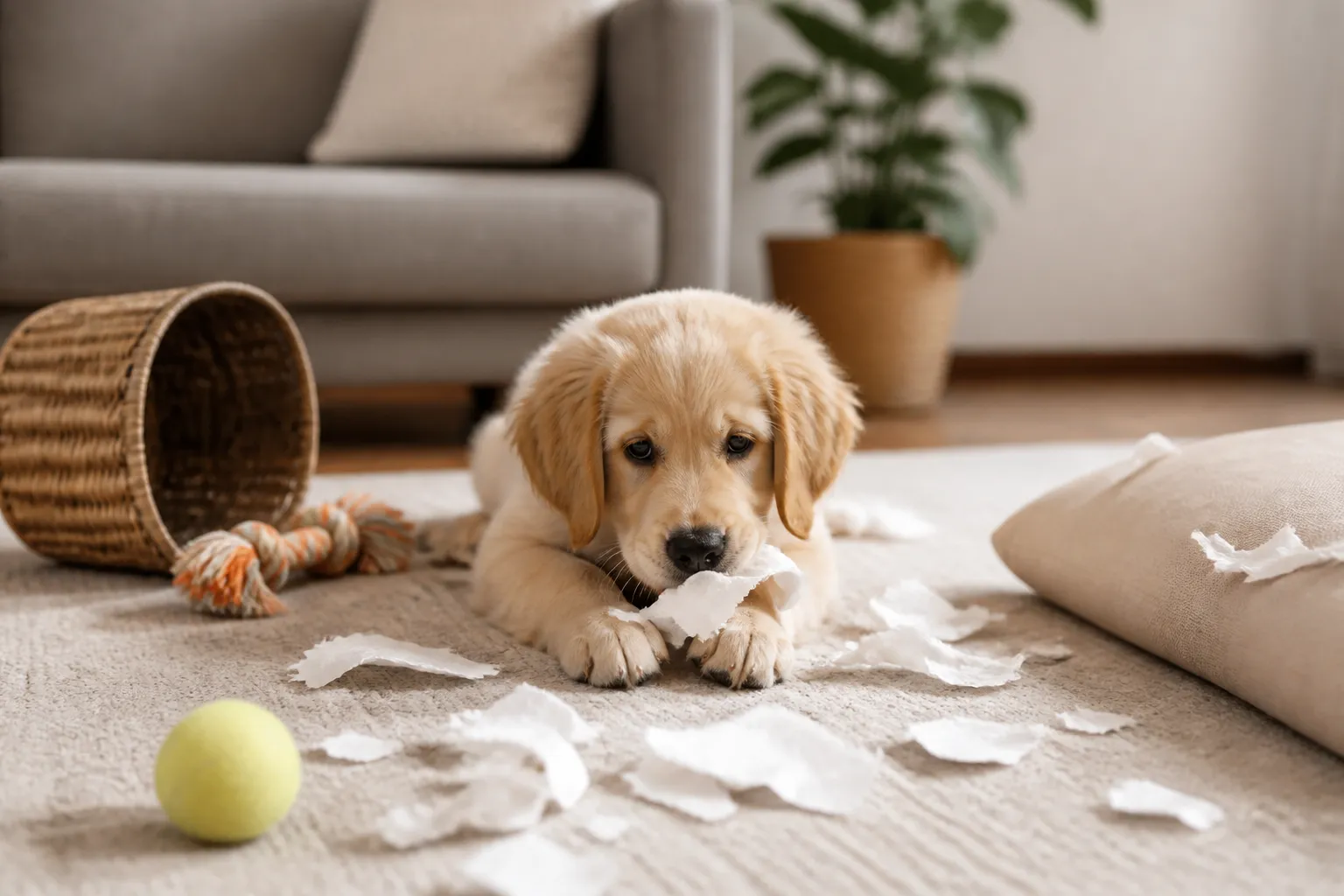
Chewing is normal, but access to household objects should be controlled. Trade a forbidden item for a desirable toy or treat rather than chasing or forcibly pulling. Once the puppy releases the object, reward the exchange. Teach “drop” during calm games with low-value toys, then gradually practice with more interesting items.
Never offer dangerous objects as substitutes merely because they are inexpensive. A puppy may not reliably distinguish an old shoe from a valuable shoe. Clear categories make learning easier.
Toilet Training
Take the puppy to an appropriate toilet area after waking, eating, drinking, playing, and active exploration. Reward immediately after elimination occurs in the correct place. Supervise indoors, watch for sniffing or circling, and respond promptly. If an accident begins, interrupt gently and carry or guide the puppy outside when practical. Clean indoor areas with a product designed to remove odor, since lingering scent can encourage repeat use.
Progress is not perfectly linear. Illness, schedule changes, fear, or excessive freedom can cause setbacks. Frequent accidents, straining, diarrhea, or sudden regression should be discussed with a veterinarian.
Socialization and Emotional Resilience
Socialization means helping a puppy have safe, positive experiences with people, animals, surfaces, sounds, handling, transport, and everyday environments. It does not mean forcing interaction with everything. The puppy should be able to observe, retreat, and recover. Pair new experiences with suitable treats or play, keeping intensity low enough that the puppy remains able to eat and respond.
Expose gradually. For example, begin with a distant vacuum cleaner, reward calm observation, and stop before distress. Later, reduce distance or increase movement in small steps. For handling, touch one ear, paw, or collar area briefly, reward, and release. This preparation supports grooming and veterinary care.
Fear signals include hiding, freezing, tucked posture, frantic escape, repeated lip licking, or refusal of food. Do not punish these signals or force the puppy closer. Increase distance, provide safety, and seek qualified help if fear persists. A confident appearance is not the same as emotional comfort.
Puppy classes can provide structured learning when instructors use humane methods and maintain sensible health precautions. Ask about training methods, vaccination policies, group size, and how fearful puppies are supported. Social contact should be controlled, not chaotic.
Exercise, Enrichment, and Rest
Puppies need movement, but more exercise is not always the answer to difficult behavior. Excessive jumping, forced running, or repetitive high-impact activity can be inappropriate for a growing body. Ask a veterinarian about suitable activity for the puppy’s age, breed, health, and physical development.
Mental enrichment is equally valuable. Scatter a portion of the puppy’s meal for supervised sniffing, use simple food puzzles, practice name games, teach body awareness, or let the puppy investigate safe scents outdoors. Short sniff walks may be more regulating than constant fast movement.
Sleep deserves deliberate protection. Puppies often need substantial rest, though individual requirements vary. Schedule quiet periods in a comfortable, low-distraction area. If a puppy becomes frantic, nippy, or unable to settle, consider whether tiredness is the real issue. Reward calmness before the puppy is exhausted, and avoid turning every quiet moment into another training demand.
Solve Problems Systematically
When a behavior concerns you, record what happens before, during, and after it. Note location, time, people present, activity, body language, and consequences. This pattern can reveal that barking occurs only at windows, jumping appears during evening greetings, or chewing happens after long periods without rest.
Define a measurable goal. “Be better” is vague; “sit for two seconds while a visitor enters” is observable. Change one variable at a time when possible. Make the environment easier, reinforce the alternative, and practice in short sessions. If the puppy fails repeatedly, the step is probably too difficult, the reward is insufficient, or the puppy needs rest.
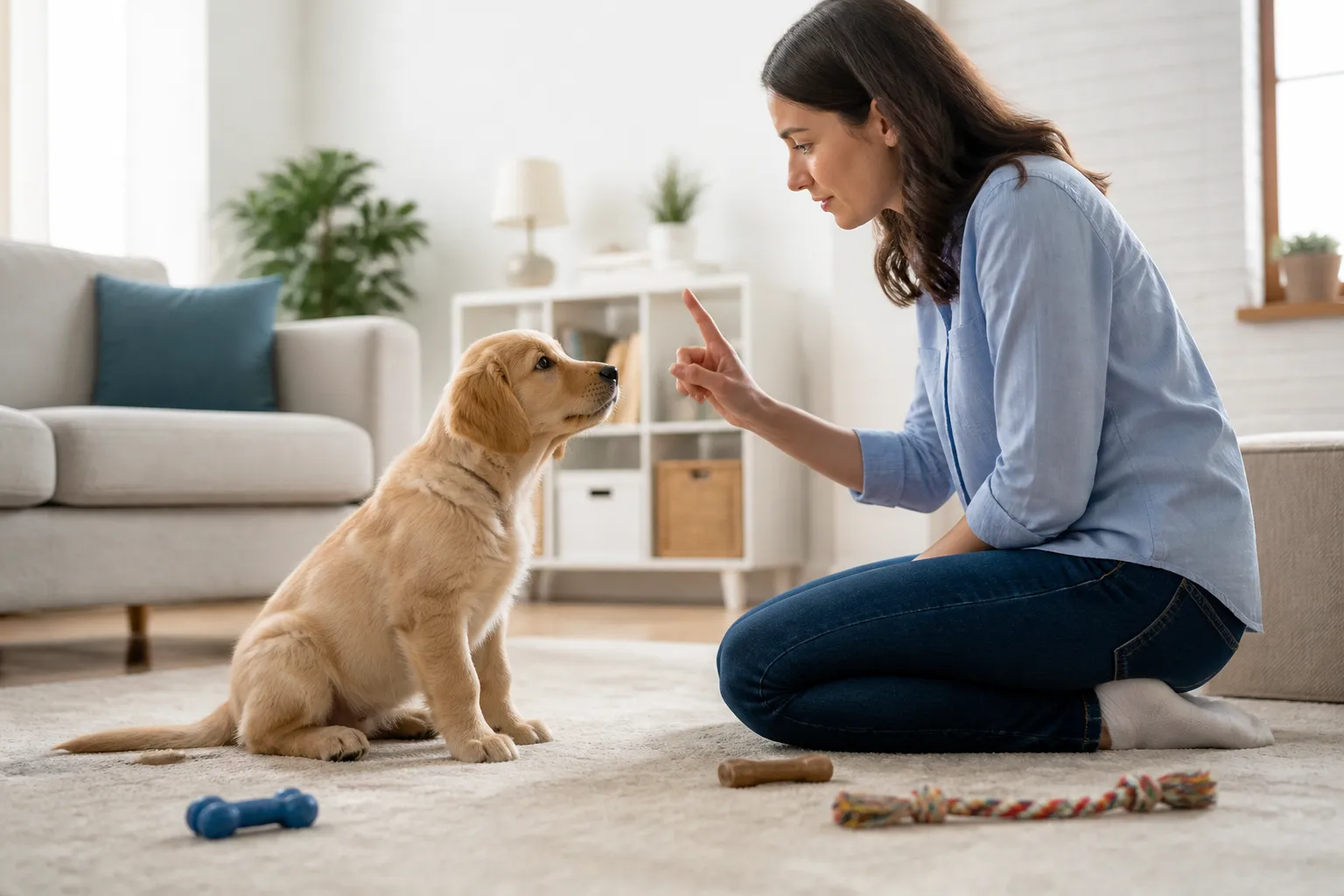
Progress should be judged over trends rather than isolated incidents. A puppy may perform beautifully at home and struggle outdoors because distractions change the task. Generalize gradually across rooms, people, surfaces, and distances. Reward generously when a skill is used in a new setting.
When Professional Help Is Appropriate
Seek veterinary advice for sudden behavior changes, pain indicators, appetite changes, elimination problems, extreme lethargy, or possible sensory difficulties. Health problems can affect learning and emotional regulation.
A qualified, reward-based behavior professional can help with persistent fear, aggression, severe separation distress, resource guarding, or behavior that creates safety concerns. Ask what methods and equipment they use. Be cautious of anyone promising instant results, recommending intimidation, or describing fear and pain as necessary teaching tools. A useful professional explains the plan, risks, alternatives, and ways to measure improvement.
Safety takes priority. Separate a puppy from children, visitors, or other animals when arousal is high. Do not place hands between fighting animals. Use barriers and obtain professional direction for serious incidents.
Practical Product Description
A thoughtfully assembled puppy behavior management kit can make training more consistent without replacing knowledge or supervision. Useful components may include a secure baby gate, washable pen, comfortable resting mat, appropriately sized crate, lightweight leash, flat collar or harness, treat pouch, small soft treats, durable chew toys, food puzzles, cleanup supplies, and a long-lasting enrichment option approved for the individual puppy.
Choose equipment for safety, fit, durability, and ease of cleaning. A harness should permit comfortable movement and be introduced gradually. Toys should be inspected regularly for damage and removed when pieces can be swallowed. Food puzzles should match the puppy’s skill level; frustration can turn enrichment into agitation. A crate should function as a voluntary resting space, never a place for prolonged confinement without suitable breaks.
The best products support a training plan. A gate prevents rehearsal of unwanted behavior, a treat pouch makes reinforcement timely, and a mat gives calm behavior a clear location. Buy fewer, useful items rather than collecting gadgets that do not address a specific need. Read manufacturer guidance, supervise new equipment, and adapt choices to veterinary recommendations.
Frequently Asked Questions
How do I stop my puppy from being stubborn?
“Stubborn” often describes confusion, distraction, fatigue, fear, or a reward that does not compete with the environment. Lower the difficulty, improve timing, use a more valuable reward, and practice when the puppy can concentrate. Repeating a cue louder rarely solves the underlying problem.
Should I punish accidents or chewing?
No. Punishment after the event cannot teach the desired alternative and may make the puppy hide behavior or fear people. Prevent access, interrupt gently when possible, reward the correct choice, and clean accidents thoroughly.
How long should training sessions last?
Use brief sessions that end while the puppy is still successful. The suitable length depends on age, skill, distractions, and temperament. Several short practices generally provide better learning than one exhausting session.
Is crate training necessary?
A crate is not essential for every household, but a positively introduced crate can support safe travel, rest, veterinary care, and short periods of management. It should be appropriately sized, comfortable, and never used as a threat or substitute for exercise, interaction, and toilet breaks.
Why does my puppy behave well inside but not outside?
Outdoor settings contain stronger distractions, unfamiliar surfaces, smells, people, and movement. Begin training at a quieter distance, reward frequently, and increase difficulty gradually. Expecting immediate performance in a complex environment is unfair and often produces frustration.
What should I do if my puppy growls?
Treat growling as useful communication, not a moral failure. Stop or reduce the interaction, create space, and consider what caused discomfort, fear, guarding, or overexcitement. Do not punish the warning. If growling is repeated, escalating, or linked to handling or resources, obtain professional guidance.
Conclusion
Puppy behavior management succeeds when the household makes desirable behavior easy, reinforces it clearly, and responds to mistakes with prevention rather than anger. Safe management, predictable routines, appropriate rest, gradual socialization, enrichment, and reward-based teaching work together. They also protect the relationship that makes future learning possible.
Start with one priority, such as toilet training, gentle greetings, or settling on a mat. Prepare the environment, define the behavior, reward small improvements, and keep records of patterns. Progress may include setbacks, especially during developmental changes, but consistent practice builds dependable habits.
Your puppy does not need perfection to become a pleasant companion. The puppy needs guidance that is understandable, humane, and repeated often enough to become familiar. By planning ahead and seeking help when safety or welfare is at stake, you can turn everyday challenges into teachable moments and create a calmer, happier home for everyone.