
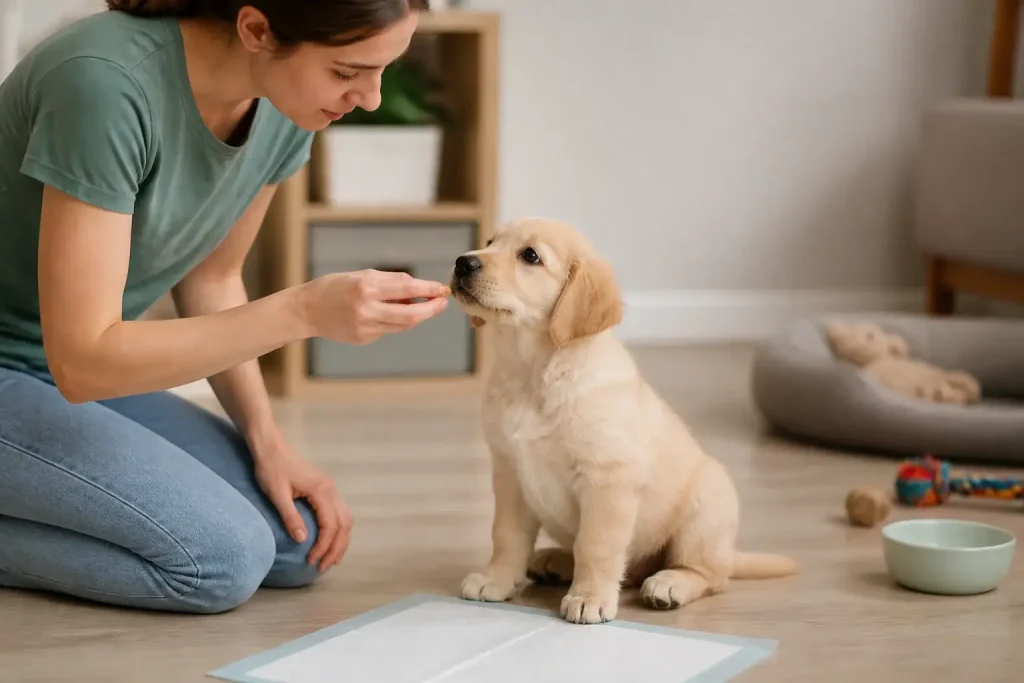
Puppy Training: A Practical Foundation
Puppy training is the process of teaching a young dog how to live safely, calmly, and cooperatively with people. It includes house training, socialization, handling, basic cues, bite inhibition, leash skills, alone time, and appropriate play. The most effective approach is not about forcing obedience. It is about making desired behavior clear, rewarding it promptly, and arranging the environment so mistakes are less likely.
Start with a simple goal: help your puppy understand what behavior works in each situation. Puppies have short attention spans, limited bladder control, and little experience controlling impulses. A successful session may last only two or three minutes. Frequent, positive practice usually produces better learning than one long lesson.
Use food, toys, praise, access to play, or permission to explore as rewards. Mark the moment you like with a brief word such as “yes” or with a clicker, then deliver the reward immediately. Timing matters because puppies connect consequences with the behavior that occurred just before them. Avoid physical punishment, intimidation, and shouting. These methods can create fear, confusion, or defensive behavior without teaching a useful alternative.
Prepare the Training Environment
Before training begins, make the home easier for a puppy to navigate. Remove electrical cords, toxic plants, small objects, unstable decorations, and anything that could be swallowed. Use gates, a pen, or a crate when direct supervision is impossible. Confinement should be a safe resting area, never a punishment.
Keep rewards in several convenient places, while ensuring the puppy cannot reach them unsupervised. Choose tiny, soft treats that can be eaten quickly. Some puppies prefer part of their regular meal, a toy, or enthusiastic praise. Watch total food intake and reduce meal portions if treats become frequent. Water should remain available according to veterinary guidance and the puppy’s needs.
Create a predictable daily rhythm. Meals, sleep, toilet opportunities, play, training, and quiet time should occur in a broadly consistent pattern. Predictability helps a puppy anticipate what comes next and reduces frantic behavior. It also helps you notice changes in appetite, elimination, energy, or mood that may deserve veterinary attention.
The First Training Priorities
Name Recognition and Attention
Teach the puppy that its name predicts something pleasant. Say the name once in a cheerful voice. When the puppy turns toward you, mark and reward. Practice indoors with little distraction, then gradually work in busier settings. Do not repeat the name many times when the puppy is ignoring you; move closer, reduce distractions, and make success easier.
An attention cue, such as “look,” can be taught by holding a treat near your face and rewarding eye contact. The purpose is not constant staring. It is to give the puppy a reliable way to reconnect with you when the environment becomes interesting.
Sit, Down, and Come
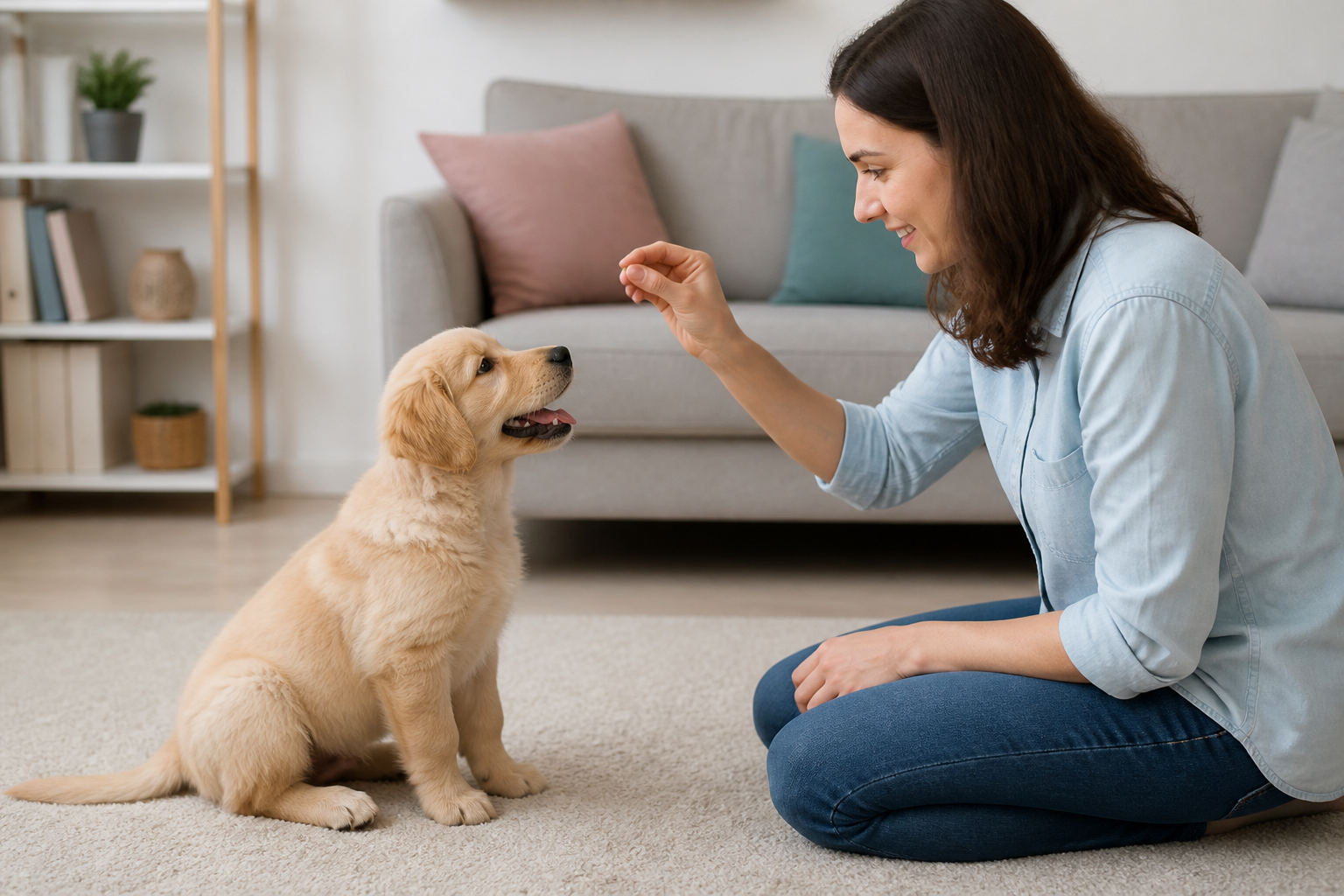
For “sit,” move a treat slowly from the puppy’s nose upward and slightly backward. As the head follows, the hips may lower. Mark the instant the puppy sits, then reward. Once the movement is familiar, add the word before the motion. Do not push the puppy into position.
“Down” can be shaped by moving a treat from the nose toward the floor and slightly forward. Reward an elbow touch or a complete lie down, depending on the puppy’s ability. Short sessions prevent frustration.
Recall, or coming when called, deserves special care. Begin only a few steps away in a quiet, secure area. Say the cue brightly, open your arms, and reward generously when the puppy reaches you. Never call the puppy to scold, end all fun, or perform an unpleasant procedure whenever possible. Use a long line outdoors until recall is dependable, and obey local leash requirements.
Leave It and Drop It
“Leave it” teaches the puppy not to take an available object. Place a boring treat in a closed hand. When the puppy stops investigating, mark and reward with a different treat from the other hand. Gradually increase difficulty. “Drop it” teaches release after an object is already in the mouth. Offer a better reward, mark the release, and return the toy when safe. Returning the toy prevents the cue from always predicting loss.
House Training Without Confusion
Take the puppy to the designated toilet area after waking, eating, drinking, playing, and exciting activity. Very young puppies may need frequent opportunities, and individual capacity varies. Watch for sniffing, circling, sudden wandering, or leaving play. Escort the puppy outside promptly and reward immediately after elimination, while still in the correct area.
If an accident happens, stay neutral. Interrupt gently only if you catch it beginning, then take the puppy outside. Clean the surface with an appropriate enzymatic cleaner so lingering odor does not invite repetition. Do not punish after the fact; a puppy cannot connect delayed anger with an earlier accident.
Keep a simple record of meals, toilet trips, accidents, and sleep. Patterns make scheduling easier. If a puppy suddenly regresses, strains, urinates unusually often, has diarrhea, or cannot remain clean in a manner inconsistent with its development, contact a veterinarian. Training cannot solve every elimination problem.
Biting, Chewing, and Mouthing
Puppies explore with their mouths, and teething can increase chewing. Provide several safe, size-appropriate chew items with varied textures. Rotate them to preserve interest. Supervise toys, remove damaged pieces, and ask a veterinarian about items that may fracture teeth or create choking risks.
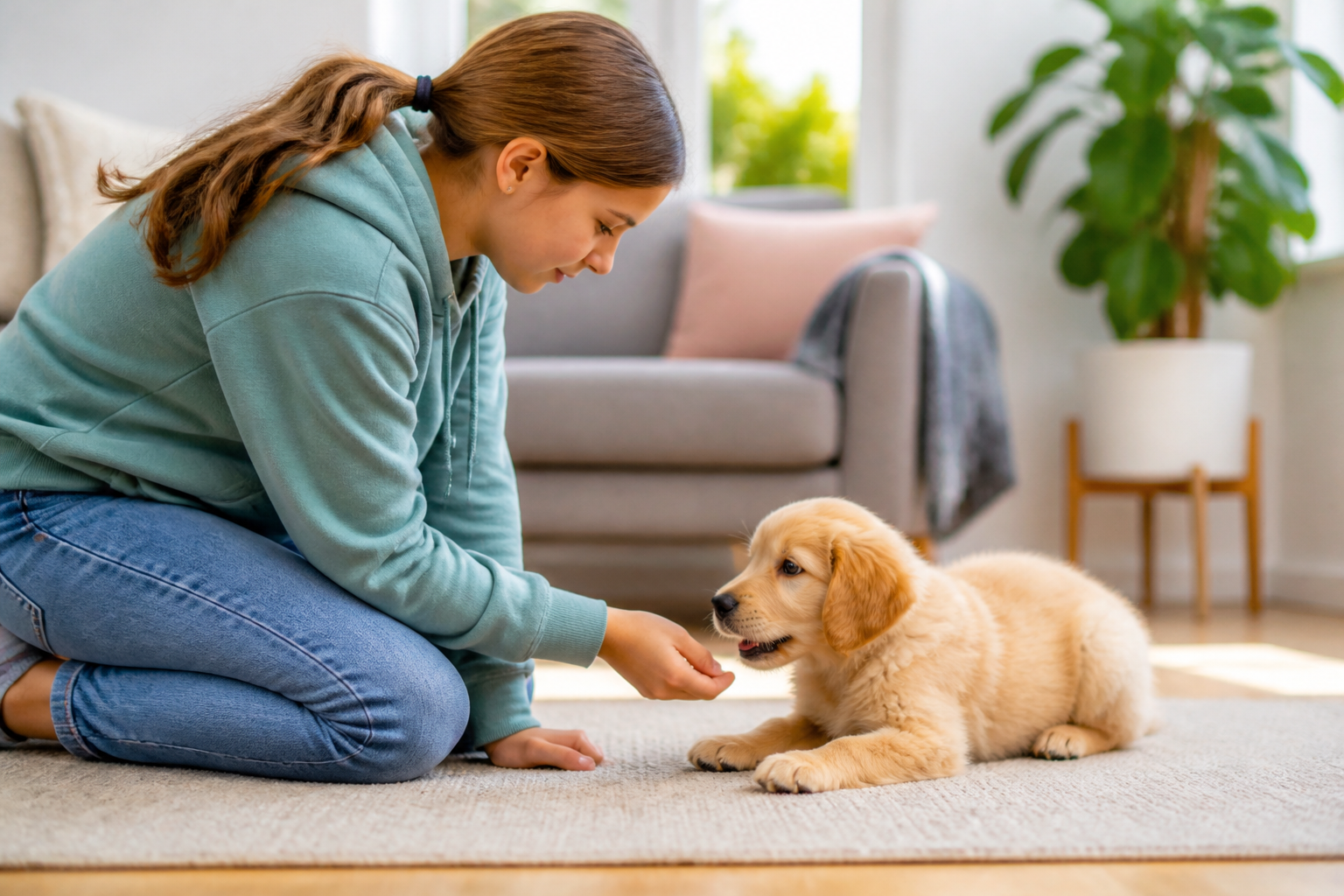
If teeth touch skin during play, calmly pause interaction and offer a toy. When the puppy engages with the toy, resume appropriate play. Avoid waving hands, wrestling roughly, or encouraging biting clothing if you want gentle interaction later. A brief, quiet break may help if the puppy is overstimulated, but prolonged isolation is not a substitute for teaching.
Many biting episodes reflect tiredness, excitement, hunger, or excessive stimulation. Puppies need substantial sleep, and a puppy that becomes frantic may need a quiet nap rather than more exercise. Schedule calm periods before behavior escalates.
Socialization and Confidence
Socialization means carefully introducing the puppy to people, animals, surfaces, sounds, handling, travel, grooming, and ordinary household events while keeping the experience manageable. It does not mean forcing greetings or exposing a puppy to overwhelming crowds. Pair new experiences with food, play, distance, and the option to retreat.
Invite calm people to approach gradually. Let the puppy choose whether to move closer. Ask visitors not to loom over, grab, chase, or pass the puppy around. For children, provide close adult supervision and teach them to leave a resting, eating, or chewing puppy alone.
Safe contact with healthy, appropriately vaccinated dogs can support social learning, but requirements vary with disease risk and veterinary advice. Ask your veterinarian about local risks, vaccination timing, and suitable puppy classes. A well-run class uses hygiene precautions, small groups, suitable methods, and controlled interactions.
Introduce handling in tiny steps. Touch an ear, feed a treat, and stop. Later, examine paws, lift lips briefly, brush, attach a collar, or simulate nail care. If the puppy pulls away, reduce intensity. Cooperative handling is built through choice and repetition, not restraint alone.
Preventing Fear
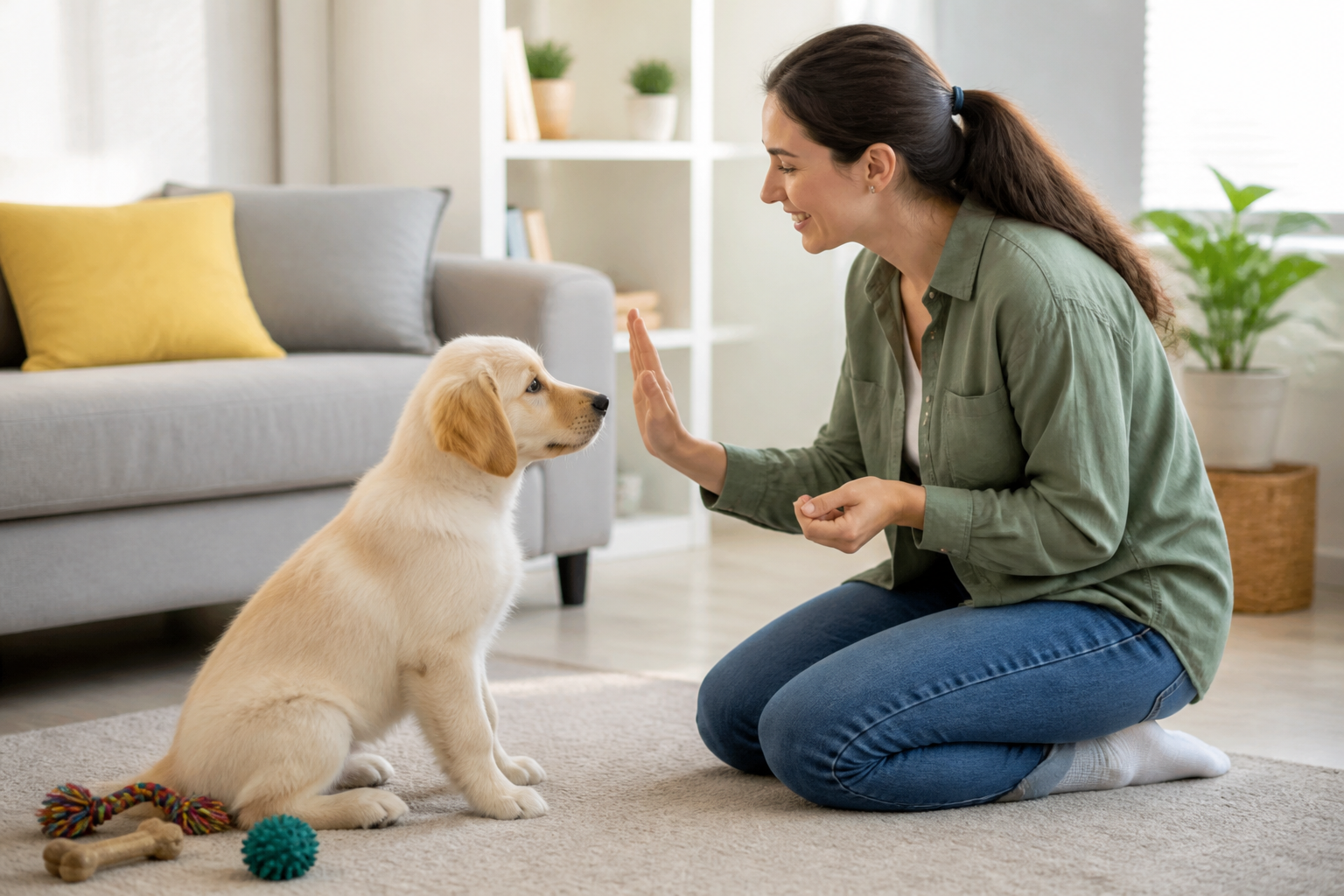
Observe body language: tucked posture, lip licking, yawning, freezing, hiding, pinned ears, or attempts to escape can signal discomfort. Increase distance, lower the challenge, and offer a way out. Do not force a fearful puppy to “face” a trigger. If fear is intense, spreading, or accompanied by aggression, seek help from a qualified reward-based trainer and consult a veterinarian.
Leash Walking and Calm Behavior
Begin indoors by rewarding the puppy for noticing a harness or collar, then for allowing it to be worn. Check fit regularly as the puppy grows. Attach a lightweight leash and reward following without pulling. Outdoors, start in a quiet area. When the leash remains loose, continue walking or provide a reward. When tension appears, stop or change direction calmly rather than jerking the leash.
Loose-leash walking is not the same as a formal heel. The practical goal is safe movement with a comfortable leash and regular opportunities to sniff. Sniffing can be enriching, so include exploratory walks when conditions permit.
Teach calmness by rewarding quiet behavior before the puppy demands attention. Place a mat near family activity and occasionally drop a treat when the puppy lies there. Begin with short durations, then gradually add distractions. Do not expect a young dog to remain settled for long periods without practice, exercise, sleep, and appropriate stimulation.
Crate Training and Alone Time
Make the crate attractive with meals, chews, and soft bedding if the puppy will not destroy it. Leave the door open initially. Reward entry, then close the door briefly while you remain nearby. Increase duration in small increments, opening the door during calm moments. The crate should never replace supervision, interaction, or regular toilet breaks.
Practice very short separations before leaving for longer periods. Step away, return, and reward calm behavior. Gradually vary distance and duration. Some puppies vocalize because they need a toilet break, while others are distressed by separation. Persistent panic, escape attempts, drooling, or inability to settle warrants professional guidance. Do not simply increase isolation and hope distress disappears.
Solving Common Training Problems
Jumping usually continues because it produces attention. Turn away or remove attention when the puppy jumps, then reward four paws on the floor or a sit. Everyone in the household must respond consistently. If visitors cannot follow the plan, use a gate or leash and greet only after the puppy is calmer.

For counter surfing, remove food from reachable surfaces, block access, and reward the puppy for staying on the floor or mat. Management is not cheating; it prevents rehearsal of an unwanted habit while training develops.
Pulling, barking, and stealing objects also improve when the puppy receives a clear alternative. Reward looking at you, moving beside you, settling, or trading. If barking is driven by fear, pain, territorial concern, or frustration, identify the trigger rather than merely suppressing the sound.
A Simple Weekly Training Plan
On each day, practice name recognition, attention, one basic cue, handling, and a calm settle. Add house-training trips and short enrichment activities such as food puzzles, scent searches, or supervised chewing. During the week, expose the puppy to a few manageable new sights or sounds, always adjusting difficulty to body language.
Keep notes on what succeeded, what caused stress, and which rewards were effective. Increase only one challenge at a time: distance, duration, distraction, or complexity. If performance collapses, the exercise has become too difficult. Return to an easier version and rebuild.
Training progress is rarely perfectly linear. Growth, teething, illness, changes in sleep, visitors, weather, and unfamiliar environments can affect behavior. Measure improvement over weeks rather than judging one difficult afternoon.
Choosing Professional Help
A qualified trainer should explain methods clearly, welcome questions, use humane reward-based procedures, and avoid promises of instant results. Be cautious of advice centered on fear, pain, dominance claims, or suppressing warning signals. For aggression, severe fear, separation distress, compulsive behavior, or sudden behavioral change, involve a veterinarian and consider referral to a veterinary behavior professional or another appropriately qualified specialist.
Training equipment should fit the puppy and support learning. A well-fitted harness, flat collar with identification, standard leash, secure barriers, chew items, and washable bedding are practical foundations. Equipment cannot replace supervision or communication, and no tool should cause pain, breathing difficulty, or panic.
Frequently Asked Questions
How long should a puppy training session last?
Begin with sessions lasting a few minutes and end while the puppy is still engaged. Several brief sessions are generally more useful than a demanding lesson. Adjust for age, temperament, sleep, health, and the complexity of the environment.
When should house training begin?
Begin as soon as the puppy arrives. Establish a toilet location, offer frequent opportunities, supervise closely, and reward immediately after success. Full reliability depends on development, schedule, environment, and individual variation.
Is punishment ever useful?
Punishment may stop behavior temporarily but often fails to teach what the puppy should do instead. It can also create fear or damage trust. Reward the desired alternative, manage the environment, and obtain professional advice when the behavior is serious.
Can treats cause problems?
Treats are useful, but excessive calories, digestive upset, or dependence on visible food can occur. Use small portions, include ordinary food when suitable, and gradually vary rewards. Praise, play, access to sniffing, and freedom can also reinforce behavior.
Should a puppy meet everyone?
No. Quality matters more than the number of greetings. Introduce people, animals, places, sounds, and handling gradually. Let the puppy retreat, and avoid forcing interaction. The goal is confidence and flexible coping, not indiscriminate friendliness.
What if my puppy does not listen outside?
Outdoor environments contain stronger distractions. Reduce distance, choose a quieter location, use valuable rewards, and practice one skill at a time. Increase challenge gradually. Lack of response does not necessarily indicate stubbornness; it often means the behavior is not yet learned at that difficulty.
How can I stop puppy biting quickly?
Provide appropriate toys, pause rough play, reward gentle interaction, and protect sleep time. Avoid physical corrections. If biting is unusually intense, accompanied by stiff body language, guarding, or repeated injury, seek veterinary and behavioral advice.
Is a crate required?
No. A crate can support safe rest and management, but a pen, puppy-proof room, or gated area may suit a particular dog better. Any confinement space must be comfortable, appropriately sized, and used with regular breaks and positive associations.
Conclusion
Effective puppy training combines prevention, clear communication, rewards, repetition, and patience. Begin with safety, toilet habits, attention, gentle handling, appropriate chewing, and confidence-building experiences. Teach practical alternatives instead of relying on punishment, and adjust every exercise to the puppy’s developmental abilities.
The best measure of progress is not perfect obedience. It is a puppy that can recover from excitement, trust its caregivers, respond in ordinary situations, and learn from new experiences. Consistent household rules, adequate sleep, veterinary care, thoughtful socialization, and timely professional support create the strongest foundation for a happy, well-behaved dog.