
Dog Health & Nutrition: Dog Health & Nutrition: Dog Health and Nutrition: A Practical Guide
A healthy dog depends on more than a full bowl and regular walks. Nutrition, preventive care, exercise, dental hygiene, mental stimulation, and attentive observation work together to support energy, comfortable movement, healthy digestion, and a longer, more enjoyable life. The right plan must also reflect a dog’s age, size, breed tendencies, activity level, body condition, and medical history.
There is no single best diet for every dog. A growing puppy, a sedentary adult, a pregnant female, and an older dog have different nutritional needs. Even dogs of the same breed may require different portions because metabolism and daily activity vary. The most useful approach is consistent, measured care combined with veterinary guidance when questions or symptoms arise.
Understanding a Complete Diet
A complete and balanced food is formulated to provide appropriate amounts of protein, fat, carbohydrates, vitamins, minerals, and water for a stated life stage. When comparing foods, read the nutritional adequacy statement on the package rather than relying only on attractive ingredient claims. Marketing terms such as premium, natural, or holistic do not by themselves prove that a food suits your dog.
Protein supplies amino acids needed for muscle, skin, coat, immune function, enzymes, and tissue repair. Dogs can use animal and plant proteins, provided the overall diet supplies essential amino acids in suitable amounts. Fat provides concentrated energy and supports cell function. It also helps the body absorb certain vitamins and contributes to taste. Carbohydrates are not automatically harmful; properly prepared sources can provide energy and fiber.
Fiber can support stool quality and normal intestinal movement, but excessive or poorly tolerated fiber may reduce digestibility or cause gas. Vitamins and minerals are necessary in small quantities, yet imbalance can be harmful. For this reason, adding supplements to a complete food without professional advice is not always beneficial.
Water is an essential nutrient. Keep fresh, clean water available at all times, and wash bowls regularly. Increased thirst can occur after exercise or in warm weather, but persistent changes in drinking or urination deserve veterinary attention.
Choosing Food for Life Stage and Circumstances
Puppies need food designed for growth, with energy and mineral levels appropriate to development. Large-breed puppies require particular care because excessive calories or an unsuitable mineral balance may place stress on developing bones and joints. Follow feeding guidance from the manufacturer and your veterinarian, and reassess portions as the puppy grows.
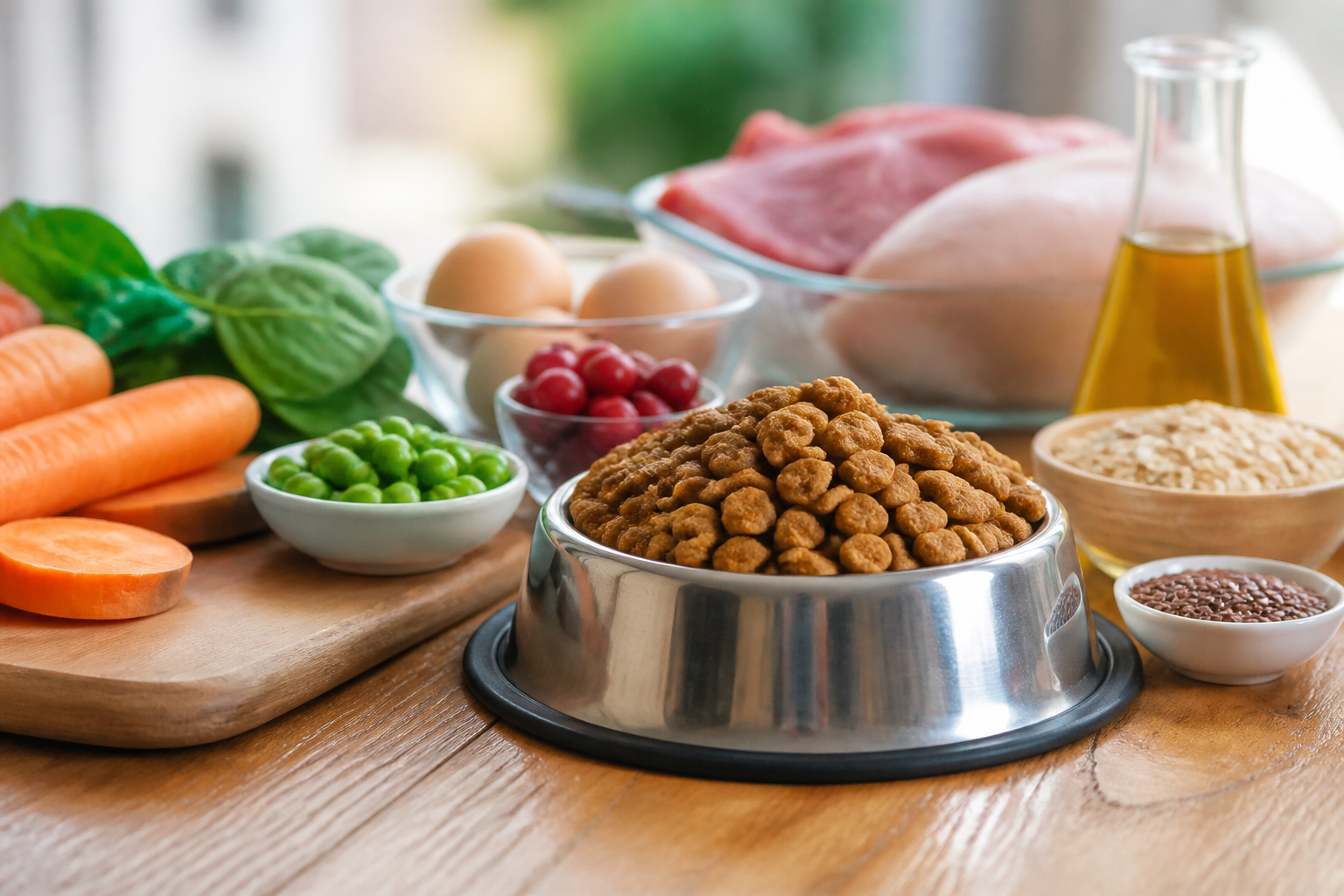
Adult dogs generally need maintenance food, but working, sporting, pregnant, nursing, or highly active dogs may require a different energy density. Neutering, reduced activity, or aging can lower calorie needs. Senior formulas may offer altered calories, protein, fiber, or other features, although age alone does not determine the ideal diet. A healthy older dog should not be placed on a restrictive diet without a reason.
Dogs with allergies, kidney disease, diabetes, digestive disorders, or other conditions may need therapeutic nutrition. These diets should be selected with veterinary oversight. Homemade diets can be appropriate in some situations, but they must be carefully formulated, commonly with help from a veterinary nutrition professional. Meat, rice, and vegetables alone may lack essential nutrients or contain unsafe proportions.
When changing food, transition gradually over several days by mixing increasing amounts of the new diet with the old one. A slower change may be preferable for dogs with sensitive digestion. Vomiting, persistent diarrhea, refusal to eat, or marked lethargy should not be dismissed as ordinary adjustment.
Reading Portions and Calories
Package feeding charts are starting points, not guarantees. Measure food with a consistent cup or, more accurately, a kitchen scale. Divide the daily amount into one or two meals according to your dog’s routine, age, and individual tolerance. Puppies may need more frequent meals, while some adult dogs do well with a regular twice-daily schedule.
Treats, chews, table scraps, dental products, and food used for training all contribute calories. Keep extras modest and reduce meal portions when necessary. Rather than feeding to appetite, use body condition and weight trends as practical guides. A veterinarian can help identify an ideal condition, especially when thick coats make visual assessment difficult.
Maintaining a Healthy Body Condition
Healthy weight protects mobility, breathing, metabolic function, and quality of life. Ribs should be easy to feel beneath a thin layer of tissue, while the abdomen should usually rise gently behind the rib cage when viewed from the side. A visible waist from above is generally expected, although normal shape varies among breeds.
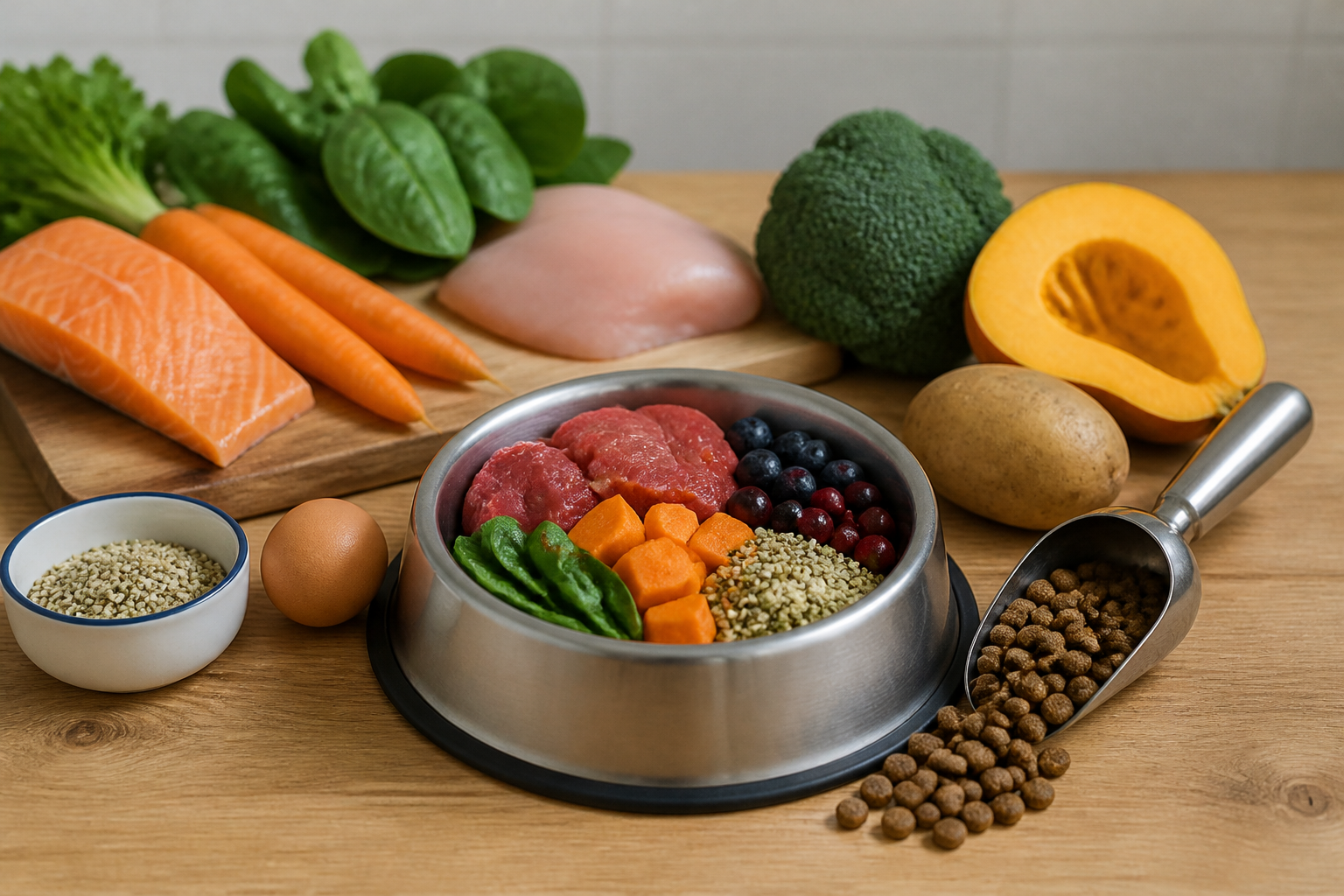
If a dog is overweight, make changes gradually. First measure current intake, including treats and chews. Then discuss a sensible calorie reduction and exercise plan with a veterinarian. Rapid restriction can cause hunger, nutrient problems, frustration, or poor adherence. Use low-calorie rewards, affection, play, or brief training sessions as alternatives to frequent food rewards.
Underweight dogs also need evaluation. Poor weight may reflect insufficient calories, dental pain, parasites, digestive disease, chronic illness, anxiety, or competition with other pets. Simply offering richer food can delay diagnosis or worsen symptoms. Sudden weight gain or loss is more significant than a small normal fluctuation and should be reported.
Exercise and Mental Enrichment
Daily activity should match physical ability, weather, age, and health. Walks provide movement and opportunities to investigate scents, but exercise can also include controlled play, swimming where safe, retrieving, gentle hill work, or structured training. Start gradually after inactivity, especially for older or overweight dogs. Watch for limping, excessive fatigue, coughing, weakness, or reluctance to continue.
Avoid intense activity in dangerous heat and provide shade, water, and rest. Dogs can overheat quickly, particularly those with short muzzles, heavy coats, excess weight, or breathing problems. Heavy panting, drooling, vomiting, confusion, weakness, collapse, or abnormal gum color can indicate an emergency. Move the dog to a cooler area and seek urgent veterinary help rather than relying on home treatment.
Mental enrichment matters because boredom can contribute to destructive behavior, excessive barking, or frustration. Food puzzles, scent games, reward-based training, safe chew items, and rotating toys encourage problem solving. Enrichment should be supervised and appropriate to the dog’s size and chewing style. Discard damaged toys or small pieces that could be swallowed.
Preventive Health Care
Routine veterinary examinations help detect dental disease, parasites, pain, weight changes, heart problems, and other concerns before they become obvious. The appropriate schedule depends on age and health. Puppies require a planned vaccination and parasite-control program, while adult dogs need individualized preventive care. Keep records of vaccines, medications, allergies, illnesses, and weight.

Parasite prevention may address fleas, ticks, intestinal worms, or heartworm, depending on local risk and veterinary advice. Never substitute a product intended for another species, and do not combine treatments casually. Some substances can be dangerous to dogs, and safety may vary by age, size, breed, or medical condition.
Dental care deserves regular attention. Brushing with toothpaste made for dogs can reduce plaque when introduced patiently. Human toothpaste may contain ingredients unsuitable for dogs and should not be used. Dental diets, chews, and professional cleaning may provide additional support, but they do not eliminate the need for examination. Bad breath, red gums, bleeding, loose teeth, facial swelling, dropping food, or reluctance to chew can signal painful disease.
Grooming also supports health. Brush the coat as appropriate, inspect skin and paws, keep nails at a comfortable length, and check ears without inserting objects deeply. Frequent scratching, head shaking, odor, discharge, hair loss, or sores should be assessed rather than masked with unprescribed products.
Safe Feeding and Household Hazards
Some ordinary human foods are dangerous for dogs. Chocolate, grapes and raisins, onions, garlic, alcohol, xylitol or other toxic sweeteners, macadamia nuts, and excessive fatty foods can cause serious problems. Bones may splinter, cause obstruction, or damage teeth. Keep hazardous foods secured, and teach household members not to share leftovers without checking first.
Store dry food in a cool, dry place in a sealed container, while preserving package information and expiration details. Wash bowls and food-storage equipment regularly. If several pets share a home, feed separately when guarding, stealing, or competition causes stress. Slow-feeding equipment may help some dogs that gulp, although it should be introduced gradually and kept clean.
Do not make abrupt nutritional changes because of a dramatic online claim, a celebrity recommendation, or a single ingredient fear. Evidence and individual tolerance matter more than trends. Raw diets and homemade recipes require careful consideration of contamination, nutrient balance, food safety, and household vulnerability. Children, older adults, pregnant people, and immunocompromised individuals may face greater risks from pathogens. Discuss alternatives with a qualified veterinarian.
Recognizing Changes Early
You know your dog’s normal habits better than anyone. Monitor appetite, water intake, urine, stool, energy, sleep, breathing, movement, skin, coat, and behavior. A simple monthly record of weight, food quantity, medications, and notable symptoms can reveal gradual changes that are otherwise easy to miss.
Contact a veterinarian promptly for persistent vomiting or diarrhea, blood in stool or urine, difficulty breathing, repeated collapse, seizures, severe pain, inability to urinate, a swollen abdomen, sudden weakness, or suspected poisoning. Emergency signs can develop quickly, so call a veterinary clinic or emergency service for direction. Do not induce vomiting or give human medication unless a veterinary professional specifically instructs you.
Reduced appetite is not always an emergency, but context matters. A dog that skips food while otherwise bright may be different from one that refuses food and appears painful, weak, or nauseated. Puppies, diabetic dogs, and animals with chronic disease may need faster attention.
Building a Sustainable Routine
A practical routine begins with a measured, complete diet and fresh water. Add consistent activity, training, sleep, grooming, dental care, and preventive appointments. Keep food, medication, and toxin safety information accessible to every caregiver. If multiple people feed the dog, use a written schedule or measured containers to prevent accidental double feeding.
Review the plan after life changes such as adoption, sterilization, illness, reduced mobility, relocation, or a change in household routine. Recalculate portions when weight or activity changes. Introduce new treats one at a time so that digestive reactions are easier to identify. Choose rewards small enough for training, and remember that attention and play can be equally valuable.
A good plan is flexible without being careless. It should allow occasional safe treats, accommodate preferences, and remain realistic for the family’s schedule and budget. Consistency is more useful than perfection. If a recommendation is difficult to maintain, discuss alternatives with a veterinarian rather than abandoning preventive care entirely.
Frequently Asked Questions
How often should a dog eat?
Many adult dogs do well with two measured meals each day, but individual needs differ. Puppies often require more frequent meals during growth. Some dogs need feeding adjustments because of medication, reflux, diabetes, pregnancy, or exercise demands. Ask your veterinarian if your dog has a medical condition or unusual appetite.
Are grain-free foods automatically healthier?
No. The absence of grains does not automatically make food more nutritious, safer, or better tolerated. Dogs can digest properly prepared grains, and dietary decisions should consider complete nutrient balance, the individual dog, and any confirmed medical need. Avoid changing food solely because of a trend.
Should dogs receive supplements?
Not routinely when they eat an appropriate complete diet. Supplements may be useful for a documented deficiency or specific condition, but products vary in quality and can interact with medications or provide excessive nutrients. Discuss every supplement, including joint, skin, herbal, and vitamin products, with a veterinarian.
Can dogs eat human food?
Some plain foods may be suitable as occasional treats, but portions should remain small and ingredients must be safe. Avoid seasoned, fatty, salty, sugary, or processed foods. Never offer known toxic items, and remember that a safe food can still cause stomach upset or contribute to weight gain.
How can I tell whether a diet works?
Look for stable, appropriate weight; firm, regular stools; good energy; healthy skin and coat; and an appetite that is consistent for that dog. These observations do not replace veterinary assessment. Persistent gas, itching, diarrhea, vomiting, lethargy, or weight change warrants investigation rather than repeated food switching.
Is raw feeding safer than cooked food?
Raw feeding is not automatically safer and may introduce pathogen, bone, contamination, and nutrient-balance concerns. Risk also affects people and other animals in the household. If you are considering raw ingredients, discuss preparation, storage, and nutritional adequacy with a veterinarian who can provide individualized guidance.
What should I do if my dog eats something toxic?
Remove access to the substance, keep its packaging or ingredient information, and contact a veterinarian or animal poison service immediately. Provide the dog’s weight, amount potentially eaten, and time of exposure if known. Do not wait for symptoms and do not give home remedies unless instructed.
How often should weight be checked?
Regular checks help identify gradual changes. Monthly weighing is useful for many dogs, while puppies, dieting dogs, and animals with medical conditions may benefit from more frequent monitoring. Use the same scale when possible and record results. Body condition matters alongside the number, because muscle and body shape affect interpretation.
Conclusion
Dog health and nutrition are connected parts of daily care, not isolated decisions about a food label. Feed a complete diet suited to life stage and circumstances, measure portions, provide clean water, protect a healthy body condition, and combine exercise with mental enrichment. Add preventive veterinary care, dental and grooming routines, safe food handling, and attentive observation.
When a dog’s appetite, weight, digestion, behavior, or energy changes, investigate the reason rather than relying on guesswork. Professional guidance is especially important for puppies, seniors, pregnant dogs, animals with chronic disease, and dogs requiring therapeutic diets. Small, consistent choices made each day can support comfort, resilience, and a happier life.