
Puppy Behavior Management: Building a Calm, Confident Puppy
Puppy behavior management is the practical process of teaching a young dog how to live safely and comfortably with people, animals, and everyday situations. It is not about demanding perfect obedience or suppressing normal puppy behavior. Instead, it combines prevention, communication, training, enrichment, and consistent boundaries so desirable habits become easy to repeat. The most effective approach starts early, remains patient, and recognizes that puppies learn through consequences, repetition, and emotional experience.
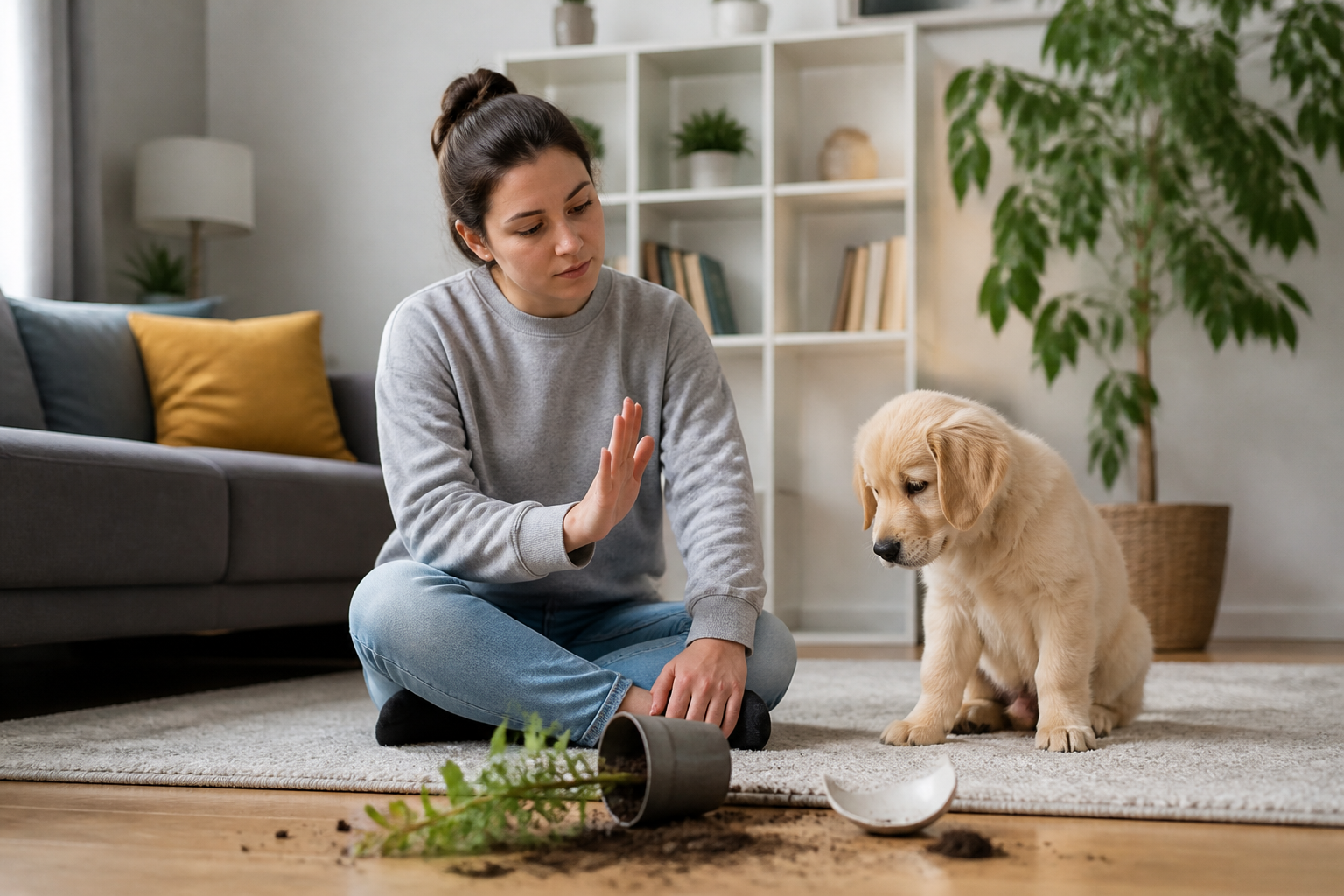
A puppy who bites, jumps, chews, barks, pulls, or struggles to settle is usually expressing a need, exploring the environment, or lacking an appropriate alternative. Punishment may stop behavior briefly, but it can increase fear, confusion, or frustration. Management works better because it changes the situation while teaching the puppy what to do instead. For example, preventing access to electrical cords protects the puppy, while offering a chew toy teaches an acceptable outlet.
Begin with realistic expectations. Puppies have immature impulse control, limited bladder capacity, and short attention spans. They may understand a cue in a quiet room yet fail to respond near visitors or outside. This is not stubbornness; it means the skill needs gradual practice. Reward small successes, keep sessions brief, and adjust difficulty before the puppy becomes overwhelmed.
Prepare the Home Before Training
A thoughtfully arranged home prevents many behavior problems. Use sturdy barriers, a puppy pen, a crate if introduced positively, and closed doors to limit access to unsafe rooms. Remove medications, cleaning products, small objects, toxic plants, loose wires, and valuable items. Secure trash containers and check that gates cannot be pushed aside. Supervision remains essential, but good management reduces the number of mistakes that require intervention.
Create a predictable daily rhythm. Meals, bathroom opportunities, play, training, naps, and quiet social time should occur in a generally consistent pattern. Predictability helps puppies anticipate what happens next and makes it easier to notice changes in appetite, elimination, energy, or mood. Flexibility is still important; the schedule should support family life rather than become a rigid test.
Teach the household the same rules. If jumping sometimes earns attention, the puppy will continue trying. Decide whether paws belong on the floor, where sleeping is allowed, which furniture is accessible, and how greetings occur. Children should not be expected to manage a puppy alone. Adults must supervise interactions and provide the puppy with a protected resting place where nobody disturbs them.
Safe Confinement and Supervision
A crate or pen should function as a comfortable retreat, never as a place of isolation or anger. Introduce it with meals, treats, chews, and short periods of calm. Increase duration gradually, and provide bathroom breaks appropriate to the puppy’s age and individual needs. If whining escalates, panting, frantic scratching, or repeated escape attempts appear, reduce the challenge and seek qualified guidance if distress persists.
Use a leash indoors when direct supervision is possible, particularly during the first weeks. A lightweight line can help you guide the puppy away from furniture or visitors without chasing. Never leave a leash attached when the puppy is unattended, because it may snag. Management tools should prevent rehearsals, not create fear or physical discomfort.
Teach Essential Skills Positively
Reward based training makes the desired choice clear. Choose a small, appealing reward, mark the correct moment with a consistent word such as “yes,” and deliver the reward promptly. Food is useful, but praise, play, access to sniffing, and permission to greet can also reinforce behavior. Use rewards that fit the environment and reduce distractions when the puppy is learning something new.
Start with name recognition. Say the puppy’s name once in a cheerful voice, then reward eye contact or movement toward you. Practice when the puppy is already likely to respond. Next, teach a hand target, such as touching a palm with the nose. This simple skill can redirect the puppy, support handling, and create a foundation for recall.
Teach “sit,” “down,” “come,” “leave it,” and “drop” in small steps. Avoid repeating a cue many times; repetition without success can weaken its meaning. If the puppy does not respond, make the situation easier, use a lure or gesture, or pause. “Come” deserves special care: make returning to you consistently rewarding, never call the puppy for punishment, and practice first indoors or in a securely enclosed area.
Managing Biting and Mouthing
Mouthing is common because puppies investigate with their mouths, play with littermates, and may experience discomfort during teething. Keep suitable chew items available in different textures, while avoiding objects that splinter, break into swallowable pieces, or are too hard for the puppy’s teeth. Supervise every chew and follow veterinary advice for safe choices.
When teeth touch skin, calmly stop movement and offer a toy. If the puppy continues, briefly remove attention by standing up or stepping behind a barrier. Resume interaction when the puppy is calmer. Do not yell, hit, hold the mouth shut, or encourage rough hand games. These responses can increase arousal or make hands frightening. Everyone should respond similarly so the lesson remains understandable.
Overtired puppies often bite more intensely. Schedule quiet rest after exciting play, training, visitors, or exploration. A nap is not a failure; it is part of behavior management. If biting is unusually severe, accompanied by stiff body language, guarding, pain, or difficulty disengaging, consult a veterinarian or qualified behavior professional.
Prevent Jumping, Barking, and Chewing
Jumping succeeds when it produces attention, even negative attention. Teach an incompatible greeting: four paws on the floor, a sit, or touching a hand target. Ask visitors to ignore the puppy until calm, then reward polite contact. Use a leash, pen, or gate when necessary. Practice with one calm person before attempting busy arrivals. The puppy should learn that calm behavior makes greetings happen faster.
Barking communicates excitement, alarm, frustration, or a desire for access. First identify the trigger and reduce unnecessary exposure. Close curtains, add distance from dogs outside, provide background sound, or move the puppy to a quieter area. Reward pauses and calm observation. Avoid shouting, because the puppy may interpret your louder voice as participation. If barking is rooted in fear, forcing the puppy closer can worsen the emotion; work below the point of panic and progress gradually.
Chewing needs prevention and redirection. Offer legal chew options, rotate them to preserve interest, and keep forbidden objects unavailable. If the puppy takes something unsafe, trade for a better item rather than chasing or forcibly grabbing it. Chase games can encourage swallowing or guarding. Teach “drop” with low-value objects first, then reward release generously. Keep valuables stored until reliable habits develop.
Toilet Training
Take the puppy to an appropriate toilet area after waking, eating, drinking, playing, and energetic activity. Remain quiet and patient, then reward immediately after elimination. A consistent surface and location can help the puppy understand the goal. Watch for sniffing, circling, pacing, or sudden departure during indoor play; these signs mean a prompt outing may be needed.
Accidents are information, not misconduct. Clean thoroughly with a product designed to neutralize odor, because lingering scent may invite repeat use. If you catch an accident beginning, interrupt gently and take the puppy outside, rewarding completion there. Never rub the puppy’s nose in waste or punish after the fact; the puppy will not connect delayed punishment with the earlier action.
Regression can occur during illness, schedule changes, stress, or development. Maintain supervision and review the routine. Frequent accidents, straining, unusual thirst, diarrhea, or sudden loss of previously reliable habits warrant veterinary attention.
Socialization Without Overwhelming the Puppy
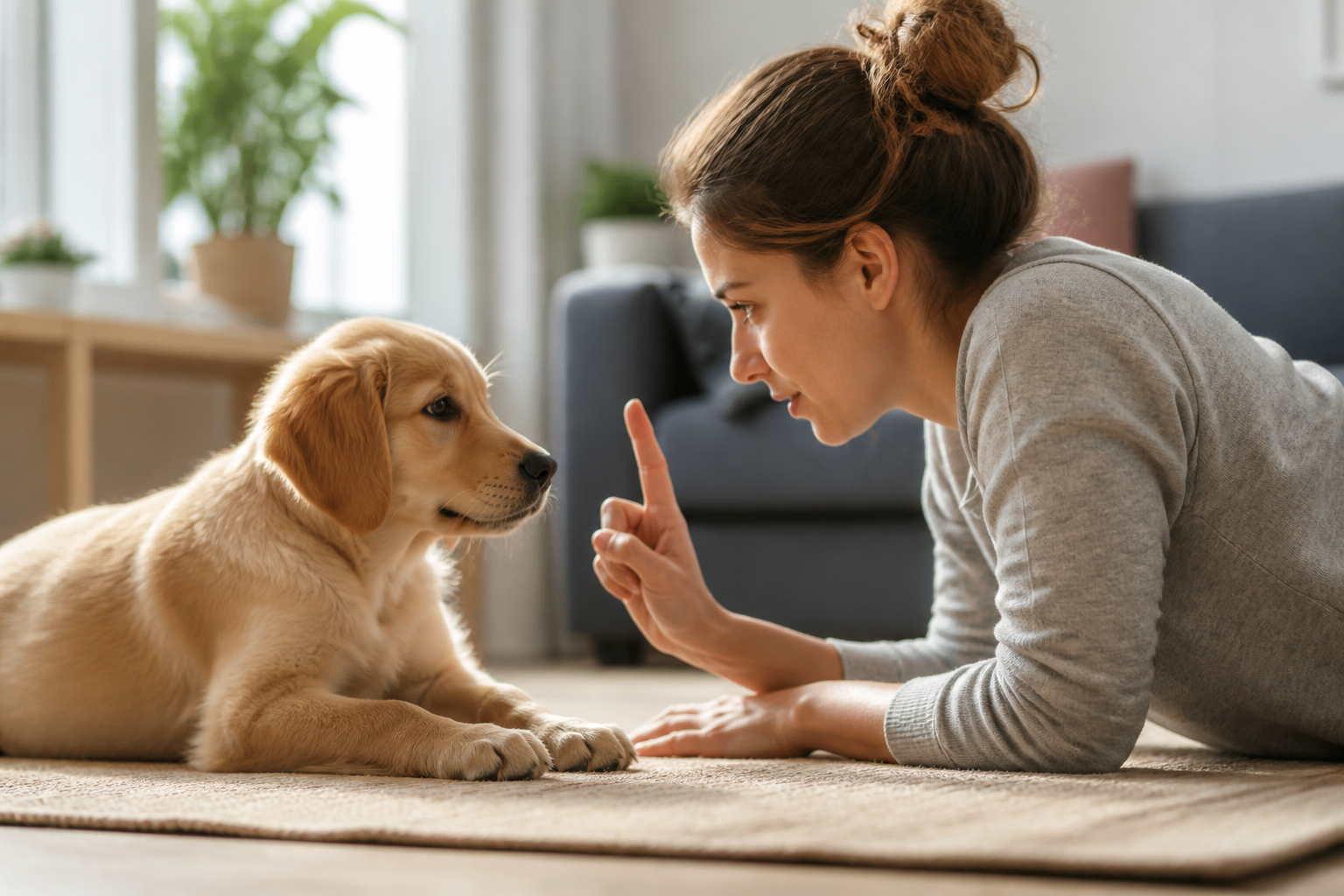
Healthy socialization means teaching a puppy that unfamiliar people, animals, surfaces, sounds, handling, vehicles, and environments can be safe. It does not mean greeting everyone or visiting the busiest places immediately. Quality matters more than quantity. Pair new experiences with food, play, or calm praise while keeping intensity low enough that the puppy can eat, explore, and recover.
Expose the puppy gradually to hats, umbrellas, household appliances, stairs, floor textures, car rides, grooming tools, and gentle body handling. Let the puppy choose whether to approach when practical. Watch for freezing, hiding, tucked posture, frantic movement, repeated lip licking, or inability to take food. These signs suggest the experience is too difficult. Increase distance, shorten the session, or return to a familiar activity.
Arrange controlled interactions with healthy, appropriate dogs rather than allowing chaotic greetings. A puppy does not need to play with every dog. Calmly observing, walking nearby, or disengaging can be valuable lessons. Ask a veterinarian about vaccination considerations and suitable social opportunities in your area, since disease risk and local guidance vary.
Visitors, Children, and Handling
Before visitors arrive, exercise the puppy moderately, prepare treats, and provide a leash or barrier. Ask guests to wait for calm behavior and avoid looming, hugging, chasing, or grabbing. Reward the puppy for looking at a visitor and returning attention to you. Permit interaction only while body language remains loose and comfortable.
Teach children to toss treats, request simple behaviors, and leave the puppy alone while eating, sleeping, or chewing. Adults should intervene at the first sign of discomfort. Handling practice should be brief: touch an ear, lift a paw, brush lightly, or look at teeth, then reward. Stop before resistance begins. Cooperative care reduces future struggles and supports safer veterinary and grooming visits.
Meet Physical and Mental Needs
Behavior improves when a puppy’s needs are met appropriately. Provide age suitable movement, sniffing, exploration, food puzzles, short training sessions, and restful sleep. Avoid excessive forced running, repetitive jumping, or long walks that may overtax developing bodies. Ask a veterinarian for guidance suited to the puppy’s breed, size, health, and development.
Enrichment should encourage thinking without creating frantic arousal. Scatter feeding in a safe area, hide kibble in simple locations, use supervised puzzle toys, practice scent games, and teach calm mat behavior. Rotate activities rather than providing everything at once. If a toy causes frustration, simplify it. Enrichment is successful when the puppy engages, solves the task, and can settle afterward.
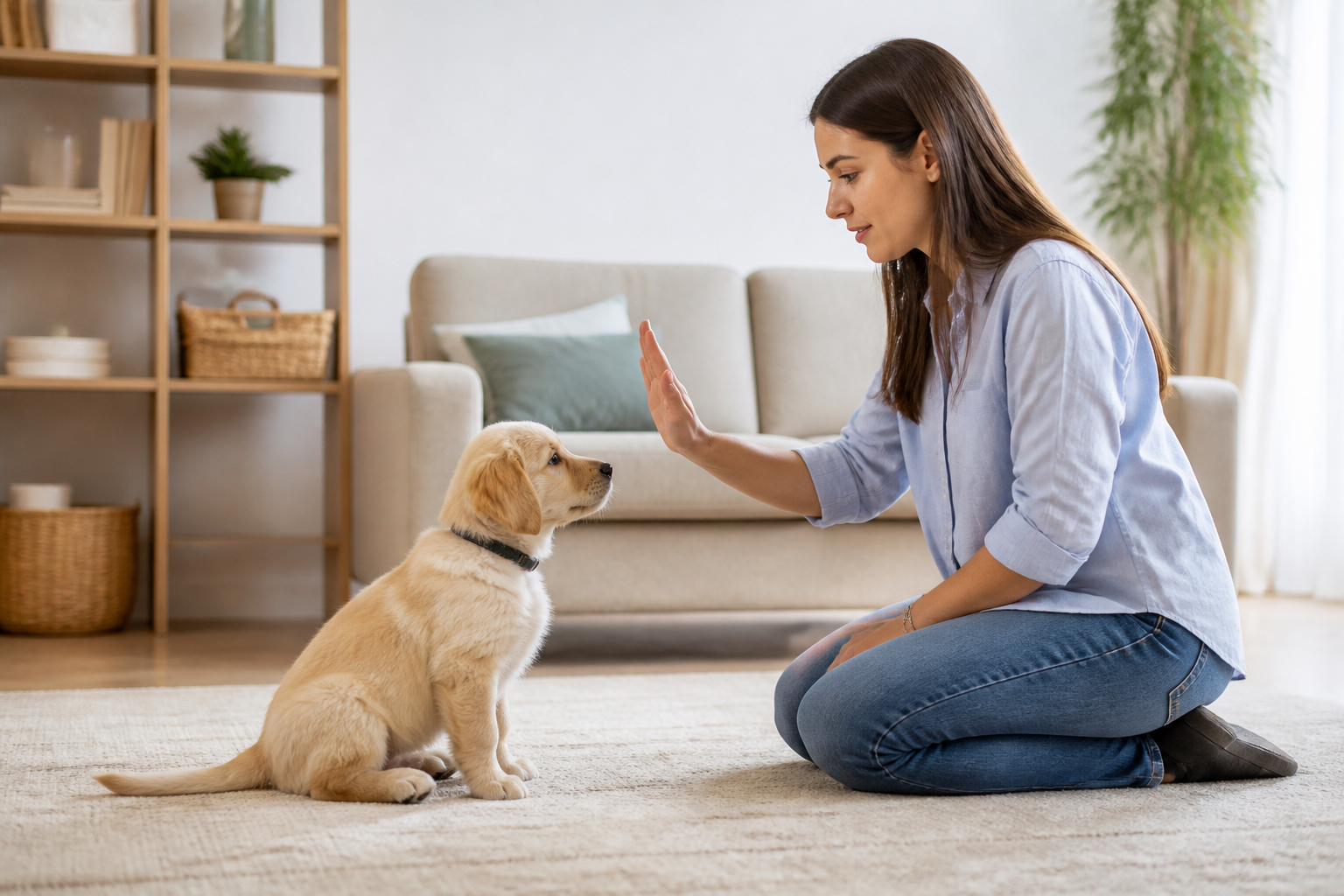
Teach relaxation deliberately. Place a mat near you, reward quiet lying, and gradually extend the time between rewards. Offer a chew during calm family activities. Do not wait until the puppy is exhausted or already frantic. A puppy who learns to settle can handle visitors, household noise, and interruptions more successfully.
Solve Problems Through Observation
Keep a brief behavior log recording the time, trigger, behavior, consequence, sleep, meals, exercise, and successful response. Patterns often emerge. Barking may increase before meals, biting may appear after missed naps, and pulling may intensify near exciting smells. Identifying the setting makes solutions more precise than labeling the puppy “bad.”
Use the ABC framework: antecedent, behavior, and consequence. The antecedent is what happened immediately before; the behavior is the observable action; the consequence is what followed. If jumping produces petting, attention maintains jumping. If calm sitting produces access, sitting becomes more useful. Change the arrangement and reward the response you want.
Progress is rarely linear. Travel, teething, illness, visitors, fear periods, or developmental changes can temporarily reduce performance. Return to easier exercises instead of demanding the previous level. Celebrate recovery and flexibility, not just flawless behavior. Consistency means responding predictably, not performing perfectly every day.
When Professional Help Is Appropriate
Seek veterinary advice for sudden behavior changes, suspected pain, extreme fear, repeated aggression, resource guarding, compulsive behavior, sleep disruption, or elimination problems that do not improve with routine management. Medical issues can influence behavior, and treatment should not be replaced by training assumptions.
For training support, choose a professional who uses humane, reward based methods and can explain each recommendation clearly. Ask how they handle fear, biting, barking, and difficult cases. Avoid advice based on intimidation, pain, dominance claims, or promises of instant results. A qualified professional should respect the puppy’s welfare, teach the family practical skills, and coordinate with a veterinarian when needed.
FAQ
How long should puppy training sessions last?
Keep sessions short enough that the puppy remains engaged. Several brief practices spread through the day usually work better than one demanding lesson. End after a successful repetition, and adjust duration according to age, temperament, health, and the skill’s difficulty.
Should I punish accidents or chewing?
No. Punishment after the event cannot teach the correct choice and may make the puppy hide behavior or fear you. Prevent access, interrupt gently when possible, clean accidents thoroughly, and reward the behavior you want repeated.
Why does my puppy behave well indoors but not outside?
Outdoor environments contain stronger smells, sounds, movement, and social distractions. The puppy may not yet be able to use the skill under that level of stimulation. Practice in gradually harder locations, increase distance from distractions, and reward frequently.
Is a crate necessary?
No single tool is mandatory. A crate can support travel, rest, and short periods of safe management when introduced positively, but a pen, gated room, or supervised tether may suit some households better. Every arrangement must provide comfort, safety, bathroom opportunities, and appropriate social contact.
How do I stop my puppy from jumping on guests?
Prevent uncontrolled rehearsals with a leash or barrier, then reward four paws on the floor or a sit. Guests should ignore jumping and offer attention only when the puppy is calm. Practice with cooperative visitors before expecting success during busy gatherings.
What should I do if my puppy growls?
Do not punish the growl. It is communication that the puppy feels uncomfortable, threatened, or protective. Increase distance, remove pressure, and note the trigger. Because the cause matters, consult a veterinarian or qualified behavior professional, especially if guarding or snapping occurs.
Can socialization create fear?
Poorly paced exposure can overwhelm a puppy, but thoughtful socialization builds confidence. Let the puppy observe from a safe distance, pair new experiences with positive outcomes, and retreat when stress signals appear. Forced greetings are unnecessary and may damage trust.
How much exercise does a puppy need?
Needs vary with age, breed, structure, health, and individual temperament. Provide opportunities for gentle movement and exploration, but balance them with sleep and low impact enrichment. A veterinarian can help identify suitable activity and warning signs of overexertion.
Conclusion
Puppy behavior management succeeds when prevention and teaching work together. Make the environment safe, establish predictable routines, reinforce useful behavior, protect rest, and introduce challenges gradually. Replace unwanted actions with practical alternatives rather than relying on punishment. Observe patterns, adjust difficulty, and involve veterinary or behavioral professionals when concerns exceed ordinary puppy development.
The goal is not a silent, motionless dog. It is a puppy who can communicate, recover from excitement, make safe choices, accept guidance, and participate comfortably in family life. Every calm greeting, released object, successful bathroom trip, and relaxed moment strengthens that future. Consistent, compassionate management gives the puppy clarity, gives the household confidence, and creates habits that can support a trusting relationship for years. Begin with one manageable change today, reward progress generously, and let steady practice build the calm companion you want together.