Service dog training is a structured process that prepares a dog to perform specific tasks for a person with a disability while remaining safe, calm, and reliable in public. It is more than teaching obedience or creating a friendly companion. A successful service dog must understand cues, make sensible choices, ignore distractions, recover from surprises, and work consistently without becoming a nuisance. Training should therefore combine ethical methods, careful assessment, gradual exposure, task instruction, and lifelong maintenance.
A well-designed training program benefits both members of the partnership. The handler gains practical assistance and greater independence, while the dog receives clear communication, appropriate rest, veterinary care, and meaningful work. Training is most effective when expectations match the dog’s temperament, physical ability, and the handler’s daily needs. No breed, age, or training method guarantees success, and professional guidance is especially valuable when disability-related tasks involve safety, mobility, medical alerts, or complex public situations.
What Service Dog Training Involves
Service dog training generally has four connected parts: socialization, basic skills, public-access behavior, and disability-related tasks. These areas overlap, but each answers a different question.
Socialization teaches the dog to remain comfortable around ordinary sights, sounds, surfaces, people, animals, vehicles, and environments. It does not mean forcing interaction. Instead, the dog learns that unfamiliar experiences can be handled calmly and that the handler provides direction.
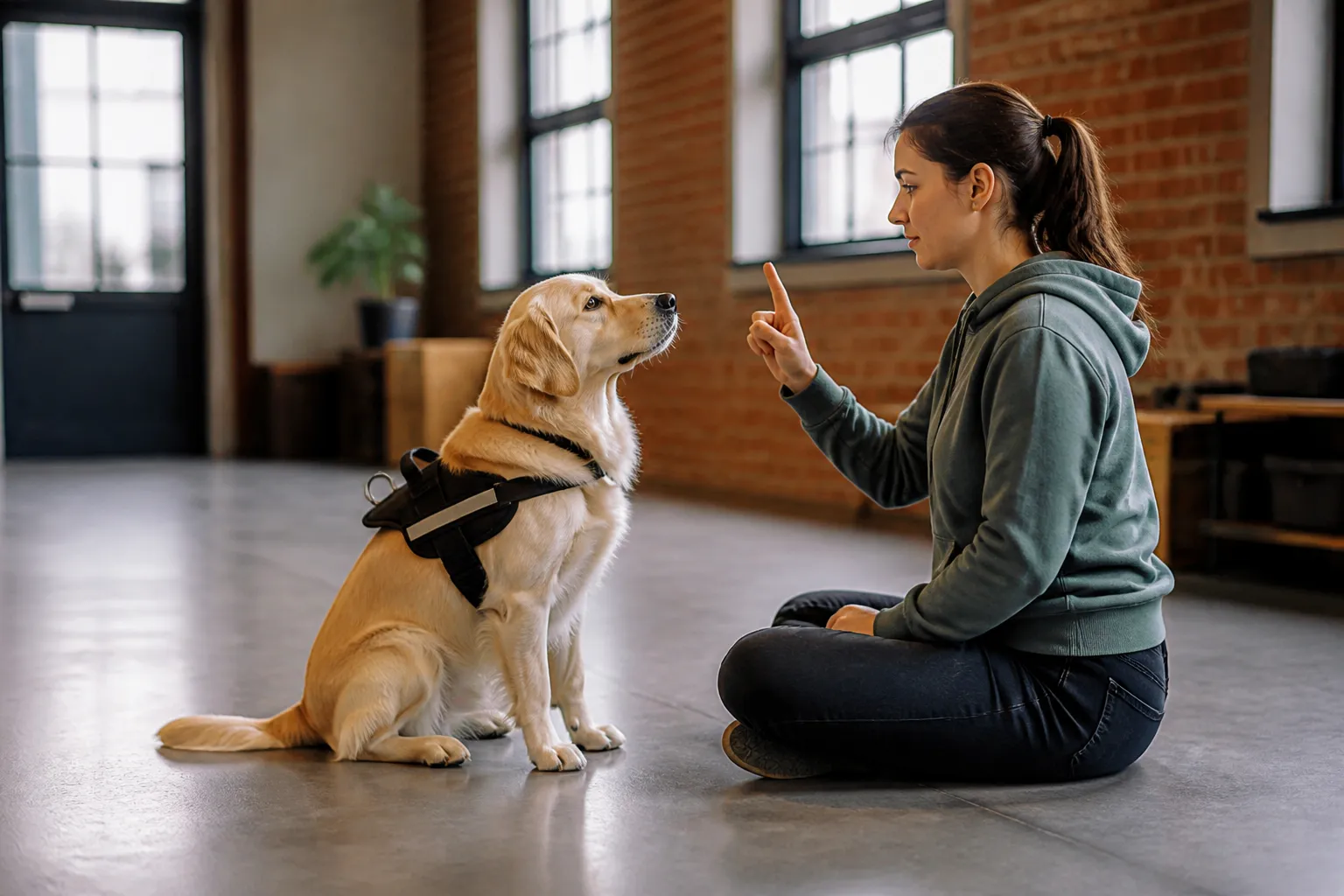
Basic skills create a communication system. Useful cues may include sit, down, stay, come, heel or loose-leash walking, leave it, drop it, wait, settle, and an emergency stop. The dog should respond in varied locations, not only in a quiet training room.
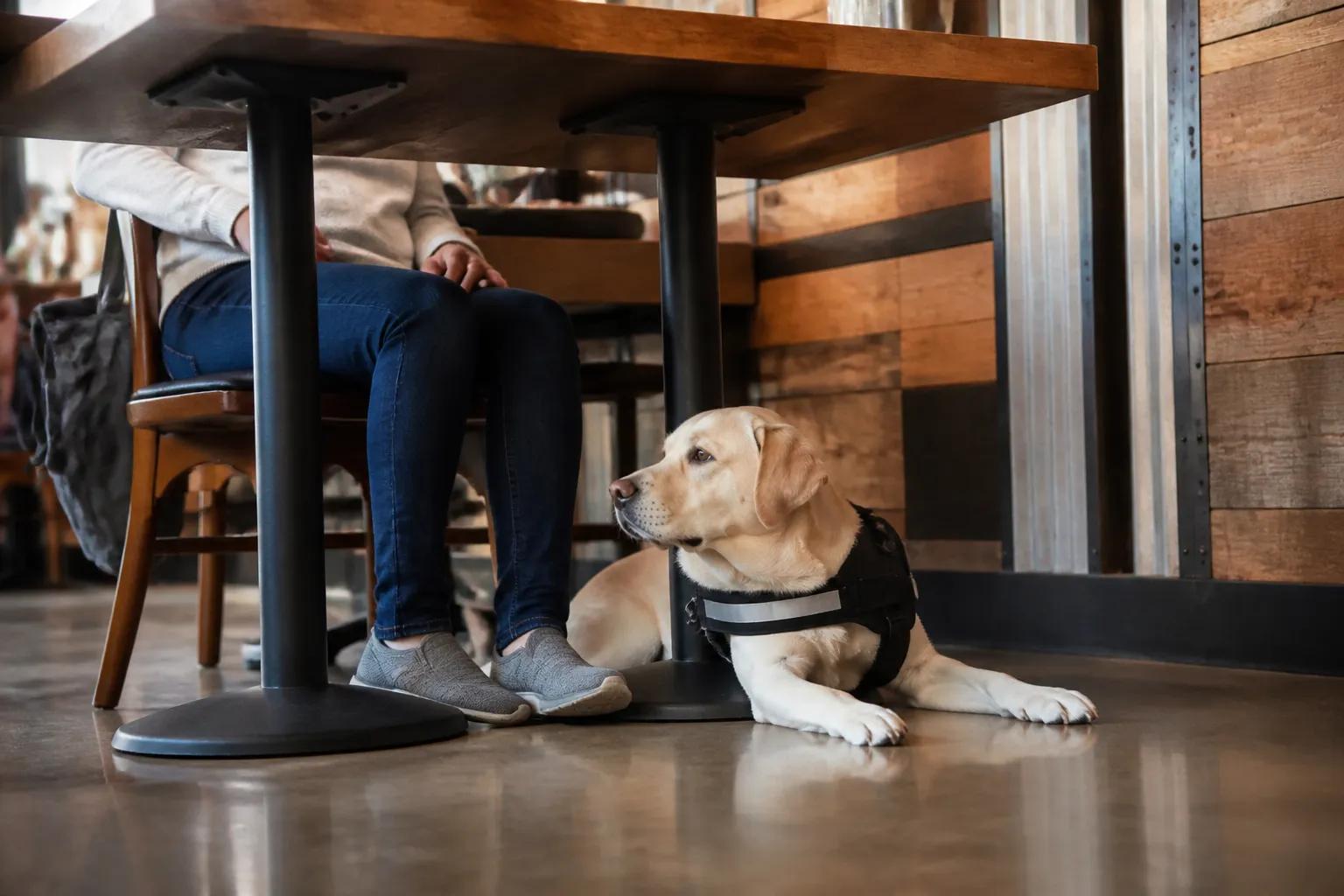
Public-access behavior focuses on self-control. A working dog should walk without pulling, ignore dropped food, avoid soliciting attention, remain quiet, settle beneath a table, and eliminate only where appropriate. It must also tolerate elevators, shopping carts, automatic doors, waiting rooms, public transportation, and crowded walkways.
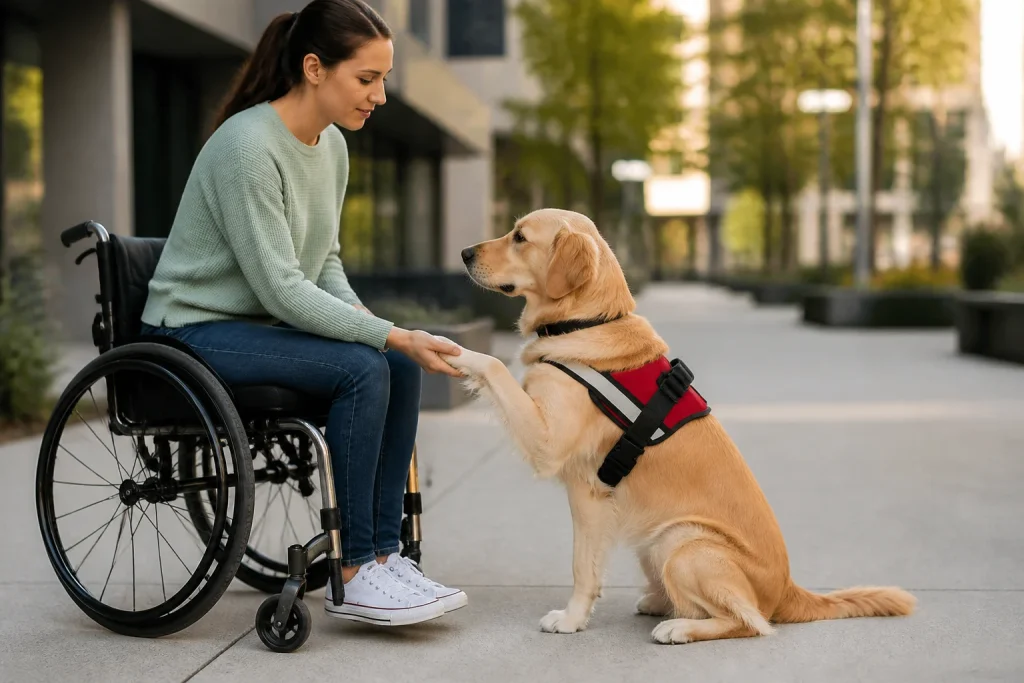
Tasks are trained to address a person’s disability-related needs. Examples include retrieving objects, opening or closing accessible doors, activating switches, providing a balance of stability only when physically appropriate, interrupting repetitive or harmful behavior, alerting to a medical change, guiding a handler toward help, or creating space. A task should be useful, safe, observable, and connected to the handler’s functional needs.
Choosing a Suitable Dog
Selection is one of the most important decisions in the entire process. A dog may be intelligent and affectionate yet unsuitable for service work because of fear, excessive arousal, pain, poor recovery, or an inability to concentrate around distractions. Training can improve skills, but it cannot reliably erase every inherited or developmental limitation.
Look for stable behavior, physical soundness, willingness to engage, and an ability to recover after a startling event. A suitable candidate usually explores new environments without persistent panic, accepts handling, and can return attention to a person after noticing a distraction. Temperament assessment should be performed thoughtfully rather than based on one brief test.
Age matters, but there is no universal ideal. Puppies offer extensive learning opportunities, while adult dogs may already have useful household habits. Either can require substantial development before dependable public work. Health screening should address joints, vision, hearing, skin, heart, and other concerns relevant to the intended tasks. A veterinarian can help identify risks and recommend preventive care.
Consider the dog’s size and body structure in relation to the work. A dog trained to retrieve items may not need the same build as one expected to carry equipment or provide carefully evaluated physical assistance. Dogs should never be trained to brace, pull a person’s full weight, or perform repetitive strenuous actions without qualified veterinary and rehabilitation advice.
Building the Foundation
Begin in a quiet setting where the dog can succeed. Reward attention, relaxed body language, responding to its name, and choosing to remain near the handler. Short sessions are usually more productive than exhausting drills. Use rewards that matter to the individual dog, including food, play, praise, access to sniffing, or a brief movement break.
Teaching Clear Communication
Choose consistent cues and reinforce promptly. If “wait” means pause at a doorway, do not sometimes use it to mean remain for several minutes. Handlers should agree on words, gestures, release signals, and reward rules. Clear communication reduces confusion and makes later task training easier.
Loose-leash walking deserves special attention. Begin where distractions are manageable, reward a slack leash, and change direction before pulling becomes intense. Avoid practicing long public outings before the dog understands the skill. A service dog does not need to march rigidly beside the handler at every moment, but it must move safely without dragging, blocking, or endangering others.
Teach settling as a practical behavior. Place a mat in the home, reward quiet relaxation, and gradually extend duration. Then practice in increasingly realistic locations. A dog that can settle while the handler speaks with a professional, waits in a lobby, or eats a meal is more useful than one that performs impressive tricks but cannot rest.
Developing Reliable Responses
Proof each skill gradually by changing one variable at a time: distance, duration, distraction, location, or handler position. If performance declines, make the exercise easier instead of repeating a failed cue. Reliability grows through successful repetitions, not intimidation.
Emergency behaviors deserve frequent, positive practice. A fast recall, a hand target, and a practiced stop can help prevent danger. However, training cannot remove all environmental risk. Handlers should still use appropriate leashes, equipment, supervision, and route planning.
Training Disability-Related Tasks
Task training should start with a precise description of the problem. Ask what happens, what assistance is needed, and what safe behavior would produce a useful result. “Help me” is too broad for a training plan. “Bring my medication pouch from the bedside table when I point to it” is clearer and easier to evaluate.
Break each task into small components. For retrieval, teach the dog to approach an item, take it gently, hold it, return, and release into the handler’s hand. For door work, teach targeting, pulling or pushing equipment designed for the dog, and waiting safely after the door opens. For interruption, reinforce a gentle nose touch or paw contact, then pair the behavior with the relevant handler pattern. Complex tasks may require chaining several behaviors.
Use prompts carefully and fade them over time. A dog that works only when shown a treat or pointed toward an object has not yet developed an independent response. Reinforce correct decisions, but do not create pressure for alerts that could frighten the dog or produce unsafe false responses.
Medical-alert and response work require particular caution. Some dogs may learn to respond to observable changes, but training outcomes vary and an alert behavior should not replace medical equipment, professional care, or an established emergency plan. If a task concerns seizures, blood glucose, fainting, severe anxiety, or another health condition, coordinate with qualified clinicians and trainers who understand the specific risk.
For mobility-related work, prioritize alternatives such as retrieving, activating assistance devices, or locating another person when those meet the need. Physical support tasks demand individualized assessment because inappropriate force can injure both dog and handler.
Socialization and Public Access
Socialization should continue throughout development. Introduce locations at a pace that preserves confidence: quiet sidewalks before busy streets, calm stores before crowded events, and short transportation rides before long journeys. Observe stress signals such as tucked posture, lip licking, freezing, frantic scanning, avoidance, or repeated yawning. Move farther away, offer a break, and reassess the plan.
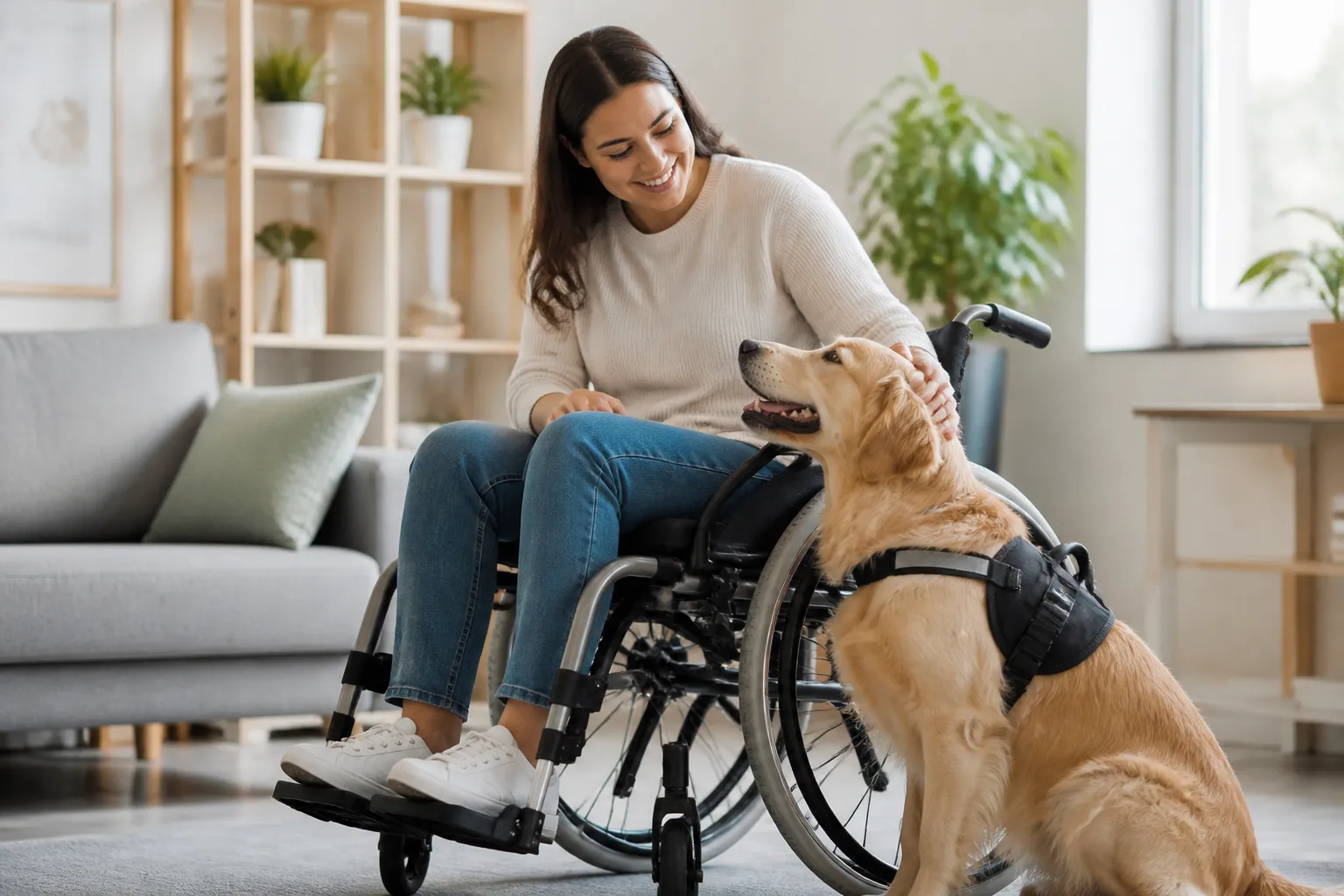
Public training should be realistic but respectful. The dog must learn to ignore food, friendly strangers, other animals, noises, and sudden movement. Do not allow members of the public to pet, feed, call, or distract a working dog without the handler’s permission. A vest or harness can communicate working status, but equipment does not replace behavior or grant permission to enter every location.

Practice emergency preparedness. Teach the dog to remain composed during an unexpected stop, dropped object, equipment failure, or handler difficulty. Carry identification, water, waste supplies, necessary medications for the handler, and contact information. Plan relief opportunities and avoid conditions that could cause overheating, paw injury, or exhaustion.
Access rules differ by jurisdiction and setting. Handlers should learn the applicable laws and policies rather than relying on online claims or assumptions. A business may address a dog’s behavior, hygiene, or direct threat, and a handler remains responsible for prompt cleanup and control. When uncertain, seek guidance from a disability-rights organization or relevant authority.
Ethical Methods and Problem Solving
Reward-based training is generally effective because it teaches the dog what behavior earns reinforcement and encourages voluntary cooperation. Rewards should be delivered for calmness, effort, recovery, and correct choices, not only perfect performance. A marker word or clicker can identify the precise moment the dog succeeds.
Avoid punishment that creates fear, pain, or confusion. Harsh corrections may suppress visible behavior while increasing anxiety, avoidance, or defensive reactions. If a dog repeatedly fails, investigate the cause. The task may be too difficult, the environment too distracting, the reward insufficient, or the dog physically uncomfortable.
Aggression, serious fear, resource guarding, separation distress, and sudden behavior changes require qualified professional assistance. A veterinarian should evaluate possible pain or illness, while a credentialed behavior professional can design a humane safety plan. Do not place a dog with unresolved dangerous behavior into public-access training.
Care, Equipment, and Daily Management
Training succeeds when daily care supports learning. Feed an appropriate diet, maintain a healthy body condition, provide routine veterinary examinations, and keep vaccinations and parasite prevention aligned with professional advice. Grooming, nail care, dental care, and regular rest are practical working requirements, not cosmetic extras.
Choose equipment for comfort and control. A well-fitted collar, harness, leash, identification, and task-specific gear should not restrict breathing, movement, or communication. Mobility equipment deserves additional evaluation. Inspect equipment regularly and replace damaged items before they fail.
A working dog needs downtime. Constant access to public environments can create stress and reduce enthusiasm. Establish a clear release cue so the dog understands when work ends. Allow safe play, sniffing, sleep, and social interaction. Retirement planning should begin before age, illness, or burnout makes the decision urgent.
Keep records of training goals, task reliability, triggers, health observations, and rest. Notes reveal patterns that memory misses. They also help a trainer, veterinarian, or healthcare professional adjust the program responsibly.
Creating a Practical Training Plan
Start with a written needs assessment. List the handler’s daily barriers, the locations where assistance is required, the tasks that would reduce those barriers, and the consequences if a task fails. Rank tasks by safety and usefulness rather than novelty.
Set observable criteria. For example, a retrieval goal might require the dog to bring three familiar objects from a safe distance in several rooms. A public-settle goal might involve remaining relaxed on a mat while the handler completes a short appointment. Define acceptable errors, because perfection is unrealistic and safety thresholds vary.
Schedule brief sessions across the week. Mix foundation skills, task practice, enrichment, and rest. Train in environments that resemble real life, but increase difficulty slowly. Have a backup plan when the dog is tired, ill, frightened, or unable to work. A service dog is not a machine, and responsible handling includes recognizing when to stop.
Professional support can save time and prevent harmful mistakes. Look for trainers who explain methods, welcome questions, understand disability-related tasks, and evaluate the dog as an individual. Ask how they measure progress, handle setbacks, protect welfare, and prepare the handler to continue training. Avoid promises of guaranteed certification, instant results, or universal suitability.
Evaluating Readiness
Readiness is demonstrated across time and settings. The dog should perform essential tasks reliably, recover from ordinary distractions, remain under control, and maintain healthy behavior. A single successful demonstration does not establish dependable performance.
Invite an objective observer to identify weaknesses. Test routes, workplaces, stores, transportation, and appointment settings relevant to the handler, while respecting local rules and the dog’s capacity. Revisit the plan after each evaluation. If a dog cannot work safely, changing the task, reducing demands, or choosing another assistance strategy may be the most responsible decision.
Frequently Asked Questions
Can any dog become a service dog?
No. Many dogs can learn useful behaviors, but service work requires suitable temperament, health, trainability, and reliable public behavior. Breed alone does not determine suitability, and affection or intelligence cannot compensate for severe fear, aggression, poor recovery, or physical limitations.
How long does training take?
The timeline varies with the dog, tasks, handler needs, training experience, and access to professional support. Basic obedience may develop relatively quickly, while dependable public behavior and complex tasks require continued practice. Quality and reliability matter more than meeting an arbitrary deadline.
Can I train my own service dog?
In some places, owner-training is permitted, but legal requirements differ. Owner-training demands time, consistency, realistic self-assessment, and access to suitable help. A qualified trainer can assist with evaluation, task design, public practice, and problem solving. Do not represent a dog as fully trained before it can work safely and reliably.
Does a service dog need a special vest?
A vest may help signal that the dog is working, but equipment does not create legal status or replace training. Requirements vary by location. Choose gear that is comfortable, clearly managed, and appropriate for the task.
What if my dog makes a mistake in public?
Prevent repeat problems by calmly regaining control, leaving if necessary, and analyzing what caused the failure. Do not punish the dog in anger. Reduce difficulty, improve preparation, and seek guidance if the behavior involves safety, distress, or repeated disruption.
Can the dog work all day?
Dogs need breaks, relief opportunities, food, water, sleep, and recreation. Workload should match age, health, weather, task intensity, and individual tolerance. A dog that is panting heavily, distracted, limping, withdrawn, or unusually irritable needs rest and possibly veterinary attention.
Conclusion
Service dog training is a long-term partnership built through careful selection, humane teaching, meaningful tasks, public reliability, and responsible care. Begin with the handler’s actual needs, define observable goals, and progress in small steps. Reward calm, useful choices; protect the dog from excessive pressure; and obtain professional help when health, safety, or complex behavior is involved.
The strongest program does not pursue impressive performance for its own sake. It produces a confident dog that can assist appropriately, a prepared handler who understands limits, and a daily routine that protects welfare. With realistic planning, consistent practice, and regular reassessment, service dog training can become a practical path toward greater safety, access, and independence.