
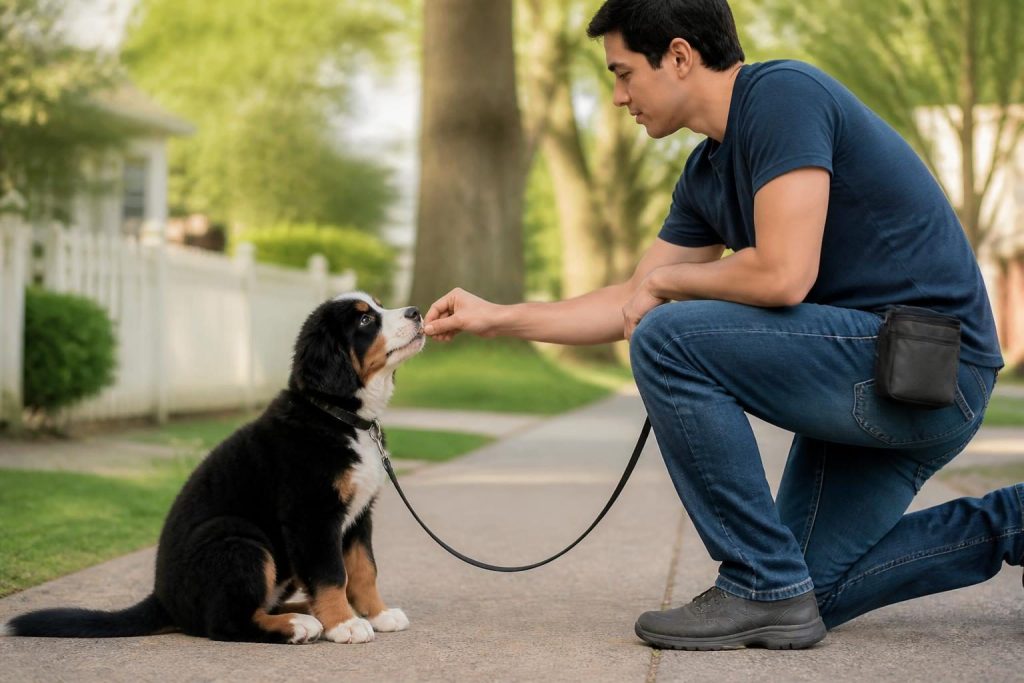
Dog Training For Puppies: Building a Reliable Foundation
Dog training for puppies is a structured process that teaches young dogs how to live safely, confidently, and cooperatively with people. Effective training is not about demanding instant obedience. It is about creating clear communication, rewarding useful choices, preventing repeated mistakes, and gradually increasing difficulty. Puppies learn continuously, whether an owner is teaching deliberately or allowing habits to develop accidentally. A thoughtful program therefore combines basic cues, house training, socialization, handling practice, enrichment, and appropriate boundaries.
The most successful approach is humane, consistent, and realistic. Puppies have short attention spans, developing coordination, and limited bladder control. Sessions should be brief, upbeat, and adjusted to the individual puppy’s age, breed, health, and temperament. Training should never depend on fear, pain, intimidation, or prolonged physical restraint. Reward based methods help puppies understand what earns food, play, access, praise, or freedom, while management prevents opportunities to practice unwanted behavior.
A useful training plan begins with three goals: keeping the puppy safe, teaching practical behaviors, and building trust. Safety includes supervision, secure equipment, vaccination guidance from a veterinarian, and careful exposure to appropriate environments. Practical behaviors include responding to a name, coming when called, settling, walking politely, releasing objects, and toileting in the correct place. Trust develops when people are predictable, patient, and attentive to canine body language.
What a Puppy Training Program Includes
A complete puppy training product or program should provide more than a list of commands. It should explain how puppies learn, show owners how to arrange the home, and offer progressive exercises that can be repeated in everyday situations. Clear instructions should identify the goal, required equipment, starting position, reward, common errors, and criteria for moving forward.
Essential materials may include a training guide, lesson schedule, printable progress records, demonstration videos, reward recommendations, socialization checklists, and troubleshooting advice. A high quality program also distinguishes between normal developmental behavior and warning signs that require professional help. For example, mouthing is common in puppies, but intense fear, guarding, repeated aggression, or sudden behavioral change deserves prompt consultation with a veterinarian or qualified behavior professional.
The program should encourage owners to use rewards strategically. Small, soft treats are convenient because puppies can eat them quickly without losing focus. Kibble, toys, praise, sniffing opportunities, and access to a favorite person can also function as rewards. Food should be counted as part of the daily diet, and particularly enthusiastic puppies may benefit from lower calorie options. Rewards should arrive immediately after the desired behavior so the puppy can make the correct connection.
Preparing the Home
Before training begins, arrange the environment to make success easier. Use gates, a puppy pen, a crate if the puppy is comfortable with it, and closed doors to limit access to unsafe or unsupervised areas. Remove toxic plants, medications, electrical cords, small objects, and valuable items that might be chewed. Provide legal chewing choices with different textures, and rotate them to maintain interest.
A predictable daily routine helps puppies rest, eat, eliminate, play, and learn. Young dogs require substantial sleep, often many hours each day. Overtired puppies may bite, bark, race around, or ignore familiar cues. Instead of interpreting every difficult moment as defiance, consider whether the puppy needs a quiet break, toilet opportunity, food, water, or reduced stimulation.
Choose a consistent set of words and household rules. If one person permits jumping while another rewards four paws on the floor, the puppy receives confusing information. Decide where the puppy may sleep, whether furniture is permitted, how greetings occur, and which objects are available for chewing. Consistency does not mean perfection; it means returning calmly to the same plan after mistakes.
Essential Equipment
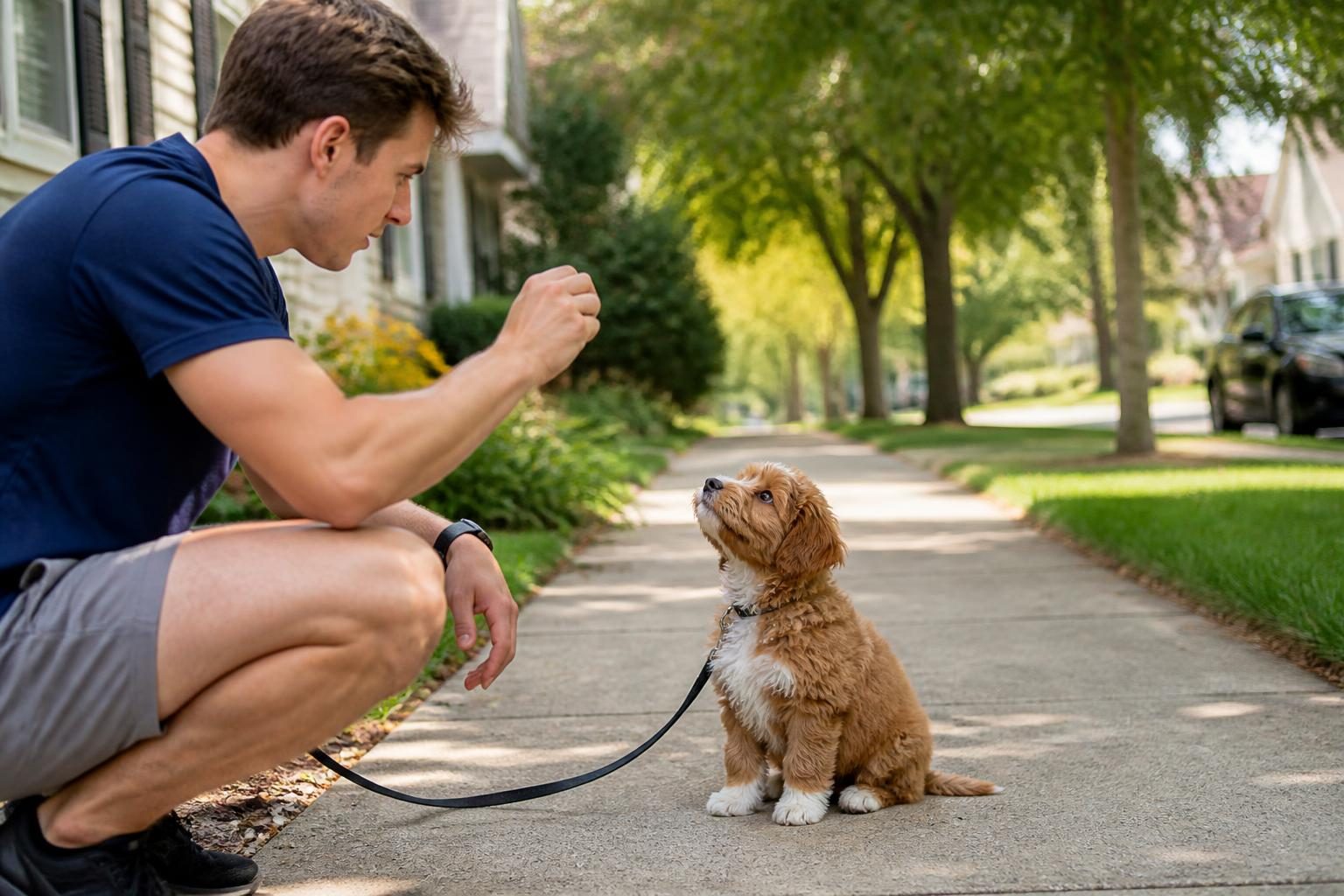
Useful equipment includes a properly fitted collar or harness, a lightweight leash, identification, a secure travel crate, a long line for suitable outdoor areas, treats, food toys, washable bedding, and enzymatic cleaner. Avoid equipment designed to cause pain or fear. Harnesses should permit comfortable shoulder movement, and collars should never be used for forceful corrections.
Teaching Core Skills
Begin with attention and name recognition. Say the puppy’s name once in a cheerful voice. When the puppy looks toward you, mark the moment with a word such as “yes” and deliver a reward. Repeat in quiet locations, then gradually practice around mild distractions. The name should predict useful information, not constant reprimands.
For sit, hold a reward near the puppy’s nose and slowly move it upward and slightly backward. As the puppy’s head follows, the hindquarters may lower naturally. Mark and reward the instant the puppy sits. Add the verbal cue only when the movement is occurring reliably. Do not push the puppy into position; guiding voluntary movement produces clearer learning.
Down can be taught by moving a reward from the nose toward the floor and then forward. Reward partial progress at first, especially with very young or physically cautious puppies. Build duration gradually. A release word, such as “free,” teaches the puppy when a stationary behavior has ended.
Recall is a safety skill requiring careful development. Start indoors, crouch close, use an enthusiastic cue, and reward generously when the puppy reaches you. Never call the puppy to punish, end every enjoyable activity, or perform something unpleasant. Practice with a long line in secure outdoor locations, increase distance slowly, and continue rewarding responses throughout life.
Leave, Drop, and Trade
“Leave it” teaches a puppy not to take an available item. Begin with a boring object in a closed hand. When the puppy stops investigating, mark and reward with a different treat. Progress to an uncovered object, then controlled movement. “Drop” teaches release after an item is already in the mouth. Offer a better reward, mark the release, and return the toy when appropriate. Trading prevents many conflicts and reduces the temptation to chase a puppy who has stolen something.
House Training
House training depends on supervision, timing, and immediate reinforcement. Take the puppy outside after waking, eating, drinking, playing, training, and exciting activity. Very young puppies may need frequent opportunities, including during the night. Bring the puppy to the same toilet area, remain quiet and patient, and reward immediately after elimination finishes.
Indoors, watch for sniffing, circling, restlessness, or sudden departure. If an accident begins, interrupt gently and take the puppy outside without anger. Clean thoroughly with an enzymatic product so lingering odor does not invite repetition. Punishment after an accident is ineffective because the puppy cannot connect delayed consequences with the earlier behavior and may become fearful of eliminating near people.
Keep a simple record of meals, toilet trips, accidents, and successful outdoor eliminations. Patterns often become visible within several days. Freedom should increase gradually, one room or short period at a time. A puppy who is clean in one room is not automatically ready to roam the entire home.
Socialization and Confidence
Socialization means carefully introducing a puppy to people, animals, surfaces, sounds, handling, transport, and ordinary environments while keeping the experience safe and positive. It does not mean forcing interaction or visiting every crowded location. The objective is flexible confidence: the puppy can notice something unfamiliar, remain within an acceptable emotional range, and recover calmly.
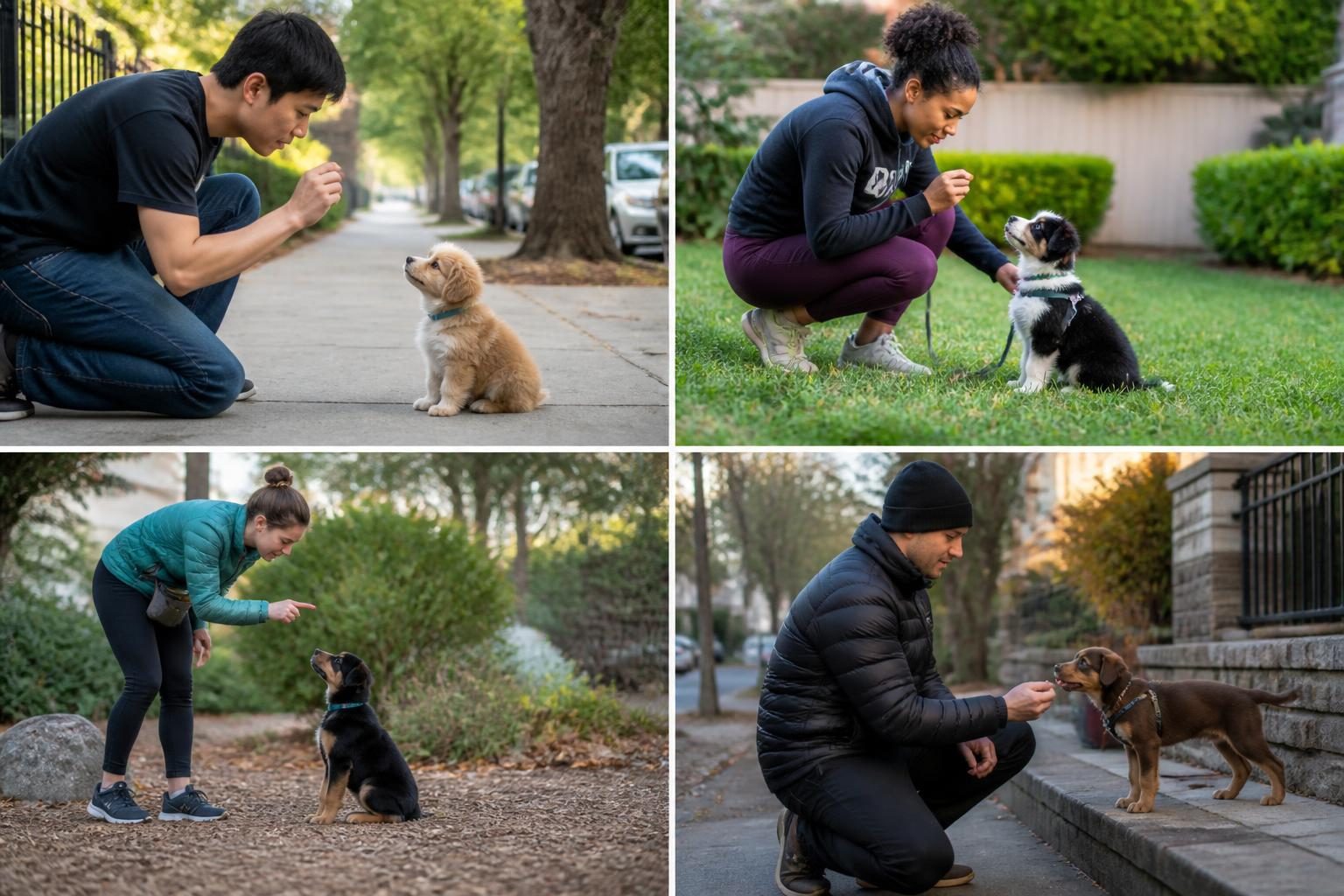
Create small exposures. A puppy might watch bicycles from a distance, hear household appliances at low volume, step briefly onto a mat, or meet a calm adult who ignores the puppy initially. Pair each experience with food, play, or rest. If the puppy freezes, hides, trembles, growls, or repeatedly attempts to escape, increase distance and lower intensity. Respecting communication prevents fear from escalating.
Puppies also need handling practice for veterinary care and grooming. Touch paws briefly, lift an ear, inspect the mouth, brush gently, and reward after each small step. Use cooperative pauses rather than restraining a struggling puppy whenever possible. Veterinary professionals can advise on safe socialization before vaccinations are complete; controlled classes may be appropriate when health requirements and hygiene standards are met.
Preventing Common Problems
Mouthing is normal, particularly during play and teething, but it must be guided. Keep a toy nearby and redirect teeth toward it. Stop movement briefly if biting intensifies, then resume when the puppy is calmer. Avoid wrestling with hands or punishing bites physically. Frequent naps, appropriate chews, and short play sessions can reduce overexcited behavior.
Jumping is usually maintained by attention. Turn away, remain quiet, and reward four paws on the floor. Ask visitors to follow the same procedure. Barking should be assessed rather than automatically suppressed. Identify whether the puppy is alerting, frustrated, fearful, lonely, or seeking activity. Reduce triggers, reward quiet observation, and meet exercise, rest, and enrichment needs.
Chewing is managed through access and alternatives. Prevent access to valuable objects, provide safe items, and reward the puppy for selecting them. Chasing, grabbing, and shouting can turn theft into an exciting game. A calm trade is more effective and protects the relationship.
Enrichment and Daily Practice
Training should be integrated into ordinary life. Ask for a sit before placing a food bowl down, reward calmness while a leash is attached, practice recall between rooms, and reinforce settling while the household is active. These short repetitions are often more valuable than one long lesson.
Enrichment includes sniffing walks, food puzzles, scatter feeding, gentle play, shaping games, and supervised exploration. Physical exercise must match the puppy’s development and veterinary advice. More exercise is not always the answer to difficult behavior; excessive stimulation can create an overtired puppy. Balance activity with quiet chewing and sleep.
Keep a progress record. Note the cue, environment, successful repetitions, distractions, and the puppy’s emotional state. If performance deteriorates, make the exercise easier rather than repeating failure. A skill learned in the kitchen may need separate teaching in the garden, hallway, car, and training class.
Frequently Asked Questions
When should puppy training start?
Training can begin as soon as the puppy joins the household, using gentle name games, reward delivery, handling, routines, and environmental management. Formal group classes may begin at an age recommended by a veterinarian and trainer, considering vaccination status and local disease risk. Early learning should be brief and positive.
How long should sessions last?
Many puppies learn well in sessions lasting one to five minutes, repeated several times daily. Stop while the puppy remains interested. Several tiny practices usually outperform a single extended lesson. If focus decreases, switch to an easy behavior, provide rest, or end successfully.
Should treats be used forever?
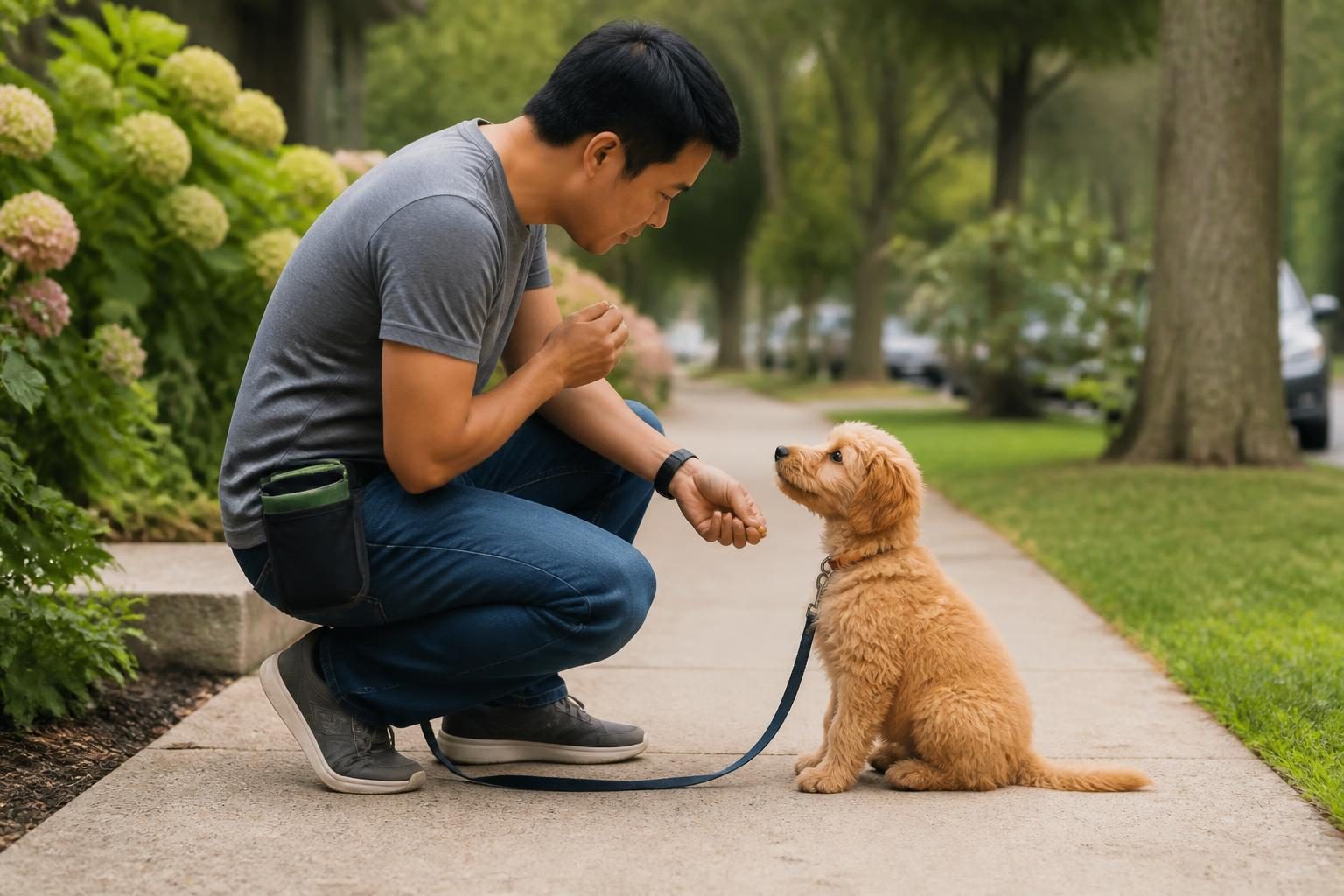
Food is a highly efficient teaching tool, especially during early learning. Once a behavior is reliable, rewards can become intermittent, but they should not disappear completely. Continue using praise, play, access, and occasional treats. In difficult environments, valuable rewards remain appropriate throughout the dog’s life.
Is crate training necessary?
A crate is not mandatory, but a correctly introduced crate can support travel, rest, recovery, and management. It should be a safe, comfortable space, never a punishment or place for excessive confinement. Introduce it gradually with an open door, rewards, meals, and short relaxed periods.
What if the puppy will not listen?
“Not listening” often reflects distraction, confusion, fatigue, fear, insufficient reinforcement, or a behavior that has not generalized. Reduce difficulty, improve the reward, clarify the cue, and practice in a quieter setting. Never repeat a cue rapidly or punish a response that is not yet reliable.
When is professional help needed?
Seek qualified assistance for biting that causes injury, guarding, severe fear, persistent separation distress, dangerous reactivity, compulsive behavior, or sudden changes. A veterinarian should assess medical contributors, including pain, gastrointestinal problems, sensory issues, and neurological conditions. Choose professionals who explain methods clearly and avoid intimidation.
Choosing a Training Service or Resource
When evaluating a puppy training product, course, app, or private service, examine the qualifications of its creators, the welfare standards it follows, and the specificity of its instructions. A trustworthy resource explains learning principles, recommends management, acknowledges individual differences, and provides progression criteria. It should not promise instant obedience or claim that one technique solves every problem.
Look for accessible demonstrations, realistic examples, printable schedules, and guidance for common household situations. Customer support can be valuable when owners need help adapting exercises. In-person trainers should observe the puppy, welcome questions, use humane methods, and refer medical or complex behavioral concerns appropriately.
Conclusion
Dog training for puppies is an investment in communication, safety, confidence, and lifelong cooperation. The strongest results come from combining reward based teaching with careful management, generous rest, gradual socialization, and consistent household expectations. Teach one small step at a time, reward desired behavior promptly, and make the environment easier when the puppy struggles.
Progress will not be perfectly linear. Developmental changes, teething, new places, illness, and exciting distractions can temporarily affect performance. Patience and observation are more productive than frustration. By protecting trust, recognizing emotional signals, and seeking professional guidance when necessary, owners can help puppies become adaptable companions with practical skills and secure relationships. A comprehensive training resource should support that process with clear lessons, ethical methods, troubleshooting, and encouragement, turning everyday interactions into meaningful learning opportunities for both puppy and person.