
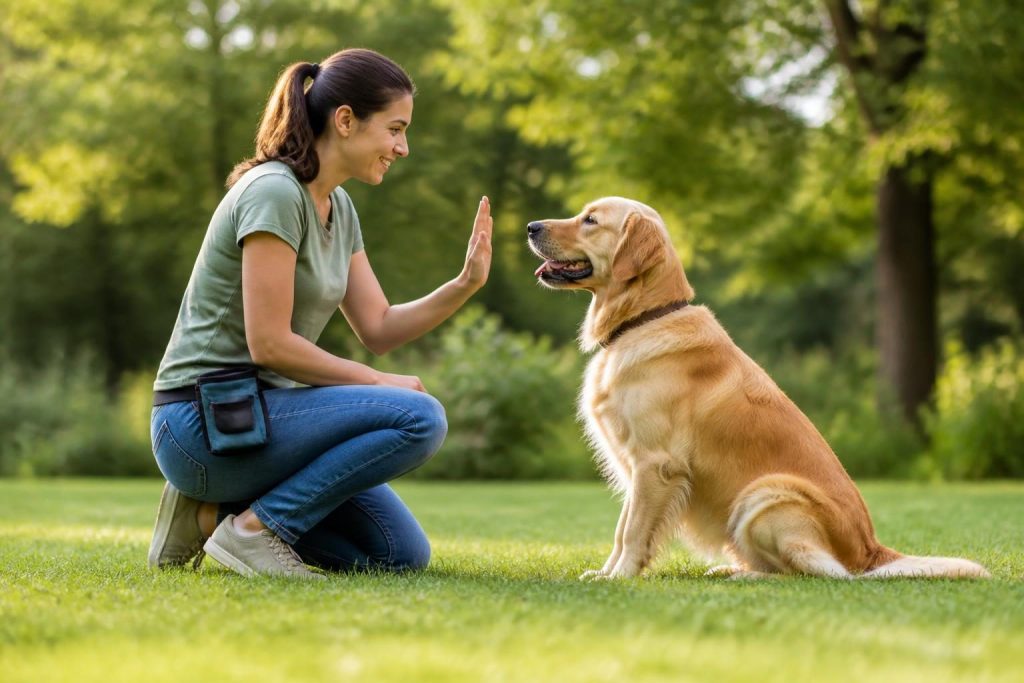
Understanding Dog Training
Dog training is a structured process that teaches a dog how to respond appropriately to cues, situations, people, and environments. Effective training does more than produce obedience. It strengthens communication, supports emotional security, prevents avoidable behavior problems, and helps dogs participate safely in family and community life. A well designed training program combines clear instruction, humane methods, consistency, patience, and realistic expectations.
Every dog can learn, regardless of age, breed, background, or previous experience. Puppies often acquire new habits quickly, while adult and senior dogs may bring established patterns that require additional time to change. Training should therefore be adapted to the individual dog’s health, temperament, motivation, learning history, and living conditions. The most successful approach treats learning as a cooperative process rather than a contest of control.
Product Description
This dog training program is a practical, progressive resource for owners who want reliable manners and a stronger relationship with their dogs. It provides step by step guidance for teaching foundational cues, improving household behavior, developing leash skills, and addressing common challenges through reward based learning. The program is suitable for puppies, adolescent dogs, adult rescues, and experienced owners seeking a clearer training structure.
Lessons are organized into short sessions that can be practiced at home, outdoors, or during ordinary daily routines. Each lesson explains the goal, preparation, training steps, common mistakes, and methods for increasing difficulty. The approach uses food rewards, play, praise, access to desired activities, and environmental management. These tools encourage dogs to repeat successful behaviors without relying on fear, pain, intimidation, or physical punishment.
The program includes guidance for selecting appropriate rewards, using markers, delivering cues, fading food lures, managing distractions, and recording progress. It also explains how to recognize stress signals and when to pause, simplify an exercise, or seek professional assistance. By combining instruction with practical troubleshooting, the resource helps owners apply training principles consistently rather than memorizing isolated commands.
Core Principles of Effective Training
Reinforcement and Motivation
Dogs repeat behaviors that produce valuable consequences. A reward may be a small treat, a favorite toy, verbal praise, social interaction, permission to sniff, or access to a preferred location. The reward should matter to the dog in that moment. Food may work well in a quiet room, while movement or play may be more useful outdoors.
Reward timing is essential. Deliver the reward immediately after the desired behavior, so the dog can connect the action with the consequence. A brief marker word, such as “yes,” or a clicker can identify the precise moment. Once the dog understands the connection, the marker allows the owner to improve accuracy even when delivering the reward takes several seconds.
Clarity and Consistency
Use one cue for one behavior, and avoid repeating it several times. If “sit” is spoken repeatedly while the dog ignores it, the word may become background noise. Give the cue once, wait briefly, and help the dog succeed through a hand signal, lure, or environmental adjustment. Reward the response, then practice again under easier conditions if necessary.
Everyone in the household should use similar rules. If one person rewards jumping while another discourages it, the dog receives confusing information. Agree on cue words, boundaries, furniture access, feeding routines, and responses to unwanted behavior. Consistency does not mean perfection; it means returning calmly to the same plan after mistakes.
Gradual Progression
Training should move from simple to complex. Begin in a quiet environment with few distractions, then increase distance, duration, movement, novelty, and competing rewards one at a time. A dog that responds beautifully in a kitchen may struggle in a park because the context is different. This is not stubbornness. It indicates that the skill has not yet generalized.
Keep sessions brief and successful. Several two to five minute sessions may produce better learning than one long session. End while the dog remains interested, and provide rest between repetitions. If errors increase, reduce difficulty rather than adding pressure. Progress is measured by reliable improvement, not by completing an exercise at maximum difficulty immediately.
Essential Skills
Name Recognition and Attention
Begin by teaching the dog that its name predicts something worthwhile. Say the name once in a calm voice. When the dog looks toward you, mark and reward. Practice in multiple rooms, then gradually introduce mild distractions. The objective is not automatic obedience to the name, but a dependable orientation that makes later communication possible.
Add an attention cue such as “watch” or “look.” Hold a reward near your face, say the cue, and reward eye contact. Keep the behavior brief at first. Attention should be invited, not forced. Avoid using the cue only before unpleasant events, because the dog may begin to avoid it.
Sit, Down, and Stay
For sit, move a reward slowly from the dog’s nose upward and slightly backward. As the head follows, the dog will often lower its hips. Mark and reward when the hips touch the floor. For down, move the reward toward the ground and then forward. If the dog stands, adjust the angle or practice from a seated position.
Stay is best taught in small increments. Ask for a stationary position, mark after one second, reward, and release with a clear word such as “free.” Gradually increase time, distance, and distraction separately. If the dog moves, avoid punishment; simply make the next repetition easier. The release cue teaches the dog when the exercise has ended.
Recall
A reliable recall can protect a dog from danger. Start indoors by moving a short distance away, using an enthusiastic cue, and rewarding generously when the dog arrives. Never call the dog for punishment, forced grooming, or an immediate end to every enjoyable activity. Frequently call, reward, and then release the dog to continue playing.
Progress to a fenced area and use a long line where appropriate. Practice around mild distractions before attempting open spaces. If the dog ignores the cue, do not repeat it continuously. Reduce distance, improve the reward, or arrange the environment so success is more likely. Recall training requires lifelong maintenance.
Leash Walking
Loose leash walking means the dog can move with a relaxed leash, not that it must remain rigidly beside the handler. Begin indoors or in a quiet area. Reward the dog for being near you, checking in, or allowing the leash to remain slack. When the dog pulls, stop or change direction without jerking. Resume movement when slack returns.
Provide opportunities to sniff and explore. Sniffing is enriching and can function as a meaningful reward. A well fitted harness may improve comfort and control, especially for dogs that pull or have respiratory concerns. Equipment supports training but does not replace it.
House Training and Household Manners
Toilet Training
Take puppies outside after waking, eating, drinking, playing, and sleeping. Choose a consistent toilet area and reward immediately after elimination. Supervise closely indoors, watching for circling, sniffing, restlessness, or sudden departure. If supervision is impossible, use a safe, appropriately sized management area.
Accidents are normal during learning. Clean them with an enzymatic product that removes odor rather than masking it. Do not punish after the event; the dog cannot connect delayed correction with elimination. Frequent accidents, straining, unusual thirst, or sudden regression may indicate a medical issue and require veterinary attention.
Jumping, Mouthing, and Barking
Jumping often continues because it produces attention. Turn away, become still, or step behind a barrier, then reward four paws on the floor. Ask for an alternative behavior, such as sitting, before greeting. Every family member and visitor should follow the same procedure.
Puppies commonly mouth during play and exploration. Redirect to suitable toys, pause interaction when teeth contact skin, and provide naps, exercise, and enrichment. Avoid wrestling with hands if it encourages biting. Persistent hard biting, fear, guarding, or aggression deserves assessment from a qualified behavior professional.
Barking communicates arousal, alertness, fear, frustration, or a desire for attention. Identify the trigger before choosing a response. Reduce exposure, reward quiet observation, teach an alternative behavior, and provide appropriate activity. Punishing warning signals can suppress communication without resolving the underlying emotion.
Socialization and Emotional Development
Socialization is the careful introduction of a dog to people, animals, surfaces, sounds, handling, transportation, and environments. The goal is confident, flexible behavior, not forced interaction with everything. Present new experiences at a distance and intensity the dog can handle. Pair them with food, play, or calm praise, then allow retreat.
Watch body language. Loose muscles, natural movement, soft eyes, and willingness to eat usually indicate manageable stimulation. Freezing, crouching, lip licking, yawning, hiding, frantic movement, tucked posture, or refusal of food may signal stress. Increase distance and simplify the situation. A dog should never be forced into contact as a test of bravery.
Controlled exposure should continue throughout life. Puppies need safe opportunities during development, while adult dogs benefit from varied but predictable experiences. Well managed classes can teach communication and focus, provided the instructor prevents bullying and maintains suitable spacing. Socialization is not the same as greeting every dog; calm neutrality is a valuable outcome.
Enrichment and Daily Management
Training works best when daily needs are met. Physical exercise should suit the dog’s age, health, breed tendencies, and weather. Mental enrichment may include scent games, puzzle feeders, trick training, food searches, chewing opportunities, and supervised exploration. Adequate sleep is equally important, especially for puppies, whose overtired behavior can resemble disobedience.
Management prevents rehearsal of unwanted habits. Use gates, closed doors, covered windows, storage containers, leashes, crates, or exercise pens when appropriate. Management is not failure. It gives the dog fewer opportunities to practice chasing, stealing, jumping, or barking while training develops.
Crates and confinement areas should be introduced as comfortable spaces, never as punishment. Provide suitable bedding, safe enrichment, and gradual duration increases. Dogs should receive regular movement, interaction, toileting opportunities, and rest outside confinement. Individual needs vary, so observe behavior rather than relying on a fixed schedule alone.
Troubleshooting Common Problems
When progress stalls, examine the training plan systematically. Is the cue clear? Is the reward valuable? Is the environment too difficult? Is the dog tired, hungry, frightened, ill, or overstimulated? Has the behavior been reinforced accidentally? Often, changing one variable reveals the solution.
Avoid labeling a dog as dominant, spiteful, or lazy without evidence. Such labels can encourage ineffective responses. Behavior has causes and consequences. A dog that steals objects may need more access to legal chews and a practiced trade cue. A dog that pulls may be overwhelmed by the environment, not deliberately defiant.
Train replacement behaviors rather than merely suppressing unwanted actions. Teach a dog to go to a mat instead of jumping, touch a hand instead of grabbing, look at the handler instead of lunging, or exchange an object instead of guarding it. Replacement behaviors provide a practical answer to the dog’s needs.
Safety and Professional Support
Training should protect physical and emotional welfare. Avoid methods involving shock, pain, choking, hitting, alpha rolls, intimidation, or deliberate flooding. These approaches can increase fear, aggression, avoidance, and damage to trust. Humane training is not permissive; it uses clear boundaries, prevention, reinforcement, and appropriate consequences without causing suffering.
Consult a veterinarian for sudden behavior changes, pain signs, mobility problems, hearing or vision changes, elimination issues, or unusual irritability. Seek a qualified reward based trainer or veterinary behaviorist for aggression, severe anxiety, separation distress, compulsive behavior, bite risk, or complex reactivity. Early support usually improves safety and outcomes.
Verify professional credentials, methods, and willingness to explain procedures. Ask how the specialist handles mistakes, fear, equipment, and safety. Be cautious of guarantees, dominance claims, secret techniques, or recommendations based on punishment. Collaboration among the owner, trainer, and veterinarian creates a more complete plan.
FAQ
How old should a puppy be when training begins?
Training can begin as soon as a puppy enters the home, provided exercises are brief, gentle, and suited to development. Early priorities include name recognition, handling, toilet routines, settling, appropriate chewing, and safe socialization. Formal cues can be introduced through play and rewards. Vaccination guidance should come from a veterinarian.
Can older dogs learn new behaviors?
Yes. Older dogs can learn effectively, although physical limitations, sensory changes, medical conditions, and long established habits may affect the pace. Use comfortable surfaces, shorter sessions, valuable rewards, and frequent repetition. A veterinary examination is sensible when learning ability or behavior changes unexpectedly.
How long does training take?
The answer depends on the behavior, dog, environment, reinforcement history, and owner consistency. A dog may learn the meaning of a cue within several sessions but need weeks or months to perform reliably around distractions. Continue practicing after apparent success, because maintenance strengthens habits.
Should treats be used forever?
Treats are useful during teaching and difficult situations. Once a behavior is reliable, rewards can become variable and may include play, praise, sniffing, or access to desired activities. However, occasional food rewards remain valuable, especially for recalls, challenging environments, and newly learned skills. Rewarding is not bribery when the behavior has been taught and the reward follows performance.
What should I do if my dog ignores a cue?
Do not repeat the cue angrily. Check whether the dog understands it in that context, then reduce distraction, shorten distance, improve motivation, or provide a prompt. If the dog still struggles, stop and try later. Repeated failure can weaken the cue, whereas easy successful repetitions build reliability.
Is group class necessary?
A group class is helpful for instruction, controlled distractions, and owner feedback, but it is not essential. Private coaching, veterinary behavior support, or carefully designed home practice may be better for fearful, reactive, elderly, or medically limited dogs. Choose the format that protects learning and welfare.
How can I stop resource guarding?
Do not forcibly remove food or objects, threaten the dog, or punish growling. Secure children and other animals, prevent access to dangerous items, and contact a qualified behavior professional. A specialist can design gradual trade and counterconditioning exercises. Growling is an important warning signal and should not be suppressed.
Building a Sustainable Training Routine
Create a weekly plan that fits real life. Choose two or three priority behaviors, define observable goals, and schedule short practices during ordinary activities. For example, reward attention before meals, loose leash behavior at the doorway, and settling while the owner reads. Integrating training into routines improves consistency without requiring lengthy sessions.
Keep a simple record of context, behavior, reward, and outcome. Notes reveal patterns, such as better focus before exercise or difficulty near traffic. Review progress weekly and adjust one factor at a time. Celebrate small improvements, including recovery after distraction, voluntary check ins, calmer greetings, and faster relaxation.
Family members should understand the plan and use the same cues. Children need age appropriate instruction and should never be left unsupervised with a dog during training. Visitors can support manners by waiting for calm behavior before greeting. Clear communication protects everyone and helps the dog predict what will happen.
Conclusion
Dog training is an ongoing educational partnership grounded in communication, reinforcement, management, and compassion. The most dependable results come from teaching small behaviors clearly, rewarding them promptly, increasing difficulty gradually, and adapting the plan to the individual dog. Exercise, sleep, enrichment, medical care, and emotional safety are not separate from training; they directly influence the ability to learn.
A successful program does not demand robotic perfection. It helps a dog make safe choices, recover from excitement, respond to guidance, and live comfortably within human environments. Owners should measure progress through improved communication and everyday cooperation rather than comparison with other dogs. When challenges exceed ordinary instruction, qualified professional support can prevent escalation and protect the relationship.
With patience and consistent practice, training becomes part of daily life. A name spoken at the doorway, a calm wait before dinner, a relaxed walk, or a voluntary glance toward the handler can represent meaningful progress. These repeated moments build trust and create the foundation for a safe, responsive, and rewarding life together.