
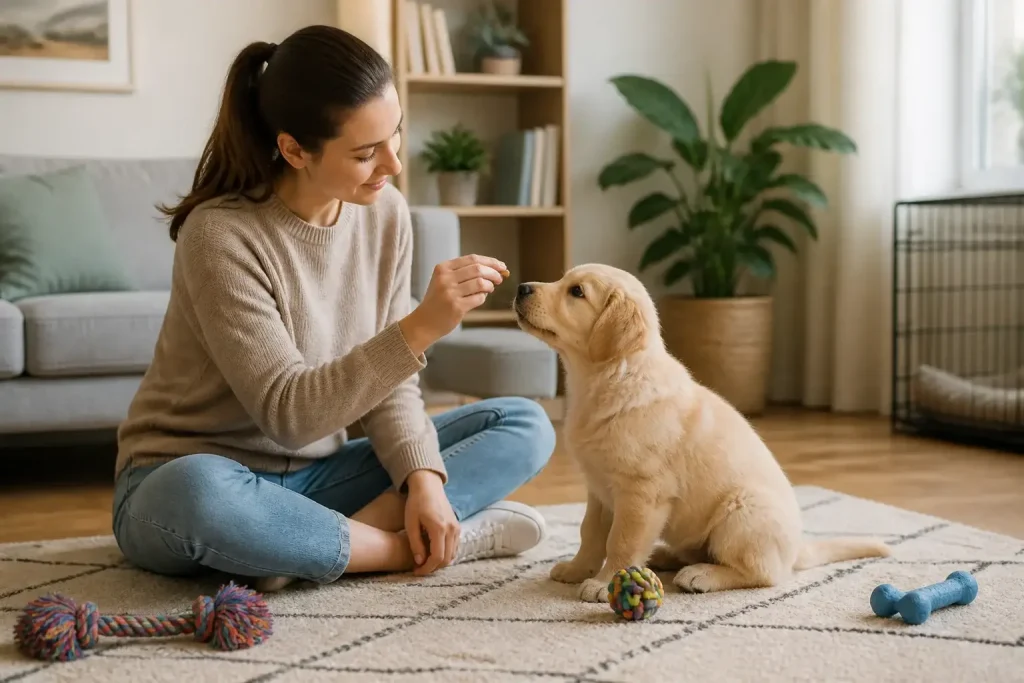
Puppy Training: A Practical Guide
Puppy training is the process of teaching a young dog how to live safely and comfortably with people, animals, and everyday surroundings. The most effective approach is clear, reward based, consistent, and appropriate for the puppy’s age. Training is not limited to obedience commands. It includes house training, socialization, handling, preventing unwanted habits, developing calm behavior, and building communication between puppy and caregiver.
Begin with realistic expectations. A puppy is learning while its brain, body, attention span, and ability to control impulses are still developing. Short lessons repeated frequently are more useful than demanding sessions. Reward the behavior you want, manage situations that encourage mistakes, and respond to errors without fear or harsh punishment. A well trained puppy is not a robot; it is a dog that understands household routines and has practical skills for making good choices.
Preparing for Training
Before lessons begin, arrange a safe learning environment. Remove tempting objects, secure electrical cords, protect household chemicals, and provide a comfortable sleeping area. Use a properly fitted collar or harness, a lightweight leash, food treats, chew items, and an appropriate crate or pen if you choose crate training. Keep rewards small, soft, and easy to eat quickly so they do not interrupt the lesson.
Everyone in the home should use the same cues and rules. If one person permits jumping while another discourages it, the puppy receives confusing information. Decide whether furniture is allowed, where the puppy should eliminate, which words mean sit or come, and how greetings will happen. Consistency does not require identical personalities; it requires predictable consequences.
Choose a quiet starting location with few distractions. As the puppy improves, practice the same skill in different rooms, outdoors, and near ordinary household activity. A behavior learned in the kitchen may not immediately appear at a park. Generalization must be taught gradually.
Building Trust and Motivation
Training works best when the puppy feels safe. Notice what motivates your individual dog. Food is often useful, but praise, play, sniffing, access to a toy, or permission to greet someone can also function as rewards. Deliver the reward immediately after the desired action, then gradually reduce visible treats while continuing to reinforce the behavior unpredictably.
Use a marker word such as “yes” or a clicker to identify the precise moment the puppy does something correctly. First pair the marker with a treat several times. Then mark simple behaviors, such as looking at you, and reward immediately. Keep your voice friendly and your movements calm.
End sessions while the puppy is still engaged. One successful minute may be more productive than ten tiring minutes. If the puppy loses focus, becomes frantic, or repeatedly fails, lower the difficulty, remove distractions, offer a brief break, and try again later. Training should challenge learning without overwhelming the learner.
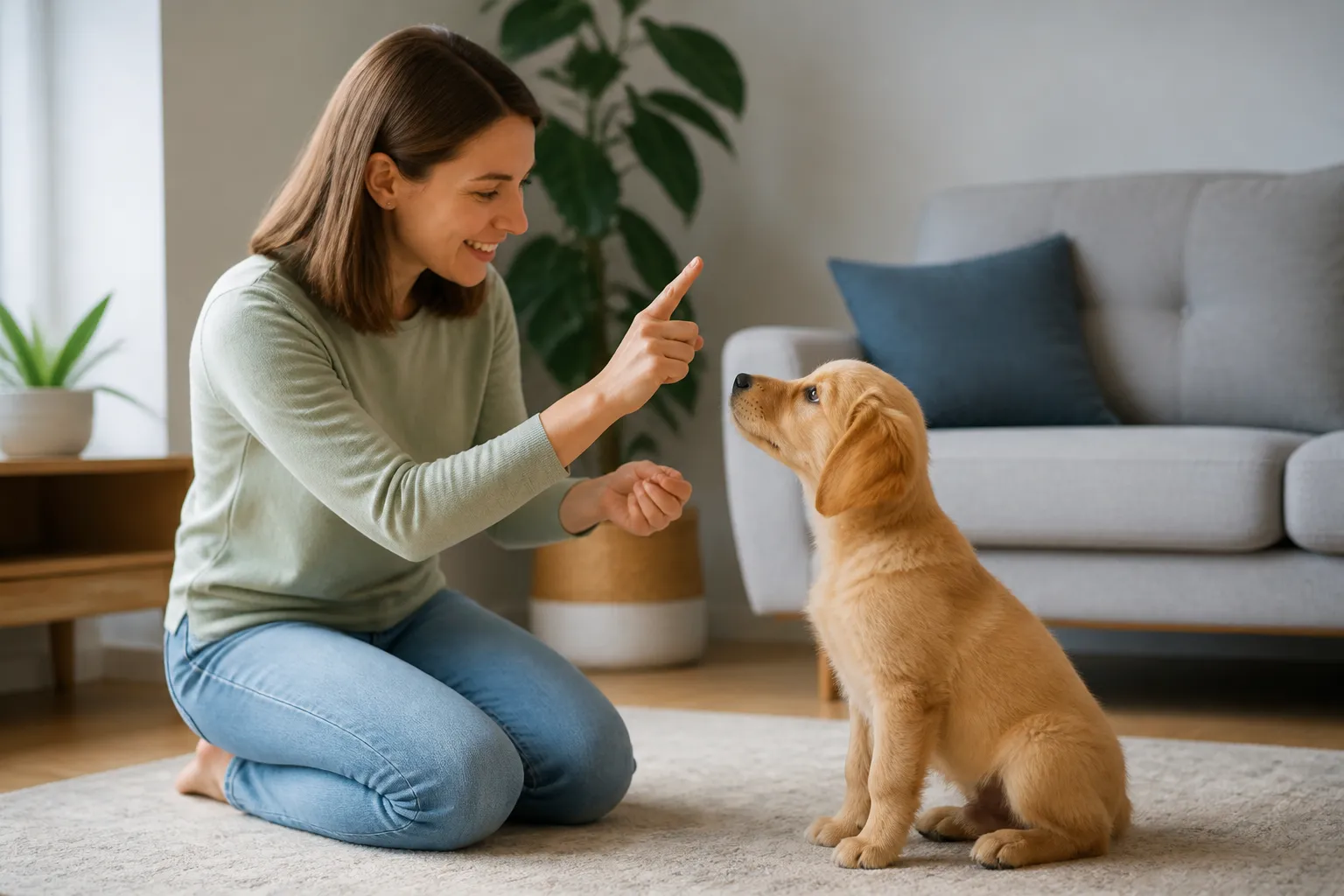
Avoid physical punishment, frightening corrections, and prolonged scolding. These methods can damage trust and may teach a puppy to hide behavior rather than improve it. They also do not explain what the puppy should do instead. Management and reinforcement provide clearer instruction.
Essential Skills
Responding to a Name
Say the puppy’s name once in a cheerful tone. When it turns toward you, mark the response and reward it. Practice in quiet areas, then increase distance and distractions. Never repeatedly call the name while doing something unpleasant, because the puppy may learn to ignore it. The name should mean, “Pay attention; something useful may happen.”
Sit and Down
Hold a treat near the puppy’s nose and move it slowly upward or slightly backward. As the head follows, the body may naturally lower into a sit. Mark the moment the puppy sits and reward. For a down, guide the treat from the nose toward the floor and forward. Avoid pushing the puppy’s shoulders down. Once the movement is reliable, add the spoken cue before the hand motion.
Come When Called
Recall is a safety skill. Begin indoors from a short distance. Say the puppy’s name and “come” in an inviting voice, then move backward or kneel. Reward generously when the puppy reaches you. Do not call the puppy to punish it, end every enjoyable activity, or perform something frightening. In outdoor areas, use a long line attached safely to suitable equipment until recall is dependable. Continue rewarding returns throughout the dog’s life.
Leave It and Drop It
“Leave it” means do not approach an object. “Drop it” means release something already in the mouth. Teach these separately with low value items first. Present a treat, wait for the puppy to disengage from the object, mark, and reward. For drop it, exchange a toy for food or another toy, then return the original item when safe. Returning possessions reduces the risk of guarding and teaches cooperation.
Loose Leash Walking
A leash should guide, not create constant tension. Reward the puppy for standing or walking near you with a slack leash. If it pulls, stop or change direction without jerking. Resume movement when the leash loosens. Practice for brief intervals and allow safe sniffing as part of the walk. Sniffing is enriching, not a failure of obedience.
House Training
Take the puppy to the chosen toilet area after waking, eating, drinking, playing, training, and sleeping. Very young puppies need frequent opportunities because bladder control develops gradually. Stay present, wait quietly, and reward immediately after elimination. A consistent route and phrase can help establish a routine.
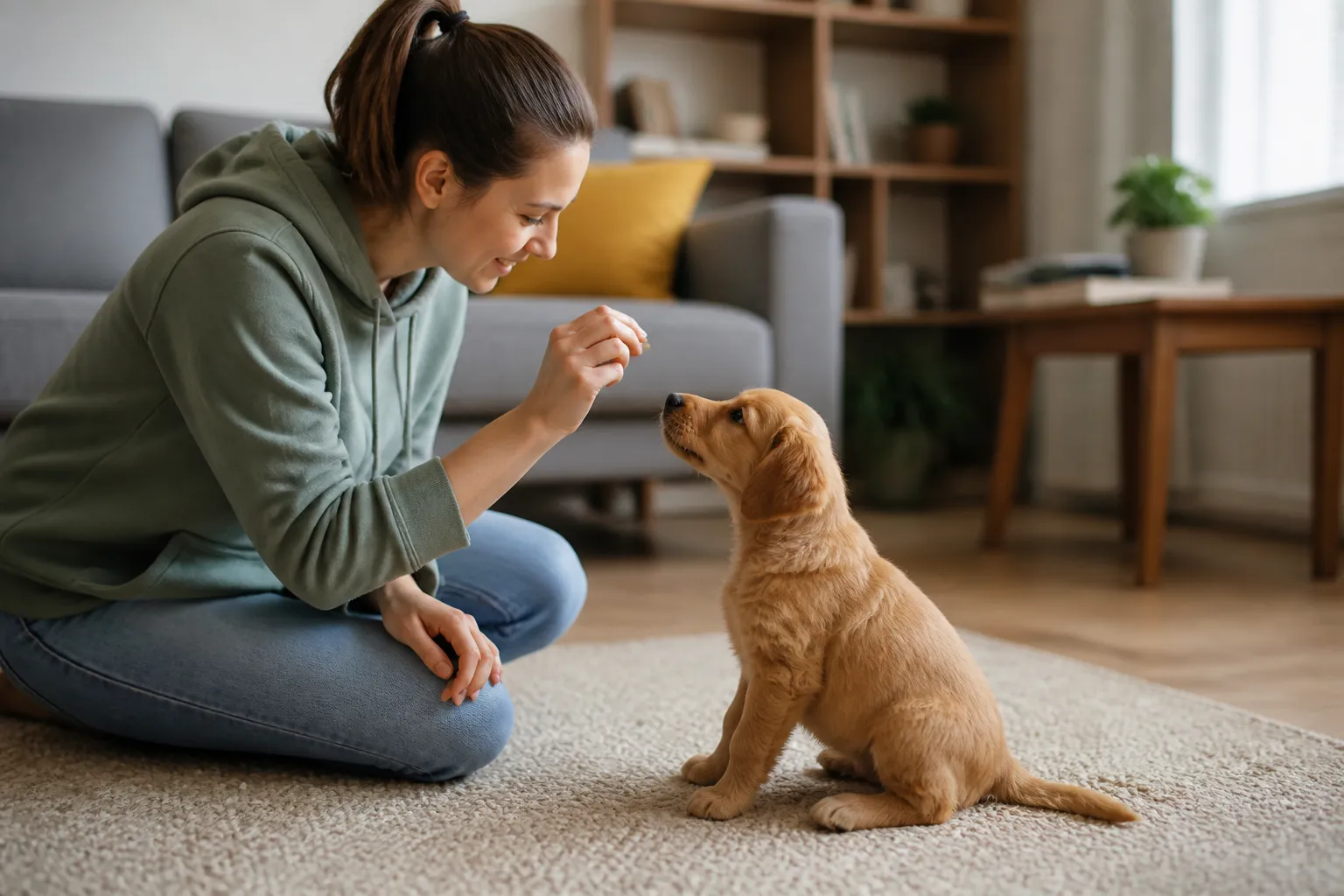
Learn the puppy’s signals, which may include circling, sniffing, wandering away, whining, or suddenly stopping play. When supervision is not possible, use a safe pen or crate for an appropriate period, but never treat confinement as punishment. A crate should be large enough for standing, turning, and resting comfortably, yet not so large that one end becomes a toilet.
Accidents are normal during learning. If you notice one beginning, interrupt gently and take the puppy outside. If you find a completed accident later, clean it thoroughly with a product designed to remove odor. Do not scold after the fact; the puppy cannot connect delayed punishment with the earlier action. Persistent accidents, straining, unusual thirst, diarrhea, or sudden regression warrant veterinary advice.
Crate, Rest, and Independence
A crate can support sleep, travel, house training, and safe management when introduced positively. Feed treats near the entrance, then inside, leaving the door open. Gradually close it for short periods while the puppy enjoys a chew. Increase duration only when the puppy remains relaxed. Provide toilet breaks and exercise appropriate to age.
A crate is not a substitute for companionship, activity, or supervision. Puppies need frequent interaction and sleep, and overtired behavior can resemble disobedience. Planned naps often improve biting, attention, and emotional regulation. Teach the puppy that being alone briefly is safe by leaving for short, easy intervals and returning before distress escalates. If separation reactions are intense, seek guidance from a qualified behavior professional and a veterinarian.
Socialization and Handling
Socialization means carefully introducing the puppy to varied people, surfaces, sounds, locations, vehicles, grooming routines, and healthy, suitable dogs. The aim is not to force interaction. It is to create calm, positive experiences. Let the puppy observe from a comfortable distance, offer treats, and allow retreat. If the puppy freezes, hides, trembles, growls, or refuses food, the situation is too difficult. Increase distance and simplify.
Pair household sounds with food at low volume. Briefly touch paws, ears, collar area, and tail, rewarding calm cooperation. Practice gentle brushing, mouth observation, harness placement, and stepping onto different surfaces. Handling should be gradual and never used to trap a frightened puppy. Ask a veterinarian about safe vaccination timing and suitable social opportunities in your area.
Well managed puppy classes can teach attention around distractions and provide controlled learning. Choose classes that use humane methods, screen participating dogs, maintain cleanliness, and allow puppies to work below their stress threshold. Socialization should continue beyond a single class.
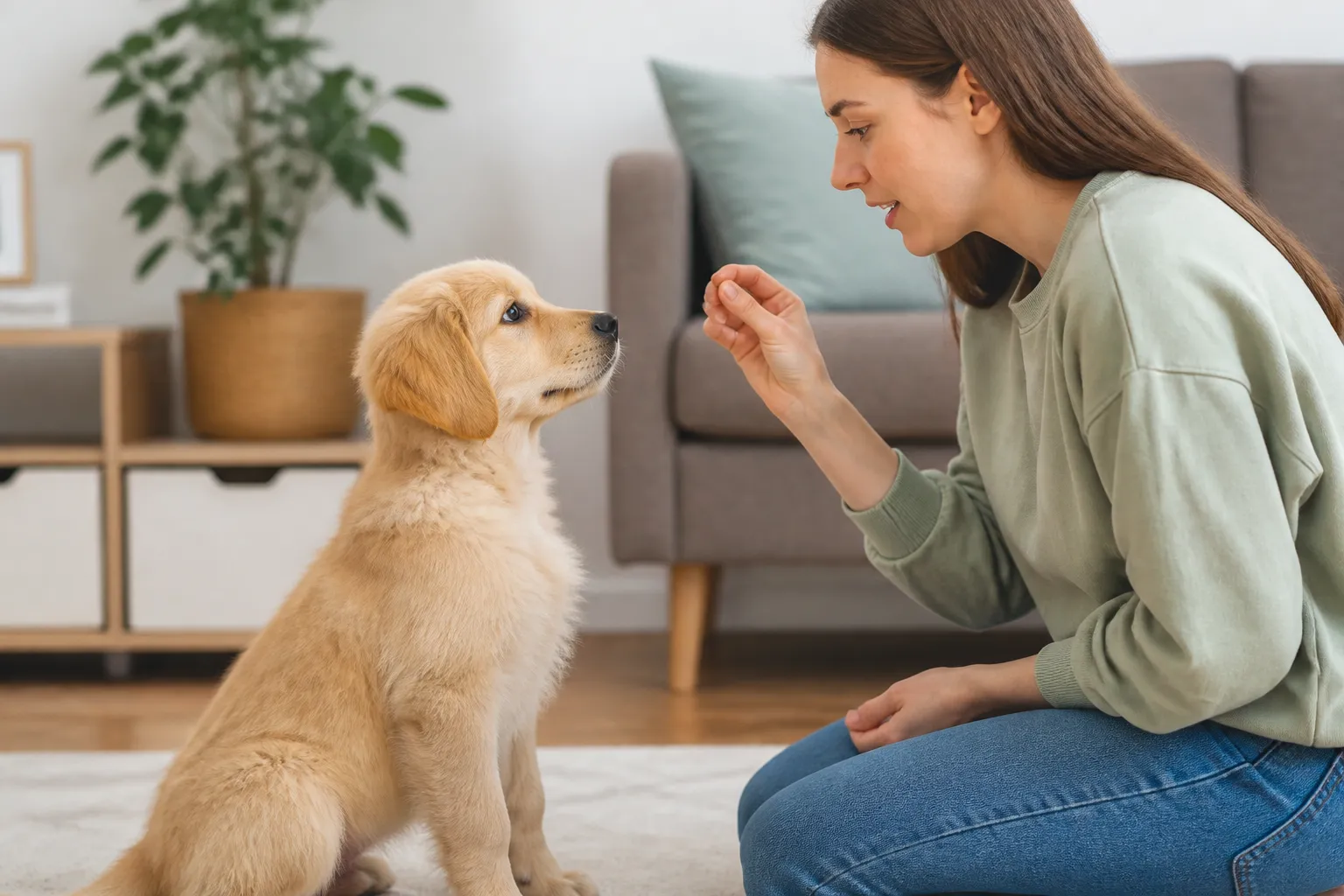
Preventing Common Problems
Puppy biting is normal exploration and play, but skin and clothing need boundaries. Offer a toy, pause interaction when teeth touch skin, and resume when the puppy is calm. Avoid wrestling with hands or punishing growls. If biting becomes frantic, provide a quiet rest period after checking basic needs such as sleep, food, water, and elimination.
Jumping is reinforced whenever a puppy receives attention while its paws are on people. Ask visitors to wait for four paws on the floor, then reward calm greeting. A leash, gate, or pen can help prevent rehearsal. Teach an alternative such as sitting or touching a hand.
Chewing is managed through prevention and choice. Keep valuable objects inaccessible, provide several safe chew options, and praise use of those items. Rotate toys to preserve interest. Do not give objects that splinter, break into dangerous pieces, or create a choking risk; ask a veterinarian about suitable materials for your dog.
Barking communicates arousal, uncertainty, attention seeking, alarm, or other needs. Identify the trigger before responding. Reduce exposure, reward quiet observation, teach an alternative behavior, and provide appropriate exercise and rest. Do not assume every bark should be stopped immediately. Sudden or excessive vocalization may justify professional assessment.
Guarding food, toys, spaces, or people should be taken seriously. Do not forcibly remove possessions or punish warning signals. Manage access, use safe trades, and consult a qualified behavior professional, especially if there is snapping or biting.
A Useful Daily Routine
A puppy’s routine should balance sleep, elimination opportunities, meals, play, training, exploration, and calm time. After waking, offer a toilet break, then a short activity or lesson. Following meals and play, provide another toilet opportunity. Several tiny training sessions can be scattered through ordinary life: reward waiting at doors, looking at you before crossing a road, settling while you prepare food, or releasing a toy.
Mental enrichment does not require constant excitement. Food puzzles, scent games, supervised chewing, simple shaping exercises, and exploring safe environments can tire a puppy thoughtfully. Physical activity should be suitable for the puppy’s age, health, breed tendencies, and veterinary recommendations. Avoid using intense exercise to manage every behavior, because the puppy may become fitter without becoming calmer.

Track progress in a notebook. Record successful cues, distractions, accidents, sleep, triggers, and rewards that work well. Patterns help you adjust the plan instead of guessing.
Troubleshooting Training
When progress stalls, examine the environment first. Is the request too difficult? Has the puppy slept enough? Are rewards valuable in this setting? Is the cue being repeated so often that it loses meaning? Is pain, illness, fear, or digestive discomfort affecting behavior? Lowering criteria often restores success.
Teach one change at a time. If the puppy can sit in a quiet room, do not immediately expect a sit beside a busy road while people approach. Increase distance, duration, distraction, or difficulty separately. Reward small improvements, such as looking at a distraction and then returning attention to you.
Regression is common during growth, environmental changes, illness, or adolescence. Return temporarily to easier steps and reinforce familiar routines. Avoid labeling the puppy stubborn; the behavior may reflect confusion, competing motivation, fear, or an unmet need.
Choosing Training Products
Useful equipment is simple, safe, and suited to the individual puppy. A flat collar can hold identification, while a comfortable harness may reduce pressure during walks. Check fit regularly because puppies grow quickly. You should be able to place appropriate fingers beneath the equipment without it slipping over the head or restricting breathing.
Treat pouches improve timing, but ordinary food can work. Select treats that match the puppy’s diet and health needs, and account for training rewards when planning meals. Durable toys should be inspected frequently and removed if damaged. A washable mat can give the puppy a clear resting place and support settlement exercises.
Electronic shock devices, aversive collars, and equipment that causes pain or fear are not necessary for humane puppy training. If a product claims to solve behavior instantly, examine its method and limitations carefully. No tool replaces supervision, teaching, enrichment, or professional help when problems are serious.
Frequently Asked Questions
When should puppy training start?
Training can begin as soon as the puppy arrives, using gentle exercises, household routines, name recognition, handling, and rewards. Lessons should match the puppy’s developmental ability. Early training is not about demanding perfect obedience; it is about creating safe habits and positive communication.
How long should each session last?
There is no universal duration. Start with a few successful repetitions and stop before concentration collapses. Some puppies can work longer than others, but several brief sessions generally fit young dogs better than one extended lesson. Play, rest, and ordinary routines can all become learning opportunities.
Should I use treats forever?
Treats are valuable for teaching and difficult environments, but dependence on a visible treat can be reduced. First reward reliably, then hide the treat, use praise or play for some repetitions, and vary reinforcement. Continue rewarding important safety behaviors, particularly recall, even after they appear reliable.
What if my puppy ignores me outdoors?
Outdoor environments contain powerful smells, movement, sounds, and social distractions. Return to a quieter location, increase distance from distractions, use better rewards, and shorten the lesson. Do not repeat the cue endlessly. Build attention gradually, and use a long line where appropriate for safety.
Is crate whining normal?
Some brief protest can occur, but persistent distress should not be ignored. Check toilet needs, temperature, comfort, and whether the crate duration increased too quickly. Practice shorter periods and reward calm behavior. Panic, self injury, or severe separation signs require professional guidance rather than forced confinement.
How do I find professional help?
Look for a trainer who explains methods clearly, uses reward based teaching, welcomes questions, and avoids promises of instant results or dominance based language. A veterinarian can help investigate medical contributors and recommend qualified behavior specialists. Seek help early when fear, aggression, guarding, or separation distress appears.
Conclusion
Successful puppy training is a long term teaching relationship, not a test of control. Provide safety, predictable routines, appropriate rest, rewarding choices, and gradual exposure to the world. Teach practical skills in small steps, prevent rehearsal of unwanted behavior, and respond to mistakes with information rather than anger. Progress may be uneven, but patient consistency creates a puppy that can communicate, recover from distractions, cooperate with handling, and participate confidently in family life. When a challenge exceeds your knowledge, professional veterinary or behavior support is a responsible part of training, not a failure.