
Building a Reliable Foundation
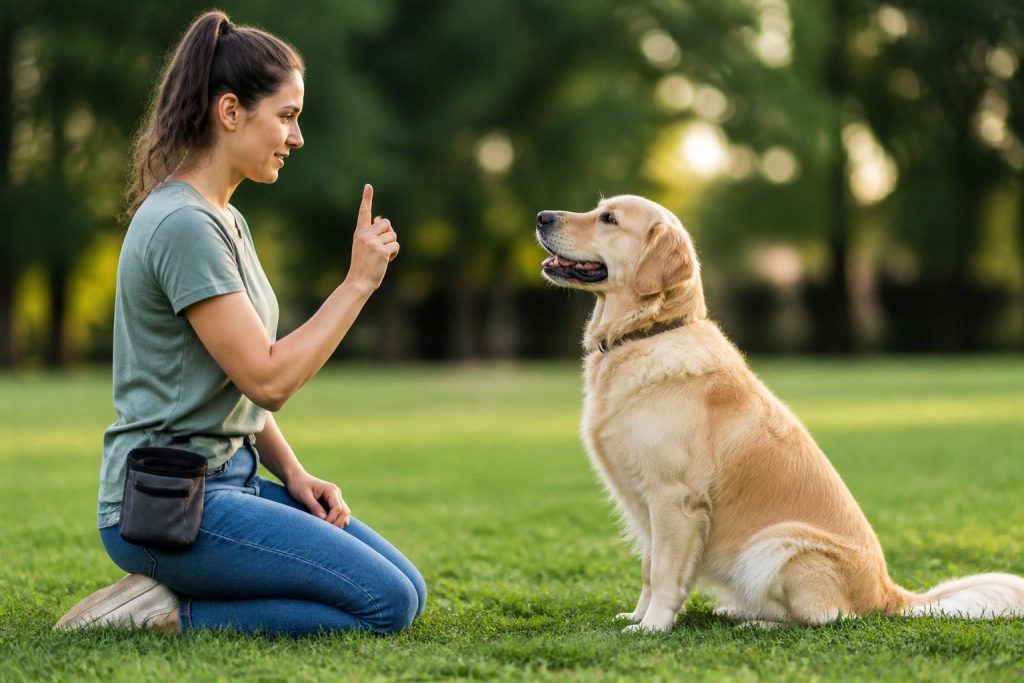
Effective dog training is a structured process that teaches a dog how to respond safely and appropriately in everyday situations. It is not limited to obedience competitions or correcting unwanted behavior. Training helps dogs understand household expectations, communicate with people, manage excitement, and make better choices around animals, visitors, food, traffic, and unfamiliar environments.
A successful program combines clear communication, humane methods, repetition, and realistic goals. Dogs learn through consequences. Behaviors that produce rewarding outcomes become more likely, while behaviors that receive no useful result gradually lose strength. Rewards may include food, toys, play, access to outdoor exploration, praise, or permission to greet someone. The most effective reward depends on the individual dog and the situation.
Training should begin with management. Preventing repeated mistakes is often easier than correcting them later. Baby gates, secure leashes, covered rubbish bins, closed doors, and carefully arranged furniture can reduce opportunities for jumping, stealing, chasing, or chewing. Management is not a substitute for teaching, but it protects the dog and household while learning occurs.
Choosing Appropriate Goals
Goals should be specific, observable, and relevant to daily life. “Be good” is too vague to train. “Keep four paws on the floor when greeting guests” is measurable. Other useful goals include walking without constant pulling, waiting before exiting a door, coming when called, settling on a mat, releasing an object, and remaining calm during grooming.
Prioritize safety and quality of life. A reliable recall, tolerance of handling, and ability to settle may be more valuable than performing numerous tricks. Consider age, breed tendencies, medical history, previous experiences, temperament, and the dog’s living environment. Puppies, adolescent dogs, adults, and senior dogs can all learn, but their energy, attention span, physical ability, and reinforcement preferences may differ.
Before beginning, schedule a veterinary examination if behavior changes suddenly, especially when fear, aggression, confusion, pain, excessive drinking, or house soiling appears. Physical discomfort can affect learning and may require medical treatment. Training cannot resolve every problem caused by illness, injury, anxiety, or neurological change.
Essential Training Principles
Reinforcement and Timing
Reward the behavior you want as soon as possible. A delay of several seconds may cause the dog to associate the reward with a different action, such as standing, turning away, or jumping. A marker word such as “yes” or a clicker can identify the correct moment, provided the reward follows promptly.
Begin in a quiet location with limited distractions. Once the dog responds consistently, increase difficulty gradually by changing distance, duration, environment, or distraction level. Raising only one challenge at a time makes progress easier to evaluate. If performance declines sharply, the exercise has become too difficult; reduce the challenge and rebuild success.
Use a high rate of reinforcement during early learning. As the behavior becomes reliable, vary rewards while continuing to provide meaningful reinforcement. Intermittent rewards can strengthen persistence, but unpredictable withholding during initial teaching may create confusion. Rewards should remain valuable enough to compete with environmental distractions.
Clear Cues
A cue should have one consistent meaning. If “down” sometimes means lie down and sometimes means stop jumping, the dog receives unclear information. Family members should use similar words, gestures, and expectations. Avoid repeating a cue many times. Say it once, help the dog succeed when necessary, and reward the response.
Teach a release cue, such as “free,” to show when an exercise ends. Without a release signal, a dog may not know how long to remain seated, lying down, or waiting. Practice short durations first, then extend them in small increments. Return to the dog or deliver rewards calmly so excitement does not immediately undo the behavior.
Humane Error Handling
Errors provide information. A dog that jumps may need more distance from guests, better reinforcement for standing calmly, or a nap before training. A dog that ignores recall may be distracted, uncertain, or insufficiently motivated. Punishment can suppress visible behavior without changing the underlying emotion and may increase fear, avoidance, or defensive aggression.
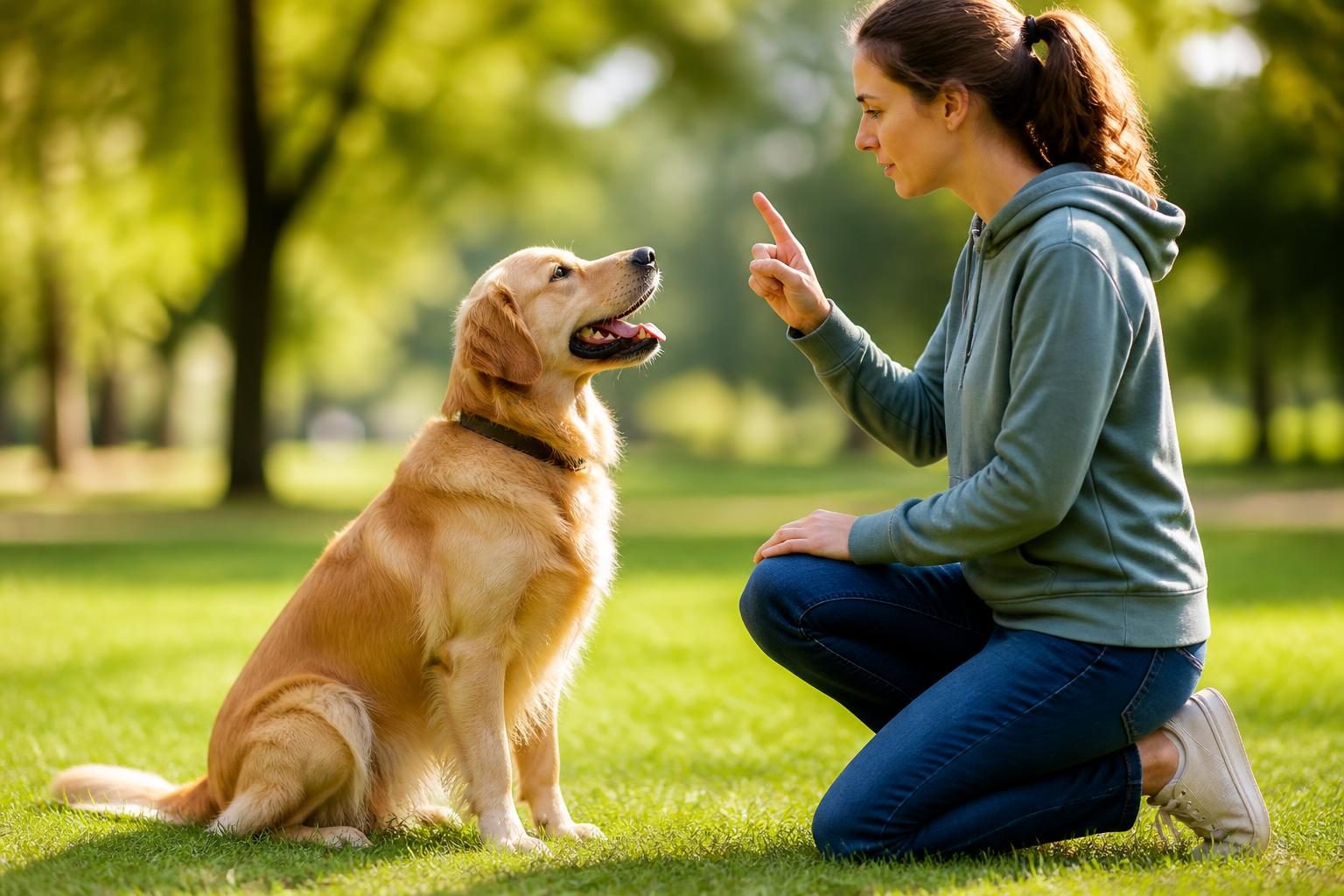
Instead of scolding, interrupt safely, reset the environment, and teach an alternative. If a dog grabs clothing, offer a toy and reinforce play with that toy. If the dog barks at a window, block access temporarily, lower visual stimulation, and reward quiet behavior at a comfortable distance from the trigger.
Core Skills for Everyday Life
Name Response and Attention
Start by saying the dog’s name in a calm voice. When the dog looks toward you, mark and reward immediately. Practice indoors, then in progressively more distracting settings. The name should predict useful information and positive interaction, not constant reprimands. Once reliable, use it to gain attention before giving another cue.
Sit, Down, and Stand
Teach positions through luring or capturing natural behavior. Move a reward slowly to guide the dog, mark the completed position, and deliver the reward while the dog remains there. Avoid physically forcing joints into position. Each posture has practical value: sitting can support polite greetings, lying down can promote calmness, and standing can assist handling and examination.
Wait and Leave It
“Wait” teaches temporary hesitation, whereas “stay” commonly indicates maintaining a position until released. Begin with a brief pause, reward, and release before the dog moves. Gradually add distance and duration. For “leave it,” present a low-value item in a closed hand. Reward the dog for moving away, then progress carefully to visible objects and real-life distractions.
Recall
Recall training requires exceptional reinforcement and careful safety management. Begin a few steps away in a secure area. Call once using an encouraging tone, move backward, and reward generously when the dog reaches you. Never call for punishment, nail trimming, or an unpleasant interruption during early practice. Use a long line outdoors until reliability is demonstrated.
Do not test recall near roads, wildlife, or uncontrolled dogs. Even well-trained dogs may ignore a cue when frightened, injured, or highly stimulated. A secure fence and appropriate equipment remain essential.
Loose-Leash Walking
Loose-leash walking does not require a dog to remain beside a person every second. It means the leash remains reasonably slack, allowing safe movement and exploration. Reward the dog for being near you, changing direction with you, or checking in voluntarily. When pulling begins, stop or turn without jerking, then resume when slack returns.
Use equipment that supports safety and comfort. A properly fitted harness may reduce pressure on the neck, while a flat collar may be appropriate for some dogs. Equipment cannot replace training, and any tool should be introduced gradually and monitored for discomfort.
Settling and Handling
Teach a dog to relax on a mat by rewarding calm postures, soft facial muscles, and reduced movement. Begin after exercise, not during peak excitement. Gradually practice while people move, food is prepared, doors open, or sounds occur. This skill is useful for visitors, restaurants, veterinary appointments, and household routines.
Pair gentle handling with rewards. Touch ears, paws, tail, collar, and body briefly, then release and reward. Progress slowly. If the dog freezes, struggles, growls, or tries to escape, stop and seek professional guidance rather than forcing contact.
Addressing Common Challenges
Jumping and Mouthing
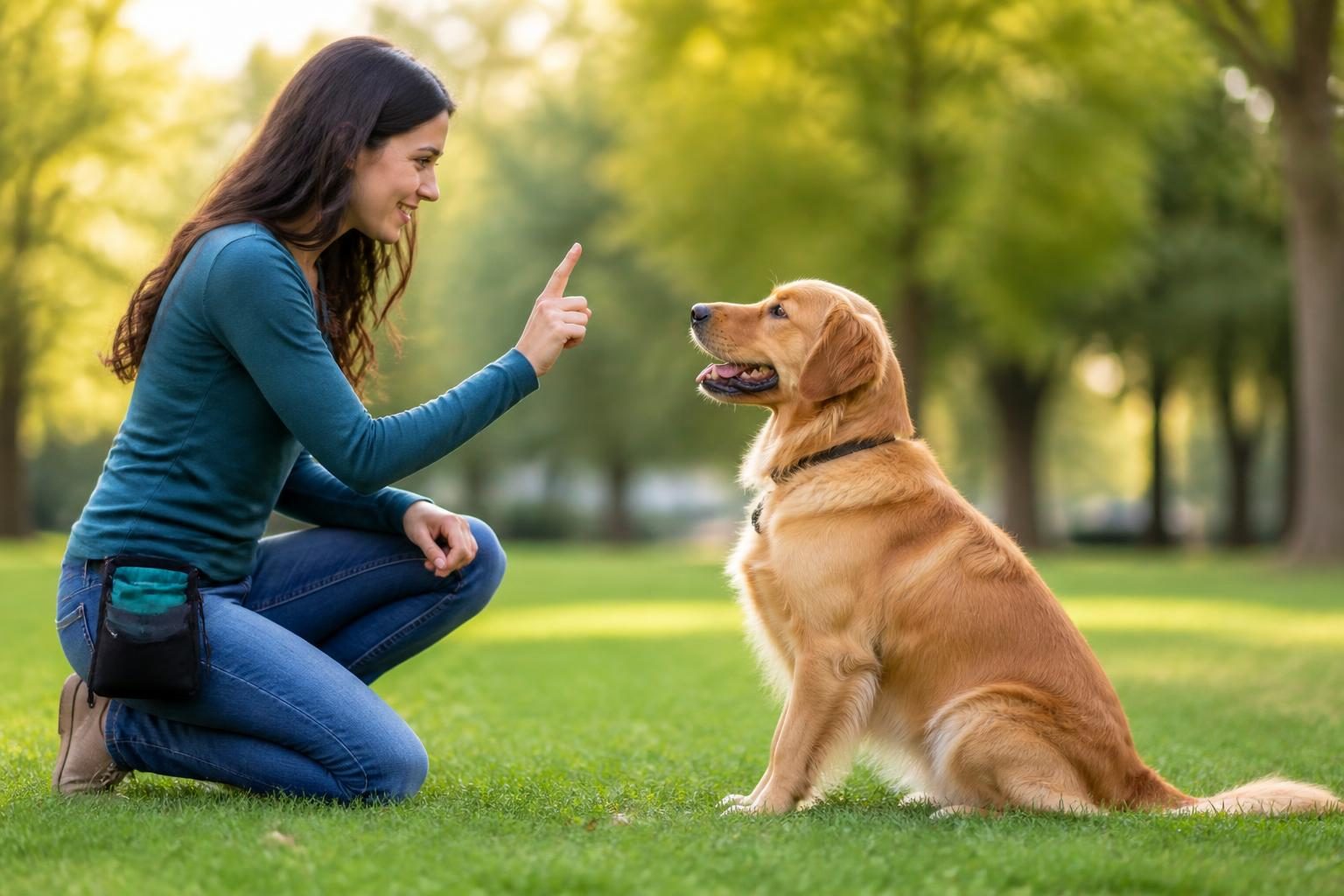
Jumping often succeeds because it produces attention. Turn away, keep hands quiet, and reward four paws on the floor. Guests should follow the same procedure. Provide a toy, scatter food, or request a practiced behavior before greeting. Puppies may mouth because of play, teething, fatigue, or inadequate enrichment. Redirect to suitable toys and schedule regular rest.
Barking
Barking has different causes, including alarm, frustration, attention seeking, territorial behavior, fear, and excitement. Identify the trigger, distance, time of day, and consequence. Reduce exposure where possible, teach an alternative such as looking at the handler, and reward quiet pauses. Avoid shouting, which may intensify arousal or sound like participation.
Chewing and Digging
Chewing is normal, particularly for young dogs, but access should be directed toward safe items. Rotate toys, supervise novel chews, and remove dangerous objects. Digging may reflect exploration, cooling, escape, or excess energy. Provide a designated digging area, shade, enrichment, and secure boundaries. Do not punish after the event; the dog is unlikely to connect delayed correction with the original action.
Fear and Reactivity
A fearful or reactive dog may bark, lunge, hide, freeze, or growl when confronted by a person, animal, sound, or object. Increase distance until the dog can notice the trigger without losing control. Pair the trigger with highly valued food, then leave or create more distance. This process, called desensitization and counterconditioning, must remain gradual.
Do not force greetings, flood the dog with frightening exposure, or punish warning signals. Consult a qualified behavior professional when there is biting risk, escalating intensity, or severe distress. A veterinary behaviorist may recommend medication alongside behavior modification.
Designing a Practical Program
Sessions and Routine
Short, frequent sessions usually outperform occasional long sessions. Two to five minutes may be sufficient for a puppy or distracted dog; older dogs may work longer if they remain engaged. End while the dog is still succeeding. Incorporate learning into ordinary routines: reward waiting at doors, calm behavior during meals, attention before crossing streets, and cooperation during equipment use.
Keep a simple record of the cue, environment, response rate, distractions, rewards, and challenges. Written observations reveal patterns that memory can miss. If progress stops, examine sleep, exercise, pain, reinforcement value, environmental difficulty, and whether different household members are applying conflicting rules.
Enrichment and Wellbeing
Training works best when basic needs are met. Dogs need appropriate sleep, movement, social contact, safe exploration, chewing opportunities, and mental stimulation. Exercise should match age, health, and breed characteristics. Overexercising growing puppies or conditioning a dog beyond physical capacity may cause injury.
Food puzzles, scent games, shaping exercises, supervised play, and exploratory walks can reduce boredom. Enrichment should not be used to exhaust a distressed dog while ignoring fear or anxiety. Watch body language for relaxed movement, loose posture, normal breathing, and willingness to engage.
Selecting Professional Help
Choose a trainer who explains methods clearly, welcomes questions, uses humane evidence-based procedures, and adapts plans to the individual dog. Be cautious of guarantees, claims that one technique suits every dog, intimidation-based demonstrations, or advice to suppress growling through punishment. For aggression, severe anxiety, compulsive behavior, or complex cases, seek a credentialed behavior consultant or veterinary behaviorist.
Ask how the professional handles mistakes, what equipment is required, how progress is measured, and what support is available between sessions. A good trainer teaches the people as carefully as the dog.
Frequently Asked Questions
How old should a dog be when training begins?
Training can begin as soon as a puppy enters a home, using gentle handling, name games, toileting routines, and simple rewards. Older dogs can learn equally well when instruction is adjusted for health, history, and motivation. Learning ability does not disappear with age.
How long does training take?
The answer depends on the behavior, consistency, environment, genetics, previous learning, and emotional state. Simple cues may develop within days, while reliable recall, loose-leash walking, or fear reduction can require months. Reliability is built through repeated practice across locations, not through one successful session.
Are treats necessary?
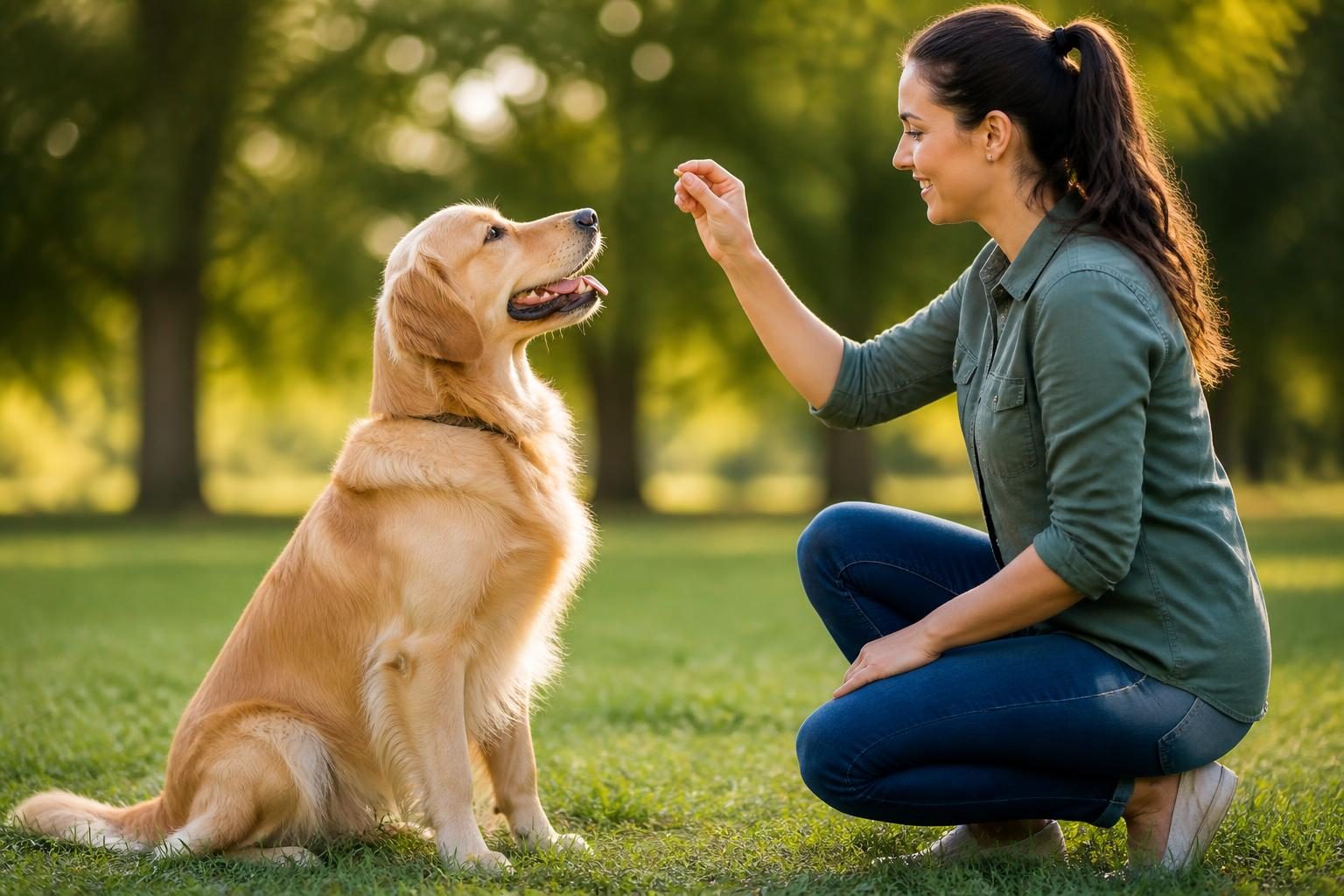
Food is often an efficient reward, especially during early learning, but it is not the only option. Toys, play, praise, sniffing, access to a preferred location, and social interaction can reinforce behavior. Deliver rewards strategically, use small portions, and include them within the dog’s daily nutritional plan.
Should a dog be trained before exercise or afterward?
Both can be useful. Brief attention exercises may work before activity, while settling practice may be easier after moderate exercise. Avoid demanding difficult work when the dog is exhausted, overheated, hungry, painful, or excessively aroused. Observe the individual and adjust timing accordingly.
What should I do if my dog will not listen?
First check whether the cue is understood in that setting. Reduce distractions, increase reward value, shorten the session, and provide clearer guidance. Do not repeat the cue louder. If the dog seems unable to respond because of fear, pain, or overwhelming stimulation, move to a safer, easier context.
Is crate training required?
No. A crate can support travel, rest, housetraining, and veterinary care when introduced positively, but some dogs prefer a pen, bed, or gated room. Never use confinement as punishment or leave a dog confined beyond its physical and emotional capacity. Provide ventilation, water when appropriate, comfortable bedding, and regular breaks.
Can training stop once a dog is obedient?
Training should become maintenance rather than disappear. Continue reinforcing important skills in varied situations and refresh them periodically. Life changes, distractions emerge, and behavior may decline without practice. Ongoing learning also provides mental stimulation and strengthens the relationship.
Conclusion
dog training is a practical communication system built through trust, clarity, prevention, and consistent reinforcement. The most useful program teaches behaviors that improve safety, cooperation, emotional regulation, and shared daily life. Begin with manageable goals, reward promptly, increase difficulty gradually, and protect the dog from situations it is not ready to handle.
Progress is rarely perfectly linear. Setbacks may follow illness, adolescence, environmental change, insufficient rest, or an unexpectedly powerful distraction. Treat each setback as information rather than failure. Adjust the plan, seek qualified help when needed, and continue measuring small improvements.
A well-trained dog is not one that never makes mistakes. It is a dog whose needs are understood, whose behavior has been thoughtfully guided, and whose human companions can respond constructively. With patience, humane methods, and regular practice, training becomes more than a collection of commands. It becomes a dependable foundation for safety, confidence, cooperation, and a rewarding lifelong relationship.