

Understanding Behavioral Dog Training
Behavioral dog training is a structured approach to changing a dog’s emotional responses, habits, and everyday choices. Rather than focusing only on commands such as sit or stay, it examines why a behavior occurs and teaches a safer, more useful alternative. Barking, jumping, pulling, guarding, fear, separation distress, and reactivity may all reflect anxiety, frustration, confusion, excessive excitement, or learned reinforcement. Effective training addresses those causes while protecting the dog’s welfare and the family’s safety.
A good program is not a quick fix or a promise of perfect obedience. It is a practical partnership involving observation, management, communication, and repeated learning. The trainer identifies triggers, records patterns, adjusts the environment, and rewards desirable behavior. Progress is measured in small improvements, such as recovering more quickly after seeing another dog or relaxing alone for several minutes longer. Consistency matters more than intensity, and humane methods generally produce clearer, more dependable results than punishment.
Behavioral training can be delivered through private consultations, home visits, group classes, virtual coaching, written plans, and follow-up support. The most valuable service begins with an assessment rather than a standard package. Each dog has a different history, temperament, physical condition, learning speed, and living environment. A customized plan makes training more realistic and helps guardians understand what to do between sessions.
What the Training Includes
Initial Behavioral Assessment
The first stage gathers a complete picture. A professional may ask when the behavior began, how often it happens, what precedes it, what follows it, and whether anyone has been injured. The assessment should include sleep, exercise, diet, previous training, household changes, medications, and relationships with people or animals. Video recordings can reveal details that are difficult to describe accurately.
The trainer then observes body language. Lip licking, yawning, turning away, stiff posture, pinned ears, whale eye, pacing, growling, and sudden stillness can communicate discomfort or rising arousal. Recognizing these signals allows guardians to intervene before a dog reaches a threshold where learning becomes difficult. The assessment should end with prioritized goals, immediate safety steps, and a method for tracking progress.
Management and Prevention
Management prevents rehearsal of unwanted behavior while training develops new skills. It may involve baby gates, secure harnesses, window coverings, covered crates, predictable routes, quiet resting areas, or separating animals during meals. Management is not failure or avoidance; it is responsible risk reduction. A dog cannot practice lunging at visitors if a gate and distance prevent access, giving the dog an opportunity to learn calm behavior instead.
Prevention also means planning for predictable situations. Before guests arrive, the dog might receive exercise, enrichment, and a food puzzle in a comfortable room. Before a walk, the guardian can prepare high-value rewards and choose a low-traffic route. Clear routines reduce uncertainty and make desirable behavior easier to repeat.

Reward-Based Skill Building
Reward-based training reinforces behavior the guardian wants to see. Rewards may include food, play, access to sniffing, praise, movement, or a preferred resting place. The reward must matter to the individual dog and should arrive immediately after the desired action. If a dog looks at a trigger and then turns toward the handler, delivering a treat teaches that checking in is valuable.
Important foundation skills include responding to a name, orienting toward a handler, hand targeting, settling on a mat, loose-leash walking, leaving an item, and calmly moving away. These skills are taught first in easy settings, then gradually practiced around mild distractions. Raising difficulty too quickly can create mistakes and frustration, so the trainer changes only one variable at a time whenever possible.
Desensitization and Counterconditioning
For fear or reactivity, desensitization presents a trigger at an intensity the dog can handle without panic. Counterconditioning pairs that trigger with something positive, such as food, creating a new emotional association. Distance, duration, movement, and visual access are adjusted carefully. A dog who cannot eat, respond, or recover is probably too close or overwhelmed.
For example, a dog worried by bicycles might begin by noticing a stationary bicycle far away, receiving treats, and leaving before tension rises. Later sessions could involve a bicycle moving slowly at a greater distance. Success depends on repetition and controlled exposure, not forcing the dog to endure frightening situations. Flooding, intimidation, and deliberate provocation can worsen fear and damage trust.
Household Coaching
Guardians are central to the program. Coaching explains timing, reward delivery, leash handling, observation, and realistic expectations. Every person should use similar cues and rules. If one person rewards jumping while another ignores it, the dog receives inconsistent information and the behavior may become stronger.
A written plan can specify daily exercises, management procedures, trigger distances, emergency steps, and signs of progress. Short sessions are often more effective than exhausting drills. Two or three minutes of successful practice, repeated throughout the day, can build a habit while preserving enthusiasm.
Common Behavioral Concerns
Barking
Barking may signal alarm, excitement, frustration, fear, territorial concern, or a desire for attention. The solution depends on the function. Blocking a view can reduce window alarms, while teaching a dog to bring a toy may redirect greeting excitement. Rewarding quiet pauses, increasing distance from triggers, and meeting exercise and enrichment needs can help. Shouting often adds noise and arousal, making the problem worse.
Jumping and Mouthing
Jumping is frequently reinforced by attention. Turning away, keeping hands still, and rewarding four paws on the floor teach a clearer alternative. For puppies, mouthing is normal exploration, but painful biting requires calm redirection to toys, rest, and appropriate interaction. If excitement escalates, ending the game briefly can provide information without fear or physical correction.
Leash Reactivity
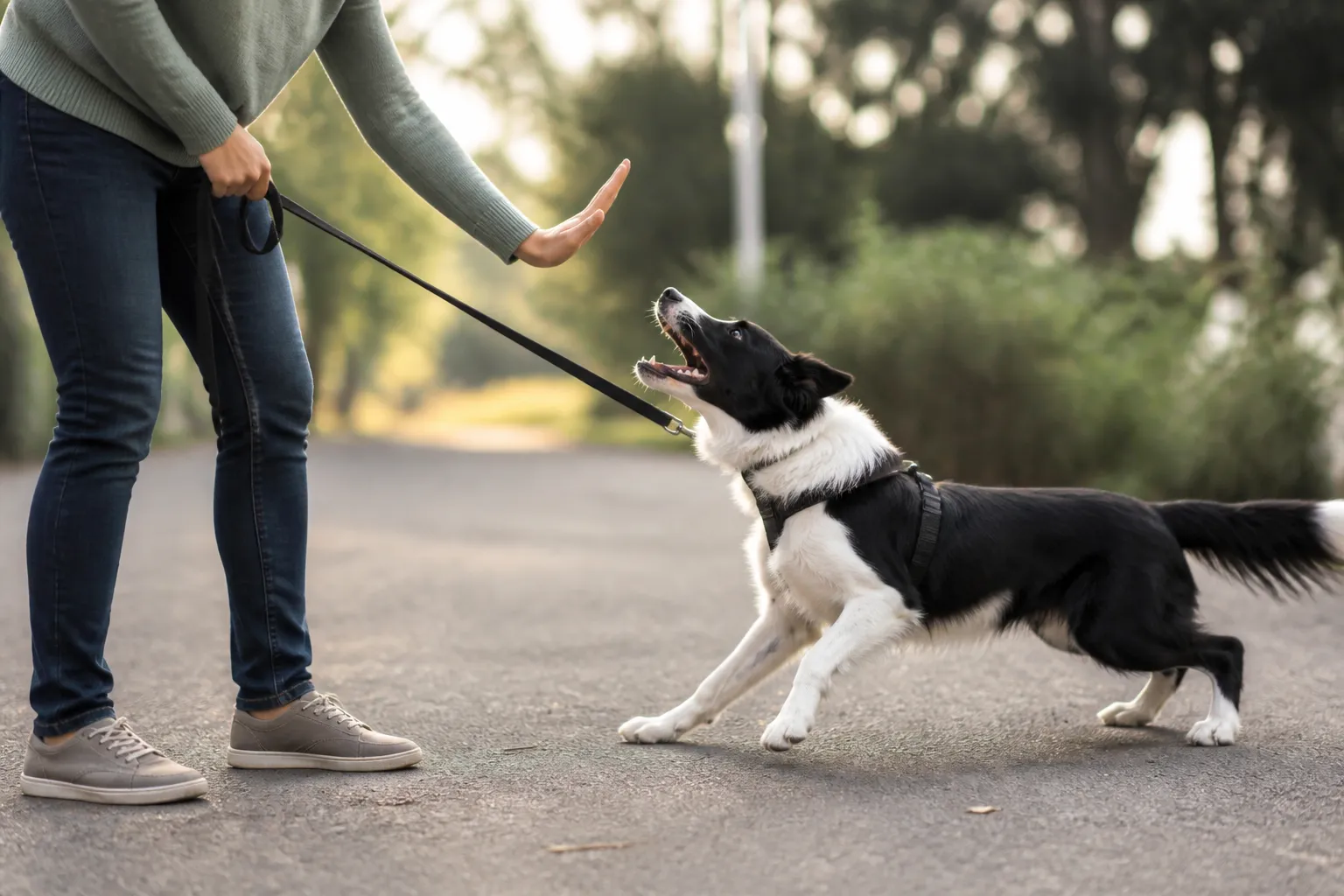
A reactive dog may bark, lunge, freeze, or pull toward people, dogs, vehicles, or sounds. The behavior can arise from fear, frustration, or excitement. Begin at a distance where the dog can notice the trigger and still think. Mark calm observation, feed repeatedly, and move away before escalation. A well-fitted harness, secure backup attachment, and practiced emergency turn improve safety.
Separation-Related Distress
Separation distress involves anxiety when a dog is left alone or expects departure. Signs can include vocalizing, destruction, drooling, pacing, escape attempts, or toileting. Treatment usually requires gradual absences that remain below the dog’s panic point. Departure cues may be practiced without leaving, and relaxation can be paired with brief, successful separations. Severe cases benefit from veterinary guidance and may require medication alongside behavior modification.
Resource Guarding
Guarding food, toys, resting places, or people should be treated seriously. Punishing growling may suppress a warning without changing discomfort, increasing bite risk. Instead, prevent confrontation, provide separation during meals, and work with an experienced professional on carefully planned exchanges. Children should never be asked to test a guarding dog or remove possessions.
Handling and Grooming Difficulties
Resistance to nail trimming, bathing, brushing, or veterinary handling often reflects pain, fear, or inadequate preparation. Start with very small steps: show the tool, provide a reward, touch briefly, then stop. Pairing handling with food and respecting early stress signals builds cooperation. A veterinarian should investigate pain, skin disease, ear problems, mobility issues, or other medical causes.

Designing a Practical Training Plan
A useful plan defines one behavior in observable terms. “Be confident” is difficult to measure, but “remain on the mat for thirty seconds while a visitor sits down” is clear. Goals should be specific, achievable, relevant, and time based, while allowing flexibility when the dog’s welfare requires a slower pace.
Identify antecedents, behavior, and consequences. The antecedent is what happens before the action; the behavior is the observable response; the consequence is what follows. This framework can reveal patterns. A dog barks when a delivery person approaches, receives intense attention, and watches the person leave. The consequence may unintentionally reinforce the sequence, even though the person did not intend to reward barking.
Use a simple progress record. Note date, location, trigger, distance, body language, response, recovery time, reward used, and any environmental complications. Patterns become visible over several weeks. Improvement may appear as lower intensity, shorter duration, fewer repetitions, faster recovery, or greater willingness to engage with the handler. A temporary setback does not erase learning; it indicates that conditions may have been too difficult.
Setting Up the Environment
Create a calm base where the dog can rest undisturbed. Provide safe enrichment, predictable sleep, and opportunities for species-appropriate behaviors such as sniffing, chewing, searching, and social interaction. Exercise should match age, health, and temperament. More physical activity is not always the answer; an overtired dog may become more reactive. Balanced routines support learning better than constant stimulation.
Choose rewards strategically. Soft, small food can be delivered quickly during walks, while a toy may suit a dog motivated by play. Reinforcement should not be used to lure a dog into frightening situations. Instead, it should support voluntary participation and provide a meaningful reason to choose the trained alternative.
Safety, Ethics, and Professional Selection
Safety comes before training goals. Use secure equipment, maintain appropriate distance, and avoid situations that exceed the dog’s coping ability. Children and vulnerable adults should be protected from dogs showing aggression, intense guarding, or unpredictable behavior. A management plan should explain where the dog stays, who handles the leash, and what happens if a trigger appears unexpectedly.

Choose a professional who explains behavior without blaming the dog or guardian. Look for humane, evidence-informed methods, clear qualifications, transparent fees, written goals, and willingness to collaborate with a veterinarian. Be cautious of guarantees, claims of dominance-based cures, harsh corrections, forced exposure, or language suggesting that pain and fear are necessary. A responsible trainer welcomes questions and adjusts methods when the dog shows distress.
Veterinary involvement is important when behavior changes suddenly, aggression appears unexpectedly, the dog shows pain, sleep changes, appetite changes, confusion, or unusual sensitivity. Medical conditions can influence behavior, and medication may help a dog become able to learn. A trainer and veterinarian can coordinate while preserving the dog’s emotional and physical welfare.
Service Benefits and What to Expect
A comprehensive behavioral training service gives guardians a framework rather than isolated commands. It can improve communication, reduce household conflict, increase safety, and help dogs participate more comfortably in daily life. The service may include an intake questionnaire, in-person observation, written recommendations, demonstration sessions, homework, video review, and scheduled progress checks.
Expect gradual change. Some concerns improve in weeks, while separation distress, severe fear, guarding, and long-established habits may require months of careful work. Improvement is rarely linear. Travel, illness, visitors, weather, pain, or stressful events can temporarily reduce performance. A strong program treats setbacks as information and returns to an easier step instead of applying greater pressure.
The guardian’s commitment determines much of the outcome. Practice should fit the household’s schedule and abilities. A plan that requires an hour daily may fail if the family can reliably give ten minutes. A skilled professional adapts exercises so they are practical, repeatable, and safe. Communication between sessions helps identify obstacles before frustration builds.
Frequently Asked Questions
Is behavioral training only for aggressive dogs?
No. It helps with fear, anxiety, barking, jumping, pulling, chasing, handling, attention problems, frustration, and household routines. Early support can prevent mild concerns from becoming deeply practiced habits. Aggression is one important reason to seek help, but it is not the only one.
Can an older dog learn new behavior?
Yes. Older dogs can learn through reward-based practice, although health, hearing, vision, mobility, and previous experiences may affect the pace. Sessions should be comfortable and brief. Veterinary assessment is especially valuable when a mature dog develops a new behavior suddenly.
Should unwanted behavior be punished?
Punishment may interrupt an action temporarily, but it often increases fear, arousal, or confusion and can suppress warning signals. Teaching an alternative, managing triggers, and rewarding appropriate choices usually addresses the underlying need more effectively. Safety concerns should be handled with professional guidance rather than improvised corrections.
How long does training take?
Time varies according to the behavior, severity, duration, environment, health, and consistency of practice. A simple greeting skill may improve quickly, while separation distress or serious reactivity needs a carefully staged program. Ask for milestones and review them regularly instead of relying on a fixed promise.
What if my dog refuses treats?
Refusal can indicate fear, excessive distraction, illness, low food motivation, or rewards that are not valuable in that setting. Increase distance, reduce difficulty, try another reward, and check for medical concerns. A dog that cannot eat or respond may need a calmer environment before training continues.
Can online coaching work?
Online coaching can help with observation, routines, enrichment, basic skills, and many household concerns. It may be especially useful when qualified local support is limited. Serious aggression, bite risk, or complex separation distress may require in-person assessment and veterinary collaboration. A blended approach can provide both convenience and direct observation.
What equipment is recommended?
Equipment depends on the dog and goal. A properly fitted harness, ordinary leash, identification, gates, food rewards, toys, and a mat are often useful. Equipment should improve safety and communication, not cause pain. Avoid tools that rely on choking, sharp pressure, electrical shock, or intimidation, particularly when fear or aggression is present.
How can children participate safely?
Children can help toss treats, practice simple cues with supervision, or reward a dog for settling. They should not hug, climb on, disturb sleep, approach during meals, take possessions, or manage serious behavior alone. Adults remain responsible for prevention, supervision, and separation whenever risk is present.
Conclusion
Behavioral dog training is an educational process that helps people understand what dogs communicate and teaches dogs practical alternatives to distress, excitement, or confusion. The strongest programs combine assessment, humane reinforcement, careful management, gradual exposure, household coaching, and medical awareness. They respect individual limits while building useful skills through repetition.
Success is not defined by forcing a dog to tolerate every situation. It is defined by greater safety, improved recovery, clearer communication, and a richer ability to make appropriate choices. Begin with manageable goals, protect the dog from overwhelming experiences, record small changes, and seek qualified assistance for serious concerns. With patience and consistency, training can strengthen trust and make ordinary life more comfortable for both dogs and the people who care for them.
Pingback: Advanced Dog Training Techniques for Lasting Obedience
Pingback: Dog Health & Nutrition: A Balanced Diet