
Advanced Dog Training: Building Advanced Skills
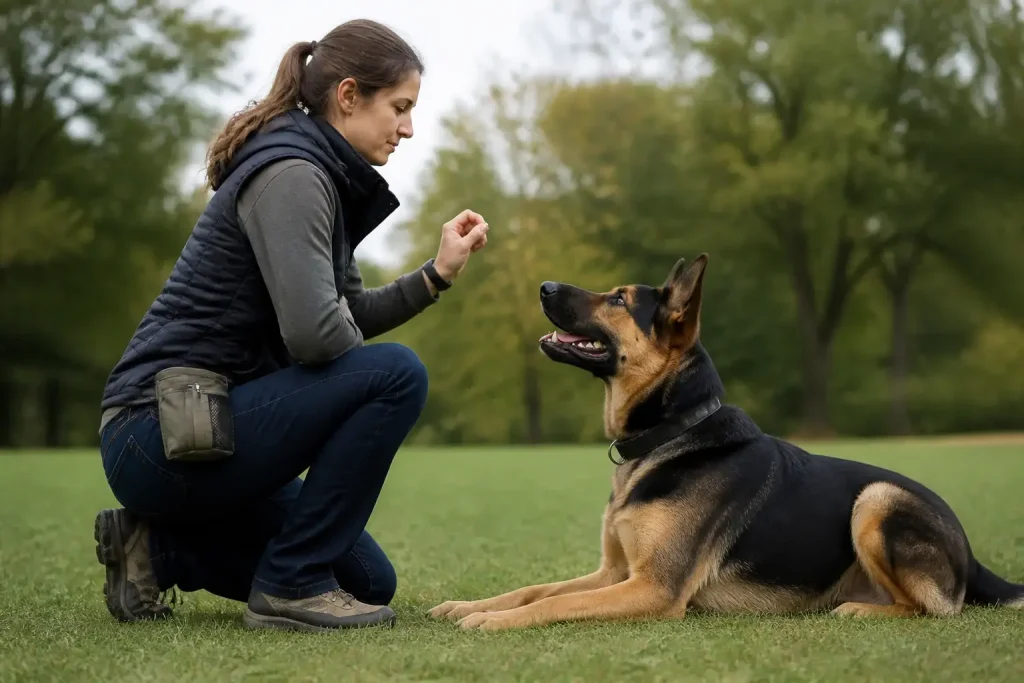
Advanced Dog Training is a structured program for owners who want dependable behavior, clear communication, and practical reliability beyond basic sit, stay, and recall exercises. It combines reward based teaching, thoughtful management, controlled distractions, and progressive challenges. The goal is not to create a mechanically obedient dog. The goal is to develop a confident partner who can make good choices, respond promptly, recover from excitement, and remain safe in changing environments.
Advanced training is suitable for adolescent and adult dogs with a foundation of basic cues. Dogs do not need to be perfect before beginning, but they should understand marker words, accept ordinary handling, and demonstrate some ability to focus around mild distractions. A qualified trainer can adapt the program for different ages, breeds, temperaments, physical abilities, and learning histories. Dogs with fear, aggression, severe separation distress, or sudden behavior changes may require individualized veterinary and behavior support before group instruction.
The program typically begins with an assessment. This review identifies current skills, motivators, triggers, reinforcement history, and environmental challenges. The trainer then creates measurable objectives. Examples include holding a stationary position for sixty seconds, returning from thirty meters, walking calmly past a dog, settling beneath a café table, or releasing a toy immediately when asked. Specific goals make progress visible and prevent training from becoming an unclear demand for general obedience.
What the Program Includes
Lessons usually combine explanation, demonstration, guided practice, homework, and feedback. Owners learn how to select rewards, deliver them accurately, adjust difficulty, use equipment responsibly, and recognize early signs of stress or confusion. Dogs practice individual behaviors before combining them into realistic sequences. A session might begin with attention, continue with loose leash walking, add a stay near movement, and finish with a recall followed by play.
A complete package may include private coaching, small group classes, video demonstrations, written plans, progress charts, and troubleshooting consultations. Some programs also provide access to online lessons for reviewing timing and technique between sessions. The most valuable feature is usually not the number of exercises, but the quality of coaching. Effective instruction helps owners understand why a behavior succeeds or fails, then offers a practical adjustment.
Learning Principles
Dogs learn through consequences, associations, repetition, and context. Reinforcement increases behavior by following it with something valuable. Food, toys, access to sniffing, social interaction, and movement can all function as rewards, depending on the individual dog. A reward must be meaningful at that moment. A piece of kibble may work in a quiet kitchen but fail near squirrels, children, or another dog.
Markers improve communication. A click or brief word such as “yes” identifies the precise behavior that earned reinforcement. The marker should be followed by the reward consistently. Timing matters because dogs connect consequences with the behavior occurring immediately before them. If an owner marks too late, the dog may learn to jump, turn away, or break position instead of the intended action.

Training should be progressive rather than abruptly difficult. Increase only one major challenge at a time: distance, duration, distraction, speed, novelty, or emotional intensity. If a dog succeeds at five seconds of stay in a quiet room, the next step might be ten seconds in the same room, not five minutes beside a busy playground. Small successful repetitions build fluency and protect motivation.
Foundations That Support Advanced Work
Before demanding precision, teach engagement. A dog should learn that orienting toward the handler predicts useful information and rewarding opportunities. Name recognition, hand targeting, offered eye contact, and voluntary check ins create a communication channel. These behaviors are not tricks; they are practical ways to regain attention without repeated commands or physical pressure.
Position changes also deserve careful teaching. Dogs can learn front, heel, side, behind, and a designated mat location. Each position should have a clear purpose and release cue. A release word tells the dog when the exercise ends, preventing accidental wandering and helping the animal understand when freedom is available.
Reinforcement schedules should evolve gradually. At first, frequent rewards establish accuracy. Later, rewards may become variable, while praise, play, sniffing, or permission to move maintain behavior. Variable reinforcement can strengthen persistence, but unpredictability should not replace generosity. A dog that works for long periods without meaningful reinforcement may lose enthusiasm or begin searching for other rewards.
Reliability Around Distractions
A behavior is not truly advanced if it works only in one familiar room. Generalization requires deliberate practice in different places, with varied surfaces, sounds, weather, people, animals, and distances. Begin below the dog’s reaction threshold. The dog should notice a distraction while still able to eat, respond, and move with the handler. If the dog freezes, lunges, vocalizes, or refuses food, the challenge is too intense.
Emergency Recall
Emergency recall is a special cue reserved for situations requiring immediate return. Choose a unique word or whistle that has never been weakened by casual repetition. Charge it in easy conditions by presenting exceptionally valuable rewards, then release the dog back to enjoyable activity. This teaches that returning does not always end freedom.
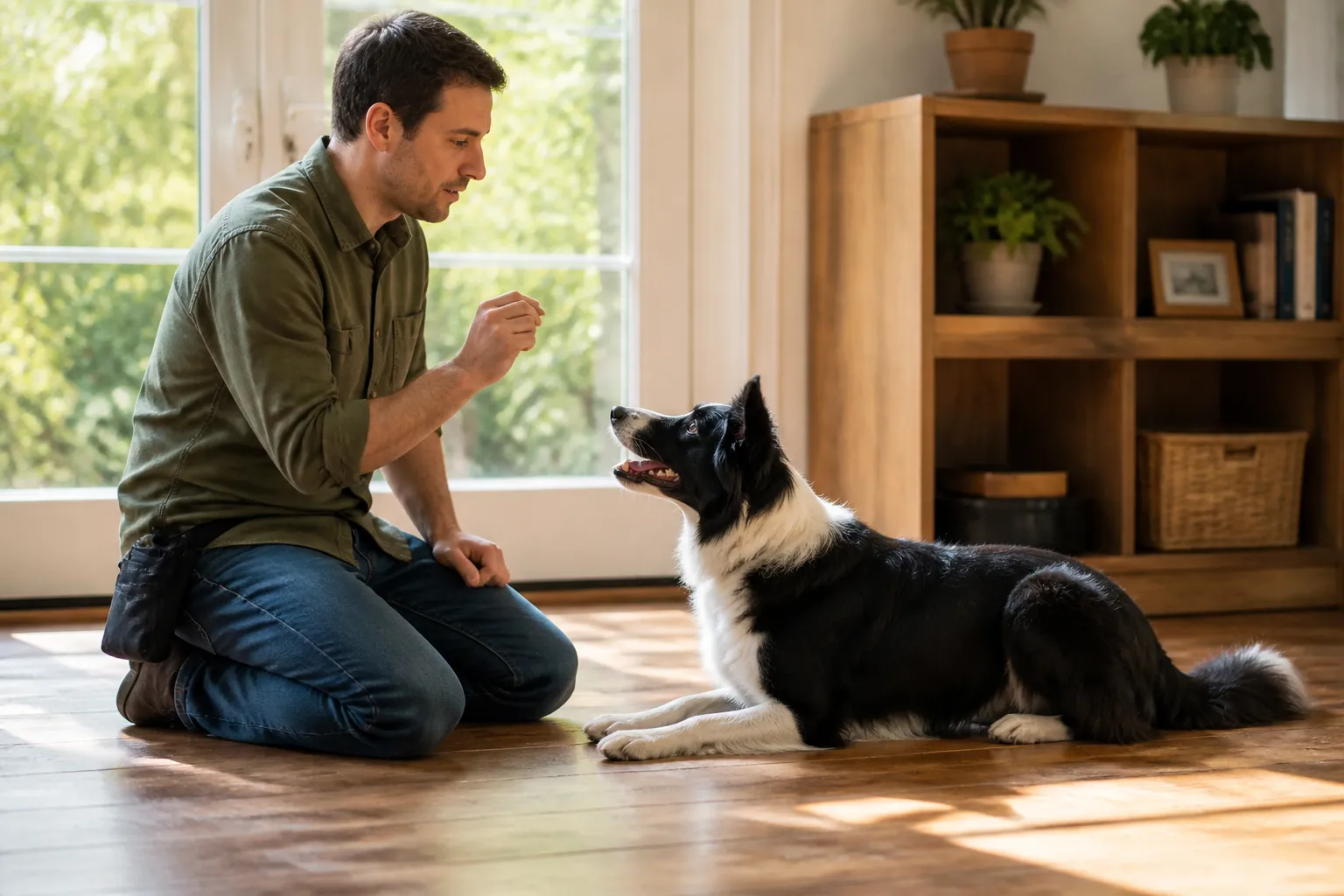
Practice first indoors, then in a secure yard, and later in carefully managed outdoor locations. Use a long line attached to suitable equipment while building reliability. Never test the cue by calling when success is unlikely. Instead, reduce distance, lower distractions, or recruit a helper. If the dog returns, reward generously, hold the collar calmly, and sometimes send the dog out again. This prevents the cue from predicting punishment or the immediate end of every enjoyable event.
Recall reliability also depends on management. No training guarantees perfect performance in every emergency. Fences, leashes, identification, supervision, and safe transportation remain essential. A long line is not a substitute for attention; it is a safety tool that prevents rehearsal of running away while skills develop.
Loose Leash and Public Manners
Loose leash walking is easiest when the dog learns that slack permits forward movement. When tension appears, stop or change direction without jerking. The moment the leash softens, continue and reinforce. Begin in low distraction areas, then practice near quiet streets, entrances, parks, and outdoor businesses. Progress should follow the dog’s ability, not the owner’s schedule.
Public manners include ignoring food on the floor, waiting at doors, settling near activity, accepting brief handling, and moving away from conflicts. Teach these skills through controlled setups. Ask a helper to approach gradually, place a harmless object at a distance, or create mild movement while rewarding calm behavior. Avoid forcing greetings. A dog that can calmly decline interaction is often safer and more comfortable than one required to meet everyone.
Impulse Control Without Suppression
Impulse control means learning to pause, evaluate, and choose. It does not mean demanding stillness while ignoring frustration. Teach clear patterns: wait before exiting, look at the handler before crossing, leave an object when asked, and settle after play. Release the dog promptly when the exercise is complete. Frequent opportunities for movement, exploration, and appropriate play make self control easier.
Teach “leave it” as disengagement from an object, not as a warning shouted after the dog has already grabbed it. Start with a boring item in a closed hand. Reward looking away, then progress to an open hand, floor items, movement, and real life distractions. For safety, use separate cues for leaving something alone and releasing an item already held.

Cooperative Care
Advanced training should include cooperation with veterinary and grooming procedures. Pair gentle touch with rewards, beginning with areas the dog readily accepts. Gradually introduce paws, ears, tail, brushing, towel drying, nail equipment, and mock examination. Use a start button, such as chin resting on a hand or mat. When the dog lifts the chin or leaves the position, pause. This gives the animal a predictable way to request a break.
Cooperative care reduces struggle and improves safety, but it does not replace professional medical handling. Pain can change behavior quickly. If a previously comfortable dog resists touch, consult a veterinarian rather than assuming disobedience.
Problem Solving and Behavior Change
Training plans should describe behavior objectively. “Bad” is not measurable; “barks when a cyclist passes within ten meters” is useful. Record what happens before the behavior, the behavior itself, and what follows. This ABC approach can reveal patterns. Barking may be maintained by distance from a feared trigger, access to attention, excitement, or relief from a demand.
Reactivity
For reactive dogs, begin at a distance where observation is possible without escalation. Pair the trigger with food, play, or movement, then create distance before the dog becomes overwhelmed. Over time, the dog can learn that seeing the trigger predicts safety and good outcomes. Progress is rarely linear. Poor sleep, pain, illness, crowded environments, or previous stressful events can temporarily reduce tolerance.
Do not punish growling or other warning signals. Suppressing communication may leave the underlying emotion unchanged while removing useful information. Use barriers, distance, visual coverage, and scheduling to prevent repeated explosions. A behavior professional experienced in humane, evidence based methods can design a safer plan for serious cases.
Jumping, Barking, and Stealing
Jumping often persists because it produces attention. Teach an incompatible behavior, such as four paws on the floor or a sit, and reinforce it before the jump occurs. Visitors should follow the same plan. If excitement is too high, use a gate, leash, mat, or quiet room while the dog regains control.

For attention barking, first address unmet needs, including exercise, enrichment, rest, and social contact. Then reinforce quiet intervals, beginning with a single second if necessary. Avoid creating a pattern in which barking eventually earns a lecture, eye contact, or access. Stealing objects should be answered with a calm trade, not a chase. Offer a valuable alternative, recover the object safely, and practice exchanges when no conflict exists.
Daily Practice and Measurement
Short, frequent sessions usually outperform occasional marathons. Two to five minutes can be enough for concentrated skill work, followed by rest or enrichment. Record the behavior, location, distraction level, success rate, reward used, and the next realistic step. A simple log reveals whether the dog is improving or merely repeating a difficult failure.
Sample Weekly Structure
On Monday, practice engagement and stationing indoors. Tuesday can focus on leash skills in a quiet outdoor area. Wednesday may include cooperative care and an easy recall game. Thursday can provide rest, sniffing, and enrichment. Friday may introduce controlled distractions with a helper. Saturday can rehearse public settling, and Sunday can review favorite skills without increasing difficulty.
Rest is part of training. Dogs need sleep, decompression, and opportunities to behave naturally. Overtraining can produce slower responses, irritability, frantic behavior, or avoidance. End while the dog is still successful and willing. A calm finish helps preserve confidence for the next session.
Equipment
Useful equipment may include a comfortable flat collar or harness, standard leash, long line, treat pouch, mat, food rewards, toys, barriers, and identification. Select equipment for fit, safety, and the specific exercise. Long lines require open space and awareness of tangles. Harnesses should permit natural movement. Retractable leashes are generally unsuitable for precision work because they maintain variable tension and offer less immediate control.
Avoid equipment intended to cause pain or fear. Physical punishment can damage trust, increase anxiety, and suppress warnings without teaching an alternative. Training should explain what the dog should do, provide a realistic way to succeed, and reinforce that choice.
Frequently Asked Questions
Is advanced training suitable for every dog?
Most healthy dogs can learn advanced skills, but the curriculum must be individualized. Senior dogs may need shorter sessions and physical accommodations. Puppies require age appropriate expectations. Dogs with sensory limitations can learn through adapted visual, tactile, or auditory signals. Dogs with serious behavior concerns should receive private assessment before joining demanding group environments.
How long does the program take?
There is no universal timetable. A reliable household skill may develop in days, while public recall or reactivity work can require months. Progress depends on genetics, reinforcement history, health, environment, handler consistency, and the difficulty of the goal. Quality matters more than speed. A dog performing successfully at a manageable level is learning more than a dog repeatedly pushed beyond capacity.
Can treats be used forever?
Rewards can change, but reinforcement should not disappear simply because a behavior is familiar. Food may become less frequent while praise, play, sniffing, freedom, or access to preferred activities maintain performance. In challenging environments, returning to frequent high value rewards is sensible. Payment is not bribery when it follows behavior and supports learning.
What if my dog ignores a cue?
First check whether the dog heard, understands, and can perform the behavior in that context. Consider distraction, distance, fatigue, pain, fear, and reward value. Repeat the cue only when necessary; repeated words can become background noise. Make the task easier, help the dog succeed, and reinforce the response. If the behavior suddenly deteriorates, seek veterinary advice.
Should I train multiple cues at once?
Yes, provided each cue is taught clearly and sessions remain manageable. Varying skills can prevent boredom and improve flexibility. However, avoid introducing several difficult changes simultaneously. Practice each behavior in easy conditions, then combine them gradually. Use distinct words and gestures, and maintain consistent release signals.
Is group class or private coaching better?
Group classes offer controlled social exposure, cost efficiency, and opportunities to practice around distractions. Private coaching provides individualized attention and greater privacy for fear, aggression, mobility, or household problems. Many teams benefit from both. The instructor’s qualifications, humane methods, observation skills, and ability to adjust difficulty matter more than the format alone.
Conclusion
Advanced Dog Training is a continuing process of communication, problem solving, and relationship building. Its strongest results come from realistic goals, careful progression, humane reinforcement, effective management, and consistent practice. Owners learn to notice emotional state, arrange environments for success, and teach useful alternatives rather than merely correcting unwanted behavior.
A dependable dog is not one that never makes mistakes. It is one that can recover, respond to guidance, and remain supported when conditions change. By developing recalls, leash manners, impulse control, cooperative care, public settling, and emotional resilience, families create greater freedom without sacrificing safety. Begin with an assessment, define measurable outcomes, practice in small steps, and celebrate honest progress. With patience and skilled guidance, advanced training becomes a practical daily language that helps dogs and people live together with confidence, clarity, and mutual respect.