
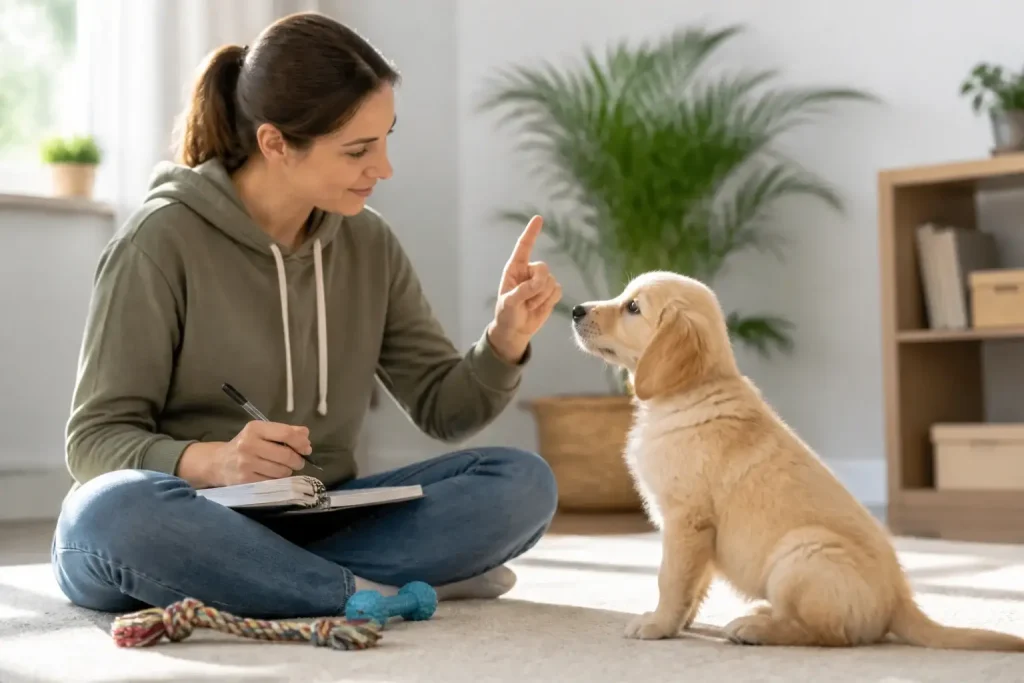
Understanding Puppy Training
Puppy training is the process of teaching a young dog how to live safely, calmly, and cooperatively with people. It includes far more than obedience commands. A well planned program develops house habits, polite social behavior, reliable responses, emotional confidence, handling tolerance, and the ability to settle. Training is most effective when it is clear, consistent, reward based, and adapted to the puppy’s age, health, temperament, and surroundings.
The central goal is communication. Your puppy does not automatically understand human expectations, household rules, or the meaning of words. Every behavior must be taught through repeated experiences. Reward behaviors you want repeated, prevent opportunities for dangerous or unwanted actions, and respond calmly when mistakes occur. Punishment may create fear, confusion, or avoidance, while it rarely explains what the puppy should do instead.
Keep sessions brief and frequent. A few minutes of focused practice, repeated several times daily, is usually more productive than one demanding lesson. Choose a quiet setting at first, then gradually practice around ordinary distractions. Use small, soft treats, a cheerful voice, play, access to a toy, or gentle praise as rewards. The best reward depends on the individual puppy, so observe what creates enthusiasm without causing frantic behavior.
Before training begins, prepare the environment. Remove tempting objects, secure electrical cords, provide safe chew items, and create a comfortable rest area. Everyone in the home should use the same words and rules. If one person allows jumping while another discourages it, the puppy receives conflicting information and learns that persistence may succeed.
Building a Practical Training Plan
A useful plan combines management, teaching, practice, and rest. Management means arranging the environment so the puppy is less likely to rehearse unwanted behavior. Teaching means showing a desirable alternative. Practice means repeating that behavior in different places. Rest matters because tired puppies often become mouthy, restless, or impulsive rather than obedient.
Setting Clear Priorities
Begin with safety and daily living skills. Name recognition, recall, toilet habits, gentle handling, appropriate chewing, and settling should receive early attention. Formal commands such as sit and down are valuable, but they are not more important than preventing accidents or teaching a puppy to relax.
Select one or two goals for each day. For example, Monday might emphasize responding to the name, Tuesday might add a hand target, and Wednesday might combine both near a doorway. Keep criteria realistic. If the puppy succeeds indoors but becomes distracted outside, reduce difficulty rather than repeating the cue loudly.
Use a simple training record. Note the behavior practiced, location, reward, successful repetitions, and any difficulty. This reveals patterns. A puppy that performs well before breakfast may struggle when hungry, excited, or overtired. Records also help you recognize gradual progress that can be overlooked during busy routines.

Teaching With Rewards
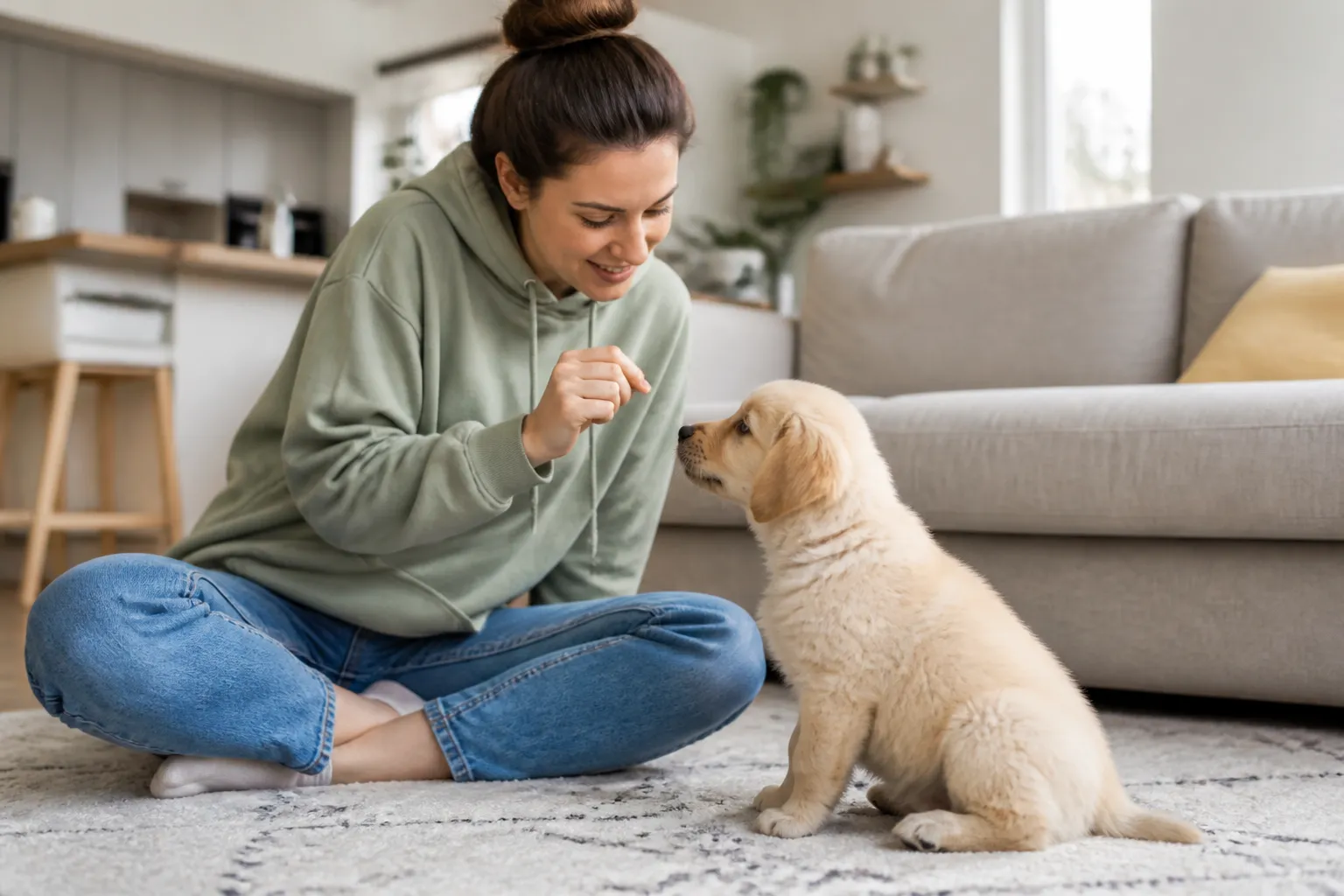
Mark desired behavior immediately with a word such as “yes” or with a clicker, then deliver the reward. Timing matters more than dramatic praise. If the reward arrives several seconds late, the puppy may connect it with a different action. Begin by rewarding often, then gradually ask for a little more duration, distance, or distraction.
Do not lure every behavior forever. A treat can initially guide a puppy into a position, but once the movement is familiar, show an empty hand and reward from the other hand. Add the verbal cue when the puppy is already beginning the behavior. This sequence helps the word acquire a clear meaning instead of becoming background noise.
Rewards should remain valuable. If a puppy ignores a treat, the environment may be too difficult, the reward may be uninteresting, or the puppy may need rest. Move to a quieter location, use a better reward, or end the session positively. Training is not a test of endurance.
Essential Skills to Teach
Name Recognition and Attention
Say the puppy’s name once in a pleasant tone. When the puppy turns toward you, mark and reward immediately. Practice without adding another command. The aim is to make the name meaningful: it predicts attention, safety, and worthwhile outcomes. Avoid repeatedly calling the name when you are frustrated, because the puppy may learn to ignore it or associate it with unpleasant events.
After attention is reliable indoors, practice in a hallway, garden, or quiet outdoor area. Increase distractions gradually. If the puppy cannot respond, the environment is too challenging at that moment. Return to an easier step and rebuild success.
Sit, Down, and Stand
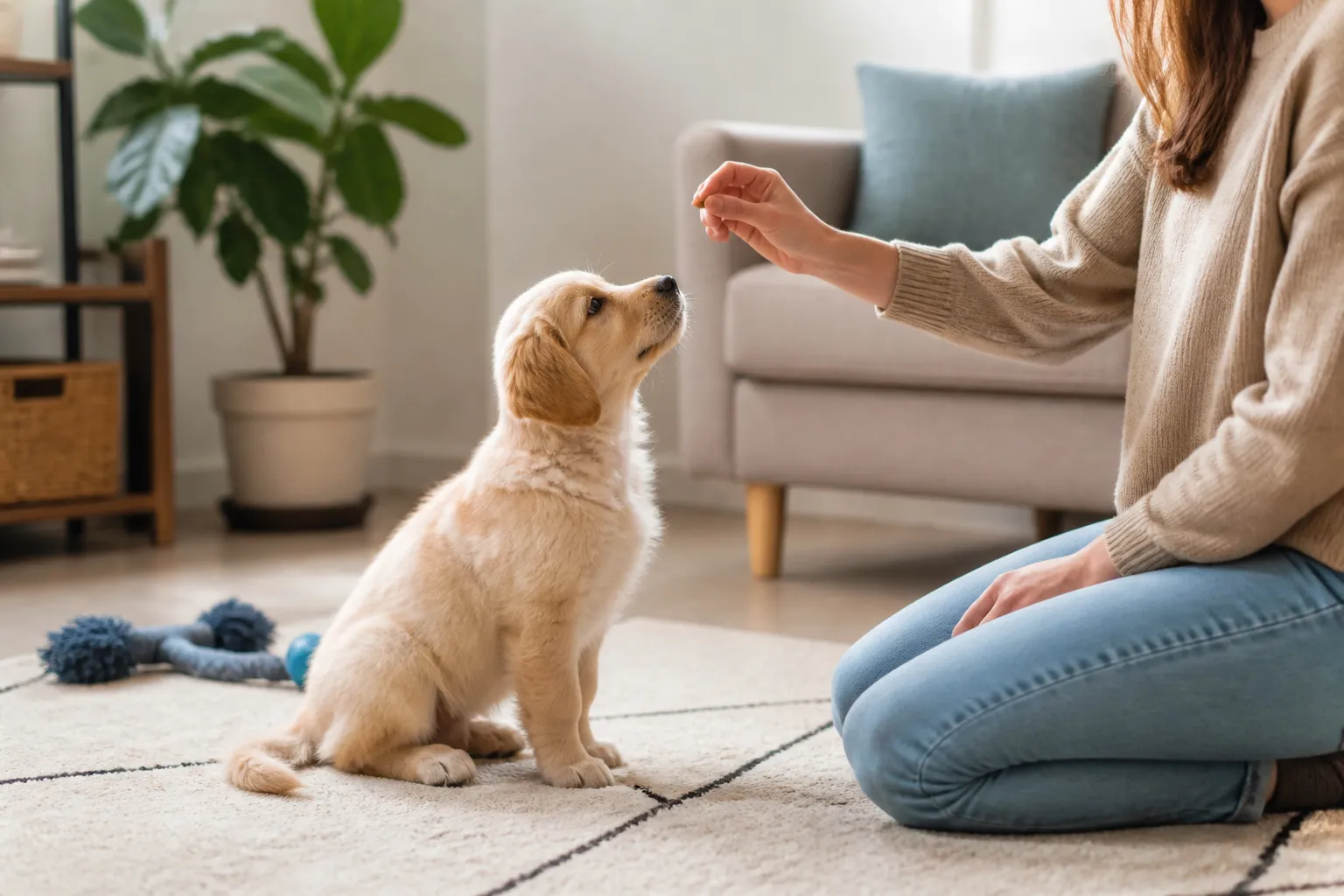
Capture natural positions by marking them as they occur, or use a treat to guide the puppy gently. Once the puppy understands the movement, add the cue. Teach each position separately, then practice transitions. Avoid physically pushing the puppy into place, since pressure can create resistance or discomfort.
Positions should not become demands for long periods. Young puppies need movement, sleep, and exploration. Reward a brief sit before placing a food bowl, opening a door, or attaching a leash. This turns useful behavior into part of daily life.
Recall
A dependable recall can protect a puppy from hazards. Start indoors by moving a short distance away, saying the recall word once, and rewarding enthusiastic movement toward you. Make coming to you consistently worthwhile. Use food, play, praise, or a favorite toy, and sometimes offer several rewards in a row.
Never call the puppy only to end enjoyable activities, deliver medicine, or scold. Instead, frequently call, reward, and release the puppy back to play. Outdoors, use a long line attached to suitable equipment while practicing in a secure area. Do not rely on an untested recall near roads, animals, or other dangers.
Leave It and Drop It
“Leave it” teaches the puppy not to approach an item. Begin with a boring object in a closed hand. When the puppy stops investigating, mark and reward with a different treat. Progress to an object on the floor while preventing access with your hand or foot. Eventually practice around realistic distractions.
“Drop it” teaches release of something already held. Offer a better reward, present it near the puppy’s nose, and mark when the mouth opens. Return the original toy when safe, so releasing does not always mean permanent loss. Avoid chasing, prying, or grabbing unless immediate safety requires intervention.
Toilet Training and Household Manners
Toilet training depends on supervision, timing, and routine. Take the puppy outside after waking, eating, drinking, playing, and vigorous activity. Very young puppies need frequent opportunities, and individual capacity varies. Remain quietly available until the puppy finishes, then reward promptly outdoors.
Watch for circling, sniffing, wandering away, sudden restlessness, or heading toward a previous accident location. If you see these signals, guide the puppy outside without excitement. If an accident occurs, clean the area with an appropriate enzymatic cleaner to reduce lingering odor. Do not punish after the fact; the puppy will not connect delayed correction with the earlier event.
A crate or pen can support toilet training when introduced positively. It should be large enough for comfortable standing, turning, and lying down, but not so large that the puppy can routinely eliminate at one end and sleep at the other. Never use confinement as punishment, and provide breaks, water, exercise, and companionship appropriate to the puppy’s needs.
Jumping, nipping, barking, and stealing are common because they produce attention or access. Teach an alternative. Reward four paws on the floor, offer a toy during greetings, reinforce quiet moments, and trade for stolen objects. Everyone must respond consistently. Turning away from jumping may help, but it should be paired with reinforcement for the behavior you want.

Preventing Puppy Biting
Puppies explore with their mouths and may bite during play, teething, excitement, or fatigue. Keep toys available and redirect gently. If teeth contact skin, pause interaction briefly, then resume calmly when the puppy settles. Avoid high-pitched reactions that might intensify chasing or excitement.
If biting becomes frantic, guide the puppy to a quiet rest area with a safe chew item. This is not a punitive isolation; it is help with regulation. Seek professional guidance if biting is persistent, unusually intense, accompanied by stiff body language, or difficult to interrupt.
Socialization and Confidence
Socialization means teaching a puppy that varied people, animals, places, surfaces, sounds, handling experiences, and routines can be safe. It does not mean forcing interaction. Let the puppy observe at a comfortable distance, offer rewards for calm attention, and allow retreat. A puppy that hides, freezes, trembles, or refuses food is communicating that the situation is too difficult.
Expose the puppy gradually to hats, umbrellas, household appliances, vehicles, stairs, different floors, gentle grooming, and brief veterinary-style handling. Pair each new experience with something positive. Keep exposures short and end before distress escalates. Ask a veterinarian about local disease risks and appropriate precautions before visiting public areas.
Dog-to-dog experiences should be carefully selected. Calm, healthy, socially appropriate adult dogs can provide useful lessons, while chaotic play may teach chasing, rough contact, or fear. Observe body language: loose movement, curved approaches, pauses, and voluntary reengagement are generally more comfortable than persistent pursuit or cornering.
Leash Skills and Public Behavior
Begin indoors by allowing the puppy to wear a properly fitted collar or harness for brief periods while supervised. Reward attention to you and movement beside you. Introduce leash pressure gradually; do not drag the puppy. Outside, reward slack leash and check-ins. If the puppy pulls, stop or change direction calmly, then reward returning attention.
Public training should begin in low-distraction areas. Progress to busier sidewalks, parks, and pet-friendly settings only when the puppy can remain responsive. Carry appropriate waste bags, water, identification, and treats. Prevent greetings with every person or dog. Polite neutrality is often more useful than constant social excitement.
Teach door manners by rewarding a pause before opening doors. Use a leash or barrier for safety, and release the puppy with a clear cue. Practice elevators, vehicles, and waiting near crossings separately. These small skills reduce rushing and help the puppy respond when the environment is stimulating.
Common Training Mistakes
One frequent mistake is repeating a cue. Saying “come” many times while the puppy ignores it weakens the word. Instead, improve the reward, reduce distraction, or use management to prevent failure. Another mistake is increasing difficulty too quickly. Training should change one major factor at a time: distance, duration, distraction, or location.
Inconsistent reinforcement can also slow learning. You do not need to reward every familiar behavior forever, but reinforce unpredictably and meaningfully. Continue rewarding especially important responses, such as recall near distractions or calm behavior around visitors.
Avoid overwhelming the puppy with long lessons, crowded environments, or constant correction. Sleep is essential for learning and emotional balance. A puppy that seems disobedient may be hungry, uncomfortable, overstimulated, or overdue for rest. Consider physical needs before interpreting behavior as defiance.
Do not compare puppies. Breed tendencies, early experiences, health, and individual temperament influence development. Progress should be measured against the puppy’s previous behavior, not another dog’s performance.
When to Seek Professional Help
Consult a qualified, reward-based trainer when a problem persists despite careful management, when progress reverses, or when you feel unsafe. Seek veterinary advice for sudden behavior changes, extreme fear, repeated house-soiling, pain-related handling reactions, unusual lethargy, or appetite changes. Medical factors can influence learning and behavior.
Choose help carefully. Ask how the professional handles fear, barking, pulling, and aggression. Be cautious of guarantees, intimidation, painful equipment, or advice centered on dominance. A good professional explains methods, observes the dog’s body language, prioritizes safety, and adjusts the plan to the household.
Frequently Asked Questions
How early should puppy training start?
Training can begin as soon as the puppy joins your household, using gentle attention games, name recognition, handling, toilet routines, and rewards. Early lessons should be short and positive. Formal expectations must match the puppy’s developmental ability.
How long should a session last?
There is no universal duration. Stop while the puppy is still engaged, often after only a few minutes for a young dog. Several brief sessions distributed through the day usually work better than one extended session. End with an easy behavior and a reward.
Should I use treats forever?
Treats are useful for teaching and strengthening behavior. Over time, vary rewards by using praise, play, access, and life rewards such as going outside. Continue using food when the environment is difficult or the behavior is safety critical. Rewarding does not create dependence; it communicates that a choice was valuable.
What should I do when my puppy ignores me?
First check whether the puppy heard you, understands the cue, and can succeed in the current environment. Reduce distractions, move closer, use a more appealing reward, or return to an easier exercise. Avoid repeating the cue angrily. If ignoring occurs suddenly across situations, consider discomfort or illness and contact a veterinarian.
Is crate training necessary?
A crate is not essential for every dog, but it can support travel, recovery, rest, and household management. Introduce it gradually with meals, treats, open-door exploration, and short comfortable periods. Never use it as a place for prolonged isolation or punishment.
How can I stop unwanted barking?
Identify the reason first. Barking may signal fear, excitement, frustration, alertness, boredom, or a need for attention. Reduce the trigger, teach an alternative such as looking at you, and reward quiet pauses. Punishing sound without addressing its cause can increase anxiety. Persistent or fearful barking deserves professional assessment.
When is my puppy ready for off-leash freedom?
Readiness depends on reliable recall, safe surroundings, impulse control, and legal requirements. Practice with a long line in enclosed areas first. Even a well trained dog may ignore a cue when frightened or chasing something, so retain management near hazards.
Conclusion
Effective puppy training is a gradual education in communication, safety, and emotional control. Start with realistic goals, arrange the environment for success, reward desirable choices promptly, and increase difficulty in small steps. Give equal attention to practical habits, confidence, socialization, handling, and rest rather than focusing only on commands.
Mistakes are information, not evidence of failure. Adjust the setting, timing, reward, or level of challenge, then try again. Consistency across household members makes learning clearer, while patience protects trust. With humane guidance and regular practice, a puppy can develop reliable skills without losing curiosity or joy. The result is not merely a dog that obeys cues, but a companion able to navigate daily life safely, calmly, and cooperatively.