
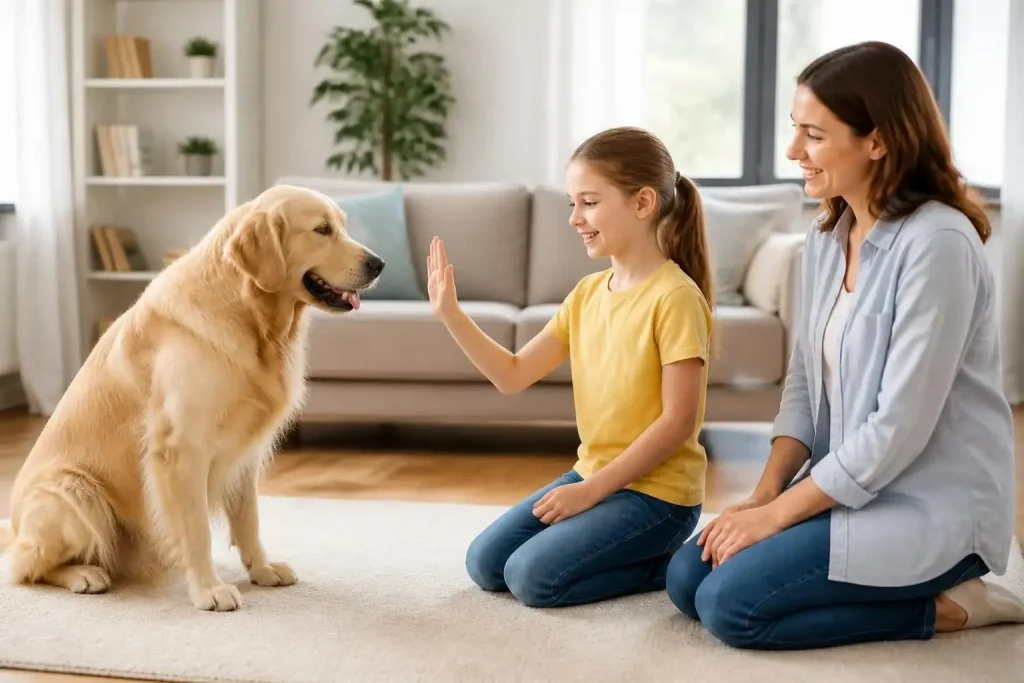
Dog Training For Kids: Why Dog Training Helps Kids
Dog training for kids is most successful when it feels like a cooperative game rather than a demanding chore. Children learn responsibility, patience, observation, and empathy while dogs learn predictable behaviors that make family life safer and calmer. The goal is not to turn a child into a professional trainer. It is to give children carefully chosen jobs, simple language, and close adult guidance.
Before training begins, an adult should assess the dog’s age, health, temperament, history, and comfort around children. A friendly dog can still become frightened, overexcited, or protective. Children should never train a dog they cannot physically control, interrupt a dog that is eating or sleeping, or approach an unfamiliar animal without permission. Adults remain responsible for safety, even when children take an active role.
Training works best when everyone uses the same cues and rewards. Decide whether the family will say “sit” or “sit down,” then use one phrase consistently. Keep sessions brief, cheerful, and easy enough to end with success. Small treats, praise, play, or access to a favorite toy can all reward useful behavior. Food rewards should be suitable for the dog and included within its normal daily intake.
Safety Rules Children Must Learn
Safety comes before obedience. Teach children to recognize a dog’s need for space. A dog that turns away, licks its lips, yawns repeatedly, lowers its body, tucks its tail, freezes, growls, or tries to hide may be uncomfortable. These signals do not mean the dog is bad; they mean the interaction should pause. An adult should calmly call the dog away and give it a quiet area.
Children should follow several nonnegotiable rules:
- Ask an adult before starting a session.
- Let the dog approach instead of chasing or cornering it.
- Keep fingers away from the dog’s mouth when offering food.
- Never pull ears, tail, collar, leash, or fur.
- Do not hug, climb on, ride, or disturb the dog.
- Leave the dog alone while it eats, sleeps, hides, or cares for puppies.
- Stop immediately if the dog seems worried, painful, unusually still, or aggressive.
- Tell an adult about every bite, snap, scratch, or frightening incident.
Children should also learn safe treat delivery. An older child can hold a flat palm, while a younger child can place a treat on the floor. Tossing a treat away from the child can create distance and reduce excitement. If the dog guards food or toys, children must not attempt training around those items; an experienced adult or qualified behavior professional should guide the plan.
Preparing a Kid-Friendly Training Space
Choose a quiet, uncluttered area with secure doors and limited distractions. Remove fragile objects and anything the dog might grab. Keep treats in a closed container, and use a lightweight leash only when an adult is present and the dog is comfortable wearing it. Avoid wrapping a leash around a child’s hand or body. A child should never be left holding a powerful, anxious, or reactive dog.
Create a simple training station containing treats, a toy, a mat, waste bags, and a family cue list. The list might say: “sit,” “come,” “leave it,” and “settle.” Write the rules in child-friendly language and place them where everyone can see them. A visible routine helps children remember that training involves preparation, calm behavior, and cleanup, not only exciting tricks.
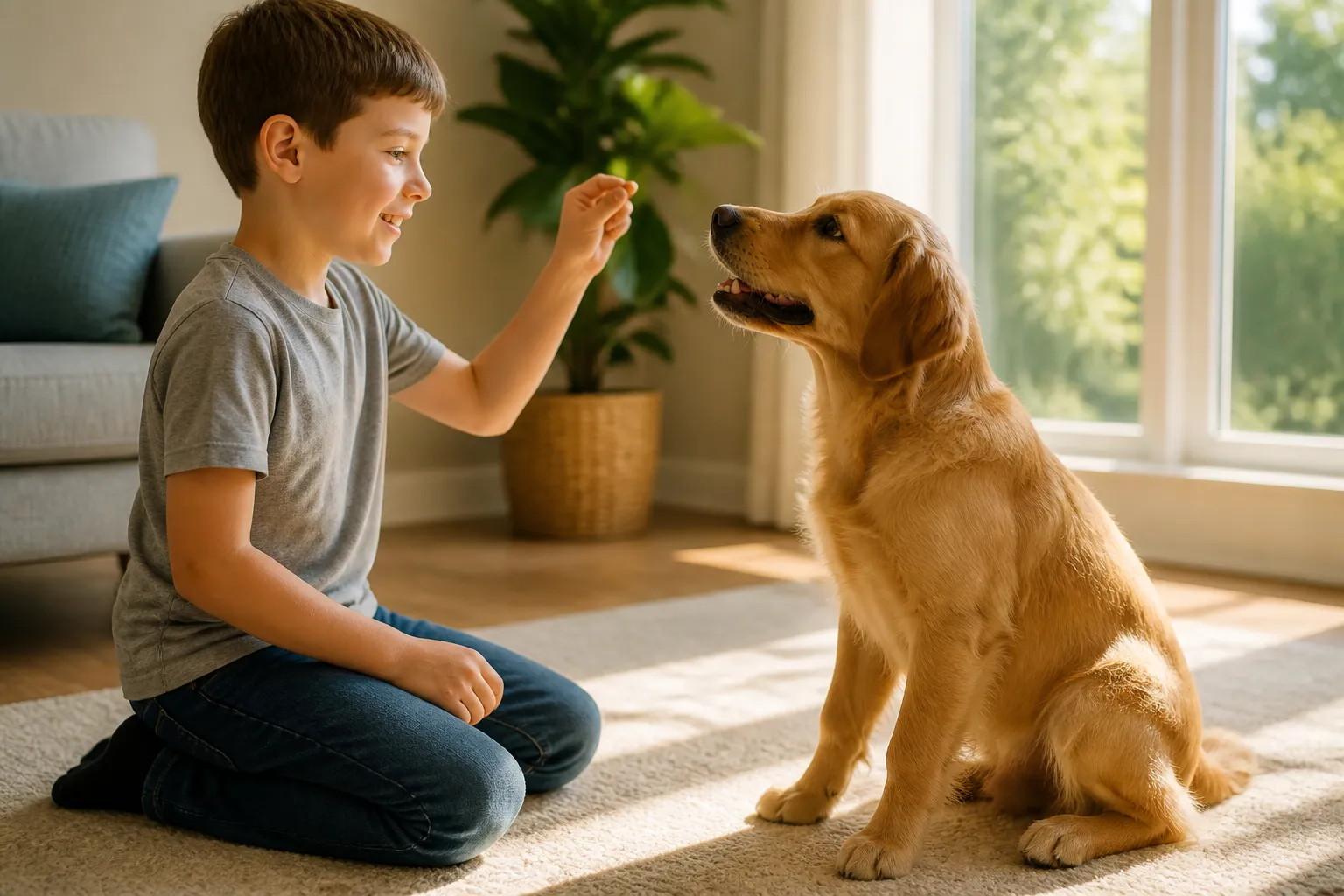
Select rewards thoughtfully. Many dogs enjoy small soft treats, but some prefer a toy, gentle praise, or permission to sniff. Observe what motivates the individual dog. Reward promptly, within a moment of the desired action, so the dog can connect behavior with consequence. Children may need practice delivering rewards quietly and accurately. An adult can demonstrate first, then let the child imitate the movement.
Five Fun Skills to Teach
1. Name response
Say the dog’s name once in a bright, friendly voice. When the dog looks toward the speaker, mark the moment with “yes” and provide a reward. Practice indoors with minimal distraction. Gradually increase distance or mild distractions only when the dog responds reliably. Children can turn this exercise into a gentle attention game, but they should avoid repeating the name rapidly. Repetition can teach the dog that the cue may be ignored.
2. Sit
Hold a reward near the dog’s nose, then move it slowly upward and slightly back. As the dog naturally lowers its hindquarters, say “sit,” mark the behavior, and reward. Children should not push the dog’s back down. If the dog jumps, move the reward away and wait for calmer behavior. Rewarding calm attempts teaches cooperation without force.
3. Hand target
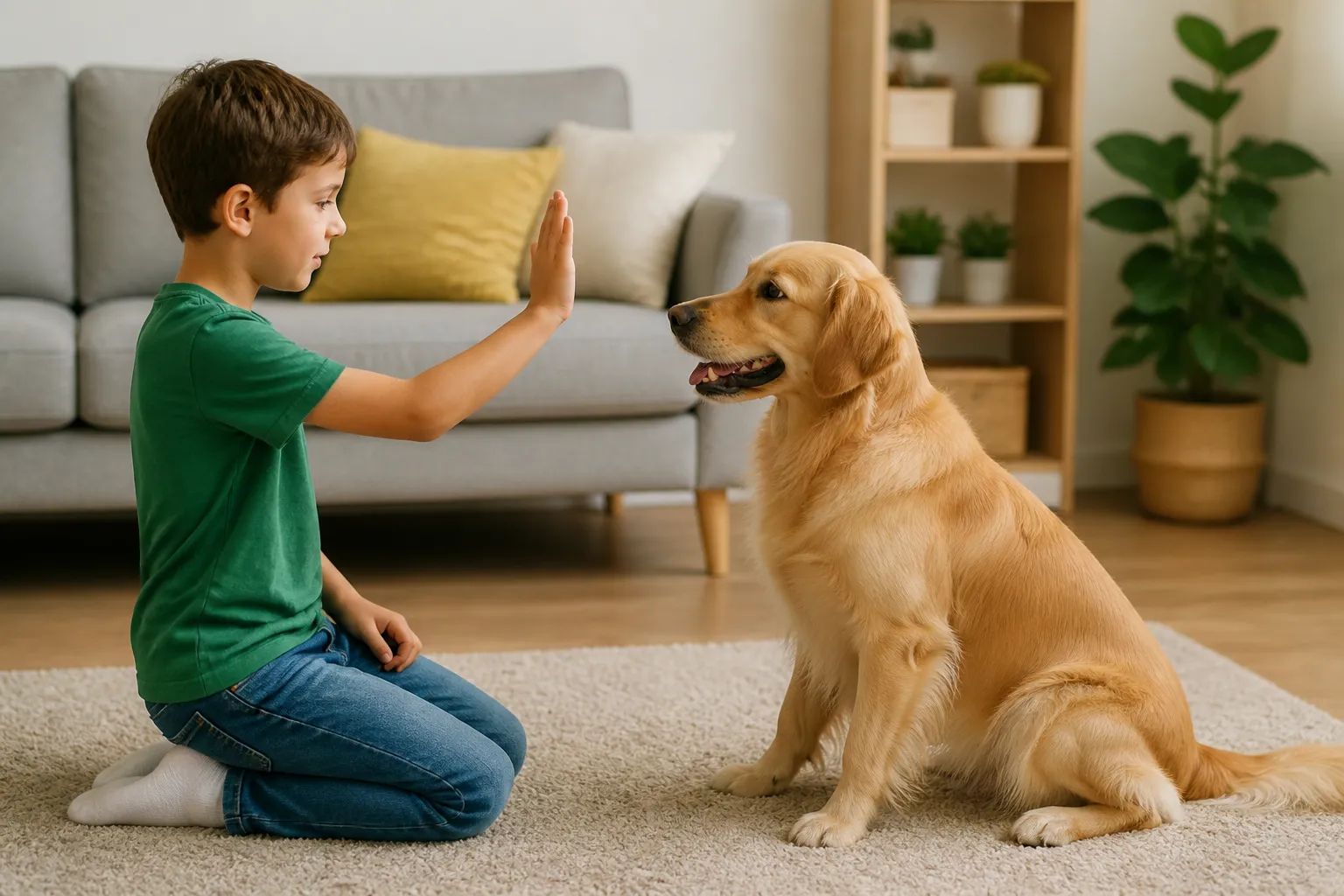
Present an open hand a few inches from the dog’s nose. When the dog investigates or touches it, mark and reward. This skill gives children a polite way to invite movement and can later help guide the dog away from doors, guests, or distractions. Keep hands still and avoid using this exercise if the dog is fearful of hands.
4. Come
Begin at a short distance inside the home. Crouch slightly, say the dog’s name followed by “come,” and use an enthusiastic voice. When the dog reaches the child, reward generously and offer gentle praise. Never call the dog to punish it, end every enjoyable activity, or do something frightening. Adults should practice outdoors only with appropriate barriers, equipment, and supervision. A recall cue must remain special and dependable.
5. Settle on a mat
Place a comfortable mat near the family, reward the dog for stepping onto it, and then reward quiet standing or lying. Children can read nearby while occasionally dropping a treat between the dog’s paws. Gradually lengthen the calm interval. This exercise supports peaceful meals, homework, visitors, and rest. Do not use the mat as punishment or force the dog to remain there when it is distressed.
Making Practice Engaging
Children often learn better when training has a clear beginning and end. Invite the child to say, “Ready,” complete three to five repetitions, then announce, “Finished.” A short session may be enough for a young child or a dog that tires quickly. End while both are successful. If either partner becomes frustrated, stop, offer a calm break, and try an easier activity later.
Use games that preserve control. Hide a treat in one closed hand and let the dog choose; reward a gentle nose touch rather than pawing or biting. Practice “find it” by scattering a few treats on the floor, provided the dog does not guard food. Play tug with explicit rules, such as starting on a cue and releasing on another cue. An adult should supervise energetic games and pause them before excitement becomes frantic.
Teach children to notice small improvements. A dog that waits one second longer, glances at its handler during a distraction, or relaxes on its mat is making progress. Praising observation helps children understand that training is communication, not a contest. Encourage them to describe what happened: “I said the cue once, she looked at me, and I rewarded her.” This reflection builds practical reasoning.
Matching Responsibilities to Age
A toddler can help an adult sprinkle treats into a bowl, choose a toy, or watch a calm dog perform a familiar behavior from a safe distance. Toddlers should never hold a leash, deliver treats near the dog’s mouth, or approach a resting animal.
Preschool children may practice name response or hand targeting while seated beside an adult. The adult controls food, timing, and the dog’s movement. Keep directions to one action at a time.
School-age children can lead short sessions with an adult close enough to intervene. They may prepare rewards, record progress, practice sit, and help reinforce mat training. They still should not manage aggression, guarding, chasing, or intense pulling.
Teenagers can learn more advanced skills, canine body language, equipment safety, and humane training principles. They may assist with structured walks if physically capable and properly instructed. Responsibility should increase according to judgment and reliability, not simply age.
Common Mistakes and Better Alternatives
A common mistake is giving a cue repeatedly. Instead, say it once, wait briefly, and make the task easier if the dog does not respond. Another mistake is rewarding excitement accidentally. If a dog jumps, children should become still, protect their face, and ask an adult for help rather than pushing the dog away. Reward four paws on the floor.
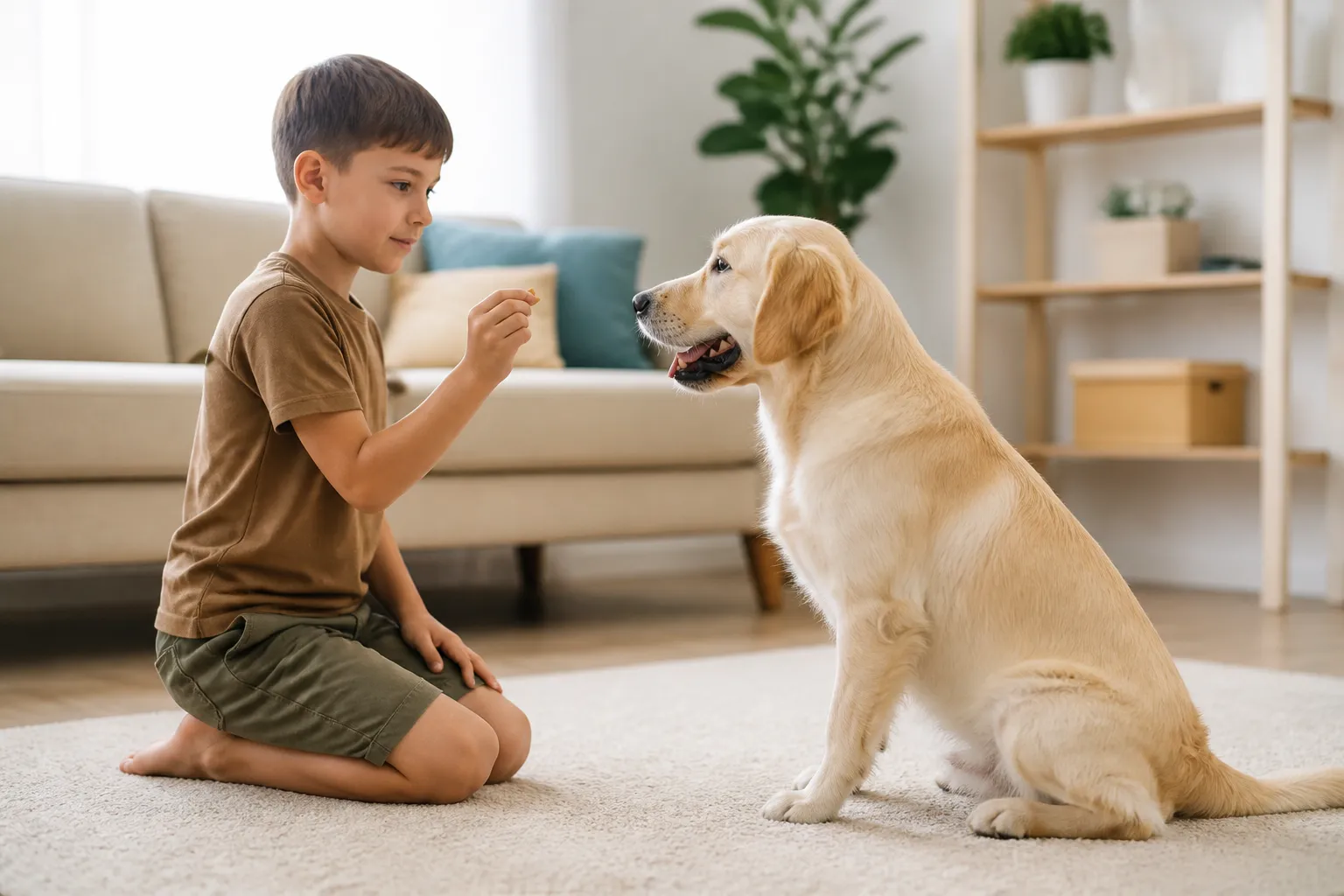
Avoid punishment, intimidation, leash jerks, shouting, and physical corrections. These methods can increase fear, confusion, or defensive behavior and may damage trust. Reward-based training teaches the dog which behavior earns a useful outcome. It also gives children a safe, constructive way to participate.
Do not demand obedience when the dog is overwhelmed. Distance from a trigger, a quiet room, or a break may be more appropriate than another command. If a dog growls, do not punish the growl. Treat it as information, create space, and seek qualified guidance. Removing warning signals without addressing discomfort can make future incidents harder to predict.
Building a Weekly Routine
A realistic routine might include one brief lesson each day, several calm rewards during ordinary life, and a weekly review. On Monday, practice name response. On Tuesday, combine name response with sit. On Wednesday, reinforce the mat. Later, practice recall indoors and review safety rules. Keep the plan flexible; illness, heat, fatigue, visitors, or stress may require rest.
Use a simple record with the date, skill, distraction level, successful attempts, and the dog’s mood. Children can draw a star for calm responses or write one sentence about what helped. Records should encourage learning, not create pressure. If progress stops, reduce difficulty, improve rewards, increase distance from distractions, or ask an adult to consult a qualified reward-based trainer.
When Professional Help Is Needed
Seek professional assistance for biting, snapping, serious lunging, intense fear, resource guarding, repeated escape attempts, or sudden behavior changes. A veterinarian can help investigate pain or medical concerns. A qualified behavior professional can design a management and training plan appropriate for the dog and family. Children should not be asked to solve dangerous behavior.
Until help is available, separate the dog and children with secure barriers, prevent rehearsals of unsafe behavior, and maintain predictable routines. Do not test whether the dog is “better” by repeating a risky situation. Safety management is not failure; it is responsible preparation.
Frequently Asked Questions
Can any child train any dog?
No. The child’s maturity, the dog’s size and behavior, and the exercise all matter. Begin with calm, low-risk skills and adult supervision. Some dogs should be handled only by adults.
How long should a session last?
Use the shortest period that keeps learning successful. For many children and dogs, a few minutes is sufficient. Stop when attention fades, excitement rises, or responses become less accurate.
What if the dog ignores the child?
Reduce distractions, improve the reward, shorten the distance, and make the cue easier. The dog may be tired, worried, confused, or insufficiently motivated. Avoid repeating the cue or showing frustration.
Are treats necessary?
No. Treats are convenient, but toys, praise, sniffing opportunities, and access to enjoyable activities can also reinforce behavior. Choose rewards the dog values and deliver them promptly.
Should children train during walks?
They may practice simple attention games with an adult, provided the environment is safe and the child cannot be pulled over. Never let a child manage a dog that reacts strongly to traffic, animals, or strangers.
What should a child do if the dog growls?
The child should stop moving toward the dog, avoid staring, and calmly call an adult. The adult should create distance and investigate the situation. Growling is a warning, not misbehavior deserving punishment.
Conclusion
Dog training for kids can build confidence, compassion, and safer habits when adults provide structure and protect both participants. Start with safety, choose simple skills, reward generously, and keep practice brief. Match responsibilities to the child’s abilities, respect the dog’s communication, and seek professional help for serious concerns.
The most valuable lesson is cooperation. A child does not need perfect commands or impressive tricks. By learning to notice, pause, invite, reward, and respect boundaries, the child becomes a thoughtful partner. By learning that calm behavior produces good outcomes, the dog gains clarity and trust. Together, they can create a happier household where training is a practical daily conversation rather than a stressful performance.
Pingback: Complete Guide to Leash Training Your Dog
Pingback: Training Your Dog To Come When Called: How to Train Your
Pingback: Understanding Behavioral Dog Training
Pingback: Puppy Training: Building a Practical Training Plan