Dog Health & Nutrition: Understanding Dog Health And Nutrition
A dog’s health depends on more than a full bowl. Nutrition supplies energy, supports muscles, protects organs, and helps the immune system respond to everyday challenges. Health also reflects exercise, sleep, dental care, preventive medicine, emotional security, and timely veterinary attention. When these elements work together, dogs are more likely to maintain a healthy body condition, enjoy comfortable movement, and remain engaged with their families.
The right feeding plan is individual. A growing puppy, an athletic adult, a senior with arthritis, and a dog with kidney disease have different needs. Breed size, age, reproductive status, activity, medical history, body condition, and food sensitivities all matter. Treats, supplements, table scraps, and feeding habits matter too. A practical plan therefore begins with observation and veterinary guidance, rather than assumptions based only on breed or package marketing.
Choosing A Complete And Balanced Diet
Commercial dog foods may be sold as dry food, canned food, fresh refrigerated food, or carefully formulated alternatives. The most important question is whether the product is labeled as complete and balanced for the dog’s appropriate life stage under the nutritional standards recognized in your region. A food intended for intermittent or supplemental feeding should not become the sole diet unless a veterinary professional provides a suitable plan.
Read the label for the life stage, feeding directions, ingredient list, calorie information when available, and manufacturer contact details. Ingredients are useful for identifying proteins, grains, vegetables, fats, and possible allergens, but the ingredient list alone does not prove that a food is nutritionally adequate. Marketing phrases such as natural, premium, ancestral, or holistic can describe positioning rather than a complete nutritional evaluation.
Select food from a company willing to explain who formulates its diets, how ingredients are controlled, and how finished products are tested. If these details are unclear, ask your veterinarian for alternatives. Sudden changes between diets can cause loose stools, so transition gradually over several days by mixing increasing amounts of the new food with the previous diet. A slower change may suit dogs with sensitive digestion.
The Main Nutrients
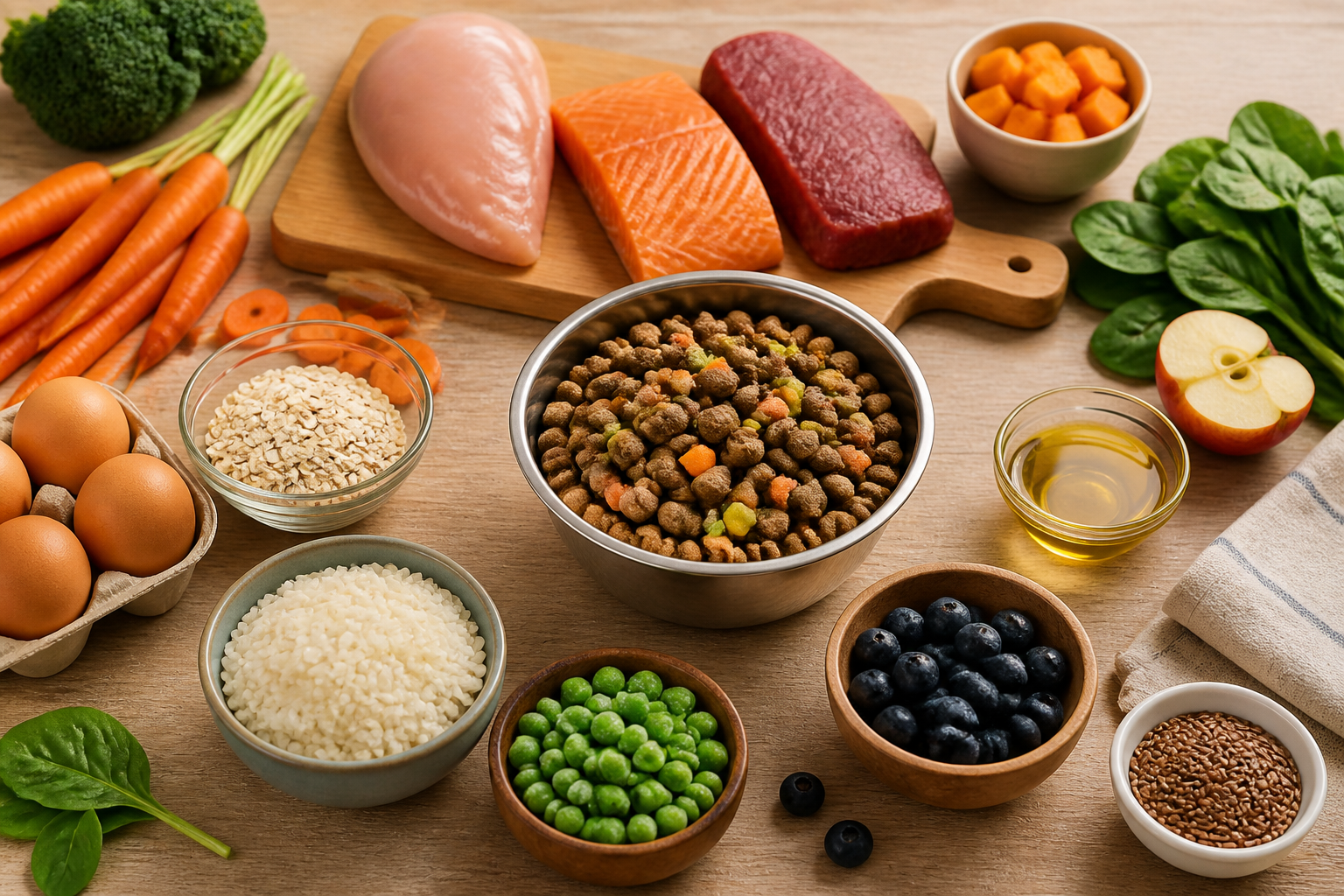
Protein provides amino acids required for tissue maintenance, enzymes, hormones, and immune function. Fat supplies concentrated energy, supports cell membranes, and helps the body use fat soluble vitamins. Carbohydrates can provide energy and fiber, although their ideal amount varies with the dog and formula. Vitamins and minerals must remain in appropriate proportions; more is not automatically better. Water is essential for circulation, digestion, temperature regulation, and waste removal.
Avoid creating a homemade diet from meat and rice alone. Such mixtures may lack calcium, essential fatty acids, trace minerals, or other nutrients, especially during growth. A home prepared diet should be formulated by a veterinary nutrition professional and followed accurately. Do not add human supplements without advice, because concentrated nutrients can interact with medicines or become harmful at excessive doses.
Portions, Calories, And Body Condition
Feeding instructions on a package are starting points, not guarantees. Two dogs of the same weight may need different amounts because of age, metabolism, activity, environment, and neuter status. Measure meals with a standard measuring cup, or use a kitchen scale when precision is important. Divide the daily allowance into one or more meals according to your dog’s routine and digestive comfort.
Monitor body condition rather than relying on weight alone. An ideal dog generally has ribs that can be felt beneath a light covering of fat, a visible waist when viewed from above, and an abdominal tuck when viewed from the side. Prominent bones may indicate inadequate nourishment, while ribs that are difficult to feel and a broad, rounded body suggest excess fat. Your veterinarian can demonstrate a body condition scoring system.
If weight rises, reduce calories gradually, increase suitable activity when medically safe, or reconsider treats. If weight falls unexpectedly, investigate rather than simply adding food. Dental disease, intestinal problems, pain, endocrine disorders, and other conditions can alter appetite or nutrient use. Weigh the dog periodically under similar conditions and record food, treats, exercise, and notable symptoms. This simple record helps reveal trends.
Treats And Safe Sharing
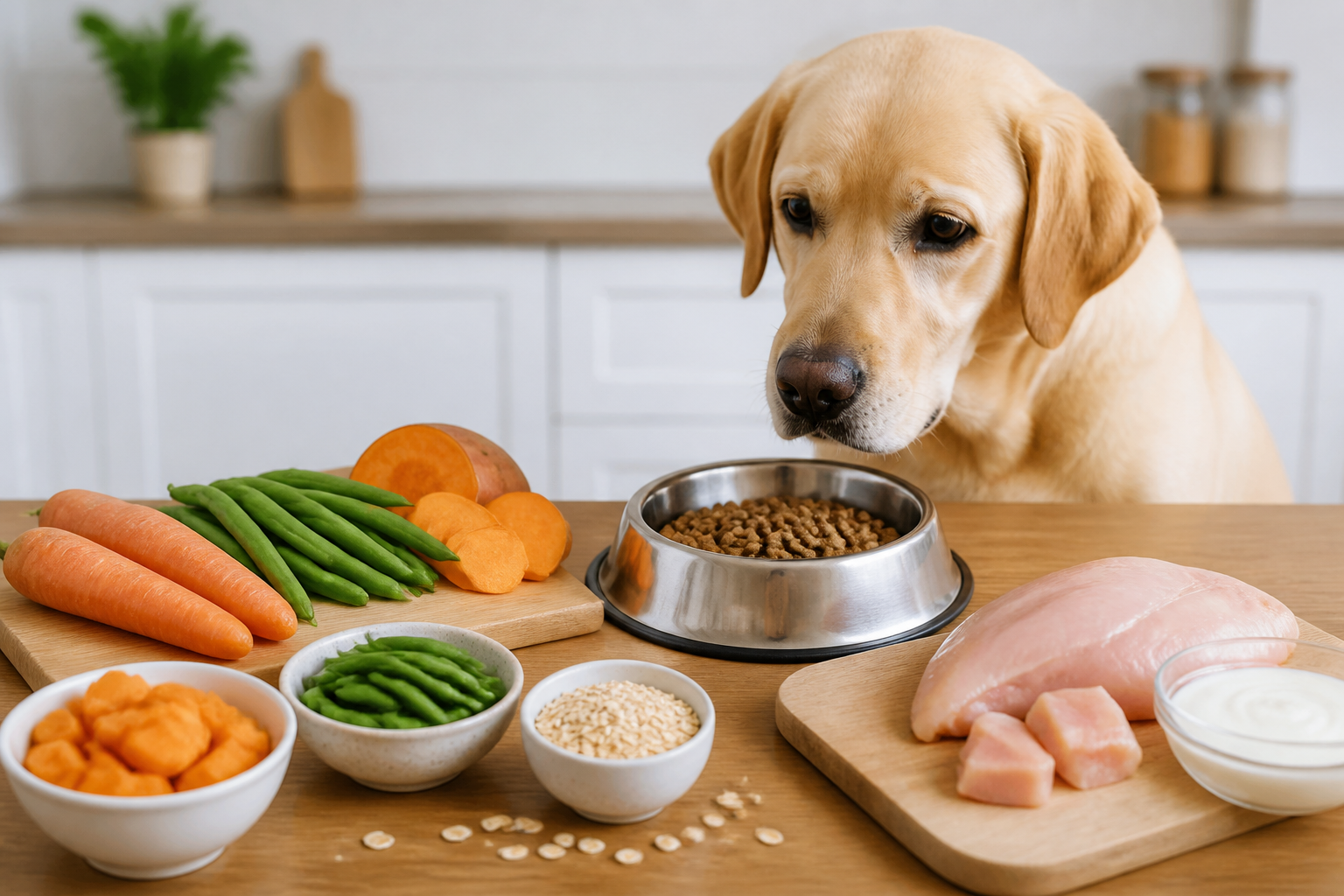
Treats should fit within the day’s total energy intake and remain small enough to avoid disrupting meals. Use part of the regular diet as training rewards, particularly for dogs that gain weight easily. Choose plain, dog safe options when sharing food, such as small pieces of suitable cooked vegetables or lean, unseasoned meat, provided these foods agree with the individual dog.
Never offer chocolate, grapes, raisins, onions, garlic, alcohol, xylitol, or foods containing toxic ingredients. Cooked bones can splinter, and fatty leftovers may cause digestive upset or contribute to pancreatitis in susceptible dogs. Keep hazardous foods secured, especially during celebrations. If a dog consumes a potentially poisonous substance, contact a veterinarian or animal poison service promptly instead of waiting for signs to appear.
Nutrition Through Every Life Stage
Puppies need diets designed for growth, with controlled mineral levels and adequate energy. Large and giant breed puppies require particular care because overly rapid growth may stress developing bones and joints. Feed measured portions, avoid unnecessary supplements, and follow veterinary recommendations about growth monitoring. Young puppies usually need several meals daily, while the schedule can change as they mature.
Adult dogs need enough energy to maintain a stable, healthy body condition. Working, sporting, pregnant, nursing, or exceptionally active dogs may require more calories, but increased food should match real demands. Pregnancy and lactation deserve professional guidance because nutrient needs change substantially and the consequences of deficiency can affect both mother and offspring.
Senior dogs do not all require the same diet. Some become less active and need fewer calories; others lose weight, develop dental problems, or have medical conditions requiring a therapeutic formula. Older dogs benefit from regular examinations, because changes in appetite, thirst, weight, mobility, or digestion may be early signs of disease rather than normal aging.
Exercise, Enrichment, And Healthy Routine
Nutrition cannot compensate for inactivity. Daily movement supports muscles, joints, cardiovascular fitness, digestion, and emotional balance. Begin with activities suited to age, breed tendencies, fitness, weather, and medical status. Increase duration gradually, watch breathing and movement, and stop if the dog shows distress, weakness, limping, confusion, or unusual reluctance.
Mental enrichment is equally valuable. Food puzzles, scent games, training, safe chewing, and varied walks allow dogs to investigate and make choices. Puzzle feeding can slow rapid eating, but introduce it gradually and supervise the first attempts. Some dogs become frustrated or guard food, so use simple designs and provide distance from other animals.
Establish consistent routines for meals, exercise, rest, toileting, and medication. Predictability can reduce household stress and makes changes easier to notice. Fresh water should be available every day. Wash bowls regularly, especially when feeding moist food, and provide additional water during heat, strenuous activity, or illness while contacting a veterinarian about unusual thirst.
Preventive Health And Dental Care
Preventive care combines veterinary examinations, vaccinations based on risk, parasite control, dental assessment, and screening appropriate to age and medical history. A dog may appear normal while pain or disease develops quietly. Routine visits create opportunities to review diet, weight, exercise, behavior, and medication safety.
Dental disease can cause bad breath, discomfort, reluctance to chew, drooling, or changes in eating. Brushing with toothpaste made for dogs is one of the most useful home measures when introduced patiently. Never use human toothpaste, because some formulations contain ingredients unsafe for dogs. Dental chews and diets may help mechanically, but they do not replace professional evaluation or treatment.

Grooming also contributes to health. Regularly inspect skin, ears, paws, nails, and coat. Check for parasites after outdoor activity and ask about products appropriate for the dog’s species, weight, age, and region. Avoid combining treatments without professional advice. A well maintained coat makes swelling, wounds, mats, or parasites easier to detect.
Recognizing Warning Signs
Contact a veterinarian promptly for persistent vomiting or diarrhea, blood in stool or urine, difficulty breathing, collapse, seizures, severe pain, repeated unproductive retching, sudden weakness, or suspected poisoning. Emergency signs can worsen quickly, so call ahead and follow professional instructions.
Less dramatic changes also deserve attention. Increased thirst or urination, reduced appetite, persistent hunger, weight change, chronic itching, repeated ear infections, coughing, stiffness, hiding, anxiety, or altered sleep may indicate a problem. Record when the change began, how often it occurs, and what makes it better or worse. Bring medication and diet information to the appointment.
Do not diagnose from internet searches or give leftover human medicine. Many common pain relievers are dangerous to dogs, and a medication safe for one animal may be unsuitable for another. Veterinary advice is especially important for pregnant dogs, puppies, seniors, dogs with chronic illness, and animals taking multiple products.
Product Guidance For A Practical Feeding Plan
A useful dog health and nutrition product should make appropriate feeding easier, not merely promise superior results. Look for clear life stage labeling, feeding directions, calorie information, storage instructions, a complete nutritional statement, and a reliable customer service contact. Packaging should be intact, unexpired, and stored according to instructions. For wet food, refrigerate leftovers promptly and discard food that has spoiled.
Choose a formula based on the dog’s needs. A healthy adult may need a maintenance diet, while a puppy, senior, active dog, or animal with diagnosed disease may need a different formulation. Therapeutic diets should be selected with veterinary supervision. If a product contains supplements, examine the active ingredients and ask whether they are necessary. Joint, skin, digestive, or calming claims do not guarantee benefit for every dog.
Useful accessories include a sturdy bowl that is easy to clean, a sealed container for food, a measuring tool, a slow feeder when appropriate, and enrichment toys that can be washed. Store food in its original bag inside the container when possible, because the bag preserves lot information needed if a safety concern arises. Do not leave food exposed to heat, moisture, or pests.
Introduce each new product separately. Start with a small amount, observe stool, appetite, skin, and behavior, and follow the gradual transition method for complete diets. Stop and seek advice if the dog develops repeated vomiting, severe diarrhea, facial swelling, breathing difficulty, or marked lethargy. Keep a simple product log containing brand, formula, date opened, serving amount, and any reaction.
Evaluating Labels Without Confusion
Compare products using nutrition and suitability rather than front label imagery. The guaranteed analysis lists minimum or maximum percentages of selected nutrients, but values cannot always be compared directly across foods with different moisture levels. Calorie information and feeding trials or formulation statements may provide more useful context. A veterinarian can help interpret labels when disease, growth, or weight management is involved.
Be cautious with extreme claims, fear based marketing, and diets that eliminate major food groups without a clear reason. Grain free does not automatically mean healthier, and an unusual ingredient does not automatically make a food safer. If a dog has suspected food allergy, do not repeatedly switch foods or add treats randomly; a structured elimination trial under veterinary direction is more informative.
Building A Daily Checklist
Begin each morning by checking water availability and observing appetite, energy, posture, and movement. Feed the measured portion, administer prescribed medication exactly as directed, and remove uneaten food when appropriate. During walks, note stamina, breathing, stool quality, and any limping. Keep training rewards small and account for them in the daily total.
In the evening, inspect paws and coat after outdoor activity, refresh water, and provide calm enrichment. Brush teeth if the dog accepts it, or work briefly toward that goal. Once weekly, review weight trends, food supplies, stool patterns, and the condition of bowls and storage containers. Monthly or according to veterinary advice, reassess body condition and exercise tolerance.
This checklist is not a substitute for medical care, but it turns vague concern into useful information. Consistent observation helps identify gradual changes before they become crises and gives the veterinary team a clearer picture of the dog’s normal baseline.
Frequently Asked Questions
How often should a dog eat?
Many adult dogs do well with one or two measured meals daily, while puppies commonly need more frequent meals. The best schedule depends on age, health, appetite, household routine, and veterinary advice. Dogs that eat rapidly, vomit bile between meals, or have medical conditions may need a different pattern.
Is dry food better than wet food?
Neither format is universally best. Dry food is convenient and often easy to measure, while wet food can increase moisture intake and may be more appealing to some dogs. Both can support health when nutritionally complete and appropriate for the individual. Dental benefits should not be assumed from texture alone.
Should I give my dog vitamins?
A complete diet usually supplies required nutrients, so routine supplementation may be unnecessary or harmful. Supplements can be appropriate for specific conditions, but product quality and dosing vary. Ask a veterinarian before adding vitamins, minerals, herbal products, or oils, particularly if the dog has disease or takes medication.
How can I help an overweight dog?
Confirm the dog’s body condition with a veterinarian, measure every meal, count treats, and avoid free feeding. Increase activity gradually if joints and heart health permit. Weight loss should be monitored rather than forced, because an overly restrictive plan can create nutritional problems. A veterinary weight program can provide calorie targets and follow-up.
What if my dog refuses food?
A single missed meal may have a simple explanation, but refusal accompanied by vomiting, pain, weakness, bloating, or other symptoms requires prompt advice. Persistent appetite loss should be investigated, especially in puppies, seniors, and dogs with chronic disease. Do not disguise medicine in foods that could be dangerous or unsuitable.
Can dogs eat homemade food?
Dogs can eat selected plain foods as treats, but a homemade diet used as the main source of nutrition must be carefully formulated. Meat alone is incomplete. Work with a qualified veterinary nutrition professional, measure ingredients accurately, follow the recipe consistently, and schedule reassessment as the dog’s age or health changes.
Conclusion
Strong dog health begins with practical consistency: choose a complete diet suited to the individual, measure portions, protect a healthy body condition, provide clean water, and treat extras as part of the overall plan. Combine nutrition with movement, enrichment, dental care, grooming, preventive medicine, and attentive observation. Avoid dramatic claims and unsafe improvisation. When appetite, weight, digestion, behavior, or mobility changes, seek professional guidance early. A thoughtful daily routine does not need to be complicated; it needs to be appropriate, measured, and responsive to the dog in front of you. That approach supports comfort, resilience, and a happier life at every stage.