
Puppy Behavior Management for a Happy Dog
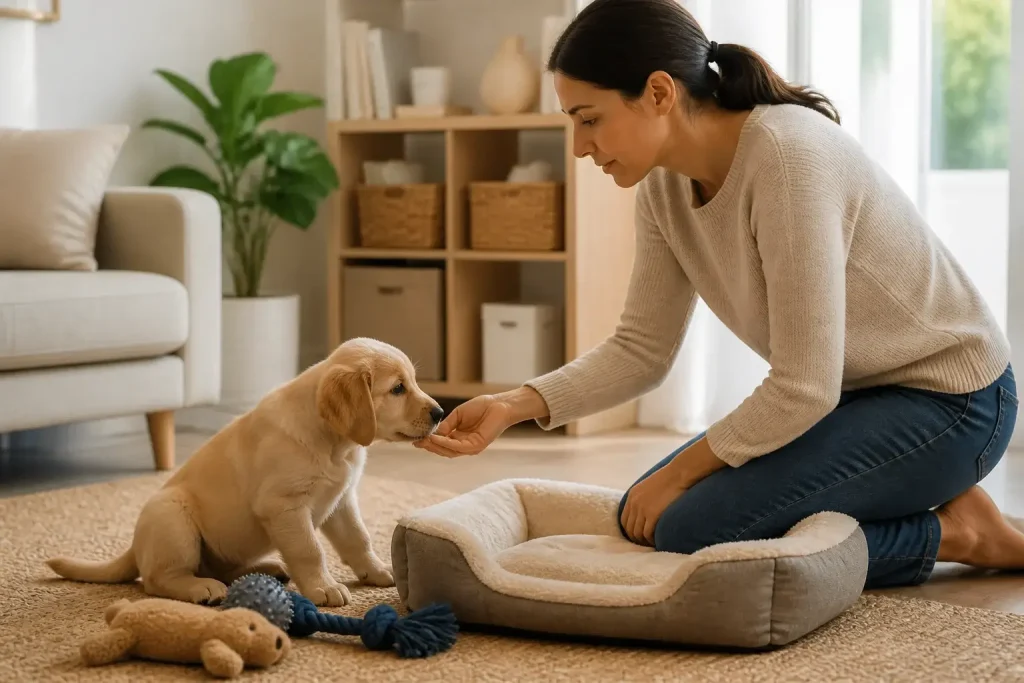
Puppy behavior management is the practical process of teaching a young dog how to live safely, calmly, and cooperatively with people. It is not about suppressing normal puppy behavior or expecting adult self control too soon. Puppies explore with their mouths, become excited quickly, tire easily, and need frequent opportunities to eliminate. Effective management combines prevention, clear teaching, suitable exercise, rest, enrichment, and patient reinforcement.
The most useful principle is simple: arrange the environment so the puppy can succeed, then reward the behavior you want repeated. A chew toy should be easier to reach than a table leg. A quiet bed should be available before the puppy becomes overtired. Training should be brief enough to remain enjoyable, while household rules should be consistent enough to be understandable.
Behavior management protects the relationship between puppy and family. It reduces rehearsals of unwanted habits without relying on fear or harsh punishment. It also helps owners distinguish a normal developmental challenge from a problem needing professional advice. With realistic expectations and a daily plan, families can raise dogs that are confident, responsive, and better prepared for adult life.
Build a Supportive Home Environment
Management starts before training begins. Inspect each room from a puppy’s perspective. Secure electrical cords, medicines, cleaning products, small objects, toxic foods, and unstable furniture. Use gates, a pen, or closed doors to limit access when supervision is impossible. Supervision is not constant staring; it means keeping the puppy close enough that you can calmly interrupt unsafe behavior and offer a better choice.
Create a small resting area containing comfortable bedding, water as appropriate, and safe enrichment. A crate may help with travel, sleep, and short periods of confinement, but it should be introduced gradually and never used as punishment. Feed meals, scatter treats, or provide a food toy there so the space predicts security. If the puppy vocalizes, consider whether the need is toileting, fear, discomfort, loneliness, or excessive confinement rather than simply demanding attention.
Decide household rules in advance. If furniture is forbidden, every family member should follow that rule. If a puppy may eventually sleep on a particular sofa, teach permission and an “off” cue rather than allowing inconsistent access. Consistency reduces frustration and makes learning faster.
Establish a Predictable Routine
Puppies cope better when important events follow a recognizable rhythm. A useful routine includes waking, toileting, eating, gentle play, training, rest, and another toilet opportunity. The exact schedule depends on age, health, diet, and individual development. Very young puppies generally need more frequent bathroom breaks and more sleep than inexperienced owners expect.
Take the puppy outside after waking, eating, drinking substantially, playing, and exciting interaction. Watch for circling, sniffing, wandering away, or suddenly stopping play. Reward elimination outdoors immediately with quiet praise or a small treat. If an accident occurs, clean the area thoroughly with an appropriate enzymatic cleaner and avoid scolding. Punishment can teach a puppy to hide toileting, not to understand the desired location.

Sleep is behavior management, not wasted time. An overtired puppy may bite, race around, bark, or ignore familiar cues. Provide planned naps in a calm place, especially after active periods. If the puppy struggles to settle, reduce stimulation, offer a safe chew, and remain boring and predictable. Gradually, the puppy learns that calm behavior leads to rest and continued access to family life.
Reward What You Want
Reinforcement means a consequence makes a behavior more likely. For many puppies, food is an efficient reward, but play, access to sniffing, gentle attention, or release from restraint can also reinforce behavior. Deliver the reward promptly, while the puppy is performing or immediately after the desired action. Timing helps the dog identify which behavior earned success.
Mark useful moments throughout the day. Reward four paws on the floor, looking toward you, lying down independently, waiting at a doorway, releasing a toy, or choosing a chew instead of a household object. These small choices become habits when repeated. Keep treats tiny and account for them within the puppy’s overall feeding plan.
Avoid bribing every action forever. At first, show the reward to motivate learning; later, reinforce from a pocket or treat pouch after the behavior occurs. Continue rewarding unpredictably, while preserving praise and other meaningful consequences. This maintains reliability without making the puppy dependent on visible food.
Teach Essential Skills
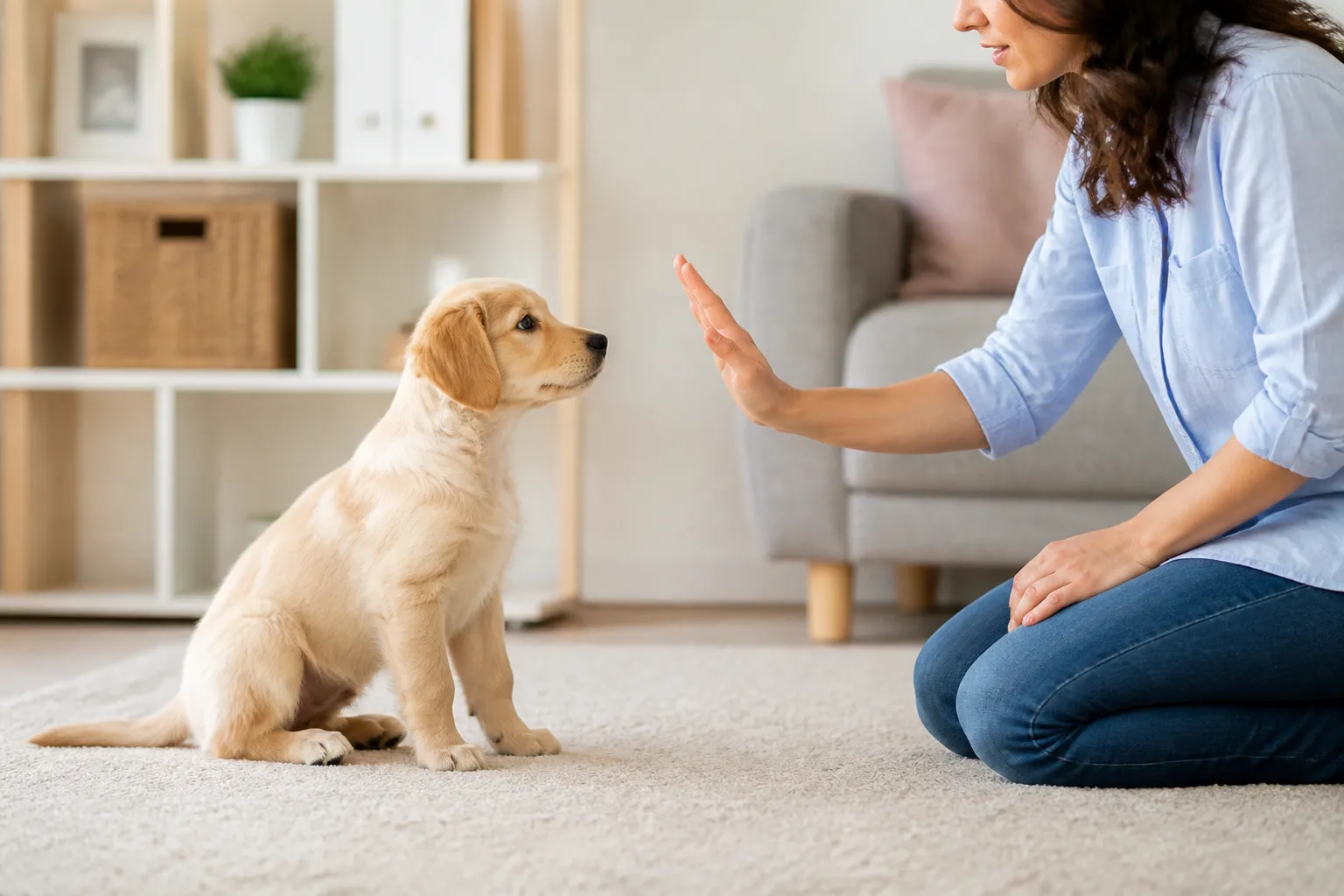
Begin with skills that improve safety and daily cooperation. Responding to a name, coming when called, sitting, lying down, waiting briefly, trading objects, and walking on a loose leash are useful foundations. Train in quiet locations before adding distractions. Use one cue consistently, say it once, and help the puppy succeed rather than repeating it louder.
Recall deserves special care. Say the puppy’s name and a cheerful recall cue, then move away, crouch, or open your arms. Reward generously when the puppy reaches you. Never call the puppy to deliver a frightening punishment or to end every enjoyable activity. Practice indoors, then in secure outdoor spaces, using a long line where appropriate. A recall cue must remain valuable, so occasionally call, reward, and release the puppy back to play.
Teach “leave it” for avoiding an item and “drop” or “trade” for releasing something already held. Begin with low-value objects and exchange them for something better. Do not chase a puppy that steals an item; chasing can turn theft into a rewarding game. If the object is dangerous, trade calmly and seek veterinary guidance if ingestion may have occurred.
Manage Mouthing and Biting
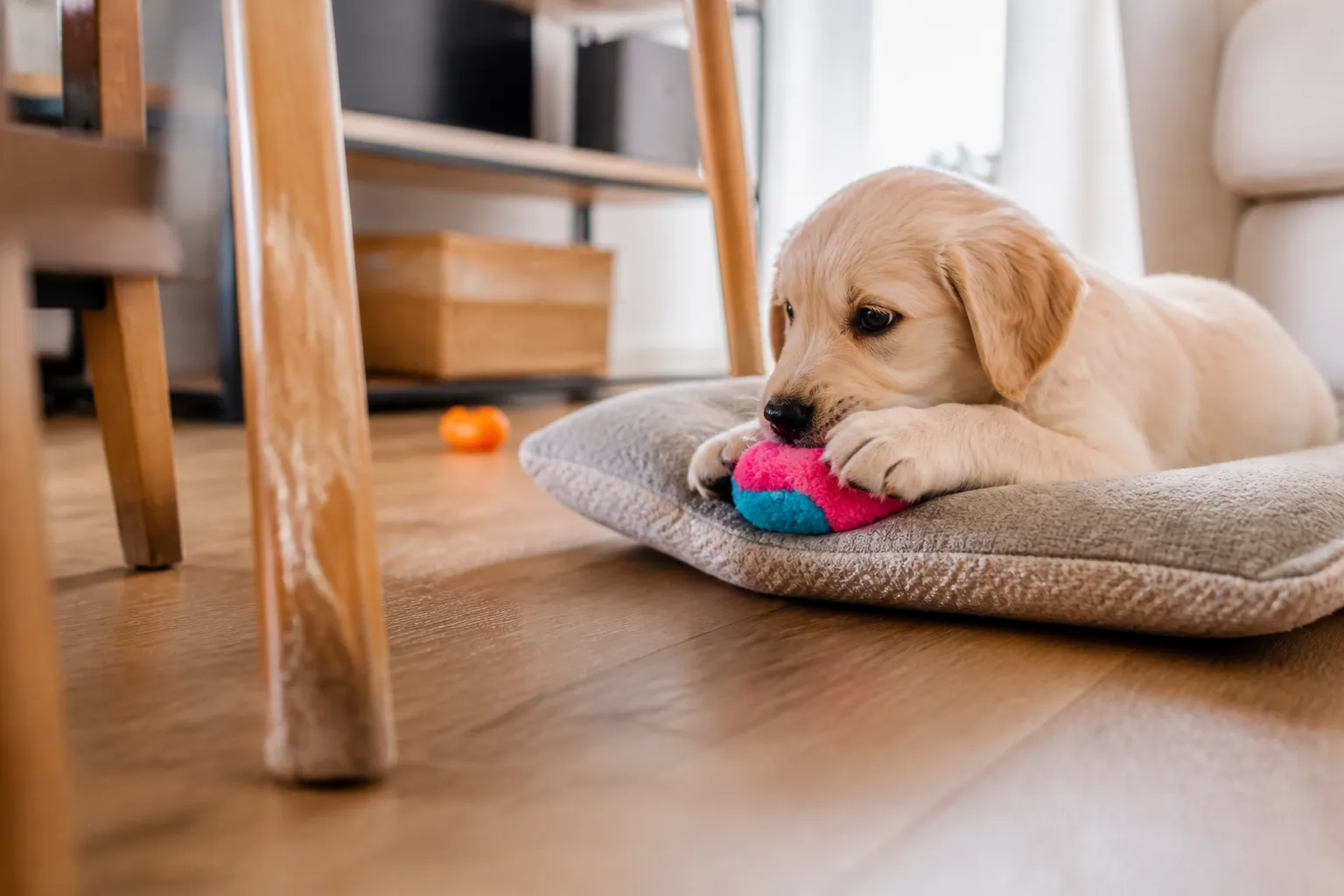
Mouthing is common because puppies investigate, play, and experience developing teeth. It still needs courteous limits. Keep several appropriate chew options nearby, including different textures that are safe for the individual dog. When teeth touch skin, pause movement, calmly offer a toy, and resume interaction when the puppy engages appropriately. If biting continues, end the game briefly and neutrally, then provide a quiet break.
Avoid waving hands, wrestling roughly, or encouraging the puppy to bite clothing unless you can reliably redirect the game. Children need direct supervision and simple instructions: stand still, fold arms, and call an adult rather than squealing or running. A puppy that repeatedly bites despite rest, redirection, and reasonable management may need an individualized assessment, particularly if body language includes stiffness, guarding, panic, or painful reactions.
Chews require supervision. Choose items suitable for the puppy’s size, chewing style, and health needs, and remove damaged pieces. No chew is risk free. Ask a veterinarian about hazards involving swallowing, fractured teeth, allergies, or digestive problems.
Guide Socialization Carefully
Socialization means learning that people, animals, places, sounds, surfaces, handling, and routine events can be safe and predictable. Quality matters more than quantity. Introduce one manageable novelty at a time, keep sessions short, and pair the experience with food or play. The puppy should be able to notice the stimulus, remain functional, and choose to engage or retreat.
Do not force greetings. A puppy hiding behind your legs is communicating discomfort, not disobedience. Increase distance, reduce intensity, and reward calm observation. Invite people to turn sideways, avoid looming, and let the puppy approach. For handling, touch ears, paws, collar, mouth area, and body briefly, rewarding after each gentle contact. Stop before resistance escalates.
Ask a veterinarian about disease prevention and suitable social opportunities. Well-run puppy classes may offer controlled practice, but crowded dog parks and chaotic greetings can overwhelm a young dog. Socialization also includes learning to relax alone, ride in a vehicle, hear household noises, and encounter grooming or veterinary routines.
Handle Jumping, Barking, and Excitement
Jumping usually succeeds because it gains attention. Turn away, keep hands still, and reward four paws on the floor. Guests should enter calmly and avoid pushing the puppy down, since physical contact can accidentally reinforce the behavior. Practice with one helper at a time. As the puppy improves, add doorbells, coats, bags, and longer greetings.

For barking, identify the cause before choosing a response. Alert barking, frustration, fear, boredom, and attention seeking require different solutions. Block the puppy’s view of triggering activity, increase distance, provide rest, and reward quiet observation. Avoid shouting, which may sound like participation. If barking appears sudden, intense, or linked with fear or pain, consult a veterinarian or qualified behavior professional.
Excitement often improves when greetings become structured. Ask for a simple behavior, such as standing calmly or touching a hand, then provide access to the visitor. If the puppy cannot respond, the situation is too difficult; create distance and allow recovery. Calmness is a skill built through repeated, successful practice, not a command that appears instantly.
Use Exercise and Enrichment Wisely
Puppies need movement, exploration, play, and mental work, but more activity is not always better. Excessive high-impact exercise or prolonged arousal can produce fatigue and poor impulse control. Favor age-appropriate movement, sniffing, gentle games, short training sessions, and food puzzles. Ask a veterinarian about exercise limits for the puppy’s breed, size, growth, and health.
Rotate toys to preserve interest. Hide part of the daily ration in safe enrichment, use simple scent games, and teach the puppy to search for a toy. Supervise puzzle items initially and adjust difficulty so frustration does not dominate. Enrichment should occupy the mind while supporting calm behavior, not keep the puppy constantly stimulated.
Respond to Common Challenges
When a puppy misbehaves, pause and ask three questions: What happened immediately before? What did the puppy gain or avoid? What need might be unmet? A puppy chewing after a long period alone may need connection and appropriate activity. A puppy grabbing clothing during an evening rush may be overtired. A puppy barking at a window may need reduced visual access.
Change the setup first. Use a gate, remove the tempting object, shorten the training session, or provide a nap. Then teach a replacement behavior. Management is not giving in; it prevents rehearsal while the puppy develops the skills needed for greater freedom.
Keep a brief behavior log. Record sleep, meals, exercise, triggers, accidents, and successful interventions. Patterns can reveal that problems occur at predictable times. This information also helps a veterinarian or behavior consultant provide more relevant guidance.
Avoid Harmful Training Practices
Physical punishment, intimidation, leash jerks, alpha-style handling, and deliberate frightening can damage trust and may increase fear or defensive behavior. They do not explain what the puppy should do instead. A calm interruption followed by redirection is more informative. Reward-based training also allows owners to notice small improvements rather than waiting for perfection.
Do not label a puppy stubborn, dominant, or spiteful without examining learning history and context. Dogs repeat behaviors that work for them. They may also be unable to respond because of fear, pain, distraction, fatigue, or insufficient teaching. Reframing the behavior as information leads to more effective decisions.
Use humane equipment correctly. Collars, harnesses, leads, crates, and pens should fit safely and support learning. Seek qualified guidance if equipment causes coughing, distress, skin injury, freezing, or avoidance.
Know When to Seek Help
Contact a veterinarian when behavior changes suddenly, when the puppy shows possible pain, extreme lethargy, repeated digestive problems, neurological signs, or unusual sensitivity to touch. Medical issues can affect sleep, elimination, appetite, movement, and tolerance. Behavior training cannot replace medical assessment.
Seek a qualified reward-based behavior professional for severe fear, repeated snapping, resource guarding, persistent separation distress, dangerous chasing, or biting that breaks skin. Early help is often easier and safer than waiting for a pattern to become established. Ask what methods the professional uses, how safety is managed, and how progress will be measured.
Emergency situations require immediate practical protection. Separate children and animals safely, prevent further access to hazards, and contact appropriate veterinary services after a bite, poisoning, choking event, or suspected ingestion. Avoid risky attempts to retrieve an object unless a professional gives clear instructions.
Frequently Asked Questions
How long should puppy training sessions last?
Use short sessions that end while the puppy is still engaged. A few minutes may be enough for a young or tired puppy. Several brief sessions distributed through the day usually work better than one demanding lesson. Stop if the puppy becomes frantic, frustrated, sleepy, or unable to take food normally.
Is crate training necessary?
A crate is optional, but many families find it useful for transportation, rest, recovery, and safe management. It should be introduced positively, with gradual duration and regular toilet opportunities. Never use it for excessive confinement or punishment. A pen, gated room, or puppy-proofed area can meet the same management need.
Why does my puppy listen indoors but not outside?
Outdoor environments contain stronger smells, movement, sounds, and competing rewards. The puppy has not forgotten training; the difficulty has increased. Return to an easier location, reward more generously, reduce distance from distractions, and progress gradually. Reliable behavior in one setting does not automatically transfer to another.
How can I stop my puppy from stealing?
Secure tempting items, provide legal alternatives, and practice trading with low-value objects. Reward the puppy for dropping an item and return a safe toy when appropriate. Chasing, grabbing, or scolding can increase excitement and make future retrieval harder. For dangerous objects, prioritize safety and contact a veterinarian if swallowing is possible.
Should I ignore all unwanted behavior?
No. Ignore only behavior that is safe and attention maintained, such as a brief demand bark, while reinforcing calm alternatives. Interrupt unsafe chewing, chasing, or rough contact promptly and calmly. Every response should consider function, safety, and the replacement behavior you want to build.
When will my puppy become calm?
Development varies by individual, genetics, health, environment, and learning history. Improvement usually comes in uneven steps rather than a straight line. Continue teaching rest, emotional regulation, polite greetings, and independent activity. Seek help if intensity, fear, or aggression seems disproportionate or worsens.
A Practical Daily Plan
A workable day might begin with immediate toileting, breakfast through a food toy, a short training session, and supervised exploration. Follow active time with a nap. Repeat toilet opportunities after sleep, meals, and play. Include brief handling practice, calm social exposure, a gentle game, and independent chewing. End with a predictable evening routine that reduces stimulation before sleep.
Adjust the plan rather than treating it as a rigid timetable. A puppy recovering from a busy class may need extra rest; another may need a short sniffing walk or training game. Progress means the puppy can manage slightly more freedom while retaining good choices. Increase one variable at a time: duration, distance, distraction, or access.
Conclusion
Puppy behavior management succeeds when prevention and teaching work together. Make the safe choice easy, meet basic needs, protect sleep, reward desirable behavior, and introduce challenges gradually. Treat accidents, mouthing, barking, jumping, and excitement as training information rather than moral failures. Clear routines and humane boundaries give puppies the structure they need without sacrificing trust.
The strongest results come from consistency, not perfection. Every family member can reinforce the same simple rules, record patterns, and adjust the environment when progress stalls. When health concerns, fear, guarding, or aggression appear, professional support should be part of responsible care. With patience and thoughtful management, a puppy can develop practical skills, confidence, and a cooperative relationship that remains valuable throughout life.