

Dogs can experience anxiety when they face separation, unfamiliar people, loud sounds, travel, veterinary visits, conflict, illness, or changes at home. Relief begins with identifying the trigger, reducing unnecessary stress, and teaching the dog that frightening situations can become predictable and manageable. There is no single product that works for every dog, and a calm-looking dog is not necessarily a comfortable dog. The safest plan combines environmental support, reward-based training, careful observation, and professional guidance when signs are intense, sudden, or persistent.
Anxiety may appear as panting, trembling, pacing, hiding, barking, whining, drooling, destructive behavior, escape attempts, house-soiling, freezing, clinginess, or refusing food. Some dogs become unusually quiet rather than visibly agitated. These behaviors communicate distress; they are not evidence of spite or deliberate disobedience. Punishment can increase fear and make future episodes harder to manage. Instead, respond calmly, protect the dog from immediate danger, and record what happened before, during, and after each episode.
Anxiety Relief For Dogs: Understanding What Your Dog Needs
The most useful first step is a simple behavior history. Note the trigger, location, time, duration, body language, intensity, and recovery time. Ask whether the dog is anxious only when alone, during storms, around particular people, in the car, or across many settings. Also record appetite, sleep, exercise, medications, and recent household changes. Patterns help distinguish a specific fear from broader anxiety and give a veterinarian or qualified behavior professional information for a practical plan.
Sudden anxiety deserves particular attention. Pain, impaired hearing or vision, digestive discomfort, hormonal conditions, neurological problems, and medication effects can alter behavior. Older dogs may become distressed because of age-related cognitive changes. A veterinary examination is therefore important when anxiety begins abruptly, worsens quickly, accompanies aggression, changes elimination habits, or appears alongside weakness, vomiting, seizures, appetite loss, or other physical symptoms. Behavioral treatment should not replace medical assessment.
Common Anxiety Patterns
Separation-related distress occurs when a dog struggles with a caregiver’s departure or absence. Signs may begin during departure preparation and include following, frantic greeting, vocalization, destruction near exits, or inability to settle. Noise fear may involve thunder, fireworks, construction, alarms, or even household appliances. Generalized anxiety can cause persistent vigilance, startle responses, scanning, and difficulty relaxing. Each pattern requires tailored management; advice suitable for a thunderstorm may be unhelpful for separation distress.
Fear and anxiety also differ in timing. Fear is an immediate response to a perceived threat, while anxiety often involves anticipation of a possible threat. Both can overlap, and either can become learned through repeated exposure. A dog that panics during one storm may begin reacting to dark clouds, wind, or changes in household activity. Early, gentle intervention is valuable because repeated panic can strengthen the association.
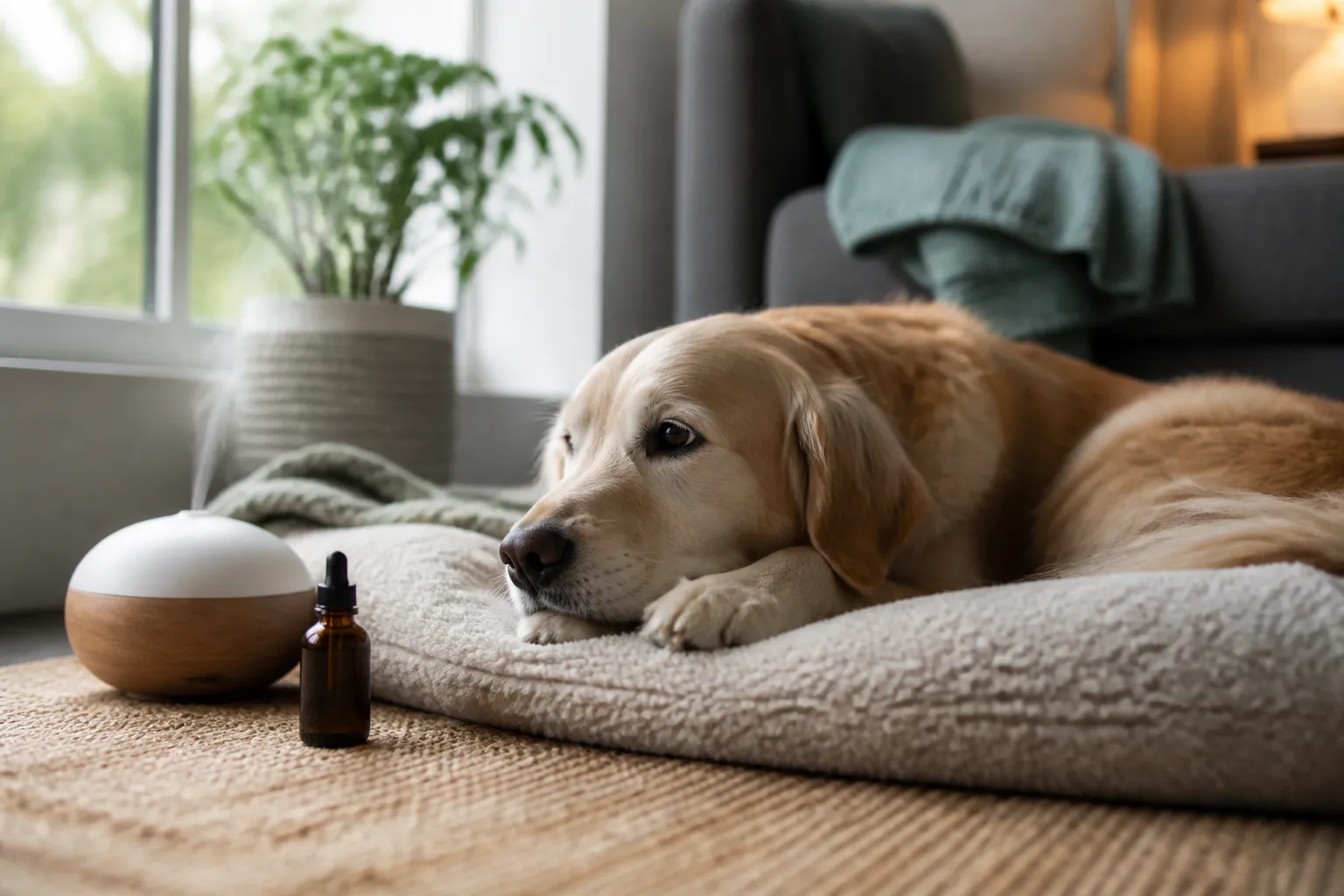
Immediate Ways to Create Calm
Start with safety. Close windows and curtains during fireworks, secure gates, remove escape hazards, and keep identification information current. Provide a quiet retreat where the dog can rest without being pulled out or crowded. A covered crate may suit a crate-trained dog, while another dog may prefer a bed behind furniture or in an interior room. The retreat should never be used as punishment. Let the dog enter and leave freely whenever possible.
Reduce stimulation without forcing complete isolation. Soft background sound, such as steady music or a fan, may mask unpredictable noises. Dim lighting can help during visual triggers. Keep your movements unhurried and your voice relaxed. Offer water and a familiar chew or food toy if the dog is willing to eat. A dog that refuses food may be too frightened for training; first lower the intensity and restore a sense of safety.
Predictable routines support regulation. Regular meal times, walks, rest periods, and gentle interaction make daily events easier to anticipate. Adequate physical activity can help, but exhausting an anxious dog is not a complete solution. Overstimulation, forced exercise, or exciting play immediately before a trigger may increase arousal. Choose sniffing, searching, slow walks, and simple training that allow the dog to think and recover.
Behavior Training That Builds Confidence
The central training principle is gradual exposure below the dog’s fear threshold. Identify a mild version of the trigger, pair it with something valuable, and stop before distress escalates. For example, a dog sensitive to door sounds might hear a very quiet recording while receiving small treats. Over repeated sessions, increase volume or duration only when the dog remains relaxed. If panting, freezing, scanning, refusal of food, or escape behavior appears, the exercise is too difficult.
This process is called desensitization and counterconditioning. Desensitization changes the intensity of exposure; counterconditioning changes the dog’s emotional association by pairing the trigger with pleasant consequences. Progress is rarely linear. A dog may manage a sound indoors but struggle outdoors, or cope on one day and react strongly after poor sleep. Return to an easier level rather than treating a setback as failure.
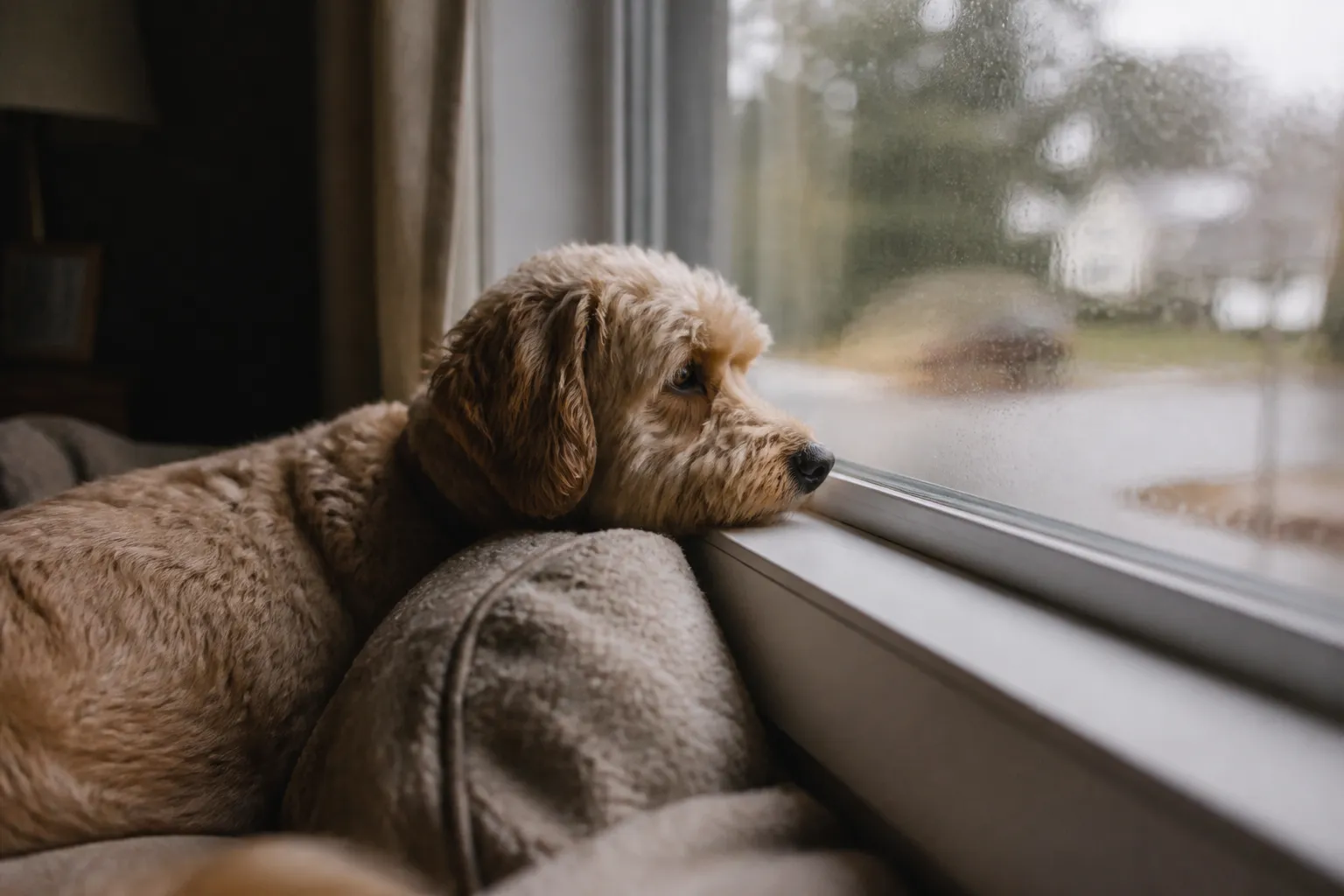
For separation distress, avoid practicing absences that repeatedly produce panic when possible. Begin with departures so brief that the dog remains calm, then increase duration in small, varied increments. Departure cues, such as picking up keys, can be practiced without leaving. A camera can help reveal whether the dog settles, vocalizes, or paces when alone. Because serious cases can worsen quickly, professional guidance is especially valuable.
Reward calm behavior in ordinary moments. Quietly place a treat on a mat when the dog relaxes, settles after a sound, checks in voluntarily, or chooses to move away from excitement. Teach a mat behavior, hand target, name response, and easy pattern such as walking several steps, pausing, and receiving a reward. These skills do not erase fear, but they give the dog safer choices and improve communication.
Never flood a dog by forcing prolonged exposure, holding it near a frightening stimulus, or insisting that it “face” a fear. Flooding can intensify distress and damage trust. Avoid punishment, leash corrections, yelling, or startling devices. A fearful dog needs boundaries and management, but fear itself is not a moral problem to suppress.
Product Options and How to Choose
An anxiety-relief product should support a broader plan, not promise an instant cure. Look for clear instructions, transparent ingredients, appropriate sizing, and guidance that matches the dog’s trigger. Consider whether the item changes the environment, provides safe enrichment, supports body contact, or delivers a supplement. Each category has potential benefits and limitations.
Comfort products include beds, blankets, covered spaces, sound machines, and food puzzles. A washable, stable bed in a quiet location may help a dog settle. A puzzle feeder can redirect attention when the dog is calm enough to eat. Avoid toys with small parts, loose strings, or materials the dog can easily swallow. Supervise new items, especially when the dog is destructive or anxious.

Pressure garments are designed to provide gentle, consistent contact around the torso. Some dogs appear calmer when wearing them, while others dislike the restriction. Fit matters: the garment should allow normal breathing, movement, toileting, and temperature regulation. Introduce it gradually during relaxed periods, reward acceptance, and remove it if the dog pants excessively, freezes, scratches, or attempts to escape. Do not use it as a substitute for training or veterinary care.
Pheromone products imitate chemical signals intended to convey familiarity or security. Responses vary considerably, and a pheromone diffuser, collar, or spray may be more useful in one environment than another. Follow label directions and allow time for observation rather than combining many new products at once. A lack of improvement is meaningful information; discontinue ineffective options rather than continually adding products.
Supplements may contain ingredients such as specific amino acids, botanical extracts, fatty acids, or minerals. “Natural” does not automatically mean safe, effective, or compatible with medication. Product quality and concentration can vary, and evidence may be limited for particular formulations. Ask a veterinarian before using a supplement, especially for puppies, senior dogs, pregnant or nursing dogs, dogs with chronic disease, or dogs taking medication. Never give human sedatives, sleep aids, alcohol, or leftover prescriptions.
Medication and Professional Support
Veterinary medication may be appropriate when anxiety is severe, frequent, dangerous, or preventing learning. A veterinarian can evaluate physical causes, discuss behavior, review other treatments, and explain expected effects and possible adverse reactions. Some medications are used daily to reduce baseline anxiety; others may be prescribed for predictable events. The choice depends on the dog, the trigger, health history, timing, and response.
Medication should be part of a monitored plan. Follow the prescribed dose and schedule exactly, and do not stop a regularly administered medication abruptly without veterinary advice. Report unusual sedation, agitation, gastrointestinal signs, loss of coordination, appetite changes, or worsening behavior. Avoid sharing medication between animals, because a dose suitable for one dog may be unsafe for another. Medication can create a learning window, but the dog still needs gradual behavior support.
A qualified, reward-based behavior professional can help with assessment and treatment design. Seek someone who explains methods clearly, respects the dog’s signals, and avoids intimidation. For aggression, self-injury, severe separation distress, repeated escape attempts, or panic, ask your veterinarian about referral to a veterinary behaviorist or another appropriately trained specialist. Prompt assistance is often more efficient and kinder than experimenting with increasingly intense home interventions.
A Practical Home Plan
Begin by listing the dog’s triggers from easiest to hardest. Choose one manageable target and define success in observable terms: relaxed muscles, normal breathing, willingness to eat, or choosing a mat. Prepare rewards before training. Keep sessions short, end while the dog is successful, and record the level used. Practice on calm days rather than waiting for a crisis.
Next, improve management. Arrange a safe retreat, secure escape routes, prepare background sound, and tell visitors how to behave. Ask guests to ignore the dog initially, avoid reaching over its head, and allow voluntary approach. During unavoidable triggers, prioritize distance and safety over training. If a dog is already panicking, do not demand obedience exercises that are beyond its capacity.
Review progress weekly. Improvement may mean faster recovery, fewer signs, greater willingness to eat, or a smaller reaction, not total silence or constant sociability. Adjust one factor at a time so you can understand what helps. If there is no meaningful progress, the dog is deteriorating, or the plan is difficult to implement, obtain professional support rather than blaming the dog or abandoning treatment.
Frequently Asked Questions
Can I comfort an anxious dog?
Yes. Calm reassurance does not create anxiety. Offer proximity, a quiet voice, and a safe retreat if the dog seeks them. Avoid frantic attention, restraint, or forcing contact. Follow the dog’s preference: some dogs want closeness, while others need space. Comfort should reduce pressure and help the dog feel secure.
Will more exercise cure anxiety?
Exercise can support sleep, physical health, and emotional balance, but it rarely cures a specific fear by itself. Choose suitable activity and avoid overstimulation. Sniff walks, food searches, and gentle play may be more useful than intense repetitive exercise for a highly aroused dog.
Should I use a crate?
A crate can be helpful when the dog already regards it as a safe resting place. Introduce it gradually with open-door enrichment and never use it as punishment. Do not confine a dog that panics in crates; frantic escape attempts can cause injury. An open room, pen, or gated retreat may be safer.
Are calming treats always safe?
No. Ingredients, doses, contamination risks, and interactions differ. Read the label, use only products appropriate for dogs, and consult a veterinarian for vulnerable animals or dogs receiving medication. Observe the first administration when professional advice supports trying it, and stop if adverse signs occur.
How quickly should relief appear?
Timing varies with the trigger, severity, treatment, and consistency. Environmental changes may help immediately, while behavior modification commonly requires repeated practice. Do not increase exposure simply because progress seems slow. If anxiety is severe or unchanged, ask a veterinarian or behavior professional to reassess the plan.
What should I do during fireworks or storms?
Prepare before the event: exercise earlier, close windows, secure doors, offer the retreat, and use steady background sound. Keep the dog indoors and supervised. Stay calm, provide optional food enrichment, and avoid taking the dog outside during the loudest period unless necessary. For predictable severe reactions, discuss preventive treatment with a veterinarian well in advance.
Conclusion
Effective anxiety relief for dogs is individualized, humane, and practical. Begin with safety and medical evaluation when symptoms are sudden, severe, or unusual. Then combine trigger management, predictable routines, reward-based training, suitable enrichment, and carefully selected products. Pressure garments, pheromone aids, comfort spaces, puzzles, and supplements may help some dogs, but none should be presented as guaranteed or used without considering fit, safety, evidence, and health history.
Your most persuasive tool is careful observation. Notice what precedes distress, what lowers intensity, and how long recovery takes. Reward calm choices, respect warning signals, and progress gradually. When fear interferes with eating, sleeping, learning, safety, or daily life, professional support is not an admission of failure; it is a responsible step toward lasting improvement. With patience and an appropriate plan, many dogs can recover faster, feel safer, and participate more comfortably in ordinary family life.