
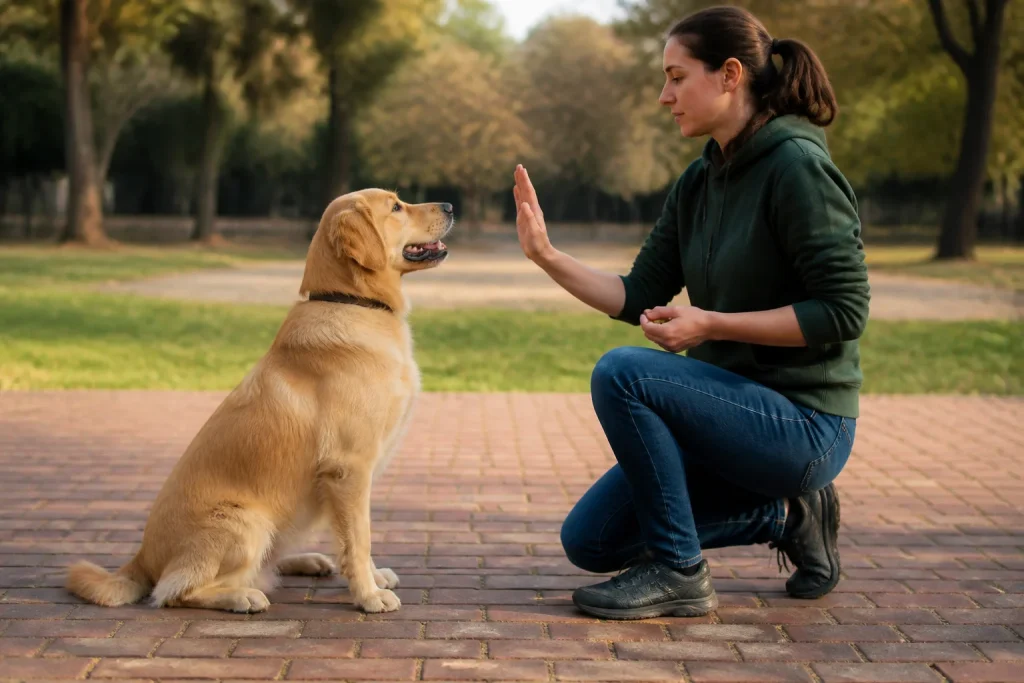
Advanced Dog Training: A Practical Guide
Advanced dog training is not simply teaching more commands. It is the process of building reliable communication, emotional control, problem solving, and safe behavior in increasingly difficult situations. A dog may respond perfectly in a quiet kitchen yet ignore a cue near squirrels, visitors, traffic, or other dogs. Advanced work closes that gap by transferring learning from controlled exercises to real life.
The most effective programs remain clear, humane, and gradual. They reward desirable choices, manage situations that are too difficult, and recognize that behavior depends on health, environment, motivation, and previous experience. Advanced training should strengthen trust rather than rely on fear or physical intimidation. If aggression, severe anxiety, compulsive behavior, or sudden behavioral change is present, consult a veterinarian and a qualified behavior professional before increasing training demands.
A useful goal is not robotic obedience. It is a dog that can notice distractions, regulate arousal, understand a cue, and choose a safe response. The handler also learns to observe body language, adjust criteria, and reinforce behavior precisely. This shared skill makes advanced training a continuing partnership.
What Advanced Training Includes
Advanced training commonly develops five related abilities: duration, distance, distraction resistance, generalization, and recovery. Duration means maintaining a behavior for longer. Distance means responding while the handler is farther away. Distraction resistance means choosing the trained behavior despite competing sights, sounds, smells, or movement. Generalization means performing the behavior in different places and contexts. Recovery means returning to a calm, responsive state after excitement or stress.
These abilities should be trained separately at first. For example, asking for a long stay, from across a busy park, while another dog runs nearby combines several difficult variables. A dog that fails may not be stubborn; the exercise may simply exceed current learning capacity. Reduce one variable, reinforce success, and rebuild gradually.
Reinforcement and Timing
Reinforcement is anything that increases the likelihood of a behavior. Food is often efficient, but toys, access to sniffing, permission to greet, movement, praise, or comfortable rest can also matter. The reward should suit the individual dog and the situation. A quiet dog may work for gentle interaction, while a highly motivated dog may need a controlled opportunity to chase a toy.
Timing matters because dogs connect consequences with the behavior occurring immediately before them. Mark the correct response with a consistent word or click, then deliver the reward. Avoid repeating a cue while the dog is still deciding. Repeated cues can teach the dog that the first instruction is optional. Give one clear cue, wait briefly, and help only when necessary.
Criteria and Progression
Define success before beginning. If teaching a stationary position, decide whether the dog must keep all paws still, maintain eye contact, or simply remain within a marked area. Changing criteria unpredictably creates confusion. Raise only one challenge at a time, such as duration, distance, or distraction. When performance declines, lower difficulty rather than adding pressure.

Use a variable reinforcement schedule only after the behavior is dependable. Occasional rewards can maintain a strong response, but unpredictability should never mean withholding reinforcement for long periods. Continue acknowledging good choices, especially when the environment itself is difficult.
Building Reliable Cues
A cue should predict a specific action and lead to a meaningful outcome. Begin in a low-distraction setting, say the cue once, and reinforce the correct response. Add modest distractions only after the dog responds promptly several times. Then practice in another room, outdoors, and in locations where the behavior will actually be used.
Proofing “Stay”
A reliable stay is built through short repetitions. Ask for the position, pause briefly, mark, and return to reward the dog without causing movement. Gradually increase time, then distance, then distractions. Sometimes return and release; at other times move away, walk around, or handle an object. The release cue should clearly end the exercise.
Avoid calling the dog out of a stay as the usual reward, because anticipation may cause movement. Instead, return to the dog and deliver reinforcement while the position is maintained. If the dog breaks, calmly reset with an easier version. Do not punish a mistake that indicates the exercise was too difficult.
Recall Under Pressure
Recall is a safety behavior, so it deserves frequent reinforcement and careful management. Use a long line in open areas until the response is dependable. Start with a cheerful cue at short distances, reward generously, and then allow the dog to return to safe exploration. This teaches that coming back does not always end enjoyable activity.
Never use recall only for unpleasant events such as nail trimming, confinement, or immediate departure. When those events are necessary, approach the dog or use a separate practical signal. If the dog ignores the recall, avoid repeated shouting. Manage the line, reduce distance, and make the next repetition easier.
Training Around Distractions
Distraction training works best at a distance where the dog can notice the trigger while still eating, playing, or responding. This is often called working below threshold. Signs that the dog is over threshold include stiff posture, frantic scanning, lunging, barking, inability to take food, or failure to respond to familiar cues. Distance, barriers, reduced intensity, and shorter sessions can restore learning.
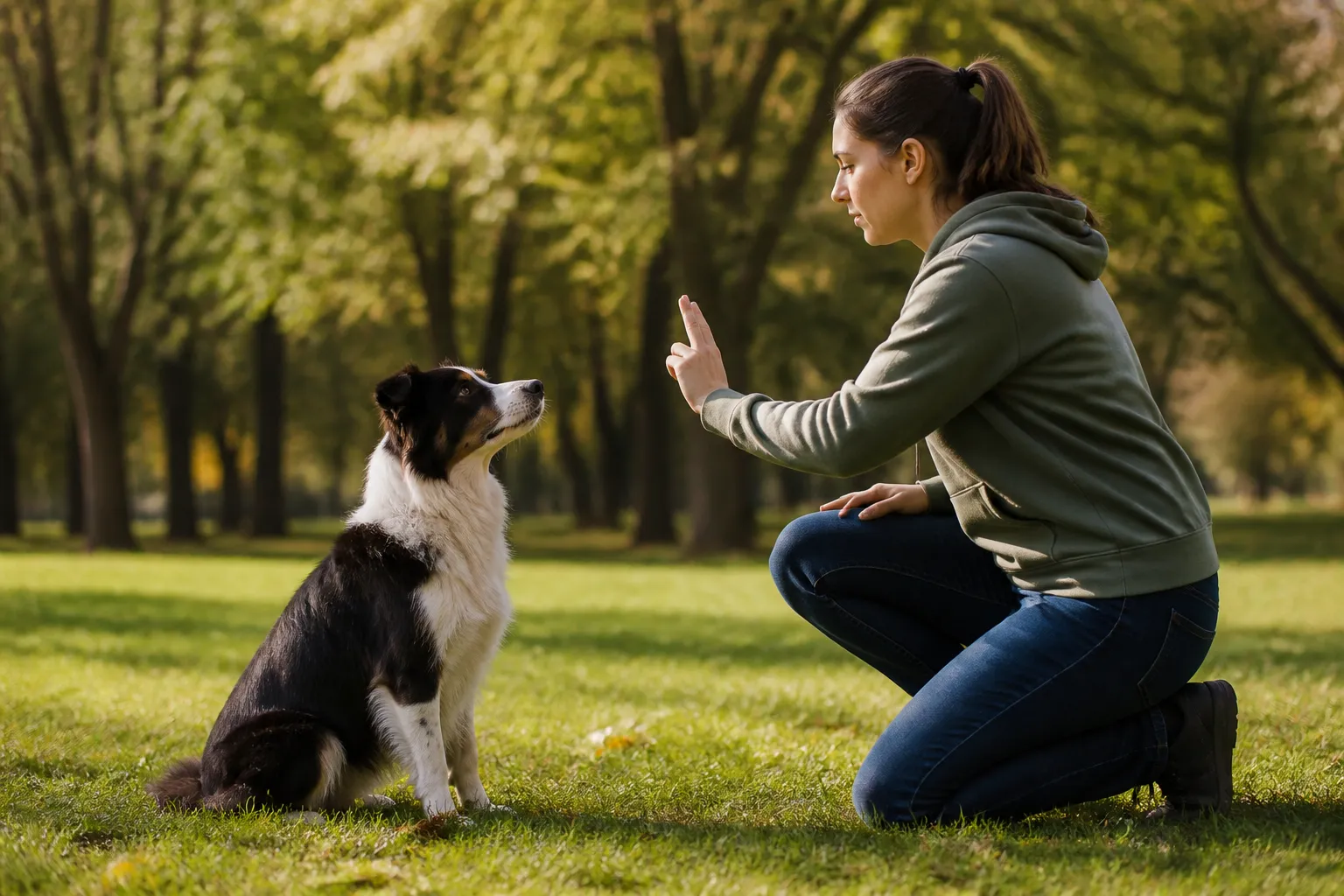
Look and Return
Teach the dog to notice a distraction and then orient back toward the handler. Begin with a mild stimulus far away. The moment the dog observes it without escalating, mark and reward. With repetition, the dog learns that noticing a trigger can predict guidance and reinforcement. Do not force prolonged staring or pull the dog toward a frightening object.
This method can support polite responses to cyclists, vehicles, dogs, wildlife, and unfamiliar people, but it is not a substitute for management. Use leashes, secure equipment, gates, and appropriate distance. The aim is safer behavior, not testing the dog’s limits.
Settling in Public
A dog that can settle has an important practical skill. Bring a mat to a quiet café area, training facility, or friend’s home. Reward lying down, soft body language, relaxed breathing, and independent attention. Begin with brief periods and leave before frustration develops. Gradually add conversation, movement, sounds, and longer duration.
Do not expect settling from a dog that has been deprived of exercise, bathroom opportunities, or sleep. Physical activity can help, but excessive arousal immediately before training may make calm behavior harder. Balance movement with sniffing, rest, and predictable routines.
Problem Solving and Choice
Advanced training should include opportunities for the dog to think rather than wait for constant direction. Targeting, object discrimination, shaping, scent games, and cooperative care exercises develop observation and persistence. Present a manageable challenge, allow the dog time to experiment, and reinforce useful steps.
Shaping rewards successive approximations toward a goal. To teach a dog to place its paws on a platform, reward looking at the platform, approaching it, touching it, and finally stepping onto it. If the dog becomes frustrated, make the next approximation easier. Avoid luring indefinitely; gradually shift toward responding to a cue and choosing the behavior independently.
Scent work is mentally engaging because it uses natural searching abilities. Hide a familiar scented object in simple locations, reward a clear indication, and increase complexity slowly. Keep searches safe and avoid items that could be swallowed. The value lies in careful observation, not making the puzzle impossibly difficult.

Cooperative care can reduce conflict during brushing, ear checks, paw handling, and veterinary procedures. Teach a consent behavior, such as resting the chin on a hand or towel. Handle briefly, reward stillness, and pause when the dog withdraws. Cooperation does not replace professional medical care, but it can make necessary handling more predictable and less stressful.
Leash Skills and Off-Leash Reliability
Loose-leash walking is not the same as forcing a dog to remain beside a leg. The essential behavior is maintaining manageable leash tension while moving with the handler. Reinforce the position you want, change direction before pulling becomes intense, and provide regular opportunities to sniff. Sniffing can be used as a reward for several good steps.
For off-leash reliability, prioritize legal requirements, secure areas, recall quality, environmental hazards, and the dog’s history. A friendly dog can still frighten others, chase wildlife, run into traffic, or approach an unsafe animal. Off-leash freedom is a management decision, not merely proof of obedience. Long lines and fenced spaces offer useful intermediate options.
Teach emergency skills separately. A rapid hand target, practiced turn, or conditioned stop may help redirect the dog before danger develops. These behaviors should be heavily reinforced and refreshed regularly. They cannot guarantee safety, so attentive supervision remains essential.
A Structured Training Plan
A practical plan begins with assessment. Record the dog’s current response, common distractions, motivators, stress signals, and environmental limitations. Choose two or three priority behaviors rather than training everything at once. Useful priorities might include recall, calm greetings, loose-leash walking, cooperative handling, and emergency redirection.
Schedule brief sessions that end while the dog is still successful. Several focused repetitions are usually more useful than a long session filled with errors. Alternate familiar exercises with new challenges. Track the setting, distance, distraction level, response quality, and reward used. Notes reveal patterns that memory may miss.
Sample Weekly Pattern
On one day, practice calm attention and hand targeting indoors. Another day, work on loose-leash walking in a quiet outdoor area. A later session can introduce mild distractions at a controlled distance. Include scent games, mat settling, handling practice, and free decompression through safe sniffing. Reserve demanding exercises for times when the dog is rested and able to concentrate.

Progress when the dog succeeds consistently under the current conditions, not after one unusually good attempt. If success falls, identify the changed variable. The problem may be distance, weather, surface, noise, fatigue, hunger, pain, or an unfamiliar handler. Adjust accordingly.
Equipment and Safety
Use equipment that fits correctly and does not create avoidable pain. A secure harness, standard leash, long line, treats, toy, mat, and safe barriers can support many exercises. Check clips and stitching regularly. Avoid leaving long lines attached where they can snag, and never use equipment as a substitute for supervision.
Training spaces should match the behavior being taught. A secure fenced area is appropriate for practicing movement and recalls, while a quiet room may be better for handling exercises. Watch for heat, icy surfaces, toxic substances, broken glass, unsafe dogs, and crowded paths. Safety is part of training, not an afterthought.
Common Mistakes to Avoid
One mistake is increasing difficulty too quickly. A dog that succeeds at home may need weeks of gradual practice outdoors. Another is rewarding only flawless performances. Reinforcing partial progress helps the dog understand the task and maintains motivation.
Handlers also sometimes train when the dog is already overwhelmed. Learning is limited when fear or extreme excitement dominates. End the session, create distance, and return later with an easier plan. Punishing warning signals can suppress communication without resolving the underlying emotion. Growling, freezing, avoidance, and lip licking deserve careful attention.
Inconsistent household rules create competing information. Everyone should agree on cue words, boundaries, greeting procedures, and reinforcement habits. If one person rewards jumping while another corrects it, the dog receives an unpredictable pattern. Clear routines make learning easier.
Finally, avoid measuring success only by obedience speed. A slower response may reflect thoughtful processing, uncertainty, fatigue, or a difficult environment. Look at body language and recovery as well as compliance. A calm, safe choice is often more valuable than a fast but tense performance.
Frequently Asked Questions
How advanced should my dog be before starting?
There is no universal age or obedience level. Begin advanced exercises when the dog understands basic communication, can engage with the handler, and can recover from mild distractions. Puppies can practice foundations in simple forms, while adult dogs may need behavior support before handling complex environments.
Should I use treats forever?
Food is a useful teaching tool, not a failure or a bribe. Once a behavior is reliable, rewards can become varied and less predictable, while environmental privileges and play take a larger role. Continue reinforcing difficult choices. Removing all meaningful rewards can weaken behavior.
What if my dog refuses a cue?
Check motivation, clarity, physical comfort, and difficulty. The dog may not understand, may be distracted, or may feel unsafe. Do not repeat the cue angrily. Lower the challenge, improve the reward, or teach the behavior in a clearer context. Sudden refusal warrants attention to possible pain or illness.
Can advanced training stop aggression?
Training may improve safety, communication, and management, but aggression has many possible causes. Do not promise a complete cure or deliberately expose a dog to triggers. Seek veterinary assessment and individualized help from a qualified behavior professional. Use barriers, distance, secure equipment, and carefully planned handling meanwhile.
How long should sessions last?
The right length depends on age, health, breed tendencies, environment, and task difficulty. Stop when attention, response quality, or emotional stability begins to decline. Short, successful sessions repeated regularly are generally easier to sustain than exhausting lessons.
Is punishment ever necessary?
Methods that cause fear or pain can damage trust, increase stress, and suppress warning signals. Clear management and reinforcement-based teaching address most skills more safely. Consequences such as removing access to attention or pausing a game can be appropriate when they are calm, predictable, and not frightening. Professional guidance is valuable for complex cases.
Conclusion
Advanced dog training is a process of creating dependable behavior without ignoring emotion or safety. Build one variable at a time, reinforce useful choices, practice across realistic settings, and observe the dog’s body language. Reliable recall, calm settling, distraction resistance, cooperative care, problem solving, and leash skills develop through repetition rather than pressure.
The strongest results come from a flexible plan. Use management when the environment is beyond the dog’s current ability, return to easier exercises after setbacks, and celebrate recovery as well as obedience. Keep sessions clear, brief, and rewarding. With patience and appropriate professional support, advanced training can produce a dog that is not merely responsive in practice, but safer, more confident, and better prepared for ordinary life.