
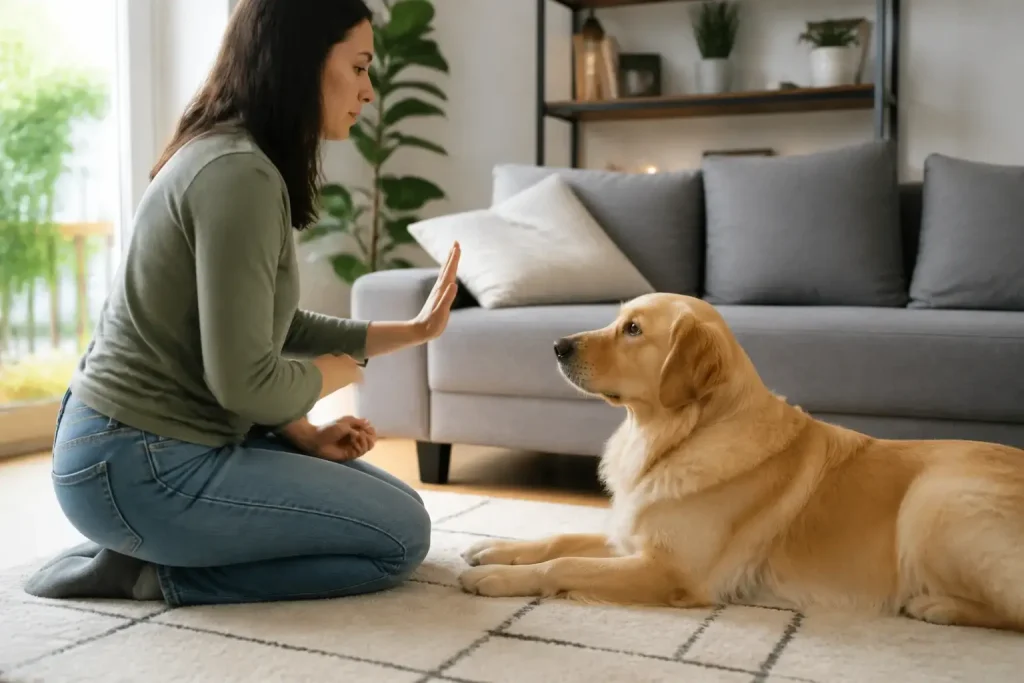
Advanced dog training is a structured process for teaching reliable behavior in distracting, unpredictable, and emotionally demanding situations. It goes beyond basic cues such as sit, down, and stay. The goal is not to make a dog perform tricks mechanically, but to develop communication, self-control, confidence, and safe decision-making. Effective training combines clear criteria, carefully chosen rewards, gradual exposure to difficulty, and consistent handling across everyday environments.
A useful advanced program should help an owner answer practical questions: How can a dog return immediately when called? How can excitement be managed around visitors, wildlife, or other dogs? How can cooperative grooming, calm travel, and dependable household manners be built without intimidation? The strongest answers come from training plans that respect learning principles and the individual dog’s physical and emotional needs.
Advanced Dog Training: What Advanced Training Really Means
Advanced training is defined by reliability and context, not by impressive vocabulary or complicated tricks. A dog that responds perfectly in a quiet room may still need foundational work if it ignores the same cue near a park, food bowl, or unfamiliar animal. Increasing difficulty means changing one variable at a time, such as distance, duration, distraction, location, or handler position.
Reliability should be measured realistically. No behavior is guaranteed in every circumstance, and some environments are unsafe for testing off-leash skills. A trained dog still has instincts, fatigue, pain, fear, and competing motivations. Advanced work therefore includes management: using a leash, long line, barriers, secure fencing, or distance whenever the situation exceeds the dog’s current ability.
Training should also remain humane. Reward-based methods teach the dog which behavior earns reinforcement, while avoiding fear and unnecessary physical pressure. Rewards can include food, play, access to sniffing, movement toward a desired location, praise, or permission to greet. The best reward depends on the dog and the situation. A skilled trainer adjusts reinforcement rather than assuming one treat works everywhere.
Build a Strong Learning System
Define Observable Behavior
Start with a precise description. “Be calm” is difficult to train because calmness can mean lying down, keeping four paws on the floor, relaxing the face, or simply pausing. Choose an observable response, such as lying on a mat with a loose body for ten seconds. Specific criteria make progress visible and reduce frustration.
Use a cue only after the dog is likely to perform the behavior. Say the word once, allow processing time, and reinforce the correct response. Repeating a cue teaches the dog that the first request is optional. If the dog does not respond, lower the difficulty, improve the reward, or examine whether the cue has been taught clearly.
Reinforce Precisely
Timing matters. Deliver the reward immediately after the desired action, or use a marker word such as “yes” to identify the exact moment. A clicker can serve the same purpose if its sound is consistent. The marker is not the reward; it tells the dog that reinforcement is coming.

Reinforcement schedules should evolve gradually. During early learning, frequent rewards help establish behavior. Once a response is fluent, vary the reward while continuing to reinforce important successes. Do not make rewards unpredictable before the dog understands the task. Intermittent reinforcement can preserve strong behavior, but it can also maintain unwanted behavior if barking, jumping, or pulling occasionally produces access.
Shape and Capture Skills
Shaping rewards small steps toward a final behavior. For example, teaching a dog to place objects in a box might begin with looking at the box, approaching it, touching it, and opening the mouth near it. Capturing rewards a behavior that occurs naturally, such as sighing and relaxing. Both methods encourage problem solving, but sessions should remain short enough to prevent confusion or frustration.
Train Impulse Control Without Suppression
Impulse control is not a single command. It is the ability to pause, orient to the handler, and choose a taught response despite motivation. Useful exercises include waiting briefly before meals, releasing a toy on cue, walking past mild distractions, and settling while household activity continues.
Begin below the dog’s threshold. If the dog cannot disengage from a toy, person, or animal, the challenge is too intense. Increase distance, reduce movement, shorten the exercise, or choose a less exciting setting. Reinforce voluntary check-ins generously. A dog that looks back at the handler without being called is practicing the foundation of self-control.
Teach release cues clearly. “Wait” may mean pause until permission, while “stay” may mean maintain position until released. Families should use the same meanings. Release the dog deliberately with a consistent word, then offer access to the reward. This prevents accidental reinforcement of breaking position and makes expectations understandable.
Impulse control should not require prolonged restraint. Dogs need movement, sniffing, play, rest, and social contact. Alternating controlled exercises with appropriate freedom creates better balance than expecting constant inhibition.
Build Reliable Recall
A dependable recall is one of the most valuable advanced skills because it can prevent injury. Teach it as a high-value behavior, not as a signal that always ends enjoyable activity. Begin indoors or in a secure area. Say the cue cheerfully, move away, and reward generously when the dog follows. Frequently call the dog, reward, and release it back to play.
Use a long line in open areas until the response is consistently strong. The line provides safety without requiring the handler to chase. Avoid calling when success is unlikely. If the dog is absorbed in wildlife, greeting, or intense play, first reduce the distraction or move closer. Repeatedly calling without follow-through can weaken the cue.

Practice emergency recall separately from ordinary recall. Choose a distinctive signal and pair it with exceptional rewards during controlled sessions. Use it sparingly. If the dog arrives, secure the leash calmly, reward again, and avoid creating a frightening event immediately afterward. For dangerous situations, physical management remains essential; recall training is not a substitute for secure containment near roads or hazardous animals.
Improve Loose-Leash Walking
Loose-leash walking is not the same as forcing a dog to remain beside a handler every moment. A practical walk may include a close position near traffic, a loose exploratory walk on a quiet path, and permission to sniff. Teach these contexts with separate cues or clear routines.
Reward the dog for slack in the leash, voluntary orientation, and returning toward the handler. If pulling begins, stop or change direction without jerking. Resume movement when the leash loosens. The consequence should be understandable: tension pauses forward progress, while a loose leash makes exploration possible. Use equipment that fits properly and does not cause pain or restrict breathing.
Increase distractions gradually. A busy sidewalk is a demanding test involving people, dogs, vehicles, scents, and noise. Begin far enough away for the dog to eat, respond, and move comfortably. Progress may be uneven, especially during adolescence, illness, or stressful periods.
Address Reactivity Thoughtfully
Reactivity describes an intense response to a trigger, such as barking, lunging, freezing, or spinning. It does not automatically reveal whether the dog is fearful, frustrated, overexcited, or aggressive. Assessment should focus on body language, history, context, recovery time, and bite risk.
Management comes first. Create distance, use visual barriers, select quieter routes, and avoid forced greetings. Then use desensitization and counterconditioning: present the trigger at a tolerable intensity, pair it with valuable reinforcement, and end the exposure before the dog becomes overwhelmed. Gradually adjust distance or movement while watching for signs of stress.
A dog that stops eating, stiffens, scans intensely, or cannot respond is often beyond a productive learning level. Do not punish warning signals. Suppressing growling can remove useful communication without changing the underlying emotion. Serious aggression, repeated bites, or dangerous behavior warrants guidance from a qualified behavior professional and veterinary evaluation, particularly when pain or illness could contribute.
Teach Cooperative Care
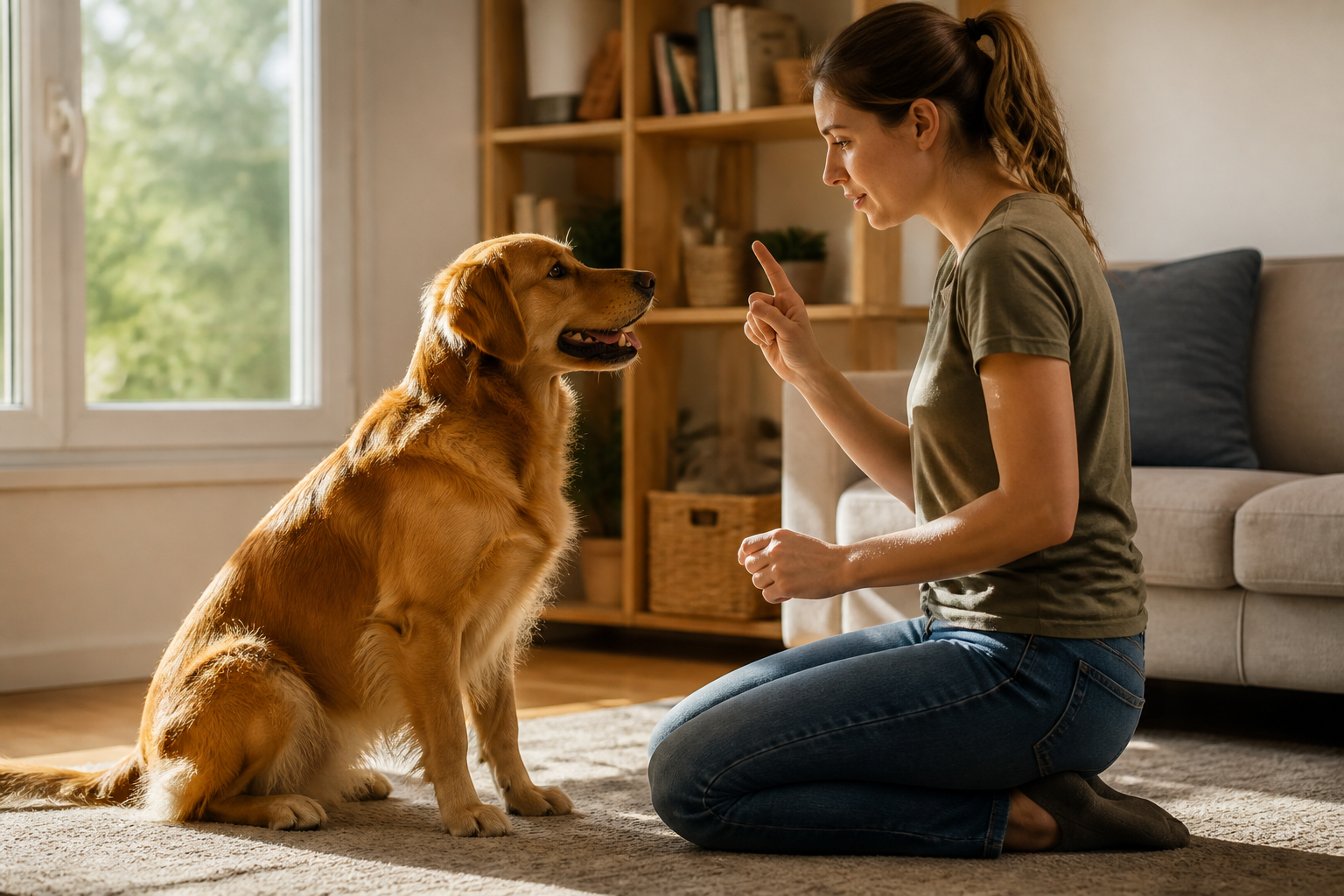
Cooperative care makes grooming, nail trimming, medication, veterinary handling, and cleaning safer. Break procedures into tiny components. A dog might first earn reinforcement for approaching a brush, then for touching the brush, accepting one stroke, and remaining relaxed while a paw is held briefly.
Use a start-button behavior when practical. For instance, the dog may rest its chin on a towel to indicate readiness. If the chin lifts, the procedure pauses. This arrangement gives the dog predictable influence and helps the handler notice discomfort early. It does not replace necessary medical care, but it can reduce conflict and improve trust.
Pair equipment with positive experiences. Show nail clippers, reward, and put them away. Touch the paw, reward, and stop. Advance only while the dog remains comfortable. Never rush because a schedule is inconvenient. If a procedure is urgent or the dog is unsafe to handle, consult a veterinarian about appropriate professional support rather than improvising restraint.
Develop Distance, Duration, and Distraction
A useful training plan changes one difficulty dimension at a time. If a dog can stay for thirty seconds beside the handler, adding a new room and a moving person simultaneously may create failure. Instead, increase duration in the familiar room, then distance, then mild distraction. This approach reveals which variable needs adjustment.
Use a training ladder. At the easiest level, the dog performs in a quiet location with frequent rewards. At the next level, add modest movement or environmental novelty. Continue upward only after several successful repetitions. If errors increase, step down promptly. Regression is information, not disobedience.
Proofing should include realistic variations: different handlers, surfaces, weather, entrances, sounds, and times of day. Generalization does not happen automatically. A dog may know “place” on a bedroom rug but not on a portable mat at a café. Teach the same concept in multiple settings while maintaining safety and manageable difficulty.
Create a Practical Weekly Program
Short, frequent sessions usually fit daily life better than occasional marathons. A week might include recall games in a secure area, leash practice on quiet walks, cooperative-care exercises, settling during household activity, and enrichment that encourages sniffing or problem solving. The exact schedule should reflect the dog’s age, health, breed tendencies, history, and available support.
Record simple observations: location, distraction, response latency, reward used, and recovery after mistakes. Notes prevent vague judgments such as “training is not working.” They also show whether a particular environment, time, or trigger creates difficulty. Video can help reveal leash tension, handler timing, or subtle stress signals, provided recording does not compromise supervision.

End sessions with an achievable success. If the dog becomes frustrated, offer an easy known behavior, reward it, and stop. Rest is part of learning. Overtraining can produce slower responses, avoidance, or irritability, especially when tasks demand sustained concentration.
Choose Equipment Carefully
Equipment should support communication and safety, not compensate for unclear training. A standard leash, secure harness or suitable collar, long line, treat pouch, portable mat, toys, and barriers cover many needs. Inspect equipment regularly for wear and ensure it fits without rubbing, slipping, or restricting normal movement.
Food rewards should be small, appealing, and appropriate for the dog’s diet. Some dogs work for kibble in quiet settings but need higher-value food around distractions. Ask a veterinarian about dietary restrictions, allergies, or weight-management concerns. Toys can be powerful reinforcers, but use them thoughtfully around multiple dogs or possessive behavior.
Avoid devices or techniques that rely on pain, fear, startling, or intimidation. They may interrupt behavior without teaching a safer alternative and can damage trust or intensify emotional responses. When a method promises instant control, examine what the dog is learning, what happens when the equipment is removed, and whether the approach remains safe under stress.
Troubleshoot Common Plateaus
When progress stops, first check whether the behavior is defined clearly and reinforced promptly. Next, examine difficulty. The dog may be succeeding in practice but failing because distractions increased too quickly. Health, sleep, heat, medication, hunger, and environmental stress can also change performance.
If the dog knows a behavior only when food is visible, use a marker and keep rewards accessible but hidden. Reinforce after the response rather than displaying the reward as a lure. Then gradually vary reinforcement while preserving motivation. If the dog refuses food, do not assume stubbornness; fear, nausea, pain, or excessive arousal may be involved.
Handlers should also assess their own consistency. Different family rules create confusion, especially for greetings, furniture access, door behavior, and begging. Agree on cues, consequences, and management arrangements. Children should not be responsible for advanced training or handling situations involving risk.
Frequently Asked Questions
How long does advanced training take?
There is no universal timetable. Simple skills may become reliable in weeks, while recall around wildlife, reactivity, or cooperative care may require many months of gradual practice. Progress depends on learning history, genetics, health, environment, handler consistency, and the level of distraction. Focus on measurable improvement rather than a fixed deadline.
Should advanced training use treats forever?
Food is a useful teaching tool, but it is not the only reinforcement. Once behavior is fluent, rewards can include play, praise, sniffing, movement, or access to valued activities. However, continuing occasional food rewards is reasonable, especially for difficult behaviors. Reinforcement maintains performance; it is not a bribe when delivered thoughtfully.
What if my dog ignores a cue?
Do not repeat the cue louder or punish the dog. Consider whether the dog heard you, understands the behavior, can perform it in that setting, and has enough motivation. Lower the difficulty, increase distance from the distraction, or return to an easier step. If ignoring is sudden or widespread, arrange veterinary assessment.
Can an older dog learn advanced skills?
Yes. Older dogs can learn, although sessions may need to be shorter and physical demands should suit mobility, vision, hearing, and stamina. Use low-impact positions, nonslip surfaces, and frequent breaks. A veterinarian can help identify pain or cognitive changes that affect training.
When is professional help necessary?
Seek qualified help when behavior involves biting, severe fear, escalating aggression, escape risk, intense reactivity, or handling that cannot be completed safely. Choose a professional who explains methods, welcomes questions, assesses the dog individually, and avoids guaranteed results. Veterinary input is important when pain, medication, or illness may influence behavior.
Conclusion
Advanced dog training is best understood as applied communication. Clear cues, precise reinforcement, gradual difficulty, thoughtful management, and respect for emotional limits create durable behavior. The most impressive outcome is not a long list of tricks; it is a dog that can respond safely, recover from excitement, cooperate with care, and make better choices in ordinary life.
Work methodically. Define one behavior, practice it where success is likely, reward useful decisions, and generalize slowly across people and places. Protect the dog from situations that exceed current skills, and treat setbacks as information. With consistent practice and appropriate professional support when needed, advanced training can strengthen safety, confidence, and the everyday relationship between dog and handler.