
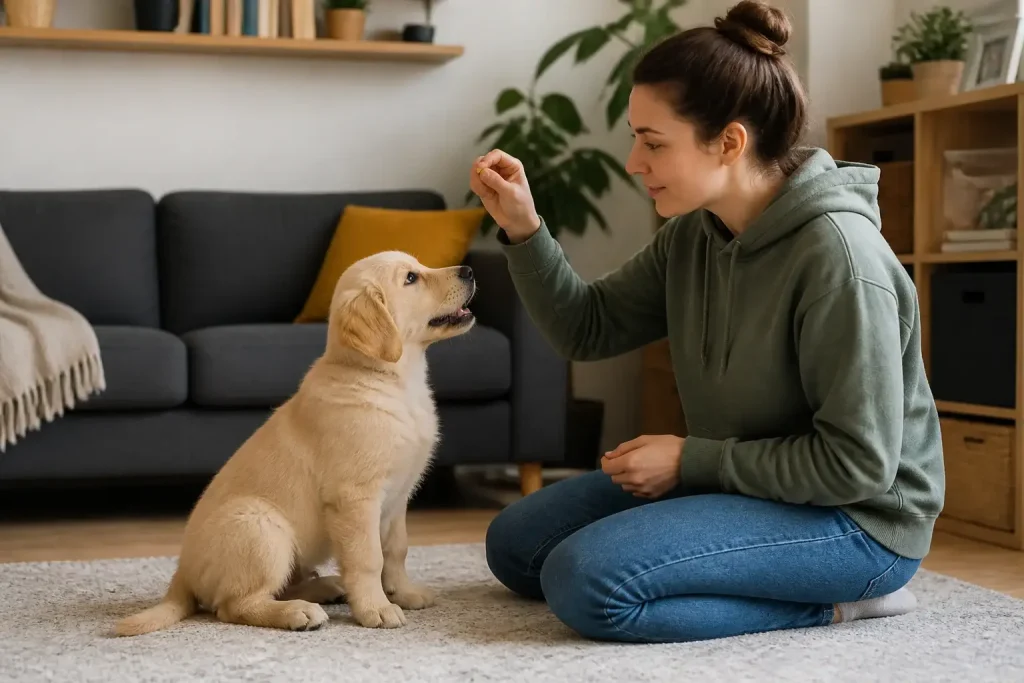
Puppy Training: Building a Happy, Well-Behaved Dog
Puppy training is not about demanding perfect obedience from a very young animal. It is a process of teaching communication, household skills, confidence, and safe behavior through clear routines and patient practice. The most effective approach combines reward-based learning, careful supervision, appropriate rest, and realistic expectations. Begin with simple behaviors, prevent opportunities for mistakes, and gradually increase distractions as your puppy becomes more capable.
A puppy learns from every interaction. If jumping earns attention, jumping becomes stronger. If sitting brings a greeting, sitting becomes useful. This principle makes training practical: arrange the environment so the behavior you want is easy to perform and rewarding to repeat. Avoid frightening or painful methods. They can damage trust, suppress warning signals, and make learning harder. A calm, consistent plan gives your puppy a secure foundation for life.
Preparing Your Home and Schedule
Before training begins, decide which rules apply throughout the household. Will the puppy sleep in a crate, pen, or bed? Which rooms are accessible? Are furniture, visitors, and feeding areas governed by specific boundaries? Everyone should use the same cues and responses. Inconsistent rules can confuse a puppy, especially when one person permits behavior another person corrects.
Create a safe management area containing a comfortable resting place, water, suitable toys, and a surface that is easy to clean. Remove electrical cords, toxic plants, small objects, unstable decorations, and accessible household chemicals. Supervision is essential when the puppy is loose. A lightweight leash attached only while an adult is actively watching can help prevent wandering, but never leave a tethered puppy unattended.
A predictable schedule supports learning. Offer meals, toileting opportunities, play, training, naps, and quiet time in a repeating pattern. Young puppies often need frequent bathroom breaks, particularly after waking, eating, drinking, playing, or exciting activity. Exact timing varies by age, health, size, and individual development, so observe your puppy rather than relying on a rigid formula. Accidents are information, not evidence of stubbornness.
Establishing Communication
Choose short, distinct cues and say them once. “Sit,” “come,” “drop,” and “go to bed” should not sound alike. Pair each cue with the behavior you want, then reward promptly. A marker word such as “yes” or a clicker can identify the precise moment the puppy succeeds. The reward should follow immediately so the connection remains clear.
Use rewards that matter to your puppy. Small food pieces are often effective, but praise, a toy, access to sniffing, or a brief game can also reinforce behavior. Keep portions modest and account for training treats in the daily feeding plan. If your puppy ignores a reward, the environment may be too distracting, the exercise may be too difficult, or the reward may not be valuable enough at that moment.
Train when the puppy is comfortable and alert, not exhausted, frightened, or desperate for sleep. Several brief sessions usually work better than one long lesson. End after a successful repetition while enthusiasm remains. Training should feel safe and predictable; frustration from either person is a signal to simplify, pause, or seek help.
Teaching a Name and Attention
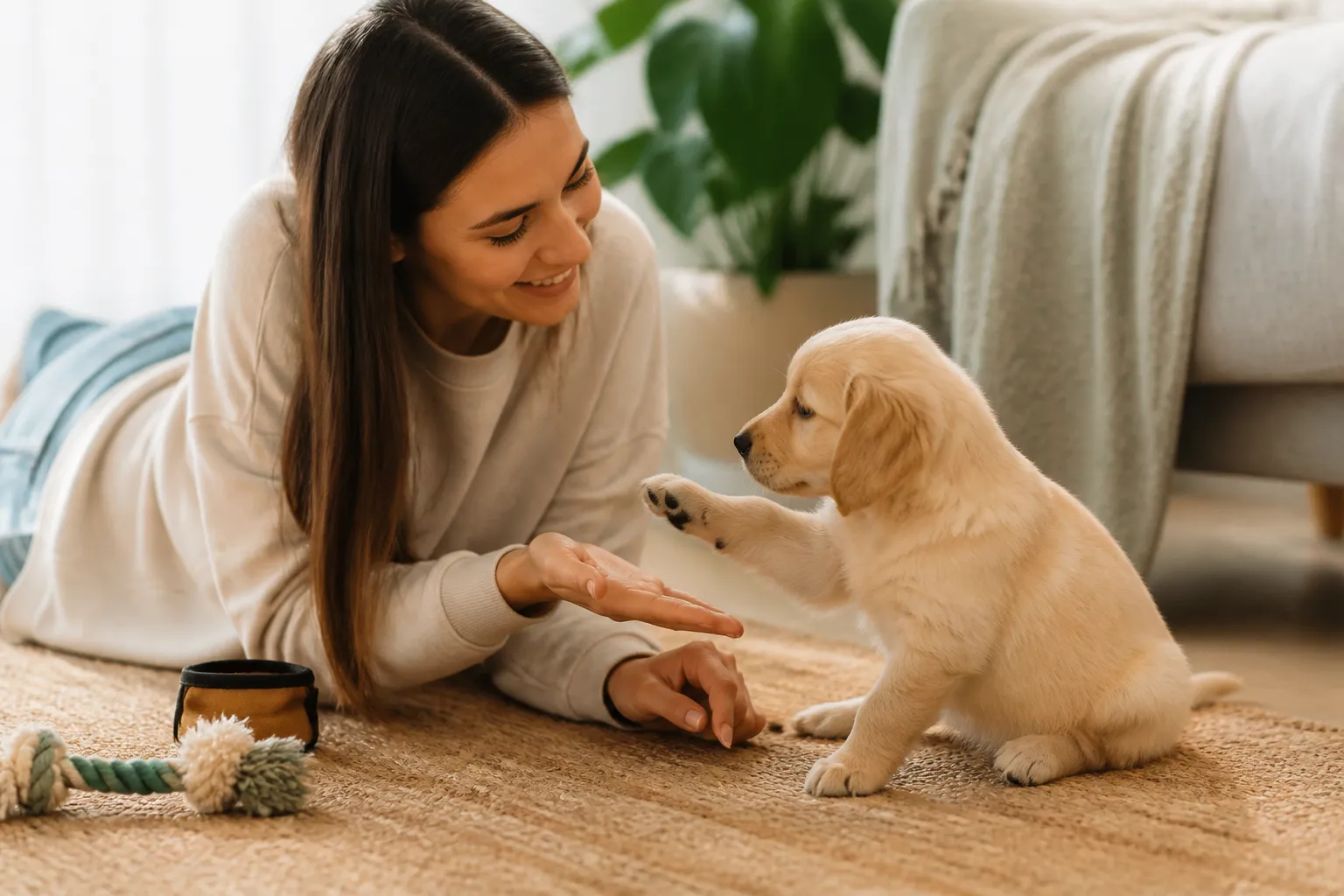
Say the puppy’s name in a cheerful voice when the puppy is nearby and likely to respond. When the puppy looks toward you, mark and reward. Repeat in quiet rooms, then practice outdoors and around mild distractions. The name should predict useful information or pleasant interaction, not scolding. Avoid using it repeatedly when the puppy cannot respond, because its meaning can become background noise.
Teach an attention cue by rewarding eye contact or orientation toward you. This skill helps redirect the puppy before a problem grows. Do not demand prolonged staring. A quick check-in is enough at first; duration can develop gradually.
House Training
Successful house training depends more on prevention and timing than punishment. Take the puppy to the designated toilet area frequently, wait calmly, and reward immediately after elimination. If nothing happens, return indoors under close supervision and try again later. Keep notes for a few days if patterns are unclear. You may discover predictable periods when the puppy needs to go.
When an accident begins, interrupt gently with a neutral sound and take the puppy outside. If you find a mess afterward, clean it thoroughly with an appropriate enzymatic cleaner and avoid reprimands. The puppy will not reliably connect delayed punishment with the earlier action. Punishment can also make the puppy hide to eliminate, which complicates progress.
If accidents are unusually frequent, painful, accompanied by diarrhea, or continue despite a sensible routine, contact a veterinarian. Health problems can affect elimination and should not be treated as a training failure.
Crate and Alone-Time Training
A crate can support rest, travel, management, and house training, but it must remain a safe place rather than a penalty box. Introduce it gradually. Place treats or meals near the entrance, then inside, allowing the puppy to choose entry. Increase the time with the door closed in small increments while the puppy remains relaxed. Provide safe, size-appropriate enrichment according to veterinary guidance.
Never use the crate as a substitute for exercise, social contact, or supervision. Puppies need movement, exploration, sleep, and interaction. If distress escalates into frantic behavior, prolonged vocalization, or attempts to escape, reduce the difficulty and consider professional advice. Some puppies require a pen, gated room, or different plan.
Alone-time training should also progress gradually. Step away for seconds, return calmly, and extend the interval only when the puppy stays comfortable. Practice departures without dramatic goodbyes. A camera can help you observe behavior, but it does not replace thoughtful progression. Persistent panic warrants help from a veterinarian or qualified behavior professional.
Socialization and Confidence
Socialization means teaching a puppy that varied people, animals, environments, sounds, surfaces, handling experiences, and routines can be safe. It does not mean forcing interaction with everyone. Let the puppy observe at a comfortable distance, offer rewards for calm behavior, and provide an escape route. A puppy who hides, freezes, trembles, repeatedly yawns, or refuses food may need more distance or a quieter setting.
Introduce experiences gradually. Carry a puppy through areas where direct contact is not yet appropriate, visit calm friends, expose the puppy to household sounds at low volume, and practice gentle handling of ears, paws, mouth, collar, and body. Pair each experience with food or play. Follow veterinary guidance about disease risk and vaccinations while planning safe social opportunities.
Good socialization includes learning to disengage. Reward the puppy for looking at a person and then returning attention to you. Teach that greetings can be brief and that calm behavior opens access to interaction. Avoid allowing every stranger or dog to rush into the puppy’s space.
Biting and Chewing
Mouthing is normal puppy behavior, but humans must teach appropriate limits. Offer sturdy, suitable chew items and redirect hands, clothing, and furniture toward them. If teeth touch skin during play, pause interaction briefly, become boring, and resume only when the puppy is calmer. Loud reactions can excite some puppies, so use a response that reduces stimulation.
Provide enough sleep. Overtired puppies often bite more intensely and appear unable to settle. Schedule quiet periods after active play. Rotate toys to maintain interest, inspect them regularly, and remove damaged items. Never offer objects that splinter, break into dangerous pieces, or are unsuitable for the puppy’s size.
Do not punish growling. Growling is communication. Instead, identify what made the puppy uncomfortable, create distance, and obtain guidance if guarding, fear, or aggressive behavior appears. A professional can help design a safe behavior plan.
Leash Skills and Outdoor Manners
Start leash practice indoors with a comfortable, properly fitted harness or collar. Reward the puppy for approaching, wearing, and moving beside the equipment. Keep sessions short. Outdoors, allow safe sniffing because exploration is enriching, while reinforcing voluntary check-ins and loose-leash steps.
When the leash tightens, stop or change direction rather than dragging the puppy. Resume movement when slack returns. This teaches that pulling does not produce forward progress. Choose quiet locations initially, then add distractions carefully. Do not expect an immature puppy to walk in a formal heel for an entire outing.
Teach a reliable recall with high-value rewards. Begin a few steps away in a secure area, say the cue once, move enthusiastically backward, and reward arrival generously. Never call the puppy to punish, end every enjoyable activity, or perform something unpleasant every time. Sometimes call, reward, and release the puppy to continue playing. Until recall is dependable, use secure management and follow local leash requirements.
Core Skills for Daily Life
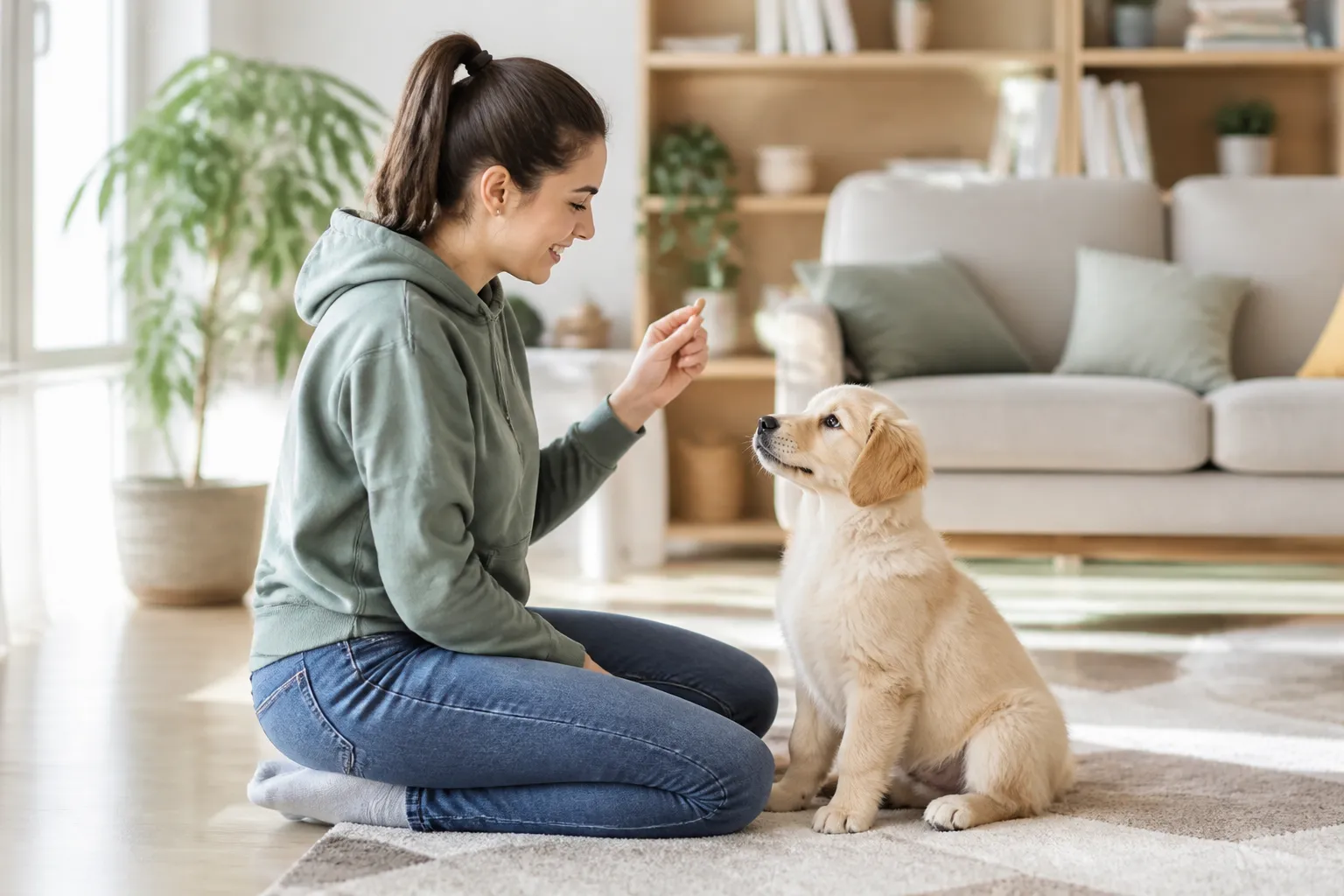
A useful “sit” can support greetings, food delivery, door routines, and calm pauses. Lure the puppy’s nose upward and slightly back, mark when the bottom touches the floor, then reward. Fade the lure by using an empty hand before adding the verbal cue. Avoid physically pushing the puppy into position.
For “down,” guide the puppy from sitting toward the floor and reward relaxed contact. “Leave it” teaches the puppy to turn away from an item; begin with a boring object in a closed hand and reward attention toward you. “Drop” should be taught by trading a toy for something valuable, then returning the toy when appropriate. Trading builds cooperation and reduces the risk of guarding.
Teach “wait” in tiny increments at doors, food bowls, and pathways. Release the puppy with a clear word. The goal is not rigid stillness but an ability to pause safely. Practice on both sides of doors and around ordinary household movement.
Managing Common Challenges
Jumping usually persists because it receives attention. Ask for a compatible behavior, such as four paws on the floor, and reward it immediately. Everyone who greets the puppy should follow the same plan. If visitors cannot cooperate, use a gate, pen, leash with active supervision, or separate room while teaching continues.
For barking, determine the cause before responding. Barking may express excitement, fear, frustration, alarm, or a need. Reduce triggers, increase distance, reward quiet observation, and teach an alternative such as moving to a mat. Shouting often adds noise and may increase arousal. Sudden behavior changes deserve veterinary consideration.
Resource guarding requires caution. Do not forcibly remove food or objects, corner the puppy, or repeatedly test the behavior. Manage access, trade safely when possible, and seek qualified professional assistance, especially if there is snapping, biting, or guarding of people.

Enrichment, Rest, and Exercise
Puppies need balanced activity, not constant stimulation. Food puzzles, scent games, gentle training, supervised exploration, chewing, and social contact exercise the mind. Play should include pauses and opportunities to settle. Excessive repetitive impact or strenuous activity may be inappropriate for growing bodies, so ask a veterinarian about suitable exercise for your puppy’s breed, structure, health, and age.
Sleep is part of training. A tired puppy may lose impulse control, become mouthy, or seem disobedient. Plan naps in a quiet place and protect them from continual interruption. Teach the puppy that calm behavior is valuable by occasionally placing treats on a mat while the puppy relaxes.
Measuring Progress
Track progress by context, not by a single perfect performance. A puppy may respond in the kitchen but struggle at a park because distractions change the task. Increase only one challenge at a time: distance, duration, distraction, or location. If success falls sharply, return to an easier level.
Use humane management while skills develop. Gates, closed doors, long lines in safe spaces, covered bins, and stored food prevent rehearsal of unwanted behavior. Management is not failure; it protects learning and safety. Celebrate small improvements, including faster recovery after excitement, voluntary attention, and choosing a chew toy.
Product Description
A practical puppy-training setup may include a properly sized crate or pen, washable bedding, reward treats, a treat pouch, a clicker or marker cue, a comfortable harness, a standard leash, identification, safe chew toys, food puzzles, baby gates, enzyme cleaner, and a mat for relaxation practice. Each item has a specific purpose.
The crate or pen provides management and rest, while gates limit access without constant physical restraint. A treat pouch keeps rewards available during spontaneous good behavior. A clicker can improve timing, although a consistent verbal marker works equally well. Harnesses may help distribute pressure, but fit matters: equipment should not restrict breathing, movement, or circulation.
Choose durable items that match the puppy’s size and chewing style. Inspect toys and replace damaged products. Avoid equipment designed to cause pain or fear, including shock, prong, and choke devices. Product choice cannot replace supervision, veterinary care, or skilled instruction. The best setup is the one that helps the puppy succeed safely and allows people to respond consistently.
Frequently Asked Questions
When should puppy training start?
Training can begin as soon as the puppy arrives, using gentle, simple exercises and household routines. Early lessons should emphasize name recognition, attention, toileting, handling, settling, and positive associations. Keep sessions brief and adapt expectations to developmental ability.
How long should a training session last?
There is no universal duration. Stop before the puppy becomes frustrated or tired. Several brief sessions spread across the day are often more productive than one extended lesson. Everyday moments, such as waiting for a meal or greeting calmly, can become useful practice.
Should I punish accidents or mistakes?
No. Punishment after the event does not teach the desired behavior and may create fear or avoidance. Prevent mistakes, interrupt gently when possible, clean thoroughly, and reward the correct choice. If progress is poor, review timing, supervision, environment, and health.
What if my puppy is afraid?
Increase distance from the frightening situation and offer calm support. Do not force approach or flood the puppy with exposure. Reward relaxed observation and progress in small steps. Persistent or severe fear should be discussed with a veterinarian and a qualified behavior professional.
How do I choose a trainer?
Look for someone who explains methods clearly, uses humane reward-based procedures, welcomes questions, and considers health, environment, and individual temperament. Ask what happens when a dog struggles. Be cautious of guarantees, intimidation, or advice centered on pain and fear.
Is socialization the same as meeting many dogs?
No. Quality matters more than quantity. Socialization includes calm exposure to varied experiences and the ability to recover. A puppy does not need to greet every dog or person. Safe distance, choice, and positive associations are central.
Why does my puppy behave well indoors but not outside?
Outdoor settings contain stronger smells, movement, sounds, people, animals, and competing rewards. The skill has not yet generalized. Practice first in mildly distracting places, reward generously, and progress gradually. Expecting immediate outdoor reliability can create frustration.
Conclusion
Effective puppy training is a continuing relationship built through clarity, prevention, reinforcement, and compassion. Teach behaviors that make daily life safer, give the puppy appropriate outlets for natural needs, and adjust difficulty according to development. Reward attention, calmness, cooperation, toileting outside, gentle play, and recovery from distractions. Manage the environment so unwanted habits are not repeatedly rehearsed.
When problems involve fear, guarding, biting, persistent distress, or sudden change, obtain veterinary and qualified behavioral guidance rather than relying on punishment. With realistic goals and consistent practice, training becomes more than a list of commands. It helps a puppy understand people, navigate the household, handle new experiences, and grow into a confident companion. Progress will include setbacks, but patient repetition turns small successful choices into dependable everyday habits.