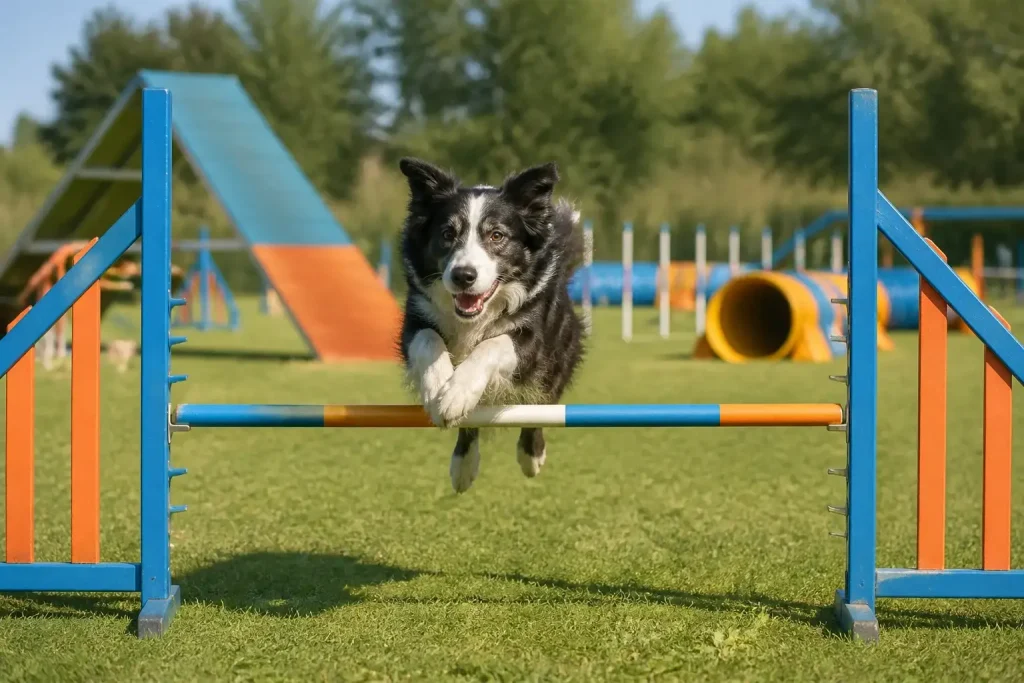
Dog agility training is a structured way to teach a dog to navigate obstacles, respond to cues, and work confidently with a handler. Done thoughtfully, it develops physical coordination, mental focus, communication, and enjoyment. It is not merely a race around jumps. The best training protects growing joints, builds reliable skills gradually, and gives the dog choices that support confidence rather than fear.
Whether you want to enjoy a backyard activity, prepare for a competition, or provide a lively dog with meaningful exercise, a successful program begins with suitable equipment, clear instruction, and patience. This guide explains how agility works, how to choose and use training products, which mistakes to avoid, and how to create sessions that remain safe and rewarding.
What Dog Agility Training Involves
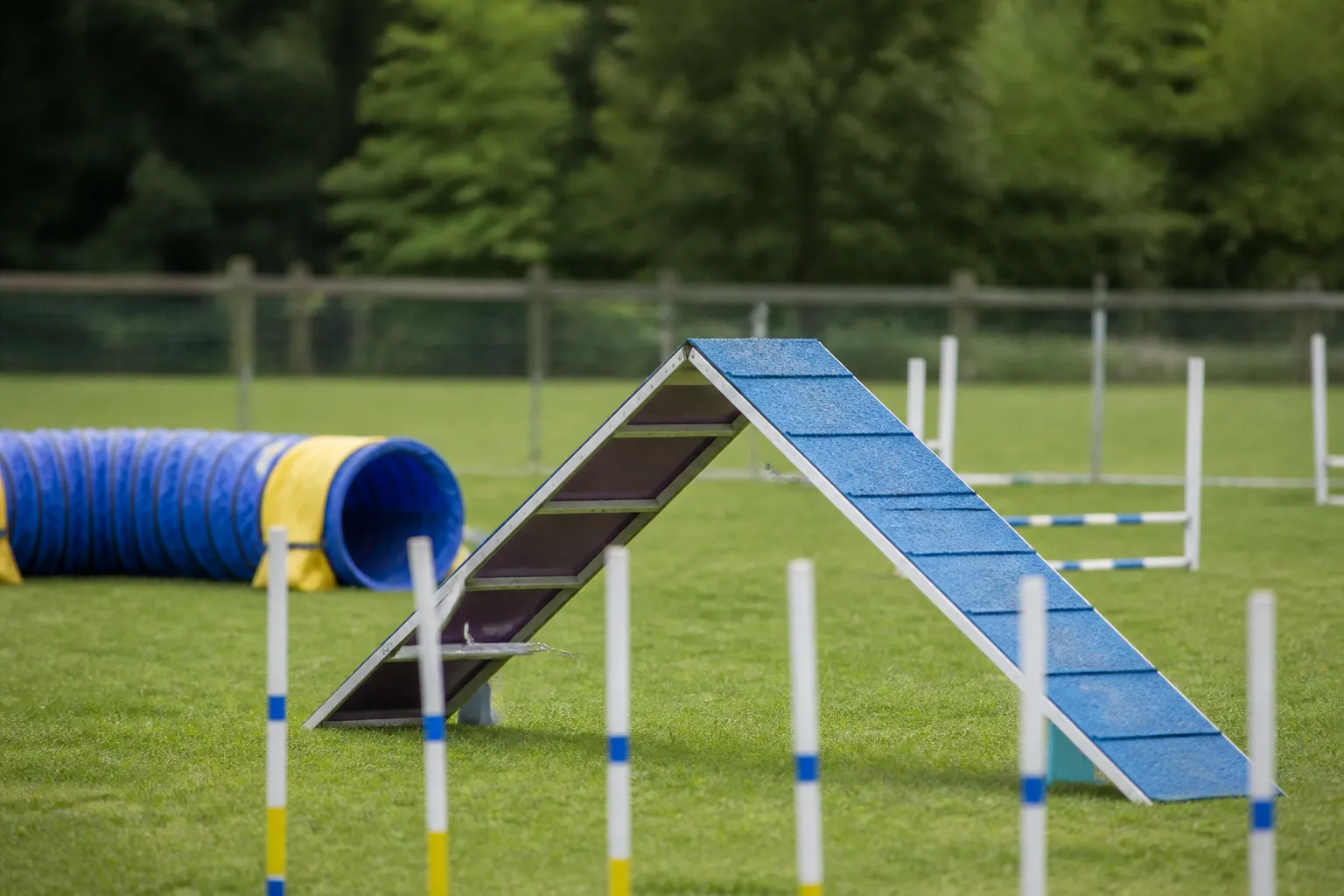
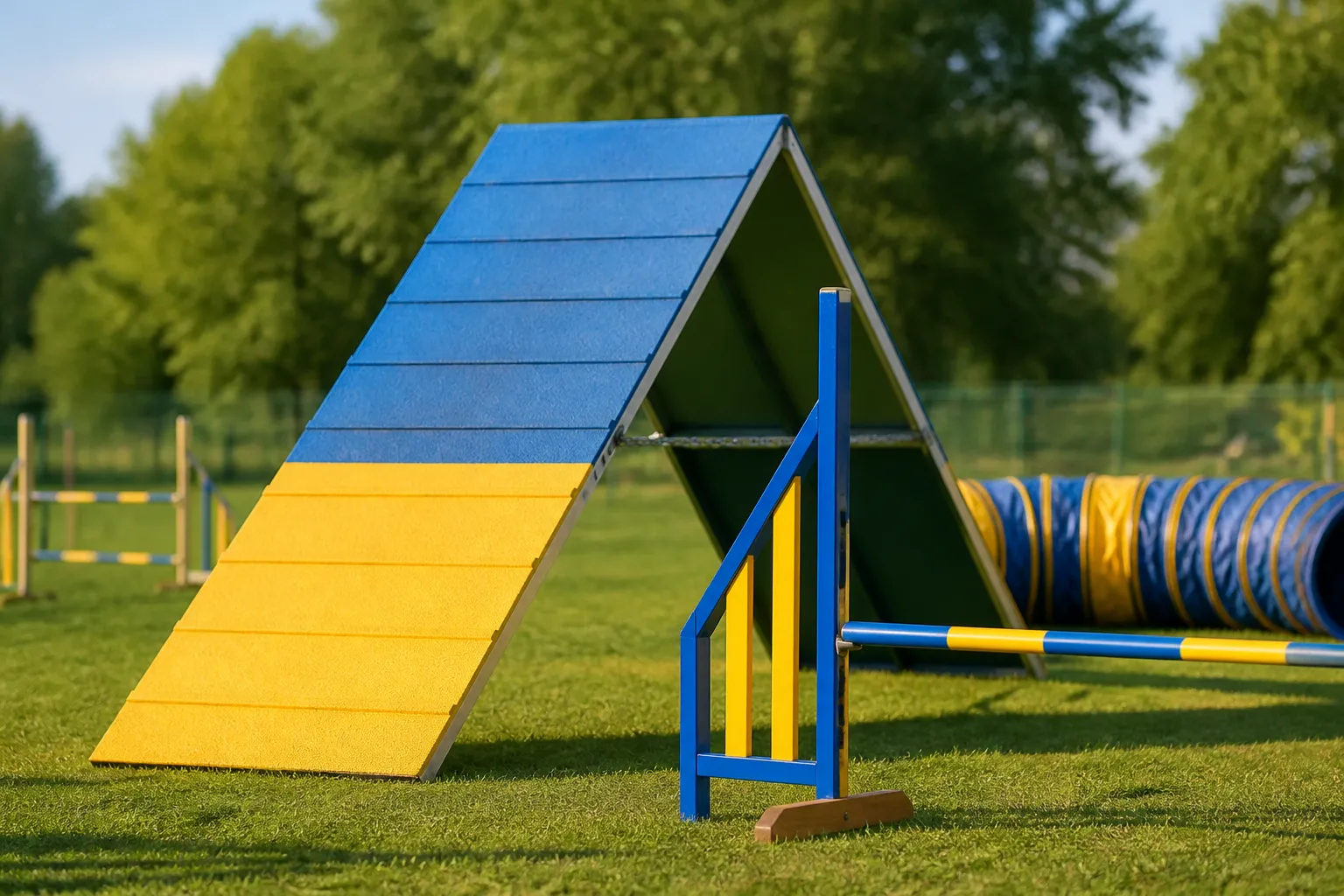
A typical agility course may include jumps, tunnels, weave poles, contact obstacles, a pause table, and occasionally specialized equipment such as a tire jump. Each obstacle asks for different abilities. A jump requires controlled takeoff and landing. A tunnel develops commitment and body awareness. Weave poles demand flexibility, timing, and a carefully taught entry. Contact equipment, including an A-frame, dog walk, or seesaw, combines climbing with accurate performance at marked zones.
Dogs do not automatically understand a course. They learn individual behaviors, then learn to connect those behaviors while following a handler’s movement and verbal cues. Training therefore progresses from simple exercises to short sequences. The handler may use a target, toy, food reward, or marker word to explain the desired action. Rewards should arrive promptly so the dog can identify which behavior earned them.
Agility can suit many breeds and mixed-breed dogs, but suitability depends on age, health, temperament, motivation, and the design of the activity. A fast dog is not automatically a skilled dog. Balance, responsiveness, recovery, and emotional comfort matter just as much as speed.
Benefits for Dogs and Handlers
Agility offers physical exercise, but its value extends beyond tiring a dog. Navigating obstacles encourages balance, rear-end awareness, coordination, and controlled movement. Dogs must notice where their feet are going, adjust their stride, and respond to changing directions. These skills can improve general body awareness, although agility should never be treated as a substitute for veterinary rehabilitation or prescribed conditioning.
The mental demands are equally important. A dog must listen despite distractions, remember recently learned patterns, and solve small movement problems. Reward-based practice can strengthen attention without requiring harsh corrections. As the dog discovers that unfamiliar objects predict clear instructions and pleasant outcomes, confidence may grow.
The handler benefits too. Agility teaches people to observe body language, deliver consistent signals, manage arousal, and plan realistic training steps. A handler who learns to reward accurately becomes better at communicating in everyday situations. Shared practice can deepen trust because the dog experiences the person as a predictable partner.
For some teams, agility is a social activity. Classes provide controlled opportunities to work around other dogs and people. However, social success does not mean every dog should greet everyone. A well-run class allows appropriate distance, prevents crowding, and respects dogs that need quiet concentration.
Choosing Equipment Wisely
The right equipment is stable, appropriately sized, easy to inspect, and suitable for the dog’s experience. Beginner equipment should make correct behavior simple. Lightweight training hurdles, a flexible tunnel, low platforms, and channel-style weave poles can be useful because they allow gradual teaching. Competition-style equipment may be unsuitable for a novice dog if it is too high, slippery, narrow, or difficult to adjust.
Jumps and Bars
Jumps should have easily displaceable bars rather than rigid obstacles that could cause injury if touched. Begin with the bar on the ground or at a very low height. The purpose initially is not to test athletic ability; it is to teach the dog to move forward, understand a cue, and land comfortably. Raise difficulty only when the dog remains relaxed and accurate.
Avoid placing jumps on hard, uneven, or slippery surfaces. A level, nonabrasive area with sufficient run-out is preferable. Never encourage repeated jumping when the dog is tired, distracted, or showing reluctance.
Tunnels and Chutes
A tunnel should remain open, stable, and free from tears, sharp edges, or trapped debris. Start with a straight, short tunnel and keep the entrance visible. A helper can hold the far end while the handler calls the dog through. Once the dog is confident, the tunnel can be lengthened or gently curved. Do not push a hesitant dog inside, because forced confinement can create a lasting fear.
Weave Poles
Weave poles are among the most technically demanding obstacles. Independent entry and smooth footwork require many repetitions. Adjustable or channel-style sets help a dog learn the path without being squeezed between closely spaced poles. Do not rush by closing the channel before the dog understands the pattern. Short, successful sessions produce better learning than exhausting attempts.
Contact Obstacles
Contact equipment requires particular caution. The painted contact zones teach the dog to place feet accurately near the end of an obstacle. Begin with a low, stable board or platform, and teach the dog to stop or move through a defined position before introducing height. Seesaws need controlled movement and reliable stability. Inspect hinges, surfaces, supports, and edges every time.
Building Skills in the Right Order
A useful training plan separates several skills that are often confused. First teach the obstacle behavior. Then teach the dog to respond to a cue. Next add handler movement, distance, and sequencing. Finally introduce distractions and speed. If a dog fails, reduce one difficulty rather than repeating the same unsuccessful attempt.
Start with Engagement
Before presenting equipment, teach the dog that working with you is worthwhile. Name games, hand touches, recalls, following, and simple positions can build attention. Use a marker word or clicker if it helps you identify the exact moment of success. Reward generously at first, then vary rewards while keeping the dog motivated.
Engagement does not mean constant eye contact. During agility, the dog may need to look at an obstacle, a landing point, or a line of travel. The important skill is shifting attention between the environment and the handler when asked.
Introduce One Obstacle
Choose one simple behavior and repeat it in both directions when practical. For a jump, reward crossing a ground bar, then gradually add height only if appropriate. For a tunnel, begin with a visible opening and a straight path. For a contact board, reward calm movement and a clear end position.
Use a consistent cue, but avoid repeating it after the dog has already ignored it. Repetition without clarity can teach the dog that the word has little meaning. If the response fails, make the exercise easier, improve your positioning, or pause.
Add Handler Movement
Once the dog can perform an obstacle, the handler should move naturally. Dogs often follow shoulders, feet, and chest direction more than spoken words. Practice sending the dog ahead, turning together, changing sides, and moving away briefly. Keep these exercises slow enough for the dog to understand.
Handlers should avoid accidental signals. Turning the body toward the wrong obstacle, blocking the dog’s path, or stopping suddenly can create confusion. Video recording, when permitted and used respectfully, may reveal movements that are difficult to notice in the moment.
Build Short Sequences
Combine two obstacles before attempting a full course. For example, connect a tunnel to a jump, then a jump to a tunnel, using a clear line. Reward after each successful sequence. As reliability improves, add a third obstacle or vary the approach angle. Keep the course simple enough that the dog can make informed decisions.
Do not measure success solely by completion. A slower, thoughtful run can be more valuable than a fast run filled with guessing. Accuracy and confidence form the foundation for later speed.
Rewards, Motivation, and Communication
Food is often convenient because it can be delivered precisely, but some dogs work more enthusiastically for a toy, praise, movement, or access to a favorite activity. Discover what your dog values in that setting. A highly aroused dog may need a calm reward, while a cautious dog may need food placed gently and predictably.
Deliver rewards according to the behavior you want. If you reward after the dog turns back toward you, you may strengthen the turn rather than the obstacle. If you want forward commitment, reward beyond the obstacle or use a target placed in the intended direction. Over time, shift from constant food delivery to variable reinforcement without removing rewards unpredictably.
Use a clear release cue so the dog knows when a position or exercise is finished. Avoid scolding mistakes. A neutral reset preserves information: the attempt did not earn reinforcement, and the handler will now make the next repetition easier. Emotional pressure can reduce experimentation, which is essential when dogs are learning complex tasks.
Safety, Health, and Training Readiness
Safety begins before the first obstacle. Ask a veterinarian about physical readiness, especially if the dog has a history of lameness, pain, breathing difficulty, orthopedic concerns, or neurological symptoms. Puppies should not be exposed to demanding heights, repetitive jumping, or unstable equipment before their bodies are developmentally ready. Exact limits vary with the individual, breed, growth stage, and professional advice.
Warm up with several minutes of easy walking, gentle changes of direction, and familiar low-impact behaviors. A warm-up should prepare the dog, not exhaust it. After training, allow a gradual cooldown and observe how the dog moves later that day and the following morning. New stiffness, reluctance, altered gait, or unusual fatigue warrants stopping the activity and seeking qualified guidance.
Use a secure, non-slip surface and provide shade, water, and adequate ventilation. Heat increases risk, particularly during fast work. Training in poor visibility or severe weather can also compromise footing and attention. Inspect equipment for loosened fasteners, damaged stitching, cracks, splinters, and unstable bases.
Keep sessions brief enough to preserve enthusiasm. A dog that suddenly stops responding may be tired, confused, overstimulated, uncomfortable, or distracted. Do not assume disobedience. End on a simple success whenever possible.
Managing Arousal
Some dogs become frantic around obstacles, toys, or other competitors. High arousal can produce knocked bars, missed contacts, barking, and unsafe acceleration. Practice calm starts, waiting, hand touches, and brief pauses away from the course. Reward the ability to think, not only explosive speed.
Other dogs become worried by noise, unfamiliar surfaces, or crowded spaces. Increase distance, lower difficulty, and pair new experiences with rewards. A dog should be allowed to observe and retreat. Confidence cannot be forced by repeated exposure at overwhelming intensity.
Common Training Mistakes
One frequent mistake is progressing because an obstacle looks easy to the human. A dog may understand a tunnel from one direction but not another, or may perform a contact behavior only when the handler stands nearby. Vary one factor at a time, and test skills in multiple locations without creating sudden difficulty.
Another mistake is using too much equipment too soon. A large course can hide the reason for failure and encourage the dog to guess. Teach clean components and connect them gradually.
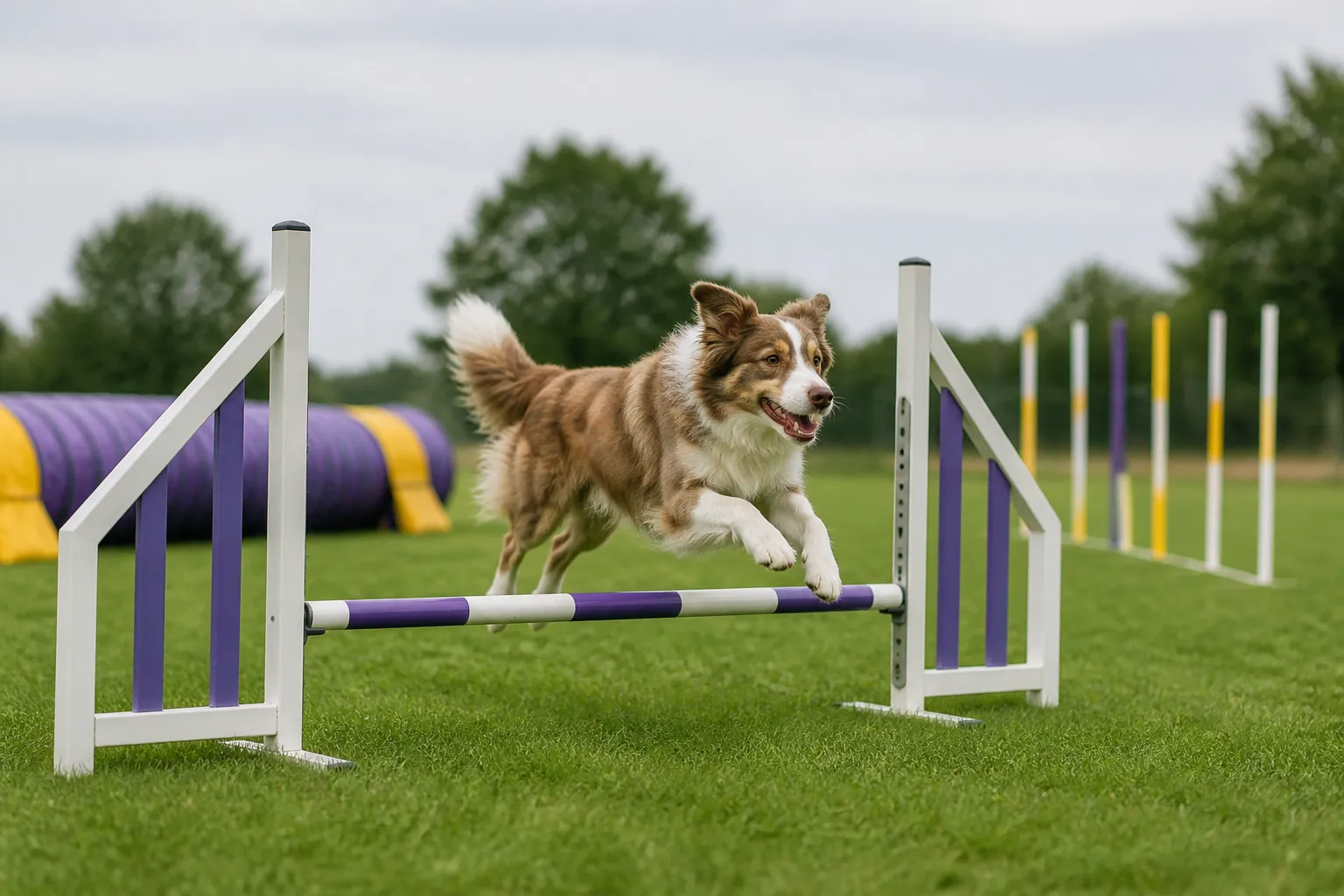
Handlers also sometimes chase speed before developing control. Speed should emerge from confidence, fitness, and clear lines. Raising jump heights or adding tight turns to make a run faster can increase physical and mental strain. Build a fluent path first.
Inconsistent cues cause avoidable confusion. Decide what words, gestures, and release signals mean, then use them consistently. Family members and instructors should understand the same system. If a cue changes, retrain it deliberately rather than assuming the dog will interpret the difference.
Finally, avoid comparing dogs. Age, structure, learning history, motivation, and temperament influence progress. A dog that needs more time is not failing. The relevant question is whether the current plan is producing safe, understandable improvement.
Creating a Practical Home Program
A home setup does not need to copy a competition course. Begin with a clear training area and one or two adjustable items. Keep equipment stored safely, and prevent unsupervised access to obstacles that could tip, collapse, or invite repetitive jumping.
Plan each session before beginning. Choose one primary objective, such as tunnel commitment, a straight-line send, or a calm start. Select a simple warm-up, several easy repetitions, one modest challenge, and a successful finish. Write down what worked, what failed, and what you will change next time.
Train on different surfaces only when the dog is ready and footing remains safe. A behavior that works in a quiet yard may not transfer to a busy class, grassy field, or indoor hall. Generalize progressively by changing location, distance, distractions, and handler position one at a time.
Use rest days and cross-training activities. Sniff walks, controlled strength exercises approved by a professional, basic obedience, swimming where safe, and play with rules can provide variety. Cross-training may help maintain interest and reduce repetitive loading, but every activity should suit the dog’s health and abilities.
A qualified instructor can identify handling errors, adjust equipment, and help manage class dynamics. Look for reward-based instruction, safe surfaces, sensible obstacle heights, clear explanations, and respect for individual dogs. Ask how the instructor handles fear, reactivity, pain, and fatigue before enrolling.
Preparing for Competition
Competition requires more than knowing obstacles. Dogs must work in unfamiliar environments, around noise, spectators, other teams, and altered course layouts. Introduce distractions gradually. Practice arriving early, settling on a mat, walking calmly near rings, and working after a short wait.
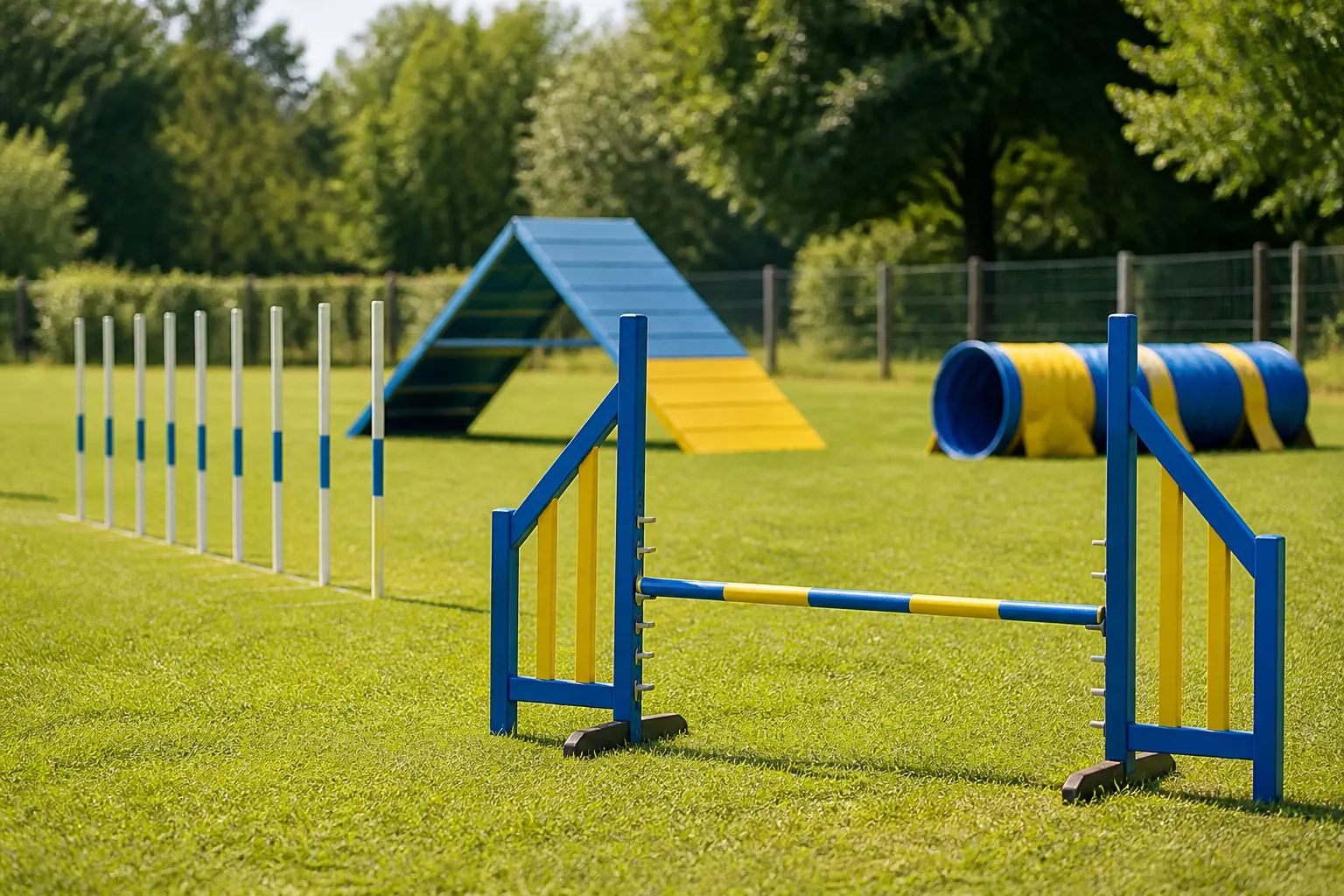
Learn the relevant organization’s rules before entering. Rules can differ regarding obstacle dimensions, jump heights, contact requirements, refusals, time limits, leash procedures, and eligibility. Confirm current information through the organization or event officials rather than relying on memory.
Course walking is a handler skill. Study the numbered path, identify likely decision points, and choose where to change sides or send the dog forward. Plan a simple strategy rather than memorizing every movement rigidly. If the dog makes an error, remain calm, follow event procedures, and learn from the situation.
A first trial should be treated as an experience, not a verdict. The dog may perform differently because of travel, weather, excitement, or unfamiliar footing. Reward calm behavior and recoverability. Competitive goals can be useful, but they should not replace the dog’s welfare or enjoyment.
Troubleshooting Specific Problems
If a dog refuses a tunnel, return to a shorter, brighter, more open setup. Reward looking toward the entrance, approaching it, and passing through with the handler nearby. If the dog exits and immediately runs away, reinforce orientation back to the handler before adding another obstacle.
If bars fall, lower the jump or replace it with a ground bar. Check whether the dog is rushing, turning early, jumping from an awkward distance, or physically uncomfortable. Reward a balanced approach and straight landing. Do not simply repeat the full-height exercise.
If weave entries fail, slow down and practice the entry angle separately. Mark the correct path, use guides if appropriate, and reward the dog for finding the first gap. A dog that can weave a straight line may still need dedicated training for angled approaches and handler motion.
If contacts are inconsistent, return to the end position on a low, stable surface. Reinforce the position independently, then connect it to movement. Avoid arguing at the obstacle. Clarity comes from making the correct response easy and valuable.
When the dog loses focus, identify the cause. The environment may be too difficult, the session too long, the reward too weak, or the task unclear. Reduce demands before adding excitement. Focus is a behavior that can be developed, not a character trait a dog either possesses or lacks.
FAQ
What age can a dog begin agility training?
Dogs can learn foundation skills at many ages, but demanding jumping, climbing, weaving, and unstable equipment should wait until the dog is physically ready. Puppies can practice attention, body awareness, flatwork, and low-impact obstacle games under knowledgeable guidance. Ask a veterinarian and qualified instructor about developmental suitability.
Does my dog need to be a specific breed?
No. Any healthy dog with appropriate motivation and temperament may enjoy agility. Breed tendencies can influence speed, size, jumping style, and reinforcement preferences, but they do not determine whether a team can learn successfully. Equipment and goals should be adapted to the individual dog.
Is agility safe for older dogs?
Older dogs may enjoy modified agility, especially low-impact obstacle work, but health status matters more than age alone. Reduce jumping, avoid unstable equipment when unsuitable, allow longer recovery, and seek veterinary advice if movement changes. The objective can shift from competition to enrichment and gentle teamwork.
Can a reactive or fearful dog participate?
Possibly, but management comes first. Choose small classes, private instruction, or quiet practice areas. Maintain distance from triggers, avoid forced greetings, and use rewards to build calm engagement. An instructor experienced with behavior should collaborate with your veterinarian or behavior professional when needed.
How often should we train?
Frequency depends on fitness, age, recovery, and session quality. Short practices separated by rest are generally more useful than occasional exhausting workouts. Stop while the dog remains willing and physically comfortable. Increase duration or complexity gradually, not both at once.
Should I use treats or toys?
Use the reward your dog values and can receive safely without losing control. Treats support precise delivery; toys can add speed and enthusiasm. Some dogs benefit from both. Always manage food portions and avoid play that encourages unsafe grabbing, collisions, or frantic behavior.
Do I need a full course at home?
No. A few adjustable, safe items can teach valuable foundations. Many skills involve handling, body awareness, attention, starts, sends, turns, and reward placement. A full course may be useful later, but it is not necessary for meaningful learning.
What should I do if my dog suddenly refuses an obstacle?
Stop and investigate rather than applying pressure. The obstacle may have shifted, become slippery, produced a frightening noise, or become physically uncomfortable. Check equipment and footing, simplify the behavior, and monitor movement. Persistent reluctance, pain signs, or performance changes deserve professional assessment.
Conclusion
Dog agility training succeeds when athletic challenge is balanced with communication, preparation, and care. Begin with engagement and simple foundations, choose stable equipment, and teach one behavior at a time. Progress by changing difficulty gradually, reward accurate choices, and treat hesitation as information rather than defiance.
Protect the dog’s body with suitable surfaces, warm-ups, rest, sensible obstacle heights, and professional advice when health is uncertain. Protect the dog’s confidence by avoiding force, managing distractions, and ending sessions on achievable successes. Whether your aim is competition, enrichment, or a stronger partnership, the most persuasive measure of progress is a dog that works willingly, thinks clearly, and finishes training eager to return.
Pingback: Behavioral Dog Training: What Behavioral Training Addresses