

Dog Health and Nutrition: Foundations for a Longer, Happier Life
Good dog care begins with a few dependable principles: feed a nutritionally complete diet appropriate for the dog’s life stage, keep body condition within a healthy range, provide regular movement and mental stimulation, maintain preventive veterinary care, and notice changes early. Nutrition cannot replace diagnosis or treatment, and no single food suits every dog. Age, size, activity, reproductive status, medical history, allergies, dental health, and household routine all influence the best plan.
A healthy routine is practical rather than perfect. Measure meals, offer fresh water, limit unbalanced treats, exercise safely, brush teeth, protect against parasites according to veterinary guidance, and schedule examinations even when the dog appears well. Puppies, senior dogs, pregnant dogs, and animals with chronic disease need individualized advice. If a dog stops eating, vomits repeatedly, struggles to breathe, collapses, has bloody diarrhea, or seems severely painful, seek veterinary help promptly.
Building a Balanced Feeding Plan
Choose food by nutritional adequacy
Select a commercial food labeled as complete and balanced for the appropriate life stage, or use a home-prepared recipe formulated and monitored by a veterinary nutrition professional. Ingredient lists can be useful, but they do not by themselves prove that a diet is balanced, digestible, or suitable for a particular dog. Marketing terms such as natural, premium, or holistic may not answer the most important question: whether the food supplies required nutrients in appropriate amounts.
Puppies generally need diets designed for growth. Large and giant breed puppies require especially careful mineral and calorie management because excessive growth can stress developing bones and joints. Adult maintenance diets are intended for mature dogs, while senior formulas may adjust calories or nutrient profiles, although “senior” is not a universal nutritional standard. Dogs with kidney disease, pancreatitis, food allergies, urinary disorders, or other conditions may require therapeutic diets prescribed by a veterinarian.
Change foods gradually over several days, mixing increasing amounts of the new diet with decreasing amounts of the old. A slower transition may be wiser for dogs with sensitive digestion. Diarrhea, vomiting, itching, or refusal to eat should not automatically be blamed on normal adjustment; consult a veterinary professional if signs persist or become severe.
Measure portions
Feeding directions on packaging are starting estimates, not precise prescriptions. Two dogs of the same weight may need different amounts because of metabolism, exercise, age, neuter status, environment, and health. Use a measuring cup for rough portions, or a kitchen scale for greater consistency. Divide the daily allowance into two or more meals when that suits the dog’s digestion and routine.
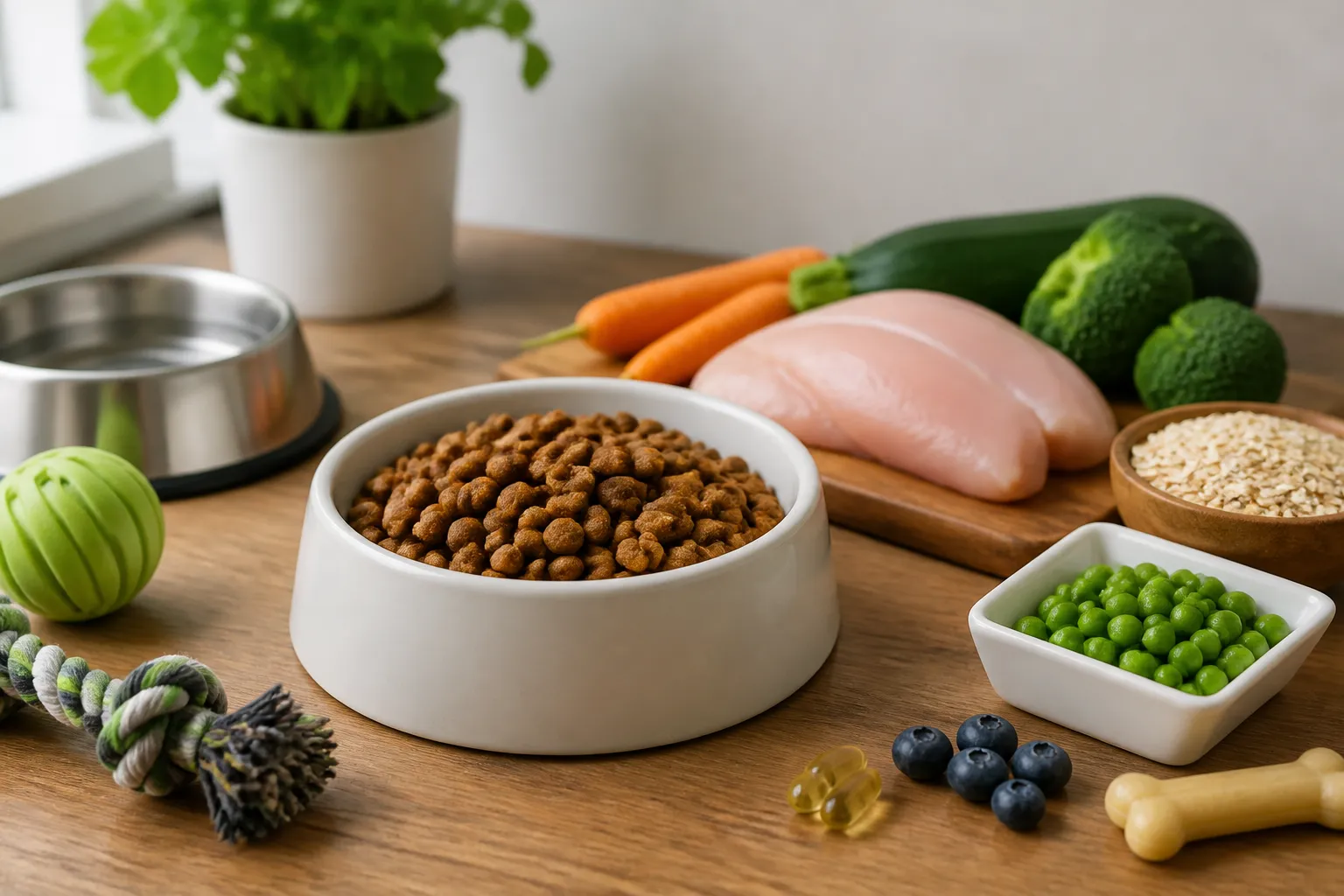
Monitor body condition rather than relying only on a scale. An ideal dog usually has ribs that can be felt beneath a thin covering, a visible waist when viewed from above, and an abdominal tuck when viewed from the side. Prominent ribs, weakness, or rapid weight loss may indicate underfeeding or disease. A disappearing waist, heavy fat over the ribs, or reduced stamina suggests excess weight. Ask a veterinarian to assess body condition and set a realistic target.
Treats, chews, table scraps, and food used for training all contribute calories. Reserve a portion of the regular meal for rewards when possible. Treats should remain a small part of daily intake, and unbalanced extras should not displace essential nutrients. Avoid giving foods known to be dangerous to dogs, including chocolate, grapes and raisins, onions, garlic, alcohol, xylitol, and cooked bones. If ingestion occurs, contact a veterinarian or animal poison service immediately rather than waiting for symptoms.
Water, Supplements, and Safe Extras
Fresh, clean water should be available at all times. Wash bowls regularly, refresh water more often during heat or exercise, and consider multiple bowls for large homes or multi-pet households. Increased thirst or urination can result from heat or activity, but persistent changes may signal diabetes, kidney disease, medication effects, or another problem. A sudden inability to keep water down is urgent.
Most dogs eating a complete diet do not need a general vitamin supplement. Adding calcium, vitamins, minerals, oils, or herbal products without guidance can create imbalances or interact with medication. Supplements marketed for joints, skin, digestion, or anxiety vary in quality and evidence. Discuss a specific product with a veterinarian, especially for puppies, pregnant dogs, older animals, or dogs receiving treatment.
Safe extras depend on preparation and the individual dog. Small portions of plain, cooked foods may be useful for enrichment, but avoid seasoning, sauces, fatty trimmings, and choking hazards. Introduce one new item at a time so digestive reactions are easier to identify. Dogs with suspected food allergy should not receive casual extras during a properly managed elimination diet.

Exercise, Weight, and Mental Wellbeing
Regular activity supports muscles, joints, cardiovascular fitness, digestion, sleep, and behavior. The right amount depends on age, breed tendencies, body condition, weather, and health. Puppies need short, varied play and rest rather than forced endurance. Senior dogs may benefit from frequent gentle walks. Flat-faced dogs, overweight dogs, and dogs with heart or respiratory disease can overheat or tire quickly.
Begin gradually, particularly after inactivity. Watch for excessive panting, weakness, limping, reluctance to continue, disorientation, or delayed recovery. Stop activity, cool the dog carefully, and seek veterinary care for severe signs or suspected heatstroke. Avoid strenuous exercise on hot pavement and provide shade. Never assume a dog can regulate temperature safely simply because it is outdoors.
Mental exercise is health care too. Scent games, food puzzles, basic training, safe chewing, supervised exploration, and calm social experiences can reduce boredom without exhausting the body. Rotate activities and choose difficulty appropriate to the dog’s confidence. Training based on rewards helps build communication and allows owners to reinforce handling behaviors, such as accepting nail trims or opening the mouth for dental checks.
Weight reduction should be planned, not improvised. Crash diets, skipped meals, or excessive exercise can cause harm. A veterinarian can calculate a calorie target, recommend a suitable food, and recheck progress. Weigh the dog periodically and adjust only with professional advice when disease, pregnancy, growth, or medication complicates the plan.
Preventive Health and Dental Care
Routine veterinary examinations help identify problems before they become obvious. The schedule varies by age and risk, but puppies need a series of vaccinations and developmental checks, while older dogs often benefit from more frequent monitoring. Vaccines, parasite control, identification, and reproductive decisions should reflect local risks and veterinary recommendations. Do not use human medication or another animal’s prescription unless a veterinarian specifically directs it.

Parasites can affect dogs and people. Fleas may cause intense itching and anemia, ticks can transmit disease, and intestinal parasites may produce diarrhea, poor growth, or no visible signs at all. Prevention is more reliable than waiting for evidence. Products differ in ingredients, duration, species safety, and regional suitability. Use only products labeled for the dog’s species, weight, and age, and follow instructions carefully.
Dental disease is common and often painful, yet dogs may continue eating despite discomfort. Daily brushing with toothpaste made for dogs is the most effective home measure. Human toothpaste may contain ingredients unsafe for dogs. Introduce a brush slowly: touch the muzzle, lift the lip, rub a few teeth, and reward calm cooperation. Veterinary dental examinations and professional cleaning may be needed because brushing cannot remove disease below the gumline. Hard objects that can fracture teeth are not automatically healthy chews.
Grooming provides opportunities to inspect skin, ears, paws, nails, and lumps. Brush according to coat type, keep nails at a functional length, and dry dogs thoroughly after swimming. Do not insert cotton swabs deeply into ears or apply leftover medication. Persistent odor, discharge, redness, head shaking, matting, or repeated scratching warrants an examination.
Recognizing Warning Signs
Owners should know what is normal for their individual dog. Changes in appetite, thirst, urination, stool, energy, breathing, gait, sleep, weight, coat, or behavior deserve attention. Record when a change began, how often it occurs, possible exposures, and what the dog has eaten. Photos, videos, and a simple diary can help a veterinarian identify patterns.
Some signs require urgent care: difficulty breathing, blue or pale gums, collapse, seizures, severe bleeding, repeated unproductive retching, a swollen painful abdomen, suspected poisoning, heatstroke, inability to urinate, or sudden paralysis. Puppies, seniors, and dogs with chronic illness may deteriorate quickly. When uncertain, call a veterinary clinic for triage rather than relying on internet advice.

Do not induce vomiting unless instructed by a professional. Do not force food or water into a weak, vomiting, or unconscious dog. Keep medication, chemicals, compost, toxic foods, and small objects secured. During travel or emergencies, carry vaccination records, medication details, contact information, and a familiar food supply.
Making Nutrition Practical at Home
Consistency makes health monitoring easier. Feed at predictable times, keep a written record of portions, and introduce changes one at a time. Store dry food in a cool, dry place, ideally in its original bag inside a clean container. Seal wet food, refrigerate it promptly, and follow the manufacturer’s storage guidance. Wash bowls daily and discard spoiled food.
Households should agree on feeding rules. A dog may gain weight when several people provide treats without knowing what others have offered. Use a jar containing the day’s training rewards, or mark portions on a shared schedule. Children should learn never to disturb a dog while it eats and never to offer unknown foods.
Food guarding, rapid eating, and swallowing dangerous objects need management. Feed guarded dogs separately and seek qualified behavior guidance rather than taking bowls away as punishment. Slow-feeding tools may help some dogs, but supervise them and stop using any item that breaks, causes frustration, or traps the tongue. A veterinarian can investigate whether unusual hunger reflects inadequate feeding, medication, parasites, or disease.
Home-prepared diets deserve particular caution. Meat, rice, vegetables, and supplements may look wholesome but can become deficient in calcium, essential fatty acids, vitamins, or trace minerals. Recipes copied from casual websites may not meet a dog’s needs, especially during growth. If home preparation is important for ethical, medical, or practical reasons, request a balanced recipe from a qualified professional and follow it precisely. Substitutions can change nutrient concentrations.
Frequently Asked Questions
How often should a dog eat?
Many adult dogs do well with two measured meals daily. Some individuals need smaller, more frequent meals because of age, medication, digestive disease, or personal tolerance. Puppies generally need more frequent feeding than adults, with the schedule adjusted as they grow. Ask a veterinarian for guidance when vomiting between meals, hunger, rapid growth, or weight changes occur.
Is grain-free food automatically healthier?
No. Grain-free is not automatically better, and grains are not inherently harmful to dogs that tolerate them. The relevant question is whether the entire diet is nutritionally adequate and appropriate for the individual. A food change should have a clear reason, such as a diagnosed allergy or veterinary recommendation, rather than a marketing claim.
Can dogs eat raw meat?
Raw diets carry potential risks from pathogens, nutritional imbalance, bones, and cross-contamination. Cooking and careful handling reduce some hazards, but preparation still must provide complete nutrition. Dogs with weakened immune systems and households containing young children, older adults, or medically vulnerable people require particular caution. Discuss the plan with a veterinarian before feeding raw food.
How can I tell whether my dog is overweight?
Feel the ribs gently, look for a waist from above, and assess the abdominal tuck from the side. Thick fat, reduced waist definition, and difficulty feeling ribs suggest excess weight, but coat type can hide shape. A veterinary body-condition assessment is more reliable than appearance alone. Weight should change gradually under supervision.
Are supplements necessary for healthy dogs?
Usually not when a dog eats a complete, balanced diet and has no identified deficiency. Supplements can be useful in selected cases, but benefits and risks depend on the product and the dog. Ask about evidence, dosage, interactions, and quality control before adding one. Never assume “natural” means harmless.
What should I do if my dog refuses food?
Consider how long the refusal has lasted and whether other signs are present. Dental pain, nausea, stress, medication, illness, or food spoilage can all contribute. Offer fresh water and avoid repeatedly changing foods or offering rich treats. Contact a veterinarian promptly if refusal persists, affects a puppy or diabetic dog, or accompanies vomiting, diarrhea, pain, lethargy, or breathing changes.
How much exercise does my dog need?
There is no universal number. A healthy adult working breed may need considerably more activity than an elderly companion dog, while some breeds have specific respiratory or orthopedic limitations. Combine appropriate walks, play, training, and rest. Increase activity gradually and stop for signs of distress. Veterinary advice is essential after injury or diagnosis.
Should I brush my dog’s teeth every day?
Daily brushing is ideal because plaque develops continuously. Start slowly with dog-safe toothpaste and reward cooperation. If brushing is impossible, discuss alternative dental care, but remember that chews and diets cannot replace professional evaluation. Bad breath, red gums, loose teeth, drooling, or difficulty chewing should prompt a dental examination.
Conclusion
Dog health and nutrition depend on connected, repeatable choices rather than one perfect product or routine. Feed a complete diet in measured portions, provide clean water, use treats thoughtfully, and adjust meals for life stage, activity, body condition, and disease. Combine appropriate exercise with enrichment, maintain vaccination and parasite plans, brush teeth, and examine the dog regularly. Most importantly, learn the individual animal’s normal appetite, behavior, movement, and bathroom habits. Early attention to change can prevent discomfort and improve treatment options. When advice conflicts or a problem seems unusual, a veterinarian is the safest source for a personalized plan. Small daily decisions, followed consistently, give dogs a stronger foundation for comfort, resilience, and companionship throughout life.