
Understanding Service Dog Training
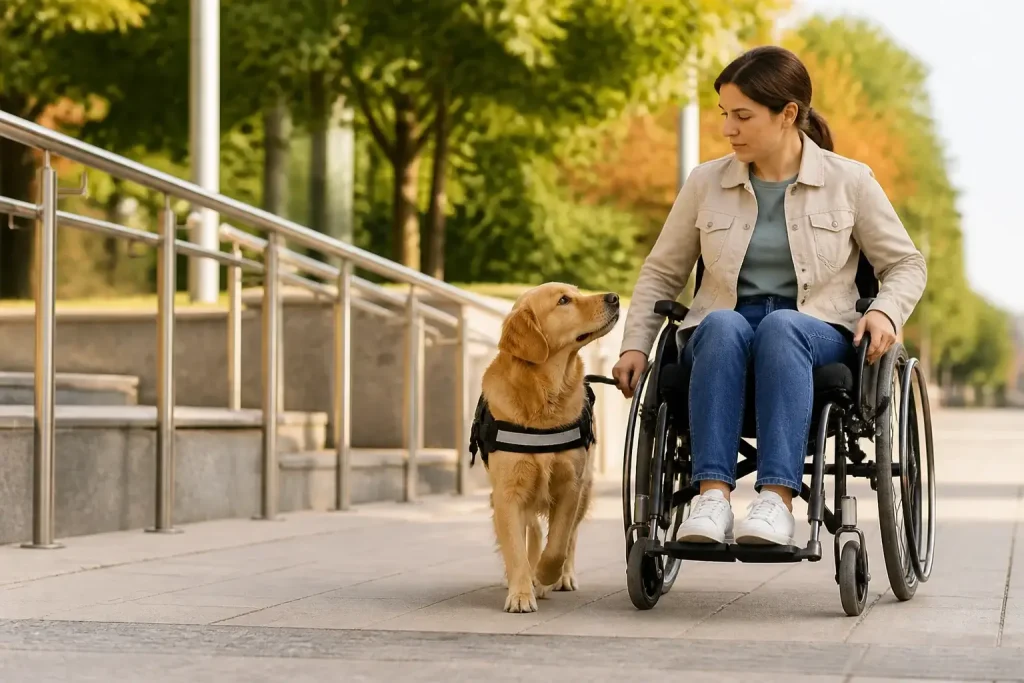
Service dog training is a structured process that prepares a dog to perform specific tasks for a person with a disability. It is not simply advanced obedience, emotional comfort, or general companionship. A trained service dog must behave reliably in public, respond to its handler’s needs, and complete work that directly reduces the effects of a qualifying disability. The goal is practical independence, safety, and a workable partnership.
Training usually combines temperament assessment, foundation skills, task instruction, public-access practice, and careful matching with a handler. Some people work with professional programs, while others use qualified independent trainers or train with substantial support. The appropriate route depends on the dog, the disability, local rules, finances, and the complexity of the required tasks.
A persuasive training plan begins with realism. Not every friendly, intelligent, or well-behaved dog is suited to service work. Dogs need stable temperaments, physical soundness, confidence without aggression, and the ability to recover from distractions. Early evaluation can prevent years of effort being invested in an unsuitable candidate.
Defining the Work
A service dog is trained to perform disability-related tasks. Examples may include retrieving medication, opening accessible doors, alerting to a change in a medical condition, interrupting dangerous repetitive behavior, providing mobility assistance when physically appropriate, or guiding a person with a sensory limitation. The exact task must be connected to the handler’s functional needs.
Comfort alone is different. A dog that makes someone feel calmer may be valuable, but comfort does not automatically constitute a trained service task. Similarly, therapy dogs visit other people in institutional settings, whereas service dogs are trained for one handler’s disability-related needs. Assistance dogs may be used as a broader term, but terminology and legal recognition vary by jurisdiction.
Before training begins, write a task description in observable terms. “Helps with anxiety” is too vague. “Interrupts escalating skin picking by nudging the hand and redirecting it to a trained behavior” is more useful because it identifies an action, a cue or situation, and a desired result. Clear definitions make training measurable and reduce confusion later.
Selecting a Suitable Candidate
Breed can influence size, energy, coat, and inherited tendencies, but breed alone does not determine suitability. More important considerations include health, resilience, sociability, focus, trainability, and the ability to remain calm around people, animals, noise, and unfamiliar surfaces. A dog that startles occasionally may improve with careful support; a dog that repeatedly reacts aggressively presents a serious safety concern.

Puppies require thoughtful socialization, not overwhelming exposure. Introduce people, environments, handling, transportation, sounds, and surfaces gradually, pairing new experiences with reinforcement. Socialization should teach calm observation rather than indiscriminate greeting. Adult dogs can also succeed, but their established habits and history need honest assessment.
A veterinary examination should address movement, pain, vision, hearing, and conditions that could limit working life. Mobility tasks deserve particular caution because repetitive bracing, pulling, or counterbalance work may harm a dog whose structure is not suitable. Ask a veterinarian familiar with working dogs for individualized guidance, and revisit health assessments as training progresses.
Building Foundation Skills
Foundation training creates the behaviors on which every advanced task depends. Teach the dog to respond reliably to its name, come when called, walk on a loose leash, settle on a mat, wait at doors, ignore dropped food, and release objects on cue. Reinforcement should be timely, clear, and valuable to the individual dog.
Use short sessions and end before frustration becomes a pattern. A useful sequence is to teach the behavior in a quiet room, add mild distractions, practice in new locations, and then increase distance, duration, or competing stimuli one variable at a time. If performance collapses, reduce difficulty instead of repeating the cue louder.
A marker signal, such as a click or a consistent word, can identify the precise moment a desired behavior occurs. Rewards may include food, play, access to sniffing, or another meaningful consequence. Training should remain humane: avoid methods that rely on intimidation, pain, or fear, since stress can damage trust and obscure whether the dog truly understands.
Handler skills matter equally. Everyone involved should use the same cues, reinforcement rules, equipment, and expectations. Inconsistent responses can teach a dog that commands are optional or that unwanted behavior sometimes produces rewards.
Teaching Disability-Related Tasks
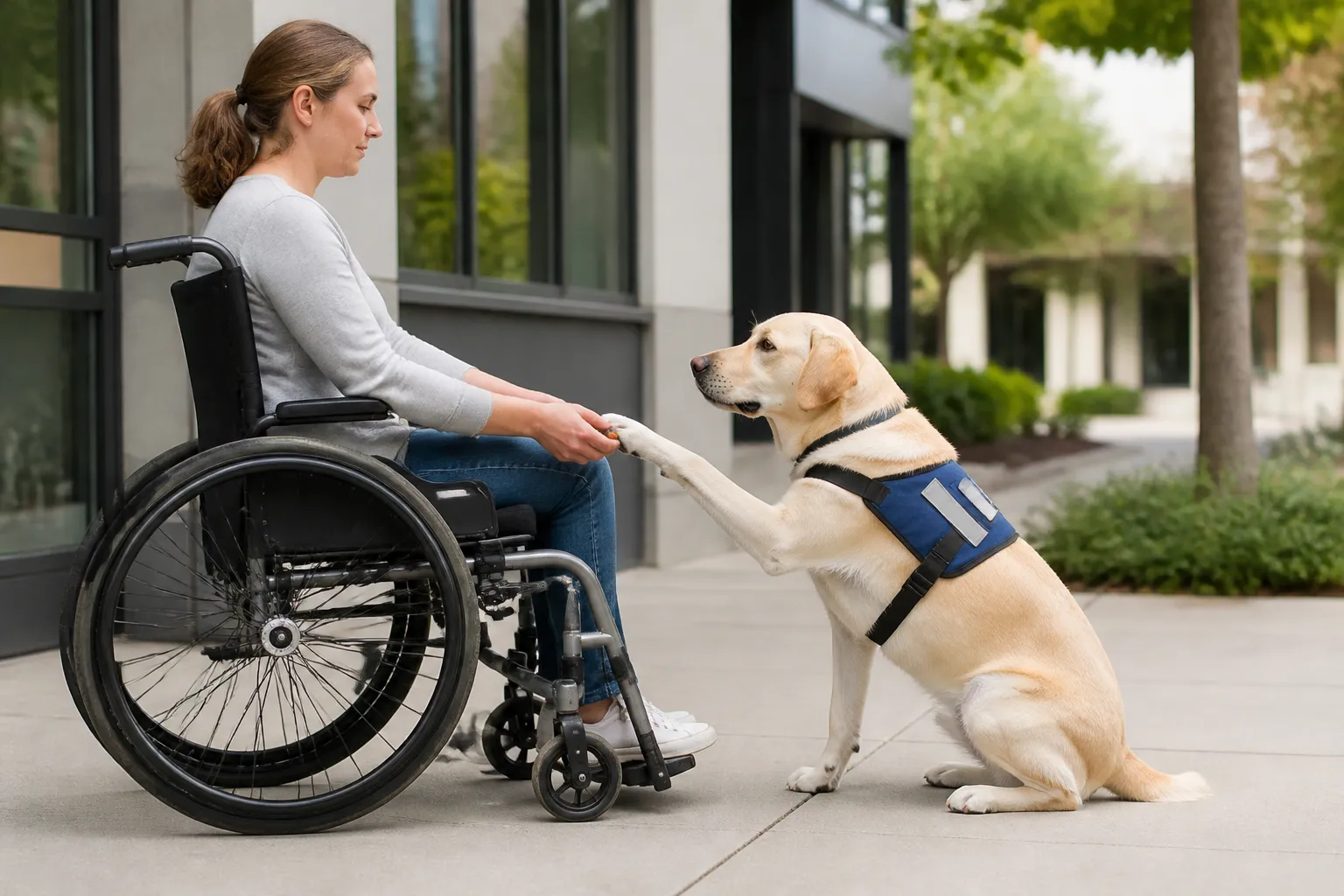
Task training should start with a functional analysis. Identify what happens before the problem, what assistance is needed, and what successful completion looks like. For example, if a handler needs help after dropping an item, the chain may involve locating the object, picking it up safely, and delivering it to the hand. Each part can be taught separately before combining the sequence.
Shape behaviors in small steps. Reward looking at an object, approaching it, touching it, gripping it, lifting it, and bringing it back. Use appropriate objects and protect the dog from unsafe materials. For alerts, avoid assuming that an untrained reaction is reliable. Build a clear alert behavior and teach a second response that provides useful assistance, such as leading the handler to medication or seeking another person.
Some tasks involve medical or psychiatric needs and require specialized professional input. A dog should not be expected to diagnose, make medical decisions, or replace emergency services. Alert behavior must be tested carefully across different conditions, with records showing false alerts, missed responses, and environmental influences. A clinician can help determine whether the proposed task fits the handler’s care plan.
Mobility assistance requires special safeguards. Pulling a lightweight object may differ greatly from supporting a person’s weight. Bracing, balance work, and transfers can create injury risks for both dog and handler. Do not teach physically demanding tasks without veterinary and professional training advice. Alternative tasks, such as retrieving a phone, activating an emergency button, or creating space, may provide assistance without unsafe loading.
Developing Public Access
Public-access reliability is more than silence. The dog should remain under control near food, children, carts, elevators, traffic, sudden noises, and crowded walkways. It should eliminate on cue when appropriate, settle beneath or beside a seat, avoid soliciting attention, and recover promptly from unexpected events.
Progress gradually. Begin in quiet pet-friendly places where legal, then practice near busier entrances, parking areas, shops, public transportation, and other environments relevant to the handler’s life. Change only one major challenge at a time. A dog that performs beautifully at home may need extensive practice before it can work safely in a hospital, airport, classroom, or busy street.

Equipment should be functional and unobtrusive. A vest does not create training, and labels cannot compensate for uncontrolled behavior. Teach the dog to ignore strangers who ask to pet it, and prepare a polite response for people who interrupt. Depending on local law, businesses may have rules concerning access, identification, or questions that can be asked. Learn the applicable requirements rather than relying on assumptions from another region.
Public-access practice must include rest. Working dogs need breaks, water, appropriate exercise, and opportunities to behave like dogs outside duty. Fatigue can increase errors and stress. The handler should recognize early signs such as repeated yawning, avoidance, scanning, slowed responses, or irritability, then end or modify the session.
Matching Dog and Handler
A successful match considers the handler’s routines, physical abilities, environment, communication style, and future needs. A large dog may retrieve effectively but be impractical in a small home or crowded transit system. A highly energetic dog may thrive with an active handler yet struggle where long periods of quiet work are necessary.
Teach the handler to give cues, reinforce correct responses, interrupt safely, and recognize when the dog needs rest or veterinary attention. The partnership should not depend on a trainer standing nearby. Handover sessions, written plans, video review, and coached practice can help transfer responsibility gradually.
Handlers also need a contingency plan. Identify who can care for the dog during illness, travel, hospitalization, or emergencies. Keep veterinary information, medication details, vaccination records, training notes, and emergency contacts accessible. If a task fails, the handler should know an alternative strategy rather than relying on one behavior under every circumstance.
Measuring Progress and Solving Problems
Use a training log. Record the setting, trigger, cue, response, reward, errors, duration, and the dog’s apparent stress level. Patterns become easier to see when notes replace memory. Progress is not merely a higher percentage of correct responses; it also includes faster recovery, calmer behavior, generalization, and safe performance under realistic conditions.
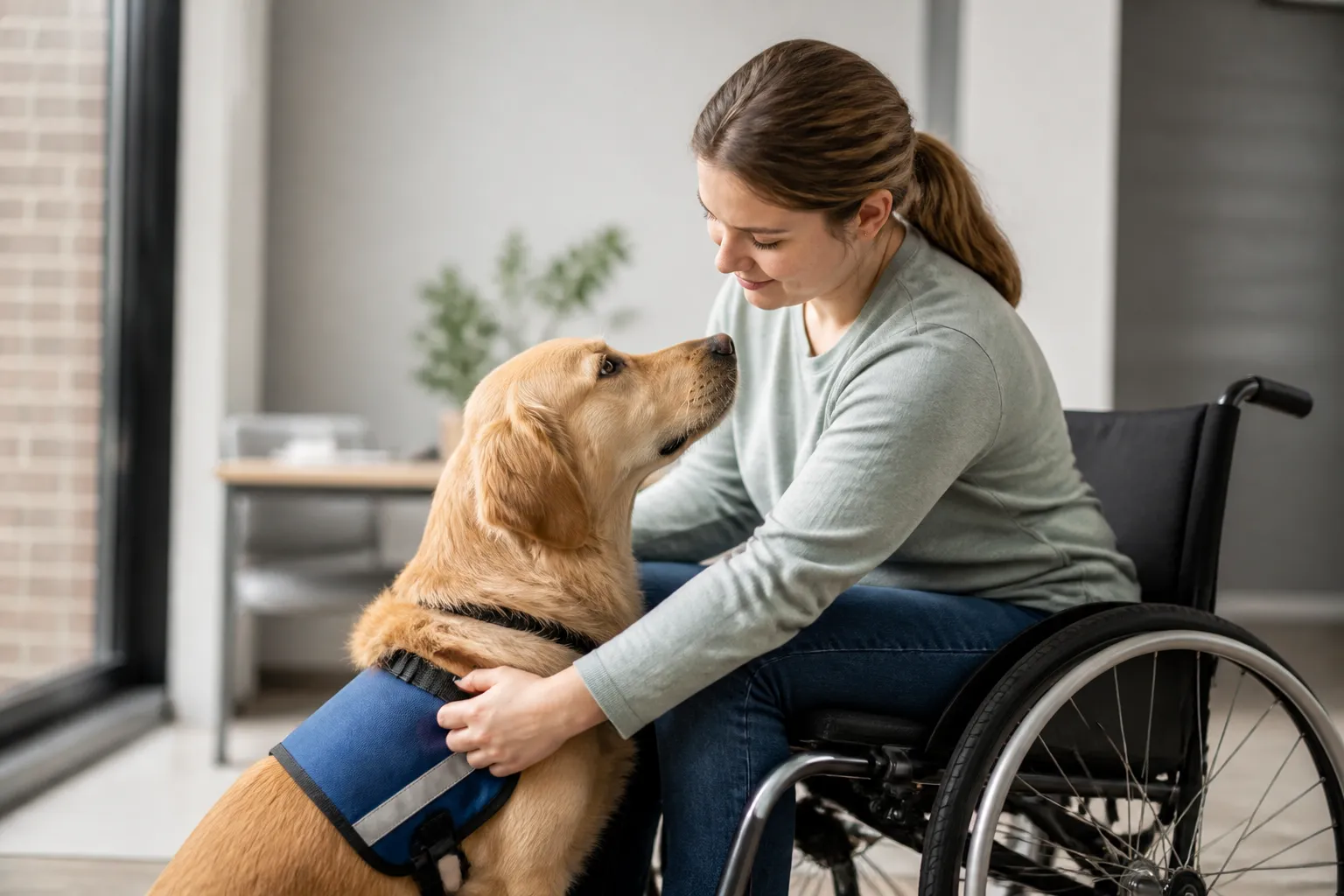
When a problem appears, check the simplest explanations first. The dog may be confused, tired, physically uncomfortable, overfaced, or responding to an unclear cue. Lower the difficulty, improve reinforcement, and return to a successful step. Punishing a warning signal can suppress communication without resolving the underlying problem.
Aggression, panic, persistent avoidance, severe separation distress, or sudden behavior changes warrant qualified professional help and veterinary evaluation. Do not place the public, the handler, or the dog at risk while attempting a difficult issue alone. A responsible trainer will explain methods, limitations, expected time, and how progress will be assessed.
Time, Costs, and Ethical Limits
Training length varies widely. A simple retrieval may develop faster than a complex alert-and-response sequence or dependable mobility-related task. Progress depends on the dog’s learning history, handler consistency, training opportunities, health, and task difficulty. Be cautious of anyone promising a guaranteed outcome or a fixed schedule without evaluating the individual team.
Expenses may include puppy raising, veterinary care, food, equipment, professional lessons, transportation, assessments, and replacement or retirement planning. Ask programs or trainers for a transparent explanation of fees and responsibilities. A lower initial price may not represent lower total cost if support ends before the handler can manage independently.
Ethical training also includes retirement planning. A dog may develop illness, age-related limitations, or stress that makes work inappropriate. Retirement is not failure. It is a welfare decision. The handler may need another assistance arrangement, a successor dog, or changes to the task plan. Maintaining records can help transfer useful information without forcing the older dog beyond its capabilities.
Frequently Asked Questions
Can any dog become a service dog?
No. Many dogs can learn obedience, but service work requires a combination of health, temperament, reliability, and task ability. A dog may be loving and clever yet unsuitable because of fear, reactivity, poor recovery, chronic pain, or inability to work calmly in public. Honest assessment protects everyone involved.
Should I train a service dog myself?
Owner training can be possible, depending on local rules, the handler’s capacity, and the dog’s suitability. Professional guidance is strongly recommended for task design, public access, mobility concerns, and difficult behavior. A blended approach often works well: the handler practices daily while a qualified trainer evaluates technique and progress.
How do I choose a trainer?
Look for transparent methods, relevant assistance-dog experience, humane practices, references that can be checked, and willingness to explain limitations. Ask how the trainer handles fear, aggression, task reliability, public access, and handover. Avoid guarantees, secrecy about methods, or pressure to purchase unnecessary equipment or services.
Does a vest prove that a dog is trained?
No. Equipment is not proof of skill, legal status, or reliable behavior. A vest may communicate that the dog is working, but it cannot replace task training and public manners. Follow local requirements and do not represent a pet as a working service dog merely to obtain access.
What if the dog makes mistakes?
Review the context rather than treating one mistake as a final judgment. Determine whether the cue was clear, the environment was too difficult, the dog was tired, or the behavior lacked generalization. Record the event, return to an easier step, and seek help if errors create safety concerns or continue despite thoughtful adjustments.
How often should a service dog work?
There is no universal schedule. Work should match the handler’s needs while allowing sleep, exercise, play, feeding, grooming, social needs, and recovery. Some dogs perform brief tasks throughout a day; others work during specific outings. Watch welfare and performance together, and adjust duties when stress or fatigue appears.
Can a service dog provide emotional comfort?
A trained task may address a disability-related need, while ordinary comfort is not necessarily a task. The distinction depends on the behavior trained and the applicable legal framework. Discuss the intended function with a qualified trainer and, when appropriate, a healthcare professional who understands the handler’s needs.
What should happen after training?
Continue maintenance practice. Skills weaken when they are never rehearsed, and environments change over time. Schedule refresher sessions, monitor health, update task strategies, and reassess public access periodically. A working partnership is maintained through regular communication, not completed once a dog passes an informal test.
Conclusion
Service dog training succeeds when it combines a suitable dog, clearly defined disability-related tasks, humane instruction, realistic public practice, and an informed handler. Begin with evaluation rather than hope, build dependable foundations before advanced work, and increase difficulty gradually. Measure behavior in real environments, protect the dog’s physical and emotional welfare, and ask for qualified help when risks exceed your experience.
The strongest partnership is not the one that performs the most impressive behaviors. It is the one that safely solves meaningful problems, communicates clearly, adapts when circumstances change, and preserves the dog’s quality of life. With careful planning, consistent practice, professional input, and honest decision-making, service dog training can provide practical support while respecting the needs of both members of the team.