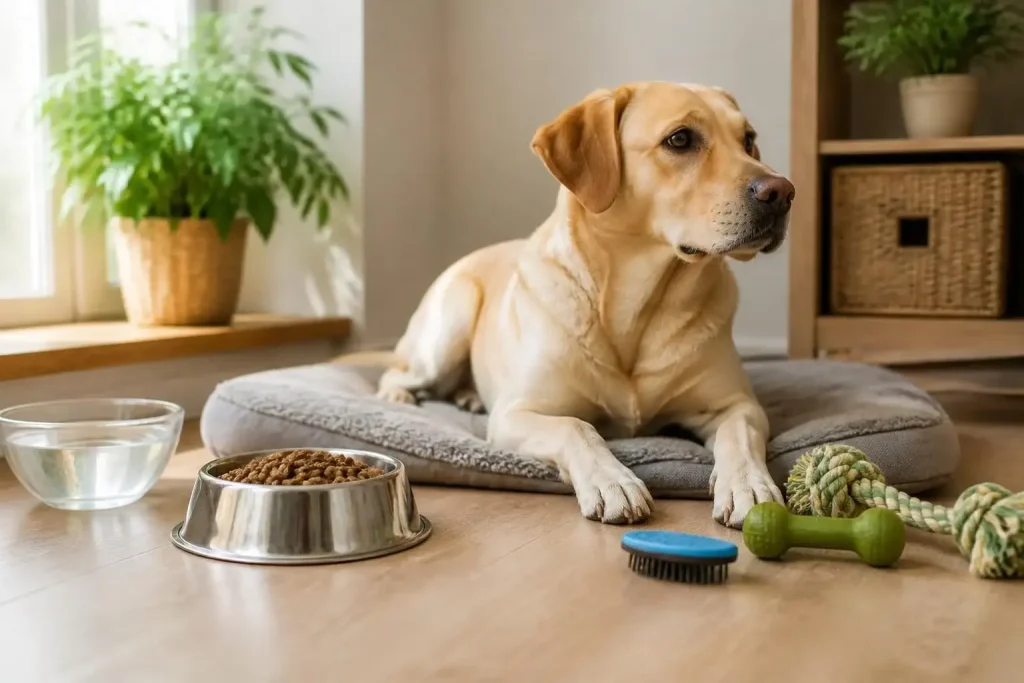
A dog wellness routine is a practical system for supporting physical health, emotional balance, safety, and quality of life. It does not require expensive equipment or an elaborate schedule. Consistent nutrition, movement, preventive care, grooming, training, rest, and observation usually matter more than occasional bursts of attention. The most effective routine also respects a dog’s age, breed tendencies, body condition, medical history, temperament, and environment.
This guide explains how to build a dependable daily and seasonal plan, choose useful products, recognize warning signs, and adjust care responsibly. It is intended as general information, not a diagnosis or substitute for veterinary advice. When a dog’s behavior, appetite, mobility, breathing, or elimination changes unexpectedly, contact a veterinarian promptly.
Dog Wellness Routine: What a Complete Wellness Routine Includes
Wellness is broader than preventing illness. A healthy routine helps a dog feel secure, use energy appropriately, maintain a suitable body condition, and remain comfortable throughout changing life stages. The essential elements are balanced food, fresh water, regular exercise, mental enrichment, dental care, parasite prevention, grooming, sleep, social connection, and professional health checks.
These elements influence one another. Excess weight can make exercise difficult; inadequate activity can contribute to boredom or destructive behavior; painful teeth can reduce appetite; poor sleep can increase irritability. Rather than treating each concern separately, consider the dog’s complete pattern.
Begin by recording basic information: age, weight, feeding method, current medications, vaccination history, known sensitivities, normal appetite, typical stool, and usual activity level. A simple record makes gradual changes easier to evaluate and gives a veterinarian useful context.
Build Around the Individual Dog
Puppies need frequent meals, gentle training, safe exploration, and age-appropriate activity. Adult dogs generally benefit from predictable meals, daily movement, and opportunities to investigate their surroundings. Senior dogs may require shorter walks, more frequent toilet breaks, softer bedding, and closer monitoring of pain, hearing, vision, and cognitive changes.
Breed characteristics can guide planning but should not replace observation. A highly energetic dog may need substantial physical and mental work, while a brachycephalic dog may require careful heat management and moderate exertion. A small dog is not automatically low maintenance, and a large dog is not automatically suited to long exercise sessions.
Feeding and Hydration
Choose a complete and balanced diet appropriate for the dog’s life stage, size, and health needs. Commercial food may be dry, wet, or a combination; the best choice is one the dog tolerates well and that fits the feeding guidance provided by a veterinarian or the manufacturer. Read the label, measure portions, and account for treats, chews, toppers, and table food.
Portion control is central to wellness. Feeding instructions are starting points, not guarantees, because metabolism and activity differ. Check body condition regularly rather than relying only on a scale. You should be able to feel the ribs beneath a light covering, observe a waist from above, and see an abdominal tuck from the side. If these landmarks are difficult to assess, ask a veterinary professional for guidance.
Keep fresh water available and clean bowls frequently. Increased thirst, repeated urination, vomiting, diarrhea, or refusal to drink can indicate a problem requiring professional attention. Do not make sudden diet changes unless instructed for an urgent medical reason. Transition gradually, while observing stool quality, appetite, and comfort.
Treats should support training, not displace nutritionally complete meals. Use small pieces, vary rewards with praise or play, and avoid foods known to be toxic or dangerous for dogs, including chocolate, grapes, raisins, onions, garlic, and products containing xylitol. When uncertain, ask a veterinarian before offering a new ingredient.
Movement and Mental Enrichment
Daily movement supports muscle tone, joint function, cardiovascular fitness, digestion, and emotional regulation. Walks should not be viewed solely as mileage. Allowing safe sniffing, changing routes, practicing loose-leash skills, and pausing to observe the environment can provide valuable mental stimulation.
Match intensity to the dog. Young dogs may need several brief sessions rather than forced endurance. Growing puppies should not be pushed into repetitive, strenuous activity. Older dogs often benefit from frequent low-impact walks, gentle play, and carefully controlled surfaces. Dogs with arthritis, heart disease, respiratory problems, or other medical conditions need individualized recommendations.
Mental enrichment can include food puzzles, scent games, basic obedience, trick training, supervised exploration, and rotating toys. Present one challenge at a time and ensure it is solvable. Frustration is not the goal. Supervise toys and chews, especially when a dog destroys objects, guards resources, or swallows pieces.
A useful daily pattern might include a calm morning toilet break, breakfast delivered through a bowl or puzzle, a walk suited to the dog’s ability, a rest period, brief training, afternoon interaction, and a relaxed evening outing. The exact schedule may vary; predictability is more important than clock precision.
Preventive Veterinary Care
Routine veterinary examinations help identify problems before they become obvious at home. The appropriate frequency depends on age, health, and risk. During an appointment, discuss vaccinations, parasite prevention, dental condition, nutrition, weight, behavior, mobility, reproductive care, and any changes you have recorded.
Preventive products should be selected with professional guidance. Fleas, ticks, intestinal parasites, and heartworm risks vary by region, lifestyle, climate, and exposure. Never use a product labeled for another species or exceed the stated dose. Some ingredients can be unsafe for particular animals, and combining products without advice may create avoidable risk.
Keep vaccination records and ask which immunizations are appropriate for the dog’s circumstances. A dog that boards, travels, visits grooming facilities, hikes, or interacts frequently with other animals may have different exposure considerations from a homebody.
Urgent signs include difficulty breathing, collapse, severe weakness, repeated vomiting, a swollen abdomen, uncontrolled bleeding, suspected poisoning, seizures, inability to urinate, or sudden neurological changes. Seek emergency veterinary care rather than waiting to see whether the issue resolves. For possible poisoning, preserve packaging and contact an appropriate veterinary poison service when available.
Dental, Skin, Coat, and Nail Care
Dental care deserves regular attention because plaque can harden into tartar and contribute to oral discomfort. Brush with toothpaste formulated for dogs; human toothpaste may contain ingredients that are unsafe to ingest. Introduce brushing gradually, starting with brief contact and rewarding cooperation. A veterinary dental examination is important when there is persistent bad breath, bleeding, loose teeth, facial swelling, dropping food, or reluctance to eat.
Grooming needs differ by coat type. Short-coated dogs may need occasional brushing, while dense, curly, or long coats can require frequent maintenance to prevent mats. Check ears, paws, skin folds, and the area beneath collars. Avoid inserting objects deeply into the ear canal, and seek professional advice for odor, discharge, redness, or repeated scratching.
Trim nails when they begin clicking on hard floors or interfere with movement. Introduce clippers or a grinder slowly. Cutting too far can cause pain and bleeding, so professional help is sensible if the nails are dark, overgrown, or difficult to handle. Grooming should build trust, not become a struggle.
Rest, Safety, and Emotional Wellbeing
Sleep and quiet time are biological needs, not rewards. Provide a clean, comfortable resting place away from constant traffic. Puppies, senior dogs, and dogs recovering from illness may require additional rest. Avoid interrupting sleep unnecessarily, particularly when children are present.
A safe home reduces preventable injuries. Secure medications, cleaning products, chemicals, small objects, and toxic foods. Use barriers around unsafe areas, check fences, keep identification current, and transport the dog with an appropriate restraint or secured crate. Microchip registration should contain current contact details.
Emotional wellness depends on safety, choice, and respectful handling. Reward desired behavior, teach alternatives, and avoid punishment that causes fear or confusion. If a dog growls, freezes, hides, or snaps, treat the signal as information about discomfort, fear, pain, or conflict. Increase distance and consult a qualified behavior professional, while arranging veterinary assessment when pain or illness may be involved.
Socialization is not forcing interaction. It is gradual exposure to people, animals, surfaces, sounds, and situations at an intensity the dog can manage. Some dogs prefer calm observation rather than greetings. Respecting that preference can prevent stress and improve trust.
A Practical Product Selection Guide
Useful wellness products should make safe care easier, not replace observation or professional support. Select items according to function, fit, durability, cleanability, and the dog’s behavior.
Food and Water Equipment
Choose bowls that are stable, easy to wash, and appropriately sized. Stainless steel or other nonporous materials may be practical because they can be cleaned thoroughly. Slow-feeding bowls can help some dogs that eat rapidly, but monitor whether the design causes frustration or makes eating difficult. Automatic feeders and water devices can support consistency, yet they still require cleaning and supervision.
Walking and Identification Equipment
A well-fitted collar should allow comfortable movement without slipping over the head. Identification information should be readable and current. Harnesses can be useful for dogs that pull or have neck concerns, provided the design permits natural shoulder movement and does not rub. Test equipment indoors first, then inspect the skin after use.
Enrichment and Grooming Tools
Choose toys based on chewing style, size, and supervision requirements. Avoid objects small enough to swallow or those that splinter, break easily, or become hazardous when damaged. A suitable brush, nail tool, dog toothpaste, waste bags, washable bedding, and a basic first-aid supply can make routine care more manageable. First-aid materials do not replace veterinary treatment; they simply help with minor situations while advice is obtained.
Prefer products with clear instructions and transparent safety information. Be cautious of supplements, calming products, detox claims, and devices promising to prevent disease. Supplements may interact with medication or be inappropriate for a particular condition. Discuss them with a veterinarian before use.
Creating a Weekly and Seasonal Plan
A checklist reduces forgotten tasks. Daily items may include fresh water, measured meals, toilet opportunities, movement, enrichment, medication if prescribed, and a brief visual check. Look at gait, breathing, eyes, coat, appetite, stool, and mood without turning every observation into an alarm.
Weekly tasks can include washing bedding, cleaning bowls and toys, checking nails, reviewing body condition, and inspecting collars, harnesses, leashes, and fencing. Record unusual findings and note whether they persist, improve, or worsen.
Seasonal planning matters. In hot weather, exercise during cooler periods, provide shade and water, and never leave a dog in a parked vehicle. Heat stress can become life-threatening; heavy distress, weakness, confusion, collapse, or abnormal breathing requires urgent care. In cold weather, protect dogs vulnerable to low temperatures, wipe paws after treated surfaces, and watch for discomfort. During travel, confirm identification, medication supplies, restraint arrangements, and access to veterinary care.
Common Mistakes to Avoid
One mistake is changing everything at once. Introducing a new diet, exercise program, supplement, grooming routine, and training method simultaneously makes it difficult to identify what helped or caused trouble. Change one major variable at a time when circumstances allow.
Another mistake is judging wellness by appearance alone. A dog may look cheerful while developing dental pain, obesity, parasites, or chronic discomfort. Regular examinations and small observations provide stronger protection than visual impressions.
Avoid comparing dogs with neighbors, social media examples, or breed stereotypes. Individual needs vary. Do not assume expensive food is automatically superior, that natural means safe, or that a tired dog has necessarily received healthy exercise. Excessive exertion can cause injury, while repetitive ball chasing may create physical and emotional strain for some dogs.
Finally, do not ignore gradual changes. Slower rising, reluctance on stairs, altered sleep, increased vocalization, house-soiling, or reduced interaction may be early signs of pain or disease. Document patterns and discuss them with a veterinarian.
Frequently Asked Questions
How long should a wellness routine take each day?
There is no universal duration. Combine several short periods of movement, training, enrichment, grooming, and connection. The dog’s age, fitness, breed, health, and household schedule determine the appropriate balance. Quality and suitability matter more than a fixed target.
Should every dog receive the same food and exercise?
No. Nutritional and activity needs differ considerably. A veterinarian can help account for growth, pregnancy, allergies, kidney or digestive disease, body condition, and medication. Exercise should likewise reflect mobility, breathing ability, temperature, and recovery after activity.
Are supplements necessary?
Usually, supplements should not be assumed necessary when a dog eats a complete diet. They may be appropriate for a documented need, but evidence, dosage, product quality, and interactions matter. Ask a veterinarian before starting one, especially if the dog is young, pregnant, elderly, or taking medication.
How can a reluctant dog accept grooming?
Use gradual desensitization. Show the tool, offer a reward, touch briefly, and stop before distress escalates. Repeat patiently, increasing duration in small steps. If handling remains unsafe or the coat is severely matted, use a skilled groomer and seek veterinary advice where pain may be involved.
When is a behavior change a medical concern?
Any sudden, persistent, or escalating change deserves attention. Reduced appetite, aggression, hiding, excessive panting, restlessness, accidents, or reluctance to move can reflect pain or illness as well as training issues. Arrange veterinary evaluation rather than assuming disobedience.
Conclusion
A dependable dog wellness routine is built through consistent, modest actions: appropriate food and water, suitable movement, thoughtful enrichment, preventive healthcare, dental and coat maintenance, safe equipment, adequate rest, and patient observation. The routine should be flexible enough to change as the dog ages or develops new needs, yet structured enough that essential care is not forgotten.
Begin with one realistic checklist, measure meals, schedule professional care, and observe patterns without panic. Choose products for safety and usefulness rather than marketing claims. Most importantly, treat changes in comfort or behavior as meaningful information. With attentive daily care and timely veterinary guidance, you can create a practical foundation for a healthier, safer, and more satisfying life together.