
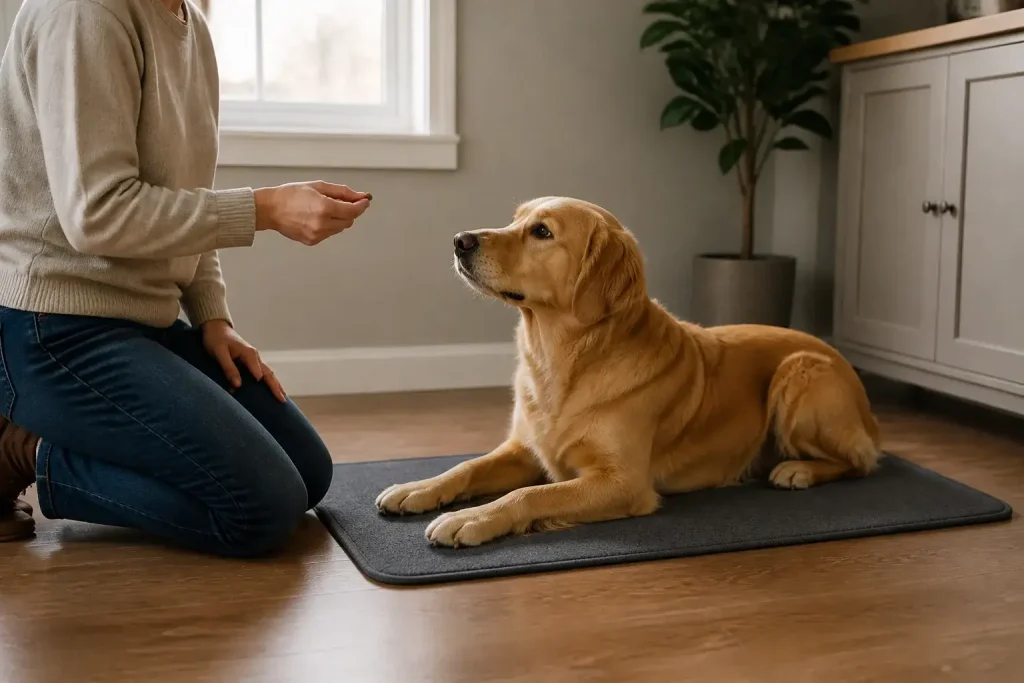
Why Teach a Mat Settle?
Teaching a dog to settle on a mat gives the dog a clear, portable place to relax while ordinary household life continues. The goal is not to force stillness or suppress communication. It is to build a calm behavior the dog can choose, then gradually make that behavior useful around meals, visitors, work, grooming, and other situations that create excitement.
A successful settle has several parts: the dog moves toward a designated mat, lies down or rests comfortably, remains there for an appropriate period, and leaves only after a release cue or sensible permission. Begin in a quiet room, use rewards the dog values, and progress in small steps. If the dog repeatedly gets up, the exercise is too difficult, too long, or insufficiently rewarding.
This plan uses reward-based training. Food is especially practical because it can mark small changes precisely, but a toy, praise, stroking, or access to a preferred activity may also reward calm behavior when the individual dog finds those consequences valuable. Avoid pushing the dog onto the mat, holding it there, scolding movement, or using the mat as punishment. A resting place should predict safety and reinforcement.
Prepare the Training Setup
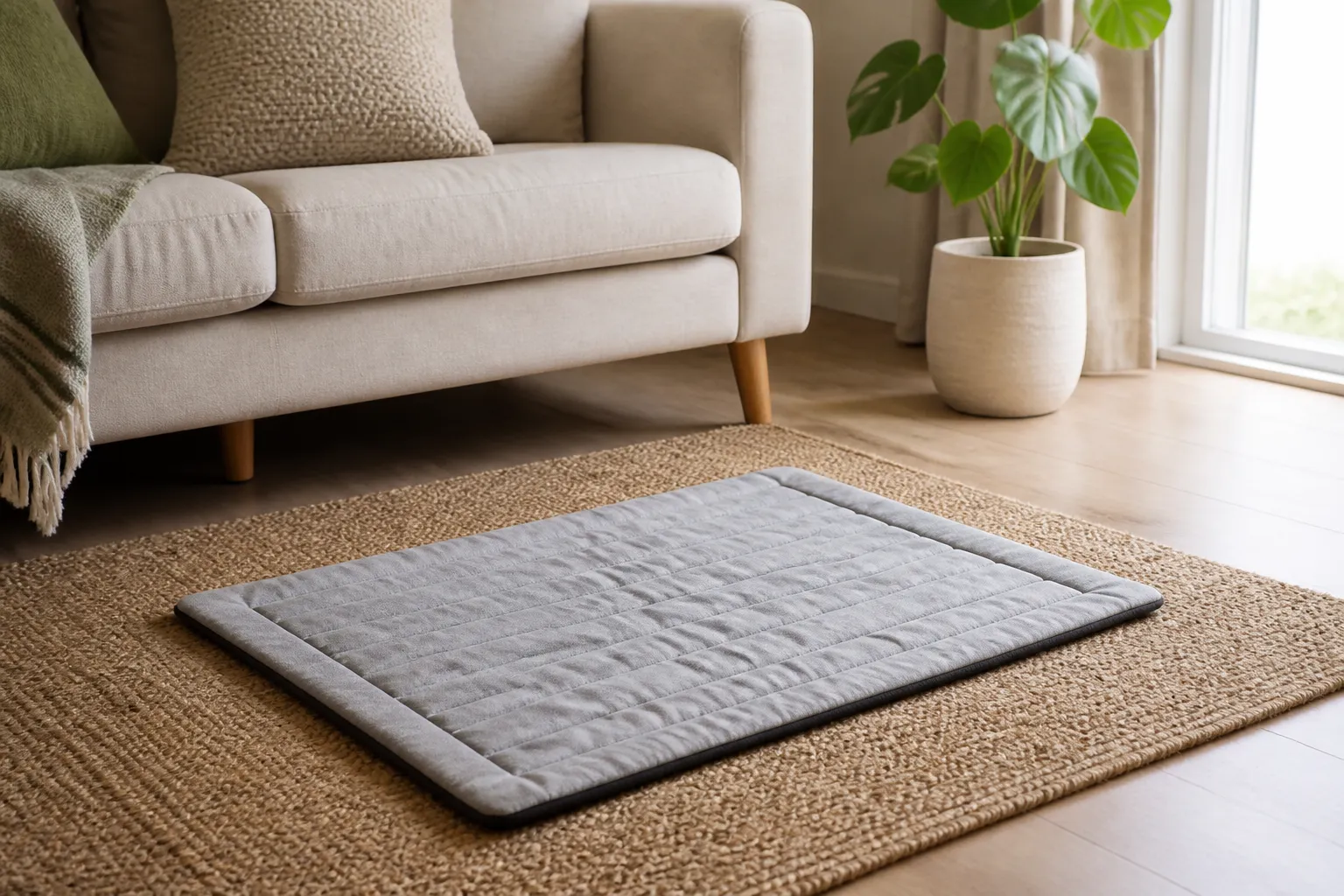
Choose a mat that is large enough for the dog to lie down fully, with enough grip to prevent sliding. A folded blanket can work initially, although a distinct surface is easier to identify and transport. Place it away from doorways, food bowls, busy walkways, and anything that makes the dog uncomfortable. Later, you can practice in more demanding locations.
Prepare small, soft treats so delivery is quick. Keep rewards in a pouch or nearby container rather than waving them continuously. Select a release word such as “free,” “all done,” or “okay.” Use the same word consistently, and avoid using it casually in unrelated situations until the dog understands its meaning.
Before formal practice, consider the dog’s needs. A dog that is bursting with energy, hungry, frightened, or physically uncomfortable may struggle to settle. A brief sniffing walk, toilet opportunity, and quiet transition can help. Exercise does not need to exhaust the dog; excessive arousal can make learning harder. If lying down seems painful, consult a veterinarian before asking for prolonged rest.
Train when interruptions are unlikely. Initial sessions may last only two or three minutes. Several brief sessions generally provide better learning opportunities than one long lesson. Keep a simple record of the setting, reward used, approximate duration, and the dog’s response. This makes progress visible and helps identify patterns.
Build Positive Mat Association
Start by placing the mat on the floor and allowing the dog to investigate. Do not immediately ask for a down. The instant the dog looks at, approaches, sniffs, or steps toward the mat, mark the behavior with a brief word such as “yes” or with a click, then deliver a treat. Toss the next treat away from the mat after several repetitions so the dog can return and offer the behavior again.
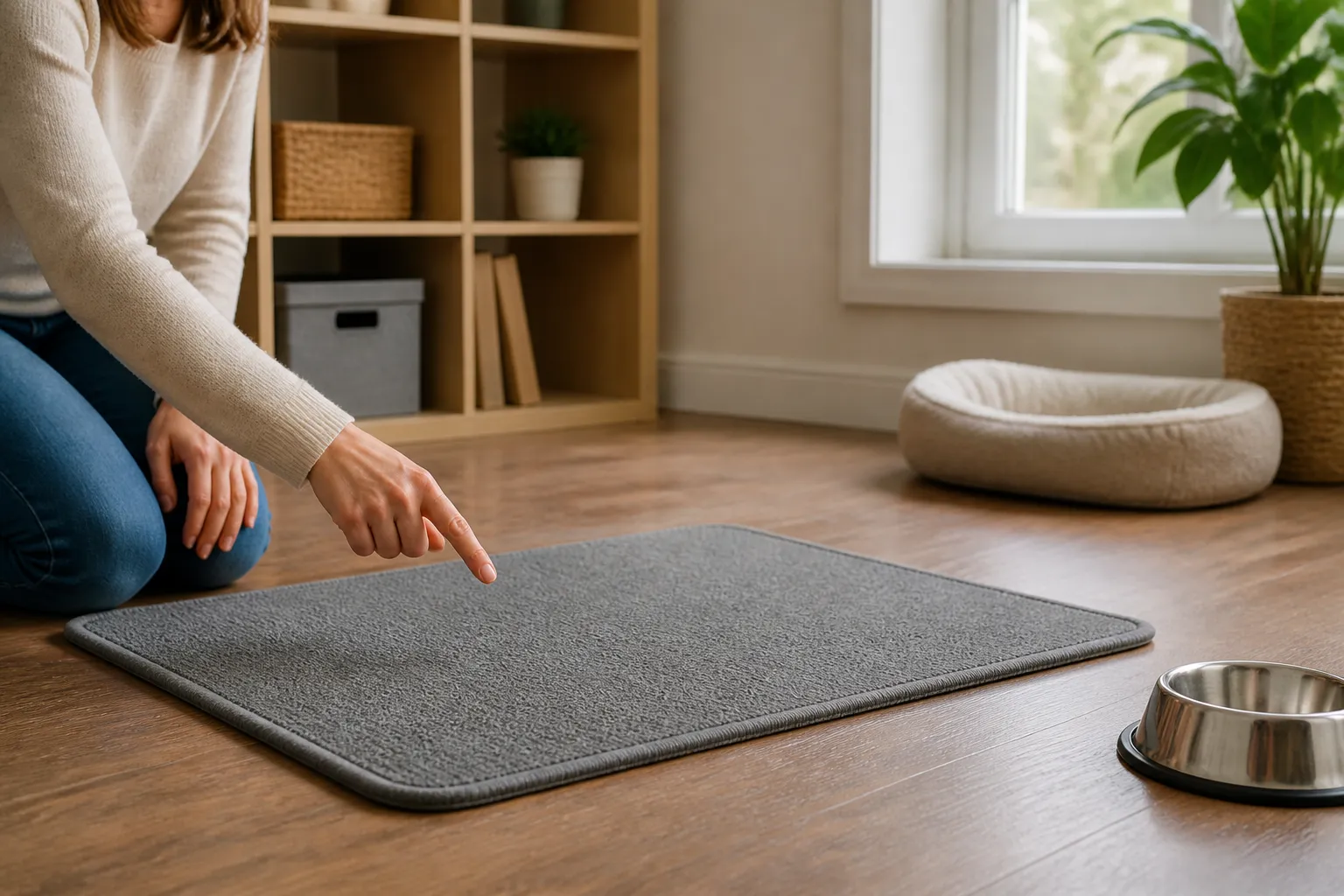
This creates a simple cycle: move toward the mat, receive reinforcement, leave briefly, and choose to return. The dog should not feel trapped. If the dog ignores the mat, make the environment easier, use a more appealing reward, or place a treat near its edge. Do not repeatedly lure the dog across the surface without allowing choice.
Once the dog readily steps onto the mat, wait for more. Reward four paws on the surface, then reward standing on it, orienting toward you, or pausing there. Deliver the treat low and calmly, preferably between the dog’s front feet. Low delivery can reduce unnecessary jumping and helps keep the dog’s attention near the mat.
Add the Down Position
When stepping onto the mat is reliable, begin reinforcing a down. You may wait for the dog to lie down naturally, or use a treat to guide the nose toward the floor and slightly forward. As soon as elbows touch the mat, mark and reward. Then release the dog and repeat.
If the dog stands up immediately after receiving the treat, that is not a failure at this stage. You are first teaching the position, not duration. After several successful repetitions, offer a second treat while the dog remains down. Follow with the release cue, then invite the dog away by tossing a treat off the mat.
Avoid saying “down” repeatedly. A verbal cue is most useful after the behavior is occurring predictably. Once the dog frequently lies down on the mat, say “mat” as the dog begins moving toward it. Later, say the cue before movement and reward the completed behavior. If the dog does not respond, return to an easier stage rather than repeating the cue louder.
Develop Duration Without Pressure
Duration should grow gradually. At first, reward after one second of stillness. Then vary the interval: one second, three seconds, two seconds, four seconds. Unpredictable but achievable timing prevents the dog from learning that a reward always arrives at exactly one moment. Keep your body quiet and avoid leaning over the dog, since attention itself may encourage movement.
Reward calm details, not merely survival. Useful signs include a hip resting to one side, a lowered head, relaxed facial muscles, soft eyes, slower breathing, or choosing to remain down after swallowing. These signals differ among dogs, so compare the individual’s relaxed posture with its normal alert posture. A dog that is motionless but tense may need more distance from the trigger or an easier exercise.
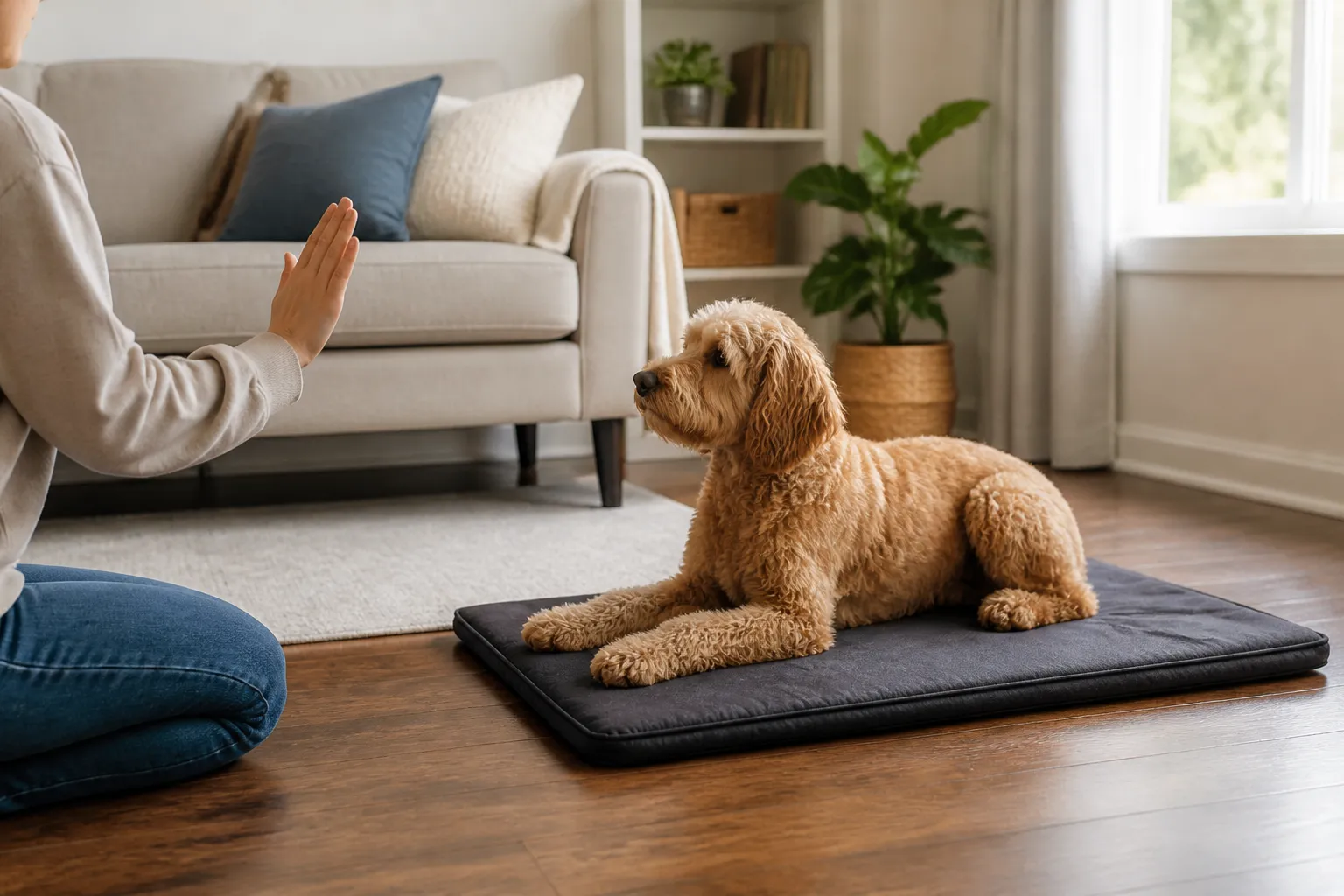
If the dog rises, calmly pause. Avoid expressing disappointment. Wait for the dog to return to the mat or guide the next repetition with less difficulty. You might shorten the interval, reduce your movement, move farther away only after success, or use a better reward. The immediate adjustment should make success likely, not demand that the dog endure repeated errors.
Teach the Release Cue
A release cue tells the dog when the exercise is finished. While the dog is settled, say “free,” pause briefly, then toss a treat away from the mat. The movement teaches that leaving after the cue is correct. At first, release after very short periods. Do not use the cue only after the dog has already wandered away, because that can blur its meaning.
Practice returning to the mat after each release. Keep the rhythm easy: cue, settle, reward, release, move away, and begin again. If the dog races off before the release, quietly reset without chasing or scolding. Reduce the duration and deliver rewards more frequently. The aim is cooperation, not a test of endurance.
Add Handler Movement and Distance
Once the dog can remain settled for perhaps half a minute in a quiet room, introduce one change at a time. Shift your weight, turn your head, take one step, sit in a chair, or touch a nearby object. Reward immediately after each successful change. If the dog gets up, make the movement smaller or return to a familiar position.
Distance is a separate challenge from duration. Do not increase both together. For example, maintain a short, successful duration while taking one step away; then return and reward. Later, add steps while keeping the interval brief. Gradually combine distance and time only when each skill is stable independently.
Your return should not always produce an exciting greeting. Walk back calmly, deliver the reward on the mat, and sometimes remain nearby. Otherwise, the dog may learn to anticipate that your approach ends the exercise. Continue to release deliberately.
A useful checkpoint is that the dog remains on the mat through several small movements without staring anxiously, creeping forward, or repeatedly standing and sitting. If these signs appear, lower the difficulty. Calm duration is more valuable than a longer stay achieved through tension.
Practice Realistic Distractions
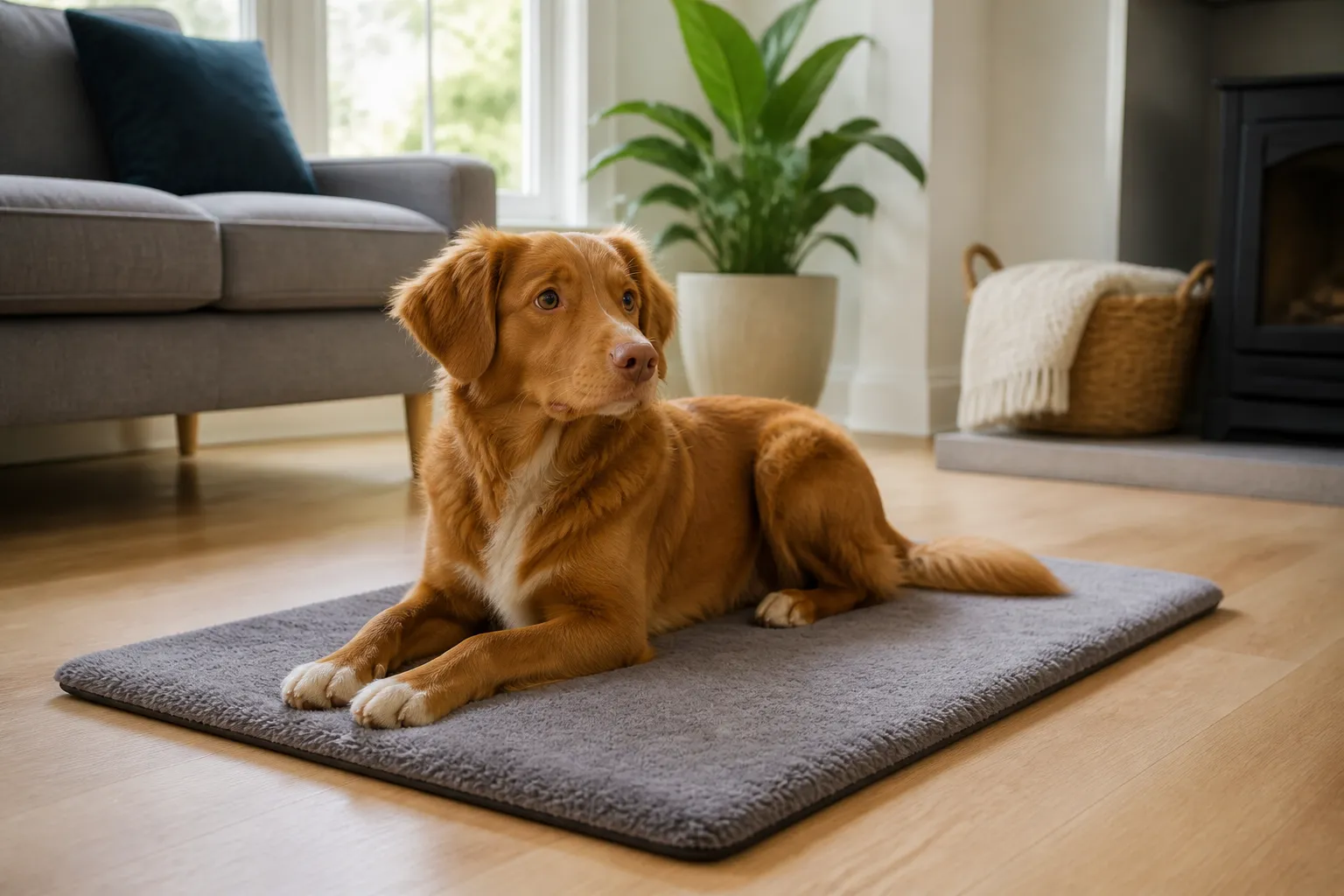
Train in layers. Change location from a quiet room to another room, then a hallway, porch, or calm outdoor area. Add ordinary distractions such as a person sitting down, a cupboard opening, a phone ringing, or a family member walking past. Introduce only one meaningful change at a time when possible.
For visitors, begin before the doorbell rings. Ask the dog to settle, reward, and have a helper enter quietly. Keep the dog far enough from the doorway to remain successful. Reward frequently while the visitor sits. If the dog cannot eat, vocalizes continuously, lunges, or repeatedly leaves, increase distance and reduce excitement. Management, such as a gate or leash, can prevent rehearsal while training continues, but equipment should not replace teaching and should never be used to drag the dog onto the mat.
For meals, place the mat away from the food preparation area and reward intermittently. At first, use your own meal or a low-distraction routine. Later, practice while preparing food. Do not expect a young or highly food-motivated dog to remain settled beside a counter before it has learned the skill in easier contexts.
At work, start with short intervals beside a chair or desk. Offer a chew or food puzzle only if the dog uses such items safely and does not guard them. A mat is not a substitute for regular toilet breaks, interaction, sleep, and movement.
Use Rewards Strategically
Reward frequency should reflect difficulty. Easy behavior may need occasional reinforcement, while a novel distraction may require treats every few seconds. Gradually vary the schedule after the dog is dependable, but continue rewarding periodically. Intermittent reinforcement is not a reason to stop rewarding entirely; calm behavior must remain worthwhile.
Use the dog’s daily food thoughtfully if appropriate, while preserving enough high-value rewards for challenging work. Treat size should be small enough for repeated delivery, and dietary restrictions must be considered. Avoid feeding anything unsafe for dogs. If food creates frantic behavior, place treats slowly between the paws, use lower-value food, or choose another reinforcer.
Reinforcement includes more than food. A dog may value permission to greet a familiar person, sniff, play, go outside, or follow you. These rewards can be useful after a successful settle, provided they do not make the dog more aroused than it can manage. Always distinguish a reward from a bribe: a reward follows the desired behavior, while a lure is used beforehand to guide movement. Lures should be faded gradually.
Troubleshoot Common Problems
If the dog will not step onto the mat, check its texture, temperature, stability, and location. Some dogs dislike slippery fabric, unfamiliar surfaces, or being positioned near a wall. Reward investigation and place the mat where the dog already relaxes. You can later move it in small increments.
If the dog settles only when treats are visible, keep rewards hidden and mark successful behavior before reaching for them. Practice easy repetitions, then increase the interval slightly. The dog should learn that reinforcement is available, not that visible food must be followed continuously.
If the dog becomes restless, inspect the plan rather than assuming disobedience. The session may be too long, the environment too stimulating, or the dog’s physical and emotional needs unmet. End with an easy success and try again later. If restlessness occurs mainly around specific people, animals, sounds, or locations, work below the dog’s threshold and consider guidance from a qualified reward-based trainer.
Some dogs vocalize when asked to wait. Do not reward frantic barking with immediate release, but do not force prolonged exposure either. Wait for a brief quiet moment if the dog can offer one, reward, and make the next repetition easier. Persistent distress, panic, aggression, or inability to take food warrants professional help. A veterinarian can assess medical contributors, and a qualified behavior professional can create a safer plan.
Maintain and Generalize the Skill
A mat settle is a living behavior, not a certificate earned once. Practice briefly in different rooms and situations, refreshing the skill before important events. Take the mat on calm visits, to a quiet office, or to outdoor settings only when the dog can cope there. A familiar object can provide a useful cue, but it cannot guarantee relaxation in every environment.
Keep expectations realistic. A puppy, adolescent dog, senior dog, and anxious adult may have different capacities. Sleep needs, pain, fear, breed tendencies, previous learning, and individual temperament all influence performance. Increase difficulty according to behavior, not a fixed timetable.
Measure progress with observable criteria: the dog reaches the mat after the cue, lies down, remains relaxed for a chosen interval, handles a specified distraction, and leaves on release. Record the easiest successful level and the point where errors begin. This information lets you advance one variable at a time.
Frequently Asked Questions
Should the dog always lie down?
No. A down is often comfortable and easy to observe, but the essential goal is relaxed settling. Some dogs may initially sit, stand briefly, or change position before lying down. Reward calm behavior that fits the situation, while gradually encouraging a comfortable down if appropriate.
How long should a dog remain on the mat?
There is no universal duration. Start with seconds and build according to age, training history, physical comfort, and environment. A short, relaxed settle is better than a long period of tension. Provide breaks for movement, water, toileting, and interaction.
Can I use the mat for punishment?
It is better not to. If the mat predicts isolation, anger, or forced restraint, the dog may avoid it. Use management elsewhere when necessary, and keep the mat associated with rewards, rest, and predictable release.
What if my dog leaves before release?
Reduce difficulty immediately. Shorten duration, remove distractions, move closer, or reward more often. Reset calmly and practice several successful repetitions. Avoid chasing, grabbing, or repeated verbal corrections.
When should I seek professional assistance?
Seek help when the dog shows fear, aggression, panic, guarding, persistent distress, pain, or sudden behavior change. Choose a veterinarian for medical concerns and a credentialed, reward-based behavior professional for complex training. Early support can prevent repeated failures and improve safety.
Conclusion
A reliable mat settle develops through choice, clear cues, gradual difficulty, and reinforcement of genuine relaxation. Begin by making the mat valuable, then teach a comfortable position, brief duration, a release cue, movement, distance, and real-world distractions. Change one variable at a time, observe the dog’s body language, and adjust before frustration builds.
The most useful standard is not perfect immobility. It is a dog that can recognize the mat, relax there, and remain capable of responding while normal life happens nearby. With short sessions and consistent expectations, the skill can become a practical foundation for calmer routines throughout the home and beyond.