

Anxiety Relief For Dogs: Understanding Anxiety in Dogs
Anxiety in dogs is a persistent state of fear, worry, or tension that can affect behavior, sleep, appetite, digestion, learning, and relationships. It may appear during thunderstorms, fireworks, travel, grooming, veterinary visits, separation, unfamiliar social situations, or changes at home. Some dogs become restless and vocal; others hide, freeze, drool, pace, tremble, or attempt to escape. Destructive chewing, indoor accidents, excessive licking, and sudden irritability can also signal distress.
The most helpful approach is not to punish anxious behavior or expect a dog to “get over it.” Anxiety is an emotional response, not deliberate disobedience. Relief comes from identifying triggers, reducing unnecessary stress, teaching coping skills, and obtaining professional support when symptoms are severe. A thoughtful plan can improve daily comfort while protecting safety and preserving trust.
Recognizing Causes and Warning Signs
Common triggers
Dogs may develop anxiety after frightening experiences, limited early socialization, pain, illness, relocation, changes in household members, or inconsistent routines. Some inherit a cautious temperament, while others become distressed after a single intense event. Separation-related anxiety often involves panic when a caregiver leaves, whereas noise sensitivity may occur only during storms, construction, or celebrations.
Look for patterns rather than isolated incidents. Record what happened before the behavior, how long it lasted, and what helped. A brief video, captured safely, can help a veterinarian understand body language that is difficult to describe. Do not deliberately expose a dog to a feared trigger simply to test the reaction.
Signs requiring attention
Mild signs can include lip licking, yawning, turning away, lowered posture, pinned ears, or seeking constant proximity. Moderate distress may involve panting when the room is cool, pacing, whining, trembling, hiding, or refusing treats. Severe anxiety can lead to frantic escape attempts, self injury, aggression, collapse, vomiting, or inability to settle.
A sudden behavior change deserves medical consideration. Pain, thyroid disorders, sensory decline, neurological conditions, gastrointestinal problems, and medication effects can resemble anxiety. Arrange a veterinary examination, especially when an older dog changes behavior, appetite, mobility, sleep, or house training. Seek urgent help for injuries, breathing difficulty, poisoning, collapse, or dangerous escape behavior.
Building a Calmer Daily Environment
Create a dependable routine
Predictability lowers uncertainty. Feed, walk, rest, and play at reasonably consistent times, while allowing flexibility for real life. Use short, calm departures and arrivals rather than dramatic goodbyes. Provide exercise suited to age, breed, health, and weather; physical activity can release energy, but exhausting an already frightened dog is not a substitute for emotional treatment.
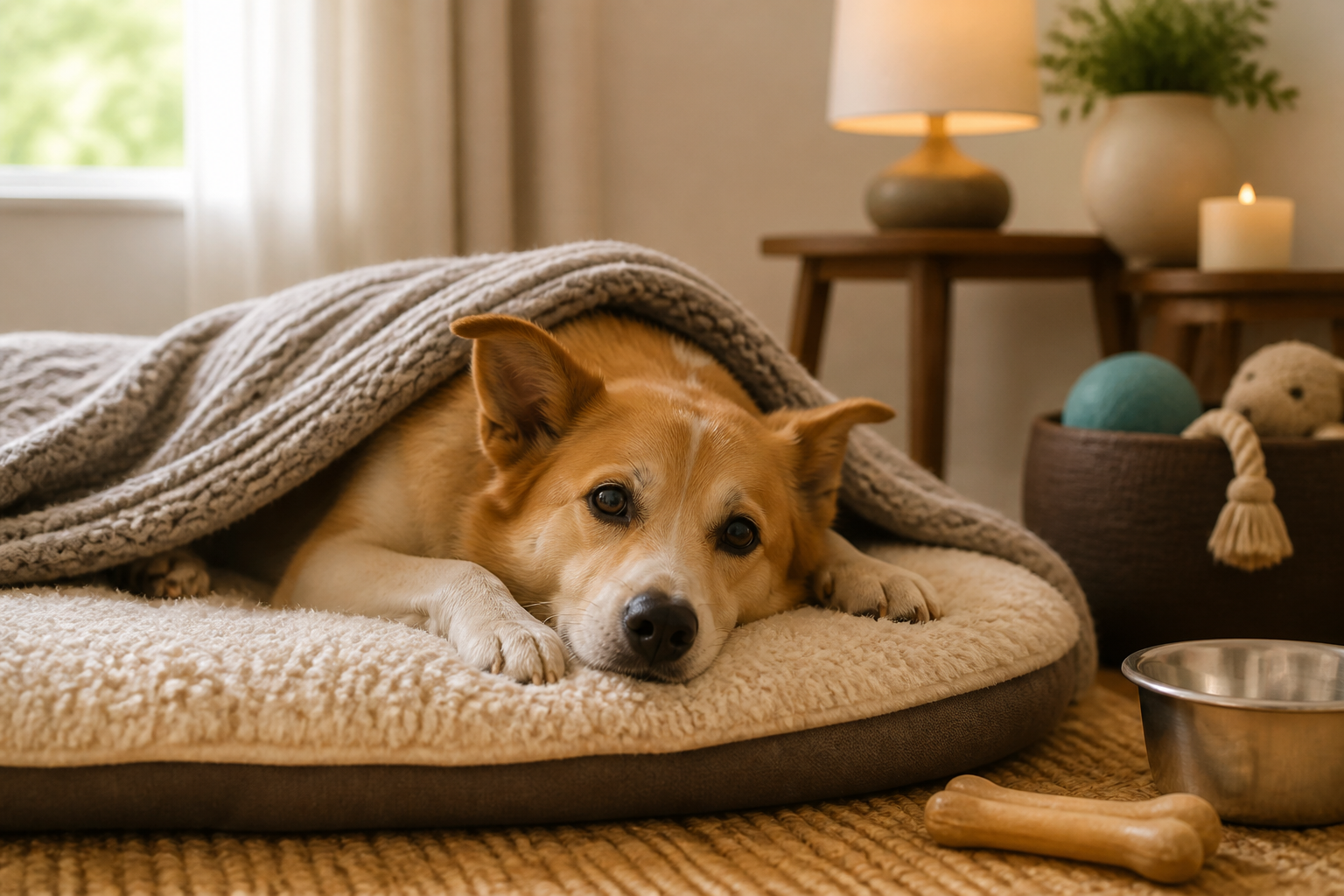
Offer a quiet retreat with comfortable bedding, water, and familiar scents. A covered crate may help some dogs, but it should never be used as forced confinement or punishment. Keep the space accessible before stressful events so it already feels safe. Close curtains, use background sound, or move the dog away from windows when visual triggers intensify arousal.
Reduce preventable pressure
Protect the dog from overwhelming greetings, crowded rooms, rough handling, and repeated commands. Ask visitors to ignore the dog initially and allow voluntary approach. During fireworks or storms, secure doors, windows, gates, and identification details. A frightened dog can move with unusual speed, so supervision and physical safety matter more than perfect obedience.
Do not punish barking, accidents, growling, hiding, or destruction after an anxious episode. Punishment can increase fear and suppress warning signals without solving the underlying problem. Instead, clean accidents quietly, remove hazards, and adjust the environment for the next occurrence.
Evidence Informed Training Strategies
Use gradual desensitization
Desensitization means introducing a trigger at an intensity low enough that the dog remains able to think, eat, and respond. For a noise-sensitive dog, this might begin with a very quiet recording played briefly from a distance. Pair the sound with high-value food, then stop before distress appears. Increase volume or duration only when repeated sessions remain comfortable.
If the dog pants, freezes, scans, refuses food, or tries to escape, the exposure is too intense. Lower the volume, increase distance, shorten the session, or stop and try another day. Progress is measured by relaxed behavior, not by forcing proximity. This process may take weeks or months, and rushing can strengthen the fear.
Practice counterconditioning
Counterconditioning changes the emotional meaning of a trigger by pairing it with something desirable. A dog who fears visitors might receive tiny treats while hearing a knock at a very low intensity, then retreat to a safe area. A dog worried about car travel may begin by eating near a parked vehicle before entering it.
Use rewards the dog genuinely values, such as soft food, a favorite toy, sniffing time, or calm play. Keep sessions brief and predictable. Training should stop while the dog is still successful. If a trigger is unavoidable and severe, management and veterinary treatment should come before training.
Teach practical alternative behaviors
A relaxed mat behavior, hand target, name response, and cheerful “find it” cue can give a dog something understandable to do. Teach each skill in a quiet setting first, reward generously, and gradually practice in mildly distracting environments. These skills are useful only when the dog remains below panic level; they cannot replace safety or treatment during an overwhelming event.
Choosing Anxiety Support Products
Products can support a wider plan, but no item should be marketed as a guaranteed cure. The best choice depends on the trigger, the dog’s health, fit, temperament, and ability to tolerate handling.
Calming beds and retreat spaces
A supportive bed, covered den, or portable mat can provide a consistent resting location. Choose washable materials, stable construction, and enough room for the dog to turn, stretch, and change position. Introduce it during calm moments with treats and praise. Never drag a frightened dog into the bed or block an exit unless a qualified professional recommends a specific safety arrangement.
Pressure garments
Some dogs appear calmer with gentle, even pressure from a properly fitted wrap or vest. Introduce it gradually and inspect the skin, breathing, movement, and body language. It should not restrict the chest, interfere with heat loss, or remain on an unsupervised dog if chewing or snagging is possible. Stop use if the dog stiffens, pants excessively, scratches, or attempts to remove it.
Pheromone and scent products
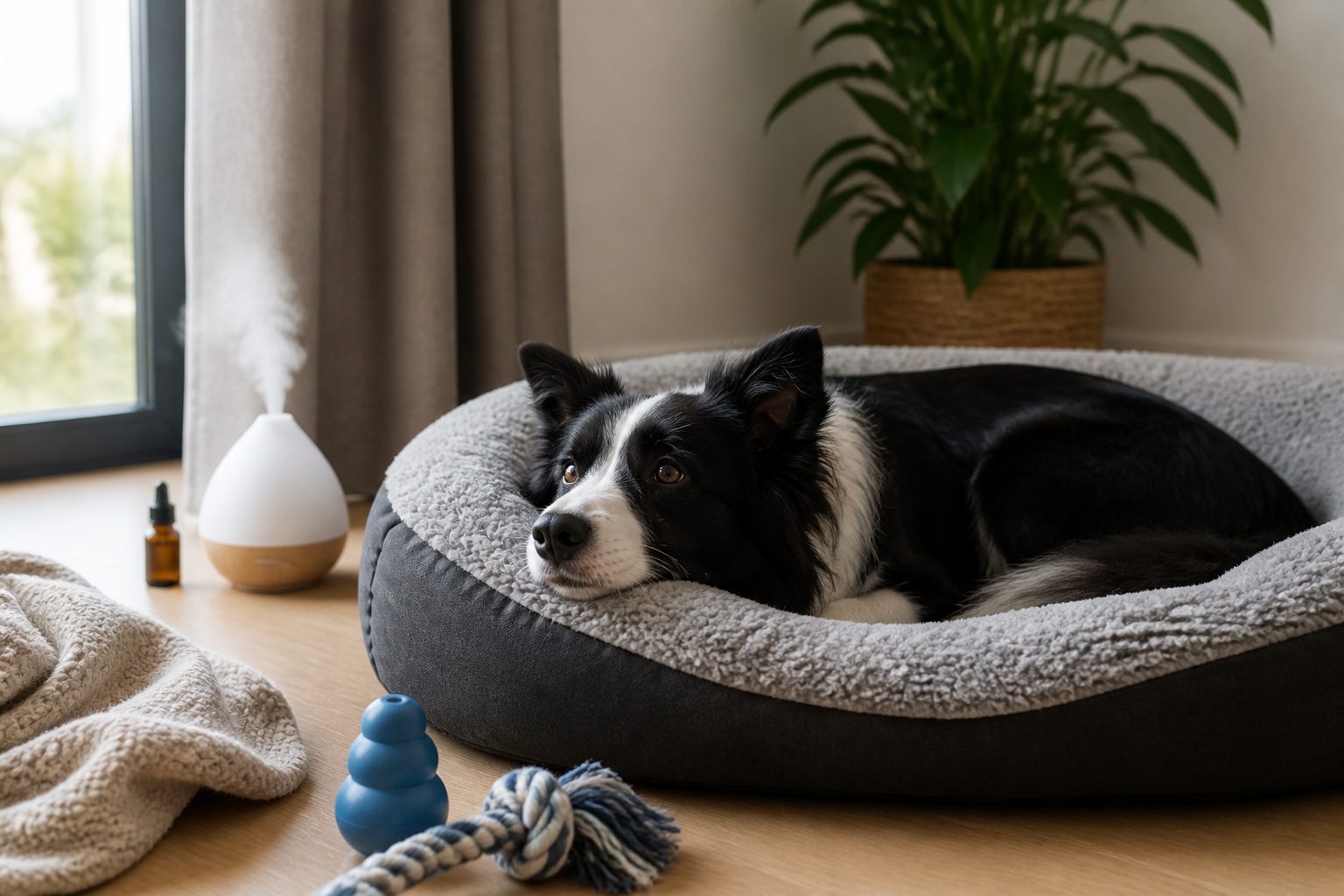
Synthetic pheromone products are designed to imitate chemical signals associated with comfort in certain contexts. Results vary, and they should be considered optional support rather than proof of treatment. Follow label instructions, avoid applying products near the eyes or mouth, and distinguish species-specific products from household fragrances or essential oils. Many essential oils can irritate or poison pets, so never use them without veterinary guidance.
Food supplements and treats
Supplements may contain ingredients such as specific nutrients, botanical extracts, or calming compounds. “Natural” does not automatically mean safe. Products can interact with prescribed medicine, worsen health conditions, vary in quality, or cause sedation and digestive upset. Ask a veterinarian before starting any supplement, especially for puppies, pregnant dogs, seniors, or dogs with liver, kidney, seizure, or bleeding problems.
Select products with clear ingredient lists, feeding directions, manufacturer contact information, batch details, and appropriate veterinary oversight. Avoid vague proprietary blends, dramatic promises, and advice to replace diagnosis with a chew or powder. Introduce one change at a time so benefits and adverse effects can be identified.
Veterinary Treatment and Professional Guidance
A veterinarian should be involved when anxiety is intense, frequent, worsening, medically suspicious, or disruptive to eating, sleeping, safety, or family life. The clinician may evaluate pain, illness, medications, reproductive status, and behavior history before recommending a plan. Bring a written trigger log and videos obtained without placing the dog at risk.
Medication can be appropriate for predictable events or ongoing anxiety. Depending on the case, a veterinarian may recommend a fast-acting option for a specific trigger, a longer-term medicine, or both. Give only prescribed medication at the directed dose and timing. Never share human medication, increase a dose independently, or combine sedating products without professional approval. Ask about side effects, missed doses, interactions, and what improvement should look like.

A qualified veterinary behaviorist or reward-based trainer can design systematic exposure, handling exercises, and environmental changes. Confirm credentials, training methods, and willingness to collaborate with your veterinarian. Avoid professionals who promote intimidation, flooding, shock, leash corrections, dominance claims, or guaranteed instant results. Fear reduction requires patience, not coercion.
A Practical Home Plan
Start with a safety audit. Secure escape routes, remove toxic substances, identify a retreat, and prepare identification information. Next, list triggers from least difficult to most difficult. Choose one manageable situation, define a calm starting point, and prepare valuable rewards. Keep a simple record of date, trigger intensity, behavior, duration, recovery time, and response to support.
Practice when the dog is rested and healthy. Use a short session, reward calm observation, and finish early. Offer decompression afterward through quiet sniffing, chewing, or rest. Schedule demanding experiences carefully; stacking stressful events can leave a dog more reactive even when each event seems minor.
Review progress every one or two weeks. Improvement may mean faster recovery, accepting food sooner, choosing the retreat independently, or needing less distance. Setbacks are information, not failure. Illness, poor sleep, weather, pain, or an unusually intense trigger may temporarily reduce tolerance. Return to an easier step instead of abandoning the entire plan.
Daily checklist
Confirm that your dog has fresh water, suitable exercise, adequate rest, safe identification, and access to a calm space. Notice appetite, stool, sleep, mobility, and grooming. Keep rewards available for relaxed choices. Share the plan with household members so everyone uses the same cues and avoids accidental punishment. Arrange veterinary review if symptoms persist or safety declines.
Frequently Asked Questions
Can I comfort an anxious dog?
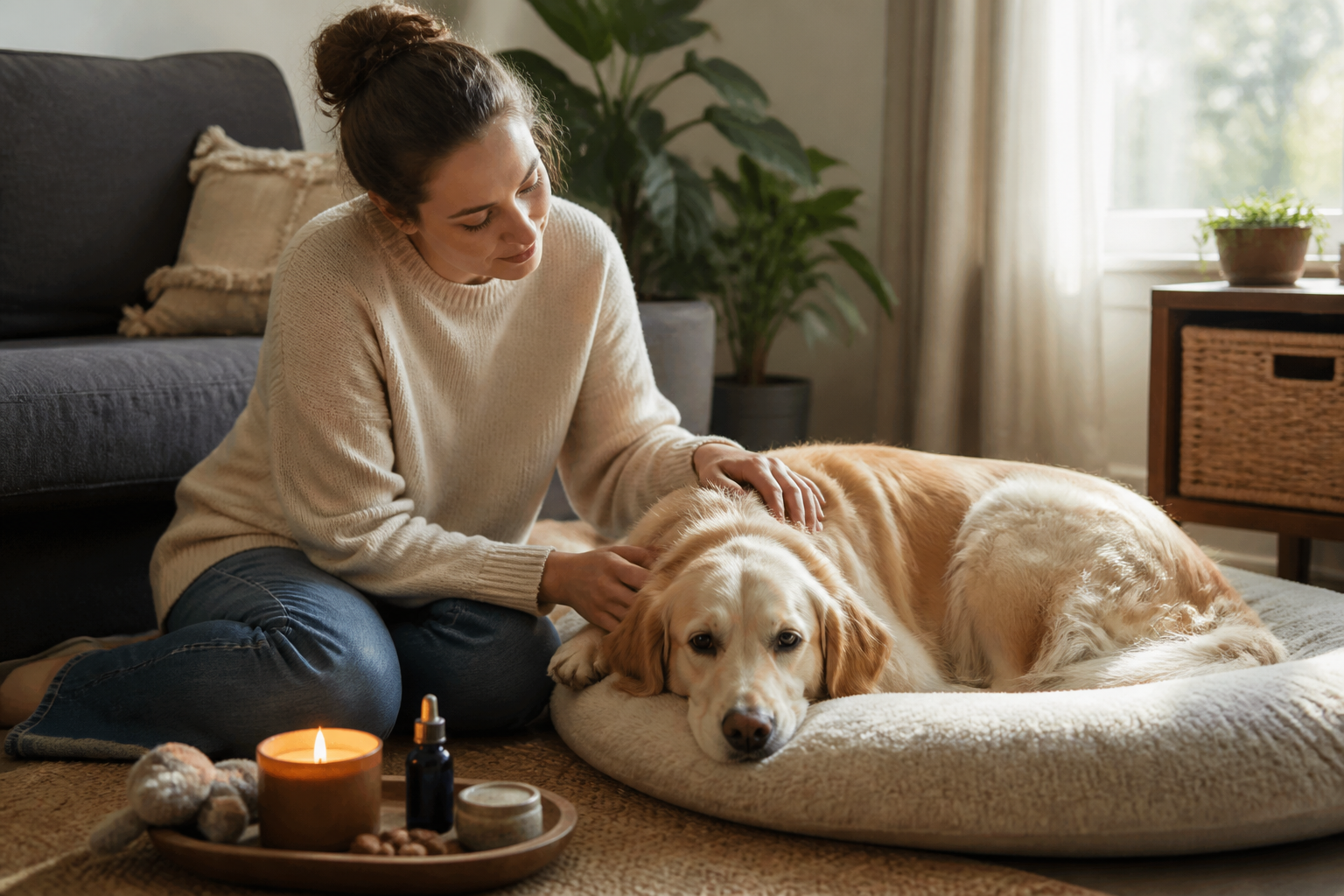
Yes. Calm, gentle reassurance does not create fear. Sit nearby, speak softly, offer contact if the dog seeks it, and allow retreat if touch increases tension. Your behavior should be steady rather than frantic. Comfort is most useful alongside trigger management and training.
Will more exercise cure anxiety?
Exercise may improve general wellbeing and provide healthy outlets, but it rarely cures fear by itself. Excessive or forced exercise can increase stress, especially in heat, pain, or crowded environments. Combine appropriate movement with sleep, enrichment, gradual training, and medical assessment.
Should I use a crate during a panic episode?
Only if the dog already regards the crate as safe and can remain comfortable there. A dog that slams against the door, bites bars, drools heavily, or attempts escape may be injured. Use a prepared room or retreat instead, and ask a professional about a safer management plan.
Are calming chews safe?
Safety depends on ingredients, dose, health history, and other medicines. Read the complete label and consult your veterinarian before use. Stop and seek advice if vomiting, diarrhea, weakness, unusual sedation, agitation, or coordination problems appear.
How long does treatment take?
The timeline varies with cause, severity, duration, learning history, health, and consistency. Some dogs settle quickly with environmental changes; others require months of structured work and medication. Judge progress by comfort and function, not by a rigid deadline.
Can a trainer diagnose anxiety?
A skilled trainer can identify behavior patterns and assist with training, but medical diagnosis and prescribing belong to veterinary professionals. Collaboration is safest, particularly when behavior changes suddenly or includes aggression, self injury, or severe panic.
What should I do during fireworks?
Walk earlier, keep the dog indoors, close curtains, provide background sound, check doors and identification, and stay available. Begin veterinary planning before the event if the dog has a history of severe noise fear. Do not wait until panic begins to discover whether a strategy works.
Conclusion
Anxiety relief for dogs is most reliable when it combines compassion, prevention, gradual learning, and appropriate veterinary care. Begin by identifying patterns and ruling out pain or illness. Make the home predictable, provide a genuine retreat, protect the dog from overwhelming exposure, and reward calm choices. Products such as beds, wraps, pheromone aids, or supplements may offer useful support, but they should complement—not replace—individual assessment and behavior work.
Choose measurable goals: a shorter recovery, safer handling, improved rest, or greater willingness to eat near a mild trigger. Progress may be gradual, yet every calm repetition teaches the nervous system that the situation can be managed. With patience, consistent routines, qualified guidance, and prompt attention to warning signs, you can help your dog feel safer and build a more confident everyday life.