
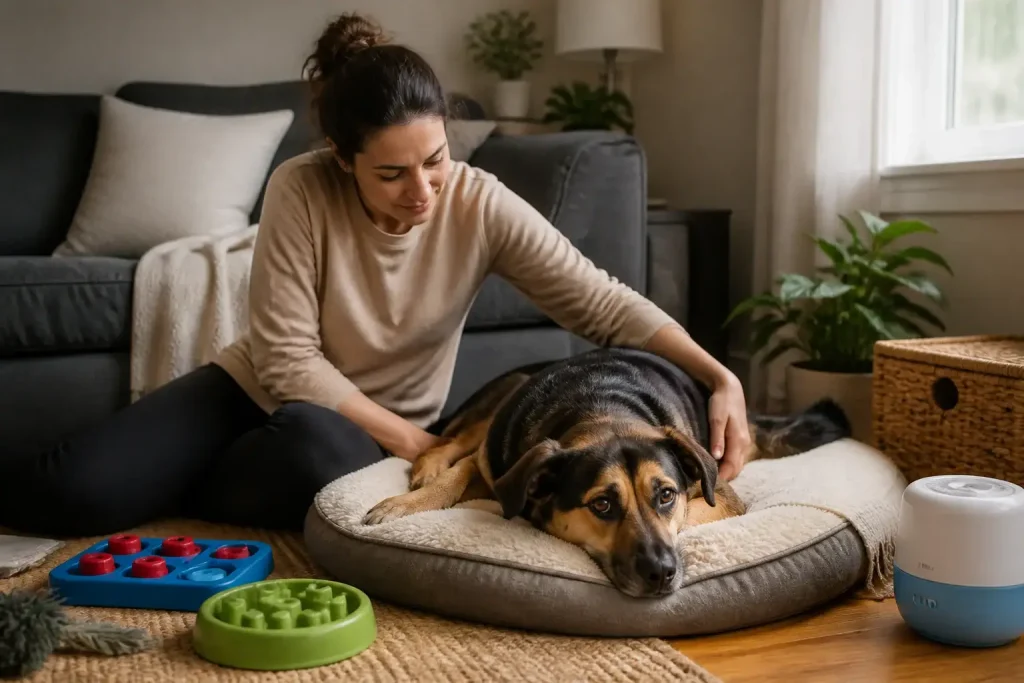
Anxiety Relief For Dogs: Effective Solutions at Home
A worried dog may bark, pace, hide, tremble, pant, drool, cling to people, or try to escape. These behaviors are signals, not stubbornness. Effective anxiety relief begins by identifying likely triggers, improving the home environment, teaching calm responses, and obtaining veterinary guidance when symptoms are intense, sudden, or persistent. The most reliable approach is usually a combination of management, gradual training, physical activity, enrichment, and, when appropriate, professional treatment.
There is no single product that suits every dog. A calming bed may help a dog settle, while another benefits more from sound masking, a food puzzle, or medication prescribed by a veterinarian. Choose solutions according to the dog’s age, health, temperament, and specific trigger. Avoid promising instant cures, because fear is an emotional response that changes through repeated, safe experiences.
Anxiety Relief For Dogs: Understanding Anxiety In Dogs
Anxiety can arise from separation, thunderstorms, fireworks, unfamiliar visitors, travel, grooming, veterinary appointments, pain, illness, or changes in routine. Some dogs react to one predictable event; others remain tense across many situations. Puppies may experience fear during developmental periods, while older dogs can become unsettled by sensory decline or cognitive changes.
Watch for patterns. Note what happens before the behavior, what your dog does, how long it lasts, and what appears to help. A brief record can distinguish separation distress from boredom, noise sensitivity from generalized fear, and discomfort from a purely behavioral problem. For example, chewing furniture only when left alone may suggest separation-related distress, whereas chewing throughout the day may have several possible causes.
Never punish growling, hiding, barking, or accidents caused by fear. Punishment can increase perceived danger and may suppress warning signals without changing the underlying emotion. Instead, create distance from the trigger, reduce pressure, and reward calm behavior.
Signs That Need Attention
Contact a veterinarian if anxiety begins abruptly, worsens quickly, or appears alongside vomiting, diarrhea, limping, reduced appetite, confusion, unusual vocalization, or changes in sleep. Pain and medical conditions can look like anxiety. Seek prompt help if a dog injures itself, destroys doors or windows while escaping, cannot eat or rest, shows aggression, or experiences severe panic.
A veterinarian can assess physical health and discuss referral to a qualified behavior professional. Medication may be appropriate for some dogs, especially when fear prevents learning. It should be selected, dosed, and monitored by a professional rather than borrowed, improvised, or purchased from an unreliable source.
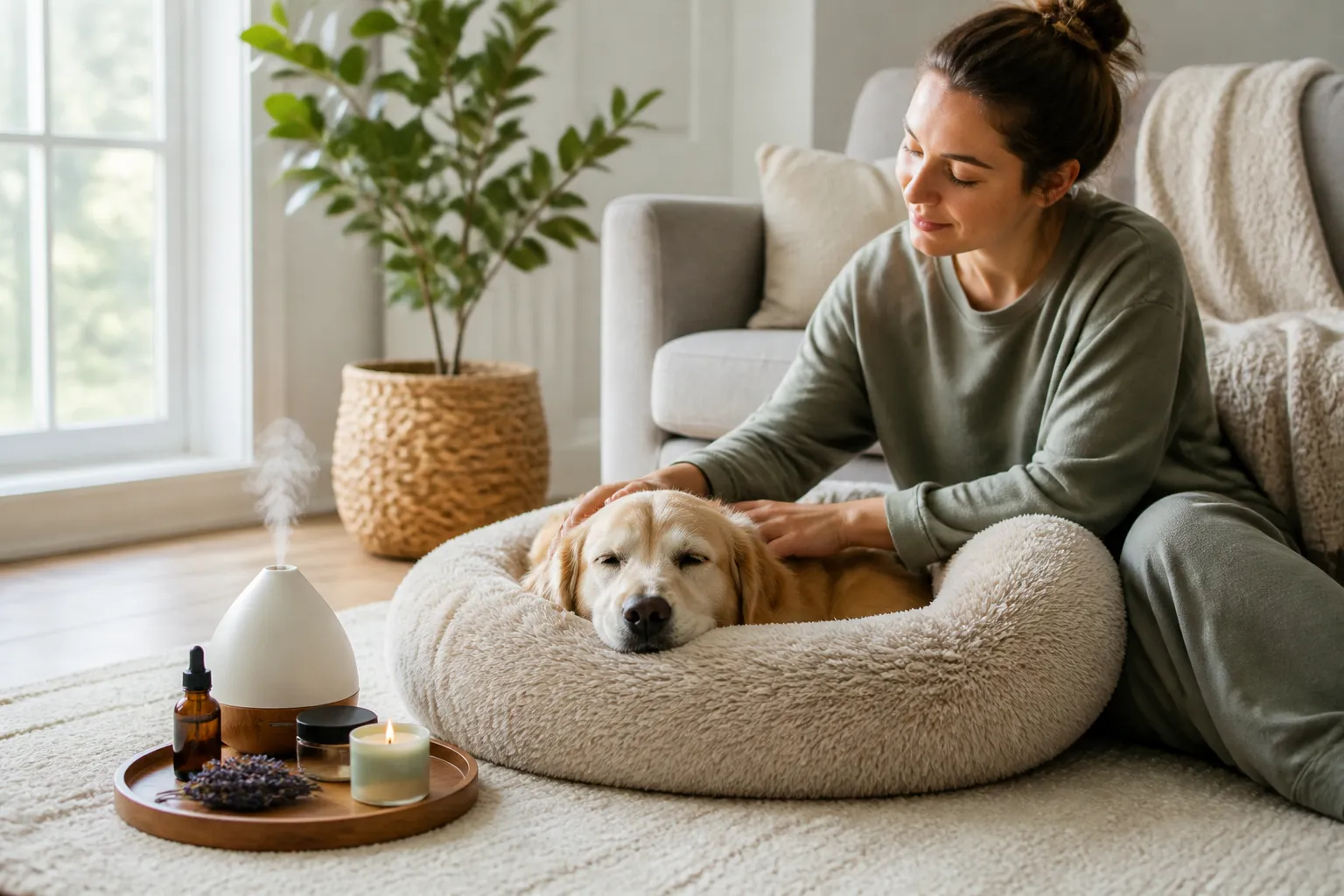
Build A Calmer Home Environment
Management reduces the number and intensity of frightening experiences while training develops new emotional responses. Start with a predictable daily rhythm. Feed, walk, rest, and play at reasonably consistent times, while allowing flexibility for normal life. Predictability helps a dog anticipate what happens next.
Create a quiet retreat. This might be an interior room, covered crate, pen, or corner containing comfortable bedding, water, and familiar scents. The space should remain voluntary and never become a place for punishment. Introduce it during relaxed moments by scattering treats nearby, feeding there, and allowing the dog to leave freely. A crate can be useful only if the dog already associates it with safety; confinement may intensify panic in a dog that fears isolation.
Reduce visual and auditory stimulation. Close curtains during storms, move the bed away from busy windows, use a fan or gentle background sound, and ask visitors to ignore the dog initially. These steps do not teach confidence by themselves, but they lower stress enough for learning to occur.
Consider practical safety. Check gates, identification, microchip details, harness fit, and escape routes. An anxious dog may bolt through a door or climb a fence. During fireworks or storms, take outdoor breaks before conditions worsen and keep the dog secured indoors when noise is intense.
Exercise, Enrichment, And Rest
Appropriate activity can reduce restless behavior, but exhausting a frightened dog is not a complete treatment. Choose exercise suited to age, breed, fitness, weather, and medical status. Sniffing walks, gentle play, training games, and supervised exploration can provide mental satisfaction without excessive arousal.
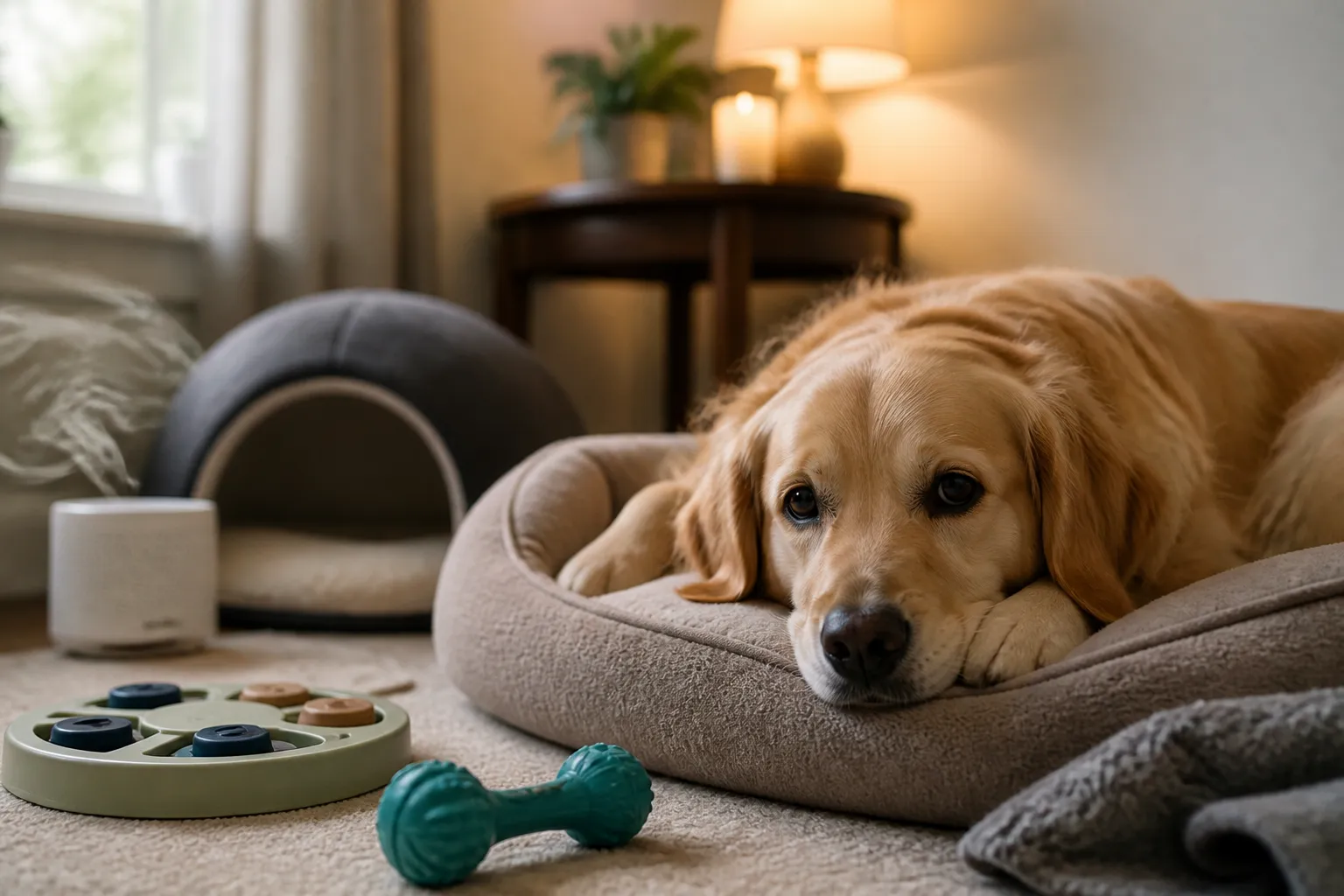
Enrichment should encourage problem solving rather than frustration. Food-stuffed toys, scatter feeding, lickable meals, cardboard search games, and simple scent trails allow dogs to use natural behaviors. Introduce each activity when the dog is calm. If the dog guards food, destroys objects, or becomes distressed when access ends, select safer alternatives and seek guidance.
Sleep matters. Dogs that are chronically interrupted may become more reactive. Protect uninterrupted rest by placing the sleeping area in a low-traffic location and teaching household members to leave the dog alone there. Young dogs, working dogs, and highly active individuals may need structured quiet periods, not constant stimulation.
Dietary changes should be considered carefully. Maintain a complete, appropriate diet and avoid sudden changes. Supplements marketed for calming may have limited or variable evidence, can interact with medications, and may be unsafe for particular health conditions. Ask a veterinarian before using herbs, oils, cannabidiol products, melatonin, or any human medication. Natural does not automatically mean harmless.
Training For Confidence
The central training principle is to expose the dog to a trigger at an intensity low enough that it can remain relatively relaxed, then pair that exposure with something valuable. This process is called desensitization and counterconditioning. Progress depends on small steps, repetition, and patience.
Begin by identifying the dog’s threshold, the point at which it notices the trigger but can still eat, respond, and move normally. Present a mild version of the trigger, such as a distant sound, closed suitcase, or brief absence. Immediately offer high-value food or a favorite activity. Stop before distress escalates. Over repeated sessions, gradually increase duration, closeness, volume, or complexity, changing only one factor at a time.
If the dog stops eating, freezes, pants heavily, pulls away, barks intensely, or attempts escape, the exercise is too difficult. Increase distance, lower the volume, shorten the session, or return to an easier step. Do not force the dog to “face” a feared situation. Flooding can make fear stronger and may damage trust.
Teach useful alternative behaviors when the dog is calm. A hand target, mat settle, name response, and relaxed leash walking can become practical tools. Reward loose muscles, soft facial expression, quiet observation, voluntary retreat, and recovery after a mild surprise. The goal is not perfect stillness; it is improved coping and faster recovery.
Separation-Related Distress
For separation concerns, begin with absences shorter than the dog’s panic point. Practice picking up keys, putting on shoes, or opening the door without leaving, so these signals lose their predictive power. Then conduct brief departures and return before distress begins. Increase time gradually and vary the pattern. A camera can help identify pacing, vocalization, or delayed distress, but watching should not replace professional advice.
Avoid prolonged “cry it out” experiments. If every absence produces panic, learning may worsen. Arrange a sitter, family member, daycare, or other suitable support while training progresses. Not every dog benefits from daycare, especially if group environments are overwhelming, so observe the individual response.
Product Options And How To Choose
A useful calming product supports a broader plan; it should not promise to eliminate anxiety by itself. Evaluate fit, safety, durability, cleaning, evidence, and your dog’s response.

Calming beds may offer pressure relief and a consistent resting location. Select washable materials, an appropriate size, and construction suited to chewing habits. Some dogs prefer open beds that permit observation; others relax in a covered design. Never force a dog into a bed or cover a crate without adequate ventilation.
Compression garments may help some dogs feel more secure during brief, predictable events. Introduce the garment gradually and monitor breathing, movement, skin comfort, and stress signals. It must fit correctly, remain supervised, and never be used as a substitute for emergency planning or behavior work.
Pheromone diffusers, sprays, and collars are widely used to create familiar scent cues. Responses vary, and product quality differs. Follow label directions, avoid applying products to irritated skin, and ask a veterinarian about use around cats, puppies, or medically fragile animals.
Sound machines and white-noise devices can mask sudden environmental sounds. Choose a gentle volume and provide an escape area. Music should not be assumed calming for every dog; observe behavior rather than relying on advertising.
Food puzzles and lick mats can encourage relaxed engagement, but they are unsuitable for unsupervised dogs that ingest pieces or guard resources. Use a durable design, appropriate food portion, and supervision at first.
When Medication May Help
Behavior modification is harder when anxiety remains severe. Veterinary medication can lower panic enough for a dog to eat, rest, and learn. Some treatments are given regularly, while others are prescribed for predictable events. The choice depends on medical history, trigger pattern, age, other medicines, and possible side effects.
Give only medication prescribed for that dog and follow instructions precisely. Do not change the dose, combine products, or stop a regular medicine suddenly without veterinary direction. Ask what effects to monitor, when improvement should be assessed, and what to do if a dose is missed. Medication is most effective when paired with management and training rather than treated as a standalone solution.
Common Mistakes To Avoid
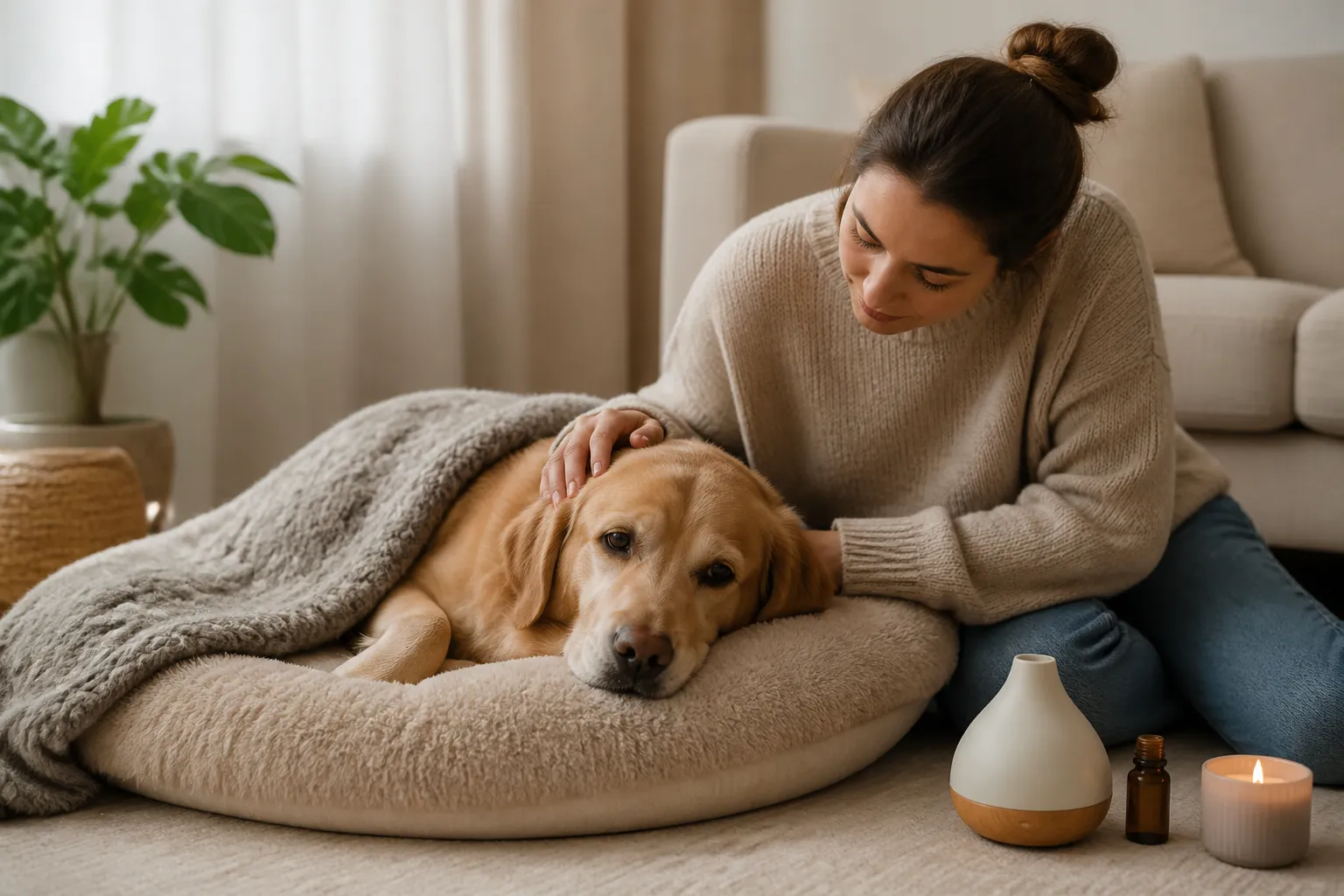
One common mistake is rewarding fear. Comforting a dog calmly does not create anxiety, but frantic handling, repeated reassurance, or forcing interaction can increase arousal. Be kind and steady: move the dog to safety, speak normally, and reinforce recovery.
Another mistake is changing too many variables at once. If you introduce a new bed, supplement, training plan, and diet simultaneously, it becomes difficult to know what helps or causes problems. Make one meaningful change at a time when possible, and record results.
Owners may also overlook triggers that seem harmless to humans. A vacuum, unfamiliar smell, slippery floor, delivery person, or collar pressure can matter. Look at the environment from the dog’s perspective and remove avoidable stressors.
Do not rely on dominance-based techniques, shock, prong, or choke equipment to address fear. Pain and intimidation may stop visible behavior temporarily while increasing anxiety and defensive responses. Reward-based training offers a safer way to teach skills and preserve trust.
A Practical Home Plan
First, arrange a health check when anxiety is new, intense, or unexplained. Second, identify triggers and estimate the dog’s threshold. Third, prepare a retreat, safety measures, and enrichment. Fourth, reduce exposure to overwhelming events while organizing gradual training. Fifth, track sleep, appetite, body language, recovery time, and responses to interventions.
Keep sessions brief and end with success. Several easy repetitions are generally more useful than one demanding session. Use valuable rewards, but account for them within the daily diet. Ask every household member to use the same cues and rules, because inconsistent responses can confuse the dog.
Review progress honestly. Improvement may mean shorter recovery, fewer escape attempts, more willingness to eat, or greater ability to settle, not immediate silence in every situation. If progress stalls, regress, or remains minimal, consult a veterinarian or qualified behavior professional. A plan should change when the dog’s needs change.
Frequently Asked Questions
What Is The Fastest Way To Calm An Anxious Dog?
Move the dog away from the trigger, reduce noise and visual stimulation, and provide a familiar retreat. Use calm, predictable handling and avoid forcing contact. For repeated or severe episodes, ask a veterinarian about an individualized plan. A product may provide comfort, but rapid relief is not guaranteed.
Should I Ignore My Dog During A Panic Episode?
No. Ignoring can leave the dog without support, while intense attention may add stimulation. Stay nearby if that helps, keep your voice and movements calm, allow space, and prevent escape or injury. Do not restrain the dog unless safety requires it and you know how to do so safely.
Do Calming Treats Work?
Some dogs appear to benefit from specific treats, but effects vary and labels do not guarantee effectiveness. Check ingredients, calorie content, interactions, and suitability for age or illness. Discuss supplements with a veterinarian, particularly when the dog takes other medicines or has liver, kidney, digestive, or neurological concerns.
Can A Crate Cure Separation Anxiety?
A crate can offer a safe resting place for a dog already comfortable with confinement. It does not cure separation anxiety, and crating a panicked dog may cause injury or intensify fear. Introduce it gradually and use alternative arrangements if confinement increases distress.
How Long Does Training Take?
Time varies with trigger, history, severity, health, consistency, and learning speed. Mild concerns may improve with careful practice, while long-standing fear can require months of management and professional support. Measure gradual gains rather than expecting a fixed timetable.
When Should I Contact A Behavior Professional?
Seek help when anxiety interferes with eating, sleep, safety, daily routines, or relationships; when aggression appears; or when home efforts produce little progress. Veterinary behaviorists and qualified reward-based trainers can identify thresholds, design exercises, and coordinate treatment with medical care.
Conclusion
The strongest approach to anxiety relief for dogs is compassionate, structured, and individualized. Start with veterinary awareness, reduce overwhelming triggers, create a secure retreat, provide suitable exercise and enrichment, and teach coping skills through gradual reward-based exposure. Beds, garments, diffusers, sound masking, puzzles, and prescribed medication may support that plan, but no product replaces understanding the cause.
Observe behavior without judgment, change one factor thoughtfully, and prioritize safety. When fear is severe or persistent, professional guidance is not a failure; it is an efficient way to protect welfare and improve learning. With patience, consistency, and realistic expectations, many dogs can become more comfortable at home and more capable of recovering when life feels frightening.