
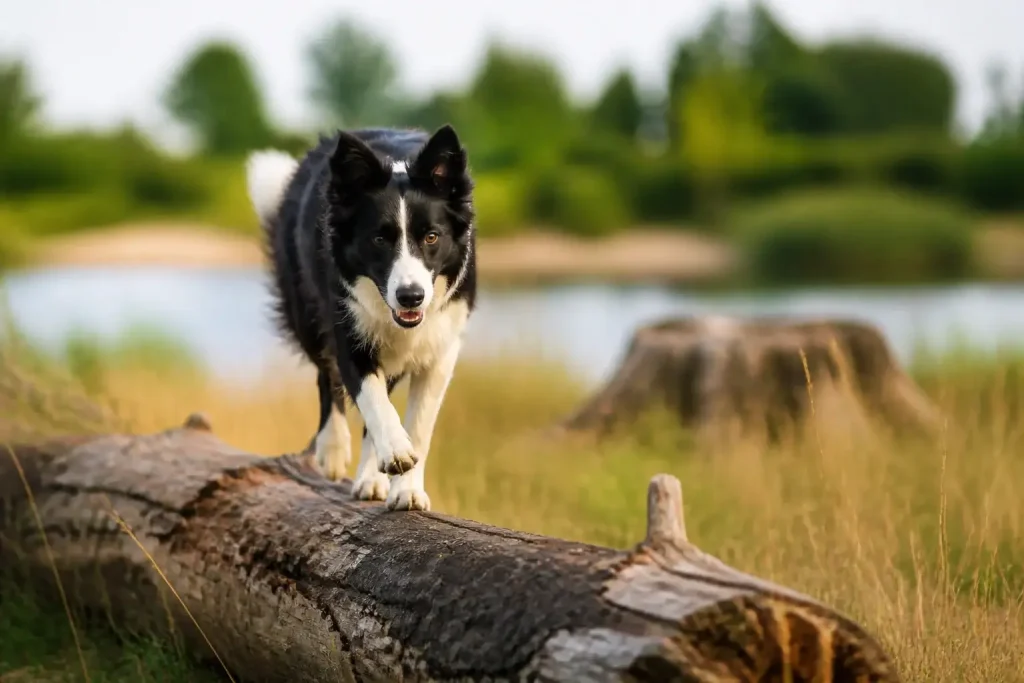
Advanced Dog Training: Building Advanced Skills
Advanced dog training develops reliable behavior, thoughtful communication, and practical cooperation beyond basic sit, stay, and recall. It is not a contest to produce the most complicated tricks. Instead, it teaches a dog to make safe, appropriate choices while distractions, distance, movement, and changing environments challenge attention. A strong program combines clear instruction, humane reinforcement, careful observation, and realistic progression. The result is a dog that can listen in ordinary life, recover from excitement, and participate confidently in demanding activities.
This training is suitable for dogs with a foundation in basic cues, but age, breed, and previous experience should not determine expectations alone. Individual motivation, physical comfort, emotional history, and learning speed matter more than labels. A young dog may excel at energetic tasks yet struggle with impulse control, while an older dog may learn precise behaviors through shorter, gentler sessions. Every plan should begin with health considerations and an honest assessment of current skills.
What the Program Provides
An advanced training program gives owners a structured pathway for turning familiar cues into dependable behaviors. Lessons may include distance work, duration, distraction proofing, loose leash walking, emergency responses, object discrimination, cooperative care, scent games, and complex sequences. Each lesson explains the target behavior, identifies useful rewards, breaks the task into manageable stages, and provides criteria for moving forward.
The program should emphasize reinforcement rather than intimidation. Rewards can include food, toys, praise, access to interesting places, sniffing opportunities, or permission to continue a favorite game. Effective reinforcement is not bribery when it is delivered thoughtfully. The trainer first teaches the dog what earns reinforcement, then gradually varies reward timing and type so performance remains strong without constant visible food.
A valuable program also teaches the human learner. Hand position, timing, leash management, posture, voice, and emotional state influence outcomes. Owners learn to give cues once, notice small improvements, prevent rehearsal of unwanted behavior, and adjust difficulty before frustration develops. This practical focus makes advanced training transferable to parks, homes, vehicles, veterinary visits, and public spaces.
Essential Learning Principles
Criteria and Progression
Training succeeds when criteria are specific. “Be calm” is too broad to measure, whereas “keep four paws on the floor for five seconds while a visitor enters” describes an observable goal. Define the behavior, context, duration, distance, and distraction level. Change only one or two variables at a time. If a dog can hold a down for thirty seconds in a quiet room, adding a moving child and a ten meter distance simultaneously may create unnecessary failure.
A useful progression moves from acquisition to fluency, generalization, and maintenance. During acquisition, the dog discovers the behavior and receives frequent reinforcement. Fluency means responding promptly and accurately. Generalization teaches that the cue applies in different rooms, on different surfaces, and with different people. Maintenance preserves the skill through occasional practice and meaningful reinforcement.

Success should be measured by more than completion. Observe latency, body language, recovery after mistakes, and willingness to reengage. A dog that performs while tense or frozen may need easier steps, even if the behavior appears correct. Relaxed attention is a better foundation for dependable performance than mechanical compliance.
Reinforcement and Motivation
Reinforcement must be valuable from the dog’s perspective. A dry biscuit may work indoors but fail near squirrels. In difficult environments, begin with higher value rewards, greater distance from distractions, or shorter repetitions. As competence grows, reward schedules can become variable. Sometimes the dog receives food, sometimes a toy, praise, or access to a scent trail. Unpredictable but fair reinforcement often sustains effort.
Avoid using rewards to lure every response indefinitely. A lure guides movement, but a prompt should gradually disappear. Show the empty hand, mark the correct action, and reward from another hand or location. This teaches the dog to follow the cue rather than stare at the reward. If behavior declines, briefly return to an earlier step instead of repeating the cue louder.
Timing matters greatly. A marker such as “yes” or a click identifies the instant the desired behavior occurs. The reward may arrive afterward, but the marker must be consistent. Trainers should practice marking imaginary events or tossing a treat into a bowl before applying the technique to complicated behaviors.
Advanced Skills in Practice
Reliable Recall
A reliable recall is a safety skill, not merely a parlor trick. Begin indoors by rewarding the dog for orienting toward the handler. Add short distances, then mild distractions. Use an enthusiastic cue, move backward, and reward generously when the dog arrives. Never punish a dog for finally returning, even if the delay was inconvenient. Punishment can make future returns less likely.
Practice recalls when success is highly probable. Call the dog away from something mildly interesting, reward, and then release it to resume exploration. This teaches that coming when called does not always end freedom. In open areas, use a long line until the response is dependable. Avoid testing the cue in situations beyond the dog’s current ability, such as immediately beside wildlife or during intense play.
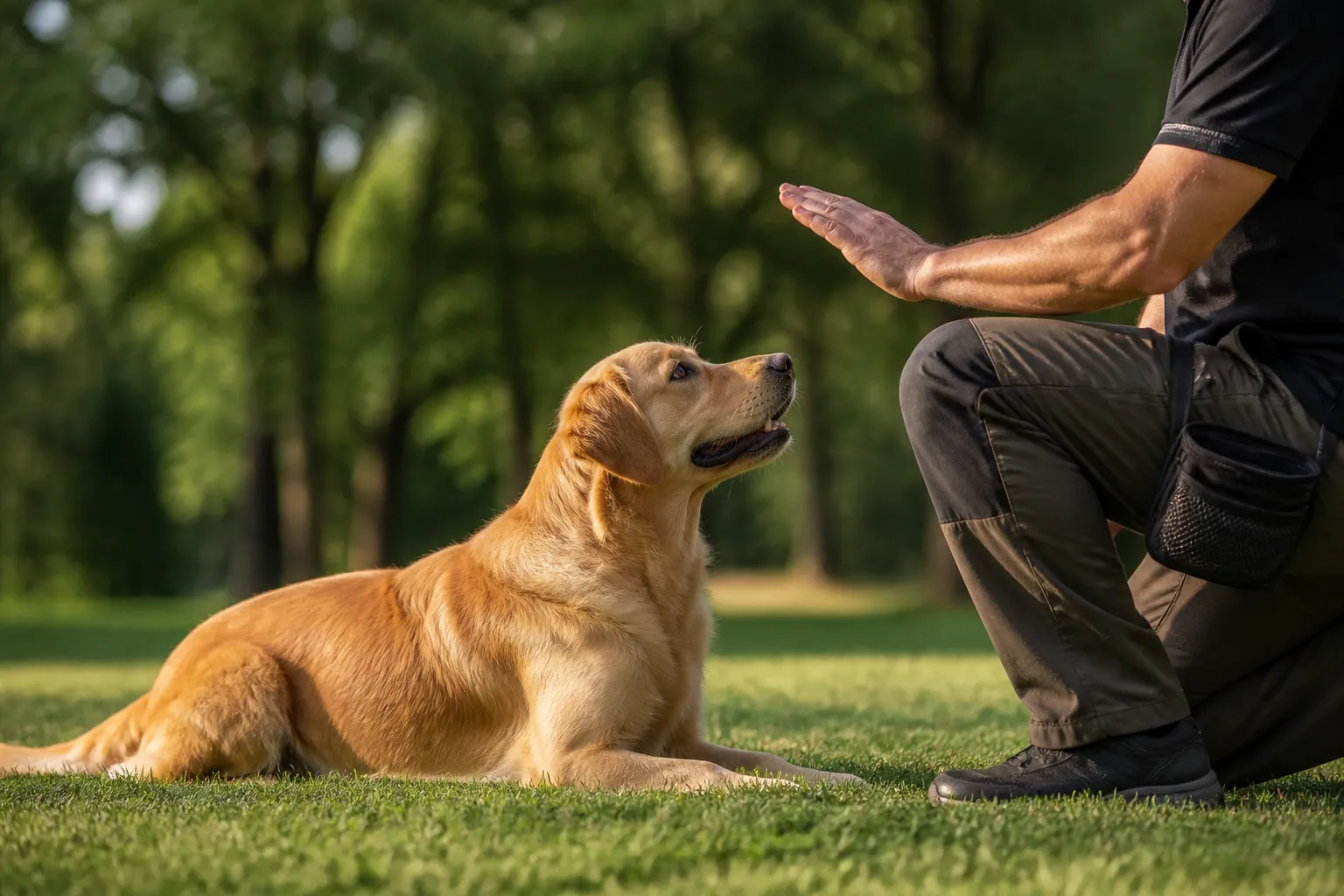
Emergency recalls deserve a distinct word or sound used only for urgent situations. Pair it repeatedly with an exceptional reward in calm settings. Keep the signal rare, and refresh it regularly. Management remains essential: secure fencing, identification, appropriate leashes, and awareness of local hazards support training rather than replace it.
Impulse Control
Impulse control is developed through repeated choices, not suppression of every natural behavior. Teach the dog to pause before doors open, food arrives, toys are thrown, or greetings begin. Start with easy delays and reinforce calm waiting. Gradually increase time, movement, and environmental excitement. Release cues such as “free” clarify when the dog may resume activity.
A useful exercise places a treat in a closed hand. When the dog stops investigating, mark and reward from the other hand. Progress to an uncovered treat, then objects on the floor, always preventing successful grabbing. The goal is not to create frustration but to teach that disengaging from temptation produces better outcomes.
Impulse control should be balanced with opportunities for active expression. Sniffing, chewing, running, tugging, and social interaction can meet legitimate needs. A dog that receives only restraint may become more frustrated, not more controlled. Advanced training works best when enrichment and rest support learning.
Distraction Proofing
Distraction proofing should be gradual and deliberate. List likely challenges, including bicycles, dogs, children, traffic, food, noises, and unfamiliar surfaces. Rank them from easiest to hardest. Begin far enough away that the dog can eat, respond, and remain emotionally stable. Reward orientation toward the handler, voluntary check-ins, and calm observation.
If the dog lunges, barks, freezes, or refuses food, the situation is too difficult. Increase distance, reduce movement, or return to a simpler environment. Flooding, which exposes a dog to overwhelming stimuli until it stops responding, can suppress visible behavior without creating confidence. Ethical training changes the emotional association and gives the dog practical alternatives.

Generalization requires variation. Practice the same skill with different handlers, collars or harnesses where appropriate, rooms, weather conditions, times of day, and surfaces. Change gradually, because a dog may interpret a new location as a completely new lesson. Maintenance sessions can be brief: three successful repetitions during a walk may be more useful than a long, exhausting drill.
Cooperative Care
Cooperative care prepares dogs for brushing, nail trimming, medication, bathing, and veterinary handling. Teach a consent behavior, such as resting the chin on a hand or standing on a mat. While the dog maintains that position, present equipment at a distance, reward calmness, and stop before discomfort. Over time, approach, touch, and brief procedures can be added.
The dog should be allowed to communicate uncertainty through pauses or leaving when safe. Consent does not mean every procedure can always be postponed, but it creates communication and reduces surprise. For urgent medical care, professionals may need to act promptly; prior cooperative training makes those moments easier and safer.
Never force painful handling as a training method. If a dog reacts suddenly, investigate possible pain, fear, or illness with a qualified veterinarian. Behavior change can be a health signal.
Designing Effective Sessions
Session Structure
Keep sessions short enough to preserve enthusiasm. A practical format includes a warmup, one primary objective, a few easy repetitions, and a clear finish. Begin with behaviors the dog knows, introduce the new challenge briefly, then end with an achievable success. Several sessions of three to eight minutes may outperform one lengthy session.
Use a written record. Note location, distraction level, cue used, response quality, reward, and the dog’s emotional state. Patterns become visible quickly. If performance declines after the third repetition, stop earlier. If one reward loses value, change the reinforcer. Records replace vague judgments with useful evidence.

Troubleshooting
When a behavior fails, avoid assuming stubbornness. Ask whether the cue is understood, whether reinforcement is adequate, whether the environment is too difficult, and whether the dog is tired, hungry, painful, frightened, or overexcited. Change one variable, then observe. Repeating an unclear cue teaches the dog that ignoring it is acceptable.
If the dog offers an unwanted behavior, calmly prevent rehearsal and redirect to a known alternative. For jumping, reinforce four paws on the floor and control access to greetings. For pulling, reduce forward progress and reward slack leash moments. For barking at a window, manage the view while teaching a mat behavior. Management is not failure; it protects progress while new skills develop.
Safety and Ethics
Advanced training should be humane, evidence informed, and appropriate to the individual. Avoid equipment or techniques designed to cause pain, fear, or injury. Punitive methods can damage trust, increase anxiety, and obscure warning signals. Seek a qualified, reward based professional for aggression, severe fear, separation distress, guarding, or sudden behavior changes.
Safety also includes physical conditioning. Repetitive jumping, sharp turns, prolonged running, and unstable surfaces can strain growing, aging, or injured dogs. Warm up gradually, provide water and rest, and stop when movement becomes awkward. Ask a veterinarian about suitable exercise when health history is uncertain.
Handlers must respect other people and animals. Maintain distance, use secure equipment, clean up waste, and do not allow a training exercise to disturb strangers. A highly trained dog is still an animal with preferences and limits. Responsible ownership combines skill with judgment.
FAQ
Is advanced training suitable for every dog?
Most dogs can learn advanced behaviors, but the goals should be individualized. A companion may focus on reliable recall and cooperative care, while another dog may enjoy scent work or precision tricks. Physical limitations, fear, age, and motivation determine the safest pace. Success means improved communication and daily function, not meeting a universal performance standard.
How long does advanced training take?
Time varies according to the behavior, history, environment, and consistency of practice. A simple chain may develop in weeks, while reliable recall around wildlife can require months or longer. Progress is not linear. Expect plateaus, review earlier steps, and judge improvement across many sessions rather than one difficult day.
Should treats always be used?
Treats are valuable, especially when teaching new or difficult skills, but they need not be visible or permanent. Gradually combine food with toys, praise, access, and life rewards. Continue reinforcing important safety behaviors unpredictably. Removing all rewards can weaken behavior, just as paying a worker once and never again would reduce motivation.
What if my dog ignores a cue?
First check the environment, cue clarity, reinforcement, and physical or emotional state. Move closer to the dog or farther from the distraction, use a known reward, and ask for an easier response. Do not repeat the cue rapidly. If ignoring occurs consistently, retrain the behavior from a simpler starting point and consider professional guidance.
Can advanced training stop aggression?
Training can improve management, communication, and alternative responses, but aggression requires individualized assessment. Do not deliberately expose a reactive dog to triggers or rely on obedience alone. Consult a veterinarian to rule out medical contributors and work with a qualified behavior professional using humane methods. Safety plans may include barriers, distance, muzzles introduced positively, and controlled routines.
Is a clicker necessary?
No. A clicker is a precise marker, but a consistent spoken word works too. Choose a marker that can be used easily in the relevant setting. The important elements are clear timing, immediate reinforcement, and consistent practice. Some dogs respond especially well to a clicker; others benefit from a verbal marker that leaves both hands available.
How can children participate safely?
Adults should supervise every interaction and direct the training. Children can toss treats for simple behaviors, practice hand targeting with guidance, or help hide scent objects, but they should not take leashes from powerful or fearful dogs. Teach children not to hug, climb on, disturb sleeping dogs, or remove valued items. Respect prevents accidents.
Conclusion
Advanced dog training is a continuing process of cooperation rather than a final examination. By defining observable goals, building behavior gradually, reinforcing thoughtfully, and respecting emotional and physical limits, owners can develop skills that remain useful under real conditions. Reliable recall, impulse control, distraction tolerance, and cooperative care improve safety and strengthen everyday communication.
The most effective plan balances ambition with patience. Train in small steps, record evidence, manage risks, and celebrate calm choices as carefully as spectacular performances. When problems exceed ordinary instruction, seek veterinary and professional support early. With humane guidance and consistent practice, advanced training can give dogs greater freedom, richer enrichment, and a more confident role in family life.
Pingback: Anxiety Relief For Dogs: Dog Anxiety Relief: Effective At-Home Solutions