
Puppy Behavior Management for a Happy, Calm Dog
Puppy behavior management is the practical process of teaching a young dog how to live safely and politely with people, animals, and everyday surroundings. It is not about suppressing normal puppy behavior or demanding perfect obedience immediately. The goal is to guide curiosity, energy, and developing self-control into habits that support a confident, calm adult dog.
The most effective approach combines prevention, reward-based training, appropriate exercise, sleep, socialization, and clear boundaries. Puppies learn continuously, including when nobody is conducting a formal lesson. If jumping earns attention, jumping becomes useful. If chewing furniture is easier than chewing an approved toy, furniture may become the preferred choice. Thoughtful management changes the environment so desirable behavior is easy and undesirable behavior is less rewarding.
Start with realistic expectations. Young puppies explore with their mouths, have limited bladder control, become overtired quickly, and may react strongly to unfamiliar sights or sounds. These behaviors are developmental, not evidence that a puppy is stubborn or bad. Consistent guidance now can prevent confusion later, while patience protects trust.
Build a Supportive Daily Routine
A predictable routine helps a puppy understand what happens next. Plan regular periods for waking, toileting, eating, play, training, calm interaction, and sleep. The exact schedule should fit the puppy’s age, health, household, and veterinary advice, but the sequence should remain reasonably consistent.
Take the puppy to an appropriate toilet area after waking, eating, drinking, active play, and naps. Stay nearby without turning every toilet trip into an exciting game. When the puppy finishes, offer immediate, gentle praise and a reward if appropriate. Timing matters: reinforcement delivered several minutes later may not clearly communicate what earned it.
Puppies often need more sleep than new owners expect. A puppy that becomes frantic, mouthy, or unable to settle may be tired rather than under-exercised. Provide a quiet crate, pen, bed, or puppy-proofed room where rest is protected. Encourage naps after stimulating activities, and avoid waking a sleeping puppy unnecessarily.
Manage the Environment Before Problems Begin
Use barriers, closed doors, gates, and secure storage to limit access to shoes, cords, medications, toxic plants, food, rubbish, and fragile objects. Keep several legal chew items available, but rotate them so they remain interesting. Supervise whenever the puppy has access to something that could be swallowed or damaged.
Management is not a failure of training. It prevents rehearsal. Every successful opportunity to steal socks, chase feet, or raid a bin can strengthen that pattern. Prevention gives training time to catch up with the puppy’s impulses.
Teach Desired Behaviors Clearly
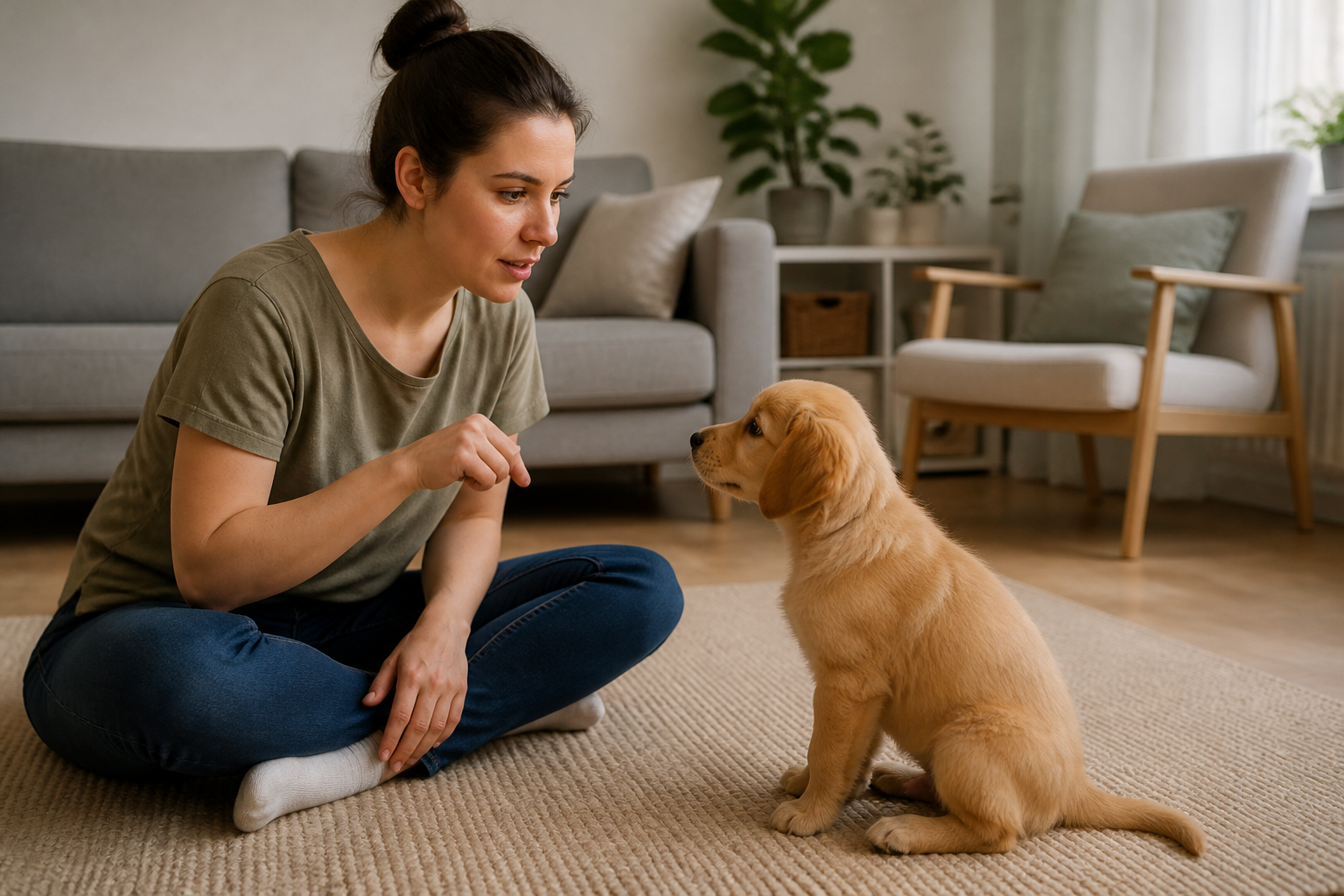
Reward-based training is most effective when the puppy understands exactly which action produces a benefit. Use a small food reward, play, praise, access to sniffing, or another meaningful consequence. Mark the desired moment with a consistent word such as “yes,” then deliver the reward promptly.
Begin with simple skills: responding to a name, looking toward you, following a treat, sitting, touching a hand, coming when called, and relaxing on a mat. Keep sessions brief and end while the puppy is still engaged. Several short lessons are usually easier to absorb than one long, frustrating session.
Do not repeat a cue many times. If “come” is said repeatedly while the puppy ignores it, the word can lose importance. Instead, improve the setup: move closer, use a quieter location, show an appealing reward, or choose an easier behavior. Give the cue once, help the puppy succeed, and reinforce generously.
Handle Jumping and Mouthing
Jumping usually continues because it produces attention. Turn your body away, keep hands still, and avoid pushing the puppy, since pushing may feel like play. The instant four paws are on the floor, calmly reward that position. Ask visitors to follow the same plan. If excitement is intense, use a gate or leash until the puppy can greet more successfully.
Mouthing is common, particularly during play, teething, and tired periods. Redirect to a suitable toy and briefly pause interaction if teeth contact skin. Avoid hitting, shouting, or holding the mouth shut. These responses can increase fear and may teach the puppy that human hands are threatening. Provide regular naps and gentle games that do not encourage frantic biting.
Support Safe Socialization
Socialization means helping a puppy form positive, flexible associations with people, animals, environments, surfaces, sounds, handling, and routine experiences. It does not mean forcing the puppy into crowded or frightening situations. A puppy should be able to observe, recover, and choose distance when possible.
Introduce new experiences gradually. At first, allow the puppy to look from a comfortable distance while receiving small rewards. If the puppy freezes, hides, pulls away, barks repeatedly, or refuses food, increase distance and reduce intensity. Progress is measured by relaxed curiosity, not by exposure alone.
Include calm handling practice for ears, paws, mouth, collar, harness, and grooming tools. Touch briefly, provide a reward, and stop before resistance develops. Pair household sounds with food at a low volume, then increase only when the puppy remains comfortable. Consult a veterinarian about safe socialization options before completing recommended vaccinations; public exposure should follow professional guidance and local disease risks.
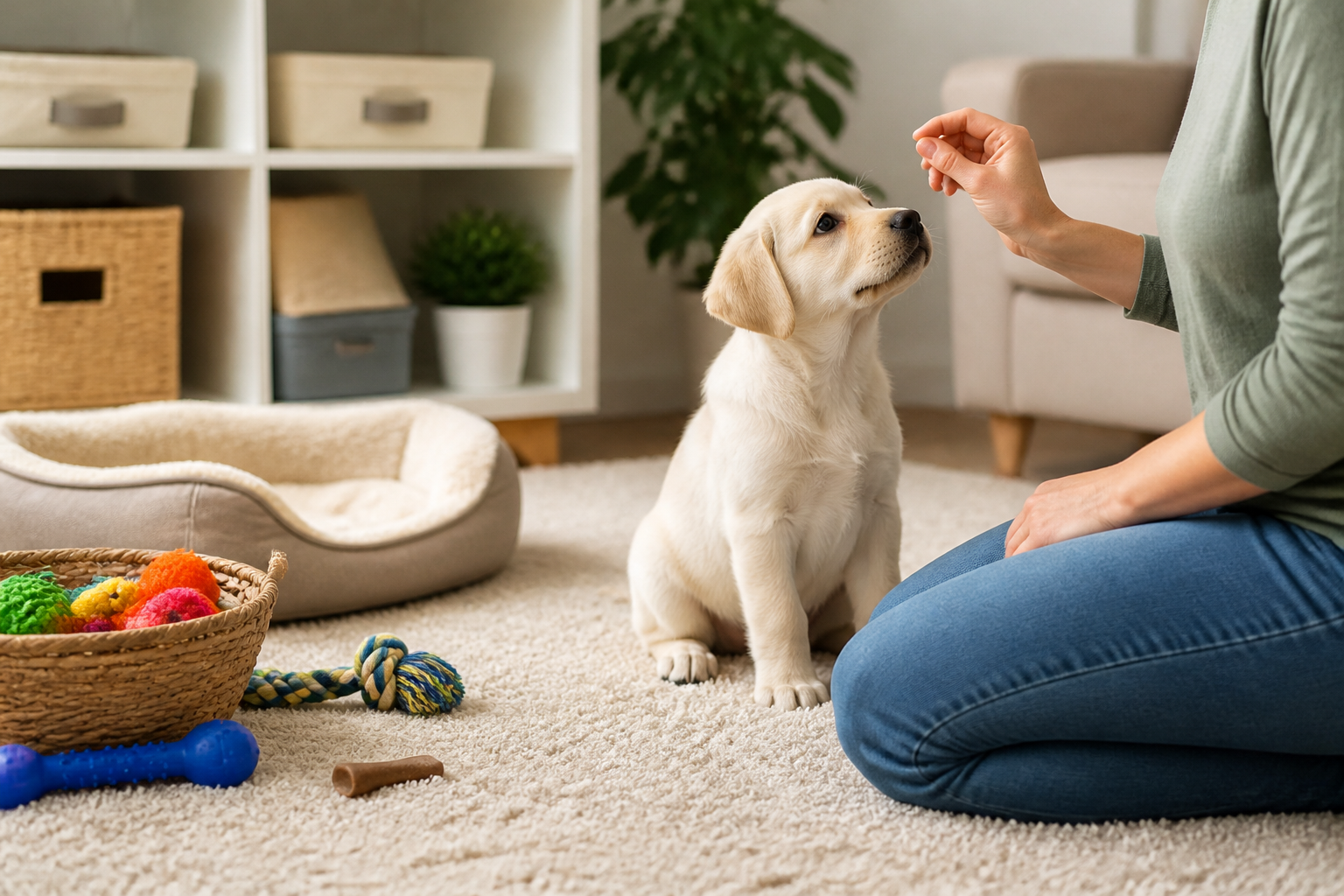
Meeting other dogs should be selective. Choose healthy, socially appropriate dogs and controlled settings rather than allowing every encounter. A puppy needs the ability to disengage, rest, and return to a trusted person. Play that becomes one-sided, relentless, or frightening should be interrupted calmly.
Provide Appropriate Exercise and Enrichment
Exercise should support development without creating exhaustion or excessive physical strain. Short walks, gentle exploration, supervised play, and sniffing activities can meet needs while allowing recovery. Follow veterinary guidance for growing bodies, especially regarding high-impact jumping, repetitive running, stairs, and strenuous activity.
Mental enrichment is equally valuable. Scatter part of a meal for supervised sniffing, use food puzzles suited to the puppy’s ability, practice finding a toy, or teach simple tricks. Rotate activities rather than increasing difficulty too quickly. Enrichment should encourage problem solving, not create frustration or guarding.
Teach calmness deliberately. Place a mat near family activity and reward the puppy for lying down, looking away from excitement, or relaxing with a chew. Gradually extend the interval between rewards. Calm behavior is a skill that improves through repetition; it should not be expected automatically because the puppy has been physically exercised.
Prevent Resource Guarding
When a puppy has food, a toy, or a resting place, avoid grabbing items unnecessarily or disturbing the puppy to prove authority. Instead, approach at a safe distance, add something valuable, and move away. The puppy learns that people approaching can predict good outcomes.
Teach exchanges with low-value objects first. Present a better reward, wait for the puppy to release the item, mark the release, and return the original object when safe. Never chase a puppy for stolen possessions, because chasing can turn theft into an exciting game. If the puppy stiffens, growls, snaps, or guards intensely, stop experimenting and seek qualified help promptly.
Respond to Fear, Frustration, and Barking
Barking communicates arousal, uncertainty, attention seeking, alarm, or frustration. Identify the trigger before choosing a response. Close curtains if outside movement causes repeated alarm, increase distance from unfamiliar dogs, offer a quiet retreat, and reward moments of observation without vocalizing. Punishing warning signals may suppress communication without changing the underlying emotion.
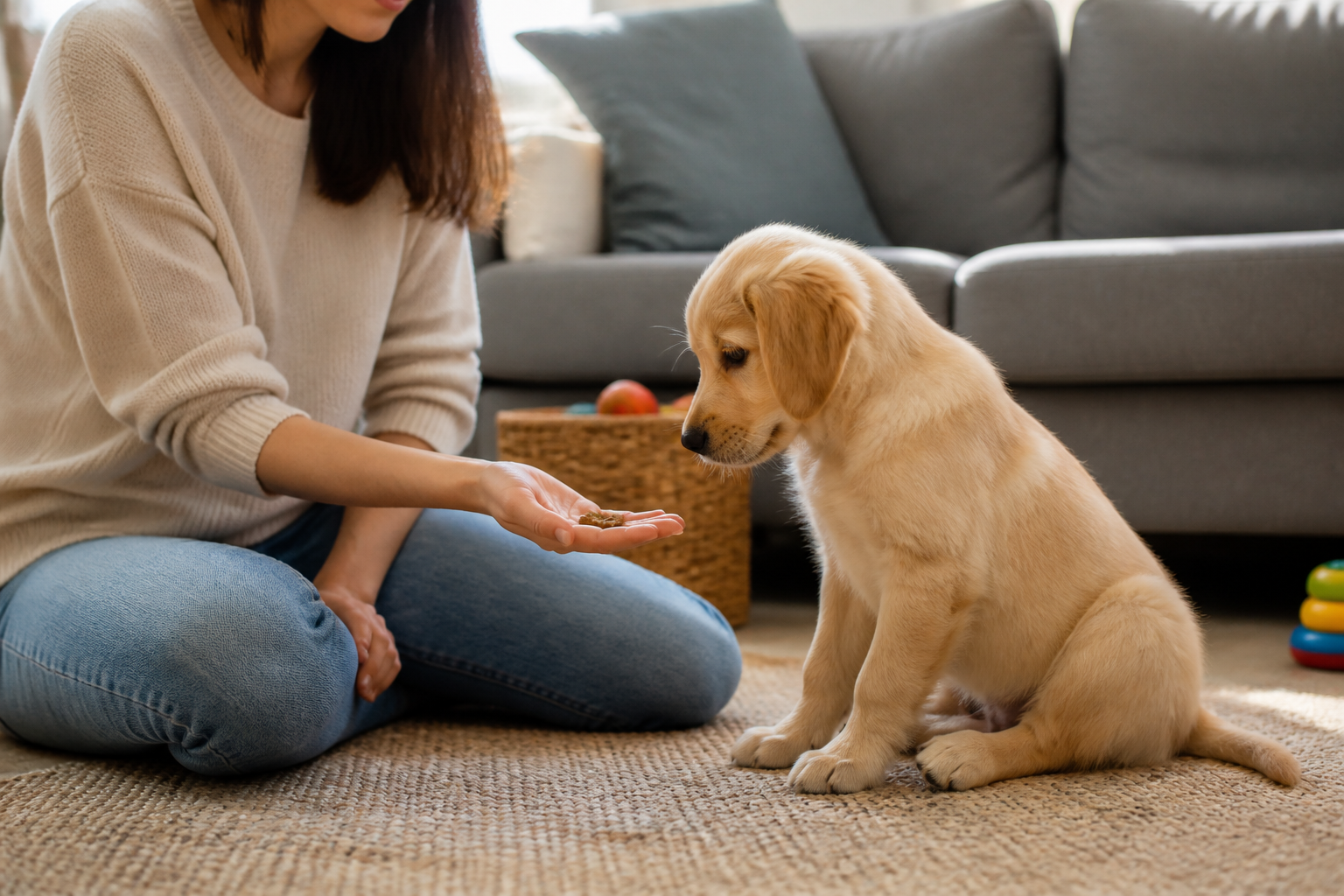
Teach an alternative response, such as looking at you, moving to a mat, or walking away. Practice first when the trigger is weak or absent. Then introduce manageable versions while rewarding calm behavior. If reactions are sudden, severe, worsening, or associated with aggression, ask a veterinarian to consider medical factors and refer you to a qualified behavior professional.
Separation-related distress requires special care. Begin with very short absences that remain below the puppy’s panic threshold, and increase duration gradually. Offer a safe resting area and avoid dramatic departures or arrivals. Persistent barking, destructive escape attempts, drooling, elimination, or inability to settle when alone warrants professional assessment. Leaving a distressed puppy for progressively longer periods may worsen the problem.
Make Training Consistent for Everyone
Family members should agree on cues, boundaries, rewards, and responses. If one person allows sofa access while another punishes it, the puppy receives confusing information. Decide where the puppy may sleep, which rooms are accessible, how greetings happen, and what behavior earns attention.
Children need supervision and clear instructions. They should not climb on, corner, hug, wake, feed, or take objects from a puppy. Teach them to invite interaction, scatter treats, or ask an adult for help. A puppy should always have a retreat where children and visitors leave it undisturbed.
Visitors can support progress by ignoring jumping, waiting for calm, and rewarding appropriate contact. Use a leash, gate, or pen when necessary. Management protects the puppy from overwhelming interactions and protects guests from accidental scratches or nips.
Understand Corrections and Common Mistakes
Harsh corrections, intimidation, and physical punishment can increase fear, conflict, and avoidance. They also provide little information about what the puppy should do instead. A more useful correction is environmental: prevent access, interrupt safely, redirect, and reward the alternative.
Another common mistake is expecting a puppy to perform in distracting places before the skill is reliable at home. Training does not automatically generalize. Practice the same behavior in several locations, beginning with easy environments and increasing distractions gradually.
Inconsistent rewards can also create frustration. You do not need to reward every familiar behavior forever, but early learning benefits from frequent reinforcement. Later, vary rewards and reinforce unpredictably while continuing to acknowledge important behaviors, such as coming when called or releasing an unsafe object.

Avoid using the crate as punishment. It should remain a safe, comfortable place, introduced gradually with food, rest, and brief positive confinement. Never rely on confinement as a substitute for social contact, exercise, toilet opportunities, or training.
A Practical Weekly Plan
During the first days, prioritize safety, toilet routines, sleep, name recognition, gentle handling, and calm bonding. Keep the environment simple enough that the puppy can succeed. Record triggers, successful rewards, accidents, sleep patterns, and difficult times; this information helps reveal patterns.
During the following weeks, add short recall games indoors, mat relaxation, polite greetings, exchanges, leash skills, and carefully selected new experiences. Increase challenge one factor at a time: distance, duration, distraction, or novelty. If performance declines, make the task easier rather than applying more pressure.
Review progress weekly. Ask whether unwanted behavior is becoming less rewarding, whether the puppy recovers quickly from excitement, and whether every household member follows the same plan. Setbacks are normal after illness, travel, teething, schedule changes, or developmental transitions. Return to easier exercises and rebuild gradually.
Product Description: A Puppy Behavior Management Kit
A useful puppy behavior management kit should support prevention, communication, enrichment, and safe routines rather than promise instant obedience. Consider a sturdy puppy gate or exercise pen, a comfortable crate or bed, washable bedding, appropriately sized chew toys, food-stuffing toys, a lightweight training leash, a well-fitted harness, treat pouch, clicker or verbal marker, grooming items, and enzyme-based cleaning supplies.
Choose equipment for safety and supervision. Toys should be large enough to reduce swallowing risk and inspected regularly for damage. A collar or harness should fit securely without restricting breathing or movement. A crate should allow the puppy to stand, turn, lie comfortably, and stretch, but not be so large that one end becomes a toilet area.
A kit is valuable because it makes the right behavior easier to reinforce. Treats can reward calmness, a gate can prevent rehearsal of chasing, a mat can define a relaxation spot, and chew items can redirect normal oral needs. Products work best when paired with timing, supervision, gradual teaching, and realistic expectations. No item replaces veterinary advice or professional behavior support when serious concerns appear.
Frequently Asked Questions
How do I stop my puppy from biting?
Redirect biting to a toy, pause play briefly when teeth touch skin, and reward gentle interaction. Ensure adequate sleep because overtired puppies often become mouthier. Avoid physical punishment. If biting is unusually intense, causes injury, or comes with stiff posture and threatening behavior, seek qualified guidance.
How long should training sessions last?
Use short sessions suited to the puppy’s attention and emotional state. Several brief practices throughout the day are generally more effective than one demanding lesson. Stop after successful repetitions, and provide rest afterward.
Should I ignore bad behavior?
Ignoring can help when behavior is maintained by attention, such as jumping, but it is not a complete strategy. Prevent access, identify the reason for the behavior, teach an alternative, and reward that alternative. Dangerous behavior should be interrupted safely rather than ignored.
When should I contact a professional?
Contact a veterinarian for sudden behavior changes, pain concerns, severe fear, aggression, repeated digestive or elimination problems, or possible separation distress. A qualified reward-based behavior professional can help with a tailored plan. Early assistance is often easier than waiting until a pattern becomes deeply established.
Is crate training necessary?
A crate is optional, but many families find it useful for safe rest, travel, veterinary care, and management. Introduce it positively and gradually. If the puppy shows panic, seek guidance rather than forcing longer confinement.
Conclusion
Puppy behavior management succeeds when prevention and teaching work together. Protect the puppy from unsafe choices, meet needs for sleep and exploration, reward behaviors you want repeated, and introduce the world at a pace the puppy can handle. Consistency matters more than perfection.
A calm dog is not created by suppressing energy or using fear. Calmness grows from predictable routines, secure relationships, appropriate outlets, and repeated opportunities to make good choices. Begin with manageable steps, adjust when the puppy struggles, and seek professional help for persistent or serious concerns. With patient guidance, everyday moments become training opportunities, and the puppy gains the skills needed for a safer, happier life with its family.