
Puppy Training: Building a Strong Foundation
Puppy training is the process of teaching a young dog how to live safely, calmly, and cooperatively with people. It includes house training, socialization, communication, handling, basic cues, impulse control, and prevention of unwanted habits. Effective training is not about demanding perfect obedience from a very young animal. It is about creating clear patterns, rewarding useful choices, and giving the puppy enough rest, structure, and guidance to succeed.
Begin with realistic expectations. Puppies have limited attention spans, developing bladder control, and little understanding of human rules. A behavior that looks like stubbornness is often confusion, excitement, tiredness, hunger, or an unmet need. Training sessions should therefore be brief, positive, and repeated throughout the day. Several sessions lasting only a few minutes can teach more effectively than one long lesson.
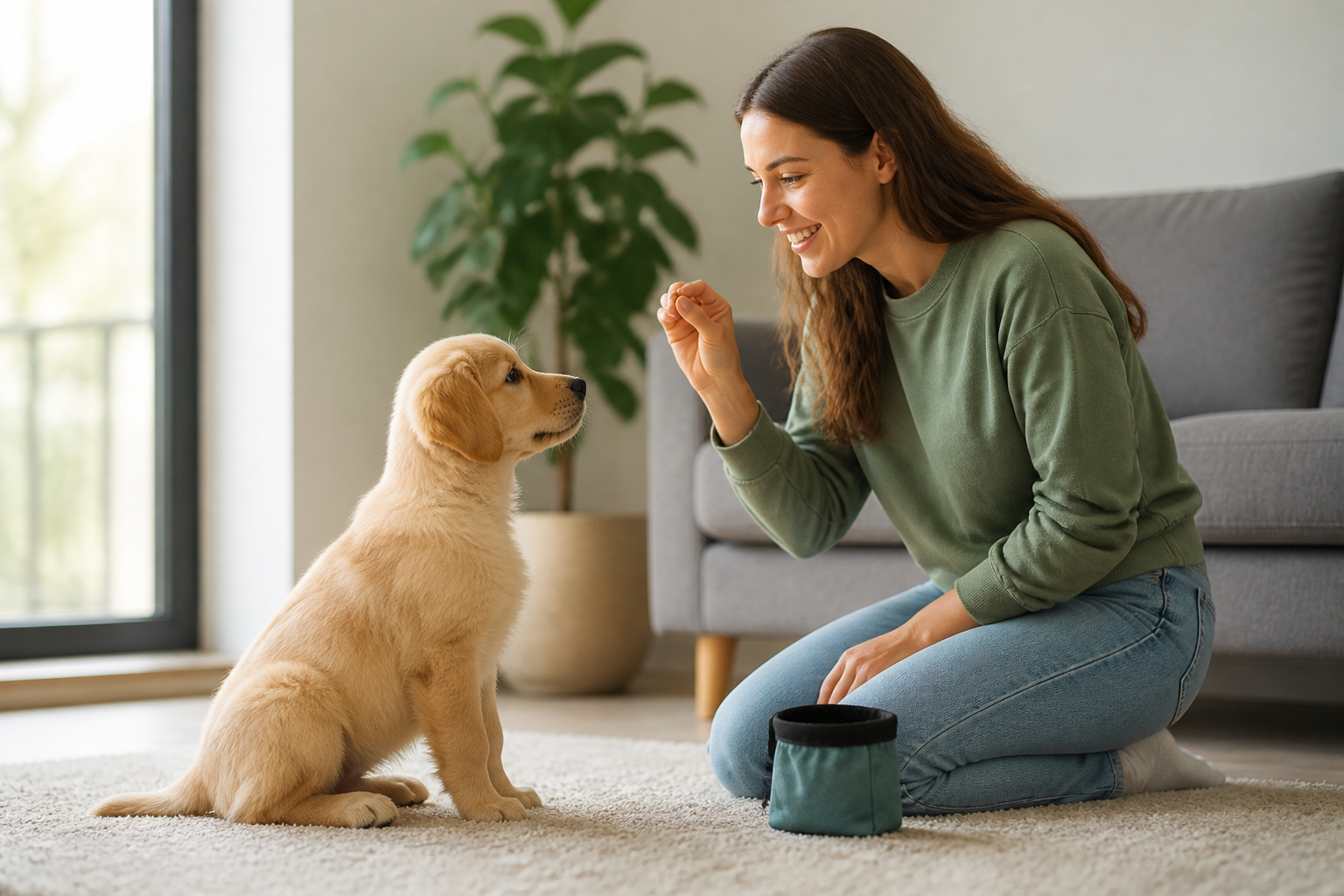
Choose rewards your puppy values. Small pieces of food are often convenient, but praise, play, sniffing, access to a favorite toy, or permission to greet a person can also reinforce behavior. Deliver the reward immediately after the desired action so the puppy can connect the consequence with the behavior. Consistency matters more than dramatic rewards. Everyone in the household should use similar words, rules, and responses.
A safe learning area supports success. Remove dangerous objects, secure electrical cables, restrict access to unsuitable rooms, and provide a comfortable bed, water, chew items, and a crate or pen if used appropriately. Management is not a substitute for training; it prevents rehearsal of habits while the puppy is still learning.
House Training and Daily Routines
House training works best when you predict when elimination is likely. Take the puppy outside after waking, eating, drinking, playing, training, and sleeping. Very young puppies may need frequent opportunities, including during the night. Carrying a small puppy outdoors can reduce accidents on the way. Once outside, wait quietly in the chosen toilet area, then reward immediately after elimination.
Accidents are normal, especially during the early weeks. If you discover a puddle afterward, do not scold. The puppy cannot connect delayed punishment with the earlier action, and fear may make future training harder. Clean the area thoroughly with an enzymatic cleaner designed to remove odor, because lingering scent can encourage repeated use. If you catch the puppy beginning to eliminate indoors, interrupt gently and take them outside, then reward completion there.
Keep a simple record of meals, naps, toilet trips, and accidents. Patterns often become visible quickly. If accidents suddenly increase, or if urination appears painful, unusually frequent, or accompanied by other concerning signs, consult a veterinarian. Medical problems can resemble training difficulties and should not be treated as disobedience.
A crate can help with rest, transportation, and short periods of safe confinement, but it should never function as punishment or long-term isolation. Introduce it gradually with treats, meals, and open-door relaxation. Increase closed-door time only when the puppy remains comfortable. Puppies need regular movement, interaction, and toilet opportunities, so confinement periods must match their age, health, and individual tolerance.
Socialization and Confidence
Socialization means helping a puppy form positive, controlled associations with people, animals, environments, surfaces, sounds, handling, and everyday experiences. It is not the same as forcing a puppy to greet everyone. The goal is confidence and flexible coping, not constant interaction.
Expose the puppy gradually. Let them observe a delivery person from a comfortable distance, hear household noises at low intensity, walk across different safe surfaces, and encounter calm, healthy dogs under controlled conditions. Pair unfamiliar experiences with food, play, or gentle praise. If the puppy freezes, hides, pulls away, stops eating, or shows escalating stress, increase distance and reduce intensity. Learning cannot happen well when fear is overwhelming.
Discuss vaccination and disease risks with a veterinarian before visiting public areas or allowing contact with unfamiliar dogs. Safe socialization can begin at home and in carefully managed settings while following professional medical guidance. A well-run puppy class may provide useful practice, provided the environment is clean, supervised, and appropriate for the puppies attending.
Handling practice should include paws, ears, mouth, tail, collar, harness, and gentle restraint. Touch briefly, reward calmness, and stop before discomfort grows. This preparation can make grooming, nail care, veterinary examinations, and medication easier later. Never use pain or intimidation to force cooperation.
Teaching Essential Behaviors
Start with skills that improve communication and safety. Say the puppy’s name once, and reward orientation toward you. Practice “come” indoors using a cheerful voice, moving away a short distance, and offering an appealing reward. Never call the puppy to punish, end every enjoyable activity, or perform an unpleasant procedure. Build a reliable recall by making returning consistently worthwhile.
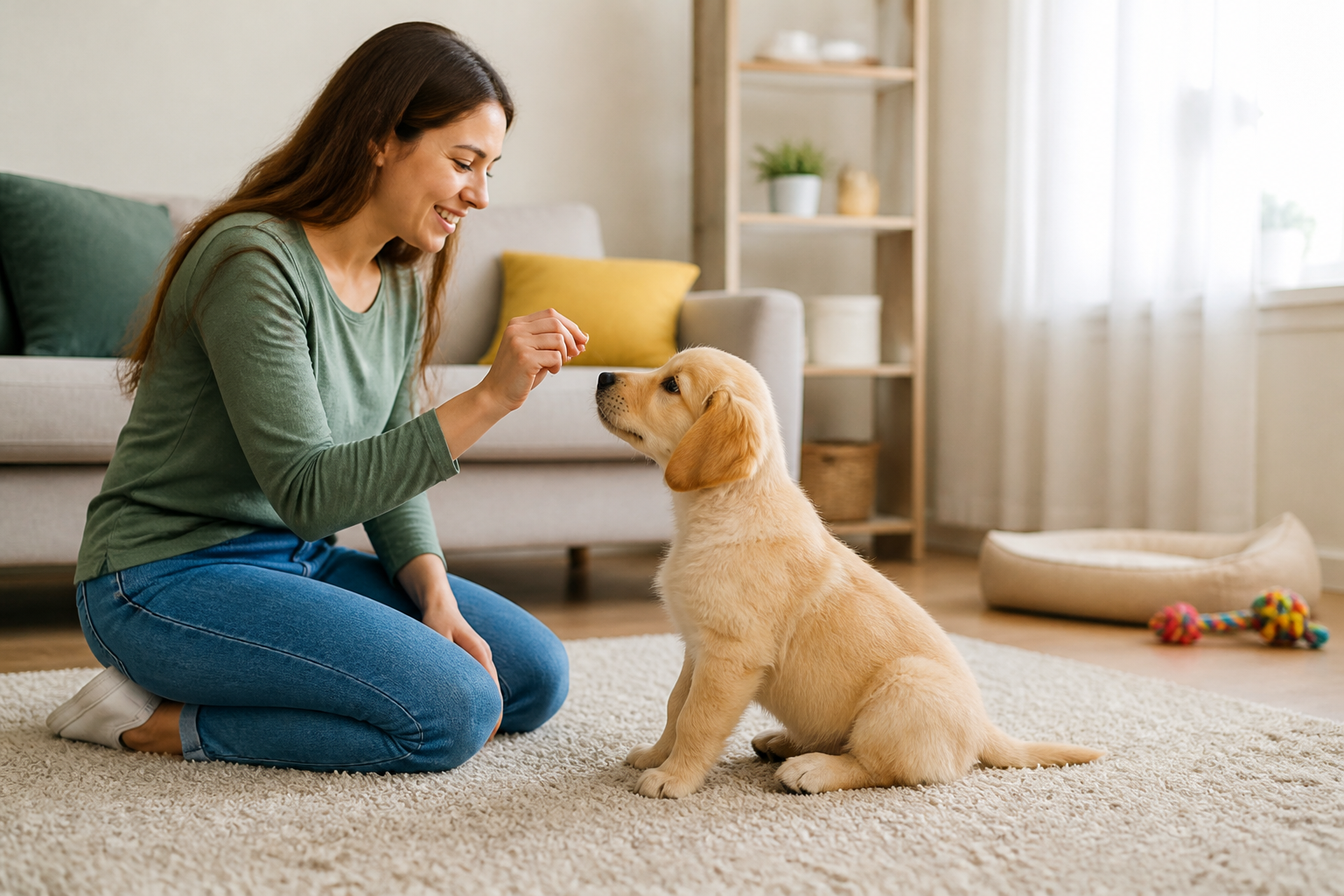
To teach “sit,” hold a reward near the puppy’s nose and move it slowly upward and slightly back. As the puppy’s head follows, the hindquarters may lower. Mark the moment with a word such as “yes,” then give the reward. Add the verbal cue when the movement is predictable. Do not push the puppy’s body into position; luring, capturing, and rewarding voluntary behavior encourage cooperation.
“Down” can be taught by moving a reward from the nose toward the floor and then slightly outward. Reward any appropriate lowering at first, gradually expecting a complete position. For “stay,” begin with a brief pause while the puppy is still, reward in place, and release with a separate word. Increase duration, distance, and distraction separately rather than all at once.
Loose-leash walking begins indoors or in a quiet area. Reward the puppy for staying near you, checking in, and allowing the leash to remain slack. If pulling begins, stop or change direction calmly instead of jerking the leash. Progress slowly. A puppy who can focus in the kitchen may not yet be ready for a busy pavement.
Teach “leave it” and “drop” with trades. Present a low-value object, offer a better reward, and mark the moment the puppy turns away or releases the item. Return safe toys when appropriate so releasing does not always mean permanent loss. These cues are especially useful around food, rubbish, household objects, and unsafe items.
Biting, Chewing, Jumping, and Barking
Mouthing is common because puppies explore with their mouths, play with littermates, and experience teething discomfort. Provide suitable chew items in several textures, supervise use, and redirect teeth from skin to a toy. If biting becomes painful, calmly pause interaction for a moment, then resume with a lower-energy activity. Avoid wrestling with hands or using physical punishment, which can increase excitement or fear.
Chewing is easier to prevent than repair. Keep shoes, clothing, children’s toys, medicines, and hazardous materials out of reach. Offer legal alternatives before the puppy searches for them. Rotate toys to maintain interest, but inspect them regularly and remove damaged pieces. Food puzzles can provide mental activity when used safely and according to feeding needs.
Jumping usually produces attention, so teach an alternative such as sitting for greetings. Ask visitors to ignore jumping by turning away and avoiding touch until four paws are on the floor. Reward calm contact immediately. Young children may need adult support because squealing, running, or waving hands can unintentionally intensify jumping.
Barking communicates arousal, alarm, frustration, fear, or a desire for attention. Identify the trigger instead of responding only to the sound. Block unnecessary views, increase distance from startling stimuli, provide rest, and reward quiet observation. Do not assume every bark should be suppressed. A veterinarian, qualified trainer, or behavior professional can help when barking is intense, persistent, or associated with fear or aggression.
Making Training Work
Use reinforcement thoughtfully. Markers, including a spoken word or clicker, identify the exact behavior that earns a reward. The marker is not magic; it becomes meaningful through repeated pairing with food or another valued consequence. Deliver rewards promptly, then gradually vary them after the behavior is reliable. Continue occasional reinforcement to maintain skills, especially in distracting environments.
Train one variable at a time. If you want a longer stay, keep the room quiet and remain nearby. If you want the puppy to respond outdoors, shorten the duration and reduce expectations. This approach reveals what the puppy understands and prevents unnecessary frustration. End sessions after a successful repetition, while the puppy still wants to participate.
Sleep is part of learning. Puppies commonly need substantial rest, though exact needs vary with age, breed, activity, and individual temperament. An overtired puppy may bite, bark, race around, or ignore familiar cues. Before concluding that training has failed, consider whether the puppy needs a toilet break, meal, nap, calmer environment, or gentle exercise.
Exercise should be age appropriate and balanced with rest. Short walks, sniffing, simple games, food puzzles, and supervised exploration can meet needs without excessive physical stress. Avoid forcing repetitive, strenuous activity in a growing puppy, and ask a veterinarian about breed-specific considerations, joints, weight, and health.
Family communication prevents mixed messages. Decide whether furniture access, greeting behavior, sleeping arrangements, and household boundaries are permitted. Rules can be flexible, but they should be predictable. A puppy allowed to jump on one person and punished for jumping on another receives confusing information.
Product Choices and Practical Equipment
Useful puppy-training equipment is simple rather than elaborate. A well-fitted collar or harness, lightweight leash, food rewards, washable bedding, safe chew toys, cleaning supplies, identification, and a secure travel arrangement cover many basic needs. A crate or exercise pen can support management when introduced positively. Choose equipment for fit, safety, durability, and the puppy’s current size.
Food rewards should be small enough for repeated practice and appropriate for the puppy’s diet. If treats make up a significant part of daily intake, reduce meal portions as advised by a veterinarian or nutrition professional. Avoid products that are toxic to dogs, and supervise high-value chews. Fresh water should remain available unless a veterinarian gives different instructions.
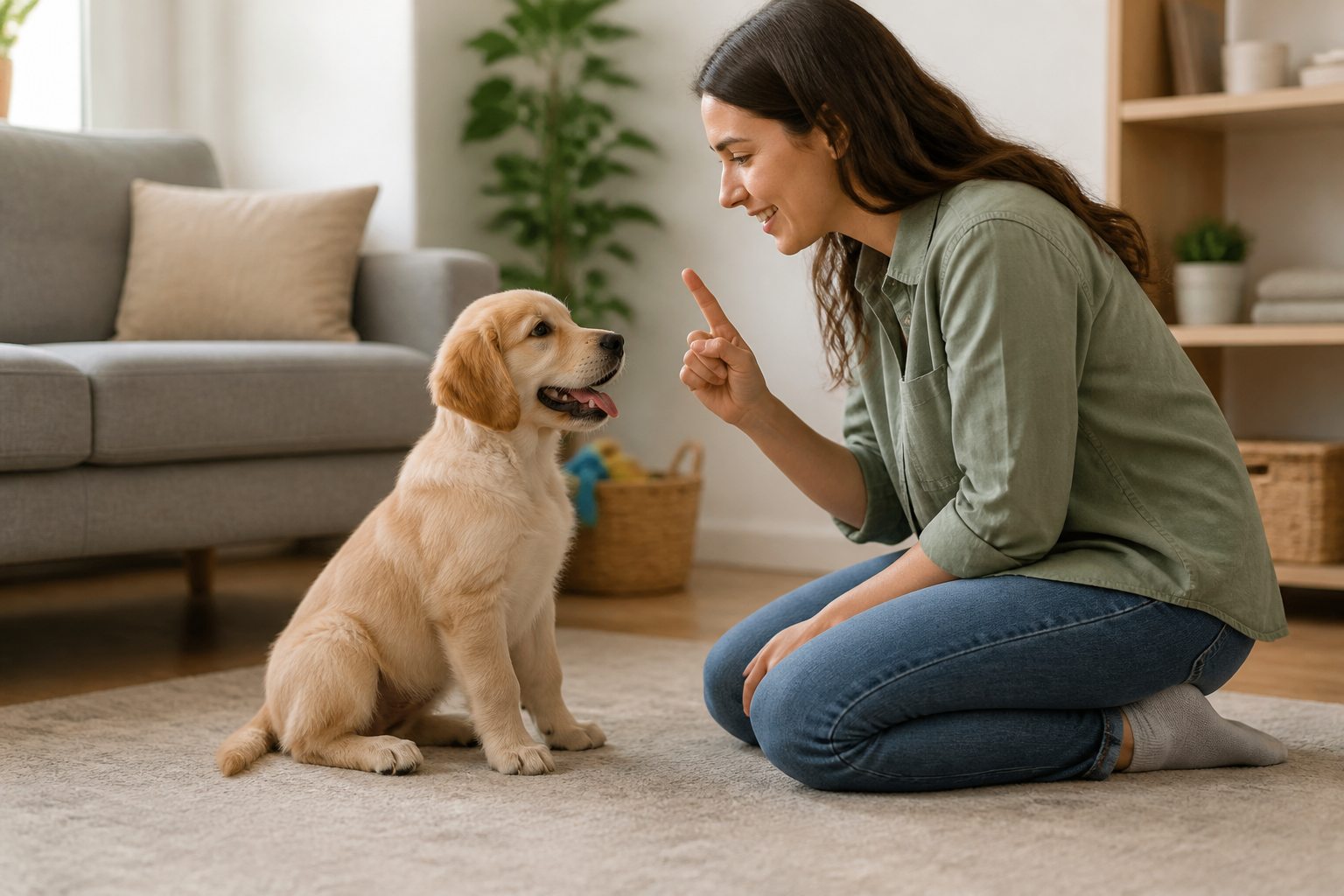
Do not select equipment solely because it promises instant obedience. Shock, prong, choke, or other aversive tools can create welfare and behavior concerns, particularly when used without expert guidance. Reward-based training, careful management, and humane handling provide clearer information and protect the relationship between puppy and caregiver.
A product description is meaningful only when it explains practical use and limitations. For example, a washable mat may help establish a rest station, but it does not teach settling by itself. A puzzle feeder may reduce boredom, but it must match the puppy’s chewing ability and supervision needs. A clicker can improve timing, but a verbal marker works equally well if used consistently.
Common Training Mistakes
One frequent mistake is expecting a behavior in a difficult setting before it is learned in an easy one. Teach at home, then a quiet garden, then a calm outdoor area, increasing distractions gradually. Another mistake is repeating a cue many times. If “come” becomes background noise, pause, improve motivation, reduce distance, and try again rather than chanting the word.
Inconsistent reinforcement can also slow progress. If jumping sometimes earns petting, the puppy may continue trying because occasional success is powerful. Agree on household responses. Likewise, avoid punishing growls. A growl is communication that the puppy feels uncomfortable; suppressing it without addressing the cause can remove an important warning.
Do not compare puppies too closely. Development differs among individuals, breeds, histories, and environments. Measure progress against the puppy’s previous behavior: shorter recovery after a sound, faster response to their name, calmer handling, or fewer accidents. Small improvements are useful evidence that the plan is working.
When behavior is dangerous, sudden, or worsening, seek qualified help early. Aggression, severe separation distress, resource guarding, panic, repeated self-injury, and persistent fear deserve individualized assessment. A veterinarian can check for pain or illness and recommend an appropriately credentialed behavior professional.
Frequently Asked Questions
When should puppy training start?
Training can begin as soon as the puppy arrives, using gentle name recognition, toilet routines, handling, and reward-based choices. Formal expectations should remain age appropriate. Very young puppies learn through many tiny repetitions rather than long lessons.
How long should sessions last?
Use short sessions that end before attention collapses. The suitable length varies, but several brief practices spread across the day are generally more productive than one exhausting session. Stop if the puppy becomes distressed, frantic, or disengaged.
Should I punish accidents?
No. Clean thoroughly, review the routine, increase supervision, and provide more timely outdoor opportunities. Punishment after an accident does not teach the correct location and may cause the puppy to hide elimination.
Is crate training necessary?
No puppy is required to use a crate, but a properly introduced crate can support rest, transport, and safe management. A pen, puppy-proof room, or supervised tethering arrangement may suit some households better. Any confinement method must allow adequate toilet breaks, movement, sleep, and social contact.
What if my puppy will not listen outside?
Reduce distractions and increase distance from competing stimuli. Use higher-value rewards, shorten the session, and practice attention games before asking for difficult cues. “Not listening” often means the environment is currently too challenging, not that the puppy is deliberately refusing.
When should professional help be sought?
Seek help when you feel unsafe, progress has stopped, fear is intense, or behavior threatens people or animals. Choose professionals who use humane, evidence-informed methods and who coordinate with a veterinarian when medical factors may be involved.
Conclusion
Successful puppy training combines prevention, patience, repetition, and clear communication. Teach useful behaviors in manageable steps, reward choices you want repeated, protect the puppy from overwhelming situations, and provide enough sleep, enrichment, and appropriate social contact. House training and basic cues matter, but emotional security matters just as much.
Expect uneven progress. A puppy may respond perfectly in a quiet room and struggle the next day after poor sleep or a distracting event. Return to an easier level without shame, identify the obstacle, and rebuild gradually. Consistency does not mean demanding the same performance every moment; it means responding thoughtfully and predictably.
The strongest results come from treating training as an ongoing relationship rather than a short course. When caregivers observe carefully, adjust expectations, and seek qualified support when necessary, puppies gain practical skills and confidence. The result is not merely a dog that performs commands, but a companion better prepared to navigate household life safely, calmly, and cooperatively.