
Anxiety relief for dogs begins with understanding what your dog is experiencing and matching support to the underlying cause. A calming product can help some dogs settle, but it should not replace exercise, predictable routines, gradual training, veterinary guidance, or treatment for pain and illness. The most effective plan combines practical environmental changes with safe, individualized care.
Dogs may show anxiety through pacing, panting, trembling, barking, whining, hiding, drooling, destructive chewing, escape attempts, house soiling, clinginess, or repeated licking. These signs can arise during thunderstorms, fireworks, travel, separation, unfamiliar visits, grooming, veterinary appointments, or changes at home. Because similar behaviors can accompany medical problems, a sudden or severe change deserves attention from a veterinarian.
Anxiety Relief For Dogs: Understanding Canine Anxiety
Anxiety is an emotional response to perceived danger or uncertainty. A frightened dog may react even when no obvious threat is visible to people. The response is not disobedience or stubbornness. Scolding often increases fear and can make future episodes harder to manage. Calm, consistent communication is more helpful than punishment.
Common triggers
Separation anxiety appears when a dog becomes distressed during absence or anticipates being left alone. Noise sensitivity may involve thunder, fireworks, alarms, construction, or household appliances. Some dogs fear strangers, other animals, car journeys, handling, or particular locations. A rescue dog may have an unknown history, yet it still benefits from patient observation rather than assumptions.
Pain, poor vision or hearing, gastrointestinal discomfort, hormonal changes, and age-related cognitive changes can also alter behavior. A dog that suddenly becomes restless at night, vocalizes, avoids touch, or has accidents should receive a health assessment. Behavioral training works best when discomfort has been considered and addressed.
Immediate Ways to Help a Distressed Dog
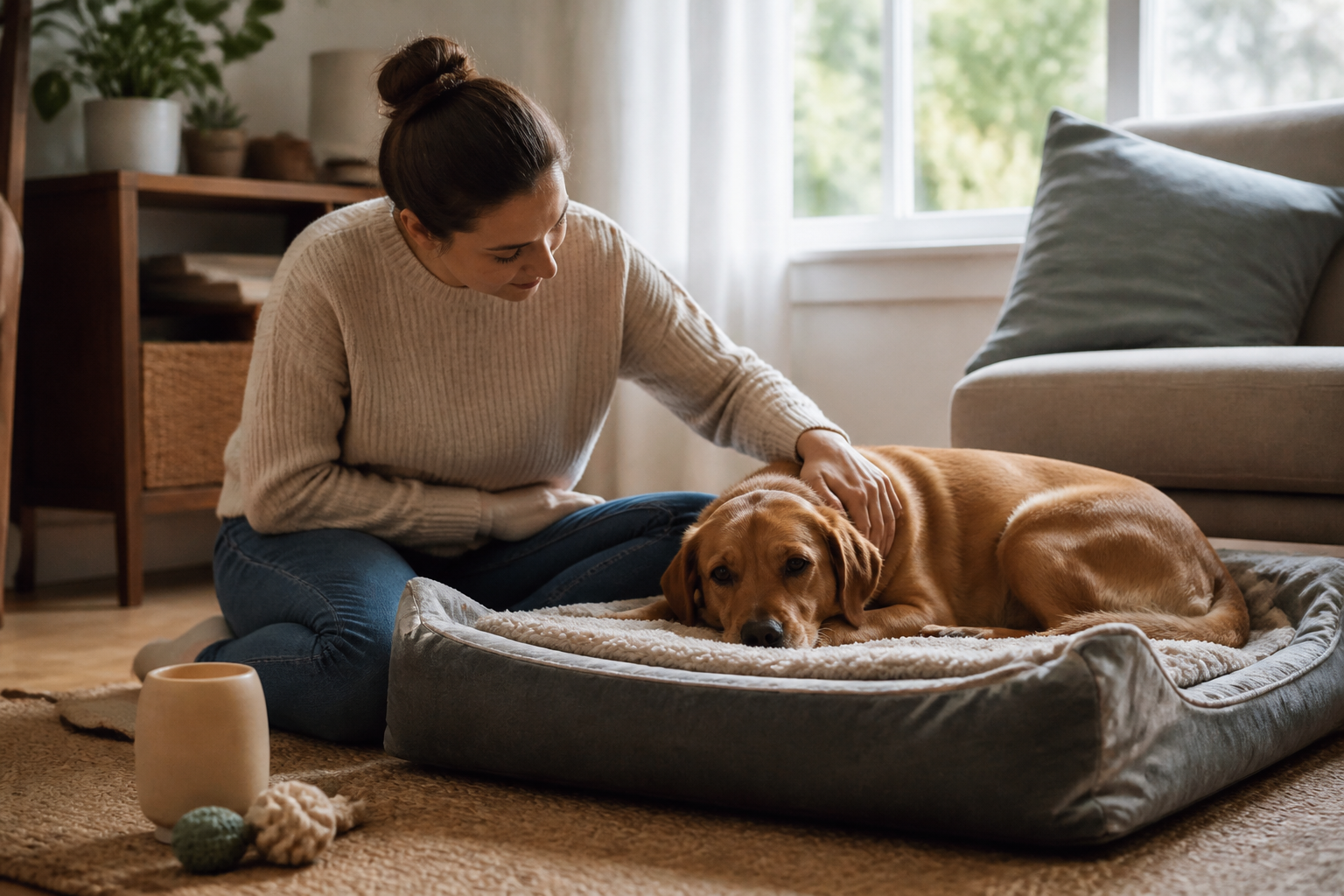
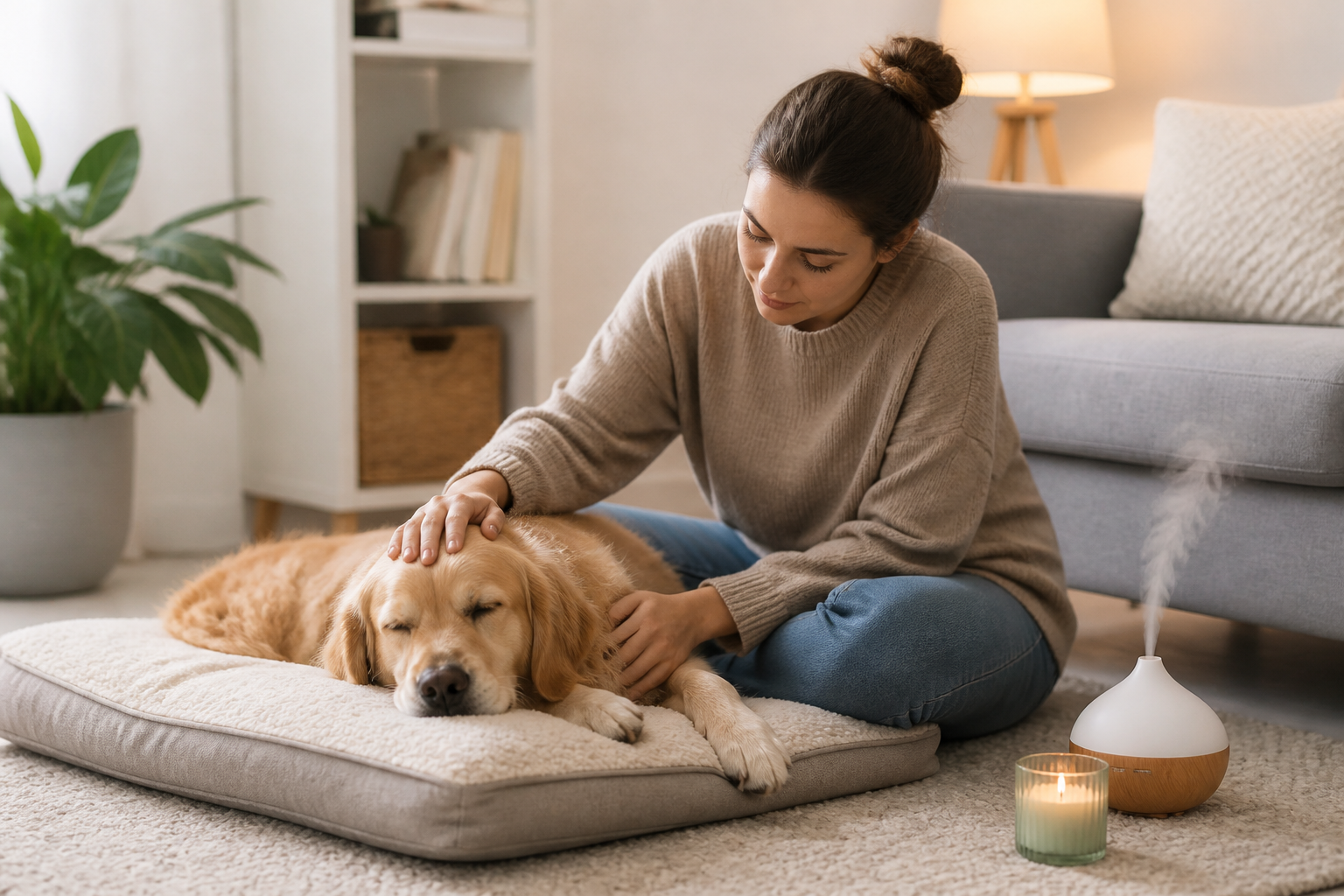
First, reduce stimulation. Move your dog to a quiet, familiar room, close curtains, lower television volume, and provide access to water. Do not force contact, pull the dog from a hiding place, or demand obedience during peak fear. Sit nearby if your presence helps, but allow the dog to choose distance.

Use a steady voice and ordinary movements. Some dogs want gentle stroking; others become more tense when touched. Watch body language: soft eyes, loose muscles, normal breathing, and voluntary approach suggest comfort, while freezing, turning away, lip licking, whale eye, or rigid posture suggests that more space is needed.
Offer a safe retreat before anxiety begins. A crate can be useful if it has already been taught as a comfortable resting place. Never use it as emergency confinement for a dog that panics inside. A bed behind a baby gate, a covered open crate, or a quiet corner may work better. Keep exits safe, especially during fireworks or storms, because frightened dogs may bolt.
For separation-related distress, avoid dramatic departures and reunions. Prepare enrichment in advance, leave calmly, and return without creating a highly charged event. However, do not simply increase alone time if your dog is panicking. Progress must remain below the level that triggers intense distress.
Building Long-Term Resilience
A predictable daily rhythm can make the environment easier to understand. Feed, walk, rest, and play at reasonably consistent times, while allowing flexibility. Adequate sleep matters; overtired dogs may react more strongly. Provide age-appropriate physical activity, sniffing opportunities, play, and food puzzles, but avoid exhausting a fearful dog or using exercise as a substitute for treatment.
Reward calm behavior when it occurs naturally. If your dog settles on a mat, looks at a trigger and then relaxes, or chooses to investigate something unfamiliar, quietly offer a treat. Reinforcement should identify the behavior you want, not bribe a dog into enduring overwhelming exposure.
Desensitization and counterconditioning are structured methods for changing emotional responses. Begin with a very mild version of the trigger, such as a recording played at barely audible volume, or a person standing far away. Pair that exposure with valued food or play. Stop before distress appears. Gradually change one factor at a time, increasing intensity only when the dog remains comfortable.
Flooding, forced greetings, leash corrections, and confrontational techniques can worsen fear. A qualified reward-based behavior professional can design a plan, especially for aggression, escape behavior, severe separation distress, or multiple triggers.
Choosing a Calming Product
“Anxiety relief” products include calming beds, pressure garments, pheromone products, supplements, treats, chews, collars, diffusers, and prescription medicines. Their quality, evidence, and suitability vary. Treat every product as one component of a broader plan rather than a guaranteed solution.
Comfort products
A supportive bed in a quiet location may improve rest. Choose washable materials, appropriate size, and construction that will not create a chewing or swallowing hazard. A pressure garment may comfort some dogs, but it must fit correctly and be introduced gradually. Remove it if the dog pants excessively, struggles, overheats, or shows increased distress. Never use clothing that restricts movement or breathing.
Pheromone products are designed to imitate chemical signals associated with canine comfort. Some dogs may respond, while others show little change. Follow label directions and observe your dog honestly. A lack of improvement after a reasonable trial means the plan should be reconsidered, not that the dog has failed.
Supplements and calming treats
Products may contain ingredients such as L-theanine, milk-derived compounds, herbs, or other nutrients. “Natural” does not automatically mean safe, effective, or suitable for every dog. Formulations differ, quality control may vary, and interactions with medicines or health conditions are possible. Ask a veterinarian before giving a supplement, particularly to a puppy, senior dog, pregnant dog, or dog with liver, kidney, seizure, or digestive problems.
Read the complete label. Check active ingredients, serving instructions, storage requirements, calorie content, and warnings. Avoid products with undisclosed blends or vague promises of instant calm. Never give a human medication or edible product containing ingredients toxic to dogs, including xylitol where present. When a veterinarian recommends a product, clarify the dose, timing, expected response, and signs that require a call.
Prescription support
For severe or recurring anxiety, a veterinarian may discuss prescription treatment. Medication can reduce overwhelming fear enough for learning and behavior modification to become possible. It is not a shortcut and may require monitoring, adjustment, or a gradual change in use. Give only medication prescribed for that dog and follow instructions precisely. Never share medication between animals or combine calming products without professional advice.
A Practical Product Description
A well-designed canine calming aid should be easy to use, transparent about ingredients, and appropriate for the specific situation. The product should complement a safe retreat, predictable routine, and reward-based training. Useful features may include clear serving guidance, secure packaging, washable materials where relevant, and instructions for introducing the item gradually.
The best choice depends on the problem. A calming bed may suit a dog that needs a reliable resting station. A pheromone diffuser may be convenient for household stress, although response is individual. A treat or supplement may help support a short-term routine, but it should not conceal serious symptoms. A pressure garment may be considered for noise events only after careful fitting and calm practice.
Evaluate claims carefully. Responsible descriptions explain what the product is intended to support, how quickly effects might be noticed if known, limitations, contraindications, and when veterinary advice is needed. Be cautious of guarantees, dramatic testimonials, or language suggesting that one item cures every type of anxiety. A trustworthy product makes observation and informed decision-making easier rather than promising certainty.
Introduce any new aid on a quiet day. Let your dog sniff it, pair it with rewards, and remove it if discomfort appears. Record triggers, behavior, timing, product use, and recovery. This simple log helps reveal whether the aid is useful and gives your veterinarian or behavior professional practical information.
Managing Specific Situations
Thunderstorms and fireworks
Prepare before the noise begins. Exercise earlier, secure doors and windows, check identification details, and create a retreat with familiar bedding. Close curtains to reduce flashes and use steady background sound if it helps mask sudden bangs. Stay calm and remain available. If your dog has a history of severe noise panic, speak with a veterinarian before the season or event rather than waiting for a crisis.
Being left alone
Use a camera when practical to identify what happens after departure. Some dogs vocalize immediately; others become distressed later. Begin with absences short enough to remain tolerable, then increase duration in small, varied steps. Food toys can help if the dog is relaxed enough to eat, but refusing food may indicate that distress is too high. Professional guidance is especially valuable when destruction, escape attempts, or self-injury occur.
Travel and veterinary visits
Condition your dog gradually to the carrier, harness, car, waiting room, and handling. Pair each stage with rewards and stop before fear escalates. A non-slip surface, familiar blanket, controlled temperature, and secure restraint improve comfort and safety. Ask the veterinary team about low-stress appointment options or pre-visit medication when appropriate.
When to Seek Professional Help
Contact a veterinarian when anxiety is sudden, worsening, persistent, associated with pain, appetite changes, vomiting, diarrhea, confusion, collapse, breathing difficulty, or self-injury. Seek urgent help if a dog has ingested a potentially toxic product, is struggling to breathe, suffers heat-related signs, or cannot stop harming itself.
A veterinary behaviorist is a veterinarian with advanced behavior expertise. A qualified reward-based trainer or behavior consultant can support skills and environmental management, but medical concerns belong with a veterinarian. Ask prospective professionals about methods, credentials, experience with your dog’s problem, and willingness to coordinate care. Avoid anyone who relies on intimidation, promises guaranteed cures, or dismisses fear signals.
Frequently Asked Questions
What is the fastest way to calm an anxious dog?
Reduce the trigger, provide a safe retreat, use a calm presence, and prevent escape. Do not force interaction or punish behavior. If episodes are severe, ask a veterinarian about an individualized emergency plan before the next predictable event.
Do calming treats work?
They may help some dogs, but results depend on the ingredient, dose, cause of anxiety, and individual response. Treats cannot reliably resolve severe fear or replace behavior modification. Review the label with a veterinarian, especially if your dog takes medication or has a medical condition.
Should I comfort my dog when it is scared?
You may offer quiet support if your dog seeks it. Gentle reassurance does not reward an emotion in the simple way people sometimes assume. Follow the dog’s preference: provide contact when welcomed and space when requested. Avoid frantic attention that increases excitement.
Can music or white noise help?
Some dogs settle with consistent, moderate background sound that masks unpredictable noises. Introduce it when the dog is already relaxed and keep volume comfortable. It is a supportive environmental tool, not a universal treatment.
Is crate training suitable for an anxious dog?
A crate can be helpful when the dog already associates it with safety and can remain relaxed there. It is unsuitable as a forced solution for a dog experiencing confinement panic. Build positive associations gradually and provide another retreat if necessary.
How long does anxiety relief take?
The timeline depends on the cause, duration, intensity, health status, and consistency of the plan. Small improvements may appear quickly after a trigger is removed, while learned fears and separation problems often require gradual work over time. Track progress by recovery, sleep, behavior, and ability to cope, not by instant silence alone.
Conclusion
Helping an anxious dog requires compassion, observation, and a plan matched to the individual. Start with safety, veterinary assessment when warranted, predictable routines, enrichment, and gradual reward-based learning. Choose calming products for specific purposes, inspect their ingredients and instructions, and introduce them carefully. A bed, garment, pheromone aid, supplement, or prescribed medicine may contribute to comfort, but none should be treated as a universal cure.
The most persuasive measure of success is not whether a dog appears quiet at one moment. It is whether the dog can recover more easily, rest more comfortably, and handle ordinary experiences with less fear. Keep records, adjust thoughtfully, and seek qualified help when anxiety is intense or persistent. With patient care and appropriate support, many dogs can develop safer, calmer ways to cope.