
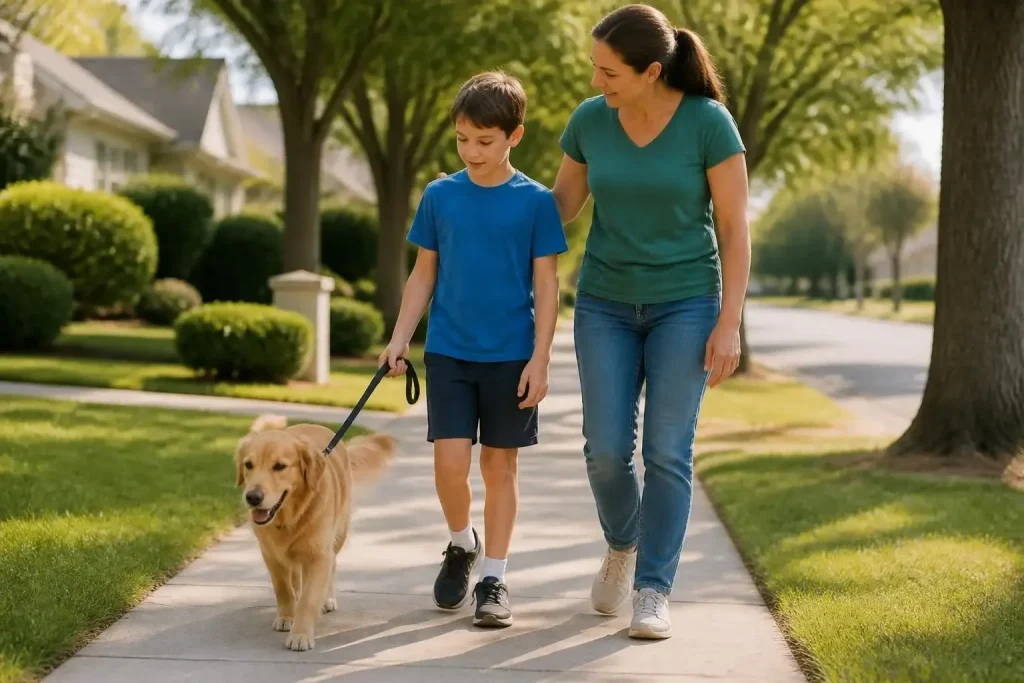
Dog Walking For Kids: Why Dog Walking Is a Valuable Skill for Kids
Dog walking can be a joyful way for children to spend time outdoors, build confidence, and participate in family care. However, a child’s readiness depends on age, maturity, physical ability, the dog’s size and behavior, and the surroundings. A leash is not a substitute for supervision or training. The safest approach treats walking as a skill that develops gradually, with an adult nearby whenever circumstances require support.
A well-planned children’s dog-walking routine can provide exercise, responsibility, and companionship without making the child feel overwhelmed. Begin by explaining that the dog is a living animal with changing moods, not a toy or a machine. The child should learn to notice body language, respect personal space, and ask an adult for help when something feels uncertain.
Choosing a Safe Starting Point
Assess the Child
Consider whether the child can follow several instructions in sequence, remain calm around distractions, and hold the leash securely without wrapping it around a hand. A child who forgets directions, runs impulsively, or becomes frightened easily may benefit from more practice before walking independently. Readiness is individual, so age alone should not determine permission.
Start with short sessions in a quiet, familiar area. An adult can hold a second leash, use a backup connection, or walk alongside the child while demonstrating safe habits. The goal is not immediate independence. The goal is reliable decision-making.
Assess the Dog
A calm, responsive dog is generally a better learning partner than a powerful, nervous, reactive, or highly excitable dog. Even a friendly dog may pull toward squirrels, greet people abruptly, or become unsettled near traffic. Consider the dog’s strength compared with the child’s ability to control the leash. If the dog can easily pull the child off balance, an adult should manage the walk.
Review the dog’s history honestly. A dog that has shown snapping, escaping, guarding, chasing, or intense fear needs professional guidance and close adult management. Children should never be expected to solve behavioral problems during a walk.
Assess the Route
Select routes with safe crossings, adequate visibility, manageable noise, and enough space to move away from other dogs. Avoid busy roads, unstable surfaces, extreme heat, and areas where loose animals are common. Check the route in advance, including water access and possible escape points if the dog slips free.
Essential Equipment and Preparation
A properly fitted collar or harness, a standard leash, identification, waste bags, and weather-appropriate clothing are basic supplies. A comfortable harness may offer useful control, but fit and design matter; ask a qualified trainer or veterinarian for guidance if equipment causes rubbing, coughing, or restricted movement. Avoid retractable leashes for beginners because their changing length can complicate control around roads, bicycles, and unfamiliar dogs.
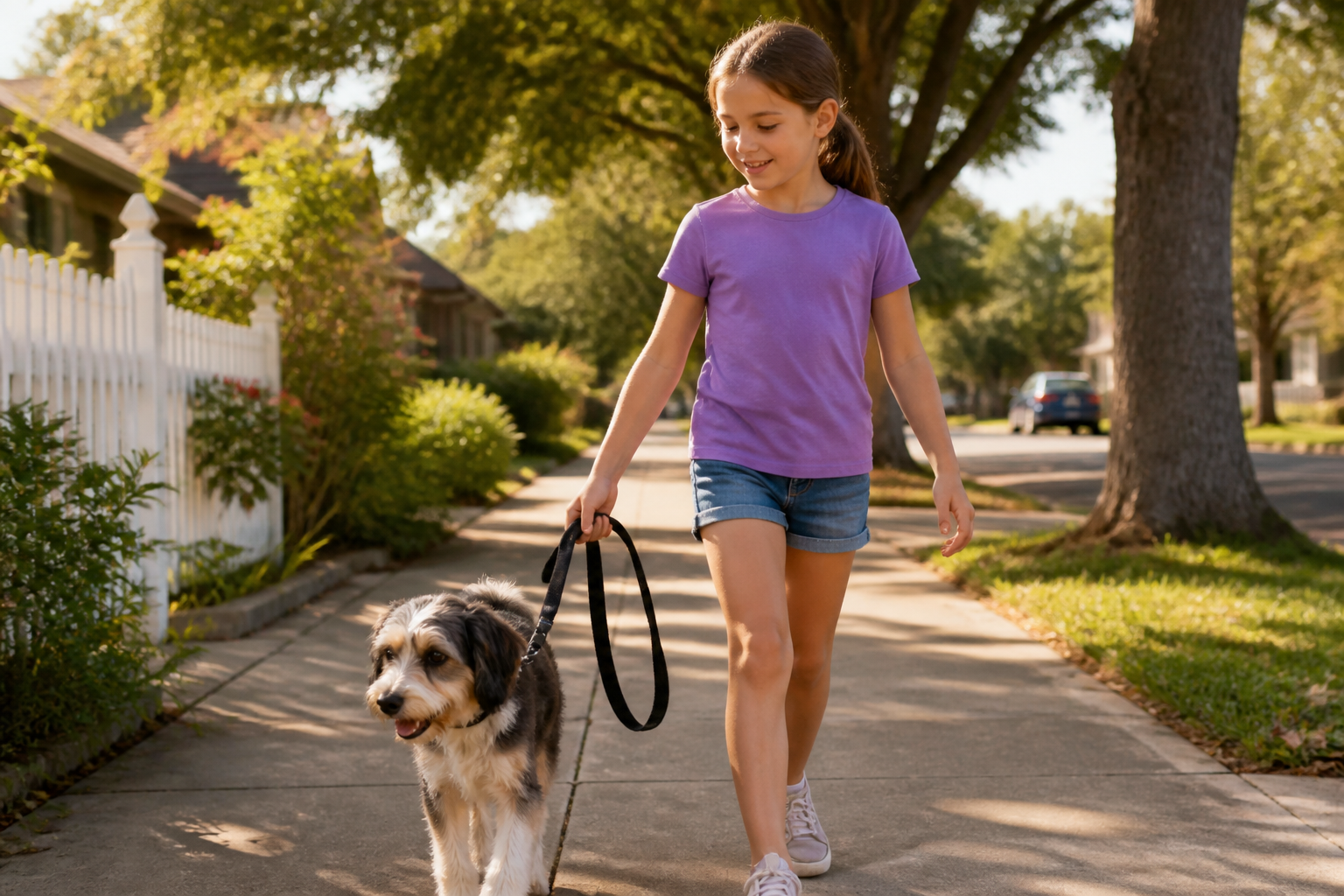
Before leaving, check that doors and gates are closed, the leash is attached securely, and the child knows where supplies are stored. Bring water when conditions or distance make it appropriate. In hot weather, choose cooler times and inspect pavement with the back of your hand. If it feels too hot for a hand, it may be uncomfortable for paws.
Children should wear visible clothing near roads and suitable shoes with secure soles. Phones can be useful for contacting an adult, but they should not distract from the dog or surroundings. Depending on family rules and local regulations, an identification card with an emergency contact may provide additional reassurance.
Teaching Leash Skills
Practice Indoors
Begin without a moving dog. Teach the child how to hold the leash with both hands when needed, keep a safe amount of slack, and avoid placing fingers inside loops. Practice stopping, turning, and releasing the leash only when an adult gives permission. The child should understand that wrapping a leash around a wrist, waist, bicycle, or playground equipment can create a dangerous entanglement.
Next, practice with the dog indoors or in a secure yard. Reward the dog for checking in, walking near the child, and responding to a calm stop cue. Encourage the child to use simple words and a steady voice. Pulling back hard can increase tension and excitement, so adults should demonstrate turning away, pausing, or calling the dog toward a reward instead.
Add Controlled Distractions
Move to a quiet outdoor location once the child and dog can cooperate in a controlled space. Introduce distractions one at a time. A distant person, mild sound, or familiar dog may be easier than a crowded park. Keep sessions short enough that both partners can succeed.
Teach a clear emergency response: stop, hold the leash safely, and call the supervising adult. The child should not chase a dog that escapes, run toward a fight, or reach between animals. Practice these responses through calm role-play so they are easier to remember under pressure.
Understanding Dog Body Language
Children need practical signals rather than frightening warnings. A relaxed dog may move loosely, breathe normally, and choose to approach. Stress can appear as turning away, lip licking, yawning outside a resting context, tucked posture, raised hackles, freezing, growling, or repeated attempts to leave. No single signal explains every situation, so children should consider the whole body and the surrounding event.
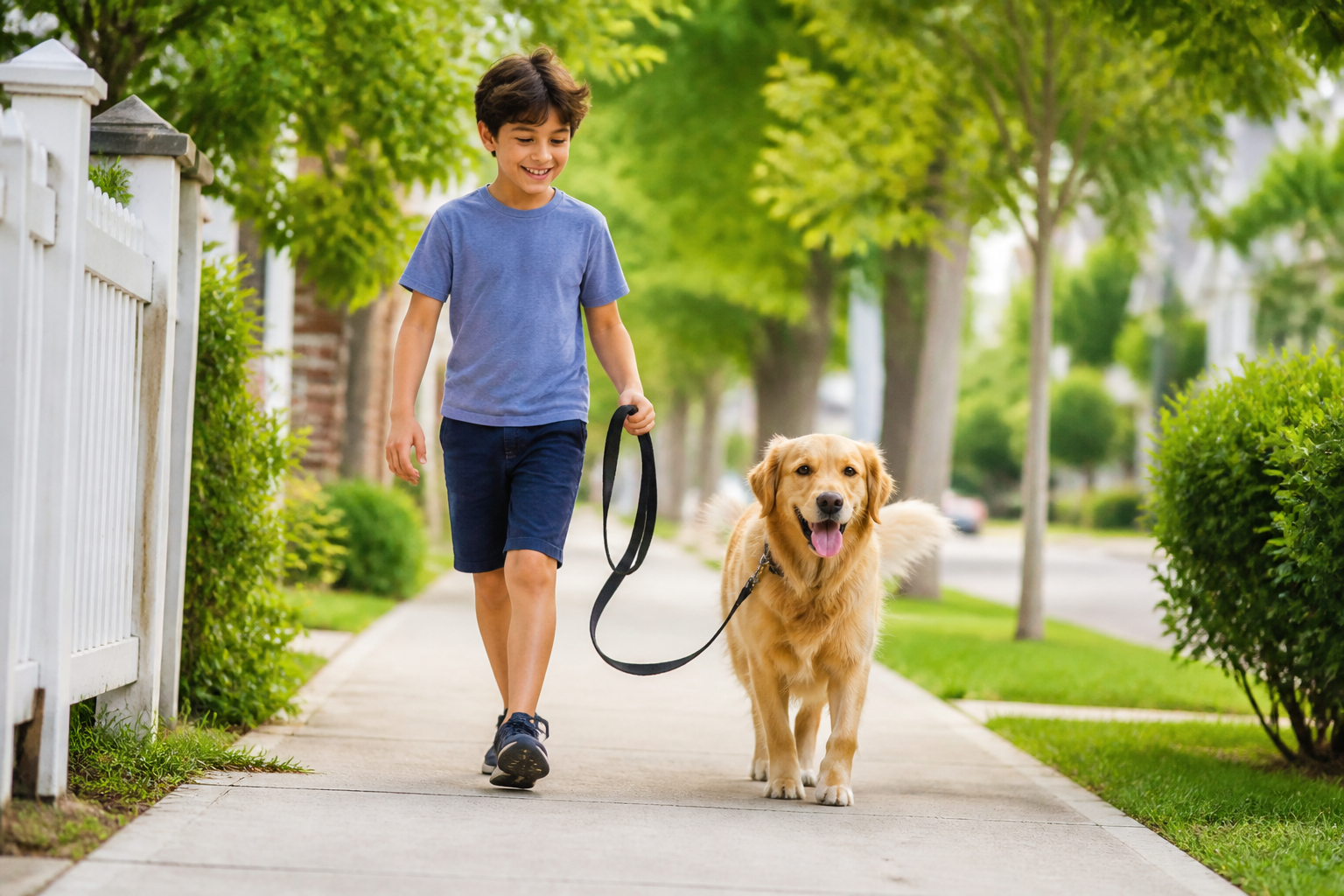
Teach the child that growling is communication, not misbehavior to punish. If the dog growls, freezes, snaps, or seems overwhelmed, the child should stop interaction and summon an adult. The dog should have space. Similarly, children should ask before approaching another dog and should never pet a dog through a fence, disturb a sleeping or eating dog, or hug an unfamiliar animal.
When another dog approaches, create distance early. Cross the street, step behind a barrier, or calmly turn around. Do not allow greetings simply because both leashes are present. A polite refusal protects dogs and people.
A Safe Walking Routine
Before Leaving
Use a simple checklist: toilet opportunity, equipment check, weather check, route choice, and adult availability. Explain the planned duration and what to do if the dog pulls, becomes frightened, or sees another animal. Establish a meeting place or a phone procedure if the child is walking with an adult at a distance.
During the Walk
Keep the dog on the side away from traffic when practical, and stay alert at driveways, intersections, and parking areas. Stop before crossing, look carefully, and cross only when the adult says it is safe. Avoid headphones and distractions. Let the dog sniff in appropriate places because sniffing provides useful mental activity, but maintain awareness of hazards such as broken glass, discarded food, chemicals, and thorny plants.
Praise responsible choices more than perfect behavior. If the dog pulls, the child can stop and wait for guidance rather than struggling. If the child feels unsafe, the correct choice is to return home or call the supervising adult. Finishing early is safer than forcing a difficult walk.
After Returning
Remove the leash only inside a secure area. Check paws for cuts, irritation, burrs, or hot surfaces, and offer water. Put equipment away neatly and wash hands after handling waste. Ask the child what went well and what felt difficult. This brief review turns each outing into a practical lesson.
Supervision and Independence
Independence should expand in stages. First, an adult demonstrates. Next, the child handles part of the route while the adult remains close. Later, the child may lead a familiar section with direct supervision. Only after consistent success should a family consider any greater freedom, and local laws, neighborhood conditions, and the dog’s behavior must be considered.
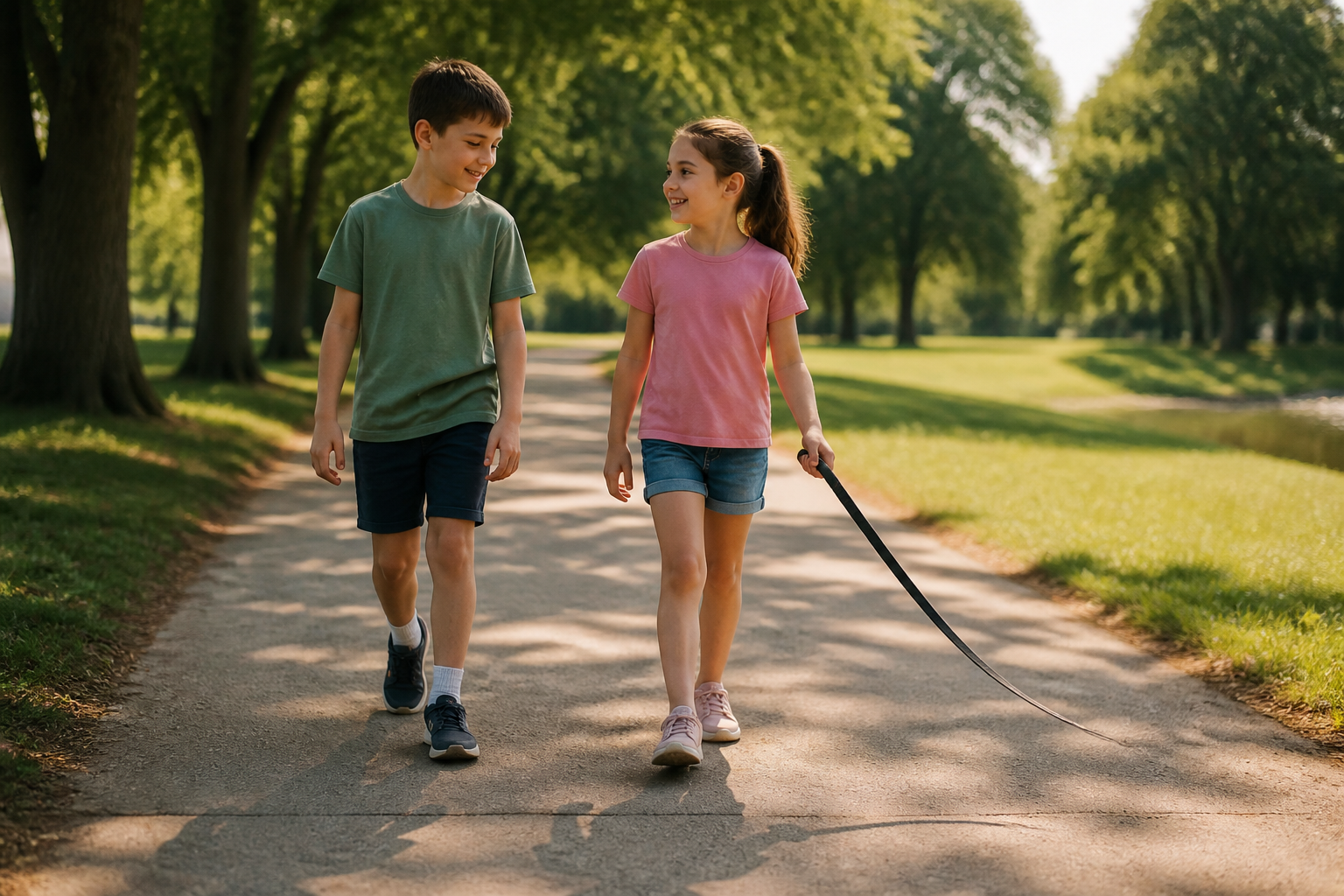
Supervision means active attention, not merely being nearby. Adults should monitor traffic, animals, weather, and the child’s fatigue. They should intervene before a problem becomes a crisis. Children need permission to ask for help without fearing blame. This attitude encourages honest reporting when a leash breaks, a dog acts strangely, or the child becomes uncomfortable.
Managing Common Challenges
Pulling is best addressed through training, equipment review, and route management. A shorter, quieter walk may be more productive than a long walk full of triggers. Chasing wildlife requires distance and secure handling; never allow a child to run after the dog.
If the dog barks at people or animals, increase space and consult a qualified behavior professional if the pattern persists. If the child is nervous, invite them to observe first, then hold the leash for a few steps in a protected area. Confidence grows through predictable success, not pressure.
Weather deserves serious attention. In heat, watch for heavy panting, weakness, vomiting, confusion, or collapse and seek urgent veterinary help for concerning signs. In cold or icy conditions, protect paws as appropriate and shorten outings. Thunder, fireworks, and poor visibility may make an indoor activity safer.
A Practical Family Product Approach
A family dog-walking kit can make training organized and appealing. Choose a properly fitted harness or collar, a durable standard leash, waste bags, reflective details, a small treat pouch, water, and an emergency contact card. The kit should be sized for the actual dog and child rather than selected for appearance alone.
A useful kit also includes a written safety card. Keep it brief: remain with the dog, avoid unknown animals, move away from traffic, call an adult when uncertain, and never run after an escaped dog. Store the supplies in one visible location so preparation becomes a routine rather than a rushed search.
Select products that are comfortable, easy to inspect, and simple for the child to use. Replace worn clips, frayed straps, cracked buckles, or damaged reflective material promptly. A colorful design can encourage ownership, but secure fit and dependable construction matter more than decoration.
Frequently Asked Questions
What age is appropriate for dog walking?
There is no universal age. Readiness depends on maturity, strength, attention, the dog’s behavior, and the route. Many children can begin with supervised practice before they are ready to manage a complete walk. An adult should decide based on demonstrated skills rather than promises.
Should a child walk a large dog?
Only when the child can safely control the dog and an adult has assessed likely distractions. Size alone does not determine risk, but a strong dog can pull a small child into traffic or onto the ground. Shared handling or adult-led walks may be better.
Can children walk reactive dogs?
Children should not be responsible for managing a reactive dog. A qualified professional can create a training plan, while an adult handles walks and prevents difficult encounters. The child may participate in calm, structured exercises only under close guidance.
What should a child do if another dog approaches?
The child should stay calm, avoid reaching toward the dog, create distance, and call the supervising adult. Crossing the street or turning around is appropriate. The child should never permit an unwanted greeting or place hands between dogs.
What if the dog escapes?
The child should not chase. They should alert an adult, remain in a safe location, and follow the family’s emergency plan. Adults can use familiar calls, rewards, and safe containment methods. Preventing escape through secure equipment is the most effective strategy.
How long should a child’s walk be?
Duration should match the child’s ability, weather, route, and the dog’s needs. Short, successful walks are preferable to outings that cause fatigue, frustration, or unsafe distraction. Gradually increase time only when both child and dog remain comfortable.
Conclusion
Dog walking for kids works best as guided education rather than an automatic household duty. With a suitable dog, appropriate equipment, a carefully chosen route, and responsive adult supervision, children can learn responsibility while enjoying meaningful outdoor time. Teach preparation, leash handling, body-language awareness, traffic safety, and emergency responses in small steps. Reward sound decisions, respect every sign of discomfort, and treat early returns as sensible choices.
The strongest routine is one the family can repeat safely. Review the dog’s behavior and the child’s confidence regularly, adjust responsibilities when conditions change, and seek professional help for persistent fear, aggression, or control problems. When safety comes first, dog walking becomes more than exercise: it becomes a practical lesson in empathy, judgment, patience, and dependable care.
Pingback: Understanding Advanced Dog Training
Pingback: Dog Health & Nutrition: Choosing a Balanced Diet
Pingback: Anxiety Relief for Dogs: Calm, Comfort, and Care