
Understanding Puppy Training
Puppy training is the process of teaching a young dog how to live safely, calmly, and cooperatively with people. It includes more than obedience commands. A well planned program develops house manners, communication, confidence, emotional control, handling tolerance, and reliable habits. Training should begin when the puppy arrives, while remaining suitable for its age, health, temperament, and previous experience.
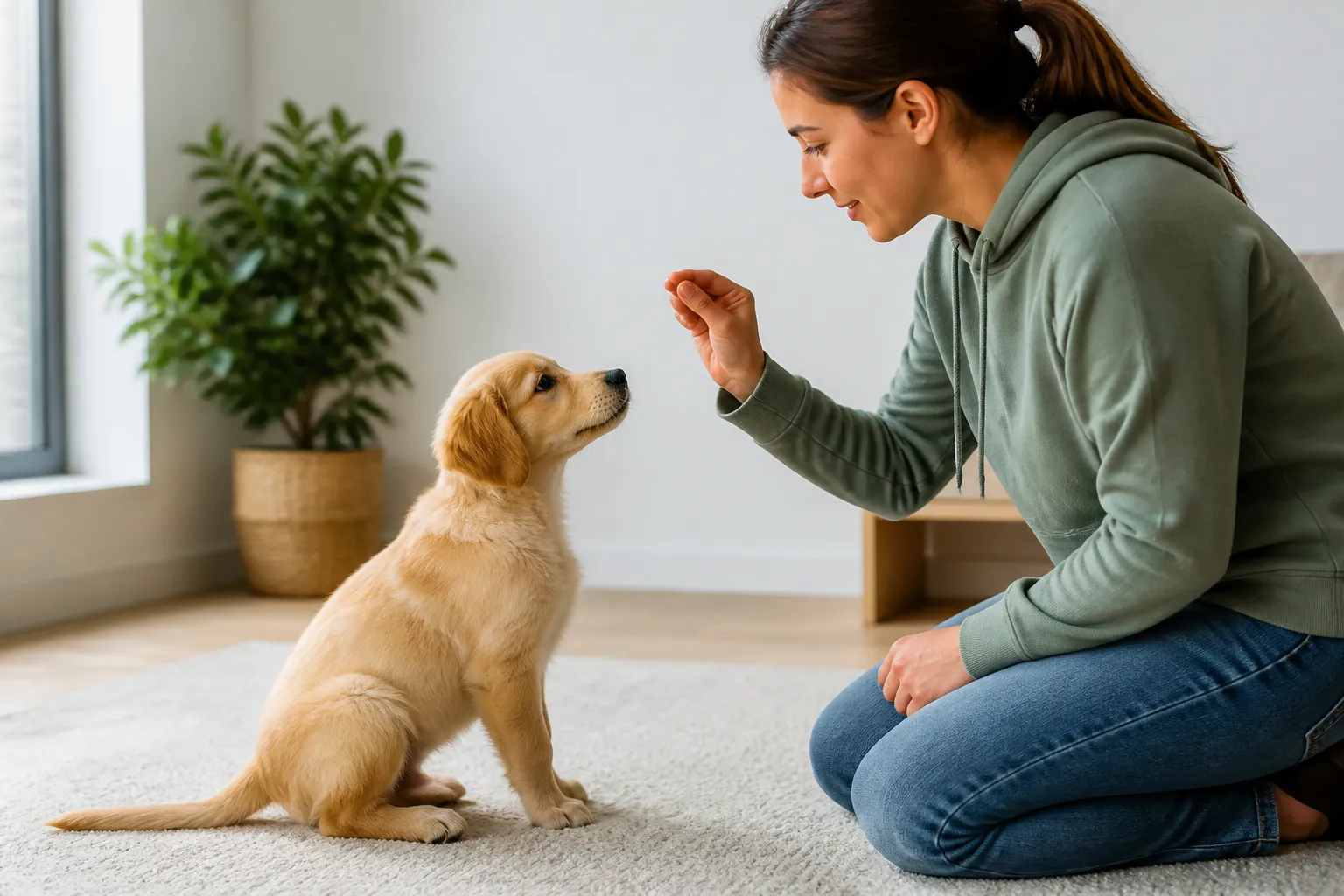
The most effective approach is kind, consistent, and reward based. Reward based training means reinforcing behaviors you want to see with food, play, praise, access to something enjoyable, or a combination of these rewards. The goal is not to control every movement. It is to make desirable choices clear, prevent unnecessary mistakes, and teach the puppy what to do instead of merely correcting what is wrong.
Puppies learn through consequences and repetition. If sitting earns attention, sitting becomes more useful. If jumping reliably produces excitement, jumping may become stronger. Everyone in the household should therefore use similar cues, rules, and rewards. Consistency reduces confusion and helps the puppy predict what will happen.
Preparing a Training Environment
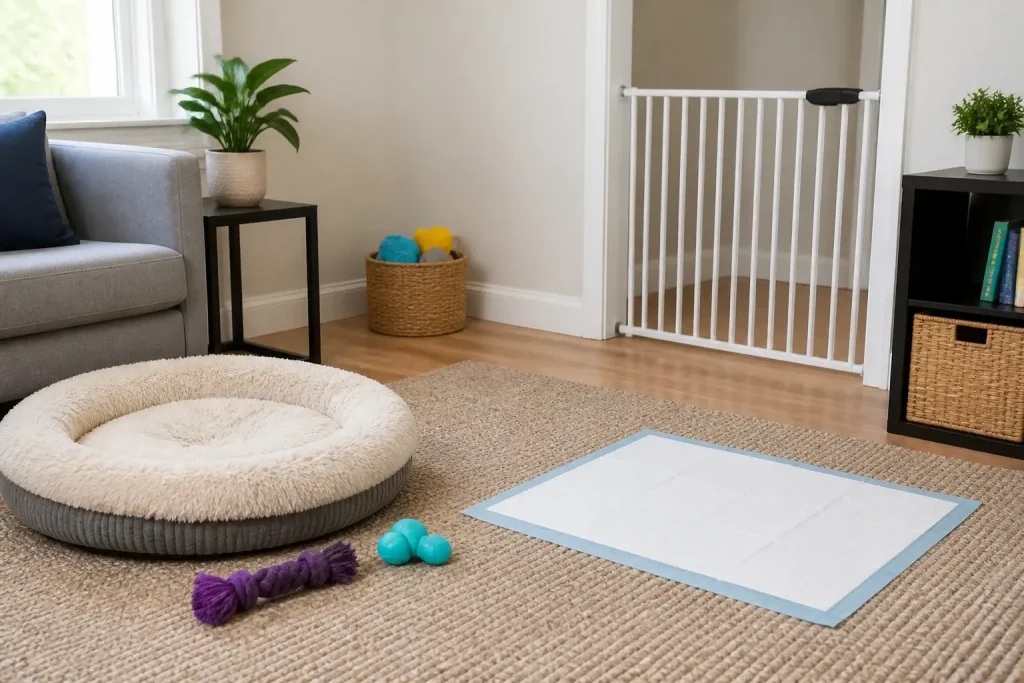
Before teaching formal cues, arrange the home so success is easier. Use a secure crate, puppy pen, baby gates, chew items, washable bedding, and a lead appropriate for the puppy’s size. Remove or protect electrical cables, medicines, toxic plants, small objects, and foods that may be dangerous. Management is not a substitute for training, but it prevents rehearsal of unwanted behavior while learning is still developing.
Choose a quiet training area with limited distractions. Keep sessions brief, perhaps a few minutes at first, and finish while the puppy remains interested. Several short practices are generally more productive than one long lesson. Have small, soft treats ready, but account for training food in the puppy’s daily diet. You can also reward with a toy, gentle praise, sniffing time, or permission to greet someone.
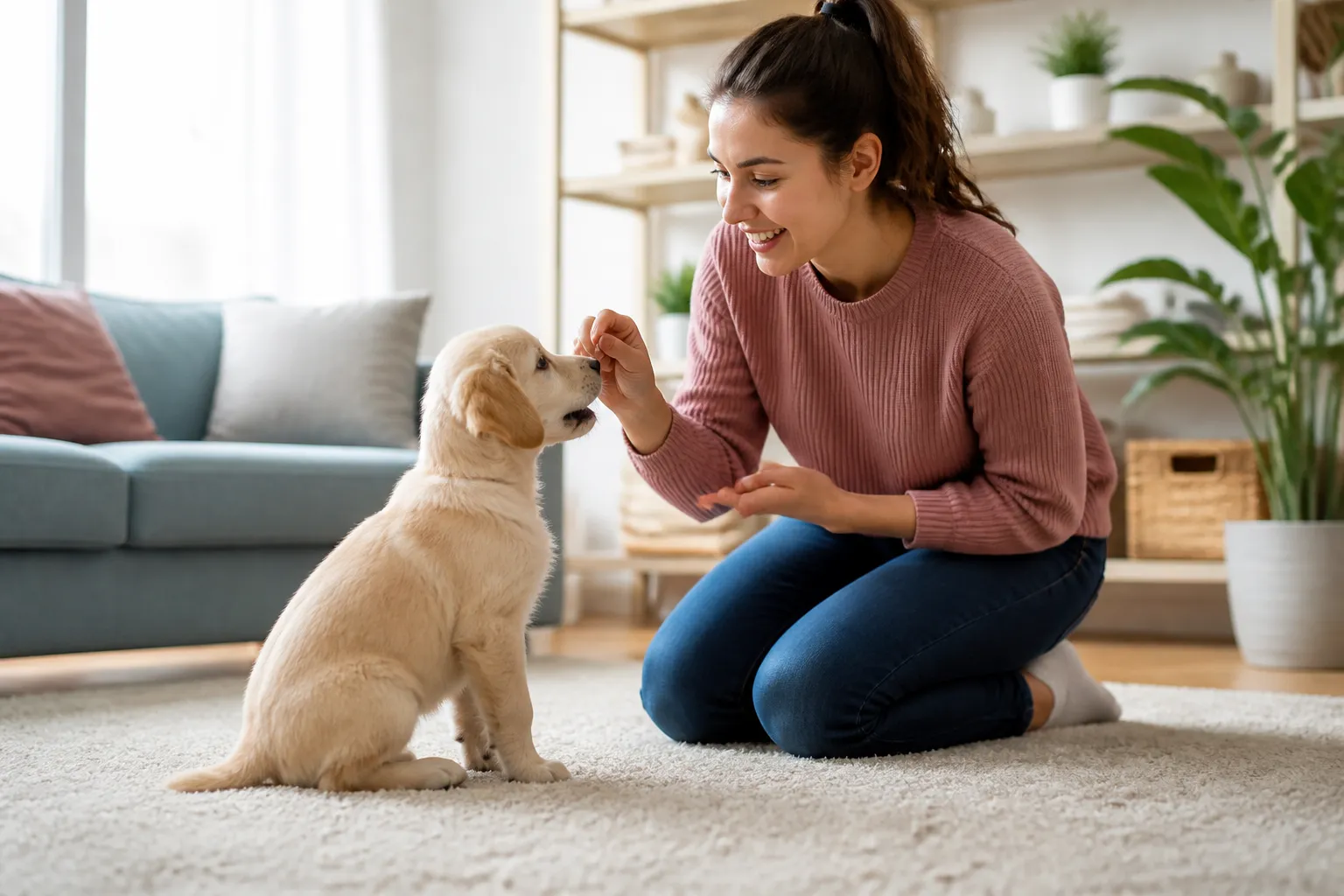
Select simple verbal cues and use them consistently. Say the cue once, wait, and reward the response. Repeating a cue many times can teach the puppy that the first request is optional. Pair words with clear body language, especially during early learning, then gradually reduce gestures so the verbal cue becomes meaningful on its own.
Building Trust and Communication
Trust grows when the puppy can understand and influence outcomes. Avoid intimidating methods, physical punishment, shouting, or frightening corrections. These techniques can suppress visible behavior without teaching a suitable alternative, and they may create fear or defensive responses. Calm guidance allows the puppy to remain able to learn.
Observe body language. A loose body, soft eyes, relaxed mouth, and willingness to take food often indicate comfort. Lip licking, yawning, turning away, crouching, hiding, sudden scratching, or refusing treats may signal stress. When stress appears, increase distance from the trigger, reduce difficulty, or end the session. Respecting communication helps prevent escalation.
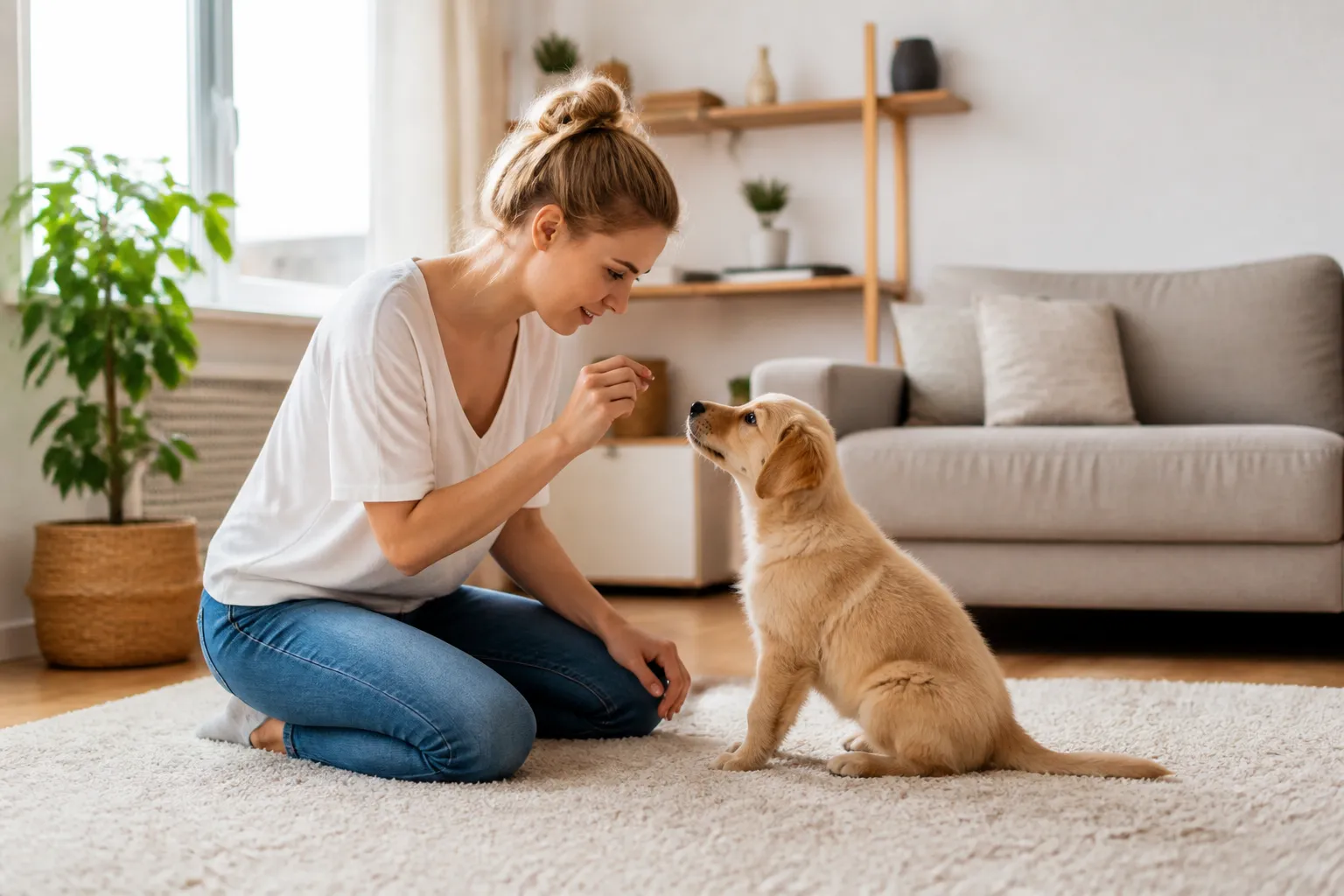
Teach attention by saying the puppy’s name in a pleasant tone. When it looks toward you, mark the moment with praise or a brief word such as “yes,” then reward. Practice in easy locations before adding distractions. The name should predict useful attention, not scolding. You can also reward voluntary check-ins during walks or play.
Teaching a Marker
A marker is a consistent word or sound that tells the puppy exactly which behavior earned a reward. Say the marker, then provide the reward immediately. Practice several times without asking for anything, so the sequence becomes clear. Timing matters: reward the behavior while it is happening or within a moment of completion. Delayed rewards can accidentally reinforce a different action.
House Training and Daily Routines
House training depends on supervision, scheduling, and rapid reinforcement. Take the puppy outside after waking, eating, drinking heavily, playing, training, and sleeping. Very young puppies may need frequent opportunities because bladder control is still developing. Carry or guide the puppy directly to the chosen toilet area, wait quietly, and reward immediately after elimination.
Use a predictable phrase, such as “go potty,” only when elimination is likely or already beginning. Over time, the phrase may become a useful cue. Keep a simple record of meals, water, naps, and accidents. Patterns can reveal when additional outings are needed.
If an accident occurs, interrupt gently if you catch it, then take the puppy outside. Clean the area thoroughly with a product designed to remove odor, because lingering scent can encourage repeated use. Do not punish after the event; the puppy may not connect your reaction with the earlier action and may become reluctant to eliminate near people.
Crates and pens should function as comfortable management spaces, never as punishment. Introduce them gradually with food, chews, and open-door exploration. Increase closed-door periods only when the puppy remains relaxed. A puppy that is vocal, frantic, drooling, or trying to escape may be experiencing distress rather than ordinary protest. Reassess duration and seek qualified guidance if distress persists.
Biting, Chewing, and Appropriate Play
Mouthing is normal puppy behavior, but humans must teach acceptable ways to use the mouth. Keep suitable chew toys nearby and redirect hands, clothing, and furniture toward them. When the puppy takes the toy, continue play or offer praise. If biting becomes painful or overly excited, calmly pause interaction, create brief distance, and resume when the puppy settles.
Avoid wrestling with hands or encouraging chasing of clothing. Use toys that permit space between fingers and teeth. Rotate several safe items to maintain interest, and inspect them regularly for damage. Choose chews appropriate to the puppy’s size and chewing style; no chew is risk free, so supervise and discard items that break apart or become small enough to swallow.
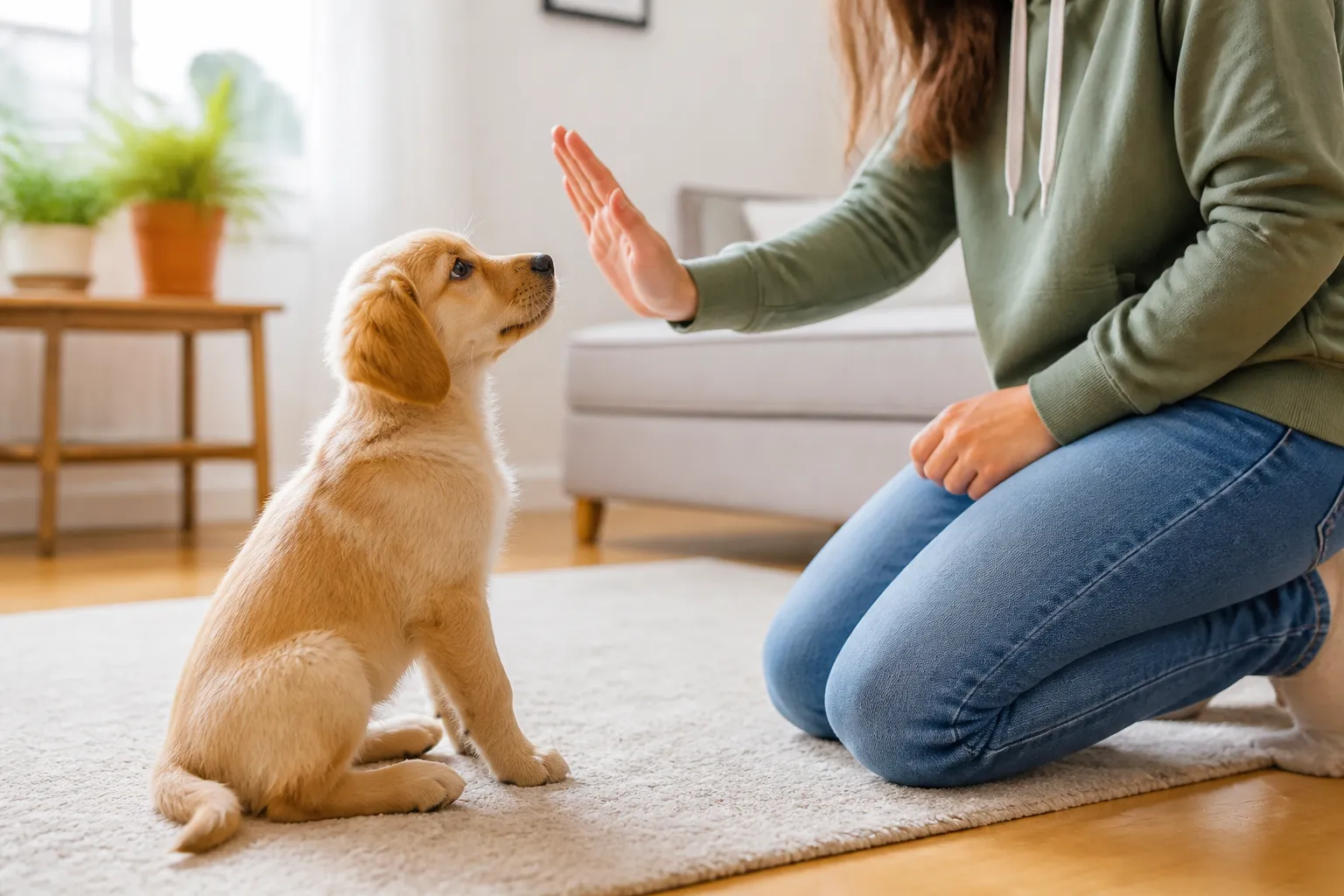
Biting often intensifies when puppies are tired, hungry, overexcited, or lacking appropriate activity. A quiet nap, toilet opportunity, food, or short sniffing walk may solve the underlying problem more effectively than repeated verbal correction. Children should not be expected to manage intense mouthing alone. Adults should supervise interactions and provide clear escape spaces for both child and puppy.
Socialization and Confidence
Socialization means carefully introducing a puppy to people, animals, environments, surfaces, sounds, handling, and everyday events while keeping the experience positive and manageable. It does not mean forcing greetings or exposing the puppy to overwhelming situations. The puppy should be able to observe, retreat, eat treats, and recover.
Create a gradual exposure plan. Start with mild versions of a stimulus, such as a distant bicycle, quiet household sound, or calm visitor. Pair observation with food or play. If the puppy freezes, hides, pulls away, barks intensely, or stops accepting rewards, the situation is too difficult. Increase distance, lower the intensity, or leave.
Include different people, clothing styles, voices, vehicles, floor surfaces, umbrellas, grooming tools, and gentle restraint. Arrange controlled meetings with healthy, appropriately vaccinated dogs when advised by a veterinarian. Puppy classes can support learning, but evaluate the instructor’s methods, cleanliness, class size, and ability to separate dogs by comfort and play style.
Socialization should continue beyond the earliest weeks. Adolescence can bring new sensitivities, and a previously relaxed puppy may need renewed gradual practice. The objective is not to make the dog enjoy every person or animal. A successful outcome may be calmly noticing a trigger and choosing to remain near the handler.
Core Skills for Everyday Life
Teach a dependable response to its name, hand targeting, sit, down, wait, leave it, drop it, come, and settle. Begin each behavior in a quiet setting and reward generously. Then add distance, duration, movement, and distractions one variable at a time. If performance falls apart, make the exercise easier instead of repeating the cue more forcefully.
Recall
Recall can protect a dog from danger, so build it carefully. Use a cheerful cue and reward with something highly valuable. Start a short distance away indoors. When the puppy arrives, gently hold its collar, reward, and release it again so coming does not always end freedom. Never call repeatedly to deliver predictable punishment.
Practice with a long line in safe areas once indoor responses are strong. Avoid testing recall around major distractions before the skill is ready. Sometimes run away playfully, crouch, or open your arms to make returning attractive. Reward even an imperfect response, then improve reliability through easier repetitions.
Loose Lead Walking
Loose lead walking is not a demand for a formal heel. It teaches the puppy that a slack lead permits movement and exploration. Begin indoors or in a quiet outdoor area. Reward near your side, stop when the lead becomes tight, and resume when the puppy turns back or slackens it. Sniffing can be a valuable reward.
Use equipment that fits comfortably and does not restrict breathing. Keep walks short enough to avoid fatigue and frustration. Puppies need opportunities to explore safely, not merely march beside a person. Alternate training, sniffing, rest, and play.
Settle and Calm Behavior
Reward calm moments before the puppy demands attention. Place a mat nearby, deliver treats for lying down or relaxing, and gradually increase the time between rewards. Practice while household activity remains mild, then add movement, visitors, or noise. A settle cue is especially useful during meals, conversations, grooming, and travel.
Do not expect a young puppy to remain motionless for long periods. Meet exercise, sleep, toileting, and social needs first. Calm behavior develops through repeated reinforcement and appropriate daily rhythms.
Handling, Grooming, and Veterinary Preparation
Touch ears, paws, tail, mouth, collar, and body gently, pairing each contact with food. Begin with brief touches and stop before the puppy struggles. Progress to holding a paw, looking inside an ear, brushing, lifting lips, and placing equipment. Cooperative handling reduces stress during grooming and medical care.
Teach the puppy that a carrier, car, or veterinary clinic predicts good experiences. Feed meals near the carrier, then inside it, and practice short journeys before longer travel. Ask veterinary staff about safe socialization opportunities and vaccination considerations. Health, parasite prevention, nutrition, and exercise advice should be individualized by a qualified professional.
Solving Common Training Problems
When unwanted behavior appears, identify its function before choosing a response. A puppy jumping may seek attention; barking may reflect excitement, fear, frustration, or a need; chewing may result from teething or insufficient appropriate outlets. Management and replacement behavior are more useful than guessing.
For jumping, turn away briefly, keep hands quiet, and reward four paws on the floor. For barking at windows, block visual access, call the puppy away, and reinforce calm behavior elsewhere. For stealing objects, avoid chasing; offer a trade with food or a toy, then retrieve the item calmly. Practice “drop it” with low-value objects before emergencies occur.
Regression is normal during growth, environmental changes, illness, or disrupted routines. Return to an easier stage and reinforce success. If behavior includes aggression, severe fear, separation distress, repeated escape attempts, or sudden change, consult a veterinarian and a qualified reward-based behavior professional. Pain and medical conditions can affect behavior.
Choosing a Puppy Training Service
A training product or service should provide clear lessons, practical demonstrations, progression criteria, troubleshooting, and humane methods. Look for guidance that explains how to prevent problems, select rewards, adjust difficulty, and recognize stress. A useful program should support the whole household rather than focus only on impressive commands.
Before joining a class or hiring a trainer, ask how the instructor handles fear, barking, pulling, and mistakes. Ask whether equipment such as shock, prong, or choke collars is required. Confirm that the environment is safe, class sizes are manageable, and private support is available when a puppy cannot learn comfortably in a group.
An online course may suit families who need flexible scheduling, while an in-person class offers controlled practice and feedback. Neither format guarantees success. The best choice matches the puppy’s needs, the handler’s learning style, and the complexity of current challenges. Read policies carefully and avoid promises of instant results.
A Practical Weekly Plan
During the first week, establish a toilet schedule, name response, safe confinement, gentle handling, and reward delivery. During the second, add hand targeting, sit, appropriate chewing, and calm greetings. Next, practice recall indoors, loose lead skills in quiet places, and short exposures to new sounds and surfaces.
Keep a daily rhythm that includes sleep, meals, toilet trips, enrichment, training, play, and quiet time. Write down successes and difficulties. Record the setting, trigger, distance, reward, and result when a behavior fails. This information makes adjustments more objective.
Increase only one challenge at a time. For example, ask for a longer settle at the same distance before adding visitors. If the puppy succeeds four times but struggles on the fifth, do not assume stubbornness; fatigue, distraction, or excessive difficulty may be responsible. End with an easy success.
Frequently Asked Questions
When should puppy training begin?
Begin immediately after the puppy arrives, using gentle routines and management. Formal expectations should match developmental ability. Early lessons can include name recognition, toilet habits, handling, safe exploration, and attention. Training should remain brief, positive, and flexible.
How long should a puppy training session last?
There is no universal duration. Stop when the puppy loses interest, becomes frustrated, or makes repeated errors. Several short practices spread across the day are usually easier than one demanding session. Age, health, temperament, and the behavior being taught all matter.
Should treats be used for every behavior?
Treats are useful, especially when a behavior is new or distractions are high. Once the response is reliable, vary rewards with praise, play, access to sniffing, or life opportunities. Continue reinforcing occasionally so the behavior remains valuable. Do not remove rewards before the puppy understands the task.
Is crate training necessary?
A crate is not essential for every household, but comfortable confinement can assist with travel, rest, safety, and veterinary care. It must be introduced gradually and never used for excessive isolation or punishment. A pen, gated room, or other safe area may be a better choice for some puppies.
How can children participate safely?
Adults should supervise every interaction. Teach children to invite the puppy rather than chase, hug, corner, or disturb it while eating or sleeping. Children can toss treats, practice simple cues with an adult nearby, and help place toys. Provide a puppy-free retreat that children must respect.
What if my puppy does not listen outside?
Outdoor environments contain more distractions than a home. Reduce distance to the distraction, use better rewards, practice at quieter times, and return to simpler exercises. Reliability develops gradually. Avoid repeating cues when the puppy is unable to respond; change the environment first.
When is professional help needed?
Seek help early for intense fear, aggression, resource guarding, separation-related distress, persistent panic, injury risk, or behavior that changes suddenly. A veterinarian can investigate medical contributors. A qualified, reward-based professional can create a tailored plan and coach household members.
Conclusion
Puppy training is an ongoing education in communication, safety, and cooperation. Build the environment carefully, reward useful choices, prevent rehearsals of dangerous habits, and increase challenges gradually. Prioritize sleep, health, socialization, handling, and calm behavior alongside commands. Expect uneven progress, especially during developmental changes, and respond with patience rather than punishment.
The most valuable outcome is not a puppy that performs perfectly in every situation. It is a dog that can recover from surprises, trust its people, make appropriate choices, and participate safely in everyday life. With consistent routines and compassionate guidance, small lessons become durable habits and create a stronger relationship for the years ahead.
Pingback: Dog Health & Nutrition: Building a Healthier, Happier Dog
Pingback: Dog Training for Kids: Safe, Fun, and Effective Tips
Pingback: Dog Walking for Kids: Safe Tips and Responsibilities
Pingback: Dog Walking for Kids: Safe Tips for Fun Adventures
Pingback: Training Your Dog To Come When Called: How to Train Your