
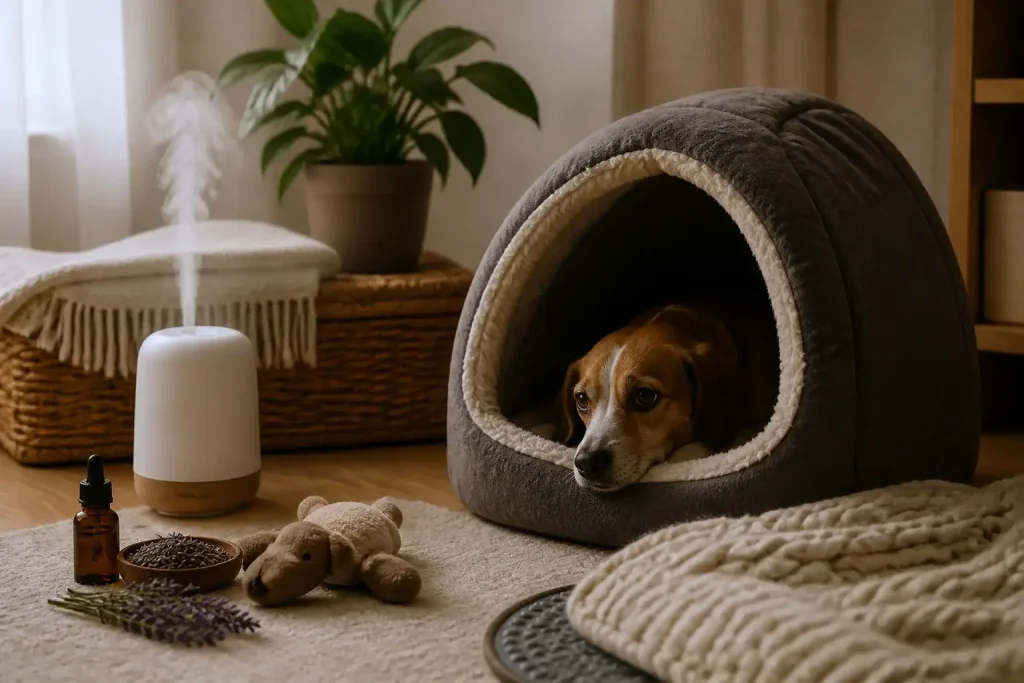
Anxiety relief for dogs works best when it addresses the reason a dog feels unsafe, not simply the visible behavior. Pacing, panting, trembling, barking, hiding, destructive chewing, escape attempts, excessive licking, and accidents can all signal distress. A calm, safe plan combines veterinary guidance, predictable routines, gradual behavior training, environmental changes, and, when appropriate, carefully selected products. No single supplement, collar, bed, toy, or technique helps every dog, and products should support—not replace—medical assessment and humane training.
The first priority is safety. Anxiety can cause a dog to bolt through doors, swallow objects, injure itself, or react defensively. Secure exits, remove dangerous items, provide a quiet retreat, and supervise unfamiliar tools. If anxiety begins suddenly, becomes severe, or appears alongside pain, appetite changes, confusion, vomiting, breathing difficulty, or unusual aggression, arrange a veterinary appointment promptly. A physical problem may be contributing to behavior that looks emotional.
Anxiety Relief For Dogs: Understanding canine anxiety
Anxiety is a state of fear, worry, or anticipation. Some dogs experience a specific trigger, such as thunder, fireworks, car travel, visitors, grooming, or separation from a caregiver. Others remain tense across many situations. A dog may learn that a particular sound, location, or event predicts something unpleasant. Repeated exposure without relief can strengthen that association, which is why forcing a frightened dog to “get used to it” often backfires.
Common forms of anxiety
Separation-related distress appears when a dog is left alone or expects departure. Signs may begin during preparation, including following a person, vocalizing, or blocking the doorway. Noise sensitivity may involve storms, construction, alarms, or household appliances. Fear of people or animals can lead to retreat, barking, lunging, or defensive snapping. Generalized anxiety may be influenced by genetics, limited early socialization, painful conditions, aging, or previous frightening experiences.
Observe patterns rather than labeling behavior too quickly. Record the trigger, distance, duration, body language, and recovery time. Note whether the dog can eat, respond to its name, or settle. A dog that refuses food and cannot disengage is likely overwhelmed; training should begin at an easier level. Video recordings, when safe and appropriate, can help a veterinarian or qualified behavior professional understand what happens when nobody is home.
Building a calming environment
Predictability lowers uncertainty. Feed, walk, rest, and practice at broadly consistent times, while allowing flexibility for real life. Offer daily opportunities for sniffing, gentle movement, chewing, play, and sleep. Mental enrichment can reduce boredom, but intense exercise is not a cure for fear and may leave an already aroused dog more agitated. Choose activities that help the individual dog settle.
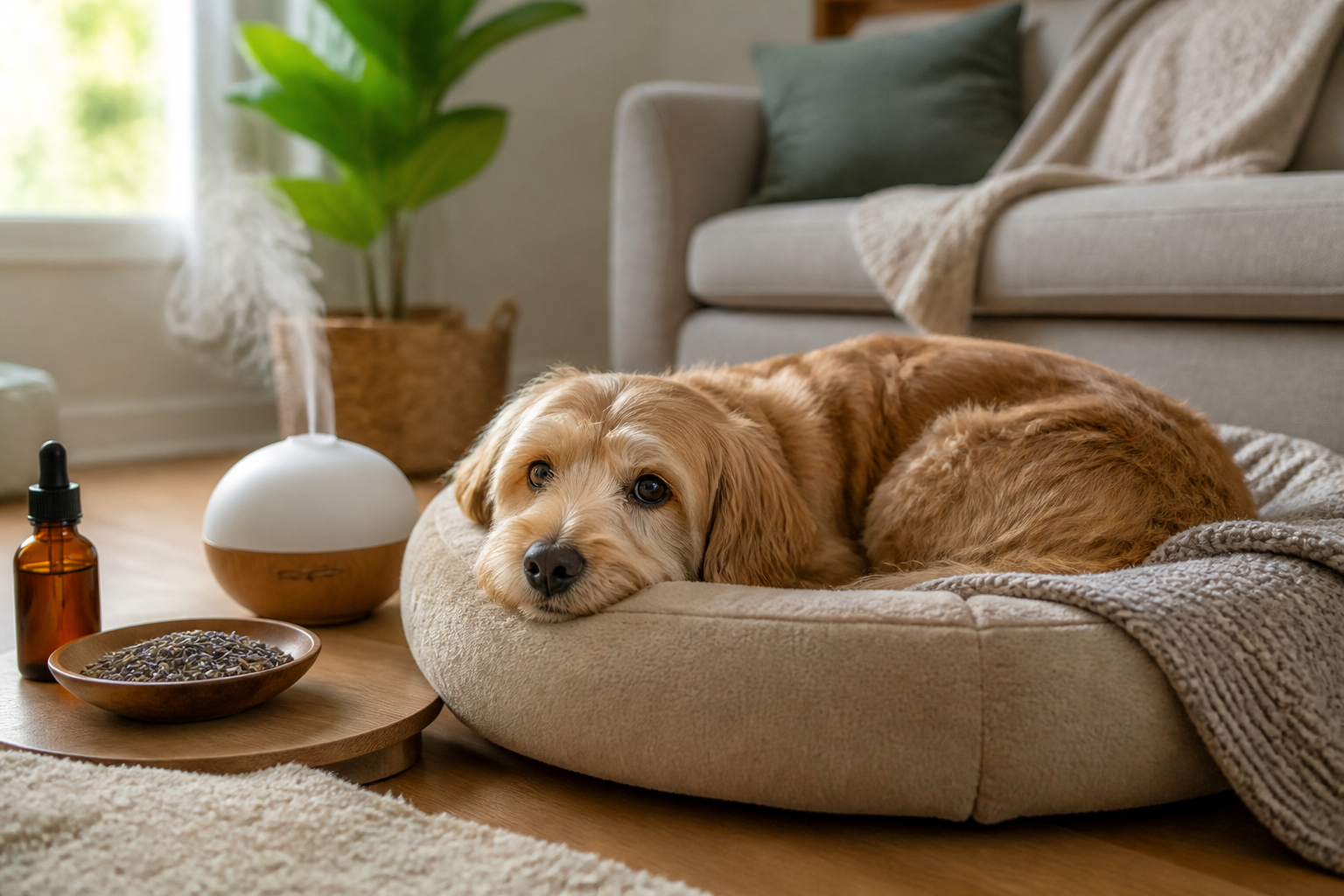
Create a retreat that the dog can enter and leave freely. This might be a covered crate, a mat behind furniture, or a quiet room with familiar bedding. Never use the retreat as punishment or force the dog inside. Add water, safe chew items, and comfortable temperature control. Close curtains during visual triggers, use white noise or soft music to mask unpredictable sounds, and keep lighting moderate. Introduce every change while the dog is relaxed, not during a crisis.
Management prevents rehearsal of fearful behavior. During fireworks, use secure identification and keep the dog indoors before noise begins. For visitors, use a gate or separate room, ask guests to ignore the dog initially, and reward voluntary calm behavior. During storms, remain composed and avoid dragging the dog toward the trigger. Comforting a frightened dog does not reward fear; however, frantic handling can increase arousal. Gentle presence, quiet speech, and an available retreat are usually more useful.
Behavior training that changes emotional responses
The most effective long-term approach often combines desensitization and counterconditioning. Desensitization means presenting a trigger at an intensity the dog can tolerate. Counterconditioning pairs that manageable trigger with something valuable, such as small food treats, a favorite game, or relaxed social contact. Over repeated sessions, the trigger can predict safety rather than danger.
Begin below the threshold. For a noise-sensitive dog, play a recording at very low volume while the dog rests or eats. Stop before tension appears. Gradually increase volume across separate sessions only when the dog remains comfortable. If panting, freezing, scanning, pulling away, barking, or refusing treats occurs, reduce intensity and return to an easier stage. Progress is not linear; illness, fatigue, weather, or an unexpected event may require a temporary step back.
For separation distress, avoid sudden long absences when possible. Teach independence through brief, successful periods behind a gate or in another room. Return before panic begins, then increase duration in small, varied increments. Departure rituals should be unremarkable. Because severe cases may escalate quickly, a veterinarian or certified behavior professional can design a carefully measured plan. Crate confinement is not automatically appropriate, particularly if the dog panics in enclosed spaces or attempts escape.

Reward desired choices immediately. A dog that looks at a trigger and then turns back to you, lies on a mat, sniffs the ground, or chooses distance is demonstrating useful coping. Mark that moment with a calm word and reward. Avoid punishment, leash corrections, flooding, and intimidation. These methods may suppress warning signals while increasing fear, damaging trust, and raising bite risk.
Choosing anxiety-relief products
Products can make a management plan easier, but evaluate claims carefully. A useful product is safe, appropriate for the dog’s size and behavior, easy to use correctly, and compatible with veterinary advice. Introduce one change at a time so you can identify benefits or adverse effects. Test new equipment on a calm day, never for the first time during a storm, party, or long journey.
Comfort beds and mats
A supportive bed can encourage rest, especially when placed in a quiet retreat. Look for washable materials, stable construction, and a size that allows the dog to stretch and turn. Some dogs prefer raised edges, while others become uncomfortable when enclosed. A mat can also become a training signal: reward the dog for stepping onto it, relaxing, and remaining there briefly. The bed itself does not treat anxiety, but a consistent resting location can support predictability.
Crates, pens, and barriers
A crate or pen may provide security for a dog already comfortable with confinement. Build a positive association gradually with open-door feeding, calm enrichment, and short voluntary stays. Never use a crate to contain panic without preparation. Dogs that scratch, bite bars, drool heavily, vocalize intensely, or injure themselves need a different management strategy and professional guidance. A baby gate may offer safer choice and distance while preserving social connection.
Anxiety wraps and calming clothing
Pressure garments fit around the torso and may help some dogs feel contained. Evidence and individual responses vary, so treat them as optional aids rather than guaranteed solutions. The garment must allow normal breathing, movement, toileting, and temperature regulation. Watch for overheating, skin irritation, restricted movement, or increased distress. Let the dog investigate it first, reward calm contact, and remove it if the dog tries urgently to escape it.
Pheromone products
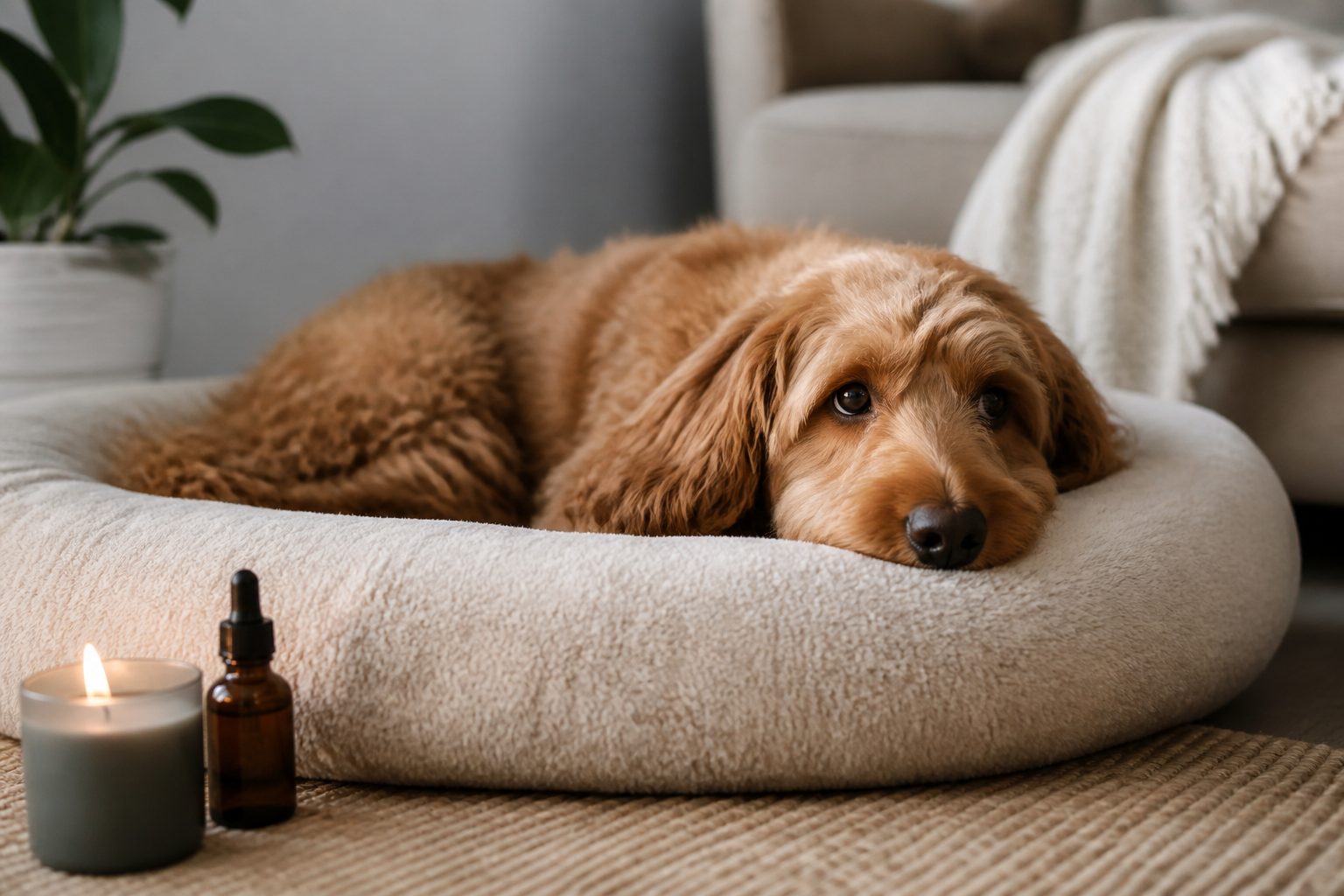
Synthetic pheromone diffusers, sprays, or collars are marketed to provide species-specific calming signals. Some dogs may respond, while others show no meaningful change. Use products exactly as labeled and avoid spraying directly on the dog unless the label specifically permits that use. A diffuser works best as part of a broader plan, not as a substitute for training, environmental control, or treatment of pain.
Food puzzles and chews
Licking, chewing, and foraging can encourage calm engagement when a dog is still able to eat. Choose durable items suited to the dog’s chewing style, supervise use, and account for calories and choking hazards. Avoid giving a novel chew during an emergency if the dog guards resources or swallows rapidly. A food puzzle should be easy enough to prevent frustration, then gradually become more challenging as confidence improves.
Supplements and calming treats
Ingredients marketed for calming may include nutrients, herbs, amino acids, or milk-derived compounds. “Natural” does not mean risk-free, consistently effective, or suitable for every dog. Products can interact with medications, cause digestive upset, or vary in quality. Ask a veterinarian before using supplements, particularly for puppies, senior dogs, pregnant or nursing dogs, dogs with liver or kidney disease, or dogs taking other treatments. Never use human sleep aids, cannabis products, essential oils, or leftover prescription medication without explicit veterinary direction.
When professional treatment is necessary
Book a veterinary examination for persistent, worsening, or function-limiting anxiety. The veterinarian can assess pain, neurologic disease, sensory decline, gastrointestinal problems, hormonal conditions, medication effects, and other contributors. A behavior history is valuable: describe triggers, timing, severity, safety concerns, and strategies already attempted.
Medication may be appropriate when anxiety is severe, frequent, or preventing learning. Some medicines are used regularly to lower overall sensitivity; others may be prescribed for predictable events. They require individualized selection, dosing, monitoring, and sometimes adjustment. Medication does not replace behavior work, but reducing panic can allow a dog to eat, rest, and learn. Follow instructions precisely, observe changes, and report concerning reactions rather than changing the dose independently.
A qualified veterinary behaviorist or experienced reward-based behavior consultant can help distinguish fear, frustration, compulsive behavior, guarding, and pain-related reactions. Seek professionals who explain methods clearly and avoid guarantees, dominance-based claims, shock, intimidation, or deliberate flooding. If there has been a bite, consult a professional promptly and use barriers, distance, and controlled handling while developing a safety plan.
A practical daily plan
Start by identifying one priority trigger and one measurable goal. Instead of aiming for “no anxiety,” choose “rests on the mat for five minutes during mild household noise” or “accepts treats while a person approaches at a safe distance.” Keep sessions short and end while the dog is successful.
Morning can include a predictable toilet break, sniffing walk, breakfast enrichment, and rest. During the day, practice a few minutes of mat training, name response, hand targeting, or relaxed movement away from a trigger. Schedule quiet time; overtired dogs often cope poorly. Before a known event, prepare the retreat, close windows, charge devices if needed, and gather high-value rewards. Afterward, allow recovery without demanding interaction.
Track progress weekly. Record frequency, intensity, duration, recovery, sleep, appetite, and successful coping choices. Improvement may appear as faster recovery, greater willingness to eat, more voluntary distance, or fewer unsafe behaviors before visible fear disappears. Celebrate those practical gains. If progress stalls, simplify the environment, lower training intensity, review health, and seek guidance rather than pushing harder.
Frequently asked questions
Can I comfort my anxious dog?
Yes. Calm companionship, gentle contact, and access to a safe place can help. Comfort does not teach a dog to feel afraid. Let the dog choose proximity, avoid restraining it, and keep your voice and movements steady. If touch increases tension, provide quiet presence instead.
Will exercise cure anxiety?
Exercise supports physical health and can reduce unused energy, but it does not cure fear or separation distress by itself. A frightened dog may become more aroused after chaotic play or forced exposure. Favor suitable sniffing, walking, and enrichment, balanced with sleep and structured behavior practice.
Are calming treats safe?
Safety depends on ingredients, formulation, dose, and the individual dog. Check the label, avoid combining products casually, and ask a veterinarian about interactions or medical conditions. Stop and seek advice if vomiting, diarrhea, unusual sedation, agitation, weakness, or other concerning changes occur.
Should I use a crate during a storm?
Only if the dog already regards the crate as a safe place and can remain there comfortably. Keep the door open when practical, add familiar bedding, and provide an alternative retreat. If the dog panics in confinement, use a secure room or barrier instead and obtain professional advice.
How quickly will anxiety improve?
Timing varies with cause, history, severity, health, training quality, and the trigger. Mild situational worry may improve with management and practice, while chronic or separation-related anxiety can require a longer plan. Look for gradual functional gains, not an instant transformation.
What should I do during an anxiety episode?
Reduce stimulation, prevent escape, and remove hazards. Offer the prepared retreat, use calm background sound, and avoid punishment or forced interaction. Do not attempt complicated training while the dog is overwhelmed. Once settled, note what happened and adjust future prevention. Seek urgent veterinary help for injury, breathing trouble, collapse, toxin exposure, or dangerous behavior that cannot be safely managed.
Conclusion
The strongest anxiety-relief plan is individualized, humane, and layered. Start with veterinary assessment when symptoms are new, severe, or persistent. Then combine management, predictable routines, a freely chosen safe space, gradual desensitization, positive reinforcement, and carefully screened products. Beds, barriers, wraps, pheromones, puzzles, and supplements may provide useful support, but none should promise instant calm or replace professional care.
Your most persuasive tool is consistent observation. Learn the dog’s early signals, intervene before panic, reward coping, and protect recovery time. Progress is measured not only by quieter behavior, but by better sleep, safer choices, faster recovery, and greater confidence. With patience and appropriate guidance, many anxious dogs can develop practical skills that make ordinary life feel more secure. Choose safety over convenience, kindness over correction, and steady progress over dramatic promises.