
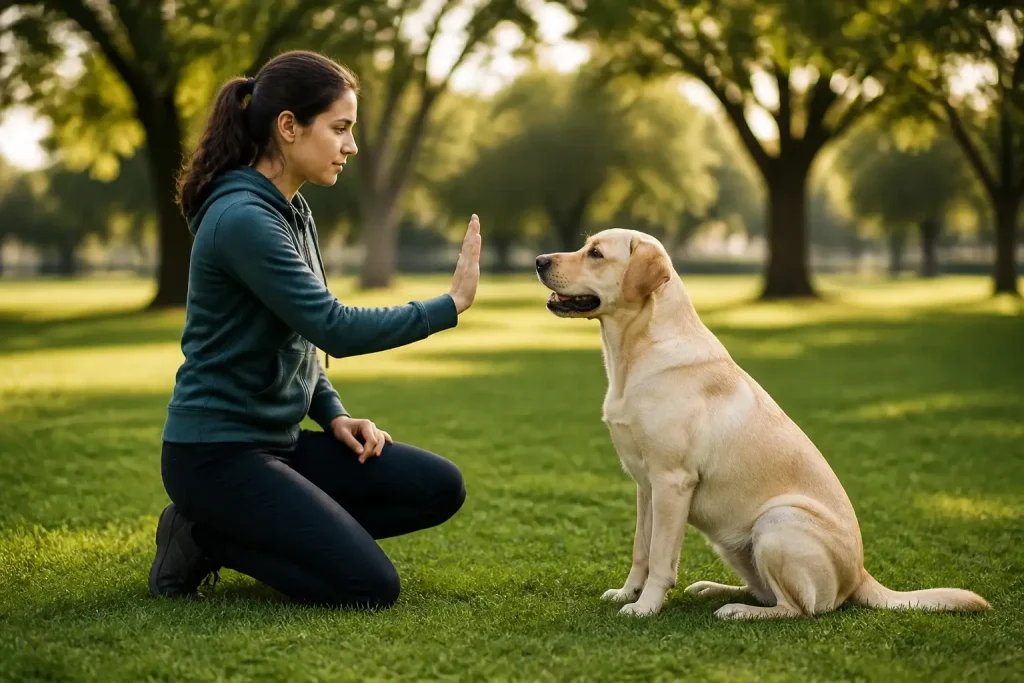
Advanced Dog Training for Lasting Results
Advanced dog training is not simply teaching more commands. It is the deliberate development of reliable behavior, clear communication, emotional control, and flexible problem solving across different places and distractions. A trained dog should understand what earns reinforcement, recover from uncertainty, and respond safely even when the environment changes. The handler must also know how to set criteria, manage risk, and adjust methods to the individual dog.
This guide explains the foundations, techniques, equipment, practice structure, and troubleshooting principles that make advanced training effective. It is suitable for companion dogs whose basic cues are already established, but it is not a substitute for veterinary assessment or qualified professional help when aggression, severe fear, compulsive behavior, or bite risk is involved.
The central principle is simple: train the behavior you want to see, reinforce it clearly, and increase difficulty gradually. Reliability grows from many successful repetitions, not from suddenly testing a dog in the hardest possible setting.
What Advanced Training Really Means
Basic training often focuses on recognizable cues such as sit, down, come, stay, and walking politely. Advanced training adds duration, distance, distraction, precision, and decision making. A dog may know “stay” in a quiet room yet leave immediately when a squirrel appears. Advanced work builds the skills that connect understanding with dependable performance.
The five dimensions of difficulty
Duration asks how long the dog maintains a behavior. Distance asks how far the handler can move away. Distraction introduces competing sights, sounds, scents, movement, food, or social pressure. Precision requires a specific position or sequence. Generalization teaches the dog that a cue has the same meaning in a kitchen, park, vehicle, training hall, or unfamiliar home.
Increase only one dimension at a time when possible. For example, ask for a ten second stay at greater distance before adding a busy playground. If the dog fails repeatedly, the lesson is too difficult, not proof of stubbornness.
Reinforcement and motivation
Reinforcement is anything that increases the chance of a behavior happening again. Food is often efficient, but play, access to sniffing, permission to greet, movement, praise, and comfortable space can also matter. Observe what your dog values in each context. A toy may motivate a lively adolescent, while a nervous dog may value distance from a trigger more than a treat.
Reward placement influences future behavior. Delivering food beside your leg can support loose walking. Tossing a reward away can reinforce moving toward a release point. A reward held low may encourage a nose target, while a reward delivered between the paws can help settle the body. Reinforcement should be immediate enough for the dog to connect it with the correct action.
Build Communication Before Complexity
Advanced training depends on a shared vocabulary. Choose short, consistent cues and decide what each one means. Avoid using the same word for several behaviors. If “come” means return all the way to the handler, do not casually use it when the dog is only expected to look over.

A marker can identify the precise moment a desired behavior occurs. A verbal marker such as “yes” or a clicker is followed by a reward. Charge the marker by pairing it with food repeatedly in a quiet setting, then use it during training. The marker does not replace the reward; it bridges the moment of success and delivery.
A release cue, such as “free,” tells the dog when a stationary behavior has ended. Without a release cue, some dogs learn that staying is optional because the exercise fades unpredictably. Practice releasing from easy positions, then gradually make the dog wait through ordinary movement, conversation, and mild distractions.
Shaping and capturing
Capturing rewards a behavior the dog offers naturally, such as lying calmly, checking in, or orienting toward a sound. Shaping rewards small steps toward a final behavior. To shape a platform position, you might reward looking at the platform, approaching it, placing one paw, placing two paws, and eventually standing squarely.
Use small criteria changes. If the dog stops offering behavior, becomes frantic, or repeatedly guesses, lower the difficulty. Training should involve thinking, but excessive frustration reduces learning and can damage trust.
Luring, prompting, and fading
A lure guides the dog with food or a toy. It can start movement efficiently, but it should be faded quickly so the dog does not depend on seeing the reward first. Move from a visible lure to an empty hand, then reward from the other hand or a pouch. Prompts may include body position, a target, or environmental arrangement. Fade each prompt systematically while preserving the cue.
Reliable Recall and Emergency Responses
Recall is one of the most valuable advanced skills because it can prevent injury. Begin with a strong history of reinforcement. Say the recall cue once in a cheerful voice, move away if safe, and reward the dog generously upon arrival. Never punish a dog for eventually returning, even if the delay was inconvenient. Punishment can make future recalls less likely.
Use a long line attached to a suitable harness or secure collar in open areas where an immediate response is not yet reliable. The line is a safety backup, not a tool for dragging the dog. Practice around mild distractions, then progress toward stronger ones while maintaining enough distance for success.
A separate emergency cue should predict unusually valuable reinforcement. Use it rarely and only when you can pay well. Pair the cue with several high value treats, then release the dog when safe. Refresh this association periodically in easy conditions.
Recall practice should include the behavior after arrival. Ask for a hand touch, collar hold, or brief sit, reward, and then often release the dog back to exploration. If coming always ends freedom, the dog may avoid returning.
Impulse Control Without Suppression
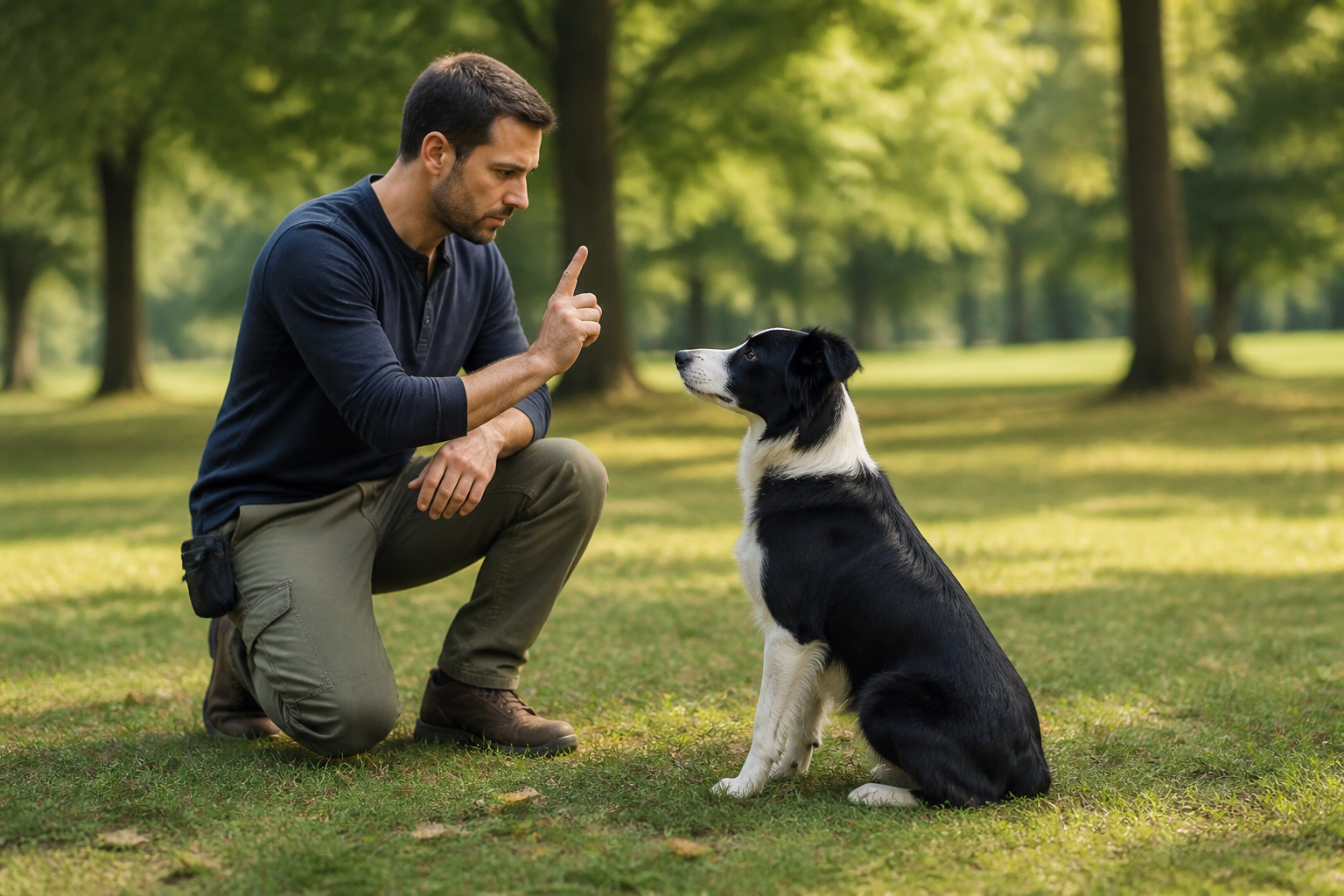
Impulse control is not the same as demanding that a dog endure every temptation indefinitely. The goal is teaching the dog to pause, orient to the handler, and choose a trained response. Useful exercises include waiting at doors, leaving food, settling on a mat, and disengaging from moving objects.
Start with distractions below the dog’s threshold. Present the item briefly, mark calm observation or disengagement, and reward. If the dog lunges, vocalizes, or cannot eat, increase distance or reduce movement. Progress should be measured by relaxed behavior, not merely by physical restraint.
Teach an alternative response. For a dog who jumps at visitors, train a mat behavior and reinforce it before the door opens. For a dog who grabs dropped objects, teach “leave it” and reinforce turning away, then teach “drop” using safe exchanges. Do not practice with dangerous items simply to test reliability; manage access and seek professional guidance when ingestion risk exists.
Mat training and relaxation
A mat can become a portable station for restaurants, offices, waiting rooms, or household routines. Reward orientation toward the mat, stepping onto it, lying down, and remaining there while the handler moves. Add duration gradually. Provide calm reinforcement, such as treats placed between the paws, and include a release cue.
Relaxation cannot be forced through repeated corrections. Some dogs need distance from noise, a covered crate, lower lighting, or predictable routines. If the dog pants, scans, trembles, repeatedly gets up, or refuses food, the environment may be overwhelming.
Loose Leash Walking and Environmental Skills
Advanced leash work combines physical positioning with emotional regulation. Reward the dog for choosing proximity, checking in, responding to a turn, and walking with a slack leash. Reinforcement can occur frequently at first, then become variable as the skill strengthens.
A change of direction should be taught before it is needed in an emergency. Say the cue, turn smoothly, and reward the dog for following. Avoid constant leash tension, which can create opposition or conceal the cue. A front attachment harness, standard leash, or other equipment may help management, but equipment does not teach the behavior by itself.
Teach the dog to navigate curbs, elevators, narrow paths, slippery surfaces, bicycles, and calmly passing people. Introduce each challenge at a comfortable distance. Environmental confidence depends on choice and gradual exposure, not flooding. If a dog is afraid, forcing closer contact can intensify the fear.

Cooperative Care and Handling
Cooperative care teaches the dog to participate in grooming, nail maintenance, medication routines, and veterinary handling. Establish a consent signal, such as resting the chin on a hand or towel. While the signal remains, handling continues at an easy level. If the dog lifts the head or moves away, pause and reassess.
Break procedures into tiny components. Touch the shoulder, reward. Show the brush, reward. Touch one paw, reward. Present the nail tool without using it, reward. Build duration and pressure separately. Pair necessary procedures with excellent reinforcement, but do not interpret stillness as consent if the dog is frozen or distressed.
For urgent medical care, safety takes priority, and a veterinarian can advise on appropriate handling or medication. Training supports care; it cannot replace professional treatment.
Advanced Tricks and Task Sequences
Tricks can strengthen body awareness, communication, and engagement. Useful projects include backing up, pivoting around a platform, carrying an object, targeting a switch, closing a drawer, weaving through legs, and performing a chain of behaviors.
Teach each component separately before combining them. A sequence might be retrieve, bring, release, and settle. Reward early steps generously, then vary which link receives the largest reward. If the chain breaks, return to the weak component rather than repeating the entire sequence without analysis.
Body awareness exercises should be adapted to the dog’s structure and health. Avoid repeated jumping, tight spins, unstable surfaces, or strenuous impact without appropriate conditioning advice. A veterinary professional or qualified canine fitness specialist can help identify limitations, especially for puppies, older dogs, or dogs with orthopedic concerns.
Proofing Behavior Across Real Life
Proofing means practicing a behavior under varied conditions while preserving clarity. Change locations, surfaces, handlers, time of day, weather, distance, and distraction type. Dogs do not automatically transfer learning from a quiet room to a crowded street.
Use a progression such as home, yard, quiet outdoor area, moderately active park, and finally a challenging location. At each stage, begin with easy repetitions. Keep sessions short enough that the dog remains engaged. End with a successful behavior rather than pushing until mistakes dominate.
Variable reinforcement can maintain strong performance, but unpredictability should come after the behavior is reliable. Continue rewarding difficult or especially valuable responses. Life rewards, including sniffing, play, greeting, and moving forward, can supplement food while preserving motivation.
Problem Solving and Training Logs
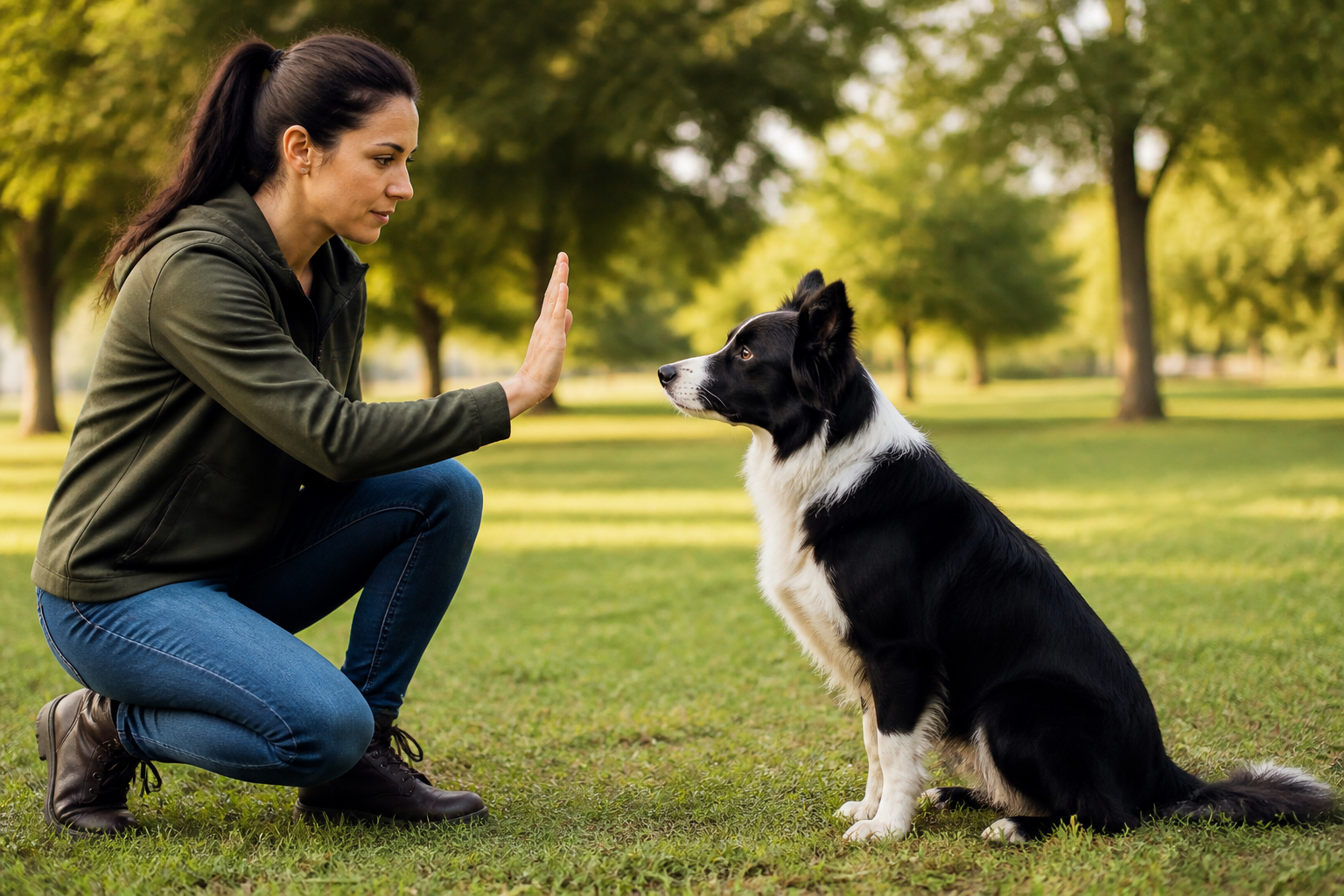
A training log turns impressions into useful information. Record the date, location, cue, distraction, distance, response, reinforcement, and the dog’s emotional state. Note whether the dog was hungry, tired, sore, overheated, or overstimulated. Patterns often reveal that a problem belongs to a particular context rather than to the cue itself.
When behavior deteriorates, ask four questions. Was the criterion too difficult? Was the cue clear? Was reinforcement valuable in that environment? Could pain, fear, fatigue, or another medical issue be contributing? Lower difficulty first, then investigate other factors.
Avoid labeling a dog as dominant, spiteful, or disobedient without examining learning history and context. Labels rarely identify a practical solution. A dog that ignores a recall near wildlife may lack sufficient reinforcement history, be over threshold, or have learned that returning ends exploration.
A Practical Weekly Structure
A balanced week can include several brief skill sessions rather than one exhausting lesson. Practice recall games on one day, mat work and handling another, leash skills during ordinary walks, and a trick or shaping project during quiet indoor time. Include free movement, sniffing, rest, and social needs.
Use a simple session format: prepare rewards and equipment, define one observable goal, practice easy repetitions, raise difficulty slightly if successful, then finish with a known behavior. Keep notes immediately afterward. If the dog makes repeated errors, make the next repetition easier instead of adding pressure.
Training should fit real life. Ask for a check in before opening a door, a mat settle while preparing food, or a hand touch before clipping the leash. These small repetitions build habits without making every interaction feel like a formal lesson.
Choosing Equipment and Professional Support
Helpful equipment may include a treat pouch, marker, long line, comfortable harness, standard leash, mat, targets, food safe containers, and enrichment items. Select equipment for fit, safety, and the behavior being taught. Inspect lines, clips, and harnesses regularly. Avoid leaving a dog unattended with equipment that could snag or be chewed.
A qualified trainer should explain methods clearly, welcome questions, prioritize safety, and adapt plans to the dog’s welfare. Be cautious of guarantees, intimidation, pain based techniques, or claims that one method suits every dog. For aggression, serious reactivity, separation distress, sudden behavior change, or suspected pain, involve a veterinarian and an appropriately experienced behavior professional.
Frequently Asked Questions
How long does advanced training take?
There is no universal timeline. Learning speed depends on behavior complexity, reinforcement quality, practice frequency, environment, health, and individual temperament. Reliable performance usually develops through gradual repetitions across many settings. Aim for steady progress rather than a fixed deadline.
Should rewards always be used?
Rewards remain useful throughout training, although their form and frequency can change. Food may become intermittent, while access to sniffing, play, movement, or greeting reinforces behavior. Do not remove reinforcement simply because a dog knows a cue; maintain enough value for the behavior required.
What if my dog knows a cue at home but fails outside?
Treat the outdoor version as a new training stage. Reduce distractions, increase distance from triggers, use better reinforcement, and reward small successes. Practice at the edge of the dog’s ability, then progress gradually. Repeating the cue louder or more often usually does not solve a difficulty problem.
Is a clicker necessary?
No. A clicker can provide consistent timing, but a well conditioned verbal marker works too. Choose the marker you can use accurately and consistently. If your hands are occupied, a verbal marker may be more practical.
Can advanced training fix fear or aggression?
Training can teach alternative behaviors and improve management, but fear and aggression require careful assessment. Do not deliberately expose a dog to overwhelming triggers or rely on punishment. Consult a veterinarian and a qualified behavior professional, especially when there is bite risk or a sudden change.
How do I prevent boredom?
Offer varied, appropriate activities: scent searches, food puzzles, shaping, retrieve games, relaxed outings, body awareness work, and calm social experiences. Novelty should remain manageable. Mental challenge is valuable, but dogs also need sleep and unstructured recovery.
Conclusion
Advanced dog training is a process of building dependable choices under realistic conditions. Start with clear communication, meaningful reinforcement, and criteria the dog can meet. Develop recall, impulse control, leash skills, cooperative care, body awareness, and relaxation separately before combining them. Generalize patiently across people, places, distractions, and distances.
The most durable results come from protecting trust while maintaining consistency. Manage situations that exceed current skills, reward improvement, and treat setbacks as information. When health, fear, or safety concerns complicate learning, seek qualified support rather than increasing pressure. With thoughtful planning and humane practice, advanced training becomes more than a collection of impressive behaviors: it becomes a practical system that helps dogs navigate daily life with confidence and helps people communicate with greater clarity.