
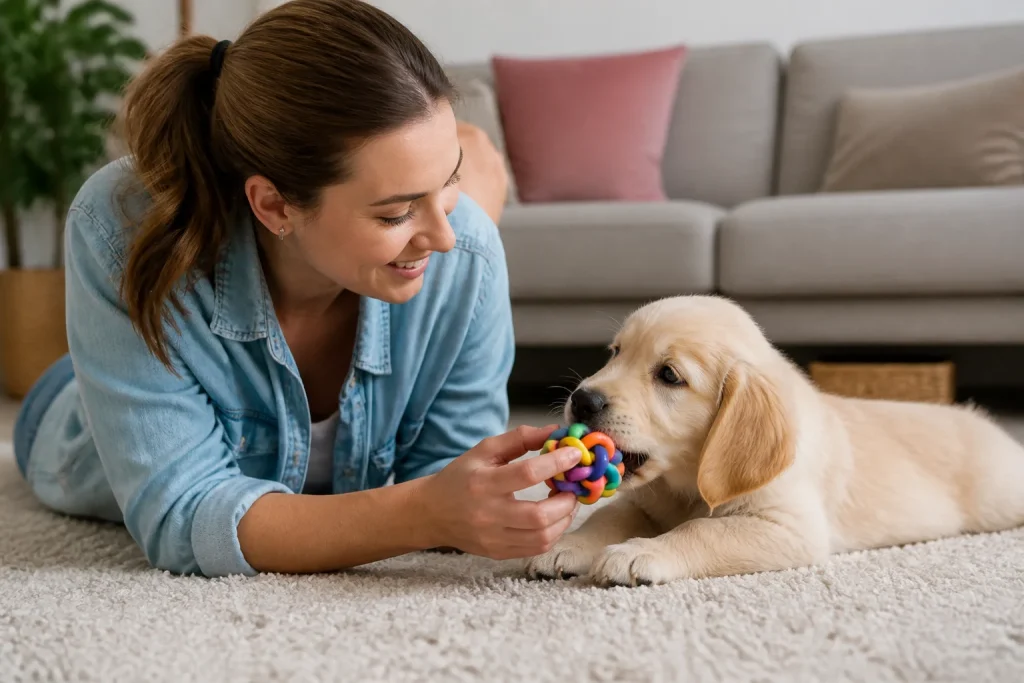
Puppy behavior management is the practical process of teaching a young dog how to live safely, calmly, and cooperatively with people. It is not about suppressing normal puppy behavior or demanding instant obedience. Puppies explore with their mouths, become excited easily, tire quickly, and lack the self control needed to make consistently good choices. Effective management combines prevention, clear teaching, appropriate exercise, rest, supervision, and rewards so desirable habits become easier than undesirable ones.
The most successful approach begins with realistic expectations. A puppy may understand a cue one day and forget it in a distracting room the next. Progress is rarely perfectly linear. Instead of labeling a puppy stubborn, dominant, or bad, look for the unmet need behind the behavior. Chewing can indicate teething or boredom. Jumping can reflect excitement. Biting may appear during play or overtired periods. Understanding the cause makes the solution more humane and more reliable.
Puppy Behavior Management: Create a Predictable Home Environment
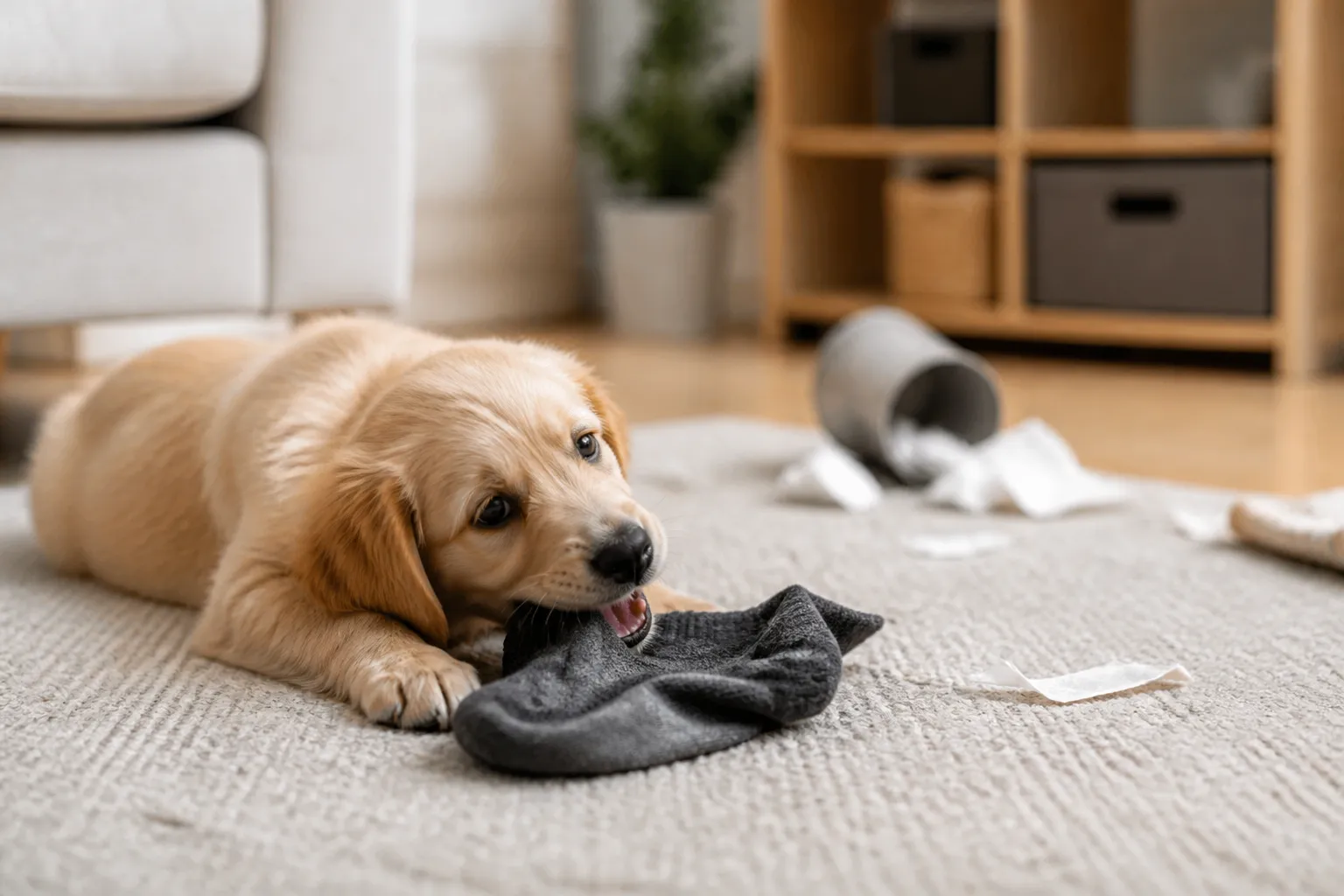
Puppies learn from consequences, including consequences you did not intend to provide. If jumping occasionally earns attention, jumping may continue. If stealing socks leads to an exciting chase, stealing becomes rewarding. Management prevents rehearsal of unwanted habits while training teaches an alternative.
Begin by puppy proofing the living space. Secure electrical cords, medicines, cleaning products, small objects, and foods that may be unsafe for dogs. Use barriers to restrict access to stairs, kitchens, or rooms containing fragile items. Keep shoes, laundry, children’s toys, and remote controls out of reach. A safe environment reduces correction and gives your puppy more opportunities to succeed.
Choose a resting area, such as a crate, pen, or bed, where the puppy can relax without being disturbed. This area should never be used as punishment. Introduce it gradually with treats, meals, and calm enrichment. The goal is to make confinement feel predictable and comfortable, not isolating. Puppies often behave poorly when they are exhausted, so scheduled naps are a central part of behavior management.
Use Supervision Strategically
When a puppy is awake and active, an adult should be able to notice what is happening. Supervision may involve direct observation, a lightweight house line used safely under guidance, or a puppy pen. It should not mean leaving a leash attached when nobody can monitor it. If supervision is impossible, use a secure, puppy proof area with an appropriate chew and water.
Watch for patterns. A puppy that circles, sniffs, wanders away, or suddenly stops playing may need a bathroom break. A puppy that becomes frantic, nips repeatedly, and cannot settle may need sleep rather than more activity. Notes about timing, food, naps, visitors, and behavior can reveal triggers and make routines easier to adjust.
Teach the Behaviors You Want
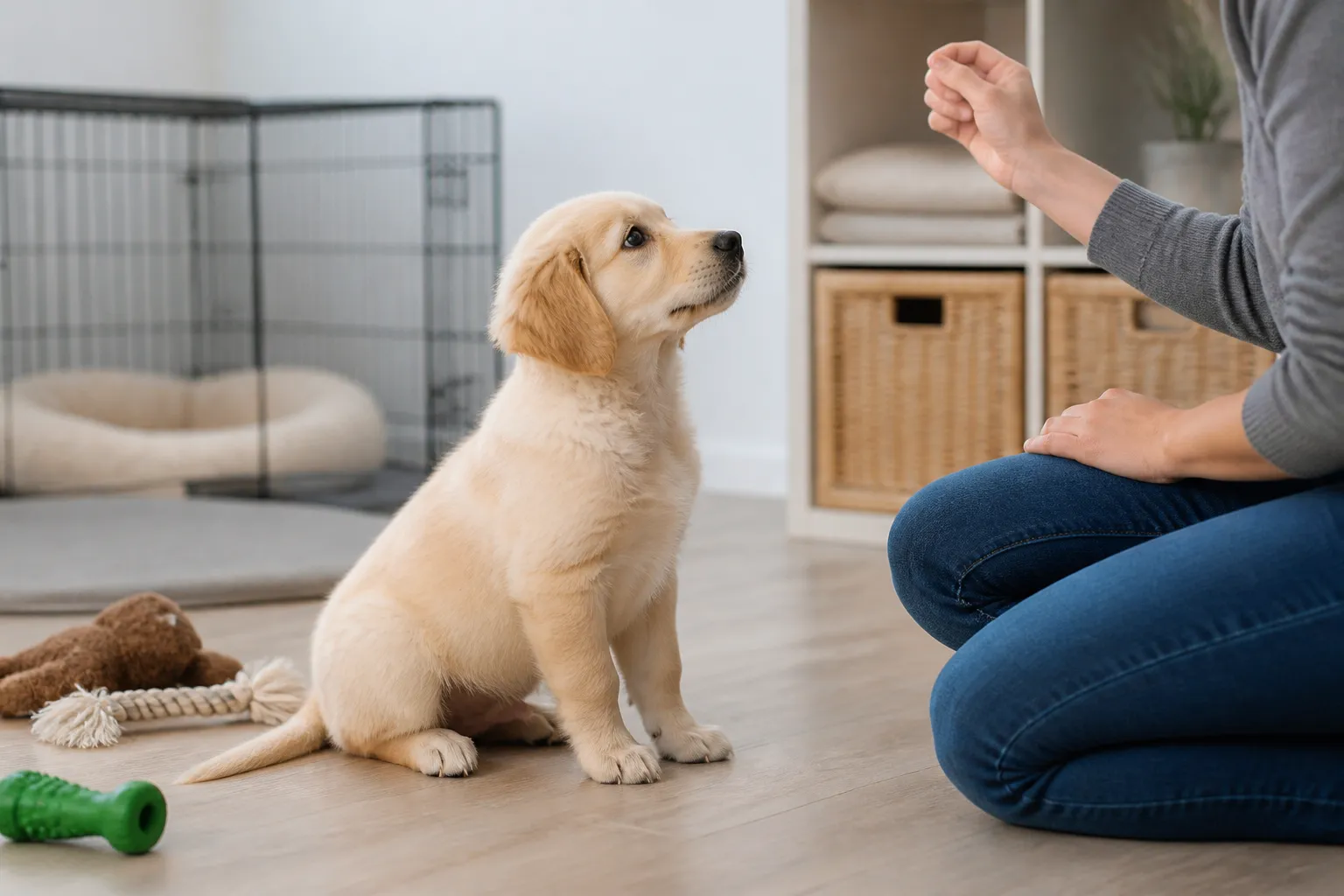
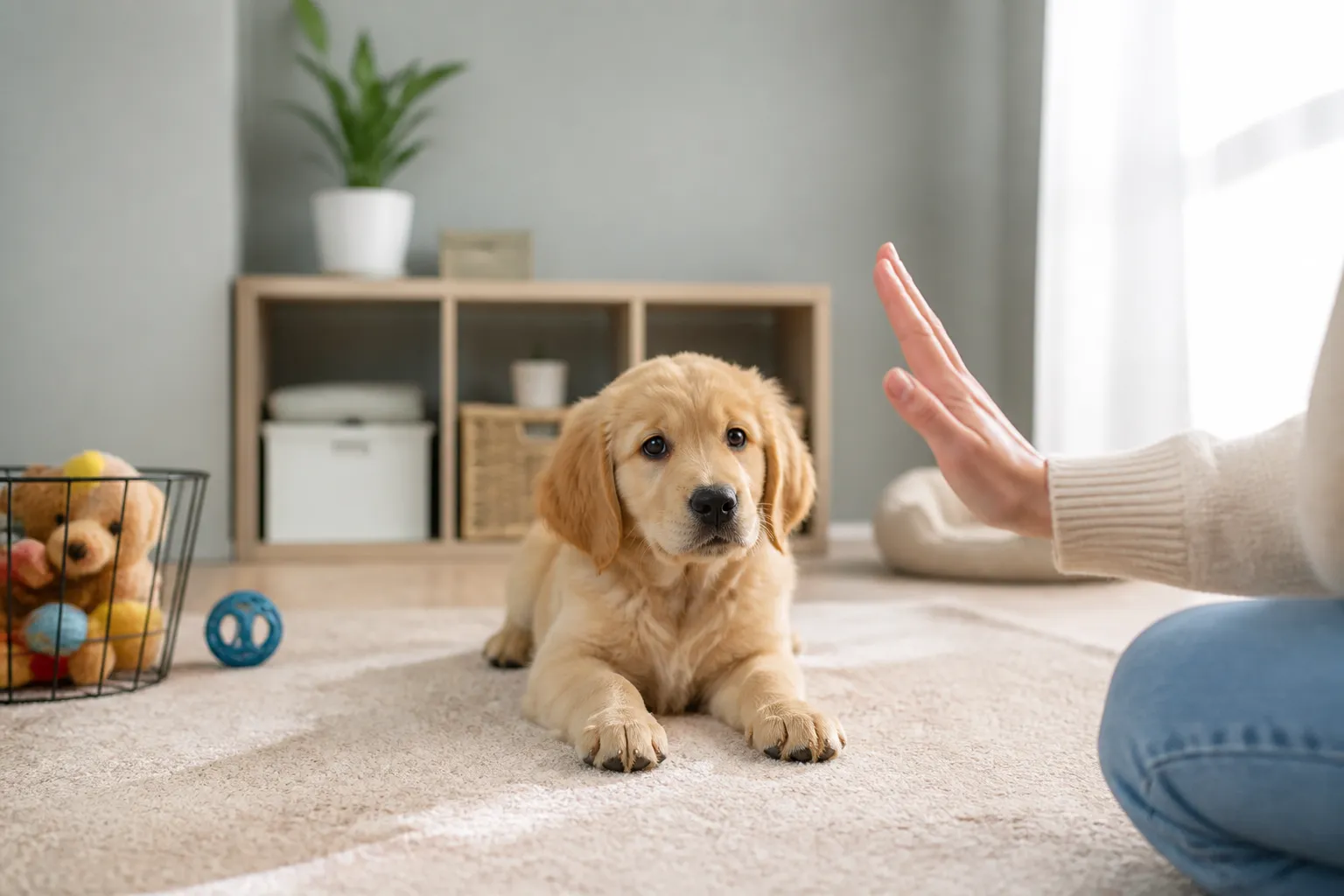
Training works best when the desired behavior is specific and immediately rewarded. “Be good” is too vague for a puppy. Instead, teach sitting for greetings, touching a hand for redirection, lying on a mat during meals, and looking toward you when a distraction appears. Use a marker word such as “yes” or a clicker, then deliver a small treat promptly. Timing helps the puppy understand which action earned the reward.
Keep sessions brief and frequent. Several short practices usually produce better learning than one long lesson that ends in frustration. Begin in a quiet room, then gradually add distance, movement, sounds, people, and other distractions. A cue is not truly dependable until the puppy can perform it in varied settings. If success falls sharply, reduce difficulty rather than repeating the cue louder.
Reward more than formal exercises. Quietly reinforce four paws on the floor, calm chewing, choosing a toy, resting independently, and checking in with you. These ordinary moments shape household manners. Food is useful, but praise, play, access to the garden, sniffing opportunities, and gentle attention can also function as rewards when the puppy values them.
Manage Mouthing and Biting
Mouthing is common, but painful biting should not be ignored. Avoid wrestling with hands or encouraging games that make skin part of the toy. Keep suitable chew items nearby and calmly redirect teeth toward them. If biting becomes too hard, pause interaction briefly, stand up, and remove attention. Resume when the puppy is calmer. A dramatic reaction can increase excitement, so quiet consistency is usually more effective.
Offer different textures and shapes, while checking every chew for wear and supervising items that could break apart. Teething puppies may seek furniture, clothing, or hands because chewing is satisfying. Prevention matters: block access to tempting objects and provide an approved alternative before the puppy starts chewing. If chewing suddenly changes, causes distress, or involves swallowing nonfood items, consult a veterinarian.
Build Reliable Toilet Habits
House training depends on timing, access, and reinforcement rather than punishment. Take the puppy outside after waking, eating, drinking, playing, and vigorous excitement, and provide additional trips according to age and individual need. Stay nearby and avoid turning every bathroom break into an immediate return indoors; otherwise, some puppies learn to delay elimination to prolong outdoor time.
When the puppy finishes in the correct place, reward immediately, while the event is still clear. Use a calm celebration and a small treat if appropriate. Indoors, supervise closely and interrupt accidents without anger if you catch them beginning. Move outside promptly, then clean the area with an enzymatic product designed to remove odor. Punishment after an accident cannot teach the earlier behavior and may make a puppy hide when eliminating.
Accidents can reflect unrealistic scheduling, incomplete training, stress, illness, or difficulty accessing the designated area. Frequent urination, straining, diarrhea, sudden regression, or unusual thirst warrants veterinary advice. A health problem should not be mistaken for disobedience.
Support Healthy Socialization
Socialization means helping a puppy develop comfortable, flexible responses to people, animals, surfaces, sounds, handling, travel, and ordinary household events. It does not mean forcing interaction with everyone. Quality matters more than quantity. Pair new experiences with treats, distance, play, or rest, and allow the puppy to observe without pressure.
Introduce experiences gradually. A vacuum cleaner can first be stationary and distant, followed by food, then briefly activated at a greater distance. Handling practice can include touching ears, paws, collar, and mouth for a second, rewarding cooperation, and stopping before discomfort. This preparation supports future grooming, veterinary care, nail trimming, and medication routines.
Watch body language. A loose body, soft eyes, normal appetite, and willingness to explore suggest comfort. Turning away, freezing, tucked posture, lip licking, yawning, trembling, hiding, barking, or frantic escape attempts indicate that the experience may be too difficult. Increase distance, reduce intensity, and offer recovery time. Forced exposure can worsen fear; gradual, positive practice builds confidence.
Introduce Dogs and Visitors Carefully
Choose calm, healthy dogs for early interactions and follow local veterinary guidance about vaccination and disease exposure. Parallel walking, brief sniffing, and breaks often create better introductions than unrestricted, high energy play. Interrupt play when either puppy becomes overwhelmed, repeatedly hides, or cannot disengage. Social skills include ending an interaction politely.
For visitors, ask people to ignore the puppy initially, avoid looming or grabbing, and reward calm approaches. A mat, pen, or chew can provide a practical retreat. Children need close adult supervision and clear rules: do not disturb eating, sleeping, resting, or chewing, and do not take toys from a puppy’s mouth. Teaching children respectful behavior protects both child and dog.
Provide Appropriate Exercise and Rest
Exercise should suit the puppy’s age, breed tendencies, health, weather, and individual stamina. Short sniffing walks, gentle play, basic training, and exploration often provide more useful enrichment than prolonged, repetitive physical exertion. Avoid forcing a tired puppy to continue. Growing bodies need recovery, and excessive impact may be inappropriate; ask a veterinarian for guidance when uncertain.
Mental enrichment is equally important. Scatter a portion of the puppy’s meal for supervised sniffing, use food puzzles appropriate to the puppy’s ability, practice simple cues, rotate toys, and offer safe chewing. Enrichment should not create frustration. If a puzzle is too difficult, make it easier so the puppy learns persistence rather than giving up.
Sleep is not optional downtime. Puppies commonly need substantial rest, although exact needs vary. Build quiet periods into the day before the puppy becomes frantic. A consistent rhythm of activity, bathroom opportunity, food, training, and sleep makes behavior more predictable. Many “wild” episodes improve when the household protects rest instead of adding stimulation.
Respond to Common Challenges
Jumping and Attention Seeking
Turn away from jumping, keep greetings calm, and reward standing or sitting. Everyone in the household should follow the same rule. If one person rewards jumping while another discourages it, the puppy receives an inconsistent lesson. Ask visitors to wait until four paws remain on the floor. For especially enthusiastic greetings, use a barrier or leash managed by an adult.
Attention seeking can be handled by teaching an appropriate request, such as sitting, touching a hand, or bringing a toy. Reinforce quiet pauses before the puppy escalates. Do not reward barking with immediate play, but also check whether the puppy needs food, exercise, sleep, bathroom access, or reassurance.
Barking and Frustration
First identify what precedes barking: passing people, confinement, play, fear, or access to something desirable. Block visual triggers, increase distance, and reward moments of quiet or calm observation. Teach the puppy to orient toward you, then provide an alternative activity. Repeatedly shouting may add excitement and rarely explains what behavior should replace barking.
Resource Guarding
Do not forcibly remove food, chews, or objects, and do not punish growling. Growling is communication that a puppy feels concerned. Instead, prevent confrontations and exchange low value items for something better when safe. Feed in a quiet location and leave the puppy undisturbed. If guarding involves stiffening, snapping, lunging, or guarding people, seek help from a qualified reward based behavior professional and consult a veterinarian.
Select Helpful Products
Useful puppy behavior management products are simple tools that support prevention and teaching. A secure crate or pen provides a rest area; baby gates control access; washable bedding supports comfort; enzymatic cleaner handles accidents; appropriately sized chew toys protect furniture; a flat collar or well fitted harness supports identification and walks; and a standard leash allows supervised exploration.
Choose equipment for safety, fit, durability, and the puppy’s behavior. Check collars and harnesses regularly as the puppy grows. Avoid tools designed to cause pain or fear, including shock, prong, and choke equipment, particularly when the problem involves fear or aggression. Equipment cannot replace training, and no product should be marketed as a guaranteed cure for behavior.
A practical starter setup might include a pen, crate, gates, food rewards, a treat pouch, several chew options, washable blankets, a harness, leash, identification, and cleaning supplies. Introduce each item gradually. If a puppy dislikes a harness, pair it with food and brief wear rather than forcing a long session. The best product is one that improves safety while preserving trust.
Create a Daily Plan
A written routine helps every caregiver respond consistently. A typical day may include a bathroom trip after waking, breakfast through a puzzle or training exercise, supervised play, a nap, another bathroom opportunity, brief handling practice, exploration, lunch if needed, quiet time, and evening settling. Exact timing should reflect the puppy’s age, health, appetite, and household schedule.
Plan for predictable triggers. Before visitors arrive, provide exercise and a bathroom break, prepare a chew, and decide where the puppy will rest. Before cooking, use a mat and reward calm behavior. Before bedtime, reduce stimulation and follow the same sequence each night. Preparation prevents many problems more effectively than reacting after arousal has peaked.
All caregivers should agree on key rules: whether furniture is allowed, where the puppy eliminates, how greetings work, which words signal cues, and what happens when biting occurs. Consistency does not require harshness. It means the puppy receives understandable information.
Know When to Seek Professional Help
Contact a veterinarian when behavior changes suddenly, anxiety interferes with eating or sleeping, elimination problems persist, or pain may be involved. Veterinary assessment is especially important for lethargy, repeated digestive symptoms, unusual aggression, or compulsive behaviors. Medical causes can affect mood, learning, and tolerance.
Seek a qualified reward based trainer or behavior consultant when fear, reactivity, separation distress, guarding, or biting does not improve with careful management. Ask about education, methods, and willingness to coordinate with a veterinarian. Be cautious of guarantees, dominance based claims, intimidation, or advice centered on punishment. A good professional explains the plan, protects safety, and adjusts difficulty according to the puppy’s responses.
Frequently Asked Questions
How long does puppy behavior training take?
Training begins immediately, but reliability develops gradually. Factors include age, temperament, health, prior experience, environment, and caregiver consistency. Measure progress by shorter recovery, more frequent good choices, and improved ability to settle, not only by perfect obedience.
Should I punish accidents or biting?
No. Punishment after an accident cannot connect behavior with the earlier event and may create fear. For biting, calmly end interaction, redirect to an appropriate chew, and protect rest. If biting is severe, persistent, or accompanied by fear, obtain professional guidance.
Is crate training necessary?
A crate is optional, but many households find it useful for safe rest, travel, veterinary care, and preventing unsupervised damage. A pen or puppy proof room can serve similar purposes. Introduce confinement positively and never use it as a place of anger or isolation.
How can I stop my puppy from chewing furniture?
Prevent access, increase supervision, provide appealing legal chews, and reward choosing them. Consider whether the puppy needs sleep, enrichment, or a bathroom break. Clean and manage tempting areas rather than expecting an immature dog to resist every opportunity.
What should I do when my puppy becomes overstimulated?
Reduce noise, movement, and social demands. Guide the puppy to a calm area, offer a familiar chew, and allow quiet rest. Avoid adding more commands or exciting play. If overstimulation is frequent, shorten activities and schedule breaks earlier.
When is fear a serious concern?
Fear deserves attention whenever it persists, spreads to new situations, prevents normal activities, or produces escape attempts, snapping, or prolonged distress. Do not force the puppy closer to a trigger. Increase distance and consult a veterinarian or qualified behavior professional.
Conclusion
Puppy behavior management is most effective when it treats behavior as information and learning as a gradual process. Puppy proofing prevents rehearsal, rewards clarify expectations, rest supports self control, and gentle socialization builds confidence. Appropriate products make these strategies easier, but trust, timing, supervision, and consistency remain the foundation.
Choose one or two priorities first, such as toilet training and calm greetings. Record small improvements, adjust the environment when problems repeat, and seek help before distress becomes entrenched. A puppy does not need a perfect home; it needs patient guidance, predictable boundaries, safe outlets, and repeated opportunities to practice success. With that foundation, good behavior becomes a practical habit rather than a constant battle.