
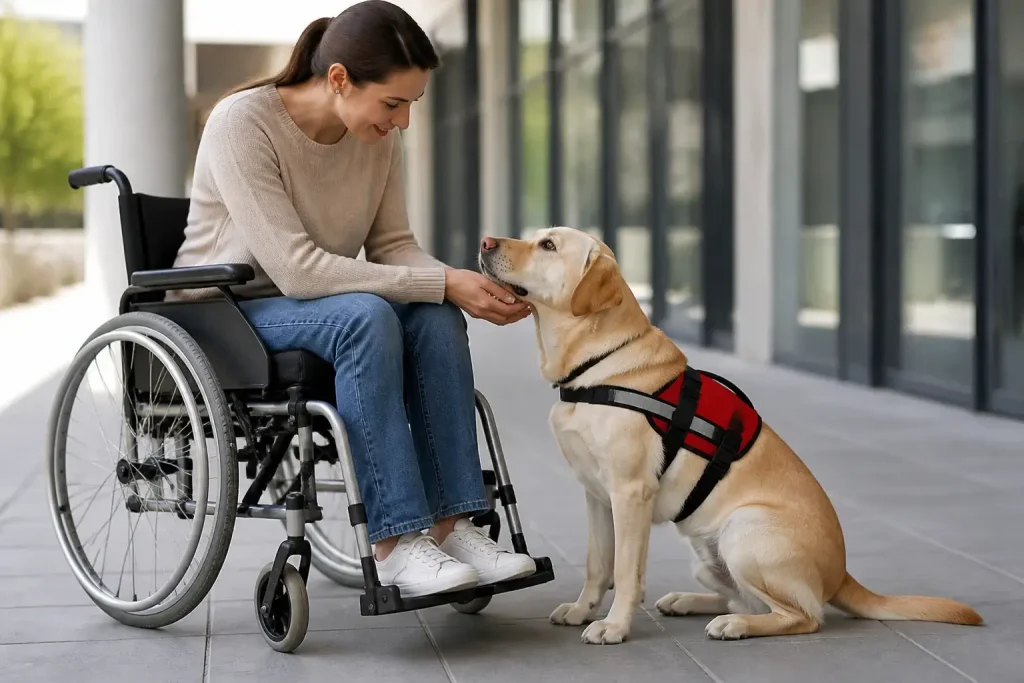
Service dog training is a structured process that prepares a dog to perform specific tasks for a person with a disability. It is more than teaching obedience, and it is not simply a matter of purchasing a calm, friendly pet. A successful partnership depends on suitable temperament, reliable public behavior, carefully selected tasks, and a strong working relationship between dog and handler. The goal is practical independence, safety, and support in everyday life.
This guide explains what service dog training involves, how dogs learn assistance skills, what owners should expect, and how to choose appropriate professional help. It also describes a training program as a service: what it should include, what limitations matter, and how to judge whether it fits a particular team.
What Service Dog Training Includes
Service dog training usually combines four connected areas: basic obedience, public access behavior, disability-related tasks, and handler education. Each area supports the others. A dog may know how to retrieve an object at home but still be unable to work safely in a crowded store. Conversely, a dog with excellent manners may not provide meaningful assistance unless it performs trained tasks that address the handler’s needs.
Training should be individualized. Mobility assistance, medical alert or response, psychiatric support, hearing assistance, and guide work require different skills and risk assessments. Some tasks are appropriate for one person but unsuitable for another. A qualified trainer begins by understanding the handler’s daily routine, limitations, environment, and goals before recommending exercises.
A responsible program also recognizes welfare. Dogs need rest, play, exercise, veterinary care, and opportunities to behave like dogs. Work should be introduced gradually, reinforced humanely, and adjusted when stress, pain, fear, or fatigue appears. Training is most effective when the dog is willing and confident rather than pressured into compliance.
Selecting a Suitable Dog
Not every dog can become a service dog, even when it is intelligent and eager to please. Temperament is usually more important than breed labels or impressive tricks. A promising candidate is generally comfortable around people, recoverable after startling events, able to focus despite distractions, and physically capable of the proposed work. Excessive fear, aggression, persistent reactivity, or severe environmental sensitivity can make service work unfair or unsafe.
Health screening deserves careful attention. A veterinarian can evaluate joints, vision, hearing, cardiovascular health, and other conditions relevant to expected tasks. Large dogs carrying or counterbalancing weight require especially cautious evaluation because many forms of mobility assistance can injure a dog if performed incorrectly. A trainer and veterinary professional should help determine whether a task places unacceptable strain on the animal.
Age also affects planning. Puppies can learn foundation behaviors and social confidence, but they are not ready for demanding work immediately. Adolescents often experience temporary changes in focus or impulse control. Mature dogs may offer steadier behavior but have less time for a long training pathway. Adoption can be successful, yet the dog’s history and behavioral responses should be assessed honestly.

Building Foundation Skills
Foundation training begins with reinforcement of behaviors that make later learning possible. The dog should learn its name, attention, hand targeting, loose-leash walking, settling on a mat, coming when called, and responding to cues in different settings. Leave it, drop it, wait, and polite greetings are particularly useful for safety and public access.
Short sessions usually produce better learning than exhausting drills. A trainer can mark the desired behavior with a consistent word or click, then provide a meaningful reward. Food is common, but toys, praise, movement, or access to a preferred activity may also reinforce behavior. Rewards should be delivered promptly so the dog understands which action earned them.
Progress should move from easy to difficult. First teach a behavior in a quiet room, then practice near mild distractions, outdoors, and eventually in realistic environments. Increasing distance, duration, and distraction simultaneously can overwhelm the dog. Change one variable at a time whenever possible, and return to an easier level if accuracy declines.
Handlers should avoid punishing warning signs such as avoidance, freezing, growling, or frantic pulling. Those signals communicate discomfort. Suppressing them can make a problem less visible without solving its cause. Humane training identifies the trigger, creates appropriate distance, teaches an alternative response, and seeks qualified behavior support when necessary.
Teaching Disability Related Tasks
A service dog’s defining contribution is a trained task that mitigates a disability. Common examples include retrieving dropped items, opening or closing accessible doors, pressing switches, interrupting dangerous repetitive behavior, alerting a handler to a medical event, locating a person or exit, providing hearing alerts, or guiding around obstacles. The exact task should be functional, reliable, and safe.
Task training often uses shaping, capturing, targeting, chaining, and generalization. For a retrieve, the dog may first learn to touch an object, hold it gently, pick it up, carry it, and deliver it to a hand. For an alert, the trainer must define what the dog should notice, what behavior constitutes an alert, and what the handler should do afterward. Vague goals make reliable training difficult.
Some tasks involve physical contact or pressure. These must be designed with professional input, especially when the handler has balance limitations, fragile joints, respiratory concerns, or neurological symptoms. A dog should never be expected to brace against unsafe weight, pull a person from the floor without appropriate preparation, or perform medical work beyond its demonstrated ability.
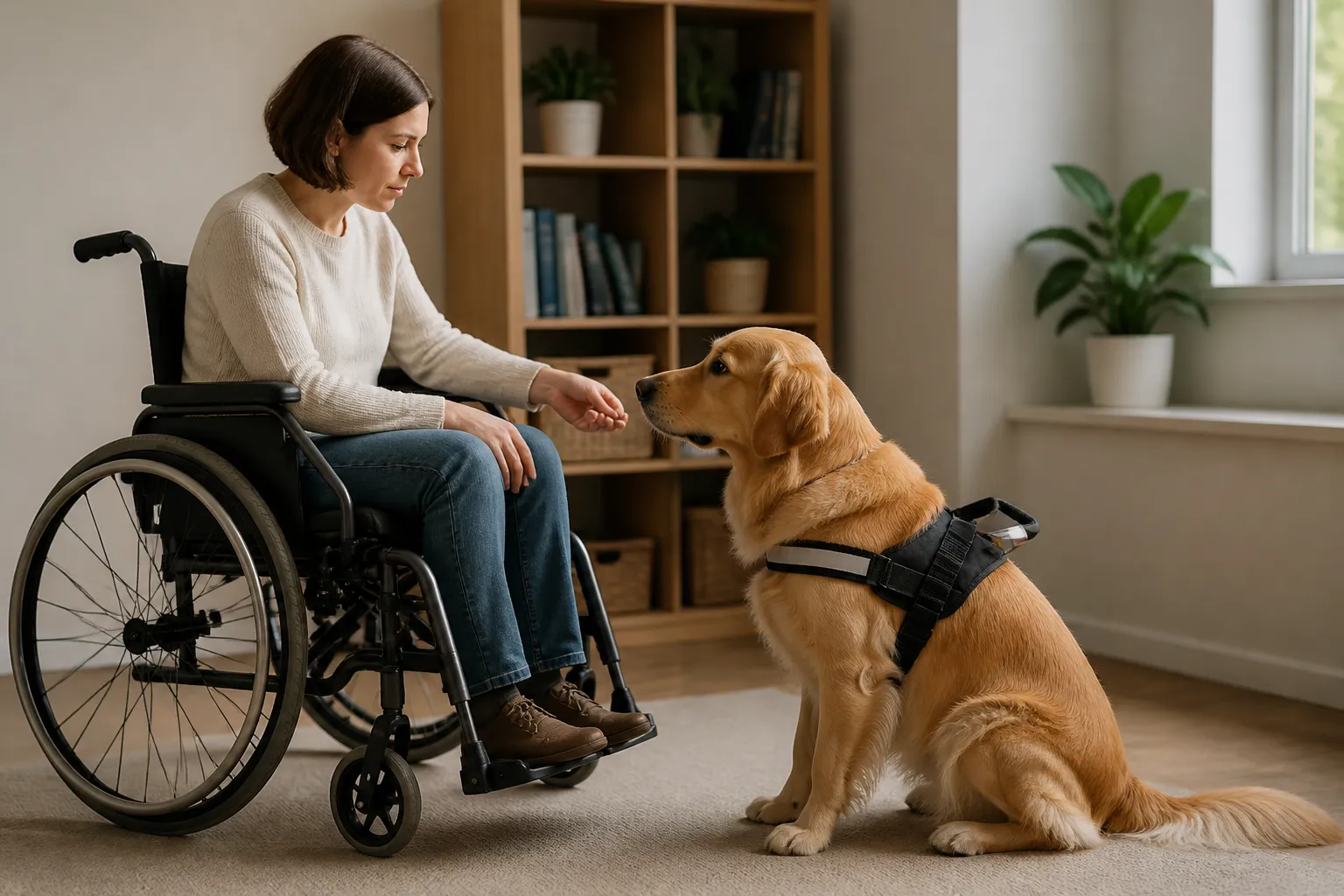
Generalization is essential. A dog that retrieves a familiar object in the kitchen may need to retrieve different objects from carpet, grass, a vehicle, or a public building. Practice should include realistic sounds, surfaces, lighting, and movement. Reliability is not established by one successful repetition; it develops through consistent performance across varied situations.
Public Access Preparation
Public access training teaches the dog to remain unobtrusive and responsive in places where members of the public gather. Useful goals include ignoring food, shopping carts, children, other animals, loud machinery, elevators, automatic doors, and unexpected contact. The dog should walk without forging, eliminate on cue when practical, settle quietly beneath a table, and avoid seeking attention from strangers.
Exposure must be gradual and carefully managed. Taking an inexperienced dog into a crowded shopping center for a long session can create fear or overstimulation. Begin in calm locations, reward focus and relaxation, and leave before the dog becomes exhausted. Later sessions can add busier environments, longer durations, novel surfaces, and more complicated distractions.
A service dog should be clean, groomed, and under control. Appropriate equipment may include a flat collar, harness, leash, identification chosen by the handler, and a treat pouch. Equipment does not replace training, and labels do not guarantee behavior. Handlers should understand the access rules that apply where they live and should not claim disability-related access for a pet that is merely in training without checking local requirements.
Etiquette protects both the working team and the public. People should not pet, feed, call to, or distract a working dog without permission. Handlers can use a brief explanation, a visible patch, or a polite request for space, but they are not required to disclose private medical information. A dog that cannot work comfortably in a setting should be removed and retrained rather than forced through it.
Choosing Professional Support
Professional guidance can save time, prevent unsafe methods, and provide objective evaluation. Look for trainers who explain their methods clearly, welcome questions, assess the individual dog, and provide realistic timelines. Relevant experience with the intended disability-related tasks matters. A trainer who specializes in pet obedience may be excellent at manners yet lack the expertise required for mobility work or complex medical response.
Ask how the program handles setbacks, adolescence, fear, aggression, health concerns, and retirement planning. Request a written description of sessions, homework, communication, fees, cancellation terms, and evaluation criteria. Be cautious about guarantees that promise certification, perfect behavior, or immediate access rights. No ethical trainer can control every variable in a dog’s development.
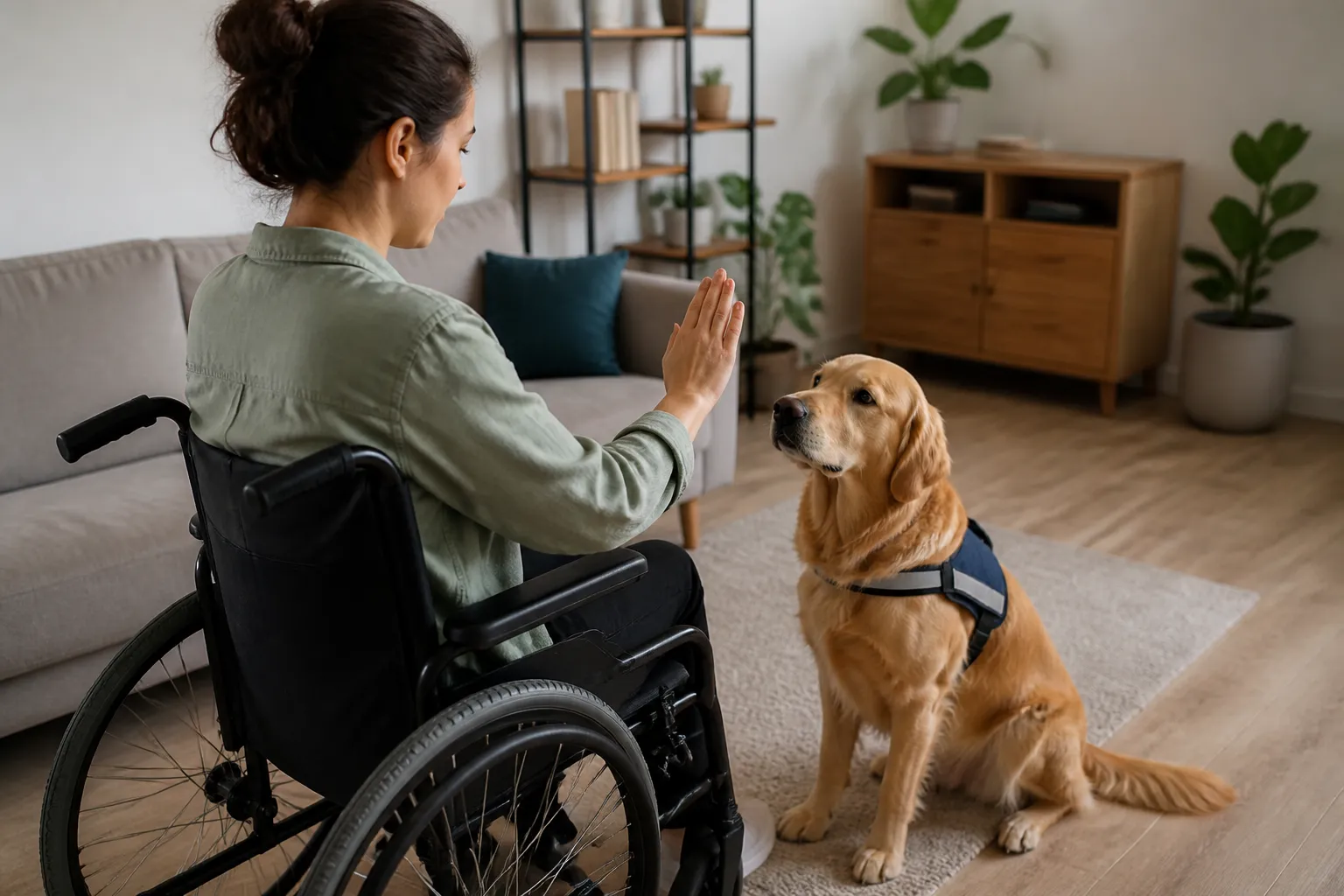
Group classes can provide controlled distractions and handler practice, while private lessons may address specific challenges more precisely. Board-and-train programs can offer intensive work but require careful investigation, follow-up instruction, and a realistic plan for transferring behavior to the handler. The person who lives and works with the dog must learn to maintain every important skill.
Remote coaching may supplement hands-on instruction, particularly for reviewing videos or planning home exercises. However, complex behavior, public access challenges, and physical assistance tasks often benefit from direct observation. When medical alerts or psychiatric tasks are involved, collaboration with appropriate healthcare professionals can clarify safe goals without asking trainers to diagnose or make clinical decisions.
A Practical Training Plan
Begin with an assessment. Record the dog’s health history, current skills, reactions to people and animals, ability to settle, and performance in ordinary environments. Identify the handler’s most important daily challenges. Choose a small number of measurable goals, such as remaining settled for a specified activity, retrieving three household objects, or responding to an alert routine.
Create a weekly schedule with brief practice periods, enrichment, rest, and ordinary companionship. Use a training log to note the cue, environment, response, reward, and any difficulty. Patterns become easier to see when written down. If the dog succeeds repeatedly, add one modest challenge. If errors increase, simplify the exercise and investigate why.
Teach a clear release cue so the dog understands when work ends. This boundary can reduce confusion and allow relaxed play. Practice emergency skills separately, including a reliable recall, stopping at doors, accepting handling, and moving away from hazards. Rehearse equipment changes and grooming calmly so routine care does not disrupt working confidence.
Evaluate function, not appearance. A dog may look attentive while missing alerts or becoming distressed internally. Observe breathing, body tension, scanning, lip licking, avoidance, and recovery after surprises. Arrange periodic veterinary checks and trainer reviews. Training should evolve as the handler’s disability, home, schedule, and dog’s abilities change.
Common Mistakes and Limitations
One common mistake is selecting a dog because of appearance, breed reputation, or a single impressive behavior. Suitability is a pattern of stable responses over time. Another is rushing public access before foundations are reliable. Early failures can become rehearsed habits and may expose the team to unnecessary conflict or danger.
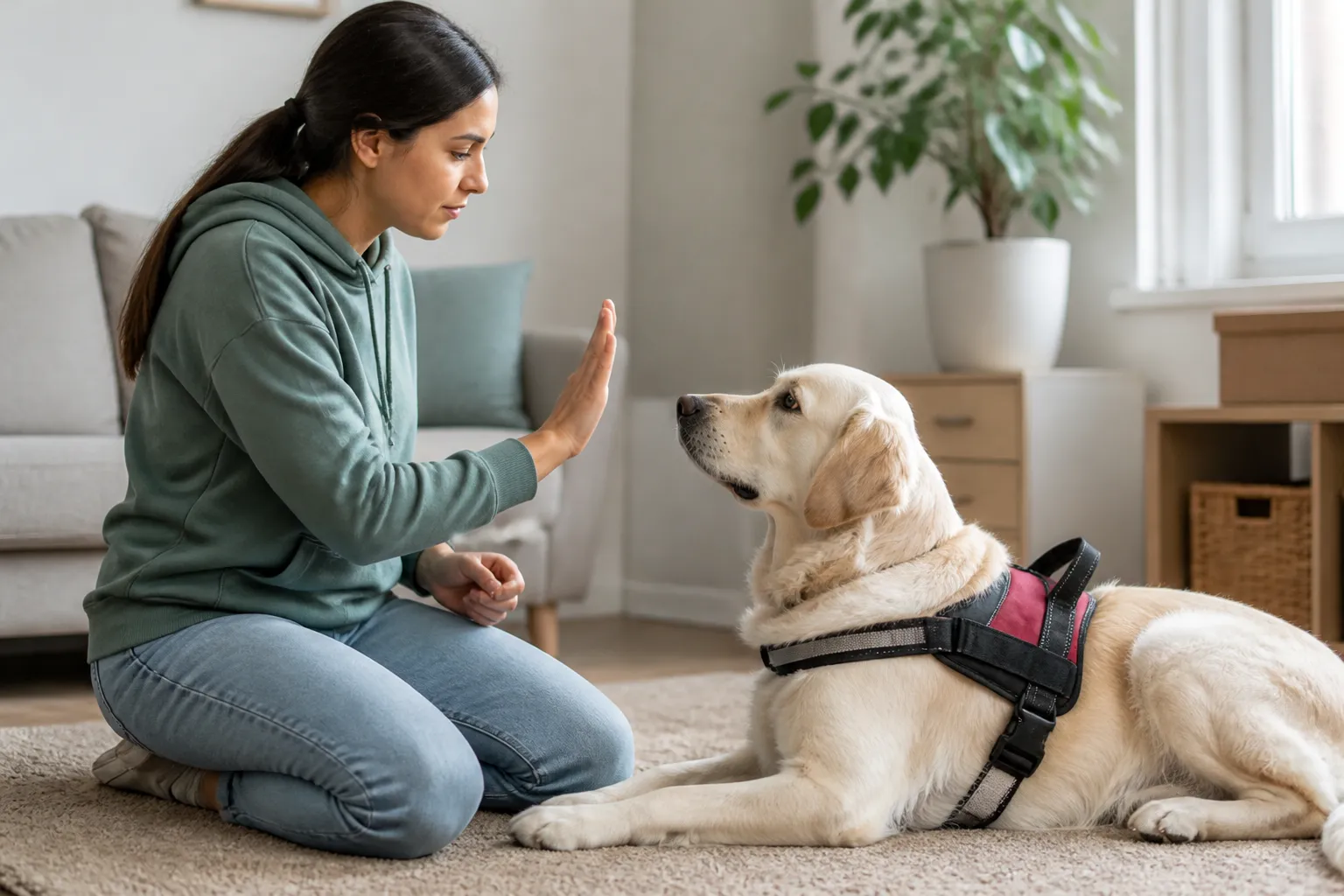
Inconsistent reinforcement can also slow learning. If a handler sometimes rewards jumping, pulling, or demanding attention, the dog receives mixed information. Family members and support workers should agree on essential cues and boundaries. Consistency does not require identical personalities; it requires predictable consequences for important behaviors.
Handlers sometimes choose tasks that sound impressive but provide little practical benefit. A task should solve a specific problem, fit the dog’s physical abilities, and be usable in the handler’s real routine. It is better to train two dependable tasks than many unreliable behaviors. Review whether the task actually improves safety, access, communication, or independence.
Finally, retirement is not failure. Aging, illness, stress, or changing needs may make work inappropriate. Planning for reduced hours, veterinary advice, and eventual retirement protects the dog and preserves the human animal relationship. A successor dog should not be expected to replace an older partner instantly.
What a Quality Training Service Provides
A strong service dog training program offers more than isolated lessons. It provides an initial consultation, suitability screening, an individualized curriculum, humane instruction, progress records, homework, and opportunities to practice in realistic settings. It explains what the team can reasonably achieve and identifies tasks that require additional medical, veterinary, or technical advice.
Quality support is collaborative. The trainer teaches the handler how to give cues, deliver reinforcement, recognize stress, troubleshoot errors, and maintain skills after formal sessions end. Written plans are valuable because they turn broad aims into observable behaviors. For example, “improve public manners” is vague; “settle quietly on a mat for fifteen minutes while the handler completes an appointment” is measurable.
A responsible provider also discusses costs without hiding essential conditions. Ask whether travel, equipment, assessments, follow-up sessions, and maintenance support are included. Availability matters because a program may be unsuitable if help cannot be obtained during a difficult transition. References can be useful, but personal information and health details should remain protected.
No training service can promise that every dog will graduate. An honest evaluation may conclude that a dog is better suited as a companion, an emotional support animal where legally applicable, or a pet with targeted home skills. That recommendation can be disappointing, but it may prevent harm and expense. Ethical advice places welfare and functional outcomes above sales.
Frequently Asked Questions
How long does service dog training take?
The timeline varies with the dog’s age, temperament, health, starting skills, task complexity, handler circumstances, and training frequency. Foundation work may begin quickly, while dependable public behavior and specialized tasks require sustained practice. Ask for milestones rather than a guaranteed completion date.
Can I train my own service dog?
In some places, owner-training is permitted, but rules differ by jurisdiction and setting. Owner-training demands time, consistency, realistic self-assessment, and access to qualified support. A hybrid plan, combining personal practice with professional evaluations, can help identify problems before they become entrenched.
Does a service dog need certification?
There is no universal worldwide certification system. Legal definitions, identification rules, and access requirements vary. A vest, card, or online certificate does not create disability-related task training by itself. Consult authoritative local guidance and avoid providers that sell documentation as a substitute for behavior and function.
What if my dog is friendly but distracted?
Friendliness is not the same as work readiness. Teach the dog that the handler, not strangers, predicts rewards during work. Increase distance from distractions, reinforce calm orientation, and practice brief exposures. If the dog cannot disengage or shows stress, reduce difficulty and seek professional assessment.
Can any breed perform service work?
Breed can influence size, energy, instincts, and physical suitability, but no breed guarantees success. Individual temperament, health, motivation, and task demands should guide the decision. Breed-specific stereotypes are less useful than direct observation and careful evaluation.
How should I handle public questions?
Use a concise response that protects privacy, such as explaining that the dog is working and should not be distracted. You may state that the dog performs trained assistance tasks without discussing a diagnosis. If a situation becomes unsafe, prioritize leaving calmly over winning an argument.
When should training stop?
Stop or modify a session when the dog shows fatigue, distress, pain, repeated confusion, or declining recovery. Training can resume later at an easier level after identifying the cause. Permanent changes may be needed if veterinary or behavioral concerns emerge.
Conclusion
Service dog training succeeds when it connects a carefully chosen dog, humane teaching, meaningful tasks, dependable public behavior, and an informed handler. Start with health and temperament, build foundation skills gradually, define tasks in practical terms, and generalize them across real environments. Professional support is especially valuable for safety-sensitive work, physical assistance, medical response, and complex behavior.
A persuasive program is not the one making the biggest promises. It is the one that evaluates honestly, protects the dog’s welfare, teaches the handler clearly, measures functional progress, and adapts when circumstances change. With patience, consistency, and appropriate guidance, training can develop a reliable partnership that supports daily independence while respecting the animal who makes that partnership possible.