
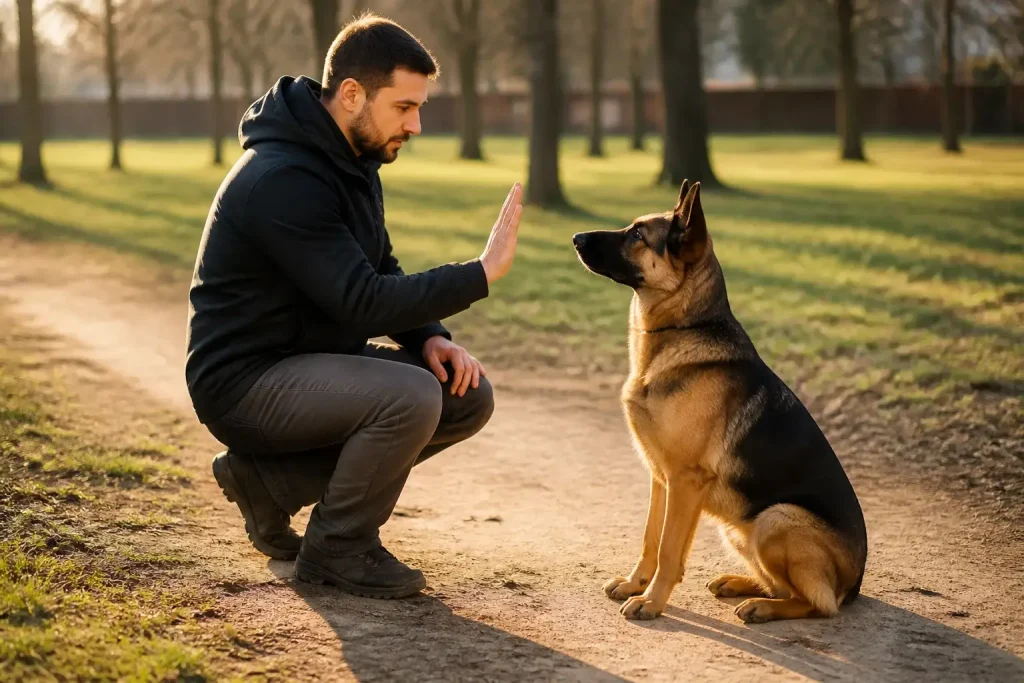
Advanced Dog Training
Advanced dog training is a structured learning system for owners who want more than basic obedience. It develops reliable behavior, thoughtful communication, emotional control, and practical skills that remain useful in everyday life. Rather than teaching isolated tricks, advanced training connects cues, environments, distractions, and decisions. The dog learns how to respond appropriately at home, outdoors, around visitors, near other animals, and during unexpected situations.
This program is suitable for healthy dogs that already understand foundational cues such as sit, down, stay, come, leave it, and walking politely. It can also be adapted for adolescent or adult dogs whose previous education was inconsistent. Progress depends less on age or breed than on motivation, physical comfort, temperament, and the handler’s ability to practice clearly and consistently.
Advanced training should be humane, gradual, and reward based. Rewards may include food, toys, praise, access to sniffing, movement, or permission to greet. Effective instruction does not mean allowing every behavior. It means teaching the dog what will work, preventing rehearsal of unsafe choices, and reinforcing desirable alternatives. Clear boundaries and kind handling can exist together.
What the Program Provides
The program provides a progressive framework for improving reliability under distraction. Lessons typically address advanced obedience, impulse control, recall, loose leash walking, cooperative care, scent activities, problem solving, and public manners. Each exercise is divided into achievable steps so the dog can succeed before difficulty increases.
Owners receive guidance on selecting rewards, delivering reinforcement precisely, reading body language, arranging safe practice environments, and measuring improvement. The emphasis is on transferable behavior. A dog should not merely perform a stay in a quiet kitchen; it should gradually learn to remain settled while a door opens, a person walks past, food is present, or mild noise occurs.
The training also teaches handlers to identify the reason behind behavior. Barking may reflect excitement, uncertainty, frustration, pain, territorial concern, or a learned habit. Jumping may produce attention, while pulling may provide access to interesting smells. When owners understand consequences and emotional states, they can select strategies that address the underlying need instead of relying on repeated corrections.
Core Learning Principles
Dogs learn through consequences, repetition, association, and observation. A behavior that produces a valuable outcome becomes more likely, especially when reinforcement arrives immediately. Timing therefore matters. If a dog sits and the reward appears several seconds later, the dog may connect the reward with standing, looking away, or another action. A marker word or click can identify the correct moment before the reward is delivered.

Use a consistent cue once, then allow the dog time to respond. Repeating “come, come, come” can teach the dog that the first signal is optional. If the dog cannot respond, reduce distance, lower distractions, improve the reward, or return to an easier stage. Training should reveal what the dog can do today, not test the dog until failure.
Short sessions are generally more productive than exhausting drills. Two to five minutes may be enough for a difficult skill, while an experienced dog may work for ten minutes with breaks. End after a successful repetition, offer rest, and vary activities. Mental effort can be tiring even when physical movement is limited.
Building Reliable Cues
A reliable cue has a clear meaning, a consistent signal, and a history of reinforcement. Begin in a quiet location. Say the cue once, assist if necessary, mark the desired response, and reward. After several successful repetitions, introduce small changes in distance, duration, or distraction, but do not increase all three at once.
For example, to strengthen “stay,” first reward one second of stillness. Gradually extend the interval, returning frequently to easier durations. Add one step of handler movement, then two. Later practice with the handler turning away, moving around furniture, or briefly leaving the room. If the dog rises, avoid anger and reset at a simpler level.
Release cues are equally important. Words such as “free,” “all done,” or “go sniff” tell the dog when an exercise ends. Without a release signal, dogs may guess when they can move, creating confusion. Reinforce calm waiting until the release is given, then make the release meaningful.
Recall and Emergency Skills
A strong recall can protect a dog from traffic, wildlife, open gates, and other hazards. Build it as a joyful response, never as a prediction that fun will end. Begin indoors by moving away, using an enthusiastic cue, and rewarding generously when the dog follows. Practice from short distances, then increase space gradually.
Use a long line in secure outdoor areas. The line is a safety tool, not a device for dragging the dog toward the handler. Call once, create movement, and reward arrival. If the dog ignores the cue, avoid repeating it endlessly. Guide gently with the line, reduce difficulty, and rebuild the association. Do not punish the dog for eventually returning, because punishment can make future returns less likely.
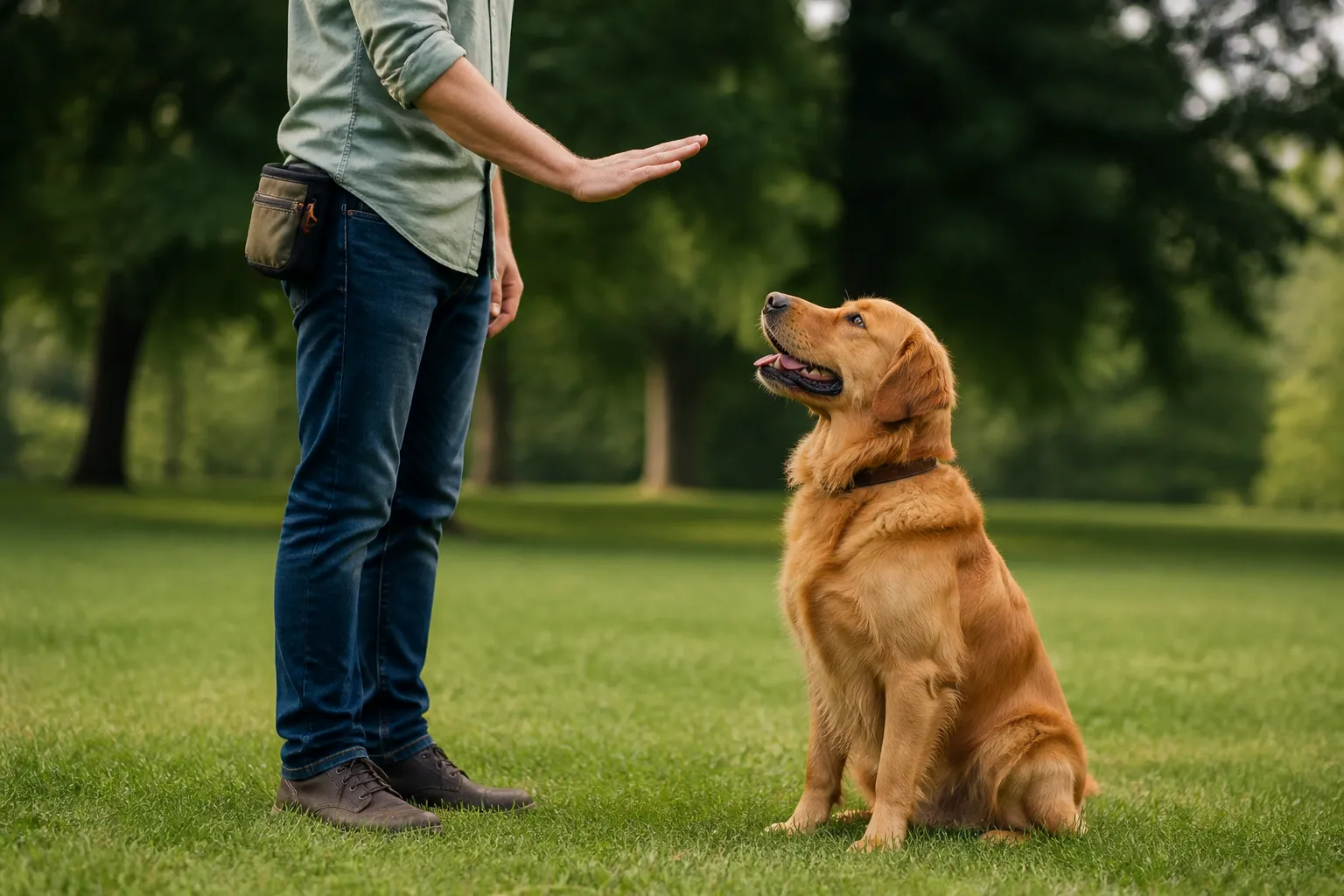
Emergency U-Turn
An emergency u-turn teaches the dog to move with the handler away from a potential problem. Pair a cheerful phrase with a quick change of direction, then reward the dog for following. Practice before it is needed, beginning without distractions. Later use it when a distant dog, bicycle, or unusual object appears, while maintaining enough space for the dog to remain responsive.
Collar and Harness Safety
Dogs should be comfortable being touched and restrained. Teach a collar grab by lightly touching the collar, delivering a reward, and releasing. Progress to holding briefly, then attaching a leash. Similarly, introduce a harness in stages: show it, reward observation, touch the body, place it briefly, and remove it. Check fit regularly, and consult a qualified professional if equipment causes rubbing, restricted movement, coughing, or distress.
Impulse Control and Calm Behavior
Impulse control is not passive suppression. It is the ability to pause, process information, and choose a trained response. Teach this skill through manageable exercises. Hold a treat in a closed hand; reward the moment the dog stops pawing and looks away. Progress to an open hand, food on the floor, and eventually real-life situations.
Door manners can be taught by approaching the door, waiting for calm, and rewarding stillness. Open it a fraction, close it if the dog rushes, and continue only when the dog can remain composed. The goal is not perfection immediately. The goal is a predictable pattern in which calm behavior makes access possible.
Settle training helps dogs relax on a mat, bed, or designated blanket. Reward soft body language, lowered hips, quiet breathing, and the decision to remain in place. Initially deliver rewards frequently. Gradually lengthen intervals and introduce household activity. This skill is valuable during meals, work, guests, veterinary visits, and travel.
Managing Distractions
Distractions should be introduced by intensity, distance, movement, and duration. A calm person across a large field is easier than a running child nearby. Begin below the dog’s reaction threshold, where the dog can notice the distraction and still eat, play, or respond. Reward orientation toward the handler, voluntary disengagement, and relaxed behavior.
If the dog stares, stiffens, vocalizes, lunges, or stops accepting rewards, the environment is too difficult. Increase distance, reduce movement, leave the area, or choose a quieter location. Threshold work is not about forcing exposure. It is about creating safe experiences in which the dog learns that noticing something does not require an explosive response.

Loose Leash Walking and Public Manners
Loose leash walking is a cooperative movement skill, not a demand that the dog ignore the environment. Reinforce the dog for staying near the handler, checking in, and maintaining a slack leash. Allow regular sniffing breaks, because exploration is enriching and can reduce frustration. A predictable pattern might include several steps of walking, a release to sniff, and a return to the handler.
When the leash tightens, stop or change direction without jerking. Resume movement when slack returns. Choose quieter routes while training, and use appropriate equipment fitted by a knowledgeable professional. A front-clip harness, standard harness, or flat collar may suit different dogs, but no equipment replaces teaching and management.
Public manners include ignoring people who do not wish to interact, waiting near entrances, passing dogs safely, and settling under a table. Greetings should be optional rather than automatic. Ask people to wait until the dog is calm, and reward four paws on the floor. If the dog is fearful, excited, or uncomfortable, create distance and decline greetings politely.
Cooperative Care
Cooperative care reduces conflict during grooming, medication, nail trims, ear checks, and veterinary handling. Teach the dog to place its chin on a hand or support, then reward remaining still. Pair brief touches with valuable reinforcement. Stop before distress escalates, and build duration slowly.
A consent-based start signal can help. For example, the dog may place its chin on a towel to indicate readiness for a brief examination. If the chin lifts, pause and reassess. This does not replace veterinary restraint when medically necessary, but it can make routine care more predictable and less frightening.
Problem Solving and Enrichment
Advanced dogs benefit from opportunities to investigate, search, manipulate, and make choices. Scent games can begin with food hidden in easy locations, progressing to containers, boxes, rooms, and outdoor trails. Puzzle feeders, shaping exercises, retrieve variations, and discrimination games challenge different abilities.
Shaping rewards small steps toward a goal without physically placing the dog. If teaching a dog to close a cabinet, reinforce looking at it, moving toward it, touching it, and eventually pushing it. Keep criteria clear and sessions brief. If the dog becomes frustrated, make the next step easier or provide a reset behavior.

Enrichment should match the dog’s safety, health, and preferences. Food puzzles may need supervision. Dogs that guard resources require professional guidance before introducing shared games. Physical exercise should consider age, structure, temperature, and medical advice. Mental work is valuable, but it should not be used to ignore pain, anxiety, inadequate sleep, or unmet social needs.
Training Plans and Measurement
A written plan improves consistency. Define one observable behavior, the cue, the reward, the starting environment, the number of repetitions, and the criterion for progress. Instead of writing “improve recall,” write “the dog turns toward the handler within two seconds from five meters indoors, eight out of ten trials.”
Record successes, distractions, reward type, and signs of stress. Progress is rarely linear. A dog may perform beautifully indoors and struggle outdoors, or succeed in the morning and find evening practice difficult. Treat setbacks as information, not disobedience.
Change only one major variable at a time. Distance, duration, distraction, speed, location, and reward value all affect difficulty. If a dog fails twice, simplify. A practical rule is to finish with several easy successes after a challenging attempt. This protects confidence and provides a clear learning history.
Choosing Professional Support
Seek a qualified reward-based trainer when behavior involves aggression, severe fear, separation distress, compulsive actions, guarding, escape attempts, or sudden change. A veterinarian should assess possible medical contributors, including pain, sensory loss, neurological conditions, and hormonal changes. Trainers and veterinarians can collaborate on behavior plans.
Ask professionals about methods, credentials, continuing education, safety procedures, and how they handle difficult behavior. Be cautious of guarantees, intimidation, claims that one technique works for every dog, or advice to suppress warning signals. Growling and avoidance provide important information. Removing communication without addressing discomfort can increase risk.
Frequently Asked Questions
Is advanced training suitable for every dog?
Most dogs can learn advanced skills, but goals and pace should be individualized. A senior dog may need shorter sessions and low-impact exercises. A fearful dog may require confidence building before public obedience. A highly energetic dog may benefit from movement and scent work between stationary exercises. Health, temperament, history, and environment should guide the plan.
How long does advanced training take?
There is no universal timeline. A simple behavior may improve within days, while reliable recall around distractions can require months of careful practice. Reliability depends on reinforcement history, genetics, emotional responses, environmental difficulty, and handler consistency. Measure gradual improvement rather than expecting a fixed graduation date.
Should rewards always be used?
Rewards are especially important while teaching and strengthening behavior. Over time, reinforcement can become intermittent, varied, and connected to natural outcomes such as moving forward, sniffing, greeting, or resting. However, intermittent reinforcement should follow a strong learning history. Abruptly removing rewards may reduce reliability.
Can treats cause weight gain?
They can if calories are not managed. Use small, soft pieces, reserve part of the daily meal for training, or choose low-calorie options approved for the dog. Account for every reward and monitor body condition. A veterinarian can provide appropriate feeding guidance.
What if my dog will not listen outside?
The outdoor environment may be too difficult, the reward may be insufficient, or the cue may not yet be generalized. Return to a quieter location, increase distance from distractions, use a long line, and practice short sessions. Avoid giving important cues when success is unlikely. Rebuild gradually.
Is punishment necessary for serious behavior?
Punishment is not a complete behavior plan and can increase fear, arousal, avoidance, or aggression. Serious behavior requires management, safety planning, and assessment of underlying causes. Reward-based behavior modification, carefully applied boundaries, and professional support are safer and more informative approaches.
How can children participate safely?
Children should practice only with close adult supervision and a dog that is comfortable. Begin with simple tasks such as tossing treats onto a mat, asking for a familiar cue, or participating in a calm scent game. Children should never climb on, corner, disturb, or take food from a dog. Adults remain responsible for safety.
What equipment is essential?
A properly fitted collar or harness, standard leash, long line for suitable areas, food pouch, high-value rewards, mat, and identification are useful. A secure carrier, muzzle trained positively, or barriers may be necessary for particular dogs. Equipment should support communication and safety, never cause pain or panic.
Conclusion
Advanced dog training is an ongoing partnership built through clarity, patience, observation, and thoughtful reinforcement. The strongest results come from teaching skills in small stages, protecting the dog from overwhelming situations, and practicing in many realistic contexts. Reliable behavior is not created by demanding more; it is created by making success understandable and worthwhile.
Prioritize safety, recall, impulse control, calm settling, cooperative care, and polite movement. Combine structured lessons with enrichment, rest, play, and opportunities to make appropriate choices. Track progress honestly, adjust difficulty when needed, and seek qualified assistance for complex behavior or health concerns.
A well-trained dog is not one that obeys mechanically in every circumstance. It is a dog that understands communication, can recover from excitement, feels secure enough to learn, and has practical behaviors that support shared life. With consistent guidance, advanced training becomes more than performance. It becomes a durable language of trust, cooperation, and responsible companionship.
Pingback: Advanced Dog Training: Building Advanced Skills