
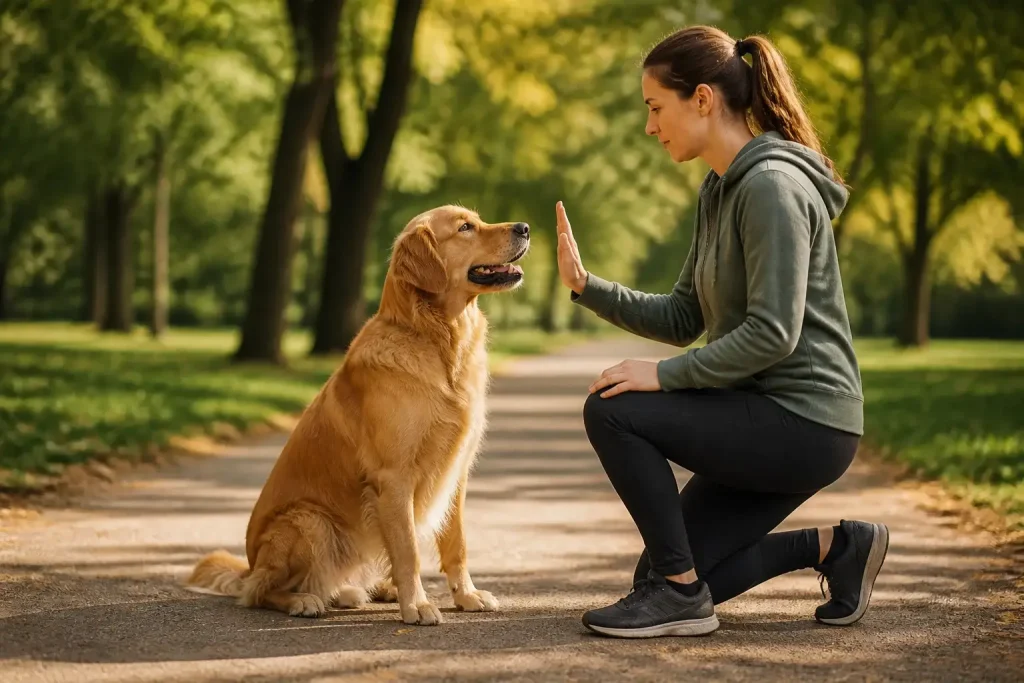
Advanced Dog Training: Building Reliable Behavior
Advanced dog training is the process of turning basic cues into dependable behavior across distractions, locations, distances, and changing emotional states. A dog that sits in a quiet kitchen may still struggle to respond near squirrels, visitors, traffic, or other dogs. Lasting obedience therefore depends less on collecting impressive tricks and more on teaching the dog how to make good choices when conditions become difficult.
The most effective approach combines clear communication, carefully managed difficulty, reinforcement, and patience. Advanced work should strengthen cooperation rather than rely on intimidation. Dogs learn best when they understand which behavior earns a useful consequence and when their handler prevents repeated mistakes. This guide explains the principles, equipment considerations, exercises, troubleshooting methods, and safety practices that make advanced training practical.
What Advanced Training Really Means
Advanced obedience is not simply asking for commands more quickly. It involves three forms of reliability.
First, the dog responds under distraction. A down must remain a down when a bicycle passes, a child runs nearby, or another dog appears at a safe distance. Second, the dog responds at a distance. The handler may stand several meters away while asking for a stay, recall, or position change. Third, the dog responds for longer durations and in unfamiliar environments.
These skills are separate. A dog may hold a stay for five minutes in a familiar room but break it immediately when the handler walks away. Treat each dimension independently. Increase only one major difficulty at a time: duration, distance, distraction, or environmental novelty. This prevents confusion and makes progress measurable.
Reliability also requires generalization. Dogs do not automatically assume that “down” in a living room means “down” at a park. Practice the same cue in multiple rooms, outdoors, quiet public spaces, and controlled social settings. Begin each new place at an easier level, then rebuild difficulty gradually.
Training Foundations That Support Progress
Reinforcement and Timing
Reinforcement means delivering something valuable after the desired behavior, increasing the likelihood that behavior will occur again. Food is often efficient, but toys, praise, access to sniffing, play, and freedom can also matter. The best reward depends on the individual dog and the situation.
Timing is crucial. Mark the correct moment with a consistent word such as “yes” or with a clicker, then provide the reward promptly. If the reward arrives several seconds late, the dog may associate it with standing up, looking away, or another accidental action. A marker bridges the short gap between behavior and reward.

Use a reinforcement schedule that matches the learning stage. New or difficult behaviors usually need frequent reinforcement. Once the response is strong, vary rewards rather than eliminating them abruptly. Intermittent reinforcement can maintain effort, but unpredictability should never mean unclear criteria. The dog must still know what behavior earns success.
Clear Criteria
Before training, define the exact behavior. “Be good” is not a useful criterion. “Keep four paws on the floor while greeting” is observable. Decide whether a stay ends when the release word is given, whether a heel permits sniffing, and whether a recall requires the dog to touch the handler’s hand.
Teach one criterion at a time. If you demand duration, perfect posture, eye contact, and distraction resistance simultaneously, the dog may fail without understanding why. Reward small approximations, then gradually require more. This shaping process is especially useful for complex tasks such as retrieving an object, settling on a mat, or walking past triggers.
Motivation and Arousal
Motivation is not the same as excitement. A highly aroused dog may want the reward intensely but lack the mental control to respond. Before difficult work, assess the dog’s emotional state. If the dog is panting, scanning, lunging, or ignoring familiar food, lower the challenge or increase distance from the trigger.
Brief sessions are usually more productive than exhausting repetitions. End after a successful response while the dog remains engaged. Rotate easy and difficult exercises so the dog experiences frequent success. A calm routine, adequate sleep, exercise appropriate to the dog, and opportunities for sniffing can all support learning, but they do not replace training.
Core Advanced Exercises
Proofing the Stay
A reliable stay is built through controlled changes. Ask for a sit or down, mark the position, wait briefly, and release. Gradually add duration, then distance, then distraction. Return to the dog before releasing when teaching early distance work; otherwise the dog may learn that standing up brings the handler back.
Use a clear release cue such as “free.” If the dog moves early, avoid punishment and reduce the next repetition. The reset should communicate that the opportunity ended, not that the dog is in danger. Practice both formal stays and real-life stationary behavior, such as remaining on a mat while dinner is prepared.
Emergency Recall
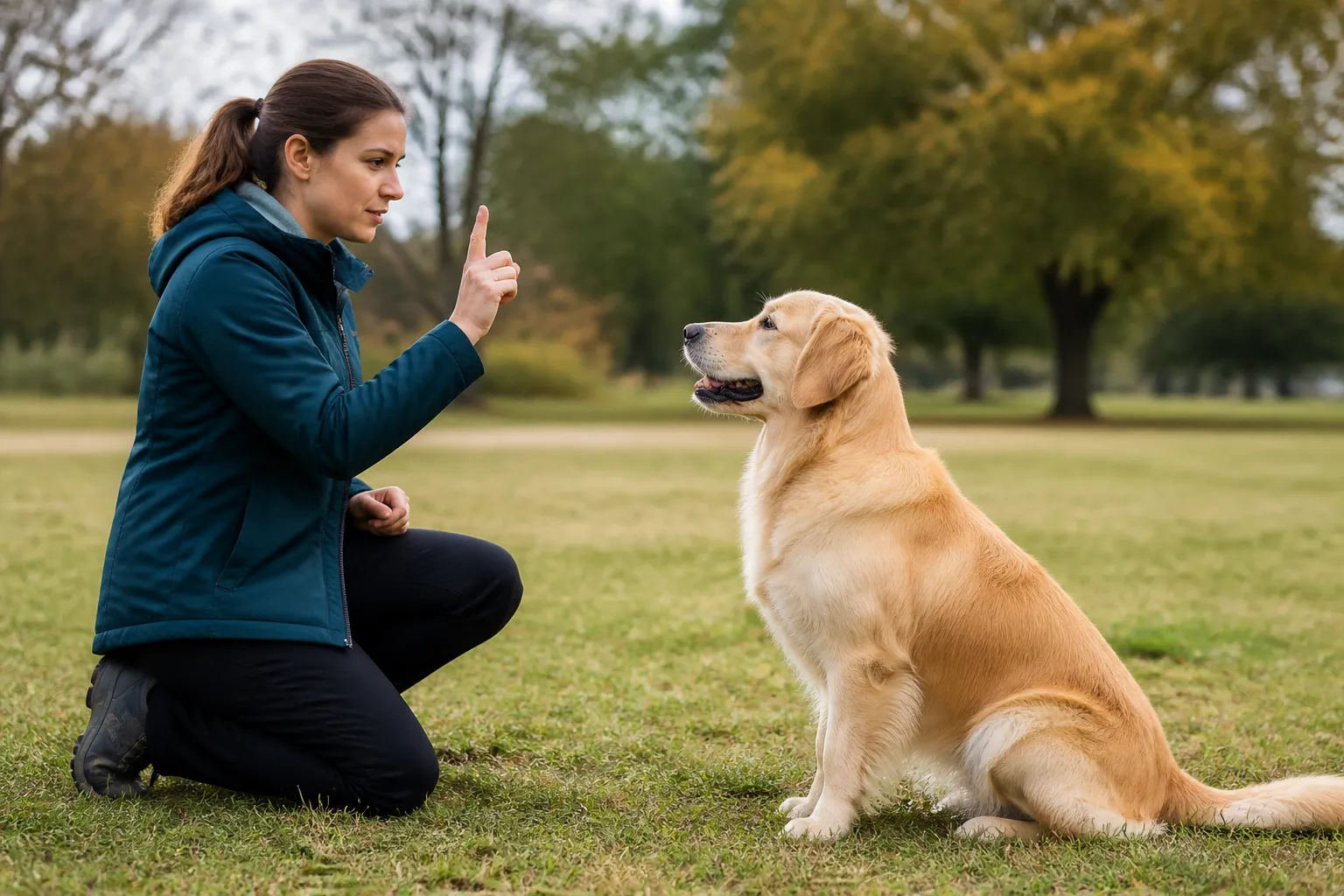
An emergency recall is a special cue reserved for situations requiring immediate movement toward the handler. Choose a word or whistle that has no history of being ignored. Pair it repeatedly with exceptionally valuable rewards in easy settings before using it outdoors.
Call once, move away, and reward generously when the dog arrives. Do not use the cue to end every enjoyable activity, deliver unpleasant care, or scold the dog. If the dog cannot respond, the environment is too difficult, the cue is insufficiently conditioned, or both. Use a long line in open areas while building reliability, and never test recall near traffic or other serious hazards without appropriate control.
Loose-Leash Walking
Advanced leash skills involve more than avoiding pulling. Teach the dog that a loose leash permits forward movement, sniffing, and exploration. When tension appears, pause or change direction without jerking. Resume movement when the leash softens, then reward the dog for choosing the correct position.
Practice separately in quiet areas, near mild distractions, and during real walks. A dog may understand a focused heel for short periods but still need a relaxed walking behavior for longer outings. Use clear cues for each task, such as “with me” for close walking and “go sniff” for permitted exploration.
Reliable Leave It and Drop It
“Leave it” asks the dog not to take or approach something. “Drop it” asks the dog to release an item already in its mouth. Teach both with trades, not force. Present a low-value object, offer a better reward, and mark the moment the dog turns away or releases. Return safe items when appropriate so relinquishing does not always end the dog’s fun.
Progress from stationary objects to moving objects, then to carefully managed outdoor distractions. Do not practice with dangerous substances or items that cannot be safely retrieved. Management remains essential; training reduces risk but does not make hazardous objects harmless.
Building Behavior Around Distractions
Distraction training works best when the handler controls distance and intensity. Begin far enough from the distraction that the dog can eat, think, and respond. Reward calm observation, orientation toward the handler, or a practiced alternative such as touching a hand. Over sessions, decrease distance in small increments.
Watch body language rather than waiting for a major reaction. A stiff posture, closed mouth, fixed stare, or sudden weight shift may signal rising tension. Respond early by increasing distance, changing direction, or offering a simple behavior. Rehearsing barking, lunging, or chasing can strengthen those patterns.

Counterconditioning changes emotional associations by pairing a trigger with valuable experiences. Desensitization changes the difficulty gradually enough that the dog remains below its reaction threshold. These methods require careful pacing. Flooding, which forces prolonged exposure to an overwhelming trigger, can worsen fear and is not a sound substitute for systematic training.
Practical Equipment Choices
Equipment should improve communication and safety, not compensate for missing training. A well-fitted flat collar or harness may suit ordinary work. A long line can provide controlled freedom during recall practice, provided it is used in open space and handled to prevent wrapping or sudden burns.
Rewards should be small, easy to deliver, and appropriate for the dog. A treat pouch reduces delays. A favorite toy may be useful for dogs that play more enthusiastically than they eat, but avoid games that create frantic grabbing when practicing calm behavior.
Head collars, front-clip harnesses, and other specialized tools can change leverage, yet each requires careful introduction and supervision. Aversive equipment, including devices designed to cause pain or fear, carries welfare and training risks. If a tool causes distress, avoidance, choking, or escalating aggression, stop using it and consult a qualified behavior professional. Children should not handle advanced equipment without informed adult supervision.
Troubleshooting Common Plateaus
The Dog Responds Only at Home
This is a generalization problem, not necessarily stubbornness. Return to an easy version of the cue in the new location. Reward heavily, then increase difficulty gradually. Change one variable at a time, and use a long line or barrier when safety requires it.
The Dog Ignores Food
Food may be too low in value, the dog may be full, or the environment may be overwhelming. First lower distractions and shorten the session. If appetite changes suddenly or the dog shows other concerning signs, seek veterinary advice. Motivation should never be forced through deprivation.
The Dog Performs Only When Paid
A reward history is not a flaw; it is how behavior was taught. Once the behavior is fluent, vary reinforcement and incorporate natural rewards. Ask for a manageable response, mark it, then provide access to sniffing, play, greeting, or movement. Avoid withholding all reinforcement, because that can reduce reliability.

Progress Disappears
Regression often follows increased difficulty, stress, illness, pain, hormonal changes, or a long break. Return to the last successful level and observe carefully. Sudden behavior changes, reluctance to move, irritability, or sensitivity to touch warrant veterinary evaluation before assuming a training problem.
A Structured Training Plan
Set one measurable goal for each session. For example, the dog may hold a mat settle while the handler takes ten steps away, or complete five recalls from a short distance in a quiet yard. Record the location, difficulty, reward, number of successful repetitions, and any early stress signals. Notes reveal patterns that memory often misses.
Use a progression such as teaching, stabilizing, generalizing, proofing, and maintaining. During teaching, make the behavior easy to understand. During stabilization, repeat it with consistent criteria. Generalization adds places and handlers. Proofing introduces controlled distractions. Maintenance uses occasional practice in daily life.
A useful session may last only several minutes. Begin with an easy behavior, work on the target skill, and finish with a success. If errors increase, stop escalating. Training plans should be flexible enough to reflect the dog’s health, age, temperament, and learning history.
Safety, Ethics, and Professional Support
Advanced training must protect the dog, handler, public, and other animals. Use secure equipment, obey local rules, and avoid off-leash work near roads, livestock, unstable ice, or unpredictable crowds. Do not use recall practice as a gamble. Management, including gates, leashes, crates, and distance, is a responsible part of behavior change.
Fear, aggression, separation-related distress, compulsive behavior, and serious reactivity may exceed ordinary obedience training. A veterinarian can investigate pain or medical contributors. A qualified reward-based trainer or veterinary behavior professional can design a plan, identify thresholds, and help the family practice safely. Credentials and methods vary, so ask how the professional handles fear, what equipment is used, and how progress is measured.
Children and visitors need simple instructions. They should not chase a dog, disturb a resting dog, reach into its food area, or test a new cue repeatedly. Give the dog a predictable retreat and teach people to respect it.
Frequently Asked Questions
How long does advanced training take?
There is no universal timetable. Simple reliability improvements may appear quickly, while behavior around strong distractions can require months of gradual practice. Progress depends on genetics, age, history, health, reinforcement, environment, and handler consistency. Measure improvement against the dog’s previous performance rather than another dog’s timeline.
Should every response be rewarded?
New, difficult, or safety-critical behaviors deserve frequent reinforcement. For fluent behaviors, vary the reward while maintaining meaningful consequences. A reward might be food, play, access to a sniffing area, or permission to greet when appropriate. Do not make valuable safety behaviors dependent on a single reward type.
Can an older dog learn advanced skills?
Yes, older dogs can learn, although sessions may need to be shorter and physically gentler. Consider hearing, vision, arthritis, dental pain, and cognitive changes. Use clear visual or tactile signals when appropriate, provide supportive surfaces, and ask a veterinarian about physical limitations.
Is off-leash obedience ever guaranteed?
No training can guarantee behavior in every environment. Wildlife, sudden noises, pain, panic, and unfamiliar hazards can change a dog’s response. Off-leash freedom should be limited to legally permitted, secure areas where the consequences of failure are manageable. Use a long line when practical.
What should I do after a failed recall?
Stay calm, secure the dog safely, and avoid punishment after arrival. Punishment can make future returns less likely. Review what made the situation too hard, rebuild the cue in easier conditions, and improve management. If the dog is repeatedly escaping, consult a professional and address barriers, gates, and equipment immediately.
Are treats bribery?
A bribe is typically shown to persuade behavior in the moment; reinforcement is delivered after the behavior to strengthen future performance. Keep rewards available but out of sight when possible, teach a marker, and gradually vary consequences as the behavior becomes reliable. Food is a teaching tool, not a moral failure.
Conclusion
Advanced dog training is a process of making useful behavior understandable, portable, and dependable. Build skills in small steps, separate duration from distance and distraction, reward accurately, and protect the dog from overwhelming situations. Practice in varied environments, use management alongside training, and treat setbacks as information rather than defiance.
The strongest results come from cooperation. A dog that can pause, return, release an object, walk safely, and settle around distractions gains greater freedom because the handler can trust the behavior more often. Progress does not require constant perfection. It requires thoughtful criteria, humane methods, consistent practice, and adjustments based on what the dog is communicating. When safety or serious emotional distress is involved, professional veterinary and behavior support is an essential part of responsible training.