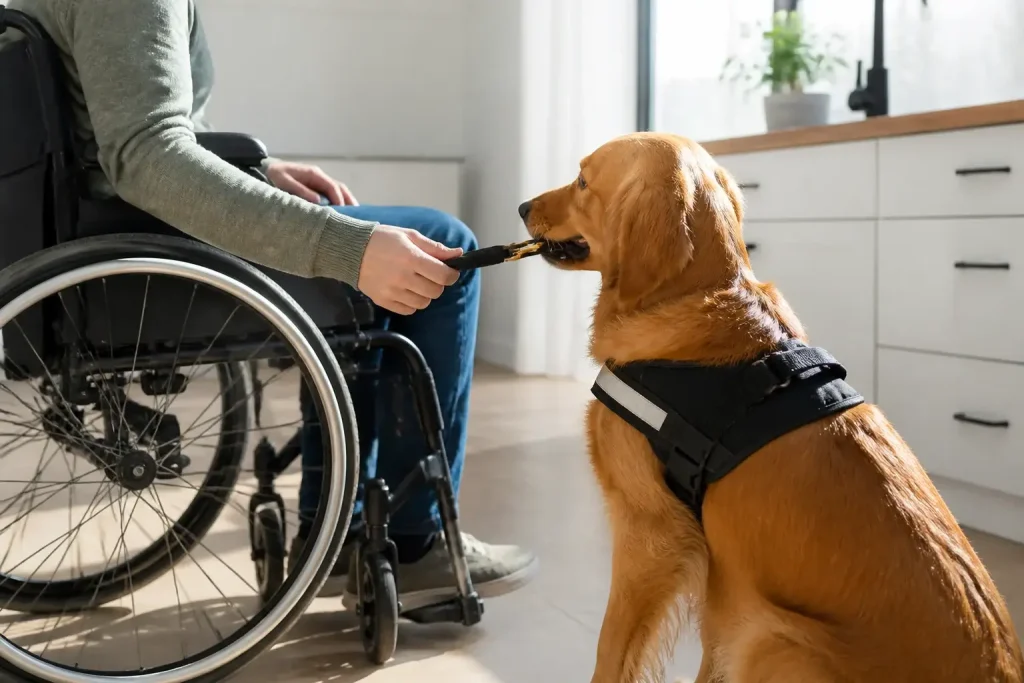
Mobility assistance dog training can transform carefully selected dogs into reliable partners for people who need practical physical support. The work is rewarding, but it is not a quick obedience course or a promise that every dog can perform every task. Effective training combines medical and functional assessment, suitable dog selection, humane teaching, public-access preparation, handler coaching, and ongoing welfare checks. The best program begins with the person’s actual daily needs, then develops safe behaviors that increase independence without encouraging unsafe pulling, bracing, or lifting.
This guide explains what mobility assistance dogs do, how training is structured, what a training product or program should provide, common mistakes, costs and timelines in general terms, and questions prospective handlers often ask. Because disability needs, laws, and professional standards vary by location, a qualified service-dog organization, veterinarian, physician, occupational therapist, or accredited trainer should help with decisions involving health, safety, or legal access.
Mobility Assistance Dog Training: What a mobility assistance dog does
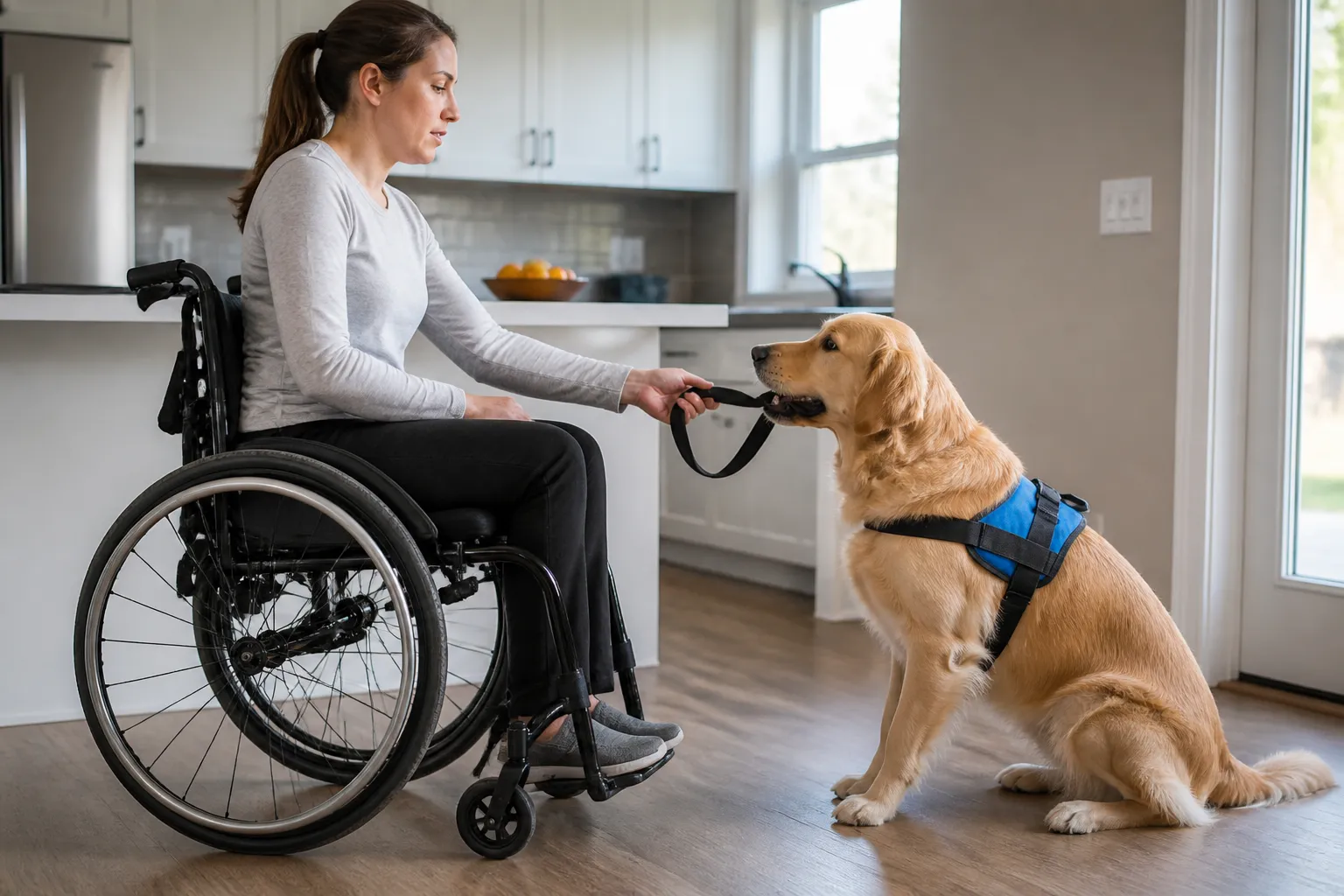
A mobility assistance dog is trained to perform disability-related tasks that help a handler manage physical limitations. Useful tasks may include retrieving dropped objects, opening or closing accessible doors, operating push buttons, bringing medication or a phone, turning lights on, carrying lightweight items, removing clothing, finding another person, and providing carefully defined balance support when professionally approved.
The word “mobility” covers different needs. One person may need help conserving energy; another may need retrieval after falls; someone else may benefit from an alert that prompts them to sit before dizziness worsens. A dog can be highly skilled at one task and unsuitable for another. Training should therefore begin with a written task profile rather than a fashionable list of tricks.
Some actions that look helpful can be dangerous. A dog should not routinely bear a person’s full body weight, pull a handler from the floor, or provide balance support through a harness unless a veterinary professional and rehabilitation specialist have confirmed that the dog’s size, structure, equipment, and technique make the activity appropriate. Many programs teach “counterbalance” only under strict conditions, while others avoid weight-bearing entirely.
A working dog also needs to remain calm in public, ignore food and distractions, settle under a table, ride safely in vehicles, and respond promptly without harsh handling. Public manners are not the task itself, but they make the task usable in real life.
Begin with a needs assessment
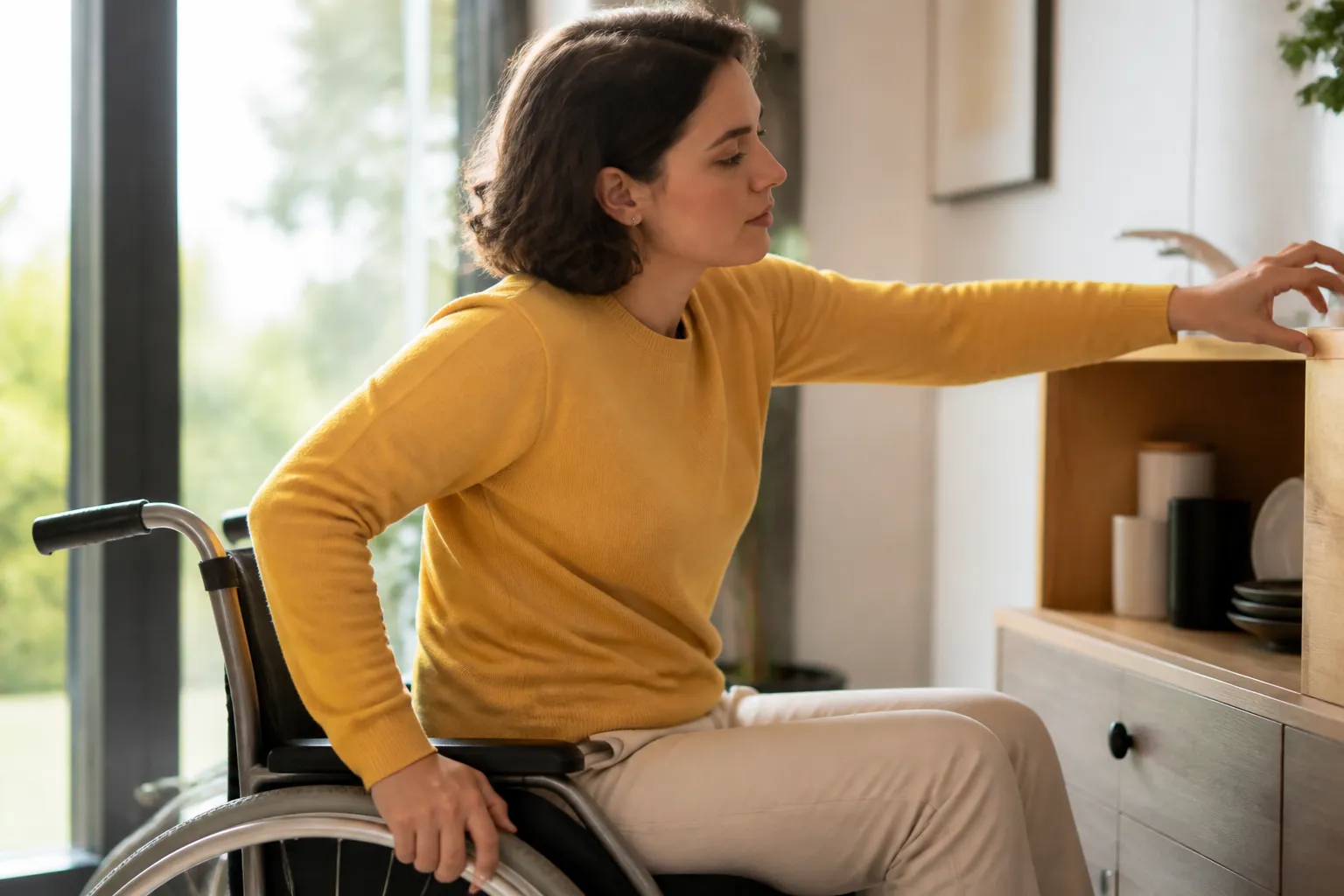
Before choosing a dog or buying equipment, describe the situations in which assistance is needed. Keep a short log for several days or weeks. Note what happens, where it happens, what help is currently available, and whether assistance must be immediate. Include fatigue, falls, pain, joint instability, balance changes, wheelchair use, transfers, and environmental barriers where relevant.
An occupational therapist can help translate daily difficulties into safer solutions. For example, retrieving an item may be appropriate, while using a dog as a support during a transfer may not be. A clinician can also identify equipment, home modifications, or human assistance that should complement the dog rather than be replaced by it.
Write task definitions
A useful task definition is observable and specific. “Help with mobility” is too vague. “Pick up a dropped pen and place it in my hand when I point” describes a behavior that can be trained and evaluated. Add context, response criteria, and a stopping cue. Decide how much repetition is reasonable and what the dog should do if the object is inaccessible.
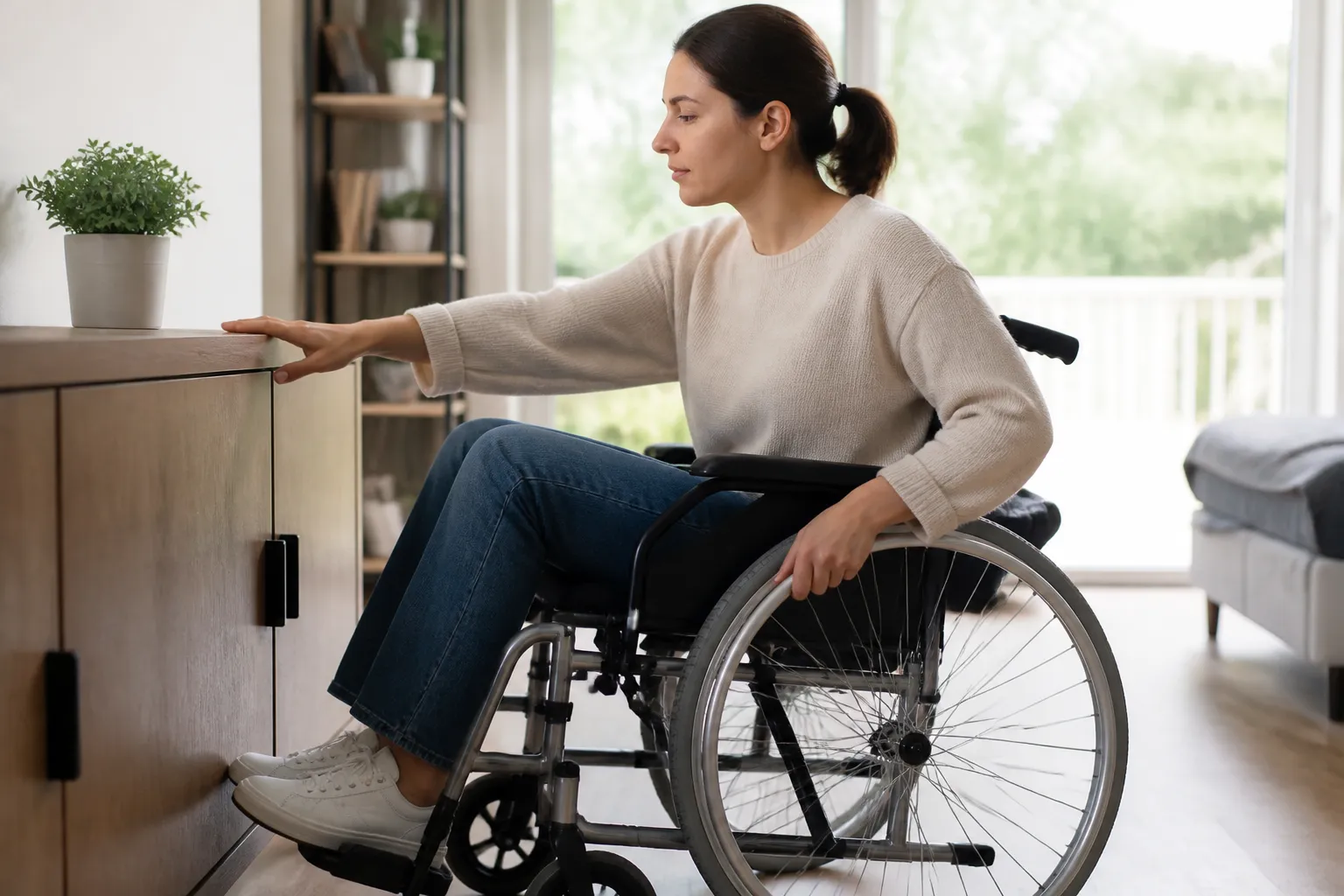
Prioritize tasks by safety, frequency, and independence gained. Begin with a small group that solves common problems. A dog that performs three dependable tasks is more useful than one that knows fifteen unreliable behaviors. Reassess priorities as the handler’s condition, home, or equipment changes.
Selecting a suitable dog
Temperament matters more than breed reputation. A promising candidate is physically healthy, socially stable, motivated by reinforcement, comfortable with handling, and able to recover from unfamiliar sounds or environments. The dog should enjoy learning without becoming frantic, defensive, or excessively sensitive.
Breed, adult size, coat, stamina, and structure may influence suitability, but no breed guarantees service ability. A dog intended for retrieval and door buttons may have different physical requirements from one expected to assist with carefully controlled counterbalance. The dog’s mature size must be considered alongside the handler’s body, equipment, living space, and transportation needs.
A veterinarian should complete a thorough health evaluation, including musculoskeletal assessment appropriate to the intended work. Orthopedic disease, chronic pain, respiratory limitations, poor vision, and anxiety can make demanding work unfair or unsafe. Screening does not guarantee future health, so preventive care and regular examinations remain essential.
Puppy raising requires patience because adult temperament and physical capacity are not fully known. An adult dog may offer clearer information about behavior but may bring established habits that need careful modification. Whether obtaining a puppy, adolescent, or adult, use transparent placement practices and avoid sellers who promise guaranteed outcomes.
Training foundations
Training should be reward-based, systematic, and adapted to the dog’s emotional state. Reinforcement may include food, play, praise, access to sniffing, or another meaningful consequence. Punishment can suppress visible behavior while increasing fear, conflict, or avoidance, which is especially risky in a dog expected to work closely with a disabled handler.
Start with engagement, name response, loose-leash walking, recalls, stationing, calm handling, and reliable release cues. Teach the dog to settle on a mat and to wait while doors, elevators, crowds, and household routines create distractions. Practice short sessions, end before frustration, and record what was successful.
Generalization is essential. A dog that retrieves a sock in a quiet kitchen may not retrieve a wallet in a busy clinic. Change location, surface, lighting, object, distance, handler posture, and distractions gradually. Reward the same functional response across varied settings, but reduce difficulty whenever accuracy drops.
Shaping assistance behaviors
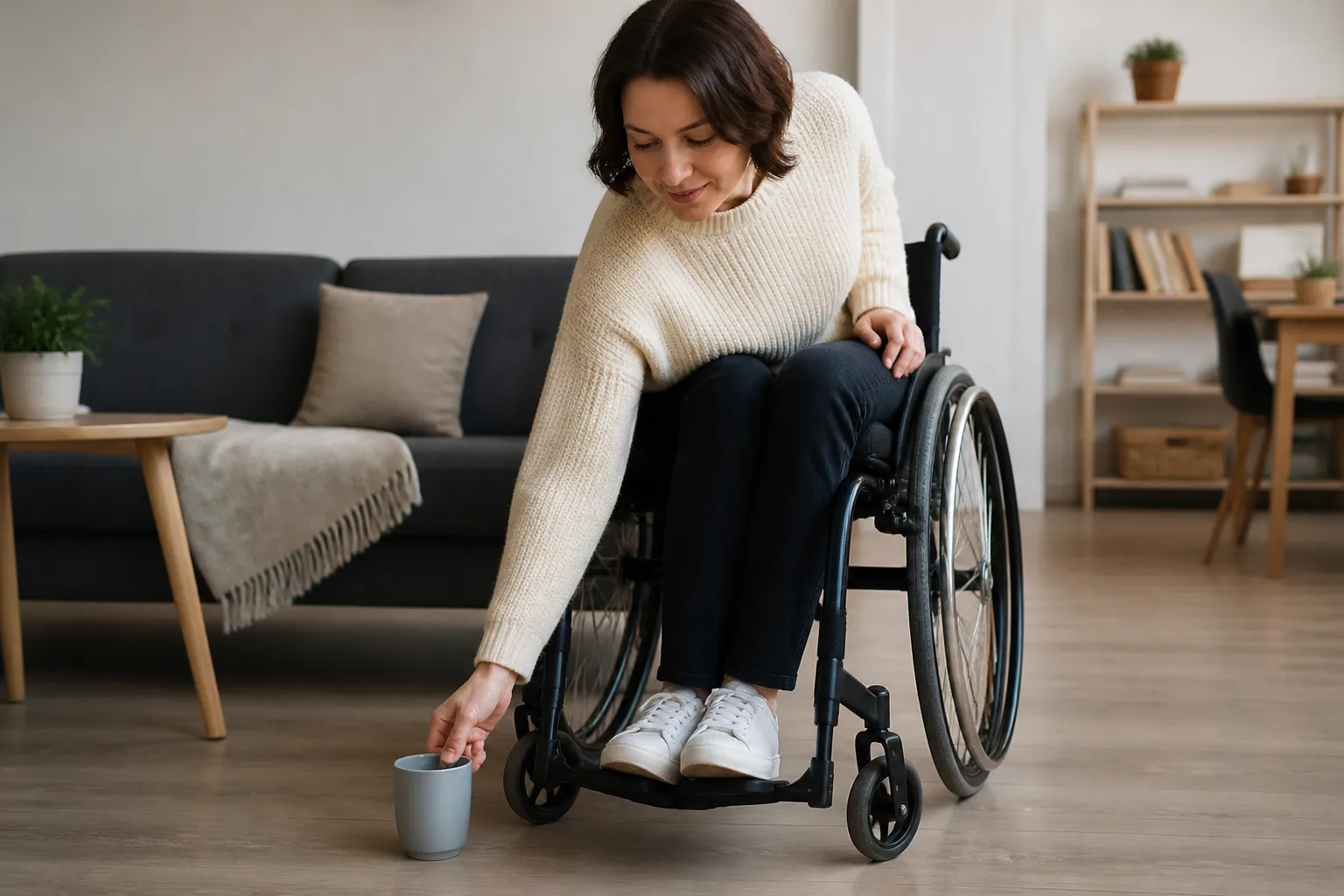
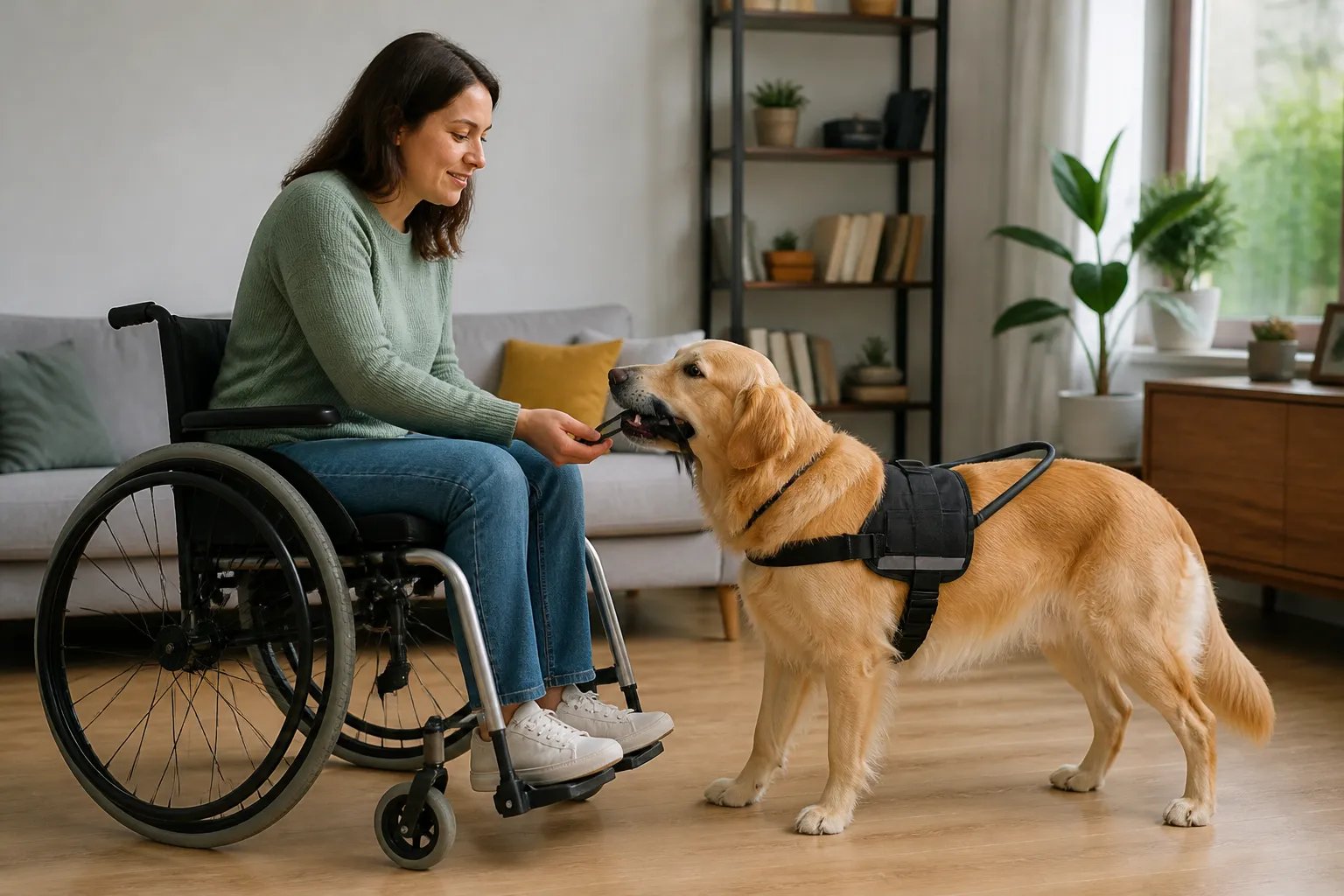
Break every task into small components. To teach retrieval, begin with orienting toward an object, then touching it, taking it, holding it, moving toward the handler, and delivering it gently. Reward each step clearly. Later add dropped-object scenarios, unusual objects, distance, and a verbal or visual cue.
For a door task, teach targeting a safe push plate or tug object separately from approaching the door. Confirm that the mechanism is suitable and that the dog cannot become trapped or damage property. Teach the dog to wait safely after the action, because opening a door is not the same as navigating through it.
A dog can learn to bring a phone, but the phone should be protected from chewing and should not be used as an emergency substitute for a reliable communication plan. Teach delivery to a hand, lap, or accessible surface. Include a cue for returning to the handler and a cue that ends work.
For clothing removal, select loose, safe garments and teach gentle pulling without grabbing skin, medical devices, or attached tubing. Stop if the dog shows stress or the handler experiences pain. Tasks involving medication should support, not replace, the handler’s prescribed routine and safeguards.
Mobility support and physical safety
Weight-bearing work deserves special caution. Dogs have different structures, growth patterns, joint health, and tolerance. A harness marketed as a mobility aid does not automatically make bracing safe. The handler’s force, direction, speed, and likelihood of stumbling all affect risk.
A rehabilitation veterinarian, physical therapist, occupational therapist, or experienced service-dog professional can help determine whether a proposed task is appropriate. They may recommend a non-weight-bearing alternative, such as retrieving a cane, activating an alert, guiding the handler to a chair, or finding another person.
Never test a young dog with sudden heavy loads, jerks, stairs, slippery floors, or repeated emergency stops. Watch for changes in gait, reluctance, stiffness, licking joints, altered appetite, unusual fatigue, or avoidance of equipment. These signs require stopping work and seeking veterinary advice.
Equipment must fit correctly and be introduced gradually. Check skin, coat, paws, nails, and pressure points after use. Harnesses, handles, mobility devices, and leashes should be inspected frequently. A task is successful only when it helps the person without compromising the dog’s welfare.
Public-access preparation
Public training should follow a progression. Begin in quiet, dog-friendly environments where legal access is clear. Practice entrances, elevators, automatic doors, shopping carts, medical equipment, dropped food, children, loud sounds, and narrow spaces one variable at a time. Keep sessions short enough that the dog remains responsive.
Teach the dog to ignore greetings, sniffing opportunities, food, and other animals unless released. A working dog should not lunge, bark repeatedly, wander, block aisles, or solicit attention. At the same time, normal breaks are necessary. A dog is not a machine, and a long outing may require water, rest, toileting, and a chance to decompress.
Public-access standards and identification rules differ by jurisdiction. Do not assume that a vest, card, registration, or online certificate creates legal rights. Research the rules that apply where the team lives and travels. Follow facility policies, transportation requirements, and health regulations, and answer access questions calmly without escalating conflict.
Handler skills
The handler must learn to read the dog, deliver reinforcement, use cues consistently, and recognize stress early. A disability may make timing or physical control difficult, so training plans should include accessible reward delivery, backup strategies, and support from another person when necessary.
Practice emergency procedures. Decide who can care for the dog if the handler is hospitalized, how equipment will be transported, and which commands are most important when the handler is fatigued. Carry identification and emergency contact information for the dog, but protect personal information and follow local requirements.
A practical training sequence
A thoughtful program often follows these stages, although progress is individual.
Stage one: assessment and planning
Document needs, consult relevant professionals, evaluate the dog, and choose initial tasks. Establish welfare limits, reinforcement methods, equipment plans, and measurable goals. Define what “reliable” means in the situations that matter most.
Stage two: foundations
Build communication, calm behavior, leash skills, stationing, handling tolerance, and environmental confidence. Do not rush task training while the dog is unable to settle or recover from distractions.
Stage three: task construction
Teach each task in small pieces, then combine the pieces. Use clear cues and consistent consequences. Keep a training log showing date, location, difficulty, response quality, and recovery.
Stage four: generalization
Practice at home, outdoors, in transport, and in appropriate public settings. Vary distractions gradually. Test realistic routines rather than isolated performances.
Stage five: team integration
The handler practices complete sequences, such as noticing a dropped item, cueing retrieval, receiving the item, rewarding the dog, and resuming travel. Include fatigue management and alternate plans for days when the dog is unavailable.
Stage six: maintenance
Continue brief practice throughout the dog’s working life. Review tasks after illness, relocation, equipment changes, or changes in the handler’s condition. Retire a task if it becomes unsafe or unnecessary.
What a training program or product should include
A quality mobility assistance dog training program should provide more than videos of impressive behaviors. Look for an individualized assessment, humane methods, clear task criteria, trainer feedback, public-access coaching, equipment guidance, and a plan for follow-up. Programs should explain their limitations honestly and avoid guarantees about certification, access, health, or success.
If purchasing a training package, assess whether lessons are accessible in format and pace. Useful materials may include demonstration videos, written steps, troubleshooting charts, progress logs, cue summaries, safety warnings, and adaptations for wheelchair users or people with limited hand strength. A product should teach the reasoning behind each exercise, not merely ask the handler to copy a sequence.
Professional support is particularly important for balance work, fall response, aggression, severe anxiety, medical alerts, and tasks involving doors, stairs, transfers, or assistive devices. Remote instruction can supplement local coaching, but it may not reveal gait changes, subtle stress signals, poor equipment fit, or unsafe handler mechanics.
A persuasive program earns trust through realistic expectations. It should say when to pause, when to simplify, and when a dog is not suitable. It should also respect the possibility that another aid, human support, or environmental change may solve the problem better than a dog.
Common mistakes to avoid
One mistake is choosing a dog because it is attractive, intelligent, or already obedient. Service work requires emotional stability, physical suitability, and sustained reliability. Another is adding tasks before foundations are dependable. A dog that cannot disengage from distractions will struggle to work safely in public.
Handlers sometimes reward only the final result and overlook small signs of stress. A dog may complete a retrieve while freezing, avoiding eye contact, or rushing away from equipment. Reinforce calm cooperation, not just compliance.
Overworking is another problem. More repetitions do not always mean faster learning. Fatigue can reduce accuracy and create negative associations. Alternate demanding practice with rest, sniffing, play, and ordinary companion activities.
Avoid using the dog as a substitute for all mobility equipment. A cane, walker, wheelchair, grab bar, reacher, transfer aid, or personal assistant may reduce pressure on the dog and improve safety. Collaborative planning is stronger than insisting that the dog perform every function.
Finally, do not misrepresent the dog’s status. Honest behavior protects the public, the handler, and other assistance-dog teams. If the dog is still learning, use appropriate settings and professional guidance rather than placing it in situations beyond its current ability.
Evaluating progress
Measure performance with practical criteria. Can the dog respond to the cue promptly? Does it complete the task gently? Does it remain calm afterward? Can the handler receive the assistance without losing balance? Does the task work in the locations where it is genuinely needed?
Record errors without treating them as failure. Identify whether the cause was unclear cueing, excessive distraction, fatigue, pain, equipment difficulty, or a task that needs redesign. Lower the challenge, improve the setup, and rebuild success.
Reliability is context-dependent. A task may be strong indoors but weak outdoors. Public work may require more preparation than home work. Reassess periodically rather than relying on a single successful demonstration.
Frequently asked questions
How long does mobility assistance dog training take?
There is no universal timetable. It depends on the dog’s age, prior learning, temperament, task complexity, handler capacity, professional support, and practice opportunities. A straightforward retrieval task may develop sooner than complex public work or carefully controlled mobility support. Progress should be judged by safe, repeatable performance, not a deadline.
Can any dog become a mobility assistance dog?
No. Some dogs lack the physical structure, confidence, focus, health, or recovery skills required. A loving pet can be an excellent companion yet unsuitable for assistance work. Early evaluation and honest reassessment prevent wasted effort and protect the dog from demands it cannot comfortably meet.
Is a special breed required?
No single breed is universally required. Individual temperament, health, size, motivation, and task fit are more important. Breed tendencies may influence selection, but they cannot replace behavioral assessment, veterinary screening, or training.
Can a mobility dog support my full weight?
Do not assume so. Full-weight support, bracing, pulling, and transfers may injure a dog or handler. Obtain individualized advice from qualified medical and canine professionals. Non-weight-bearing tasks may offer safer assistance.
Should I train alone or hire a professional?
Many foundation exercises can be practiced at home, but individualized professional guidance is valuable. Seek help for candidate evaluation, task design, public access, equipment, behavior concerns, and any activity involving force or medical risk. A blended approach can provide flexibility without sacrificing safety.
Does a vest make a dog an assistance dog?
No. Clothing does not create training, reliability, or legal status. The dog’s behavior, the tasks it performs, and applicable local rules determine the relevant considerations. Research official guidance rather than relying on online claims.
What if my dog makes mistakes in public?
Move to a safe, quiet location, identify the trigger, and prevent repetition while you adjust training. A single error does not define a team, but repeated unsafe behavior signals that the environment is too difficult or the dog needs more support. Do not punish the dog in panic.
When should a dog retire?
Retirement may be appropriate when health, stamina, stress, age, or changing tasks makes work uncomfortable or unreliable. Plan a gradual transition, veterinary review, and continued companionship if suitable. Another dog or support arrangement may be introduced without expecting the retiring dog to compete.
Conclusion
Successful mobility assistance dog training is a partnership built around safety, function, and respect. Start with a precise needs assessment, select for suitability rather than appearance, teach through humane incremental steps, and involve qualified professionals when physical support or health concerns arise. Practice realistic routines, protect rest and welfare, and evaluate the team by dependable outcomes rather than impressive demonstrations.
A well-designed training program or product should give the handler clear lessons, practical adaptations, safety boundaries, feedback, and continuing support. It should also acknowledge when another tool or service is better. With patient preparation and honest assessment, an assistance dog can provide meaningful help while remaining a healthy, willing, and valued partner.