
Dog Health & Nutrition: Dog Health & Nutrition: Building a Healthy Foundation
Dog health and nutrition are closely connected. A balanced diet supplies energy, supports muscles and organs, helps maintain a healthy coat, and contributes to normal immune function. Yet good care involves more than selecting a bag of food. A dog’s age, size, activity, body condition, medical history, environment, and individual tolerance all influence what is appropriate.
The safest approach is practical and consistent: feed a complete diet suited to the dog, measure portions, provide fresh water, encourage suitable activity, schedule preventive veterinary care, and observe changes in appetite, weight, stool, skin, behavior, or energy. No single food, supplement, or feeding style guarantees perfect health. Nutrition should support veterinary guidance rather than replace it, especially when a dog has persistent symptoms or a diagnosed condition.
Choosing Appropriate Food
Read the label thoughtfully
Look for a food labeled as complete and balanced for the dog’s relevant life stage, such as growth, adulthood, or all life stages. Large-breed puppies may need food specifically formulated for controlled growth. The label should also provide feeding directions, ingredient information, calorie information when available, and the name of the manufacturer or responsible company.
Ingredients are useful, but they should not be judged in isolation. The first ingredient is not automatically the most important measure of quality, and unfamiliar ingredient names are not necessarily harmful. Nutrient adequacy, manufacturing controls, formulation expertise, and reliable quality assurance matter. Ask a veterinarian for help interpreting claims when a label is confusing.
Avoid choosing solely because packaging uses words such as natural, premium, holistic, or grain-free. These terms may have limited practical meaning for an individual dog. Grain-free food is not inherently better, and removing grains is usually unnecessary unless a veterinarian identifies a specific reason. Food allergies can involve several ingredients, and true diagnosis requires a structured dietary trial rather than guesswork.
Match food to the individual
Puppies need nutrients and calories for growth, but excessive intake can contribute to overly rapid development, particularly in large breeds. Adult dogs generally need maintenance nutrition, while older dogs may benefit from adjusted calories, protein, fiber, or other nutrients depending on health status. Senior is not a precise nutritional diagnosis; a healthy older dog and an older dog with kidney disease require different considerations.
Working, sporting, pregnant, nursing, underweight, and highly active dogs may have increased energy needs. Conversely, neutered, sedentary, or obesity-prone dogs may need fewer calories. Feeding charts are starting points, not guarantees. Monitor body condition and adjust gradually.
Portions, Treats, and Weight
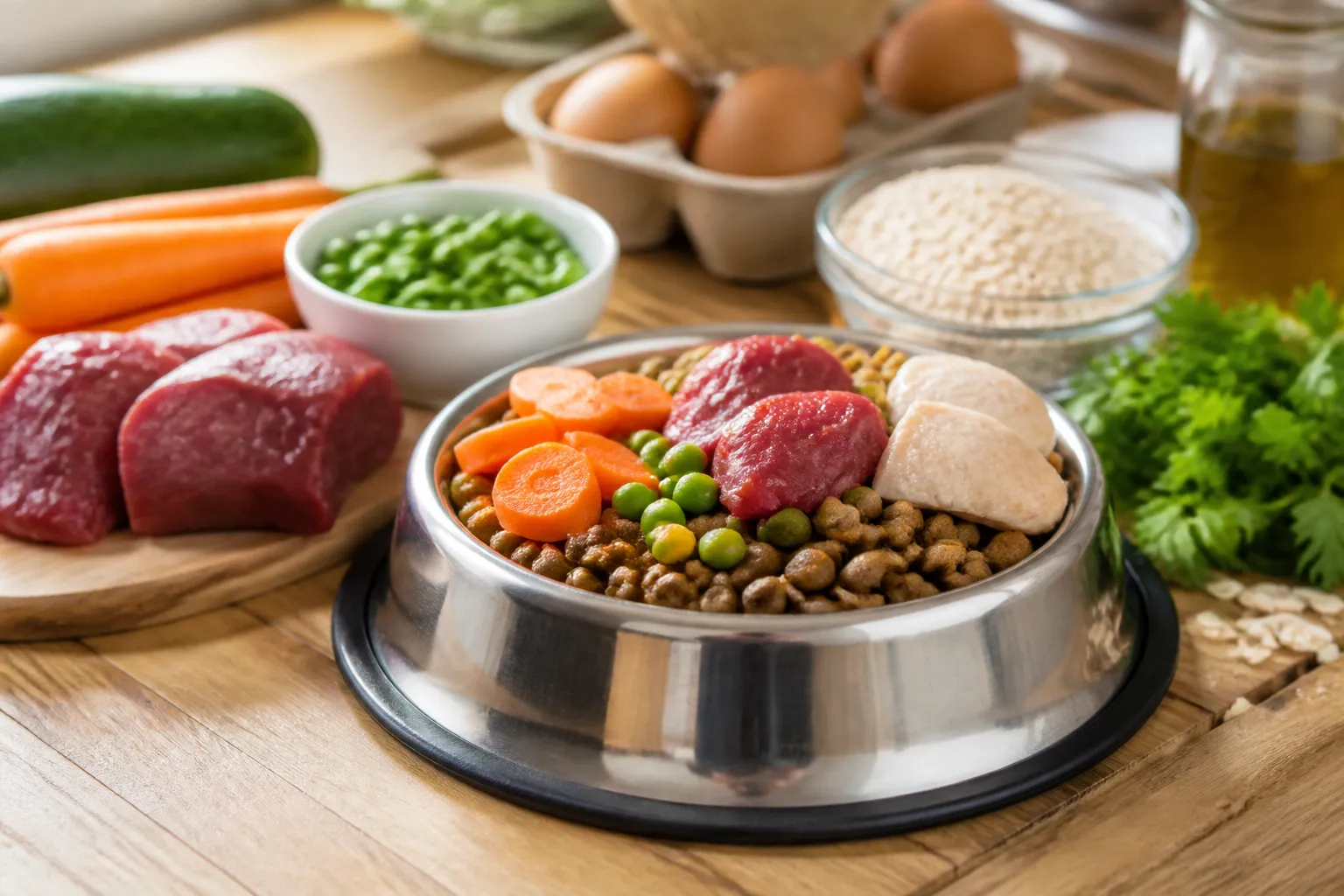
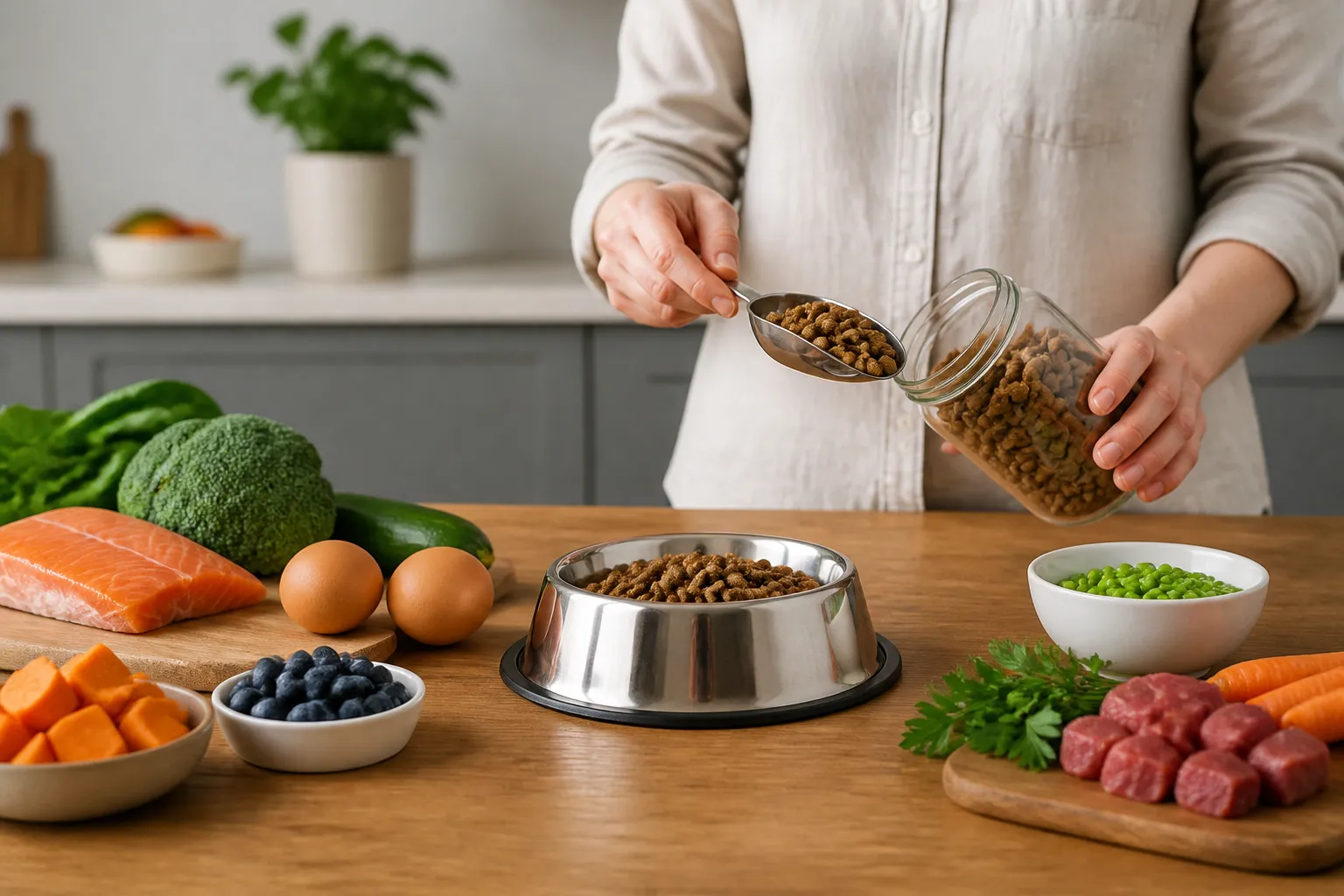
Portion control is one of the most effective tools for preventing nutrition-related problems. Measure food with a standard measuring cup for larger portions, or use a kitchen scale when accuracy is especially important. Feed at regular times if that routine suits the household. Free-choice feeding can make overeating difficult to detect, particularly in dogs that eat rapidly or live in multi-dog homes.
Treats, chews, table scraps, food used for training, and pill pockets all contribute calories. Keep them modest and reduce meal portions when treats are frequent. Treats should not displace a nutritionally complete diet. Choose options appropriate for the dog’s size and chewing habits, and supervise chewing to reduce choking or intestinal obstruction risks.
Body condition is more useful than a number on the scale alone. In a dog at a healthy condition, ribs should be easy to feel without being prominently visible in most breeds, a waist should be visible from above, and the abdomen should rise toward the hind legs when viewed from the side. Breed differences matter, so ask a veterinary professional to demonstrate assessment.
Unplanned weight loss, rapid gain, persistent hunger, reduced appetite, increased thirst, vomiting, diarrhea, or changes in stool deserve attention. These signs can reflect dietary problems, stress, dental disease, parasites, endocrine disorders, or other illness. Do not simply keep changing foods without investigating the cause.
Nutrients Dogs Need
Dogs require water, protein, fats, carbohydrates, vitamins, and minerals in appropriate amounts and proportions. Protein provides amino acids for tissues, enzymes, hormones, and repair. Fat supplies concentrated energy and helps absorb certain vitamins. Carbohydrates can provide energy and fiber, although dogs do not require one particular carbohydrate ingredient.
Fiber may support stool quality and intestinal function, but too much can reduce digestibility or interfere with calorie intake. Vitamins and minerals are essential, yet more is not always better. Excess supplementation can create imbalances or toxicity. A complete commercial diet generally supplies required nutrients without additional products.
Fresh water should be available at all times. Wash bowls regularly and provide extra water during hot weather, travel, exercise, or illness. A sudden increase or decrease in drinking can be medically significant, especially when accompanied by changes in urination, appetite, or weight.
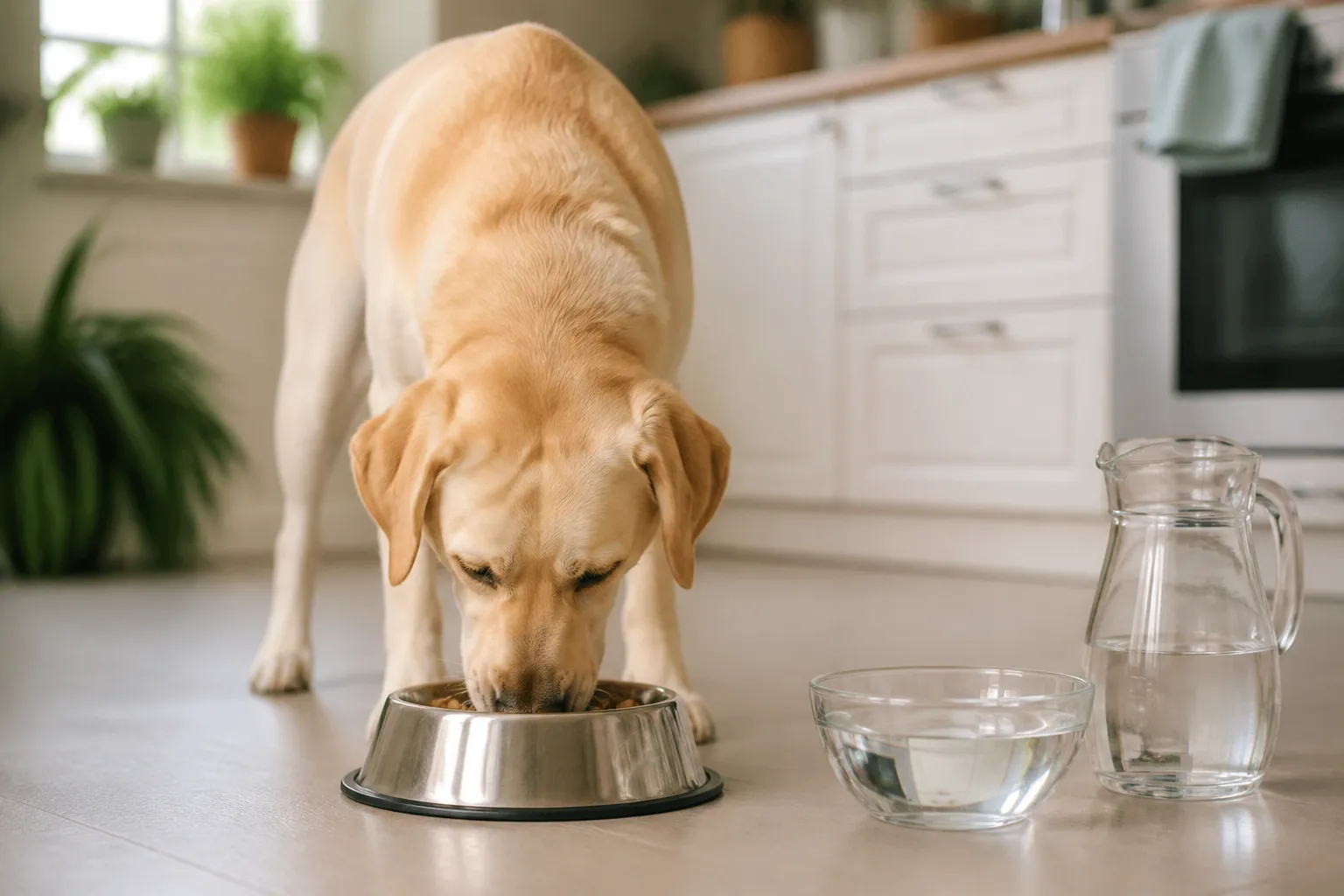
Home-prepared diets require careful formulation. Recipes found online may lack essential nutrients or provide unsafe proportions. If home cooking is necessary or preferred, consult a veterinarian with nutrition training and follow a recipe designed for the specific dog. The recipe should be followed consistently; substituting ingredients can change its nutritional profile.
Raw diets also require cautious evaluation. They may carry bacterial contamination risks for dogs and people, and unbalanced recipes can harm growth or long-term health. Bones may fracture teeth or cause obstruction, constipation, or gastrointestinal injury. Discuss the intended diet with a veterinarian before making a change, particularly if children, older adults, pregnant people, or immunocompromised individuals share the home.
Supporting Digestive and Dental Health
Change foods gradually over several days by mixing increasing amounts of the new food with decreasing amounts of the old. A slower transition may be appropriate for sensitive dogs. Mild temporary stool changes can occur, but repeated vomiting, severe diarrhea, blood, weakness, dehydration, or refusal to eat warrants prompt veterinary advice.
Digestive health also benefits from appropriate exercise, parasite prevention, safe food storage, and avoiding sudden access to rich leftovers. Store food in its original packaging or a clean, sealed container, and follow handling instructions. Discard spoiled food and prevent dogs from accessing trash, compost, medications, chemicals, and toxic substances.
Dental disease is common and can affect comfort and eating. Daily tooth brushing with toothpaste made for dogs is an effective preventive habit when introduced patiently. Never use human toothpaste unless a veterinarian specifically confirms it is safe; some products contain ingredients dangerous to dogs. Dental diets, chews, and professional cleanings may help, but not every product is safe or effective. Avoid extremely hard objects that can fracture teeth.
Introduce dental care gradually
Begin by touching the lips and teeth briefly, rewarding calm behavior. Progress to a dog toothbrush or soft finger brush, then add veterinary toothpaste. Short, positive sessions are more sustainable than force. If the gums bleed easily, breath becomes persistently unpleasant, teeth loosen, or chewing changes, arrange an examination rather than relying only on home care.
Exercise, Enrichment, and Rest
Nutrition works alongside movement. Daily activity helps maintain muscle, supports healthy weight, and provides mental stimulation. The right amount depends on age, breed tendencies, fitness, weather, joint health, and temperament. Puppies need controlled play and rest rather than exhausting forced exercise. Older dogs may benefit from shorter walks, gentle strengthening, swimming where safe, or several brief sessions.
Increase activity gradually. Watch for limping, reluctance to rise, excessive panting, weakness, coughing, or prolonged recovery. Stop and seek advice if signs are concerning. Avoid strenuous exercise in dangerous heat, and remember that pavement can burn paws. Provide shade, water, and opportunities to rest.
Enrichment can include scent games, food puzzles, training, supervised exploration, and calm social interaction. Use part of the dog’s measured daily ration in puzzle toys so enrichment does not unintentionally increase calorie intake. Rest is equally important. A predictable sleeping area and quiet periods help dogs recover and regulate behavior.
Preventive Veterinary Care
Routine examinations allow a veterinarian to assess body condition, teeth, heart, joints, skin, parasite risks, and vaccination needs. Preventive plans should reflect local disease exposure, lifestyle, travel, age, and medical history. Ask about parasite control for fleas, ticks, heartworm, and intestinal parasites where relevant.
Keep a written record of food, treats, medications, supplements, weight, stool patterns, and unusual symptoms. This information can reveal trends and makes appointments more productive. Bring packaging or photographs of labels when discussing a diet.
Vaccinations and parasite prevention are important, but so are behavioral and safety discussions. Ask about identification, emergency preparation, toxic foods, exercise limits, neutering considerations, and pain recognition. A dog that hides, pants unusually, changes posture, becomes irritable, or stops normal activities may be uncomfortable even without obvious injury.
Seek urgent veterinary care for difficulty breathing, collapse, seizures, repeated vomiting, severe abdominal swelling, suspected poisoning, uncontrolled bleeding, inability to urinate, heatstroke signs, or sudden profound weakness. For less urgent but persistent changes, call the clinic promptly rather than waiting for the next routine visit.
Supplements and Special Diets
Supplements should have a clear purpose. Fish oil, joint products, probiotics, vitamins, and herbal preparations vary in purity, dose, evidence, and suitability. A supplement can interact with medication or worsen a disease. Ask a veterinarian before using one, and provide the exact product, ingredients, strength, and intended dose.
A therapeutic diet may be recommended for kidney disease, urinary disorders, food-responsive intestinal disease, obesity, allergies, or other conditions. Such diets are designed around specific nutrient targets and are not interchangeable with ordinary foods that make similar marketing claims. Follow the feeding plan carefully and report problems with acceptance, stool, vomiting, or weight.
Food allergies are less common than many owners assume and cannot be confirmed by itching alone. A veterinarian may recommend a strict elimination diet followed by controlled reintroduction. During that period, every treat, flavored medication, chew, and shared snack matters. Do not alter the trial casually, because doing so can make results impossible to interpret.
Practical Feeding Routine
Create a routine that every household member can follow. Record the dog’s target portion, feeding times, permitted treats, medications, and forbidden foods. Keep food away from curious pets and supervise children who may offer snacks. In multi-dog homes, feed separately when competition causes rushing, guarding, or unequal intake.
Use slow-feeding equipment if a dog consistently gulps meals, but introduce it gradually and choose a design that is easy to clean. Puzzle feeders should not frustrate the dog or require excessive force. Training rewards can come from the regular meal ration, making learning more rewarding without adding calories.
Review the plan whenever the dog’s activity, weight, age, medication, or health status changes. Seasonal changes may affect exercise and appetite. Reweigh food rather than relying on a bowl level that varies by hand. Make adjustments in small steps and allow time to observe the result.
Frequently Asked Questions
How often should a dog eat?
Many adult dogs do well with one or two measured meals daily, while puppies often need more frequent feeding because of growth and smaller stomach capacity. The appropriate schedule depends on age, health, household routine, and veterinary advice. Consistency is usually more important than a universally correct number of meals. Dogs with specific conditions may require a tailored schedule.
Is dry food better than wet food?
Neither format is automatically superior. Dry food is convenient, easy to measure, and often less expensive per feeding. Wet food can increase water intake and may be easier for some dogs to eat. The key questions are whether the food is complete and balanced, appropriate for the dog, accepted willingly, and fed in a portion that maintains healthy condition. Some households combine formats successfully.
Can dogs eat human food?
Some plain foods may be suitable in small amounts, but human food should not replace a complete diet. Avoid chocolate, grapes and raisins, onions, garlic, xylitol or other toxic sweeteners, alcohol, caffeine, macadamia nuts, cooked bones, and foods excessively fatty or salty. When uncertain, contact a veterinarian or animal poison service promptly, especially after a known ingestion.
Should every dog take vitamins?
No. A complete and balanced diet generally supplies essential vitamins and minerals. Adding supplements without a demonstrated need may create excesses or nutrient interactions. Puppies, pregnant dogs, dogs with disease, and dogs eating homemade diets require individualized advice rather than routine supplementation.
How can I tell whether a diet is working?
Observe stable body condition, suitable energy, normal appetite, well-formed stools, healthy skin, and a comfortable coat. These signs are useful but not diagnostic. A dog can appear well while developing a silent problem, so routine examinations remain important. Track trends instead of judging one meal or one day.
What should I do if my dog refuses food?
Check for stress, heat, recent diet changes, spoiled food, dental discomfort, and access to inappropriate items, but do not assume the cause. Contact a veterinarian if refusal persists, recurs, or occurs with vomiting, diarrhea, pain, lethargy, dehydration, breathing changes, or other abnormalities. Very young, elderly, pregnant, or medically fragile dogs may need advice sooner.
Conclusion
Healthy feeding is a continuing process, not a single purchase. Choose complete nutrition suited to the individual, measure portions, account for treats, provide water, protect dental health, and pair food with appropriate exercise, enrichment, sleep, and preventive care. Watch the dog rather than relying exclusively on packaging promises or generalized feeding charts.
When appetite, weight, digestion, thirst, behavior, or mobility changes, investigate early. Veterinary guidance is especially important for homemade diets, supplements, raw feeding, allergies, chronic disease, and unexplained symptoms. A thoughtful routine, careful observation, and timely professional support can help a dog maintain comfort, vitality, and a happier life.