
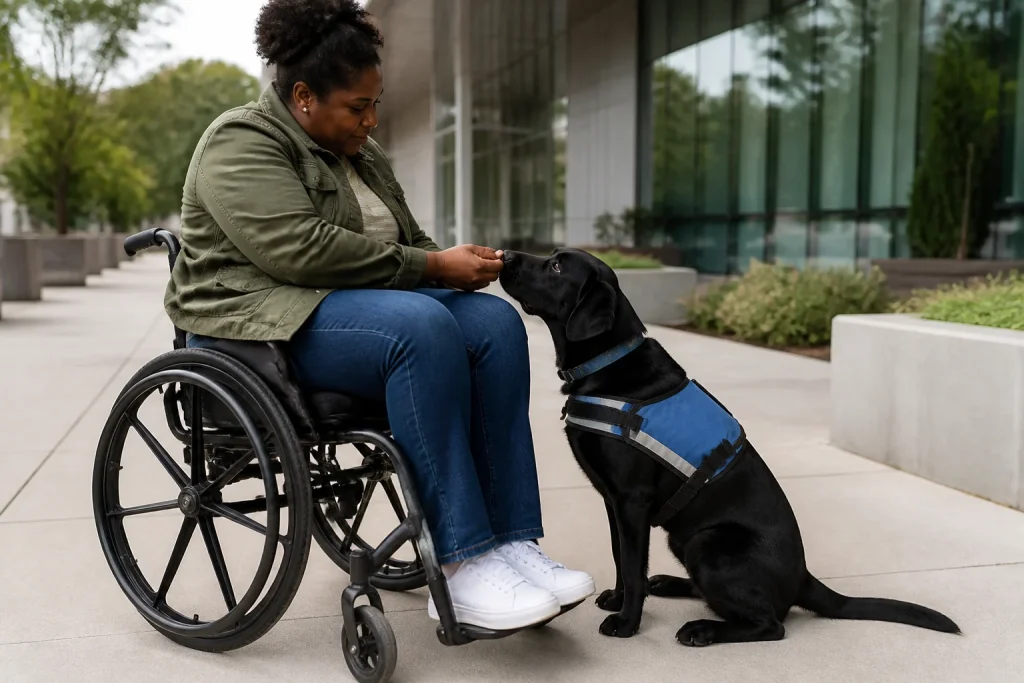
Service dog training is a structured process that prepares a dog to perform specific tasks for a person with a disability while remaining calm, safe, and reliable in public. The goal is not simply to teach obedience or create a friendly companion. A successful service dog must understand individual cues, work despite distractions, make sensible choices, and support daily independence without becoming a burden.
Training therefore combines temperament assessment, foundational skills, task instruction, public-access practice, and careful maintenance. It also requires realistic expectations. Not every dog is suited to this work, and no training program can guarantee success. However, thoughtful planning, humane methods, and consistent practice can greatly improve the possibility of developing a dependable working partnership.
What Service Dog Training Involves
A service dog is trained to perform work or tasks directly related to a person’s disability. Examples may include retrieving dropped objects, interrupting harmful behavior, providing mobility assistance when appropriate, alerting to a change in condition, opening accessible doors, guiding a handler around obstacles, or creating space during a medical episode. The correct tasks depend on the handler’s needs, environment, physical abilities, and professional guidance.
General manners are essential, but they are only the foundation. A dog may sit, stay, and walk politely yet still be unsuitable for service work if it is fearful, excessively social, noise sensitive, or unable to recover from surprises. Training should evaluate the whole dog, including health, motivation, resilience, focus, and willingness to cooperate.
A persuasive reason to approach this work systematically is reliability. A task that succeeds occasionally may not provide meaningful support when timing matters. The dog needs clear signals, predictable reinforcement, and repeated practice in settings that resemble real life. The handler also needs to learn how to cue, reward, manage equipment, and recognize when the dog is tired or stressed.
Choosing a Suitable Dog
Selection is often more important than advanced technique. A suitable candidate generally shows stable behavior, curiosity without recklessness, physical soundness, and an ability to settle quietly. The dog should enjoy working with people but should not demand attention from every passerby. A professional temperament evaluation can reveal concerns that are easy to overlook at home.
Breed can influence tendencies, size, energy, and trainability, but it does not determine individual success. A large dog may be helpful for certain retrieval or balance-related tasks, while a smaller dog may be practical for alerting, interruption, or household support. Size alone does not make a dog appropriate for weight-bearing assistance. Any task involving physical support must be considered with veterinary and professional training advice because injury can result from unsuitable structure, equipment, or technique.
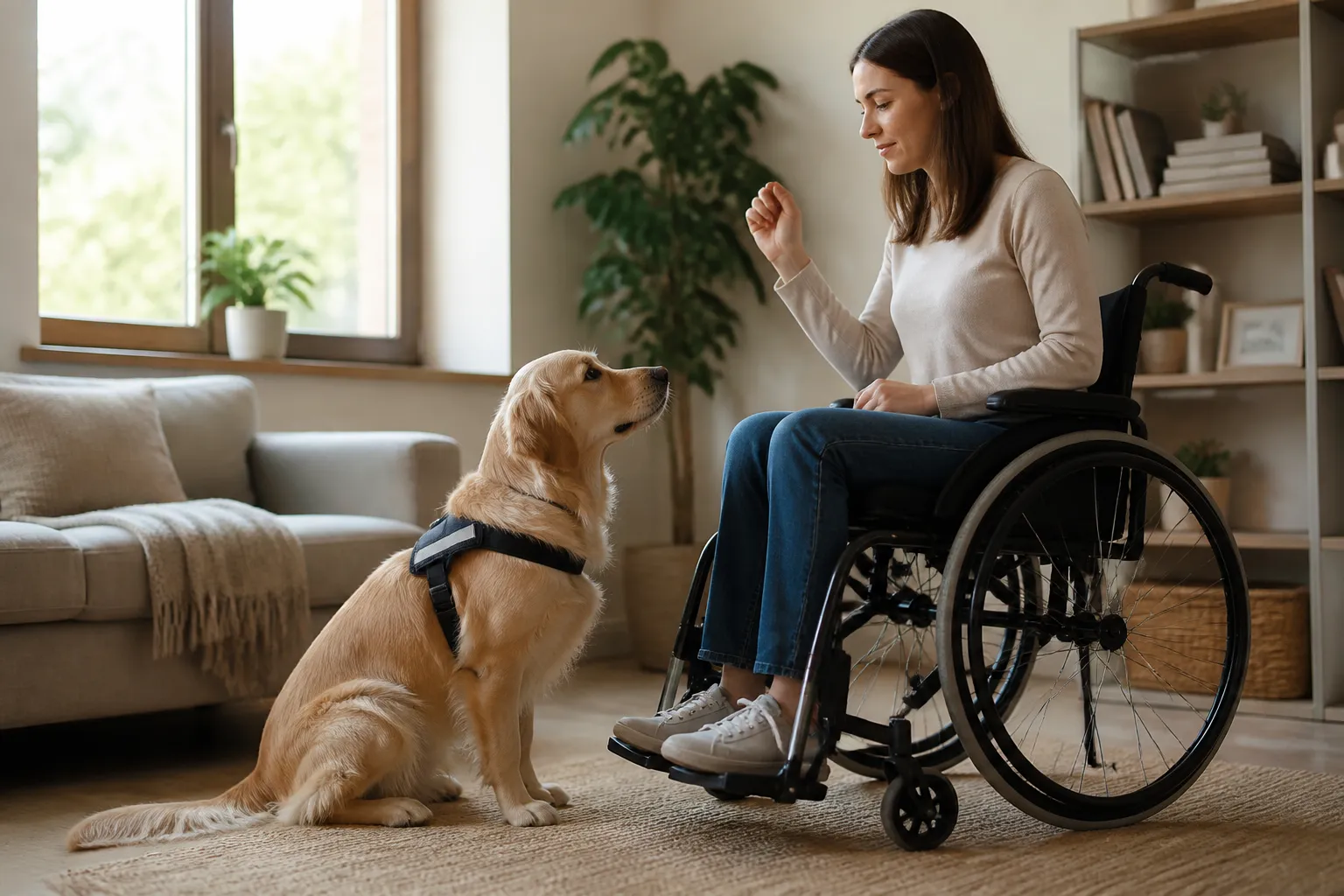
Health screening matters throughout the process. Vision, hearing, joints, skin, digestion, and emotional wellbeing can affect performance. A dog in pain may appear stubborn or distracted when it is actually uncomfortable. Regular veterinary care, suitable nutrition, grooming, rest, and parasite prevention support both welfare and reliability.
Red Flags During Evaluation
Persistent fear, defensive aggression, uncontrollable chasing, severe separation distress, extreme noise sensitivity, and inability to recover after a startling event deserve serious attention. These traits should not be hidden by forcing the dog into public situations. Ethical training prioritizes safety and welfare, and it accepts that a dog may be better suited to another role.
Building the Foundation
Foundation training begins with communication. Teach the dog its name, a marker such as verbal praise, and rewards that genuinely matter to it. Food is common, but toys, access to movement, sniffing, or social interaction may also reinforce behavior. Keep early sessions short enough to preserve enthusiasm. Reward the behavior you want, then gradually ask for duration, distance, and distraction.
Core skills include loose-leash walking, recall, sit, down, stand, stay, leave it, drop it, place, settling on a mat, and polite greetings. The dog should learn to ignore food, people, animals, noises, and unusual surfaces when asked. It should also accept handling of paws, ears, mouth, harnesses, and medical equipment calmly.
Do not rush into crowded public spaces. Begin in controlled environments, then increase complexity one variable at a time. For example, practice a settle at home, then in a quiet outdoor area, then near a calm store entrance. If performance deteriorates, reduce difficulty rather than repeating a failed exercise. This approach protects confidence and provides clearer information about what the dog has actually learned.
Positive reinforcement is usually effective because it makes desired behavior valuable. Humane training also includes management, thoughtful boundaries, and consequences that do not create fear or pain. Avoid methods that depend on intimidation, harsh corrections, or flooding the dog with overwhelming experiences. A dog that obeys only to avoid punishment may become less willing to communicate, especially under stress.
Teaching Disability-Related Tasks
Task training should begin by defining the practical problem precisely. “Help me when I am unwell” is too broad. A trainable description might be “touch my hand when I begin a repetitive movement,” “retrieve the phone after I drop it,” or “lead me to a chair when I give a specific cue.” Clear definitions make progress measurable and prevent accidental reinforcement of unwanted behavior.
Break each task into small components. Suppose the goal is retrieving medication equipment. The dog may first learn to touch a target, take a soft object, hold it gently, carry it a short distance, deliver it to a hand, and eventually respond to a cue in realistic locations. Add distance, duration, doors, clutter, and distractions gradually. Protect important objects from chewing and confirm that anything the dog handles is safe.
For interruption or alert tasks, trainers must distinguish trained behavior from spontaneous reactions. If a dog naturally notices a change, that observation may become the starting point, but the final response still needs a clear cue or consistent pattern. A dog should not be expected to make medical decisions. The handler needs an appropriate human backup plan and professional advice for health-related concerns.
Mobility-related work requires particular caution. Retrieving, bracing against stable furniture when appropriate, or activating an accessible button may be reasonable tasks for some dogs. Pulling, counterbalancing, or carrying significant weight can cause injury if the dog’s size, age, structure, equipment, and technique are unsuitable. Consult qualified professionals before teaching physically demanding work.
Public Access and Real-World Reliability
A service dog must behave responsibly in public, not merely perform tasks at home. Public-access preparation includes quiet walking, ignoring food and strangers, remaining under control near children and animals, settling beneath a table, riding elevators, navigating automatic doors, tolerating traffic, and recovering from sudden sounds.
Training should progress through carefully chosen locations. Start with low-distraction areas and short visits. Bring rewards, water when appropriate, waste bags, and a plan for leaving promptly if the dog becomes fatigued or overstimulated. Public practice is not a test of endurance. Quality matters more than duration.
Teach an emergency exit behavior. A dog should respond to a cue that means return to the handler, move away from a hazard, or settle immediately. Practice this skill before it is needed. Also observe subtle stress signals such as lip licking, yawning, scanning, tucked posture, refusal of food, pacing, or repeated shaking. Removing the dog from a difficult setting is responsible handling, not failure.
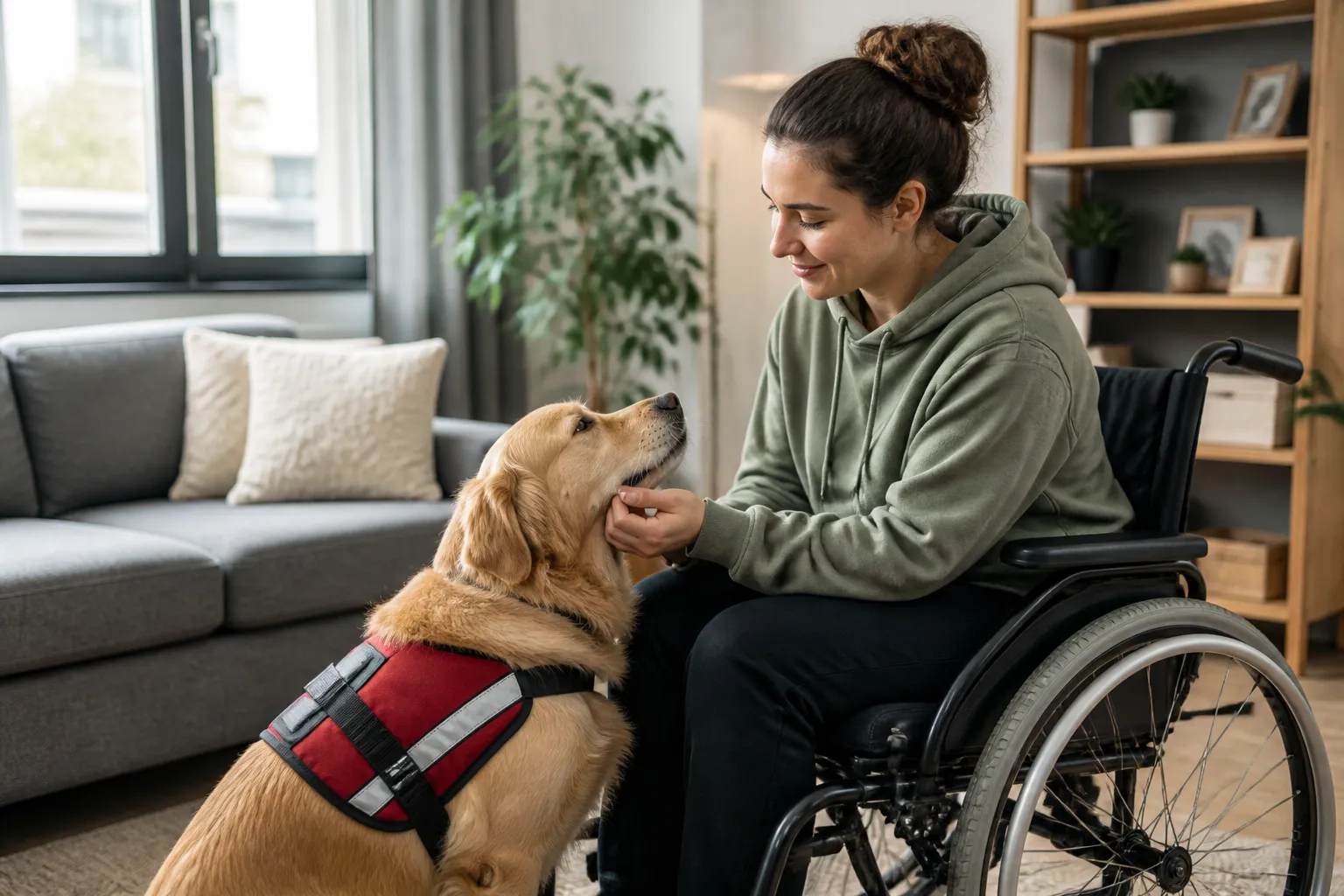
The dog should never be encouraged to solicit attention, sniff people, block aisles unnecessarily, or approach other animals while working. A clear working cue, vest, harness, or other equipment may help communicate expectations, but equipment does not create legal status or replace training. Rules concerning service animals vary by jurisdiction and setting, so handlers should verify current requirements through official local sources.
Handler Training and Partnership
Training the human is equally important. The handler must deliver cues consistently, reinforce promptly, maintain equipment, record progress, and understand the dog’s limits. They should know when the dog is working, resting, exercising, or simply being a companion. A dog cannot be expected to work continuously without breaks.
Develop a shared vocabulary. Use one cue for each behavior, avoid repeating commands, and decide how family members will respond. Keep a written task plan describing the cue, expected response, acceptable alternatives, and situations requiring professional review. Video can help identify timing problems, but privacy and dignity should be protected when recording disability-related routines.
A reliable partnership includes consent and choice. If the dog refuses a task, investigate possible pain, fear, confusion, fatigue, or environmental difficulty. Do not punish communication. Provide rest days and enjoyable nonworking activities so the dog’s life contains more than performance. This balance protects motivation and welfare over the long term.
Selecting Professional Support
A qualified trainer can shorten the learning curve and identify risks early. Look for transparent methods, relevant experience, humane handling, clear contracts, and willingness to collaborate with veterinary and healthcare professionals when appropriate. Ask how the trainer assesses temperament, measures progress, handles setbacks, and decides whether a dog should change careers.
Be cautious of guarantees, pressure to pay large sums before evaluation, claims that equipment alone solves behavior problems, or promises that every dog can become a service dog. A responsible provider explains uncertainty and welcomes questions. Group classes may support foundations, while individualized coaching is often useful for complex tasks or disability-specific routines.
Owner-training, program training, and hybrid models each have advantages. A program may provide structured selection and experienced support, but availability and matching policies differ. Owner-training offers deep partnership development and flexibility, but it demands time, organization, and access to skilled guidance. A hybrid arrangement can combine professional evaluation with daily practice by the handler.
Common Mistakes to Avoid
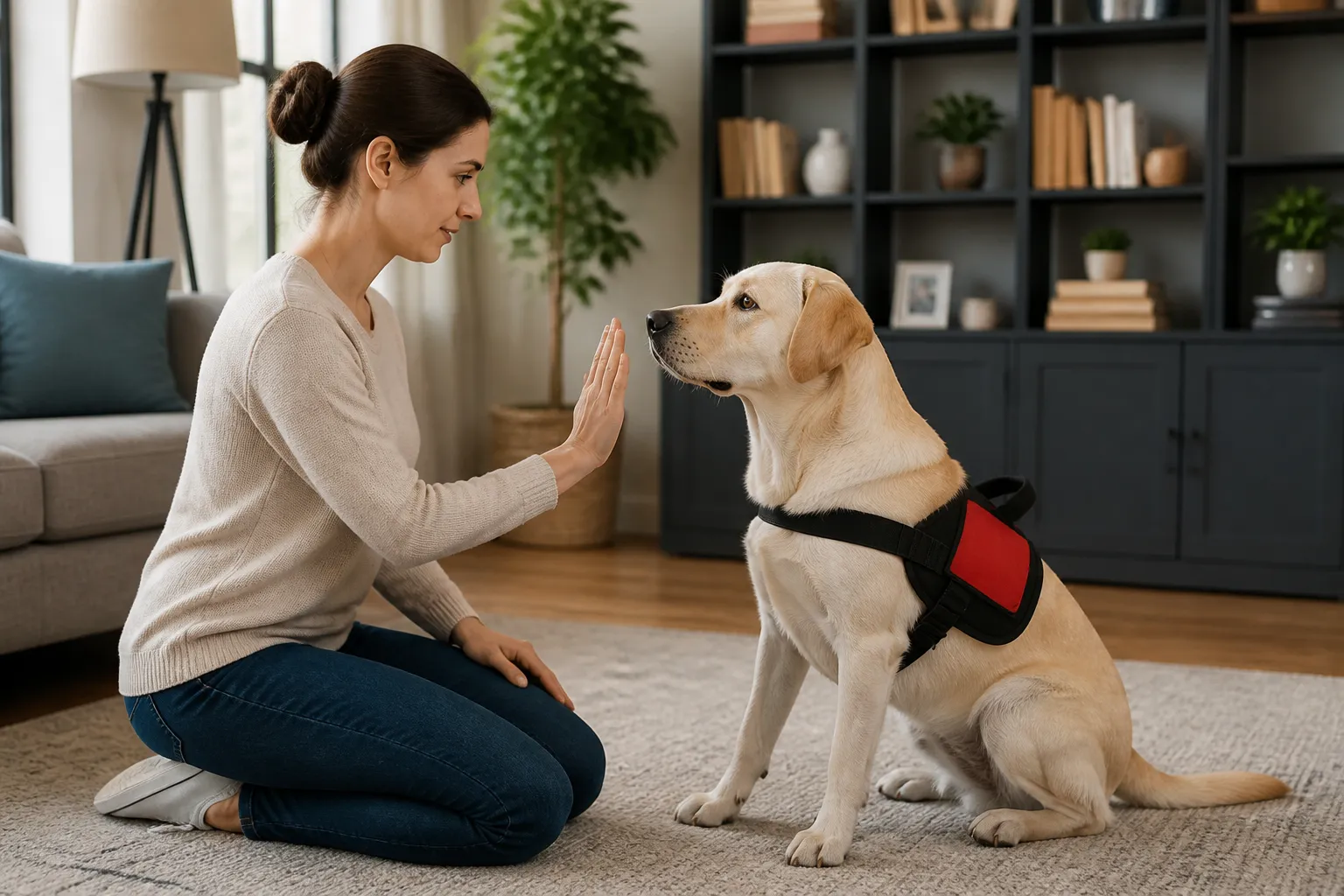
One frequent mistake is teaching advanced tasks before basic attention and settling are reliable. Another is increasing distractions too quickly. Repeating a cue louder does not clarify it; it often teaches the dog that the first cue can be ignored. Reinforce promptly, simplify the exercise, and try again under easier conditions.
Inconsistent household rules also create confusion. If one person rewards jumping while another expects four paws on the floor, progress will be slower. Agree on routines for feeding, greetings, equipment, rest, and working periods.
Do not use public access as free training without preparation. A disruptive dog can create safety concerns and damage public trust. Practice privately, choose appropriate locations, and leave before behavior unravels. Finally, do not overlook retirement planning. Age, illness, stress, or changing disability needs may require reduced work, reassignment, or retirement. Planning early helps protect both the handler and the dog.
Maintenance, Documentation, and Progress
Skills fade when they are not practiced. Schedule brief refreshers for obedience, tasks, public behavior, and emergency responses. Vary locations while keeping expectations clear. Maintain a log noting successful repetitions, distractions, stress signals, physical changes, and questions for the trainer or veterinarian.
Regular assessment should examine function rather than appearance. Ask whether the dog completes the task safely, responds promptly, recovers from surprises, and remains comfortable. A polished vest or excellent heel does not compensate for unreliable assistance. Conversely, occasional mistakes do not automatically mean failure; identify the cause and adjust the plan.
Equipment should be inspected regularly. Check leashes, harnesses, identification, mobility aids, and task objects for wear or poor fit. Introduce new equipment gradually and reward calm acceptance. Keep emergency contact information and relevant care instructions accessible, while sharing personal medical details only when necessary and appropriate.
Frequently Asked Questions
Can any dog become a service dog?
No. Dogs vary in temperament, health, motivation, and resilience. Some can learn useful assistance tasks but are not comfortable or reliable in public. A careful assessment is more valuable than forcing an unsuitable candidate through training.
How long does training take?
There is no universal timetable. Duration depends on the dog’s starting skills, task complexity, handler circumstances, practice consistency, and access to professional support. Rushing can produce fragile behavior, so progress should be based on reliability and welfare rather than a fixed deadline.
Is a service dog the same as an emotional support animal?
They serve different functions. A service dog is trained to perform disability-related tasks. An emotional support animal may provide comfort through its presence but does not have the same task-training role. Applicable rights and rules differ by location and context; consult official guidance rather than relying on assumptions.
Should training use treats forever?
Rewards can change over time, but reinforcement remains useful. Food may be reduced for familiar behaviors while praise, access, play, or real-life rewards become more prominent. For safety-critical tasks, continuing to reinforce excellent responses is sensible. Avoid removing rewards so abruptly that reliability declines.
What if the dog makes a mistake?
Stay calm, prevent danger, and identify what caused the error. The dog may not understand the cue, may be distracted, tired, uncomfortable, or overwhelmed. Return to an easier version, reward correct behavior, and seek professional advice if the problem repeats. Punishment can hide warning signs and weaken trust.
Can a service dog work all day?
No dog should be treated as a machine. Working time depends on the individual, task demands, environment, age, health, and opportunities for rest. A capable handler plans breaks, hydration, toileting, enrichment, and veterinary care. A dog that cannot settle or appears distressed needs support, not increased pressure.
Conclusion
Service dog training is a long-term partnership built on appropriate selection, humane teaching, precise tasks, public responsibility, and continuous evaluation. The strongest program does not pursue impressive tricks; it develops safe, functional assistance that genuinely improves the handler’s daily life.
Start by defining needs, obtaining professional and veterinary guidance, and evaluating the dog honestly. Build foundation skills before adding complexity, practice in gradual stages, protect the dog’s physical and emotional welfare, and document meaningful progress. Choose support based on transparency rather than grand promises. With patience and realistic expectations, training can produce more than obedience: it can create dependable communication, greater independence, and a respectful working relationship that benefits both members of the team.