
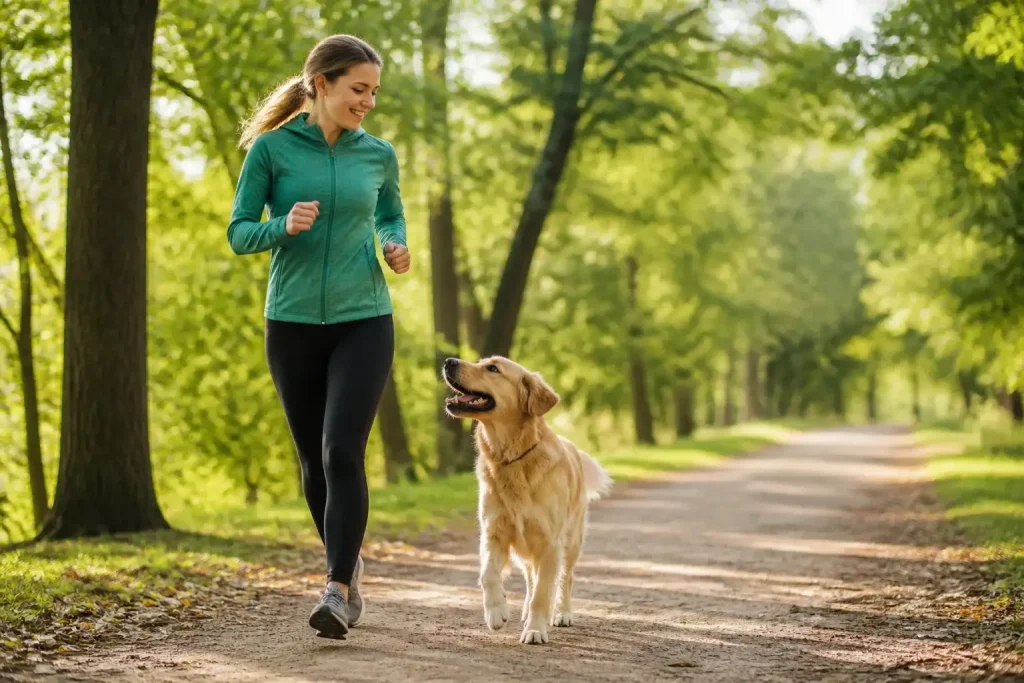
Regular exercise is one of the most effective ways to support a dog’s physical health, emotional balance, and relationship with the people who care for them. The right routine can strengthen muscles, protect mobility, improve sleep, reduce boredom, and provide healthy outlets for natural behaviors such as sniffing, chasing, exploring, and playing. However, exercise is not simply a matter of walking farther or throwing a ball more often. A suitable plan depends on age, breed tendencies, body condition, health, temperament, weather, and the individual dog’s ability to recover.
The most useful approach is consistent, varied, and gradual. Offer daily movement, include mental challenges, observe your dog closely, and adjust before fatigue becomes injury. A young, energetic dog may need several active sessions, while a senior companion may benefit more from short, gentle walks and controlled strengthening. Puppies require care because growing bones and joints are vulnerable to excessive impact. Dogs with breathing problems, arthritis, heart disease, obesity, or other medical concerns should receive exercise guidance from a veterinarian.
Dog Exercise Tips: Why Exercise Matters
Exercise helps a dog use energy constructively, but its benefits extend well beyond tiring the body. Walking supports cardiovascular fitness and gives dogs an opportunity to investigate changing scents. Play develops coordination and can reinforce communication between dog and guardian. Gentle climbing, balancing, and controlled movement may support body awareness. Regular activity can also make everyday behavior easier because a dog whose needs are met may be better prepared to settle at home.
Mental stimulation deserves equal attention. A dog can return from a long walk still restless if the outing offered no chance to sniff, choose a route, or interact thoughtfully. Sniffing requires concentration and gathers information about the environment. Training games, food puzzles, searching activities, and novel but manageable experiences can therefore complement physical exercise.
Exercise is not a guaranteed cure for anxiety, reactivity, or destructive behavior. Some dogs become more aroused after frantic games or crowded outings. If behavior worsens, reduce intensity, increase distance from triggers, and seek qualified behavioral help rather than assuming the dog needs more exhaustion. Calm, predictable activity is often more useful than relentless stimulation.
Assess Your Dog First
Consider Age and Life Stage
Puppies need movement, but their developing skeletons call for moderation. Several brief play periods are usually more appropriate than one long, forced outing. Let a puppy pause, sleep, and choose rest. Avoid repetitive jumping, sharp turns, and prolonged running on hard surfaces until growth is complete according to veterinary advice and the dog’s individual development.
Adult dogs often tolerate more structured activity, although breed labels should not determine the entire plan. Two dogs of the same breed may differ greatly in fitness, motivation, weight, and health. Older dogs can remain active, but stiffness, slower recovery, reluctance to climb stairs, or changes in gait deserve attention. Shorter sessions, softer surfaces, warm-up time, and rest days may preserve enjoyment.
Check Health and Body Condition
Before increasing exercise, examine how your dog moves. Watch for limping, repeated stopping, excessive panting, coughing, weakness, or reluctance to continue. Notice whether your dog rises slowly, avoids certain movements, or seems painful after activity. These signs warrant a pause and, when persistent or concerning, veterinary evaluation.
Body condition matters because extra weight increases stress on joints and can make ordinary activity difficult. Do not begin an aggressive exercise program for an overweight dog. Gradual walking, measured feeding, and professional guidance provide a safer path. A veterinarian can help distinguish normal effort from a problem and recommend an appropriate pace.
Account for Breed Tendencies Without Stereotypes
Some dogs are naturally motivated to retrieve, herd, track, run, or patrol. Those tendencies can guide enjoyable activities, but they do not create a rigid prescription. A scent-oriented dog may prefer a slow exploratory walk to a fast jog. A retriever may enjoy controlled fetch, while a brachycephalic dog may require careful limits because breathing can become difficult, especially in heat. Individual observation should always outrank assumptions.
Build a Balanced Routine
A complete routine combines low-impact movement, purposeful play, training, and recovery. Start with a few minutes of easy walking, allowing your dog to loosen up and gather information. Add the main activity only after your dog appears comfortable. Finish with a slower period so breathing and excitement can settle.
Consistency usually matters more than occasional heroic outings. Frequent moderate activity is easier to recover from and less likely to create soreness than a dramatic weekend session after several inactive days. If your schedule is busy, divide exercise into manageable blocks. A morning walk, a short training game, and an evening sniffing stroll may provide more balance than one rushed session.
Increase duration or intensity gradually, not both at once. For example, extend a comfortable walk slightly before adding hills or faster intervals. Maintain the new level long enough to observe recovery. If your dog is stiff later, unusually tired, or reluctant to participate the next day, return to the previous level and progress more slowly.
A calendar can reveal patterns. Record activity, weather, appetite, sleep, and recovery for several days. This simple log may show that your dog handles several short sessions well but struggles after repetitive ball chasing. It can also help a veterinarian understand changes in mobility.
Choose Effective Walking Strategies
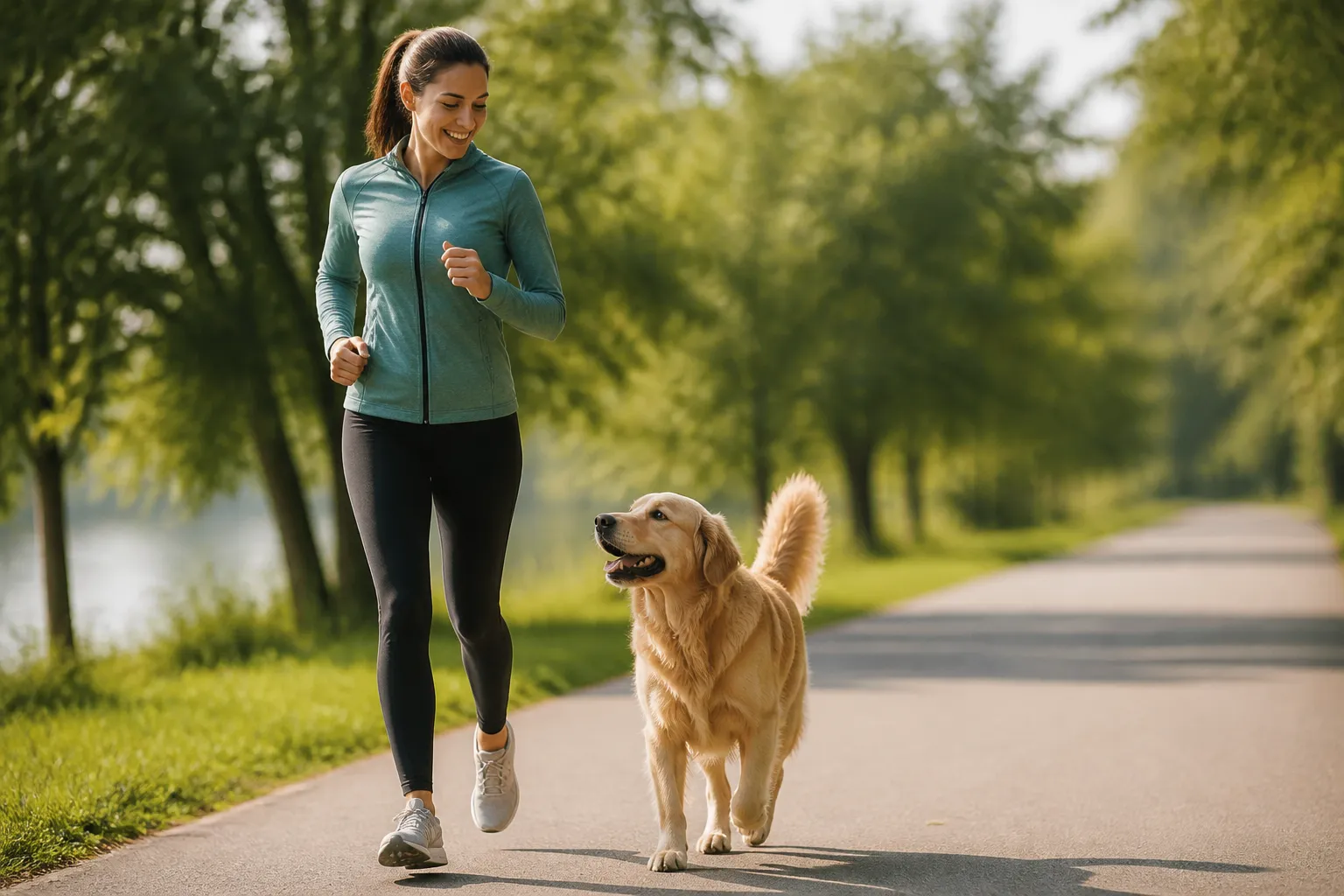
A walk should serve both movement and information gathering. Let your dog sniff safely when conditions permit. Sniffing slows the pace, but that is not wasted time; it offers mental engagement and may make the outing more satisfying. Use a comfortable harness or collar fitted appropriately, and check regularly for rubbing or restricted movement.
Vary routes carefully. Familiar paths can build confidence, while occasional new locations provide enrichment. Introduce novelty gradually for dogs that are fearful or easily overwhelmed. Select quieter times and wider spaces when traffic, crowds, bicycles, or other animals trigger stress. Distance and calmness are more valuable than forcing close encounters.
Practice loose-leash skills in small portions. Reward your dog for walking near you, checking in, and responding to a gentle change of direction. Avoid turning every walk into a strict obedience test. A dog that never gets to explore may become frustrated, whereas a dog that is always pulling can be difficult to control and exposed to safety risks.
Outdoor safety requires identification, reliable recall training, and awareness of local rules. Keep your dog leashed where required and near hazards such as roads, cliffs, livestock, or unstable ice. Check paws after outings for cuts, trapped debris, or irritation. Provide water, but do not encourage rapid drinking immediately after intense exertion if your dog is distressed; allow cooling and offer reasonable amounts calmly.
Make Play Safer and More Interesting
Fetch can be excellent exercise when organized thoughtfully. Use a suitable toy, clear the area, and avoid repeated high jumps or abrupt stops. Roll the toy or throw it at a low angle, especially for dogs with joint concerns. Several short repetitions are safer than continuing until motivation drops or movement becomes sloppy. Teach a release cue and trade toys rather than wrestling an object from a reluctant dog.
Tug can build strength and cooperation when both participants follow rules. Keep the toy at a comfortable height, use steady rather than jerking motions, and stop if teeth contact skin. A dog that becomes frantic, guards the toy, or cannot disengage needs calmer training before the game continues. Tug is not inherently harmful; unsafe speed, poor control, and ignoring warning signals create the problem.
Hide-and-seek games encourage searching and recall. Ask a family member to hold your dog, hide nearby, and call cheerfully. Reward discovery, then make locations more challenging. Scatter a small portion of the dog’s normal food across a safe area for supervised foraging. Food puzzles can occupy the mind, but use them as part of the daily food allowance to avoid unintended weight gain.
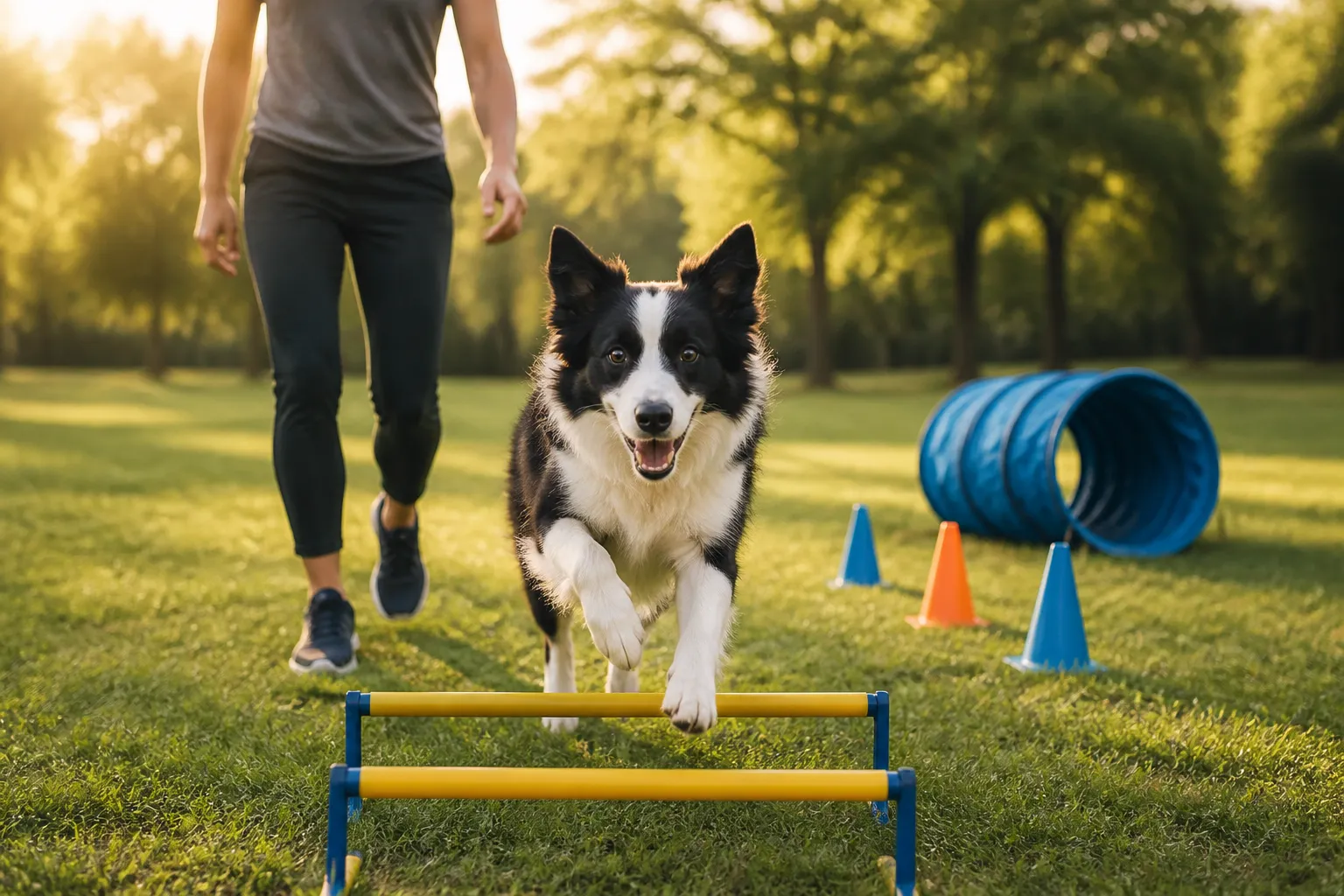
Obstacle activities should emphasize confidence, not height or speed. Walking around cones, stepping over low poles, standing on a stable surface, or following a target can improve coordination. Never use unstable equipment without instruction. Stop when concentration fades, and make success easy enough that your dog remains willing to participate.
Add Training to Exercise
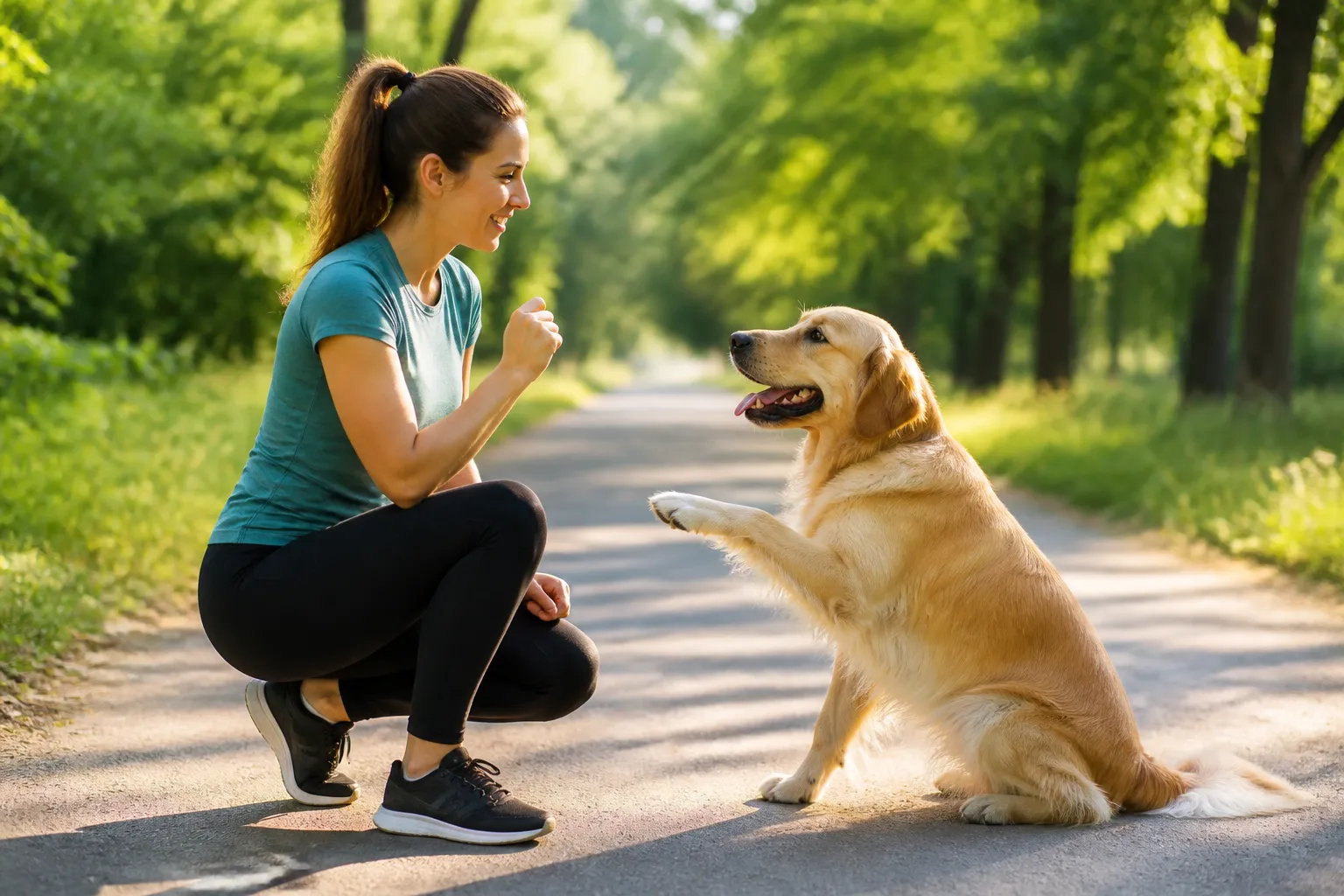
Training is movement with a purpose. Practice a few repetitions of recall, hand targeting, sit, down, wait, or settling during ordinary walks. Reward generously enough to make cooperation worthwhile, using small treats, praise, play, or permission to sniff. Short sessions preserve enthusiasm and make learning easier.
Recall deserves special care. Begin indoors or in a secure enclosed space, calling once in a cheerful voice and rewarding immediately when your dog turns toward you. Build distance and distractions gradually. Do not call your dog only to end fun or deliver something unpleasant. In open areas, use a long line until recall is dependable, and never test it near traffic or dangerous wildlife.
Impulse control can make exercise safer. Teach your dog to pause before crossing a doorway, waiting for a toy, or greeting another dog. These behaviors should be reinforced calmly rather than demanded through intimidation. A dog that can pause is better prepared to handle excitement and return attention to the handler.
Social exercise must be individualized. Some dogs enjoy compatible playmates; others prefer parallel walks or human interaction. Watch body language: loose movement, voluntary engagement, and easy pauses suggest comfort, while stiffness, hiding, repeated avoidance, hard staring, or frantic pursuit suggest that the interaction should end. Do not force greetings to make a dog “social.”
Adapt Exercise to Weather
Heat is a serious exercise risk. Plan activity during cooler periods, choose shade, carry water, and use shorter sessions. Hot pavement can injure paw pads; test surfaces with your hand and select grass or another cooler route when needed. Heavy panting, weakness, confusion, vomiting, stumbling, or collapse requires immediate attention and veterinary guidance. Do not rely on a dog’s willingness to continue as proof of safety.
Cold weather creates different concerns. Small, thin-coated, very young, elderly, or ill dogs may need shorter outings and protective clothing that fits without restricting movement. Salt, ice, and chemical deicers can irritate paws, so wipe feet afterward. Avoid frozen ponds and rivers unless safety has been independently established; ice thickness can vary and a falling dog may be impossible to rescue safely.
Rain and poor air quality may make outdoor exercise inappropriate. On such days, use indoor scent games, training, food puzzles, gentle toy play, or supervised movement through a safe room. Indoor activities should still include rest and clear boundaries. If a dog is frustrated by confinement, rotate activities rather than escalating intensity.
Use Rest and Recovery Properly
Rest is part of training, not a failure to exercise. Muscles and connective tissues need time to recover, particularly after unfamiliar activity. Offer a quiet place to sleep, maintain normal hydration, and avoid stacking demanding sessions on consecutive days until you understand your dog’s tolerance.
Observe your dog during the hours after exercise and the following morning. Mild tiredness can be normal, but persistent limping, stiffness, reduced appetite, unusual irritability, reluctance to rise, or sensitivity to touch should not be ignored. Stop the activity and consult a veterinarian when symptoms are significant, repeated, or worsening.
Warm-ups and cool-downs need not be elaborate. Begin slowly, walk gently at the end, and avoid stopping abruptly after intense running. Regular nail care can improve traction, while keeping the coat free of mats supports comfort. These small measures reduce preventable problems and help your dog move naturally.
Avoid Common Exercise Mistakes
One frequent mistake is measuring success only by distance. A long walk may be inappropriate for a puppy, senior, injured dog, or heat-sensitive breed, while a short sniffing walk may be highly enriching. Evaluate quality, comfort, recovery, and enjoyment instead.
Another mistake is using exercise to suppress every unwanted behavior. If a dog is fearful, reactive, or compulsive, exhaustion can conceal the issue temporarily without addressing its cause. Combine appropriate activity with management, reward-based training, environmental changes, and professional support when needed.
Repetitive motion also deserves caution. Daily hard-surface running, constant jumping, or endless ball chasing can place concentrated stress on joints and soft tissues. Vary surfaces and activities, include slower days, and favor controlled movement over frantic acceleration.
Do not ignore consent. A dog that repeatedly moves away, freezes, yawns, licks lips, or stops engaging may be overwhelmed rather than stubborn. Offer a break and reassess the environment. Exercise should strengthen trust, not turn the handler into a source of pressure.
Create a Practical Weekly Plan
A flexible week might include several relaxed sniffing walks, brief training sessions, controlled play, and one or two novel enrichment activities. The exact schedule should reflect your dog’s capacity. For an active adult, a longer walk may be appropriate on some days, followed by an easier recovery day. For a senior, multiple short outings may work better than one extended trip.
Use a simple planning formula: one activity for cardiovascular movement, one for exploration, one for skill building, and one for calm enrichment. These categories can overlap. A quiet forest walk may provide movement and sniffing; a recall game can combine training and activity; a food search can occupy the mind indoors.
If another person helps care for your dog, share the plan and warning signs. Agree on commands, equipment, permitted routes, treat portions, and emergency contacts. Consistency prevents one enthusiastic session from undoing several careful days.
FAQ
How much exercise does a dog need each day?
There is no universal number. Needs depend on age, health, breed tendencies, body condition, temperament, and the type of activity. Start with manageable sessions and judge the plan by comfortable movement, good recovery, and balanced behavior. Ask a veterinarian for individualized guidance if your dog has medical risks or a major change in tolerance.
Is one long walk better than several short walks?
Not necessarily. Several short walks can provide repeated opportunities for movement, sniffing, toilet breaks, and training, while reducing fatigue. A healthy, conditioned dog may enjoy a longer outing, but puppies, seniors, overweight dogs, and dogs with joint or breathing concerns often benefit from shorter sessions.
Can play replace walking?
Play can provide valuable movement and interaction, but it may not replace every benefit of a walk. Walking offers changing scents, controlled exploration, and exposure to varied surfaces. If outdoor walks are temporarily limited, combine indoor movement with scent work, training, and enrichment while maintaining safety.
Should I exercise my dog after eating?
Avoid intense activity immediately after a substantial meal. The appropriate waiting period can vary with meal size, dog characteristics, and activity intensity, so ask your veterinarian for advice, particularly if your dog is at risk for digestive emergencies. Calm toilet breaks are different from vigorous running or jumping.
What if my dog refuses to exercise?
First check for pain, illness, heat, fear, uncomfortable equipment, or an overwhelming environment. Do not drag or force the dog. Try a quieter route, shorter duration, high-value rewards, or gentle indoor games. If refusal is sudden, persistent, or paired with other changes, arrange veterinary evaluation.
Is dog-park play safe?
It can be enjoyable for suitable dogs in well-managed settings, but risks include rough collisions, disease exposure, resource conflict, and poor supervision. Observe the environment before entering, leave if play becomes frantic, and never assume every dog is compatible. Parallel walks or one trusted playmate may be safer alternatives.
How can I exercise a dog with arthritis?
Use professional guidance, low-impact movement, controlled pace, and consistent routines. Short walks on forgiving surfaces, gentle swimming where safe and appropriate, and carefully selected strengthening exercises may help some dogs, but the plan should account for pain, medication, weight, and recovery. Never push through obvious discomfort.
What signs mean I should stop immediately?
Stop for collapse, severe weakness, confusion, repeated vomiting, breathing difficulty, blue or pale gums, staggering, or suspected heat illness. Also stop when your dog shows pain, sudden lameness, or inability to continue. Move to a safe, cool area and contact a veterinarian promptly; emergencies require immediate professional care.
Conclusion
The best dog exercise plan is not the most extreme one. It is the routine your dog can perform safely, enjoy consistently, and recover from comfortably. Combine exploratory walks, purposeful play, training, enrichment, and rest. Adjust for life stage, health, weather, equipment, and temperament, and treat changes in movement or behavior as useful information rather than inconvenience.
Start with a modest plan today: a calm walk, a few rewarding training repetitions, and a supervised search game. Observe your dog afterward, record what worked, and make only gradual changes. With patience and informed choices, exercise becomes more than a way to spend energy. It becomes daily support for mobility, confidence, learning, and a stronger human canine partnership.