
Dog Potty Training Tips: Start With a Clear, Kind Plan
Successful dog potty training depends less on punishment and more on timing, supervision, and consistency. Your dog must learn three connected ideas: where elimination is appropriate, how to signal that a bathroom break is needed, and why relieving indoors is not acceptable. Puppies may need many opportunities because their bladder control is still developing. Adult dogs can also need retraining after adoption, illness, schedule changes, or a move.
The most effective approach is simple: prevent mistakes, reward the correct behavior immediately, and respond calmly when accidents happen. A predictable routine helps your dog understand what to expect, while careful observation helps you act before an accident begins. Training is not a contest. Progress can be uneven, and occasional setbacks do not mean the method has failed.
Before beginning, choose the intended bathroom location, collect suitable cleaning supplies, and decide which reward your dog values. Everyone in the household should use the same words, door, route, and expectations. Mixed messages create confusion, especially when one person allows indoor pads while another expects outdoor elimination.
Prepare the Home and Schedule
Preparation makes learning easier. Remove tempting rugs, bath mats, and soft items from the training area when possible. A dog may find absorbent fabric similar to grass or puppy pads, so limiting access reduces opportunities for mistakes. Use baby gates, closed doors, or a safe confinement area to manage rooms your dog cannot yet handle reliably.
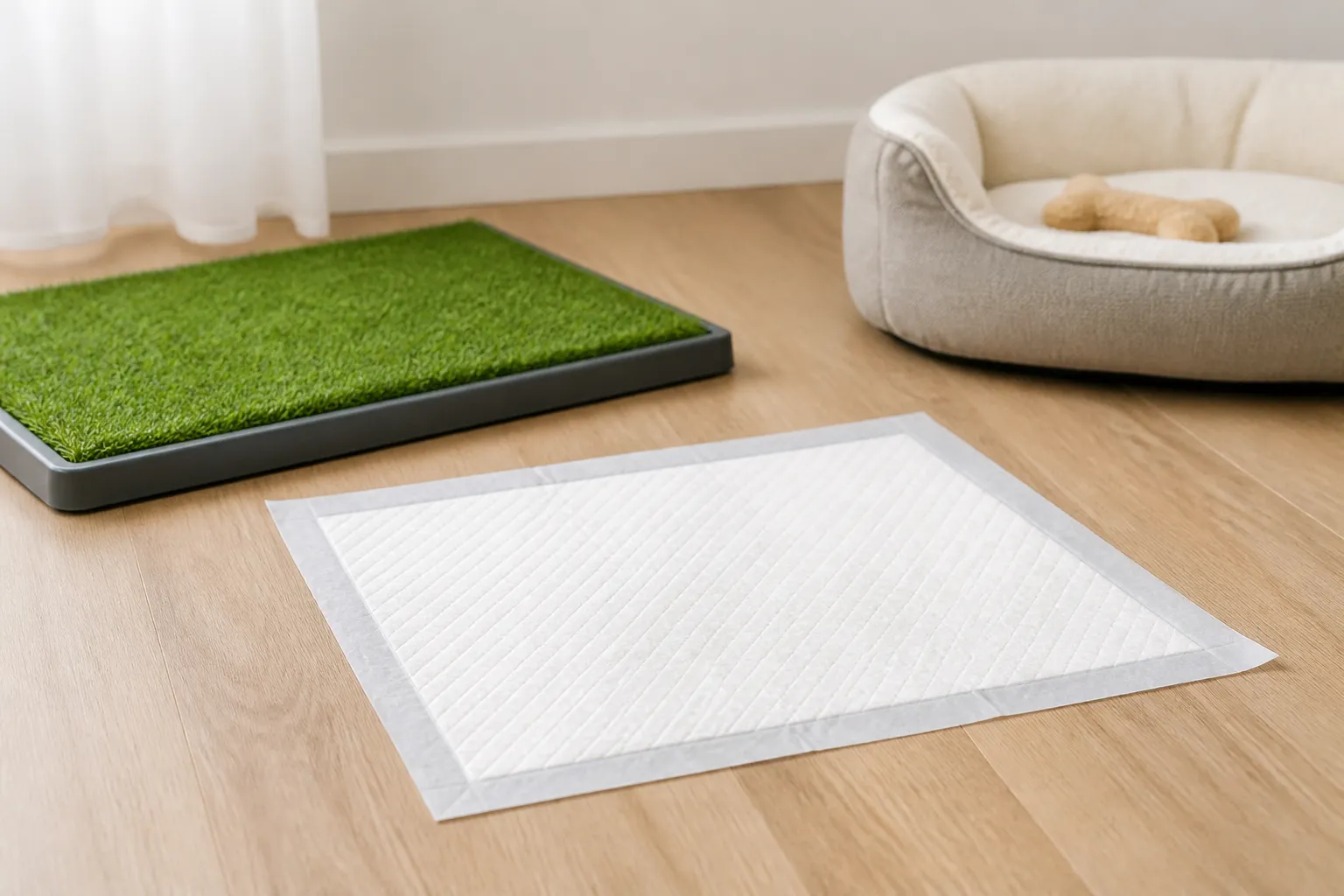
Choose a designated toilet spot that is easy to reach and reasonably quiet. Outdoor locations should be safe, clean, and available in different weather conditions. If your dog is small, elderly, frightened, or newly vaccinated, discuss suitable outdoor arrangements with a veterinarian, because health and exposure considerations can affect the plan. If indoor training is necessary, place a pad or washable toilet surface in one consistent location rather than moving it from room to room.
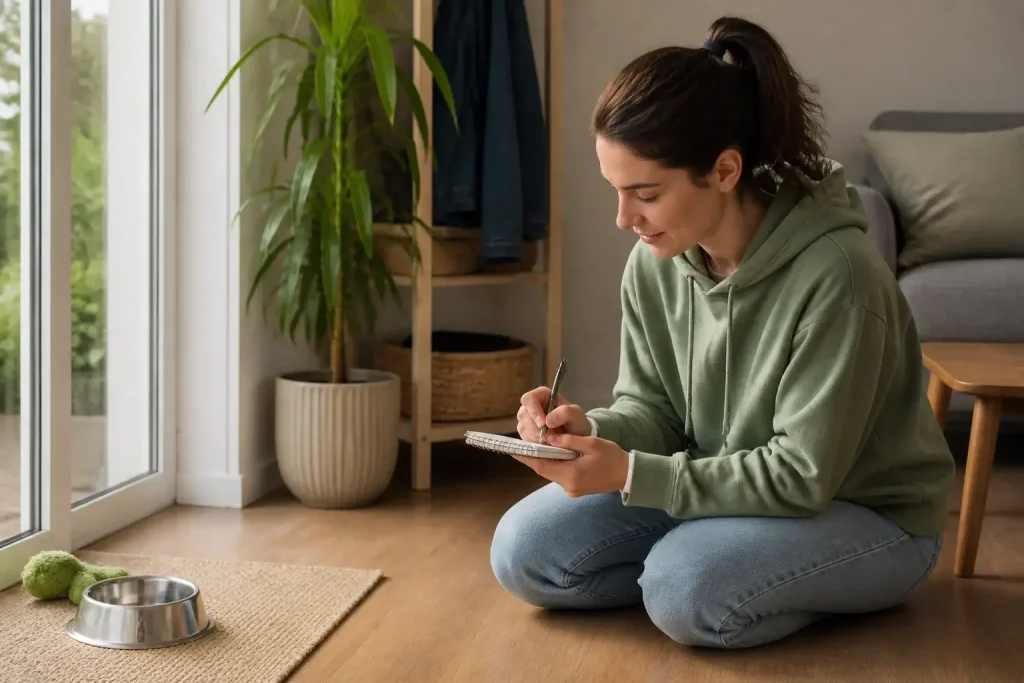
Build a schedule around predictable events. Take your dog out after waking, eating, drinking heavily, playing, training, napping, and coming out of confinement. Young puppies often need very frequent breaks, while adult dogs may manage longer intervals, but individual needs vary. A written log is useful. Record meals, water, naps, bathroom trips, successful eliminations, and accidents. Patterns become visible quickly, allowing you to adjust timing instead of guessing.
Feed meals at regular times rather than leaving food available continuously if that fits your veterinarian’s advice. Predictable meals often produce more predictable bowel movements. Water should remain available, especially during warm weather or activity; do not restrict water to force dryness.
Use Supervision to Prevent Mistakes
Supervision is the central skill in potty training. When your dog is loose, keep the dog within sight or close enough to hear movement. Watch for sniffing, circling, wandering away, sudden stillness, whining, scratching, or heading toward a previous accident. These signals are not always obvious, so observation improves with practice.
If you cannot supervise, use a safe management option. A properly sized crate, playpen, or puppy-proof room can prevent roaming, but confinement must not replace exercise, interaction, or regular bathroom opportunities. The space should allow comfortable standing, turning, lying down, and resting. A crate should not be used as punishment. If your dog repeatedly soils the confinement area, consider whether the interval is too long, the space is unsuitable, or a medical problem may be present.
Take the dog directly to the chosen spot, using the same door and a calm leash routine when practical. Avoid turning the bathroom trip into an exciting walk before elimination. Give your dog a few quiet minutes to investigate. If the dog goes, reward immediately while still at the location. Waiting until you return indoors may cause the dog to connect the reward with coming inside rather than eliminating outside.
If nothing happens, return indoors for a short period of close supervision or safe confinement, then try again. This prevents a common mistake: allowing free play after an unsuccessful trip, only to discover an accident moments later.
Choose Rewards That Matter
A reward should arrive within seconds of the desired behavior. Use cheerful praise, a small food treat, play, or access to a favorite activity. Food is often efficient because it is clear and immediate, but not every dog is motivated by the same reward. Experiment with tiny, safe treats and observe what captures attention without causing digestive upset.
Pair the reward with a consistent phrase, such as “go potty,” but introduce the phrase carefully. Say it once as the dog begins eliminating, not repeatedly while the dog is searching. With repetition, the phrase can become a useful cue. Do not demand a performance before the dog understands the behavior.
Reward every successful elimination at first. Later, as the habit becomes dependable, you can gradually vary the reward while continuing praise. Avoid taking the dog straight indoors every time after elimination if the dog learns that going ends outdoor access. Sometimes offer a brief sniff or calm walk afterward. This reduces the possibility that the dog will hold urine to prolong time outside.
Reinforce the Right Behavior
Praise should be specific enough for the dog to understand. A warm voice, immediate treat, and relaxed body language communicate approval more effectively than loud excitement that interrupts elimination. Some nervous dogs prefer quiet praise and a treat placed near their mouth. Match your response to temperament.
Never reward an accident simply because you feel guilty afterward. Instead, reset the routine and look for the missed opportunity that preceded it. The goal is not to make the dog feel bad; it is to make the correct choice easy and valuable.
Handle Accidents Without Punishment
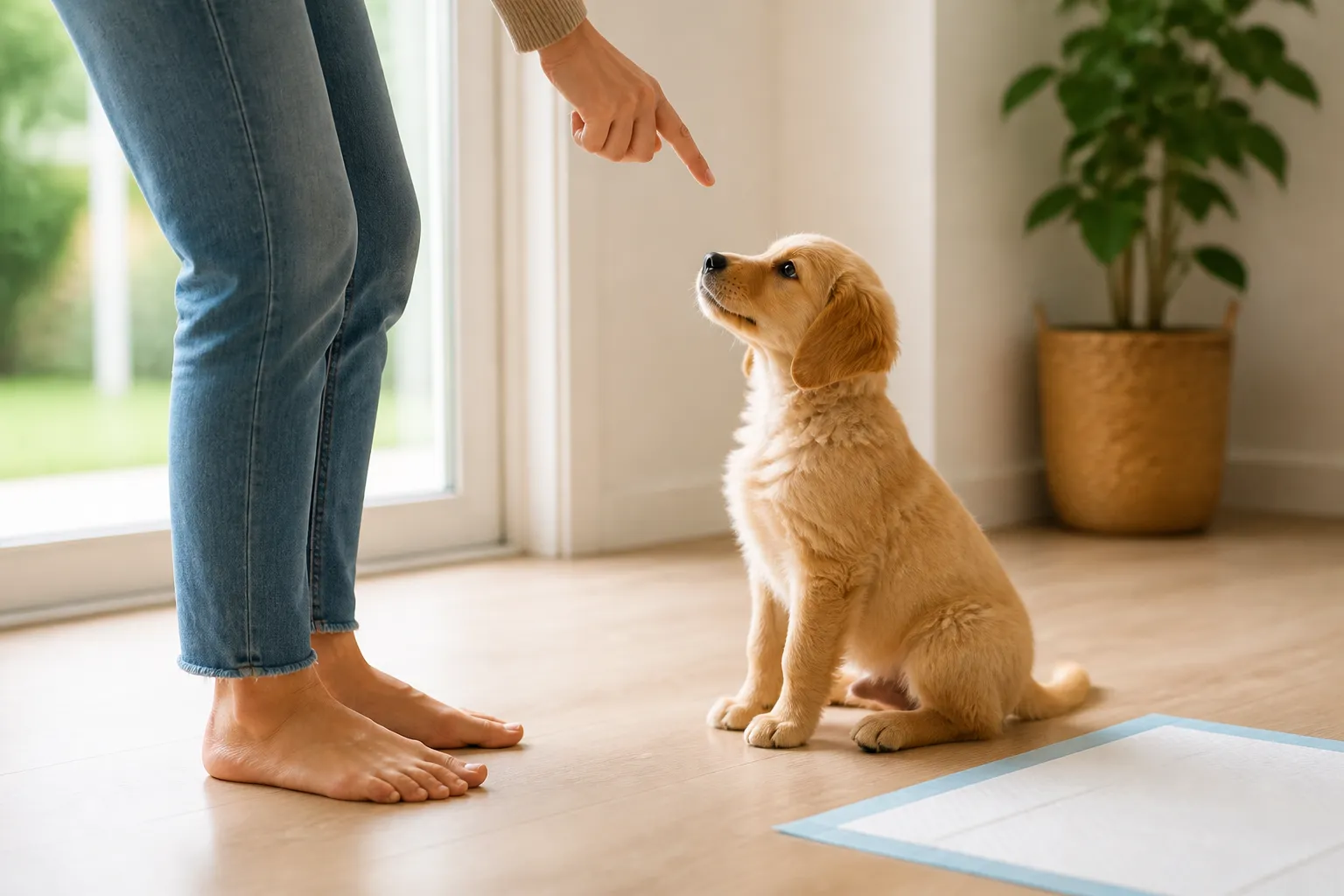
Accidents are information. They may show that the break came too late, supervision failed, the dog misunderstood the location, or a health issue is affecting control. Punishing after the event is ineffective because dogs generally cannot connect a delayed reaction with an earlier elimination. Yelling, rubbing a nose in waste, or striking a dog can create fear and may cause hidden accidents rather than better habits.
If you catch the dog beginning to eliminate indoors, interrupt gently with a neutral sound or brief phrase. Immediately guide the dog to the designated spot. If the dog finishes there, reward the completion. Avoid startling the dog so severely that elimination stops altogether and becomes associated with fear.
Clean the area thoroughly with an enzymatic cleaner designed for pet stains, following the product label. Ordinary household cleaners may remove visible marks while leaving odor compounds that a dog can detect. Blot fresh urine rather than spreading it, and allow cleaned surfaces to dry before restoring access. If accidents continue in one location, block access temporarily and inspect for lingering odor.
Keep a record of accidents, including time, location, activity, and what happened beforehand. Several incidents after naps may indicate a need for an immediate outing. Accidents during greetings may reflect excitement or submissive urination rather than incomplete training. Respond calmly and consider the emotional context.
Teach a Reliable Bathroom Signal
A dog needs a practical way to request a break. Some dogs naturally wait by a door, stare at a person, whine softly, or pace. Reinforce these behaviors when they occur before an outing. You can also teach a deliberate signal, such as touching a hanging bell with the nose or paw.
To teach a bell signal, first present it at nose level. When the dog investigates or touches it, mark the moment with praise and provide a treat. Repeat until contact is easy. Then place the bell beside the exit and ask for contact before opening the door. Immediately go to the toilet spot, but keep the trip purposeful. If the bell becomes a button for unlimited entertainment, pause and distinguish genuine bathroom needs from attention seeking by maintaining a predictable routine.
Do not require a signal beyond the dog’s physical or emotional ability. A frightened rescue dog may need time before confidently approaching a door. A senior dog may benefit from a visible light or a clear verbal routine. Signals should support communication, not create another source of pressure.
Adapt Training to Age and Circumstances
Puppies commonly need more frequent breaks than owners expect. Their bodies and attention spans are developing, and excitement can trigger sudden elimination. Carrying a small puppy to the designated location may prevent accidents on the way. After sleeping, eating, drinking, and energetic play, assume a break is likely to be needed.
Adult dogs may learn quickly, but previous habits can be strong. An adopted dog may have lived in a kennel, apartment, yard, or unstable environment with different rules. Begin as though the dog needs a complete refresher: supervise, schedule trips, reward success, and restrict unsupervised access. Do not assume an adult dog is being stubborn.
Senior dogs may need more frequent outings, easier access, and patience. Joint pain, cognitive changes, reduced vision, or medication effects can alter bathroom habits. A dog that was previously reliable but suddenly begins having accidents deserves veterinary evaluation rather than harsher training.
Small dogs are sometimes given more indoor freedom because their accidents are easier to overlook. That can delay learning. Their smaller bladders may require more frequent opportunities, but the same principles apply: consistent location, immediate reinforcement, supervision, and thorough cleaning.
Dogs living in apartments may require careful planning for elevators, stairs, weather, and distance to the toilet area. Keep leash, shoes, waste bags, and rewards ready near the exit. Reducing preparation time makes it easier to respond promptly.
Recognize Medical and Emotional Causes
Training cannot solve every bathroom problem. A previously reliable dog that suddenly urinates indoors may have a urinary disorder, digestive illness, pain, increased thirst, medication effect, or another medical concern. Frequent small urinations, straining, blood, unusual odor, diarrhea, constipation, excessive drinking, lethargy, or apparent discomfort warrant veterinary advice. Urinary obstruction, severe illness, or inability to urinate can be urgent; seek prompt professional care when these signs occur.
Emotional factors also matter. Fear, separation distress, excitement, and conflict can produce accidents even when a dog understands the household routine. Punishment commonly increases anxiety and may worsen the pattern. Identify triggers, reduce pressure, and consult a qualified veterinarian or behavior professional when distress is persistent, intense, or accompanied by destructive behavior.
Marking is different from a full bladder emptying. A dog may deposit small amounts on vertical surfaces, often in response to social or environmental cues. Management, cleaning, supervision, and behavior guidance may help, but sudden marking should still be discussed with a veterinarian. Neutering decisions, anxiety treatment, and behavior plans should be made with professional advice rather than assumptions.
Build Reliability Through Gradual Freedom
Freedom should be earned gradually. Begin with one or two easy-to-monitor rooms. After a sustained period of successful trips, expand access one area at a time. If an accident occurs, calmly reduce freedom and return to more frequent outings for a while. This is not a setback to hide; it is feedback about the current level of responsibility.
Continue supervising during high-risk moments even after progress appears strong. Visitors, travel, thunderstorms, household renovations, schedule changes, and new pets can disrupt habits. Before an event, provide a bathroom opportunity and keep the dog near you afterward. During travel, preserve familiar cues, food timing, and toileting language where possible.
A reliable dog may still need help during illness, extreme weather, or unusual delays. Keep backup options available, such as washable pads, a trusted caregiver, or an indoor toilet area when appropriate. Preparedness prevents a single unavoidable accident from becoming a repeated pattern.
A Practical Daily Routine
Morning: take the dog directly to the toilet location, reward success, then provide breakfast. Offer another trip after eating and after active play.
Daytime: schedule breaks based on age, health, and observed patterns. Alternate supervised freedom with rest, training, sniffing, and exercise. Record results rather than relying on memory.
Evening: reduce chaotic activity before bedtime, offer a final calm outing, and keep the sleeping area comfortable. Very young puppies may need an overnight break. Respond quietly and return to rest after elimination.
The routine should be flexible enough to fit real life but consistent enough to be understandable. A schedule that no household member can maintain will not remain effective, so design one that matches work, school, weather, and transportation realities.
Select Helpful Training Products
Useful products support supervision and hygiene; they do not replace teaching. A washable bed or crate mat can make cleaning easier. Baby gates help create safe boundaries. A lightweight leash kept nearby allows prompt guidance without chasing the dog. Small treat containers make immediate reinforcement practical during busy routines.
Choose a crate or pen based on the dog’s current size and ability to remain clean, not on an oversized area that permits a sleeping corner and toilet corner. Adjustable dividers can accommodate growth when used correctly. Never use confinement to force a dog to hold urine beyond a reasonable interval.
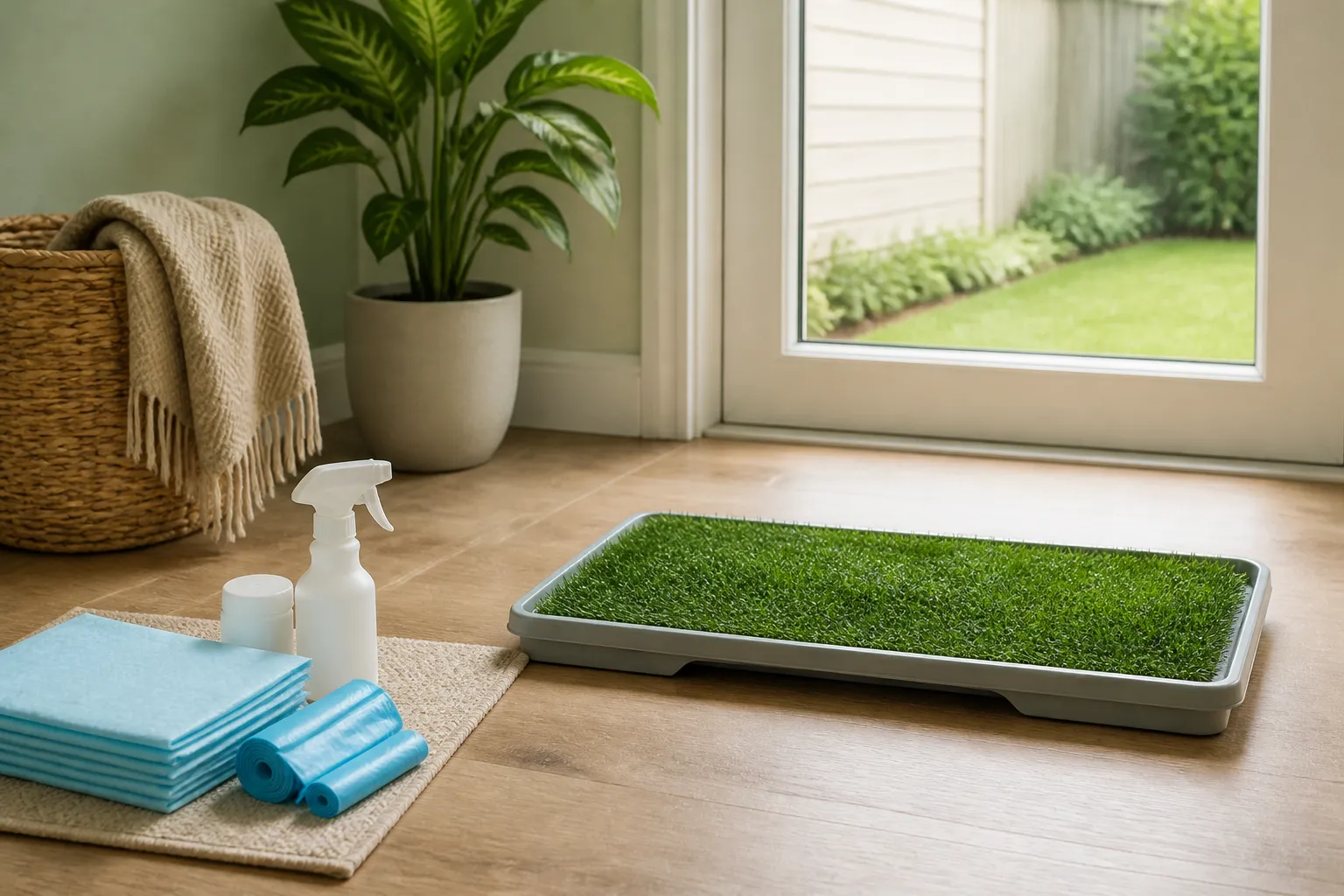
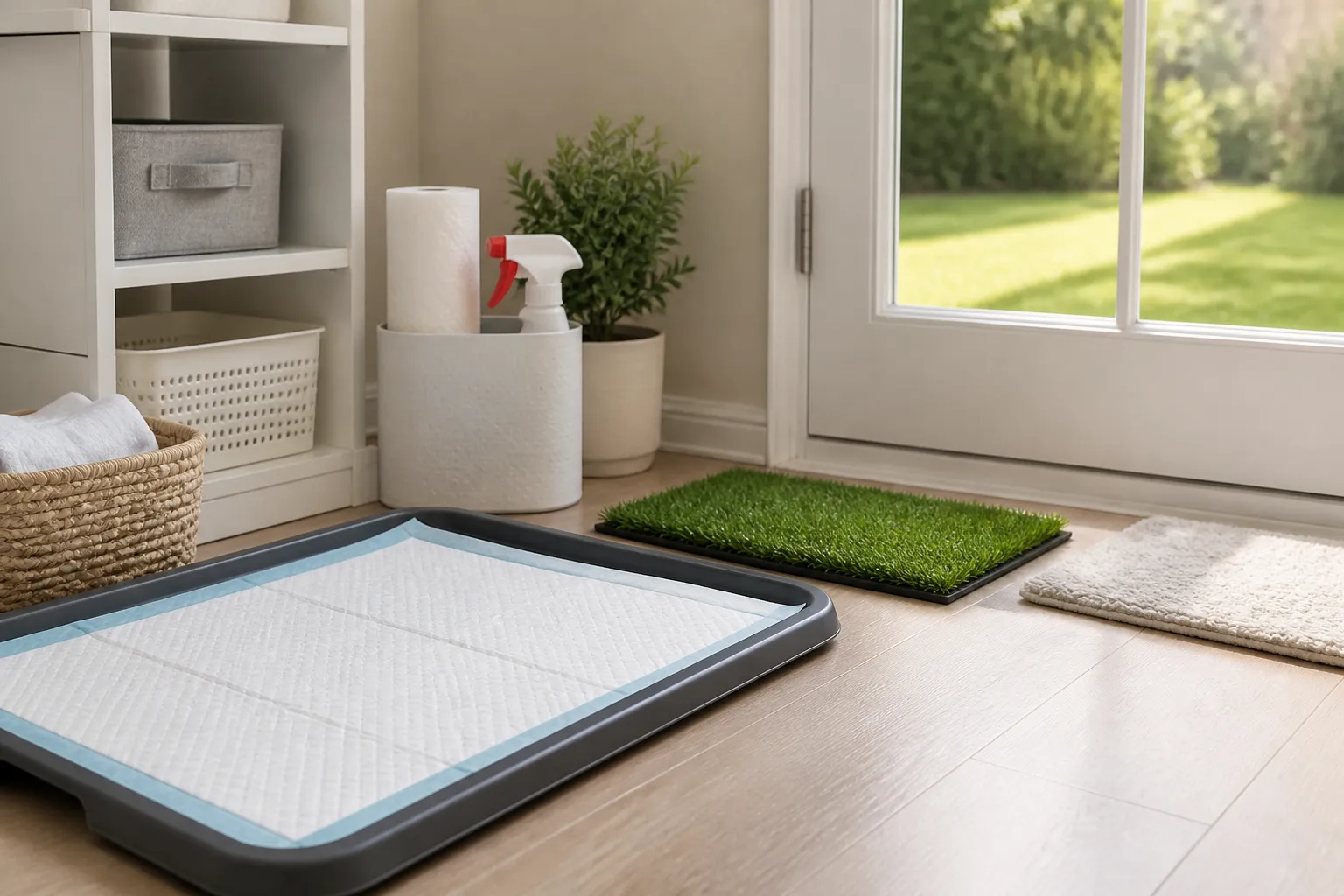
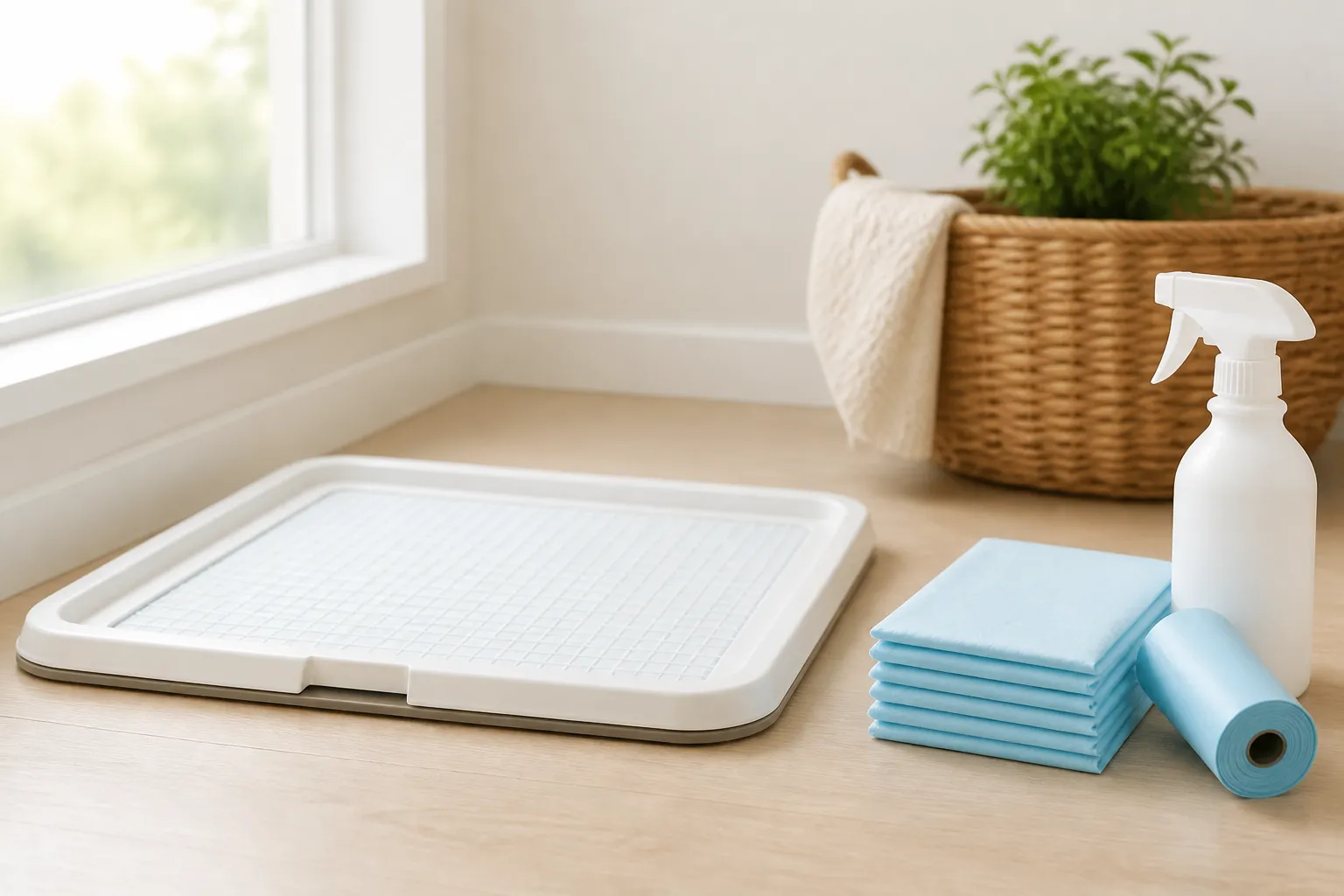
Enzymatic cleaner is particularly valuable because it targets odor residues. Test any cleaner on a hidden part of a fabric or floor first, and follow label instructions. Disposable pads may help in apartment living, severe weather, illness recovery, or homes where outdoor access is limited. However, pads can create a lasting preference for indoor elimination. If the long-term goal is outdoors, place the pad near the exit and gradually transition only when the dog is ready.
A door bell, visual cue, or recorded reminder can support consistency. Select equipment that is safe, easy to clean, and simple for every caregiver to use. Avoid products marketed as instant solutions or devices that rely on fear, shock, pain, or intimidation. Humane training is more appropriate for building trust and clear communication.
Troubleshoot Common Sticking Points
If your dog will not eliminate outside, check the environment. Rain, cold surfaces, traffic, unfamiliar smells, or nearby dogs may feel intimidating. Choose a quieter spot, shorten the route, provide shelter where safe, and reward small steps toward relaxed outdoor behavior. Do not turn waiting into an exhausting standoff; return indoors under supervision and try again soon.
If the dog eliminates outside but has accidents indoors, increase frequency and reduce freedom. The dog may understand the preferred location but lack reliable control or may be distracted outdoors. Keep trips calm and remain in the chosen spot until elimination occurs.
If accidents happen only when alone, investigate separation-related distress. A camera can reveal pacing, vocalization, or immediate panic, but avoid using observation to punish. A veterinarian or behavior professional can help create a gradual absence plan.
If the dog urinates during greetings, ask visitors to ignore the dog briefly, keep voices calm, and allow the dog to approach when ready. Excitement-related urination often improves as greetings become quieter, but persistent cases deserve individualized advice.
If progress stops, review the basics rather than adding harsher consequences. Check timing, cleaning, health, stress, household consistency, and access to unsupervised areas. Most training problems have a manageable cause once the pattern is observed carefully.
Frequently Asked Questions
How long does potty training take?
There is no universal timetable. Age, health, previous experience, household consistency, and the dog’s environment all influence progress. Some dogs develop a reliable routine quickly, while others need months of careful management. Measure improvement by fewer accidents, clearer signals, and longer successful intervals, not by a fixed deadline.
Should I use puppy pads?
Pads can be useful when outdoor access is limited, for certain medical situations, or as a temporary management tool. They may also teach a preference for indoor surfaces. If outdoor toileting is the final goal, use one consistent pad location near the exit and transition gradually. Discuss unusual circumstances with a veterinarian or qualified trainer.
Should I crate my dog overnight?
A crate may support overnight management if the dog is comfortable and the interval is appropriate. It should be introduced positively, never used for punishment, and never treated as a substitute for bathroom breaks. Young, ill, or elderly dogs may need nighttime outings. If the dog shows distress, reassess the setup and seek guidance.
What should I do if I find an old accident?
Clean it thoroughly with an enzymatic product, restrict access while the area dries, and review the routine that allowed the accident. Do not scold after the fact. The dog cannot learn from a delayed punishment, but you can learn from the location and timing.
Can an adult rescue dog be potty trained?
Yes. Begin with supervision, frequent scheduled trips, immediate rewards, and limited freedom. Give the dog time to understand your home and routine. Previous housing conditions, fear, medical issues, or marking may affect progress, so avoid interpreting uncertainty as defiance.
When should I call a veterinarian?
Call when accidents begin suddenly, persist despite consistent management, or occur with straining, blood, pain, diarrhea, constipation, unusual thirst, lethargy, or other behavior changes. Medical causes should be ruled out before assuming a training failure.
Conclusion
The strongest potty training plan is preventive, predictable, and humane. Choose one clear bathroom location, schedule frequent opportunities, supervise closely, reward success immediately, clean mistakes thoroughly, and expand freedom gradually. Treat accidents as useful information rather than occasions for blame. Adapt expectations to age, health, temperament, weather, and living arrangements.
Consistency matters more than perfection. Every successful trip strengthens a habit, while every calmly managed mistake identifies a part of the plan that needs adjustment. Household members should share the same cues and responses, and professional help is appropriate when health or anxiety may be involved.
With patience and careful observation, most dogs can learn dependable bathroom habits while preserving trust. The result is more than a cleaner home: it is clearer communication, greater confidence, and a daily routine that feels manageable for both dog and person.