
Understanding Puppy Training
Puppy training is the process of teaching a young dog how to live safely, calmly, and successfully with people. It includes more than commands such as sit or stay. A complete program develops communication, toilet habits, handling tolerance, emotional control, social skills, and reliable responses in everyday situations. The aim is not to control every movement. It is to help a puppy understand which choices are rewarding and which behaviors are unsuitable.
Begin with realistic expectations. Puppies have immature attention spans, developing bladder control, and limited experience with household rules. Mistakes are normal, not evidence of stubbornness or failure. Short, positive sessions usually produce better learning than long drills. Train when the puppy is rested, comfortable, and mildly interested in food or play. End while the puppy is still succeeding.
Use one clear cue for each behavior, reward promptly, and keep everyone in the household consistent. If “off” means stop jumping for one person but climb onto a lap for another, the puppy receives confusing information. Family members should agree on permitted furniture, greeting rules, feeding routines, and words for important behaviors.
Preparing the Training Environment
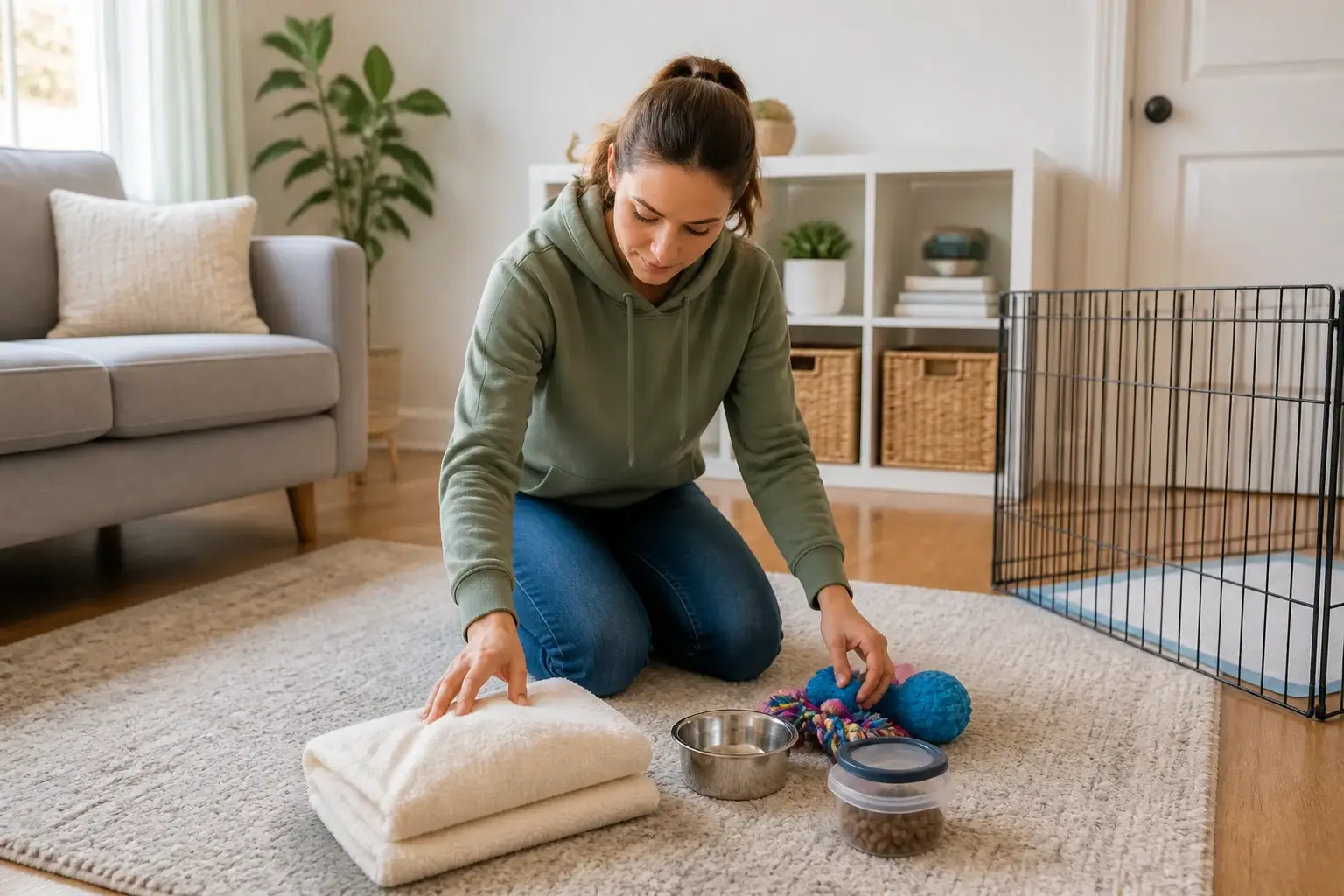
Before teaching formal skills, arrange the home so good decisions are easy. A puppy-proofed area can include a crate or pen, washable bedding, water, safe chew items, and a toilet route. Remove electrical cords, medicines, small objects, toxic plants, and anything that could be swallowed. Management prevents rehearsal of unwanted behavior while learning is still developing.
Choosing Useful Equipment
A flat collar or well-fitted harness, a lightweight leash, identification, food rewards, and durable toys are practical essentials. Select equipment that fits comfortably and check it regularly as the puppy grows. Avoid tools designed to cause pain or fear. Training should build trust, because a frightened puppy may suppress signals without learning the underlying skill.
Use rewards that are small and easy to eat. Soft food can be useful during lessons, while kibble may work for familiar behaviors in a quiet room. Toys, praise, permission to sniff, and access to play can also reinforce learning. The best reward depends on the individual puppy and the situation.
Establishing a Routine
A predictable routine supports toilet learning and reduces unnecessary frustration. Offer toilet opportunities after waking, eating, drinking, playing, and exciting activity. Young puppies also need frequent breaks during the day. Take the puppy to the same appropriate location, remain quiet, and reward immediately after elimination. If nothing happens, return indoors under supervision and try again later.
Accidents should be cleaned with an appropriate odor-removing product. Do not punish after the event; the puppy cannot connect delayed anger with an earlier action. If accidents are unusually frequent, painful, or accompanied by changes in thirst or behavior, consult a veterinarian.
Building Communication Through Rewards
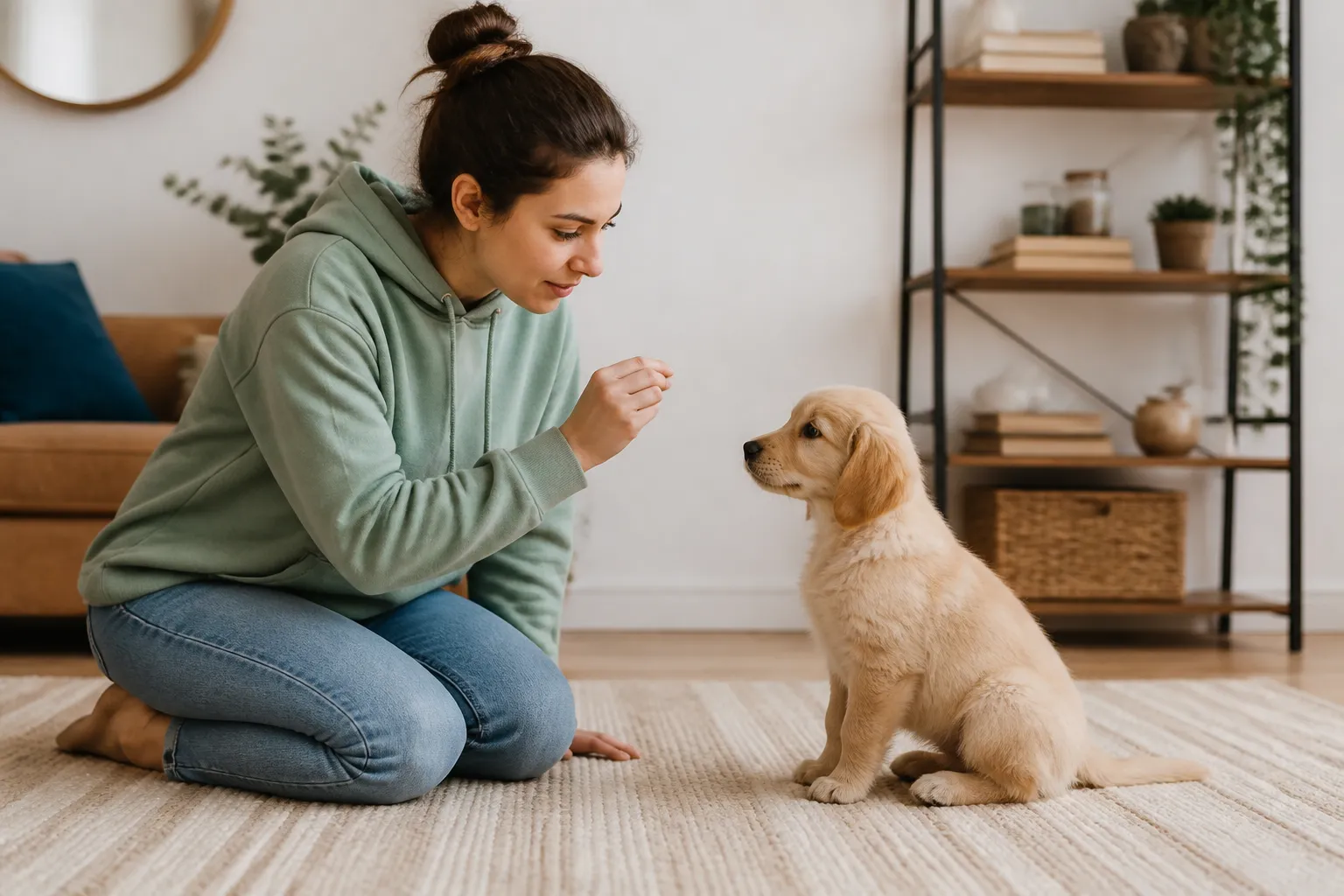
Reward-based training teaches a puppy that responding to a cue produces a desirable consequence. First capture or encourage the behavior, then mark the correct moment with a brief word such as “yes,” and deliver the reward. Timing matters. If the reward arrives several seconds later, the puppy may associate it with standing up, barking, or moving away.
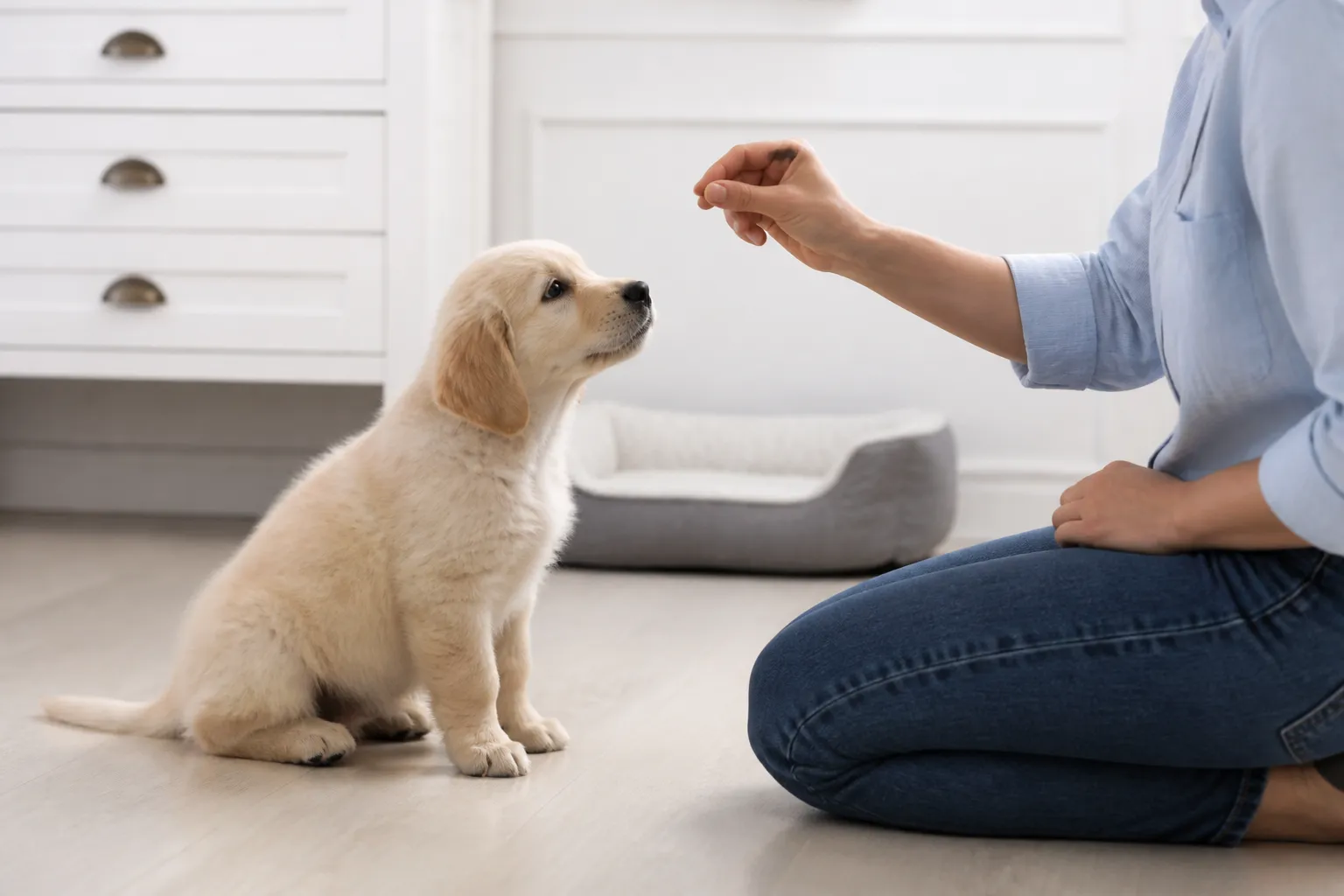
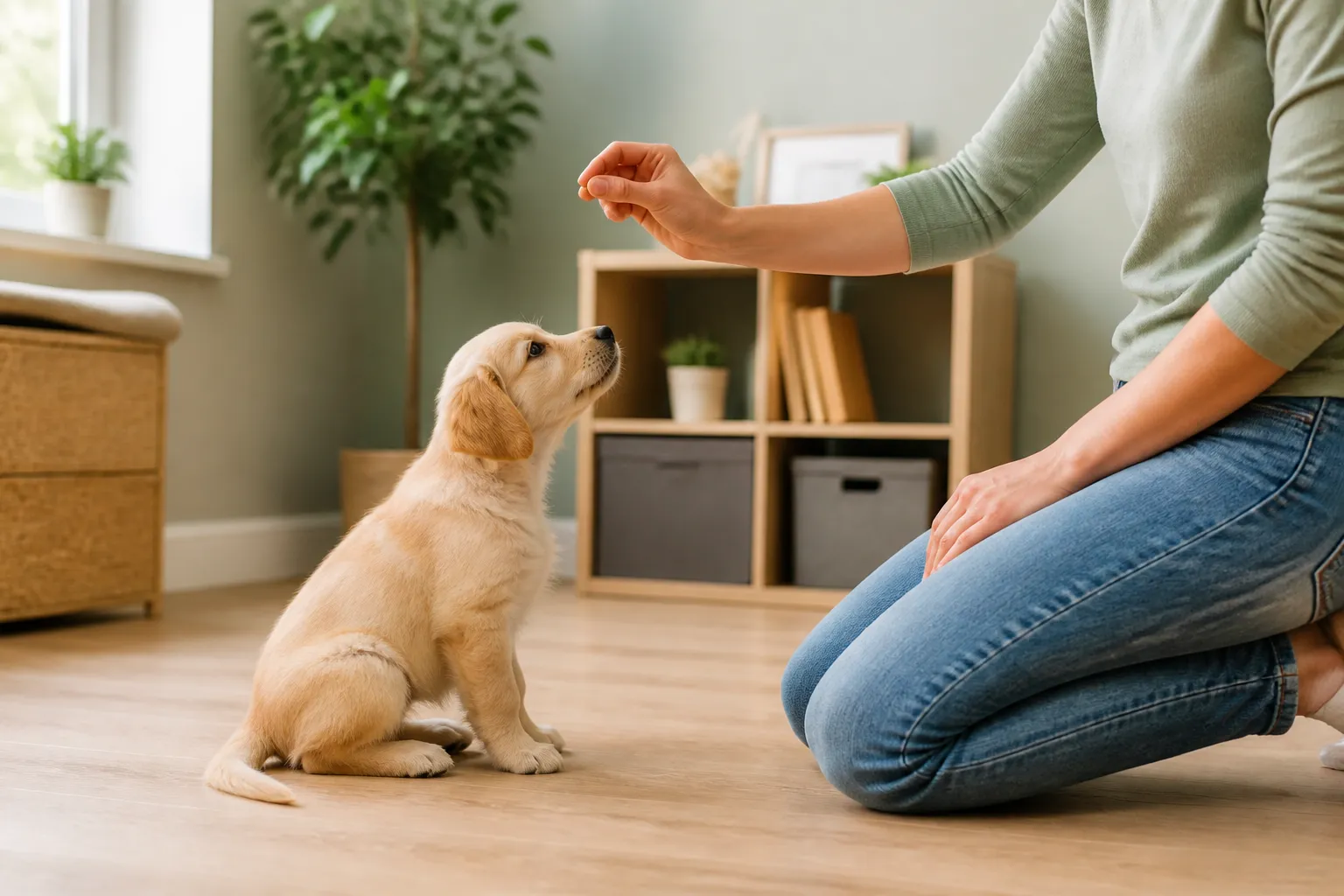
Teach one small piece at a time. For example, to teach a sit, hold a reward near the puppy’s nose and move it slowly upward. As the head follows, the hindquarters may lower naturally. Mark and reward the instant the bottom touches the floor. Once the action is predictable, say “sit” just before the movement. Avoid repeating the cue again and again. Repetition without response can teach the puppy that the word has no immediate meaning.
Gradually reduce visible food. Keep rewards available, but sometimes deliver praise, a toy, or an opportunity to sniff instead. In unfamiliar or highly distracting settings, return to frequent reinforcement. Reliability develops through practice across locations, distances, durations, and distractions.
Teaching Essential Skills
Name Recognition and Attention
Say the puppy’s name once in a cheerful voice when the puppy is already likely to notice you. When the puppy looks toward you, mark and reward. Practice indoors, then in progressively more interesting places. The name should predict useful communication, not punishment. Avoid using it repeatedly when you are angry or when the puppy is unlikely to respond.
A strong attention response helps with safety, redirection, and later training. It does not require constant eye contact. The goal is a willing orientation toward the handler.
Sit, Down, and Stand
These positions are useful, but they should not become the only measure of good behavior. Teach them with gentle lures or captured moments, then add verbal cues. Reward calm transitions rather than forcing the puppy into place. A down may be difficult on cold or slippery surfaces, so provide suitable footing.
Practice each position briefly. Add duration only after the puppy understands the action, and add distance only after duration is stable. Changing several variables at once makes the exercise unnecessarily difficult.
Recall
Recall means coming to the handler when called. Begin in a quiet room with a happy voice, move backward, and reward generously when the puppy follows. Use a long line in secure outdoor areas if appropriate, and never call the puppy only to end enjoyable activities or deliver unpleasant treatment. Sometimes call, reward, and release the puppy to play again.
Do not chase a puppy that is running away. Instead, lower your body, use an inviting voice, move away, or create a safe barrier. For emergencies, build a special recall word that is used rarely and rewarded exceptionally well. Recall remains a lifelong skill requiring maintenance.
Preventing Common Behavior Problems
Jumping on People
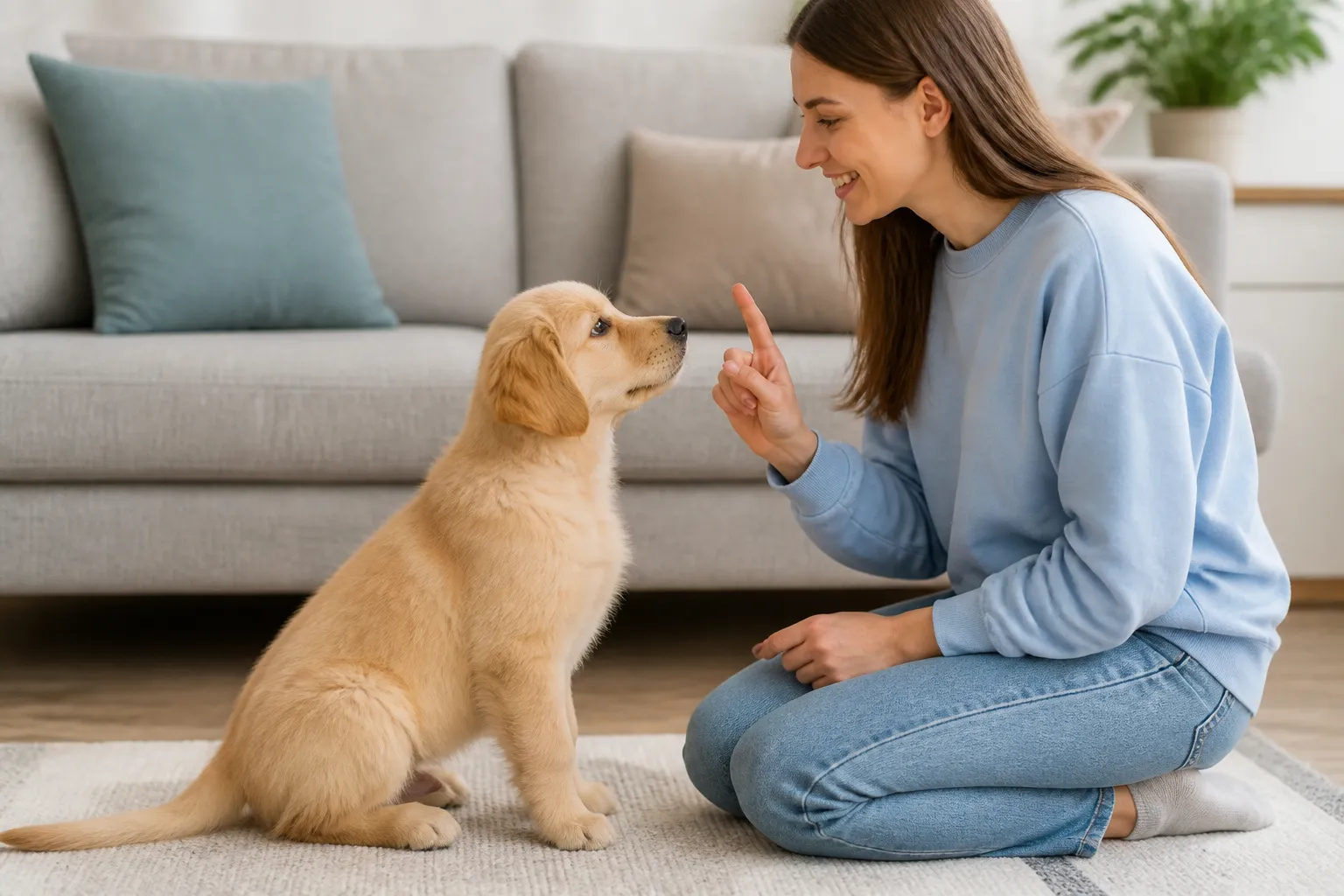
Jumping is often rewarded unintentionally because people speak, touch, or push the puppy away. Teach an alternative greeting. Before the puppy approaches, ask for four paws on the floor, reward calmness, and pause interaction if jumping begins. Visitors should follow the same plan. A leash, pen, or gate can prevent rehearsal during exciting arrivals.
Mouthing and Biting
Puppies investigate with their mouths, and playful biting is common. Redirect to a suitable toy, pause play when teeth touch skin, and resume when the puppy settles. Avoid wrestling with hands or punishing harshly, which can increase excitement or fear. Ensure the puppy receives sleep, chewing opportunities, and calm activities. Persistent, intense, or fearful biting deserves professional guidance.
Barking
Identify what maintains the barking. A puppy may bark for attention, alarm, frustration, play, or access. Reduce exposure to unnecessary triggers, reward quiet pauses, and teach an alternative such as coming to a mat. Do not simply shout, because the puppy may interpret this as participation. If barking is sudden, excessive, or linked to distress, investigate health and emotional causes.
Chewing and Stealing
Chewing meets normal developmental needs, but valuable objects should be managed. Provide varied, safe chews, rotate toys, and supervise access. If the puppy steals something, avoid chasing. Offer a better reward, exchange calmly, retrieve the object, and return an appropriate toy. Teach “drop” with low-value items first, rewarding release rather than forcibly opening the mouth.
Socialization and Confidence
Socialization means carefully introducing a puppy to people, animals, surfaces, sounds, handling, travel, and ordinary environments while keeping the experience manageable. It is not a requirement to greet everyone. A puppy can learn that observing from a comfortable distance is safe and rewarding.
Present new experiences gradually. Pair a sound, person, or surface with treats or play, then allow the puppy to retreat. Watch body language: tucked posture, freezing, lip licking, frantic escape, persistent yawning, or refusal of food can indicate stress. Increase distance or simplify the situation rather than forcing exposure.
Puppy classes may provide structured practice, but evaluate cleanliness, supervision, group size, training methods, and vaccination policies. Ask a veterinarian about local disease risks and suitable timing before attending public places. Safe socialization can occur at home, in private yards, during controlled visits, or through carrying the puppy in environments where floor contact is not appropriate.
Handling practice should include brief touches to paws, ears, mouth, tail, and coat. Pair each touch with rewards and stop before resistance escalates. This preparation supports grooming, veterinary care, nail maintenance, and future medical treatment.
Calmness, Crate Training, and Alone Time
A crate or pen should function as a comfortable resting area, never as punishment. Introduce it with the door open, placing food, chews, and meals inside. Close the door for short periods while the puppy is relaxed, then reopen before distress develops. Increase duration gradually. The puppy still needs toilet breaks, movement, interaction, and mental stimulation.
Teach settling outside the crate as well. Place a mat near you, reward quiet lying, and occasionally deliver a treat without calling the puppy away. Begin in a low-distraction room and gradually practice while you read, work, or prepare food. Calm behavior should receive attention just as actively as energetic behavior.
Alone-time training should progress in tiny intervals. Step away briefly, return neutrally, and increase time only when the puppy remains comfortable. Sudden, prolonged isolation can create distress. Signs such as frantic vocalizing, destructive escape attempts, drooling, or inability to eat may indicate a separation-related problem requiring a qualified behavior professional and veterinary input.
Troubleshooting Training Challenges
Regression is common after a move, illness, schedule change, stressful event, or developmental transition. Return to an easier level, increase supervision, and reinforce familiar behaviors. Avoid assuming that a puppy is deliberately disobedient. Learning is affected by sleep, pain, hunger, excitement, fear, and the environment.
When a behavior fails, ask four questions. Was the cue taught clearly? Is the environment too distracting? Is the reward valuable enough? Is the puppy physically or emotionally able to respond? Adjust one factor at a time. For example, move from a busy park to a quiet hallway before changing the cue or demanding a longer stay.
Keep a simple training record. Note the behavior, location, distractions, reward, and result. Patterns can reveal that a puppy succeeds before breakfast but struggles when tired, or responds indoors but not near other dogs. Such information supports practical adjustments and helps professionals understand the problem.
Frequently Asked Questions
When should puppy training begin?
Training can begin as soon as the puppy joins the household, provided sessions are gentle and appropriate for the puppy’s age and health. Start with name recognition, toilet routines, handling, rewards, and safe exploration. Formal expectations should remain modest. The priority is building communication and positive habits.
How long should each session last?
There is no universal duration. Many puppies learn best through several brief sessions rather than one extended lesson. Stop when attention declines, frustration appears, or the puppy has achieved a small success. Everyday moments, such as waiting before meals or walking calmly through a doorway, can provide useful practice.
Should food rewards be used forever?
Food is a practical teaching tool, not a bribe when introduced correctly. As behavior becomes reliable, vary reinforcement with praise, play, access to valued activities, and occasional food. Continue rewarding difficult behaviors, safety responses, and skills practiced in distracting environments. Maintenance prevents reliable behavior from fading.
What should I do if my puppy ignores me?
First reduce difficulty. Move closer, remove distractions, use a clearer cue, or choose a more valuable reward. Confirm that the puppy understands the behavior rather than merely hearing the word. Repeatedly calling without a response can weaken the cue, so calmly regain attention and practice at an easier level.
Is punishment ever appropriate?
Physical punishment, intimidation, and frightening corrections can damage trust and may increase fear or defensive behavior. Clear management, prevention, redirection, and reinforcement of alternatives are safer educational strategies. If behavior presents a risk, prevent access and seek qualified help rather than escalating force.
When is professional help necessary?
Contact a veterinarian for sudden behavior changes, suspected pain, unusual elimination, extreme fear, or concerning aggression. Seek a reward-based trainer or behavior consultant when problems persist despite consistent management, when safety is involved, or when family members feel overwhelmed. Early support can prevent patterns from becoming harder to change.
Conclusion
Effective puppy training combines patience, prevention, clear communication, and carefully timed reinforcement. Teach practical skills in small steps, provide adequate sleep and suitable outlets, and adapt difficulty to the puppy’s emotional and physical capacity. Socialize thoughtfully rather than forcing interaction, and treat mistakes as information about supervision or training design.
A well-behaved dog is not produced by demanding perfection from a young puppy. It develops through thousands of ordinary interactions in which desirable choices are made understandable and worthwhile. When household expectations are consistent and learning remains safe, training strengthens the relationship as well as the behavior. Progress may be uneven, but steady practice creates a confident companion who can participate more successfully in family life.