
Understanding Puppy Behavior Management
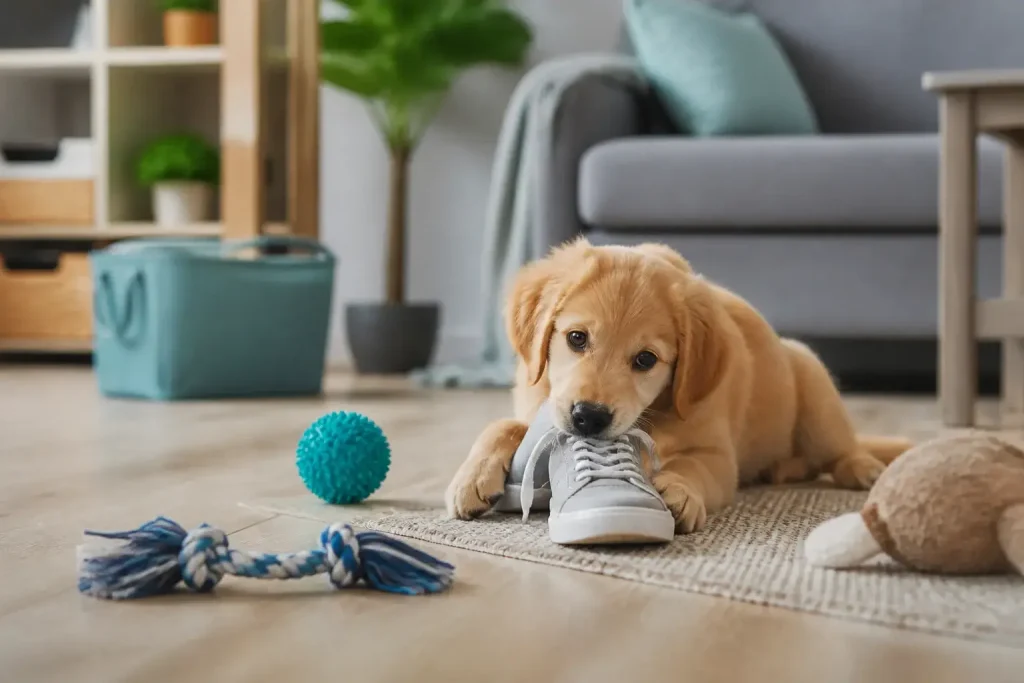
Puppy behavior management is the practical process of guiding a young dog toward safe, calm, and socially appropriate habits. It combines training, supervision, environmental planning, and compassionate communication. The goal is not to suppress normal puppy behavior. Puppies investigate with their mouths, move impulsively, sleep frequently, and struggle to control excitement. Effective management channels those instincts into acceptable choices while preventing rehearsal of habits that may become difficult later.
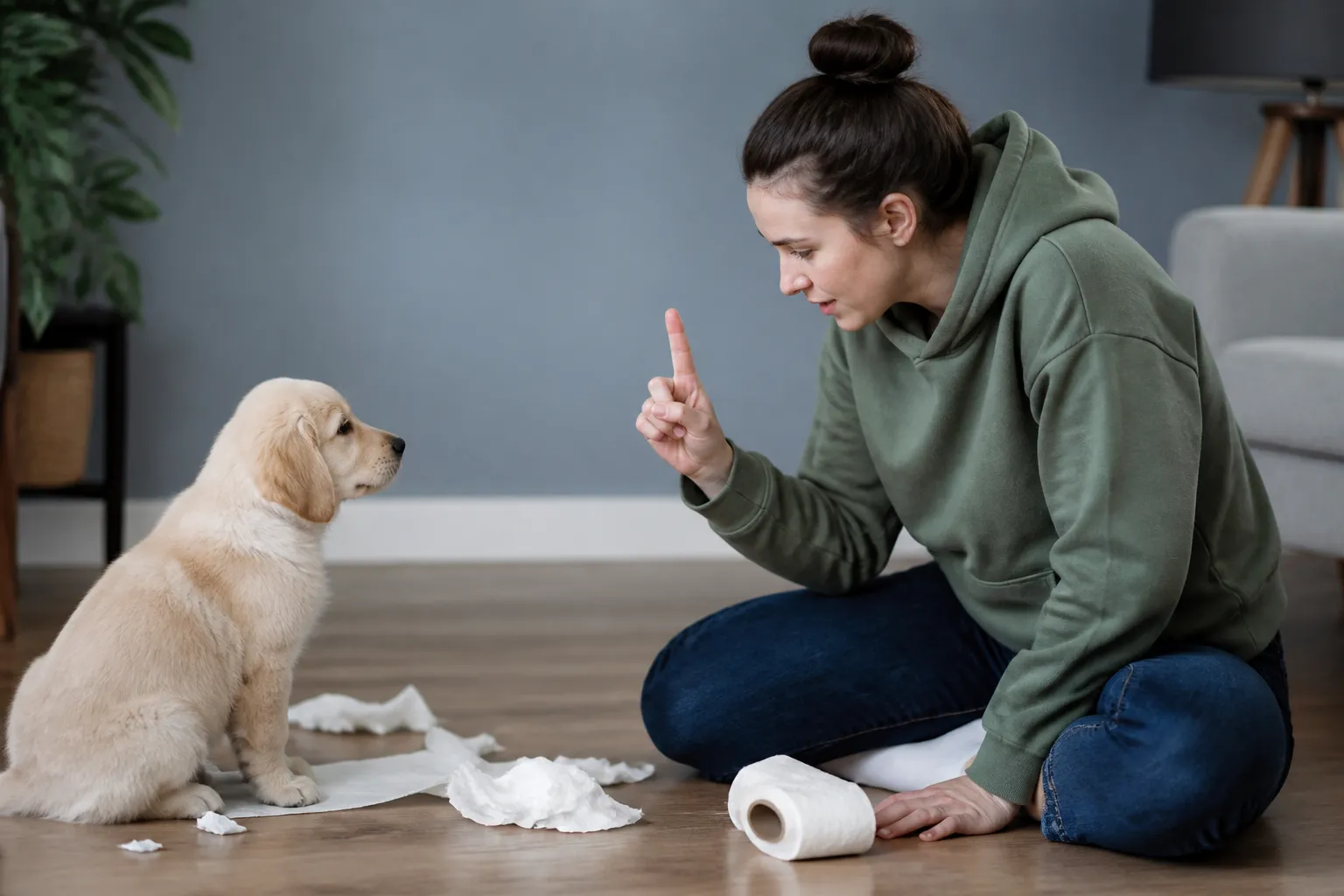
A puppy does not arrive knowing household rules. Chewing a chair leg, jumping at visitors, barking for attention, or having an accident indoors is usually a developmental problem rather than deliberate disobedience. Punishment may create fear without teaching a replacement behavior. A better approach identifies what the puppy needs, changes the situation, rewards the desired response, and repeats the lesson consistently.
Management is especially important because learning begins immediately. Every interaction can strengthen a behavior. If jumping sometimes earns petting, the puppy learns that jumping can work. If calm sitting reliably receives attention, sitting becomes a valuable strategy. Clear routines make the right choice easier and reduce confusion for both puppy and family.
Preparing a Supportive Home
Before the puppy arrives, remove tempting hazards and decide which spaces are available. Secure electrical cords, medicines, cleaning products, small objects, and unstable furniture. Use gates to separate the puppy from stairs, kitchens, or rooms containing fragile items. A safe confinement area should include comfortable bedding, water when appropriate, suitable toys, and enough room to stand, turn, stretch, and rest.
A crate can support sleep, transport, and short periods of management when introduced positively. It should never function as punishment or a place for prolonged isolation. Begin with the door open, scatter treats inside, and allow the puppy to leave. Gradually build duration while the puppy remains relaxed. If whining, scratching, or frantic behavior increases, reduce the difficulty and reassess the setup.
Puppy-proofing is not a substitute for supervision. A curious puppy can discover a new opportunity within seconds. Keep valuable belongings out of reach, monitor play, and interrupt unsafe exploration calmly. Management prevents mistakes; training explains what to do instead.
Building a Predictable Routine
A regular rhythm helps puppies anticipate eating, toileting, play, training, and sleep. Young dogs often need frequent bathroom opportunities, particularly after waking, eating, drinking, playing, and exciting activity. Take the puppy to the chosen toilet area promptly, wait quietly, and reward elimination immediately afterward. Delayed rewards are harder for a puppy to connect with the correct action.
Include short activity periods followed by rest. Overtired puppies may appear hyperactive, bite harder, bark more, or ignore familiar cues. More exercise is not always the solution. A calm nap, quiet chew, or brief separation from stimulation may restore self-control. Protecting sleep is behavior management, not indulgence.
Teaching Through Reinforcement
Reward-based training makes desired behavior worthwhile. Rewards can include food, play, access to a toy, praise, sniffing opportunities, or permission to greet someone. Choose what matters to the individual puppy and deliver it promptly. Timing matters: the reward should follow the behavior you want repeated.
Start in a quiet environment with simple goals. Mark the correct moment with a consistent word such as “yes,” then provide the reward. Once the puppy understands, gradually practice around mild distractions. Increase only one challenge at a time: distance, duration, movement, or environmental excitement. If performance collapses, the lesson has advanced too quickly.
Teach practical foundation skills. Responding to a name creates attention. Hand targeting helps guide movement without pulling. Sitting can replace jumping. Coming when called supports safety. Settling on a mat encourages calm behavior. Leave-it and drop-it protect the puppy from dangerous objects. Each skill should be practiced in brief, successful sessions rather than exhausting repetitions.
Managing Mouthing and Nipping
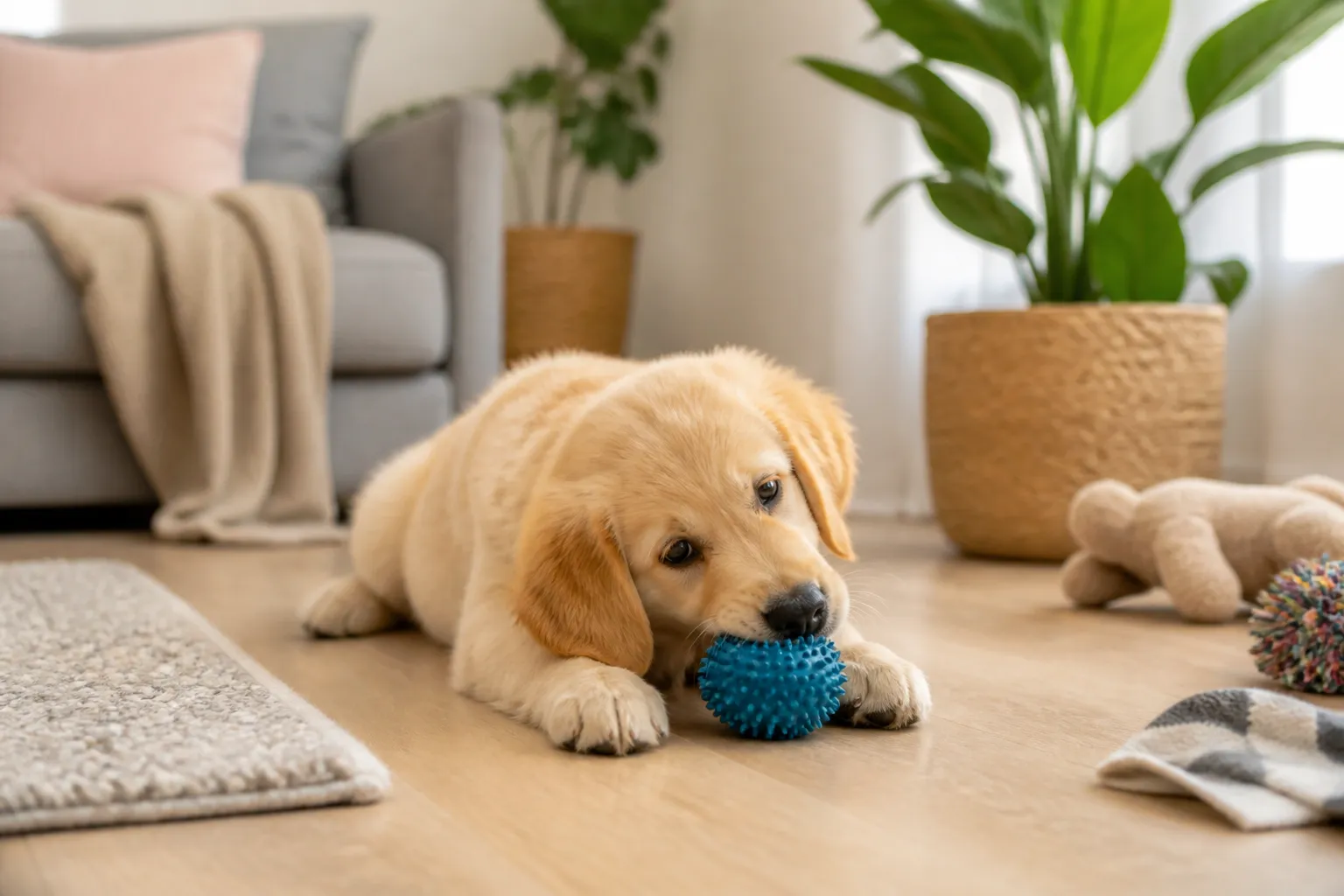
Mouthing is normal, but painful biting must receive a consistent response. Keep appropriate chew items nearby and offer one before the puppy becomes highly aroused. If teeth touch skin, pause movement and attention briefly. Then redirect to a toy or initiate a calmer activity. Everyone in the household should follow the same procedure.
Avoid wrestling with hands, shouting, or physically holding the muzzle. These responses may increase excitement or create defensive behavior. Children should not be expected to manage nipping independently; an adult should supervise interactions and provide an escape space for both child and puppy.
Observe patterns. Nipping may intensify during tiredness, teething, frustration, or fast play. Schedule rest, use toys that can be chased or tugged appropriately, and end games while the puppy remains successful. Reward gentle contact and calm pauses. Over time, the puppy learns that controlled play keeps interaction going, while painful behavior makes the interaction stop.
Handling Jumping, Barking, and Attention Seeking
Jumping persists when it produces a rewarding result. Turn away, keep hands still, and avoid excited verbal responses. The instant four paws return to the floor, reward calmly. You can also teach a sit for greetings, but practice first with familiar people in low-pressure situations. Visitors should enter quietly and follow the agreed routine.

Barking has several possible causes, including alarm, frustration, fear, loneliness, excitement, or a desire for interaction. Identify the cause before choosing a response. Reduce visual access to passing activity if the puppy is guarding windows. Provide distance from frightening triggers. For demand barking, avoid delivering the requested reward during barking, then reinforce a brief quiet pause and offer an appropriate alternative.
Do not promise instant silence. A puppy needs a functional replacement behavior, such as looking at the handler, touching a hand, going to a mat, or chewing a toy. Reward the replacement generously at first, then gradually expect longer calm intervals.
Preventing Destructive Chewing
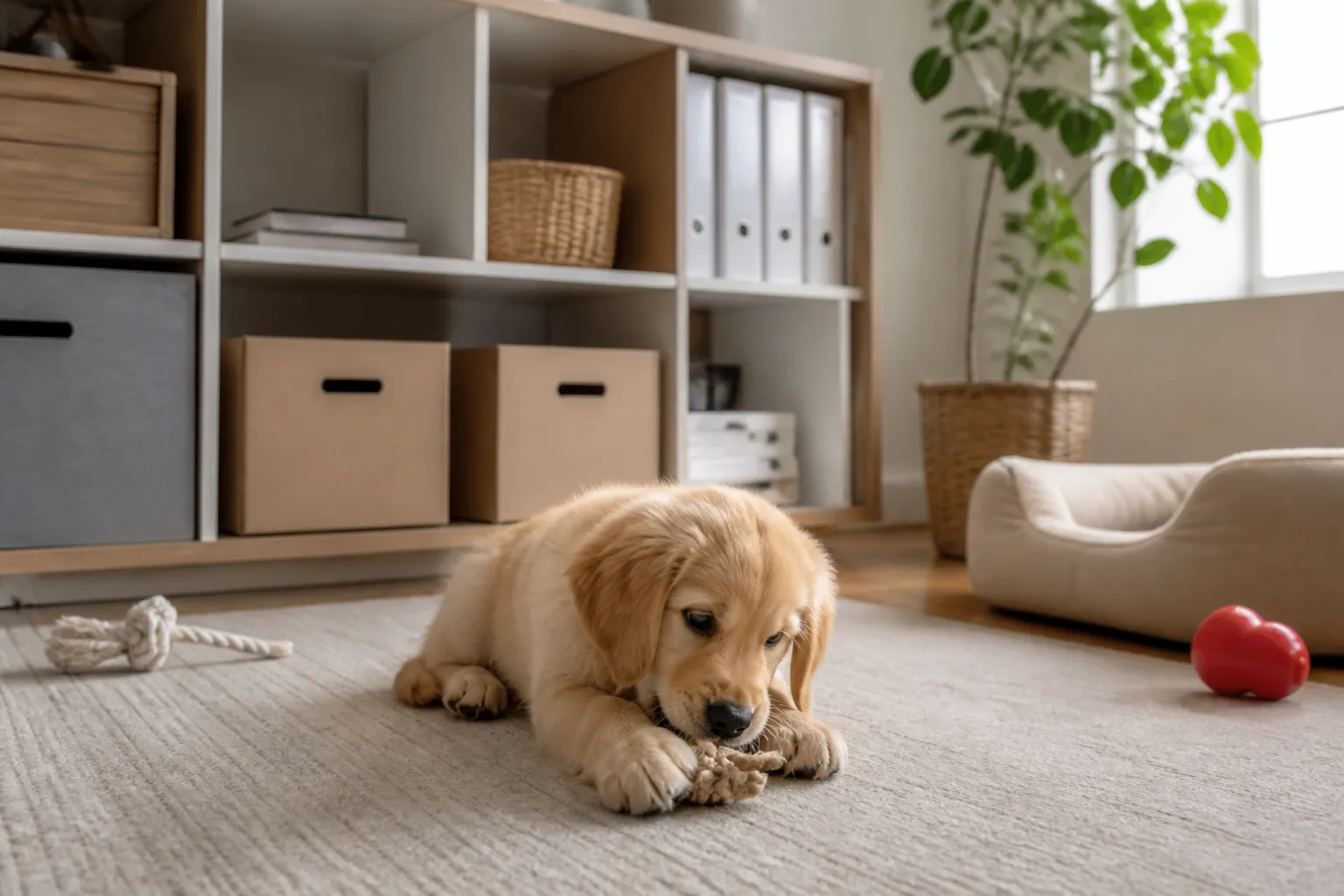
Chewing supports exploration and may help a teething puppy manage discomfort, but household destruction is preventable. Limit access to furniture when supervision is unavailable. Offer several safe textures and shapes, rotate them to preserve interest, and inspect them regularly for damage. Avoid items that splinter, break into swallowable pieces, or are unsuitable for the puppy’s size.
If the puppy chooses furniture, calmly interrupt and guide it to an approved chew. Praise engagement with that item. Bitter sprays alone rarely teach a durable alternative, and some products may be inappropriate if used incorrectly. The strongest plan combines restricted access, appealing options, and consistent reinforcement.
Socialization Without Overwhelming
Healthy socialization means learning that varied people, animals, surfaces, sounds, handling, and environments can be safe. It does not mean forcing a puppy to greet everyone. Introduce novelty gradually, pair it with valuable rewards, and allow the puppy to observe from a comfortable distance.
Watch body language. Loose movement, curiosity, taking food, and easy recovery suggest manageable intensity. Hiding, freezing, repeated yawning, tucked posture, frantic pulling, or refusal of food indicate that the experience may be too difficult. Increase distance, reduce duration, or leave. Confidence grows through successful choices, not unavoidable exposure.
Arrange carefully selected encounters with healthy, socially appropriate dogs. Avoid chaotic gatherings where the puppy cannot escape rough play. Ask a veterinarian about local disease risks and suitable activities before attending group settings. Safe social learning should include calm observation, handling practice, car journeys, different flooring, household sounds, and brief visits to appropriate places.
Handling and Cooperative Care
Touch should predict comfort and rewards. Briefly touch an ear, paw, collar, or shoulder, then feed a treat and stop. Progress slowly toward brushing, nail handling, dental care, and veterinary-style examination. Never force a frightened puppy through a procedure when training can be paused and rebuilt.
Teach a cooperative station, such as standing on a mat, and reward stillness. Pair equipment with food before using it. A harness, leash, towel, or carrier should become familiar through short, pleasant sessions. These preparations reduce conflict during grooming, transport, and medical care.
Leash Skills and Outdoor Conduct
Begin indoors by rewarding the puppy for noticing the leash and walking beside you. Outdoors, use a quiet area and reinforce voluntary check-ins. If the leash tightens, stop or change direction without jerking. Resume movement when slack returns. Sniffing can be used as a reward, because exploration is valuable to dogs.
Teach the puppy that people, bicycles, and dogs do not automatically require greeting. Maintain enough distance for calm observation. If a trigger causes lunging or frantic barking, create space immediately and choose an easier setting next time. Reliable outdoor behavior develops through many controlled repetitions, not through overwhelming encounters.
Responding to Fear and Frustration
Fear should be taken seriously. Do not drag a puppy toward a frightening object or punish growling. Growling is communication that the puppy needs space. Move away, lower the intensity, and reward calm observation if the puppy can still eat and think. Repeated severe reactions deserve professional guidance.
Frustration often appears when access to food, toys, people, or movement is blocked. Teach short waits, trade games, and calm access. Present a low-value item, offer a better reward, and return the original when appropriate. This builds trust and reduces the need to guard possessions.
Sudden behavior changes, persistent distress, aggression, appetite changes, pain signs, or elimination problems warrant veterinary discussion. Medical discomfort can influence behavior, and training cannot resolve an untreated health issue. A qualified, reward-based behavior professional can create a plan for fear, guarding, separation-related distress, or complex aggression.
Creating Family Consistency
Write simple household rules. Decide whether the puppy may climb on furniture, where greetings occur, which words signal cues, and what happens when teeth touch skin. Inconsistent responses are difficult for a young dog to interpret. Everyone should reward the same alternative behaviors and avoid accidentally reinforcing unwanted ones.
Keep a brief behavior record. Note the situation, what happened before, the puppy’s response, and what followed. Patterns may reveal that barking occurs before meals, biting follows long play, or accidents happen after missed toilet breaks. This information turns frustration into a practical adjustment.
Use realistic expectations. A puppy may understand a cue in the kitchen yet struggle in a busy park. Reliability develops gradually. Reward improvement, not perfection, and review whether the environment is making success possible.
Product Selection for Better Management
Useful products support training rather than replace it. Choose a properly fitted harness, lightweight leash, washable bedding, safe chew items, food-stuffable toys, barriers, and a comfortable crate or pen. Inspect equipment frequently and replace damaged items. Fit should permit movement without rubbing, slipping, or restricting breathing.
Food puzzles can provide mental activity, but difficulty should match the puppy’s experience. Begin with simple options that allow quick success. Rotate toys instead of placing every item out at once. Keep especially valuable chews available only during supervised periods if guarding or swallowing is a concern.
Avoid tools marketed as instant solutions when they rely on pain, intimidation, or startling corrections. Such methods may suppress visible behavior without resolving fear or teaching a safer response. A product is valuable when it improves safety, increases clarity, and helps the puppy practice an appropriate behavior.
Frequently Asked Questions
How long should training sessions last?
Several brief sessions are usually more effective than one lengthy lesson. Stop while the puppy remains interested and successful. A session might involve a handful of repetitions, a short game, or a few calm leash steps. Adjust duration according to age, energy, environment, and individual concentration.
Should I punish accidents indoors?
No. Punishment after an accident cannot teach the correct location and may make the puppy hide elimination. Clean the area thoroughly with an appropriate product, increase supervision, and provide more frequent outdoor opportunities. Reward successful toileting immediately.
What should I do when my puppy will not listen?
First reduce distractions and make the request easier. Check whether the puppy is tired, frightened, hungry, overstimulated, or physically uncomfortable. Use a reward that matters, give the cue once, and help the puppy succeed rather than repeating it many times. Practice later in a calmer setting.
Is crate training necessary?
A crate is not essential for every household, but a properly introduced crate can help with travel, rest, safety, and veterinary care. It should be comfortable and associated with positive experiences. Never use it as a place for anger or extended confinement.
How do I stop separation distress?
Build independence gradually. Reward the puppy for relaxing while you move around the home, then practice very short absences that remain below the point of panic. Increase duration slowly. Persistent barking, destruction, escape attempts, or toileting during absences should be discussed with a veterinarian or qualified behavior professional.
When should I seek professional help?
Seek help early when fear, guarding, aggression, intense reactivity, separation distress, or repeated safety risks appear. Choose someone who uses humane, reward-based methods and can explain the plan clearly. Early support often prevents a manageable concern from becoming a deeply practiced pattern.
Conclusion
Puppy behavior management succeeds when prevention, teaching, and patience work together. Make the environment safe, provide predictable routines, protect sleep, and reward the behaviors you want repeated. Replace jumping with calm greetings, biting with appropriate chewing, and frantic reactions with distance and support. Socialize thoughtfully, handle gently, and respond to fear without punishment.
The most persuasive reason to begin today is practical: every successful repetition strengthens a habit. You do not need perfect timing or an elaborate program. You need clear expectations, suitable rewards, consistent supervision, and willingness to adjust difficulty. When behavior changes suddenly or exceeds your ability to manage safely, involve veterinary and professional support.
A well-managed puppy is not a robot that never makes mistakes. It is a young dog learning how to live confidently with people. By treating mistakes as information and good choices as opportunities, you create a safer home, a stronger relationship, and a foundation for reliable behavior throughout adulthood.