
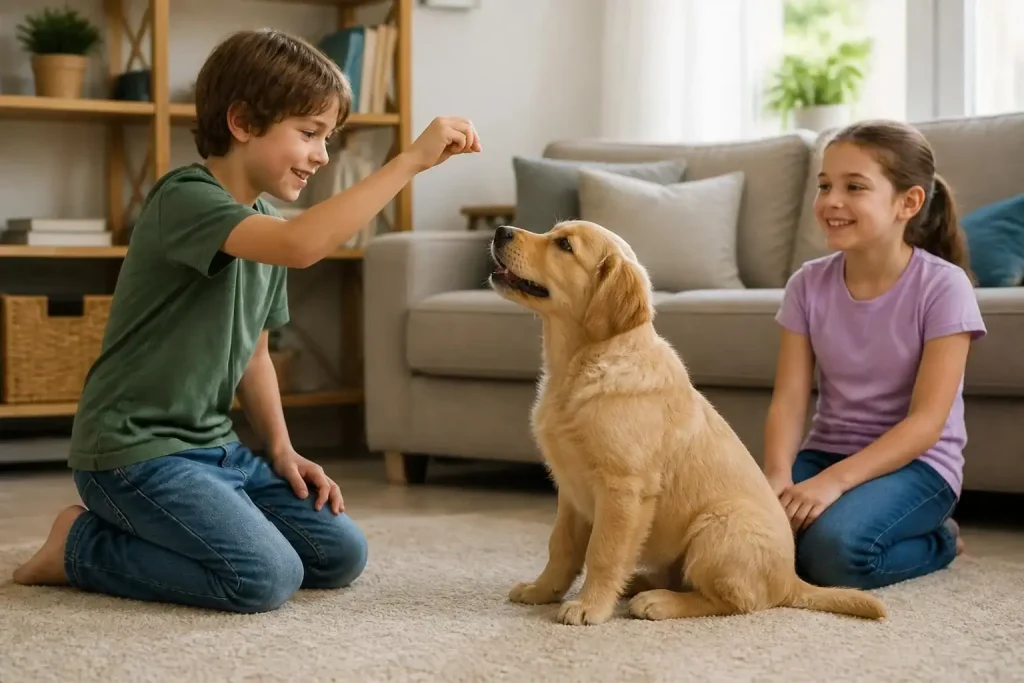
Why Dog Training for Kids Matters
Dog training for kids can become a rewarding family activity when adults provide guidance, realistic expectations, and consistent supervision. Children learn responsibility, patience, observation, and empathy while dogs learn useful behaviors that make everyday life calmer. The goal is not to turn a child into a professional trainer. It is to teach safe communication, encourage cooperation, and build a trusting relationship between child and dog.
A successful program matches activities to the child’s age, the dog’s temperament, and the family’s routine. Short, cheerful sessions usually work better than lengthy lessons. Rewards should be immediate and meaningful, such as a small treat, a toy, praise, or permission to sniff and explore. Training should never rely on fear, hitting, yelling, leash jerking, or forcing a dog into a position. Humane methods protect confidence and make learning more enjoyable.
Adults remain responsible for safety and decisions. A child may practice a familiar cue, but an adult should supervise, manage food, open gates, and intervene whenever excitement rises. Children should also understand that a dog is not a toy. Even friendly dogs need rest, privacy, and respectful handling.
Start With Safety
Before training begins, establish simple family rules. Children should never disturb a dog while it is eating, sleeping, hiding, caring for puppies, or chewing a valued object. They should not climb on the dog, pull ears or tails, hug tightly, ride on its back, or place their face near the dog’s face. A dog that turns away, licks its lips, yawns repeatedly, stiffens, growls, or tries to leave may be asking for space.
Teach children to pause when they see these signals. Rather than scolding a growl, an adult should calmly create distance and investigate the cause. Growling is communication, not bad manners to punish. If a dog snaps, bites, guards resources, or shows intense fear, stop child-led training and seek help from a qualified, reward-based behavior professional.
Choosing a Safe Practice Area
Select a quiet, uncluttered space with secure doors and comfortable footing. Remove tempting objects that could cause chasing or guarding. Keep treats in an adult-controlled container, and use small pieces so lessons do not replace balanced meals. A lightweight leash may be useful outdoors, but children should not hold a powerful or highly reactive dog unless an adult is physically able to take control.
Begin with the dog behind a baby gate or beside an adult if the child is nervous. Distance can make both participants more comfortable. End every session before either becomes frustrated. A successful ending might be one easy cue, a calm pause, and a friendly goodbye.
Teach Children to Communicate Clearly
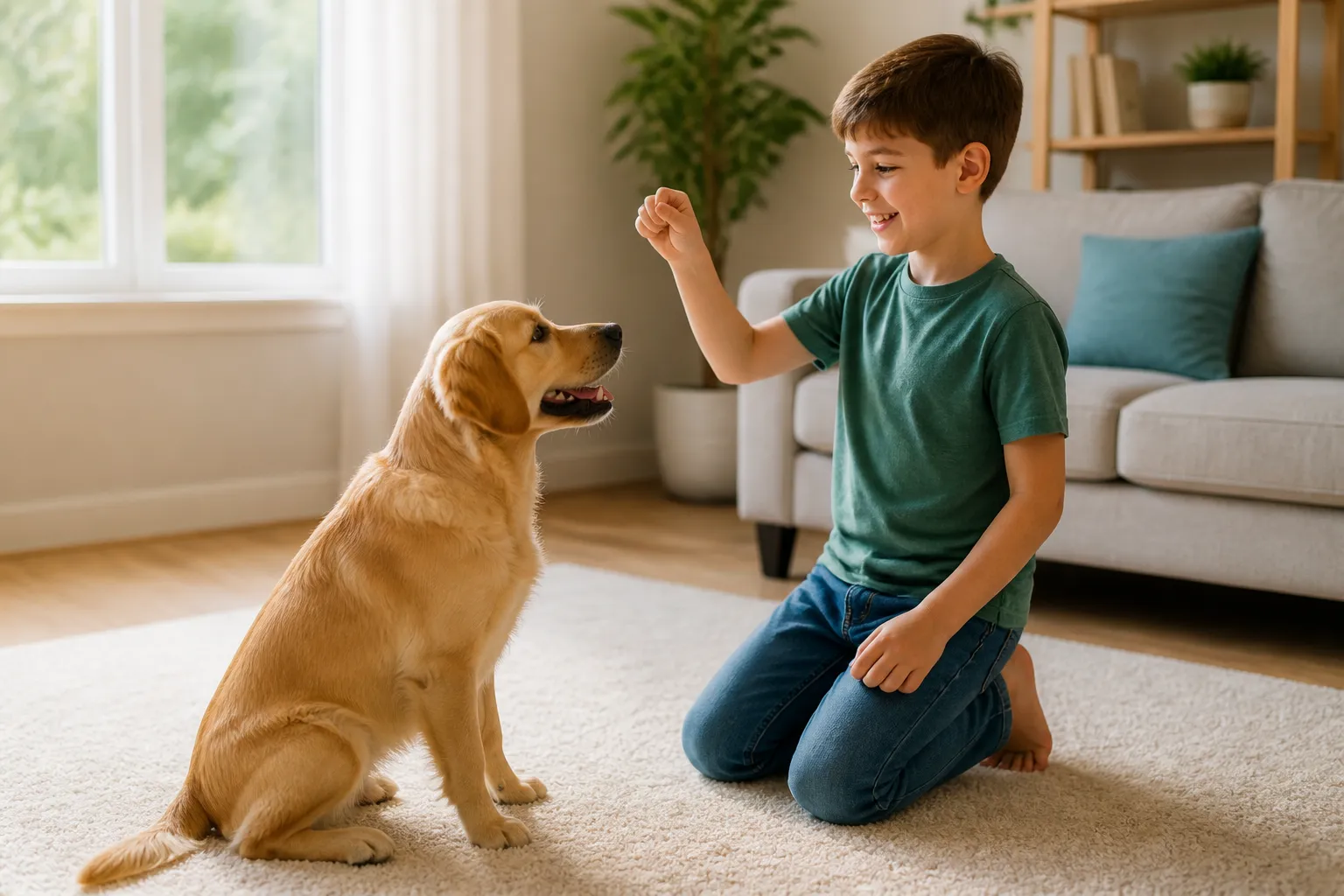
Dogs learn through patterns. A child who repeats a cue with different words, gestures, or emotional intensity can confuse the learner. Choose one short phrase for each behavior, such as “sit,” “come,” “drop,” or “touch.” Adults should demonstrate the cue and explain what the dog should do before asking a child to try.
Use a calm voice and give the dog time to respond. Repeating “sit, sit, sit” can teach the dog to wait for several prompts. Instead, say the cue once, pause briefly, and help only when necessary. When the dog performs the behavior, mark the moment with “yes” or a clicker, then deliver the reward promptly.
Children can keep a simple training journal. They might record the date, behavior practiced, reward used, and what happened. This encourages observation without turning training into a test. Notes can reveal useful patterns, such as better focus before dinner, outdoors, or after exercise.
The Reward Equation
A reward must matter to the dog. Some dogs prefer food, while others value tug games, praise, petting, or access to a favorite sniffing spot. Children can help identify preferences by offering approved options under adult supervision. Avoid using foods that are unsafe for dogs, and ask a veterinarian about dietary concerns.
Reward the behavior you want to see, not merely enthusiastic movement. If teaching calm sitting, wait for four paws on the floor before rewarding. If teaching gentle greetings, reward the dog for keeping its body relaxed instead of jumping. Timing is more important than expensive equipment.
Five Foundational Skills for Kids
1. Name Response
Say the dog’s name once in a cheerful voice. When the dog looks toward the child, mark and reward. Practice in a quiet room, then gradually add mild distractions. Never use the name to announce punishment. A reliable name response helps a child gain attention before requesting another behavior.
2. Hand Target
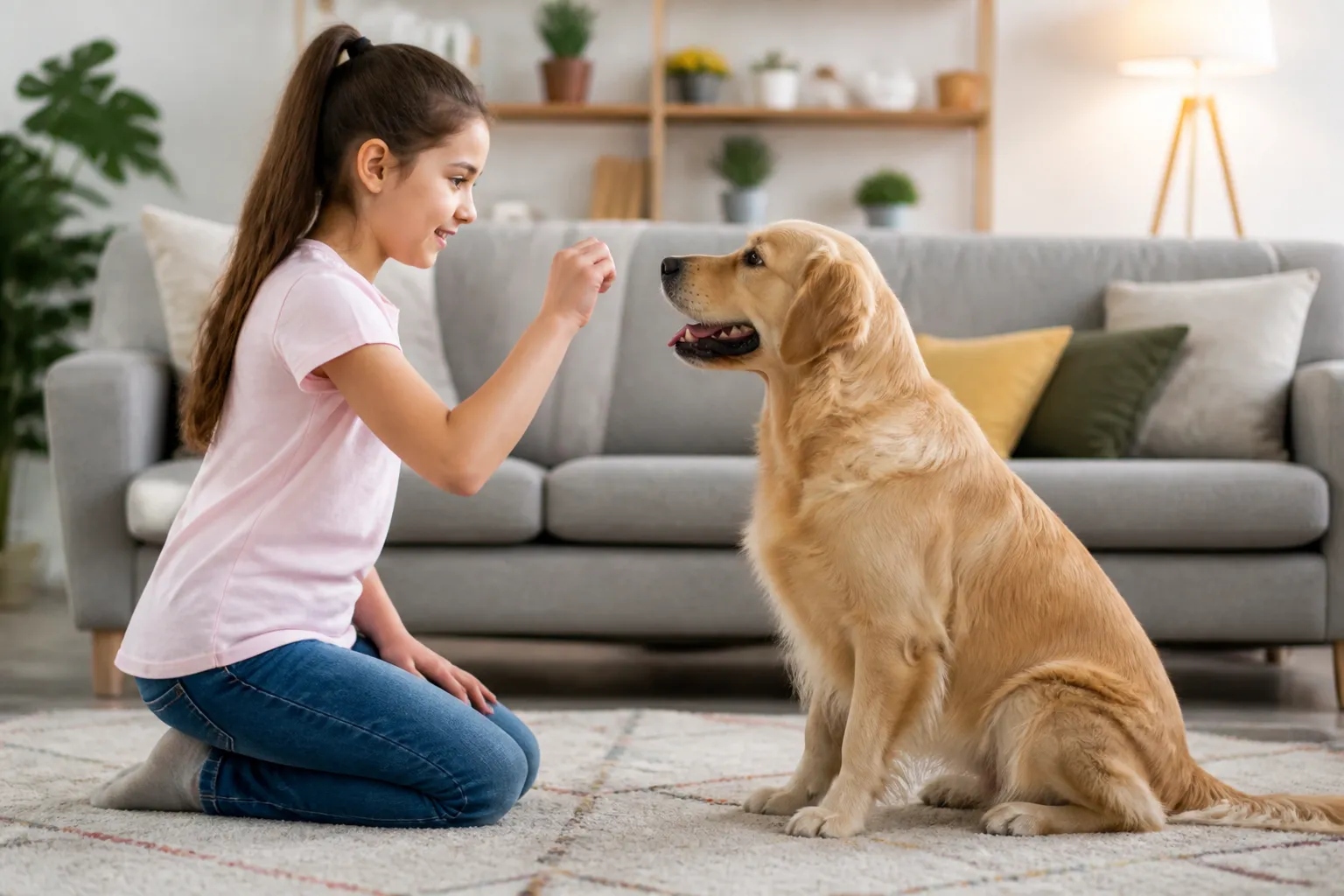
Present an open palm a few inches from the dog’s nose. When the dog investigates or touches it, mark and reward. This game teaches the dog to follow a hand without grabbing clothing. It can later help guide the dog away from doors, guests, or exciting objects.
3. Sit
Hold a reward near the dog’s nose and move it slowly upward and slightly back. As the dog’s head follows, its hindquarters may lower. Mark the instant the bottom touches the floor, then reward. Children should not push the dog down. If the dog jumps, make the reward less visible and wait for calm.
4. Come
Recall practice requires special care. Begin only a short distance away, use an excited but inviting voice, and reward generously when the dog reaches the child. Never call the dog for punishment, nail trimming, or an unwanted ending. Adults should protect the cue by avoiding repeated calls when success is unlikely. Outdoors, use a secure fenced area or a properly managed long line.
5. Drop
Trade a boring toy for a valuable treat. Place the treat near the dog’s nose; when the dog releases the toy, mark and reward, then return the toy when appropriate. Returning the object teaches that releasing does not always mean losing. Children must never wrestle objects from a dog’s mouth.
Make Lessons Fun and Manageable
A child-friendly session can last only a few minutes. Start with an easy behavior, introduce one small challenge, and finish with a successful repetition. Use games that encourage movement without promoting rough contact. Hide a toy for the dog to find, practice walking between cones, or reward the dog for choosing a mat while the child reads nearby.
Rotate activities to prevent boredom. One day may emphasize name response and hand targeting; another may focus on calm greetings. Keep the difficulty appropriate. If the dog stops taking rewards, scans the room, pants heavily, or makes repeated mistakes, reduce distractions or provide a break. Stress can block learning.
Children also need breaks. An adult can supervise quiet chewing or a food puzzle while the child returns to another activity. This teaches that training is part of life, not a demand for constant performance.
Teaching Gentle Walking
Choose a quiet route and reward the dog for staying near the adult. A child can deliver treats while the adult holds the leash. Later, the child may hold the leash only if the dog is calm, the environment is secure, and the adult can immediately take over. If the leash becomes tight, stop rather than pulling back. Reward the dog when slack returns, then continue.
Never let a child wrap a leash around a hand, wrist, or body. Avoid retractable leads near roads, unfamiliar dogs, or crowded areas. Walking skills develop gradually and should not depend on the child’s physical strength.
Solving Common Problems
Jumping often continues because it earns attention. Adults and children should turn away, keep hands still, and reward four paws on the floor. If the dog is too excited, use a gate or leash managed by an adult. Once calm, invite a greeting.
Mouthing during play requires immediate adjustment. Stop moving, remove attention briefly, and offer an approved toy when the dog relaxes. Children should not squeal, wave fingers, or play wrestling games that encourage grabbing. Persistent or painful biting needs professional assessment.
Barking may reflect excitement, fear, boredom, or a need for distance. Punishment can intensify anxiety. Identify the trigger, increase distance, reward quiet observation, and provide appropriate exercise and enrichment. If barking is sudden, severe, or accompanied by threatening behavior, consult a veterinarian or behavior professional.
Resource guarding should never be tested by a child. Adults can arrange professional guidance and manage access to food, toys, and resting places. A child’s task is simply to leave the dog alone during those moments.
Build Responsibility Without Blame
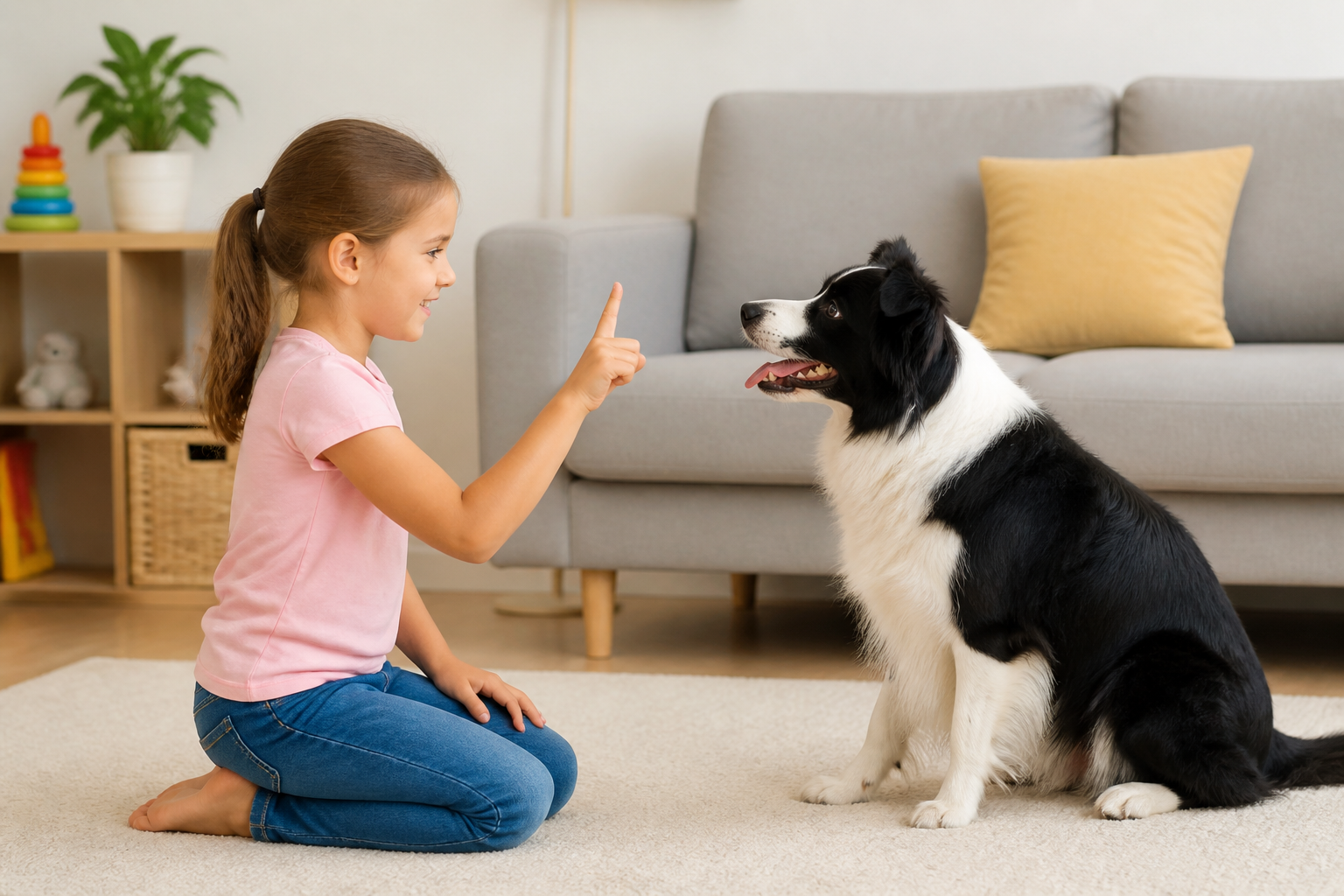
Assign duties that fit the child’s development. A young child might help refill a water bowl with an adult, choose a training toy, or mark successes on a chart. An older child might prepare approved treats, practice a familiar cue, or remind family members to close a gate. Adults should inspect equipment, monitor nutrition, and make final decisions.
Avoid measuring success by perfect obedience. Look for progress: quicker attention, softer body language, calmer greetings, or faster recovery after excitement. Reward children for careful observation and respectful choices, not just for making the dog perform.
Consistency matters more than intensity. If one family member permits jumping while another expects sitting, the dog receives an unclear message. Hold a brief family meeting to select shared cues, rewards, boundaries, and emergency plans. Write them where everyone can see them.
Selecting Helpful Training Products
Useful equipment is simple, safe, and suited to the individual dog. A well-fitting flat collar or harness, a standard leash, small treats, a treat pouch, a washable mat, and durable toys may be enough. Choose items that adults can inspect regularly for damage. Replace frayed leashes, cracked clips, or broken toys promptly.
A clicker can help precise timing, but it is optional. Some children may find its sound startling, so introduce it gradually or use a verbal marker. Food puzzles and snuffle activities can provide enrichment, but supervise new products and follow size and chewing guidance.
Avoid equipment designed to cause pain or fear, including shock, prong, or choke devices. Also be cautious with toys that encourage possessive conflict or can be swallowed. The best product is not the most expensive one; it is the tool that supports safe, humane practice.
When to Seek Professional Help
Contact a veterinarian when behavior changes suddenly, especially if pain, illness, hearing loss, or mobility problems could be involved. Seek a qualified reward-based trainer when the dog shows aggression, severe anxiety, repeated escape attempts, guarding, or behavior that the family cannot safely manage.
Ask professionals how they train, what equipment they use, and how they protect children during sessions. A good plan should explain management as well as exercises. Training is not a quick contest. Progress may be uneven, and setbacks are information about stress, difficulty, health, or environment.
Frequently Asked Questions
What age can children begin training a dog?
Many children can participate once they understand basic safety and can follow an adult’s instructions. The exact age varies with maturity, dog size, temperament, and task. Very young children should participate only through closely supervised, simple activities.
Should children give every treat?
No. Adults should control portions and account for treats within the dog’s diet. Children can offer tiny approved rewards during planned sessions, while adults handle dietary restrictions and prevent accidental feeding.
Is it safe for a child to train a puppy?
Yes, with close supervision and realistic expectations. Puppies have developing impulse control and may nip, jump, or become tired quickly. Sessions should be brief, gentle, and balanced with sleep, play, and quiet time.
What if the dog ignores the child?
The dog may be distracted, tired, uncomfortable, or insufficiently motivated. Reduce difficulty, improve the reward, move to a quieter area, and allow a break. Never force participation.
Can training replace exercise?
No. Dogs need appropriate physical activity, mental enrichment, rest, and social experiences. Training complements these needs but does not replace them.
Conclusion
Dog training for kids works best as a supervised partnership built on safety, kindness, and clear communication. Teach children to notice canine signals, respect boundaries, use rewards, and stop before frustration grows. Begin with name response, hand targeting, sit, recall, and drop, then add walking and calm behavior gradually. Keep equipment simple, manage difficult situations proactively, and seek professional help when risk or fear appears.
The most valuable result is not a dog that performs on command every time. It is a household where children make thoughtful choices, dogs feel secure, and everyone understands how cooperation develops. With patient adult leadership and short, positive practice, training can become a practical life skill and a joyful way for children and dogs to grow together.
Pingback: Advanced Dog Training Techniques for Lasting Results
Pingback: Behavioral Dog Training: How Dog Behavior Develops
Pingback: Service Dog Training: Skills, Confidence, and Partnership
Pingback: Advanced Dog Training for Lasting Results
Pingback: Puppy Behavior Management Tips for a Happier Home