
Puppy Training: Building a Strong Start
Puppy training is the process of teaching a young dog how to live safely and comfortably with people, animals, and everyday surroundings. The most effective approach is clear, consistent, reward based, and suited to the puppy’s age, health, temperament, and previous experiences. Training should not be limited to obedience commands. It should also cover toilet habits, handling, socialization, calm behavior, safe chewing, walking, and the ability to rest alone.
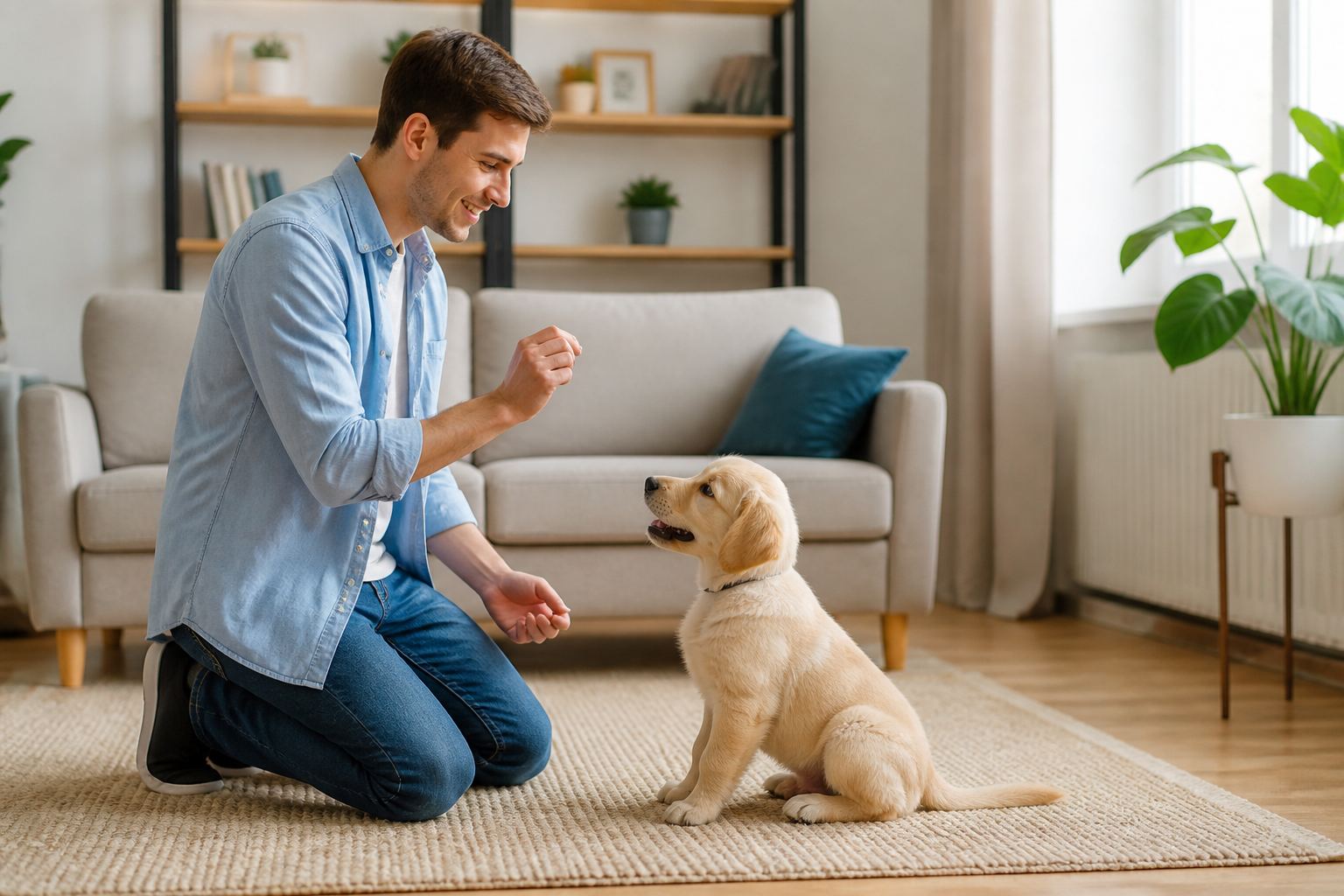
Begin by deciding which behaviors you want to encourage. A puppy cannot understand an abstract rule such as “be good,” but it can learn specific actions: sit before greeting, keep four paws on the floor, chew a toy instead of furniture, or wait at a door. Reward the behavior you want immediately, using a small food treat, a toy, praise, or access to something enjoyable. Timing matters because the reward should arrive while the puppy is performing the desired action or immediately afterward.
Keep sessions short and frequent. Several one to five minute practices usually work better than one long lesson. End while the puppy is still interested, and provide quiet opportunities for sleep. Young dogs tire mentally as well as physically, so overtraining can produce biting, frantic movement, or poor concentration rather than better learning.
Prepare the Home
Before training begins, arrange the environment so success is easy. Remove dangerous objects, secure electrical cables, store medications and cleaning products safely, and block access to rooms that cannot be supervised. Provide a comfortable bed, a safe crate or pen if you choose to use one, water, suitable chew items, and a designated toilet area outdoors or indoors according to your circumstances.
Management is not a substitute for training, but it prevents rehearsal of unwanted habits. A puppy that repeatedly steals socks, jumps on visitors, or explores rubbish is practicing those behaviors. Use baby gates, a lightweight house line under supervision, closed doors, and careful storage to reduce opportunities for mistakes. Never leave a line attached when the puppy is unattended, because it can snag.
Choose a consistent vocabulary. If one person says “down” for lying down and another uses it to mean getting off furniture, confusion is likely. Agree on words, hand signals, household rules, and reward methods. Everyone who handles the puppy should follow the same plan. Consistency does not mean harshness; it means that the puppy receives understandable information.
Choosing Rewards
Use rewards that are safe, appealing, and small enough to avoid excessive calories. Kibble can work during ordinary practice, while higher value treats may help around distractions. Praise and play are useful alternatives, but food often allows especially precise timing during early learning. Deliver rewards calmly rather than waving them continuously, and gradually vary rewards as the behavior becomes reliable.
Toilet Training
Take the puppy to the chosen toilet location after waking, eating, drinking, playing, and vigorous activity. Very young puppies may need frequent opportunities because bladder control develops gradually. Stay quietly present, and when the puppy finishes, reward immediately outside or beside the approved area. Then allow a brief sniff or play period so toileting does not always end the outing.
Learn the puppy’s signals. Sniffing, circling, sudden restlessness, moving toward a previous accident, or pausing during play can indicate a need to go. If you see a signal, guide the puppy promptly. Supervise closely when the puppy is awake and loose. When supervision is impossible, use a safe pen or crate for an appropriate period, never as punishment or prolonged confinement.
Accidents are normal during learning. If you notice one beginning, interrupt gently and take the puppy to the correct location. Clean indoor areas with a product designed to remove odor, because lingering scent can encourage repetition. Do not punish, rub the puppy’s nose in the mess, or shout. Punishment can create fear and may teach the puppy to hide future accidents rather than become reliably clean.
If accidents remain frequent despite a careful routine, consider illness, stress, unsuitable access, or a schedule that expects too much. A veterinarian can help rule out medical causes, especially when toileting changes suddenly, urine appears abnormal, or the puppy shows discomfort.
Teaching Basic Skills
Start with attention. Say the puppy’s name once in a pleasant voice, and reward eye contact or movement toward you. Practice in a quiet area before adding noise, distance, or other animals. A name should predict useful information, not repeated scolding. If the puppy ignores you, reduce distractions and make the exercise easier.
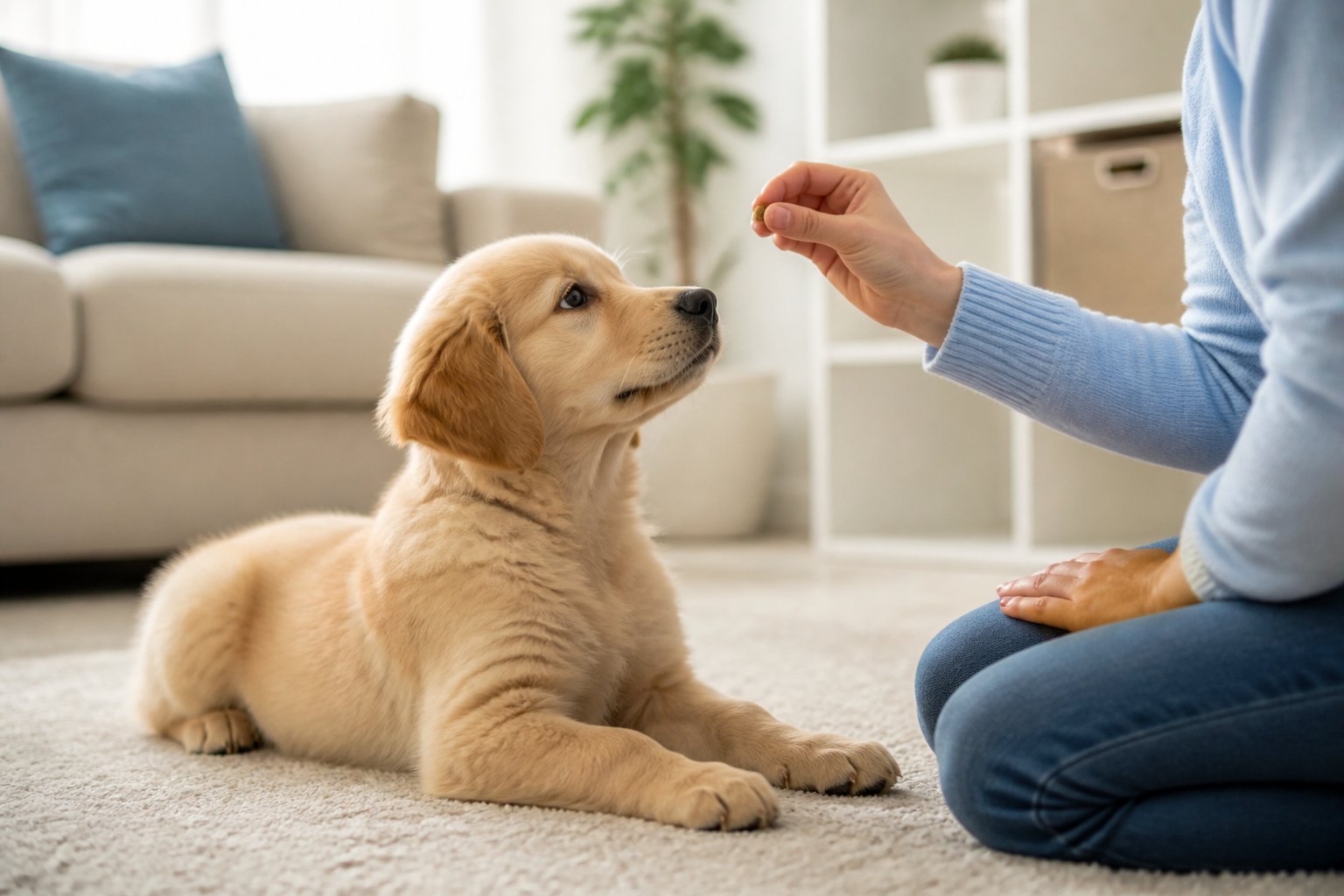
To teach sit, hold a reward near the puppy’s nose and move it slowly upward and slightly back. As the head follows, the hindquarters may lower. Mark the moment the puppy sits, then reward. Add the spoken cue when the movement is already familiar. Avoid pushing the puppy into position, since physical pressure can make the lesson uncomfortable and less clear.
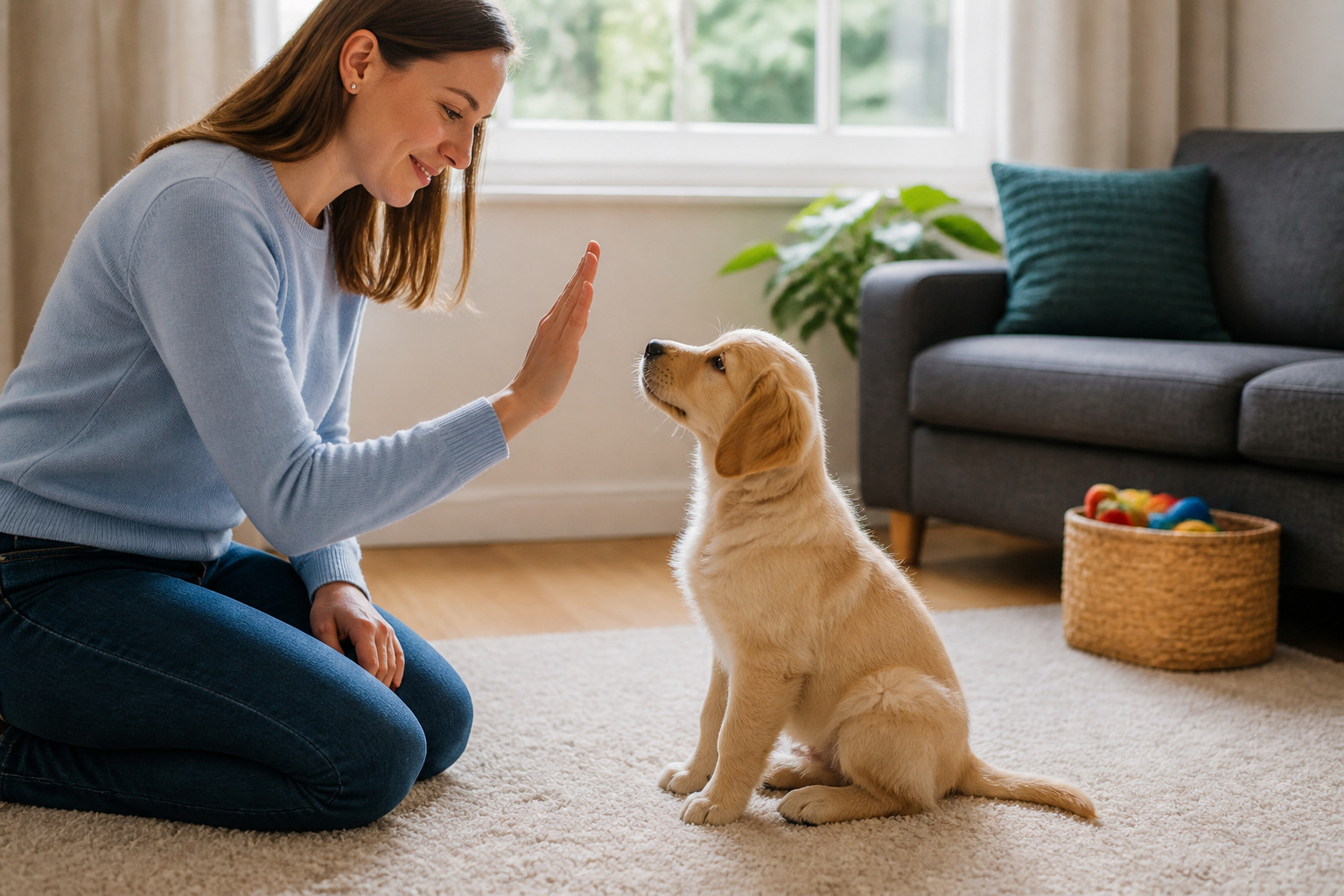
For recall, begin indoors or in a secure enclosed area. Say a cheerful cue, move away a short distance, and reward the puppy for coming. Never call the puppy for punishment, forced grooming, or an experience it strongly dislikes. If you must end play, walk over calmly rather than repeatedly calling an unreliable puppy. A recall cue should remain valuable.
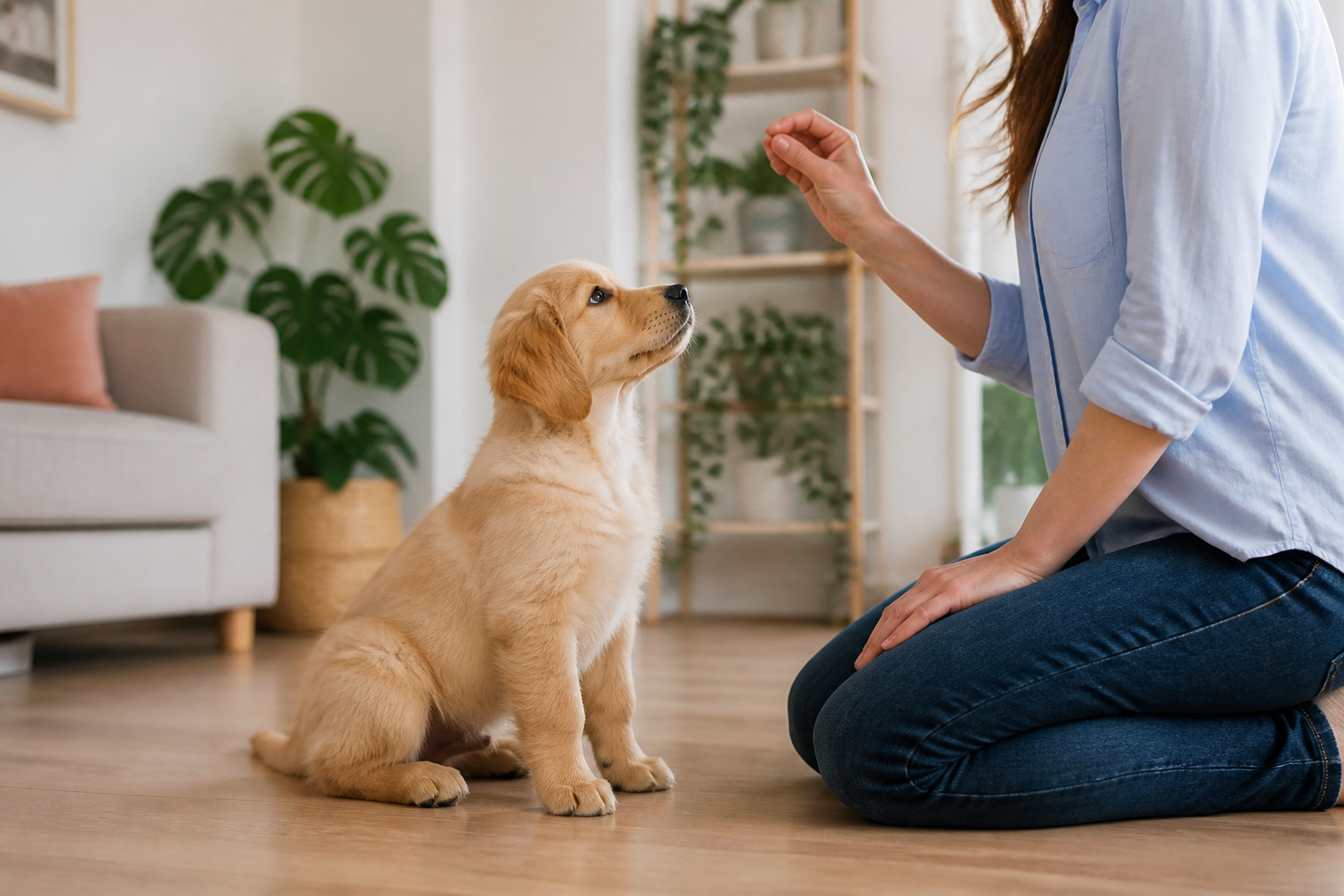
Teach waiting in tiny increments. Ask for a sit, pause for one second, reward, and release with a clear word. Gradually increase time, distance, and distractions one at a time. Do not expect a puppy to hold a position while you immediately add all three challenges. Release cues help the dog understand when a behavior is finished.
Loose Leash Walking
Begin indoors with a well-fitted collar or harness and a lightweight leash. Reward the puppy for being near you and for checking in voluntarily. Outside, choose a quiet route and allow safe sniffing. If the leash becomes tight, stop or change direction without jerking. Resume movement when slack returns. Progress slowly, because a busy street can overwhelm a beginner.
A harness may help manage pulling, but equipment does not teach loose walking by itself. Avoid choke, prong, or shock equipment unless guided by a qualified professional who prioritizes humane methods and understands the risks. Puppies need opportunities to explore safely, not constant correction.
Biting and Chewing
Mouthing is common because puppies explore with their mouths, play with littermates, and experience discomfort during teething. It is not a reason to label a puppy aggressive. Nevertheless, teeth on human skin should be redirected consistently. Freeze your hands, offer an appropriate toy, and praise engagement with that toy. If biting continues, calmly end the interaction for a short pause.
Keep several chew options available, but inspect them regularly for damage, choking hazards, or pieces that can be swallowed. Choose items appropriate for the puppy’s size and chewing style. Avoid giving household objects that resemble forbidden possessions, such as old shoes, because puppies may not distinguish the approved pair from the new pair.
Overexcited biting often means the puppy needs sleep, a toilet break, or reduced stimulation. Schedule calm periods after active play. Do not wrestle with hands, chase a puppy for stolen objects, or punish growling. A growl is communication. If guarding, hard biting, stiff posture, or fearful behavior appears, separate safely and seek help from a veterinarian or qualified behavior professional.
Socialization and Confidence
Socialization means teaching a puppy that ordinary people, animals, surfaces, sounds, handling, transport, and environments can be safe. It is not a competition to meet as many individuals as possible. Quality matters more than quantity. Pair new experiences with food or play, keep exposure brief, and allow the puppy to retreat.
Watch body language. A relaxed puppy may investigate, take treats, and recover quickly. Fear can appear as freezing, hiding, tucked posture, lip licking, trembling, avoidance, or refusal of food. Increase distance and lower the intensity immediately. Forced exposure can strengthen fear. Confidence grows when the puppy has choice, support, and successful repetitions.
Introduce grooming gradually. Touch paws, ears, tail, mouth area, and coat for a second, reward, then stop. Build duration over many sessions. Practice wearing a collar or harness, entering a vehicle, hearing household appliances, and standing on different safe surfaces. Arrange controlled interactions with healthy, vaccinated dogs as advised by your veterinarian. Avoid crowded or contaminated areas until appropriate preventive care is established.
Calmness and Alone Time
Puppies need to learn that nothing is happening sometimes. Reward lying on a mat, relaxing beside you, or choosing a toy without demanding attention. Place the mat near ordinary household activity, then gradually move it farther away. Quietly drop rewards between the puppy’s paws. Calm behavior is easier to build proactively than after frantic behavior begins.
Introduce alone time in very small steps. Give a safe activity, leave for a few seconds, and return before distress escalates. Extend duration gradually. A crate can support rest and management when introduced positively, but it must never become a place of fear or excessive confinement. If the puppy cries intensely, pants, damages barriers, or cannot settle, reduce the difficulty and obtain professional guidance.
Problem Solving and Safety
When a behavior is unwanted, ask what is reinforcing it and what need may be unmet. Jumping may produce attention; barking may gain access to people; stealing may create an exciting chase. Prevent rehearsal, teach an alternative, and reward that alternative. For example, reward four paws on the floor before greeting, or trade a stolen object for food rather than pulling it away.
Do not rely on dominance theories, intimidation, physical punishment, or frightening corrections. These methods can damage trust and may suppress warning signals without resolving the underlying emotion. Humane training still requires boundaries, but boundaries are taught through management, predictable consequences, reinforcement, and patient repetition.
Supervise children closely. Teach them not to disturb a puppy while eating, sleeping, hiding, or chewing. Adults should manage all interactions, because even a friendly puppy can scratch, nip, or become frightened. Provide a retreat that children cannot enter. Never allow a child to ride, restrain, or carry a puppy without appropriate supervision.
A Practical Daily Plan
A useful day alternates biological needs, learning, play, and rest. After waking, offer a toilet opportunity, followed by breakfast and a short training session. Provide supervised play, another toilet break, and a nap. Repeat brief lessons later, incorporating handling, name response, recall, leash skills, and calm settling. The exact schedule depends on age, breed, health, household routine, and individual tolerance.
Record observations for several days. Note sleep, meals, toilet success, triggers, training duration, and signs of stress. Patterns can reveal that accidents occur after long play, biting increases when naps are missed, or barking begins near a particular window. Use those observations to adjust the environment instead of simply repeating a command more loudly.
Progress is rarely linear. A puppy may perform beautifully at home and struggle outdoors. This does not mean training failed; the context changed. Return to an easier version, reward generously, and build difficulty gradually. Adolescence can also bring temporary inconsistency as independence develops. Continue reinforcing known skills without expecting perfection.
Frequently Asked Questions
When should puppy training start?
Training can begin as soon as the puppy arrives, using gentle routines, attention games, handling, and reward based learning. Lessons should match developmental ability and health status. Ask a veterinarian about vaccination considerations and suitable socialization opportunities.
How long should sessions last?
Use very short sessions, often one to five minutes, repeated throughout the day. Stop sooner if the puppy loses interest, becomes frustrated, or shows stress. Daily consistency is more valuable than occasional demanding practices.
Should I use a crate?
A crate may help with travel, rest, safety, and toilet management when introduced gradually and positively. It is not essential for every household. The puppy needs adequate exercise, interaction, toilet opportunities, and freedom from prolonged confinement.
What if my puppy will not listen?
First reduce distractions, improve reward value, check whether the puppy is tired or uncomfortable, and make the requested behavior easier. Dogs do not understand a cue they have never learned in that setting. Avoid repeating it rapidly; wait, reset, and teach again.
Is punishment ever appropriate?
Harsh punishment is unnecessary and can increase fear, avoidance, or aggression. Calmly interrupt unsafe behavior, manage the environment, and reinforce a suitable alternative. If behavior presents a safety concern, consult a qualified professional who uses humane, evidence informed methods.
How can I stop jumping?
Prevent greetings while the puppy jumps. Turn away or pause access, then reward four paws on the floor or a sit. Ask visitors to follow the same procedure. Practice with low excitement first, and increase difficulty gradually.
When should I seek professional help?
Seek assistance for severe fear, aggression, resource guarding, separation distress, repeated injury, sudden behavior changes, or training problems that do not improve. A veterinarian can assess medical contributors and refer you to an appropriate behavior specialist.
Conclusion
Effective puppy training is a cooperative teaching process, not a test of obedience. Establish a safe environment, reward desired behavior quickly, manage opportunities for mistakes, protect sleep, and introduce people and experiences gradually. Teach practical skills in small steps, use consistent cues, and treat communication such as growling or avoidance as information rather than defiance.
Expect uneven progress and adjust the challenge to the puppy in front of you. Success may be a single calm greeting, one outdoor toilet, a moment of eye contact, or choosing a toy instead of a chair. Those small repetitions accumulate. With patience, humane guidance, suitable veterinary care, and realistic expectations, training can build reliable manners while strengthening trust and helping the puppy become a confident companion.