Service dog training is a structured process that prepares a dog to perform specific tasks for a person with a disability while remaining safe, calm, and manageable in public. It is not simply advanced obedience, emotional support, or a convenient way to bring a pet everywhere. Reliable training combines suitable temperament, humane teaching, careful socialization, task practice, public-access skills, and ongoing maintenance. The strongest programs also match the dog’s abilities to the handler’s actual daily needs, then measure performance in realistic environments.
Service Dog Training: Understanding the Purpose of Training
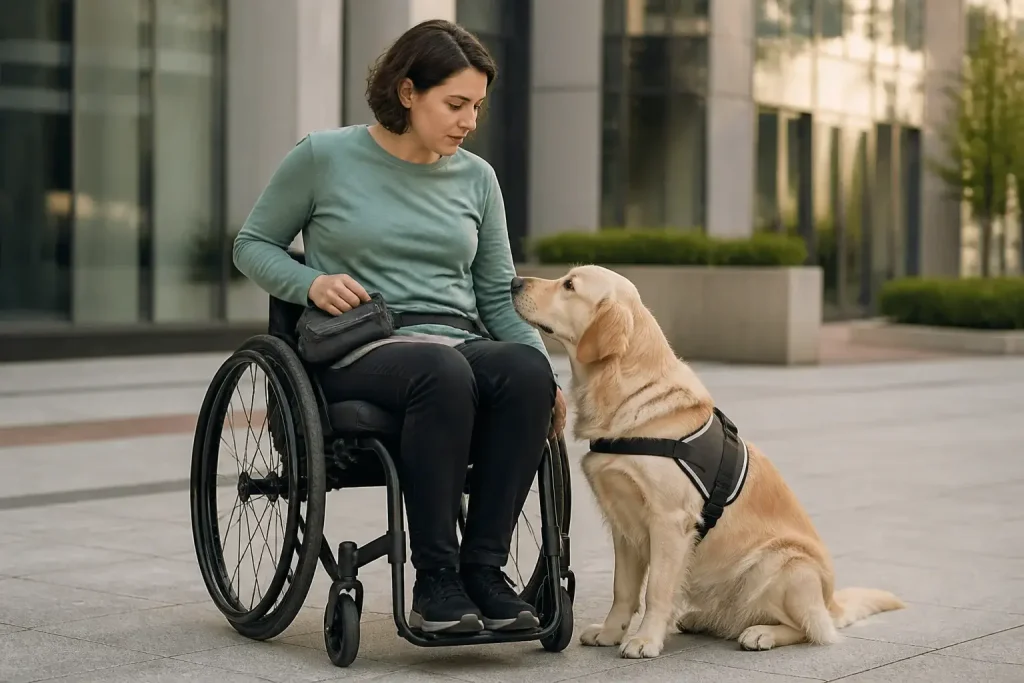
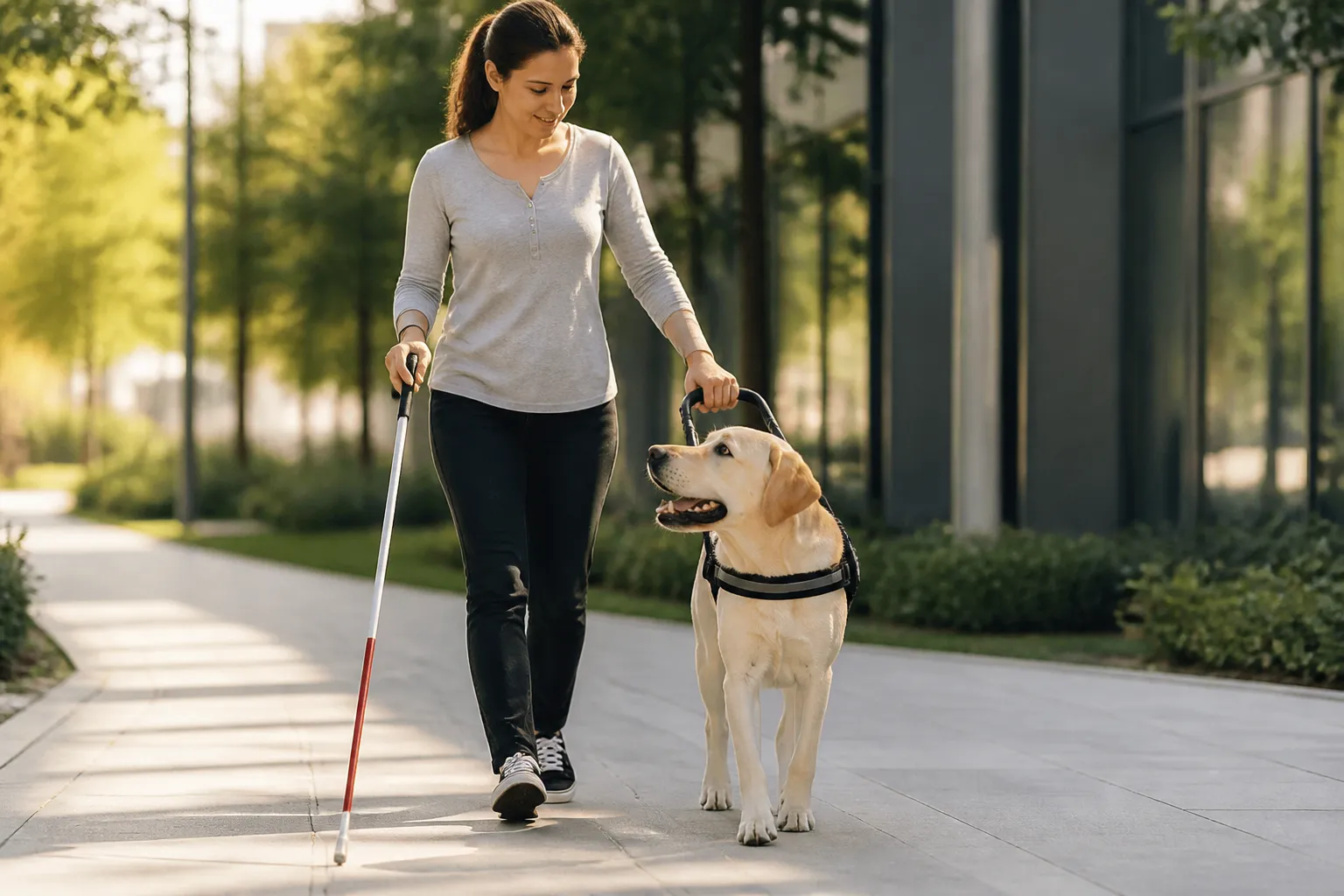
A service dog is trained to mitigate a disability through work or tasks. Examples may include retrieving dropped objects, providing balance support when appropriately structured, alerting to a medical change, interrupting a harmful behavior, guiding a person with limited vision, or responding to a mobility-related need. The appropriate tasks depend on professional advice, the person’s functional limitations, and the dog’s physical and behavioral suitability.
Training should begin with a practical needs assessment. Write down what assistance is required at home, outdoors, during travel, and in emergencies. Separate a desirable behavior from an essential task. A dog that brings a phone on request may be useful, but a dog that recognizes and responds to a specific, observable condition may provide more direct disability mitigation. Clear definitions make training safer and evaluation more objective.
A service dog should not be expected to replace medical treatment, human support, emergency services, or professional care. It is one part of a broader support plan. Some tasks, especially medical alerts and weight-bearing assistance, require specialist guidance because inaccurate responses or unsafe physical pressure can create serious risks.
Choosing a Suitable Dog
Breed alone does not determine success. Individual temperament, health, motivation, confidence, adaptability, and recovery from stress matter more than a fashionable label. The dog should generally enjoy working with people, tolerate handling, remain curious without being impulsive, and recover promptly after startling experiences. Excessive fear, persistent reactivity, guarding, predatory behavior, or inability to settle are significant concerns.
A veterinary examination should address joints, vision, hearing, pain, and conditions that could limit demanding work. Ask for a realistic assessment rather than a promise. A puppy may show promising traits, yet adult behavior cannot be guaranteed. An adult dog with a known history may offer greater predictability, although it still needs careful evaluation.
Consider the handler’s environment. A large dog may be difficult in a small home or crowded transit system, while a tiny dog may be unsuitable for retrieval or physical assistance. Coat care, exercise needs, climate tolerance, feeding, transportation, and expected working lifespan affect long-term practicality. The best match is the dog whose abilities fit the job and whose care the handler can sustain.

Building the Foundation
Engagement and Communication
Begin with reinforcement-based teaching. Reward the behaviors you want, using food, play, praise, access to movement, or another meaningful consequence. Reinforcement does not mean allowing disorder; it means making correct choices worthwhile and explaining expectations clearly. Avoid methods that rely on fear, pain, intimidation, or prolonged distress. Such techniques can suppress warning signals, damage trust, and make public behavior less predictable.
Teach the dog its name, attention, hand signals, verbal cues, release cues, and a reliable marker for correct behavior. Keep early sessions short and end before frustration appears. Practice in quiet places first, then gradually add distance, duration, distractions, and novelty. If performance collapses, reduce difficulty instead of repeating a cue louder.
Essential foundation behaviors include loose-leash walking, recall where safe, sit, down, stand, stay, leave it, drop it, settle, and polite greetings. Teach the dog to ignore food on floors, dropped items, other animals, inviting strangers, and sudden sounds. A service dog must respond even when the handler is anxious, tired, distracted, or physically limited, so cues should be practiced from different positions and with varied rewards.
Socialization and Environmental Skills
Socialization is controlled exposure, not forced contact. Introduce surfaces, elevators, stairs, doors, traffic, shopping carts, uniforms, medical equipment, children, quiet offices, busy sidewalks, and public transport at a pace the dog can manage. Reward calm observation. The goal is neutrality, not greeting everyone.
Watch body language. Lip licking, yawning, freezing, tucked posture, avoidance, frantic scanning, or repeated shaking may indicate stress. Move farther away, simplify the exercise, and provide recovery time. Flooding a worried dog can worsen fear. Confidence grows when the dog learns that unfamiliar events are manageable and that the handler will create space.
Teach settling on a mat or beside a chair. Practice while the handler reads, talks, waits, eats, or receives treatment. Add realistic interruptions gradually. A dog that performs tasks but cannot rest quietly for an extended period is not ready for many public settings.
Teaching Disability-Related Tasks
Define the Task Precisely
A task should have a clear trigger, behavior, and useful outcome. For example, “retrieve medication container when asked” is measurable. “Help with anxiety” is too broad until translated into behaviors, such as interrupting a repetitive action, creating a physical boundary when safe, or guiding the handler toward a predetermined support location. The task must be voluntary, physically safe, and relevant to the handler’s disability.
Break complex work into small components. First teach the dog to target an object, then hold it gently, carry it, deliver it, and repeat the sequence from different rooms. Use low-value practice items before introducing fragile or medically important objects. Add distance, obstacles, darkness, background noise, and handler movement only after each earlier component is reliable.
For alerts, avoid assuming that every change in behavior represents a medical event. Define what is being detected, how the response will be confirmed, and what the handler should do next. Professional medical and training input is particularly important when an incorrect alert could cause medication errors, unnecessary emergency action, or dangerous delay.
Generalize and Proof
Dogs learn contextually. A task performed in the kitchen may fail in a clinic, car, hotel, or crowded street. Practice in varied safe locations, with different surfaces, lighting, sounds, and people. Reinforce accurate responses, but also teach an “all done” cue so the dog can disengage.
Proofing means testing skills against gradually increasing distractions without setting the dog up to fail. Ask whether the dog can work near food, another dog, a ringing phone, a moving wheelchair, or a stranger speaking to the handler. Do not deliberately create hazardous situations. Safety takes priority over a training milestone.
Keep records. Note the date, location, trigger, response time, accuracy, distractions, stress signals, and reward used. Patterns reveal whether a problem concerns motivation, unclear cues, fatigue, environment, pain, or insufficient generalization. Objective notes are more useful than impressions such as “seemed better.”
Public Access and Handler Responsibility
Public behavior must be exceptionally dependable. The dog should remain under control, avoid unnecessary contact, ignore food and merchandise, stay close without blocking pathways, and eliminate only in appropriate places. It should not bark, lunge, solicit attention, wander, or interfere with staff, customers, patients, or other animals.
Train public access progressively. Begin outside a quiet location, then enter briefly when the dog can succeed. Increase time before increasing complexity. Carry water, waste supplies, grooming tools, identification required by applicable rules, and a plan for removing the dog if illness, fear, or fatigue appears. A vest may communicate working status, but equipment does not create training or legal rights.

Handlers should understand the rules that apply where they live and travel. Requirements differ among jurisdictions, transportation systems, housing providers, workplaces, and private businesses. Do not rely on online claims that a certificate, registry, or purchased identification automatically establishes access. Verify current requirements with official authorities or qualified professionals.
Respect other people’s boundaries. Do not allow strangers to pet, feed, photograph, or distract the dog without permission. A concise explanation, such as “The dog is working; please give us space,” is often sufficient. At the same time, handlers must manage the dog responsibly and should not use disability status to excuse uncontrolled conduct.
Selecting Professional Support
A qualified trainer should explain methods, goals, progression, equipment, risks, and expected owner participation before accepting payment. Look for experience with the relevant disability tasks, transparent assessment, humane handling, and willingness to collaborate with veterinarians, occupational therapists, physicians, or behavior professionals when appropriate. Ask how the program handles fear, reactivity, failed candidates, and transitions between trainer and handler.
Be cautious of guarantees about exact completion dates, perfect behavior, or permanent medical alerts. Dogs are living animals, and training outcomes depend on genetics, health, environment, consistency, and the task itself. A responsible provider may discuss possibilities and benchmarks without promising certainty.
Programs vary from owner-trained partnerships to nonprofit placements and private coaching. Owner training can provide close customization but requires time, skill, access to suitable environments, and honest self-assessment. A program dog may offer established foundations, yet the handler still needs extensive instruction and bonding. Cost, waiting periods, follow-up support, and replacement policies should be examined in writing.
A Practical Training Plan
Start with a written baseline. Record the dog’s current strengths, triggers, health limits, foundation cues, and the handler’s functional priorities. Choose a small number of initial goals. For each goal, define the cue, correct response, reward, environment, and standard for advancement.
Schedule frequent sessions that fit real life. Five focused minutes repeated several times may teach more effectively than one exhausting session. Include rest, sniffing, free movement, grooming practice, and ordinary companionship. A working dog also needs permission to relax and behave like a dog.
Use a progression such as home, familiar outdoor area, quiet public space, moderately busy location, and challenging environment. Advance only when the dog succeeds consistently while remaining comfortable. Return to an easier stage after setbacks. Regression is information, not disobedience.
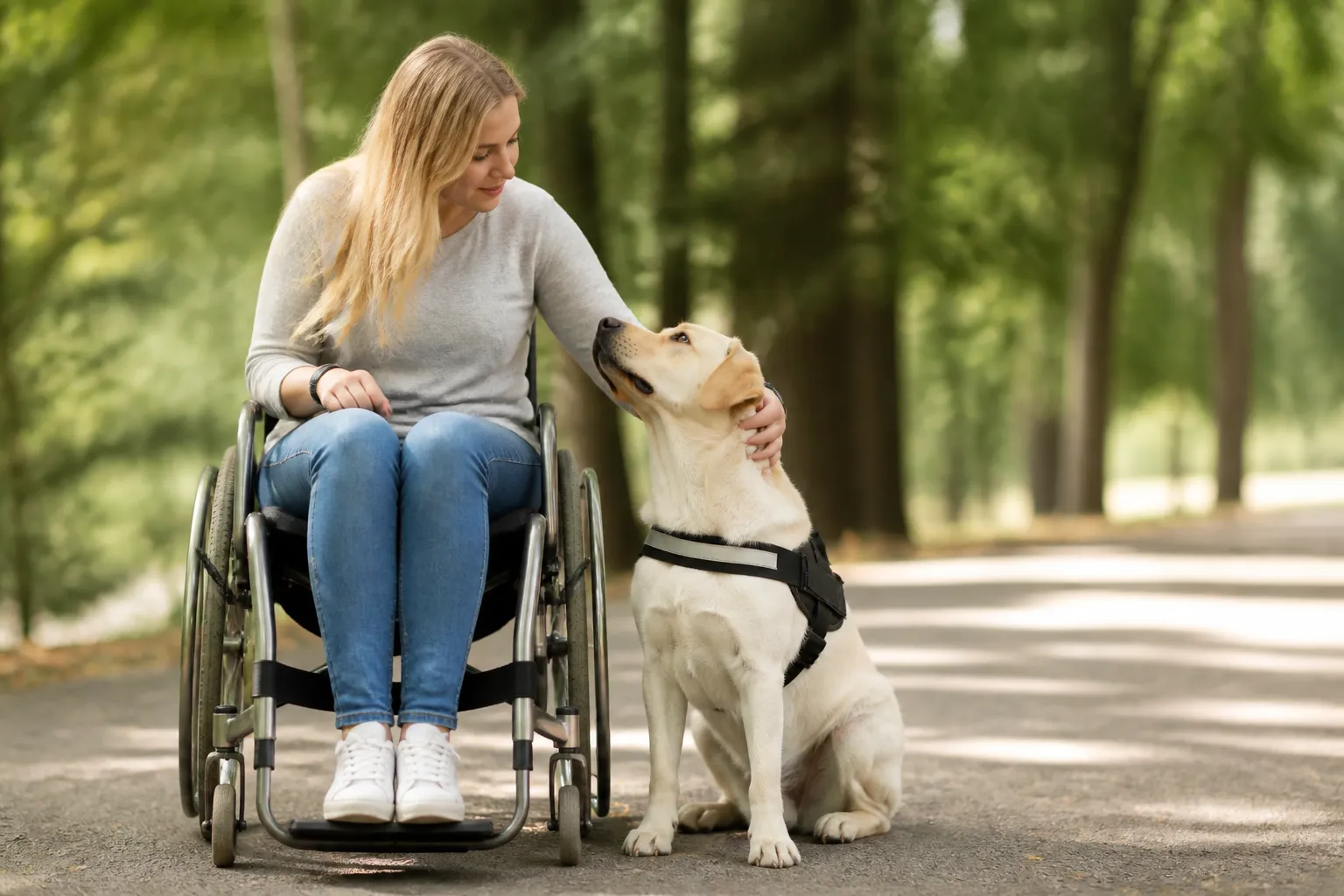
Review equipment regularly. A well-fitted harness, leash, collar, treat pouch, and mobility aid should support communication without causing pain or restricting breathing. Mobility assistance deserves special caution: a dog should never be used as a substitute for a stable support device unless a qualified professional has confirmed that the method is safe for both partners.
Maintaining Reliability
Training does not end when a dog appears finished. Reinforce important skills throughout its working life, especially after changes in housing, schedule, health, medication, or handler ability. Refresh public settling, emergency recall, task responses, grooming tolerance, and calm behavior around distractions.
Schedule veterinary care and watch for subtle changes. Pain, hearing loss, digestive illness, fatigue, or medication effects can look like stubbornness or loss of training. Reduce demands and seek veterinary guidance when behavior changes suddenly. Retirement planning should begin before performance declines. A successor dog may require gradual introduction, and the older dog deserves comfort, purpose suited to its condition, and a secure future.
Troubleshooting Common Problems
If the dog ignores cues, first check whether the cue is clear, the reward is valuable, and the environment is too difficult. If the dog pulls, reinforce proximity before entering stimulating spaces. If it barks at people, increase distance and consult a qualified behavior professional rather than punishing the warning. If task accuracy falls, investigate health, fatigue, unclear criteria, and environmental changes.
Never pressure a dog through panic or use a task that creates injury. Pause, document what happened, and obtain help. A humane reset usually protects progress better than forcing a visibly distressed animal to continue.
Frequently Asked Questions
How long does service dog training take?
There is no universal schedule. Time depends on age, temperament, health, task complexity, prior learning, training frequency, and public-access demands. A simple task may develop quickly, while reliable work across locations takes much longer. Readiness should be based on demonstrated performance and welfare, not a calendar promise.
Can any dog become a service dog?
No. Many dogs can learn useful behaviors, but service work requires stable temperament, physical suitability, focus, recovery from stress, and reliable behavior around distractions. A loving pet may still be unsuitable for public work. Early, honest evaluation prevents wasted effort and protects the dog.
Is emotional support the same as service work?
No. Emotional comfort can be valuable, but service work requires trained tasks that mitigate a disability. Definitions, access rules, housing policies, and transportation requirements may differ by jurisdiction. Consult current official guidance rather than assuming that one category automatically receives another category’s protections.
Should training use treats forever?
Rewards can change over time, but reinforcement remains useful. Food may become intermittent for familiar skills, while praise, play, access, and life rewards support maintenance. For difficult tasks or high distractions, valuable rewards are sensible. Reliability should not depend on withholding essential care or creating distress.
What if the dog fails the program?
Failure to become a service dog is not failure as a companion. Some dogs can transition to pet homes, therapy roles where appropriate, sport, scent work, or other activities. Make decisions with honest attention to safety, welfare, and the dog’s strengths. Do not keep escalating demands simply because money or emotion has already been invested.
Can a service dog play off duty?
Yes. Clear transitions help. Use a release cue and provide ordinary enrichment, exercise, social contact, and rest. Off-duty time can improve welfare, but the dog must also learn when excitement ends and working behavior resumes.
Conclusion
Effective service dog training is a partnership built through careful matching, humane instruction, realistic task design, gradual public exposure, and continuous evaluation. Begin with the handler’s genuine needs, select for suitability rather than appearance, and teach small behaviors that can be measured and generalized. Protect the dog’s health, respect public responsibilities, and seek qualified help for specialized or risky work. When training is patient and evidence-informed, the result is more than impressive obedience: it is dependable assistance that supports independence while preserving the dignity and welfare of both partners. Consistent review, honest reassessment, and retirement planning keep that partnership safe, useful, and sustainable for years.